
If you searched for 'bird of paradise meaning in Hindi,' you might be looking for two entirely different things: the actual bird species called the bird of paradise, or the popular ornamental flower that shares the same name. Both exist, both have Hindi names, and both get mixed up constantly. Let me untangle this for you right away so you know exactly what you're looking at.
Bird of Paradise Meaning in Hindi and Tamil (Bird vs Flower)

Rajesh Sharma
23 Mar 2026

Bird or Flower? Sort This Out First
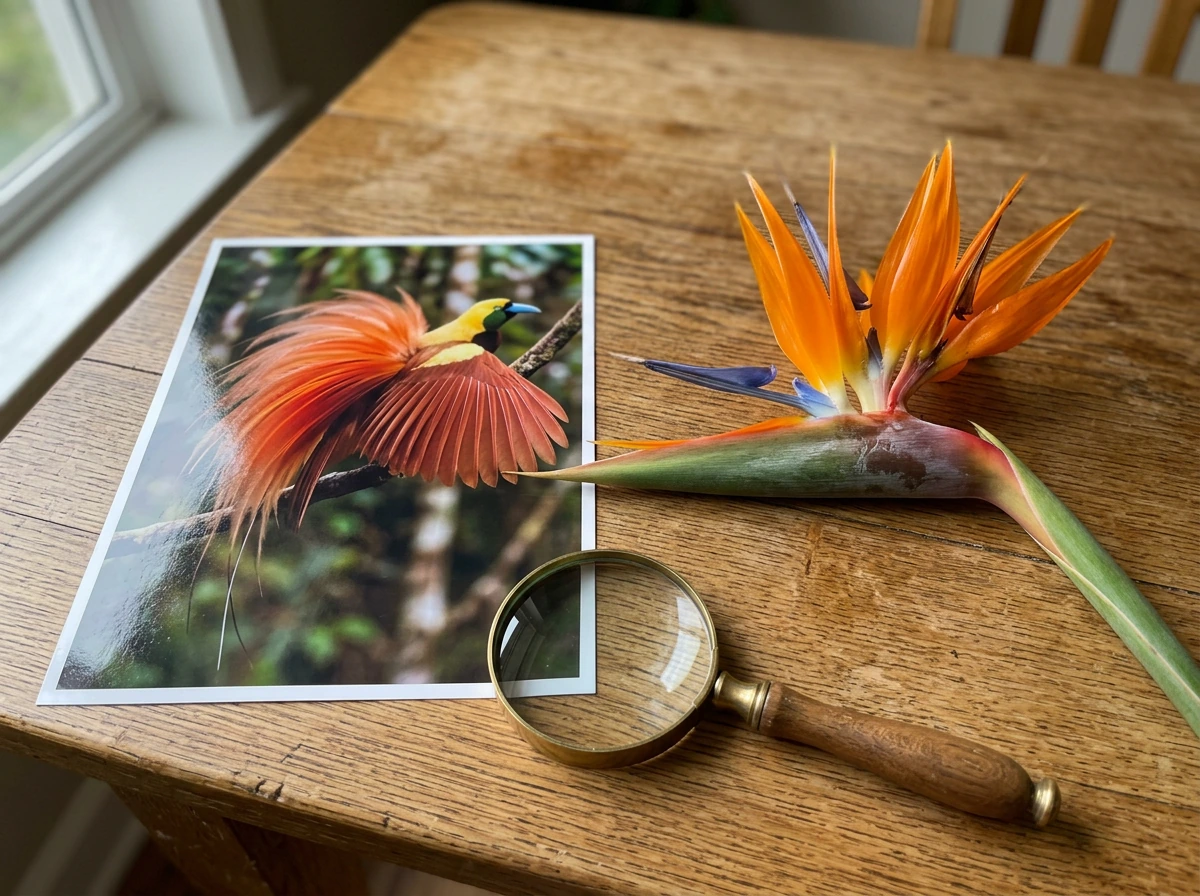
The confusion here is completely understandable because the English name 'bird of paradise' genuinely belongs to two unrelated things. The first is a family of birds called Paradisaeidae, famous for their spectacular plumage, mostly found in Papua New Guinea and surrounding regions. The second is a flowering plant, blank" rel="noopener noreferrer">Strelitzia reginae, that got its common name because its exotic blooms visually resemble the display posture and vivid coloring of those birds. The Cambridge Dictionary actually spells this out: the plant is called 'bird of paradise' because of its resemblance to the birds.
So before you go any further, ask yourself: am I thinking of a bird I saw in a documentary or reference book, or a striking orange-and-blue flower I spotted in a garden or nursery? The answer determines which Hindi name and meaning applies to you. If you searched 'paradise bird meaning in Hindi,' that's the same intent as 'bird of paradise in Hindi' and the answer is the same for either phrasing.
The Bird: Hindi Name, Meaning, and Usage
The bird of paradise (family Paradisaeidae) is called स्वर्गपक्षी (svargapakshī) in Hindi. This is the name listed in Hindi-language wildlife references and on multilingual taxonomy pages for Paradisaeidae. You will also see it written out in a more literal phrase: स्वर्ग का पक्षी (svarg ka pakṣī), which translates word for word as 'bird of heaven' or 'bird of paradise.' Both forms are used in Hindi, and in practice you will encounter phrases like 'स्वर्गपक्षी या बर्ड ऑफ़ पैराडाइज' in wildlife articles, where the Hindi term is offered alongside the English one for clarity.
Breaking Down the Word स्वर्गपक्षी
The word स्वर्गपक्षी is a Sanskrit-origin compound, which is typical of how Hindi names so many birds. स्वर्ग (svarg or svarga) means heaven, paradise, or the celestial realm in Sanskrit and Hindi. पक्षी (pakṣī) means bird, also from Sanskrit, and it is the same root you will recognize if you have looked into Hindi bird terminology before. Put them together and you get 'heavenly bird' or 'paradise bird,' which is a near-perfect translation of the English name. The pronunciation is roughly svarg-pak-shee, with the stress falling naturally on the first syllable.
In everyday Hindi conversation, most people would say 'बर्ड ऑफ़ पैराडाइज' (the borrowed English term transliterated) rather than स्वर्गपक्षी, simply because the bird does not appear in India and is not part of common cultural vocabulary here. But in written Hindi, in books, wildlife documentaries dubbed in Hindi, and nature magazines, स्वर्गपक्षी is the standard term. If you are a language learner or a student preparing for an exam, स्वर्गपक्षी is the correct Hindi answer to give.
The Flower: Bird of Paradise Meaning in Hindi
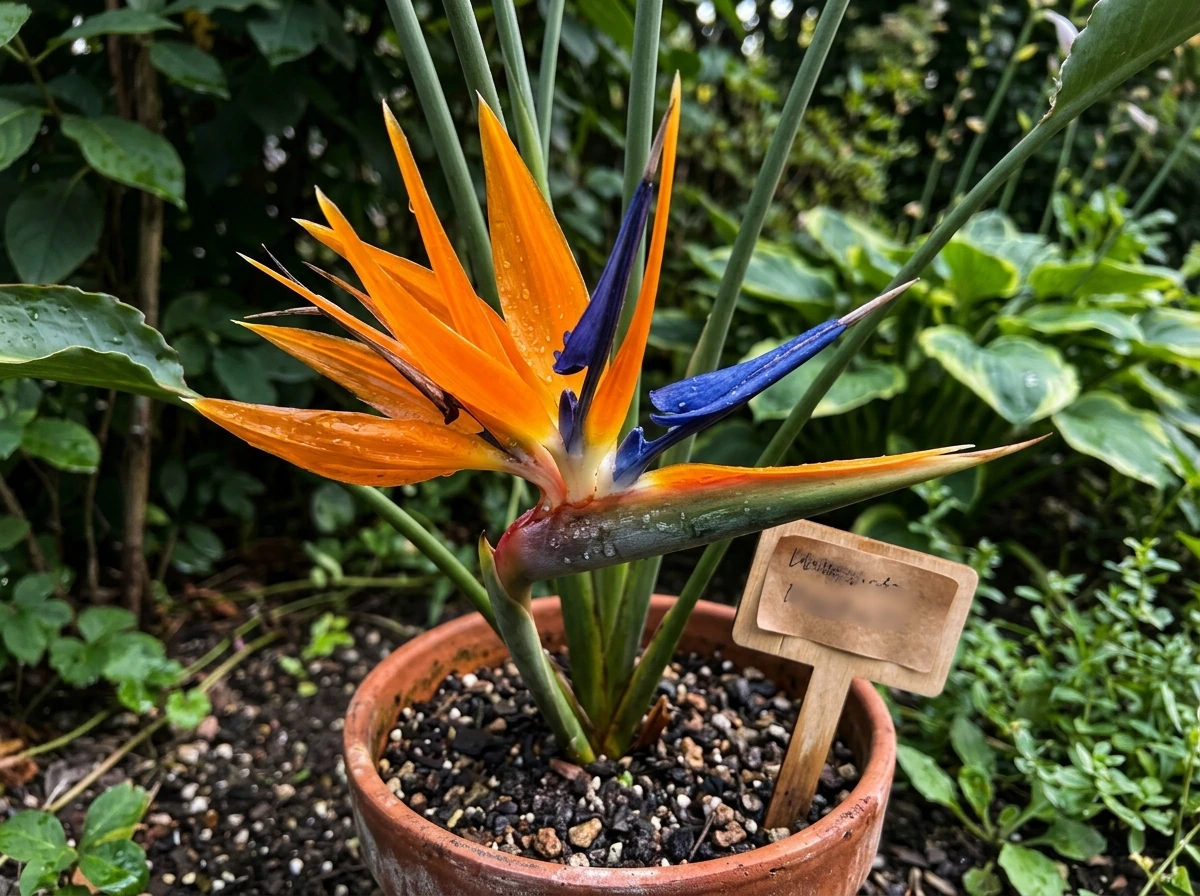
The bird of paradise flower (Strelitzia reginae) is a completely different organism. It is a South African plant, now widely grown as an ornamental in India and across the world, prized for its dramatic blooms that look like a crested tropical bird mid-flight. Britannica Dictionary defines blank" rel="noopener noreferrer">“bird of paradise” as the ornamental plant Strelitzia reginae (as commonly used in English). It is a South African plant, now widely grown as an ornamental in India and across the world, prized for its dramatic blooms that look like a crested tropical bird mid-flight. The USFWS and Kew's Plants of the World Online both formally recognize 'bird of paradise' as a standard common name for Strelitzia, and Merriam-Webster separately clarifies that the default meaning of 'bird of paradise' in English refers to the bird family, not the plant, which is why context matters so much.
स्वर्गपक्षी का पौधा (svargapakshī kā paudhā), अर्थ ‘the bird of paradise plant.’ You will find this exact phrase in Hindi gardening and plant-care articles. So the same core word, स्वर्गपक्षी, does double duty for both the bird and the flower in Hindi, which is precisely where the confusion originates and makes people search for “plover bird meaning in hindi.” Some Hindi speakers also use क्रेन फूल (kran phool, meaning 'crane flower'), which is a translation of the plant's other common English name 'crane flower.'
| What You Mean | Hindi Name | Transliteration | Scientific Identity |
|---|---|---|---|
| Bird of paradise (the bird) | स्वर्गपक्षी / स्वर्ग का पक्षी | svargapakshī / svarg ka pakṣī | Family Paradisaeidae |
| Bird of paradise (the flower/plant) | स्वर्गपक्षी का पौधा / क्रेन फूल | svargapakshī kā paudhā / kran phool | Strelitzia reginae |
Bird of Paradise Flower Meaning in Tamil
For those searching specifically for the bird of paradise flower in Tamil, there are a couple of names in use. A Tamil retail plant page for Strelitzia reginae uses the label பராதீச பறவை செடி (pārādīca paṟavai ceṭi), which is essentially a transliterated version of 'paradise bird plant' in Tamil script. This is the term you are most likely to encounter in Tamil nurseries and plant shops.
Beyond that transliteration, multilingual plant identification sources list two more Tamil-origin names for the plant: சந்திரவாசி (chandiravasi) and சொர்க்கத்தின் மலர் (sorkathin malar). The second one is particularly meaningful: சொர்க்கம் (sorgam) means heaven or paradise in Tamil, and மலர் (malar) means flower, so சொர்க்கத்தின் மலர் translates as 'flower of paradise' or 'flower of heaven,' a beautiful parallel to the Hindi स्वर्गपक्षी. In day-to-day Tamil usage, especially in nurseries and gardening contexts, you will most often hear the English name 'bird of paradise' used directly, just as in Hindi-speaking regions.
Why 'Paradise' Shows Up in the Name: The Symbolism Behind It
The word 'paradise' in the name is not accidental, and understanding where it comes from gives you a richer sense of why both Hindi and Tamil lean into the 'heaven' translation so naturally. The birds of paradise (Paradisaeidae) were first brought to Europe from New Guinea in the sixteenth century as dried skins with their legs removed, which traders did for preservation purposes. European naturalists, never having seen the birds alive, assumed they must be creatures of heaven with no need to land on earth. They named them 'birds of paradise,' and the Latin genus name Paradisaea reflects exactly that.
This concept of a celestial, otherworldly bird translates almost instinctively into Hindi as स्वर्गपक्षी because स्वर्ग carries all the same weight that 'paradise' does in the Western sense: it is the divine realm, the abode of gods, a place of perfection and beauty. If you have read about the phoenix or other mythic birds in the context of Indian languages (a topic covered separately on this site), you will notice a similar pattern where birds of extraordinary beauty get mapped to heavenly or divine vocabulary across cultures. The bird of paradise fits that template perfectly.
For the flower, the symbolism transfers by association. Because the plant's blooms so strikingly mimic the plumage of these 'heavenly birds,' the flower inherited both the English common name and, in Hindi, the same Sanskrit-rooted word. In Indian cultural contexts more broadly, the idea of a flower embodying paradise is not at all foreign: the lotus and other sacred flowers carry similar divine connotations in Hindu and Buddhist traditions. The bird of paradise flower, though not native to India, slips into that symbolic vocabulary with ease.
How to Know Exactly What You're Looking For
Here is a simple way to confirm which meaning applies to your search before you use a name or translate something. Run through this checklist:
- Are you researching a bird you saw in a nature documentary, book, or ornithology reference? Then you want स्वर्गपक्षी (svargapakshī) referring to Paradisaeidae.
- Are you looking up a plant with orange and blue or yellow flowers, often sold in nurseries or used in floral arrangements? Then you want स्वर्गपक्षी का पौधा or क्रेन फूल for Hindi, and பராதீச பறவை செடி or சொர்க்கத்தின் மலர் for Tamil.
- If you searched 'paradise bird meaning in Hindi,' treat it as identical to 'bird of paradise meaning in Hindi.' The correct Hindi answer is स्वर्गपक्षी in both cases.
- For a Hindi sentence using the bird meaning, you can say: 'स्वर्गपक्षी अपने रंगीन पंखों के लिए प्रसिद्ध है' (The bird of paradise is famous for its colorful feathers).
- For a Hindi sentence using the flower/plant meaning, you can say: 'मेरे बगीचे में स्वर्गपक्षी का पौधा लगा है' (I have a bird of paradise plant in my garden).
- If you are in a Tamil-speaking context and want to refer to the flower, use சொர்க்கத்தின் மலர் in formal or poetic usage, or simply say 'பர்ட் ஆஃப் பாரடைஸ்' (the transliterated English) in everyday conversation.
- Double-check scientific names when in doubt: Paradisaeidae for the bird family, Strelitzia reginae for the ornamental flower.
Once you have that distinction clear, the rest follows naturally. Whether you are a language learner building vocabulary, a gardening enthusiast trying to label a plant correctly, or someone curious about what this name means in a cultural and spiritual sense, the core answer is the same: ...the core answer is the same: flamingo bird meaning in hindi flamingo bird meaning in hindi, a name rooted in Sanskrit that does full justice to both the extraordinary bird family that inspired it and the equally extraordinary flower that borrowed its name., a name rooted in Sanskrit that does full justice to both the extraordinary bird family that inspired it and the equally extraordinary flower that borrowed its name. pelican bird meaning in hindi
FAQ
If I want the bird (Paradisaeidae) in Hindi, is स्वर्गपक्षी always the right term, or can it refer to the flower too?
स्वर्गपक्षी is the standard Hindi term used for the bird family, but in everyday writing it can be used loosely when people talk about the plant. If the context mentions a flower, nursery, or pot, you should switch to स्वर्गपक्षी का पौधा (or the English/Latin Strelitzia label).
How can I quickly tell whether a Hindi page is talking about the bird or the flower when it only says स्वर्गपक्षी?
Look for keywords like चिड़िया/पक्षी, plumage, habitat, or Papua New Guinea for the bird. For the plant, you will usually see words like पौधा, फूल, केसर/पंखुड़ी, ornamental, गमले, or Strelitzia.
Is “स्वर्गपक्षी” a Sanskrit-origin word, and does that affect pronunciation in Hindi?
Yes, it is a Sanskrit-derived compound (स्वर्ग + पक्षी). In Hindi pronunciation you typically split it as svarg-pak-shee, with the first part (स्वर्ग) spoken clearly, and it is often rendered in Roman letters as svargapakshi.
What Hindi phrase should I use if I’m naming the flower in a shopping or gardening context?
Use स्वर्गपक्षी का पौधा, which explicitly signals the plant meaning in Hindi gardening articles. If available, also add Strelitzia reginae to avoid ambiguity at nurseries.
In Hindi, do people ever translate “bird of paradise” into something other than स्वर्गपक्षी?
Some Hindi speakers use the borrowed transliteration बर्ड ऑफ़ पैराडाइज in conversation, especially since the bird is not commonly seen locally. For exam answers, self-study notes, or formal writing, स्वर्गपक्षी is usually safer.
Is “क्रेन फूल” (kran phool) used for the same flower as bird of paradise, or can it mean something else?
क्रेन फूल is commonly used as an alternate name for the same plant (Strelitzia, the bird of paradise flower). Still, if a page lists Strelitzia reginae or describes the distinctive orange-blue bloom, that confirms it.
For Tamil, if I see பராதீச பறவை செடி, will it always mean the plant, not the bird?
That Tamil label is meant for the plant (it includes செடி, meaning plant). If the Tamil text is about animals or forests and uses terms for birds instead of plant descriptors, then it likely refers to the bird meaning rather than the flower.
Are the Tamil names சந்திரவாசி and சொர்க்கத்தின் மலர் definitely for Strelitzia reginae?
They are used in multilingual plant contexts for the bird of paradise flower, so they usually point to Strelitzia. To be certain, check whether the source also references ornamental flowering or matches the Strelitzia identification.
Does the phrase “paradise bird” in Hindi ever create the same confusion as “bird of paradise”?
Yes, it can. People may write or translate it as स्वर्गपक्षी (bird) or स्वर्गपक्षी का पौधा (flower) depending on context. If a source does not specify पक्षी vs पौधा, use the surrounding description to disambiguate.
If I’m writing a sentence in Hindi, what small formatting choice can prevent the reader from confusing bird and flower?
Mention the type explicitly, for example “स्वर्गपक्षी का पौधा” when talking about the plant, and “स्वर्गपक्षी (Paradisaeidae)” when referring to the bird family. Adding the scientific name once (Paradisaeidae or Strelitzia reginae) removes most ambiguity.
Next Articles
Bird Beak Meaning in Hindi: Chonch, Bill, Pronunciation
Bird beak in Hindi chonch or bill, pronunciation, examples, beak vs bill differences, and figurative Hindi use
Bird Pankh in English Meaning: Wings or Feathers?
Learn bird pankh in English meaning: pankh means feathers or wings, with context rules, examples, and regional equivalen
Bird Peck Meaning in Hindi: Translation, Examples
bird peck meaning in Hindi: pecking, pecks at, pecked action और वाक्य उदाहरण, साथ ही शब्द चयन व tense guide