
If you searched 'flamingo bird meaning in Hindi,' you probably want one of two things: the correct Hindi word for flamingo, or what the flamingo symbolizes in Indian culture. This article gives you both, clearly separated, so you can find exactly what you need without wading through the wrong answer.
Flamingo Bird Meaning in Hindi: Word, Pronunciation, Symbolism

Rajesh Sharma
23 Mar 2026
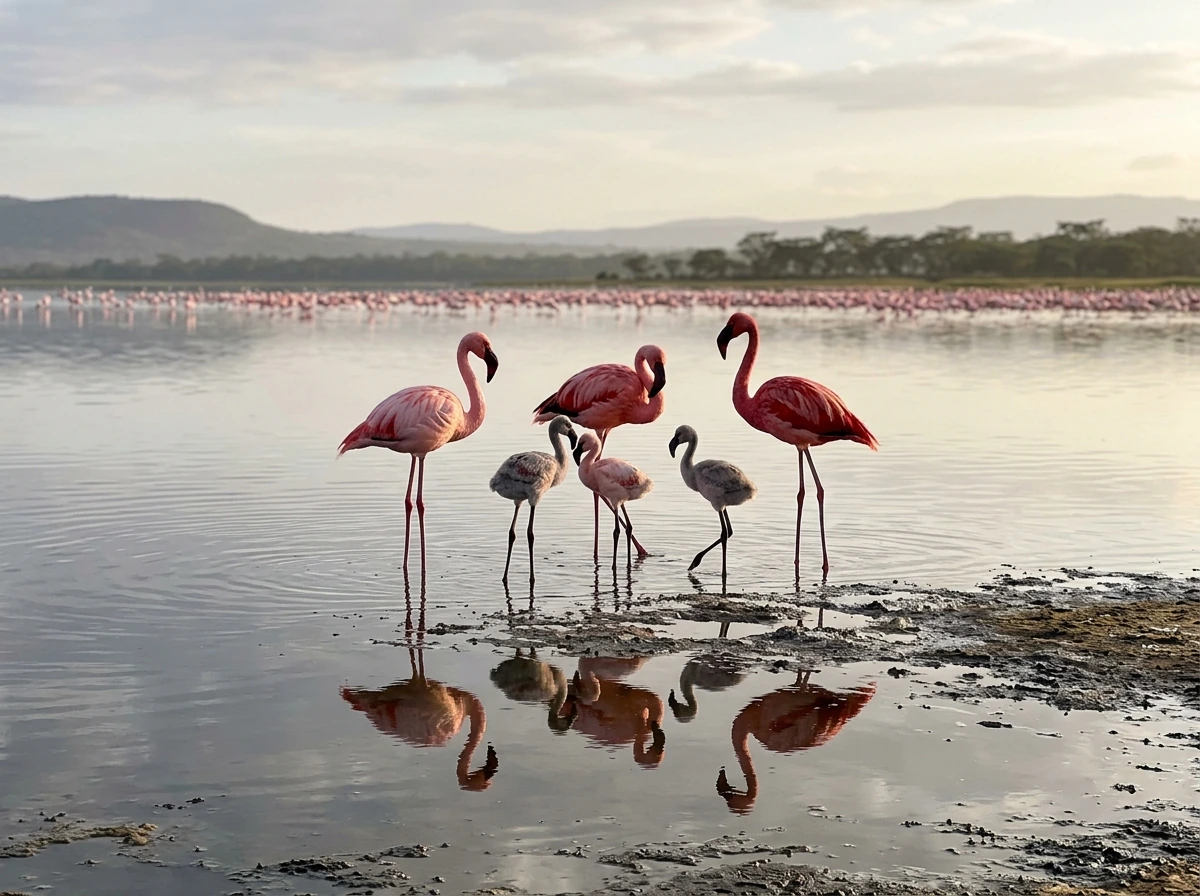
Quick answer: flamingo in Hindi
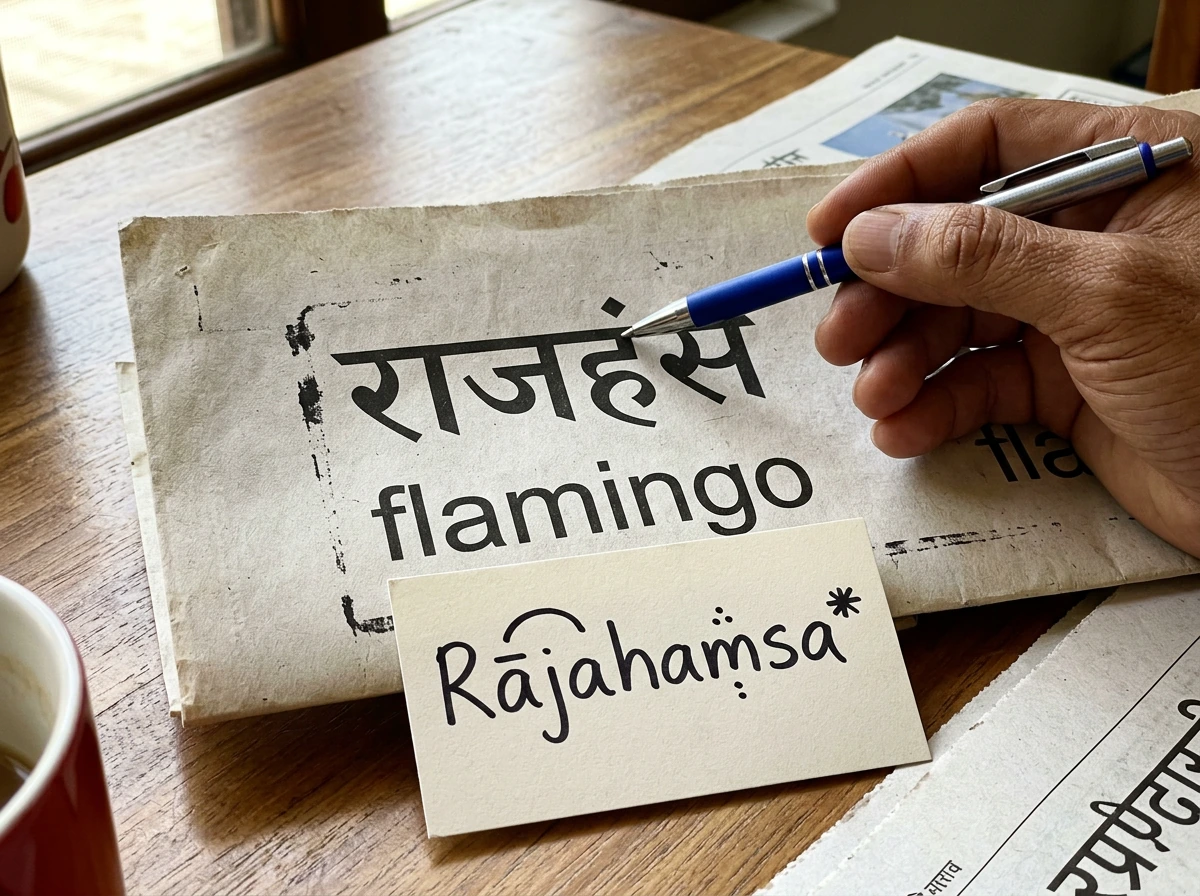
The standard Hindi word for flamingo is राजहंस (Rājahaṃsa). You will see this written in Hindi media as राजहंस, and journalists frequently pair it with the English loanword for clarity, writing 'फ्लेमिंगो (राजहंस)' or 'फ्लेमिंगो यानी राजहंस.' Both forms are correct and widely understood.
| Term | Script | Pronunciation | Register |
|---|---|---|---|
| Standard Hindi name | राजहंस | Raaj-hans (the 'aa' is long, stress on first syllable) | Formal, literary, media |
| Common loanword | फ्लेमिंगो | Fle-MING-go | Casual, spoken, social media |
| Older transliteration | फ्लमिँगो | Fluh-MING-go | Rare, mostly in older dictionaries |
In everyday conversation, most Hindi speakers in urban India will say फ्लेमिंगो because English bird names have become the default in casual speech. But in nature writing, school textbooks, poetry, and journalism, राजहंस is the preferred term. If you are writing something formal or literary, go with राजहंस. If you are captioning an Instagram post, फ्लेमिंगो works perfectly.
Common Hindi names and how people actually use them
Hindi media does not pick just one form and stick to it. A headline might read 'राजहंस का आशियाना बना डीडवाना' while the body of the same article uses 'फ्लेमिंगो' several times. NDTV Hindi uses both in the same sentence: 'फ्लेमिंगो यानी राजहंस.' Mumbai Live follows the pattern 'बारह राजहंस (फ्लेमिंगो).' This dual usage is not confusion; it is a deliberate editorial choice to reach both traditional-vocabulary readers and modern readers who think in English bird names.
Regional usage shows some variation too. In Gujarati and Marathi coverage of flamingo sightings around Navi Mumbai and the Rann of Kutch, you will often see the English word transliterated into the local script, while the more formal equivalent of राजहंस (which maps across to related classical vocabulary) appears in literary or educational contexts. If you are researching this for a Marathi or Gujarati context specifically, the same principle applies: the transliterated loanword is the casual form, and a classical compound is the formal one.
What राजहंस actually means, word by word
राजहंस is a Sanskrit compound made of two parts: राज (rāja) meaning 'king' or 'royal,' and हंस (haṃsa) meaning 'swan' or 'goose.' So the word literally translates to 'King Swan' or 'Royal Swan.' This is where the name's logic becomes clear: the flamingo, with its tall stature, vivid pink plumage, and dignified bearing, was seen as a grander, more majestic version of the common swan, hence worthy of the royal prefix.
The root हंस (haṃsa) has deep Sanskrit lineage. In classical Sanskrit, हंसः referred to the swan or a goose-like waterfowl, and it carried profound spiritual weight in Hindu philosophy, where it was associated with discernment and divine grace. Adding राज in front elevated the creature to 'king of the water birds,' a title the flamingo earned through its striking appearance. This is why baby-name resources list Hansraj (हंसराज, the reversed compound) as meaning 'King of Swans,' which is essentially the same idea.
One thing worth knowing for literary contexts: राजहंस appears in classical poetry not always strictly as flamingo but sometimes as an idealized royal bird. A UOU course text on Hindi poetry uses 'राजहंस की पत्नी' in a descriptive passage, showing that the word has a poetic life beyond strict ornithology. When you encounter राजहंस in older literature, context will tell you whether it refers to a flamingo, an idealized swan-like bird, or a symbolic royal creature.
Flamingo symbolism in Indian culture
The flamingo does not have the same dense mythological presence in India as, say, the peacock or the hamsa (swan). But it carries real symbolic weight that comes from its observable qualities: its color, its posture, and its seasonal movement. These are the three pillars of flamingo symbolism in Indian tradition.
Grace and beauty (the color-beauty symbol)
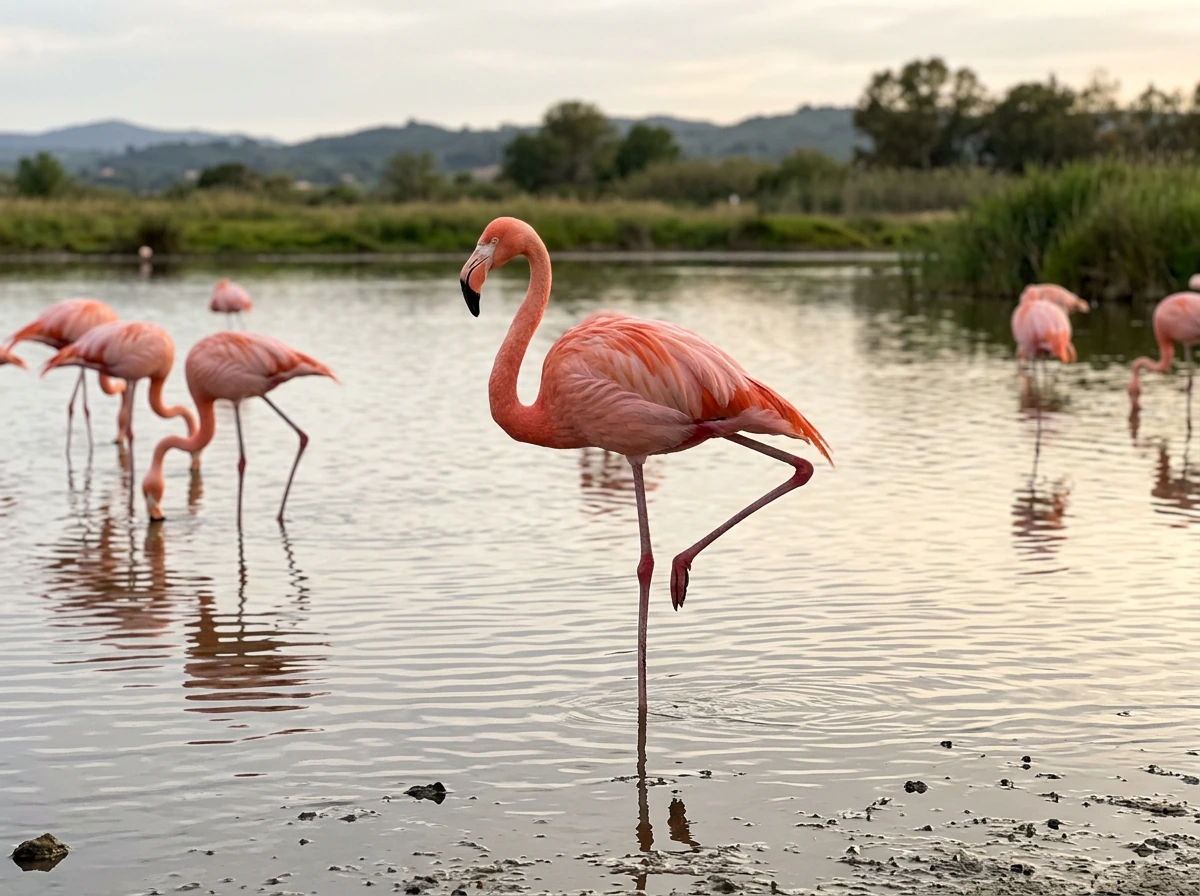
The flamingo's pink-to-red coloration is its most commented-upon feature in Indian writing. TV9 Hindi, for example, leads flamingo coverage with 'फ्लेमिंगो का रंग पिंक क्यों होता है,' treating the bird's color as its defining characteristic. In symbolic terms, that distinctive pink represents beauty that comes from what you consume and how you live: flamingos get their color from carotenoid pigments in their food. National Geographic explains that flamingo feather color is produced by carotenoids from the foods they eat carotenoid pigments. Indian symbolic readings often connect this to the idea that true grace is cultivated, not inherited, an alignment with classical notions of inner refinement expressing outward beauty.
Balance and stillness (the one-leg symbol)
The flamingo's habit of standing on one leg is perhaps its most universally recognized trait. In the Indian symbolic framework, this posture resonates with concepts like tapas (focused effort or austerity) and dhyana (meditative stillness). Standing firm on one point, unbothered and balanced, is a quality admired in yogic tradition. It is worth noting that this is an interpretive layer drawn from the bird's observable behavior: there is no ancient canonical text that declares the flamingo a symbol of balance. But the parallel is genuine and widely used in modern cultural and spiritual writing.
Journey and seasonal return (the migration symbol)

If you’re looking for the bird of paradise meaning in hindi style of explanation, note that flamingos are migratory visitors to India. bird of paradise meaning in hindi They appear in large numbers at the Rann of Kutch, Sambhar Lake in Rajasthan, and coastal wetlands near Mumbai. Similarly, if you want the goldfinch bird meaning in Hindi, you can compare how different birds get named and symbolized in Indian usage. Raftaar Hindi news frames their arrival as 'migratory flamingo birds return home,' a seasonal event that in Indian poetic tradition aligns with themes of longing, reunion, and the turn of seasons. This is the symbolism most grounded in lived, observed reality, and it is the safest to use in poetry or story contexts without overclaiming.
Royalty and dignity (the 'राज' prefix connection)
The very word राजहंस encodes a symbolic reading: this is a kingly bird. In the Indian aesthetic tradition, birds with the राज prefix are associated with leadership, dignity, and refinement. This is different from the mythological symbolism of, say, the phoenix (a topic covered separately if you are exploring legendary birds in Hindi tradition). The flamingo's royalty is natural, not supernatural: it earns the title through appearance and bearing.
One critical distinction: flamingo is not the same as swan
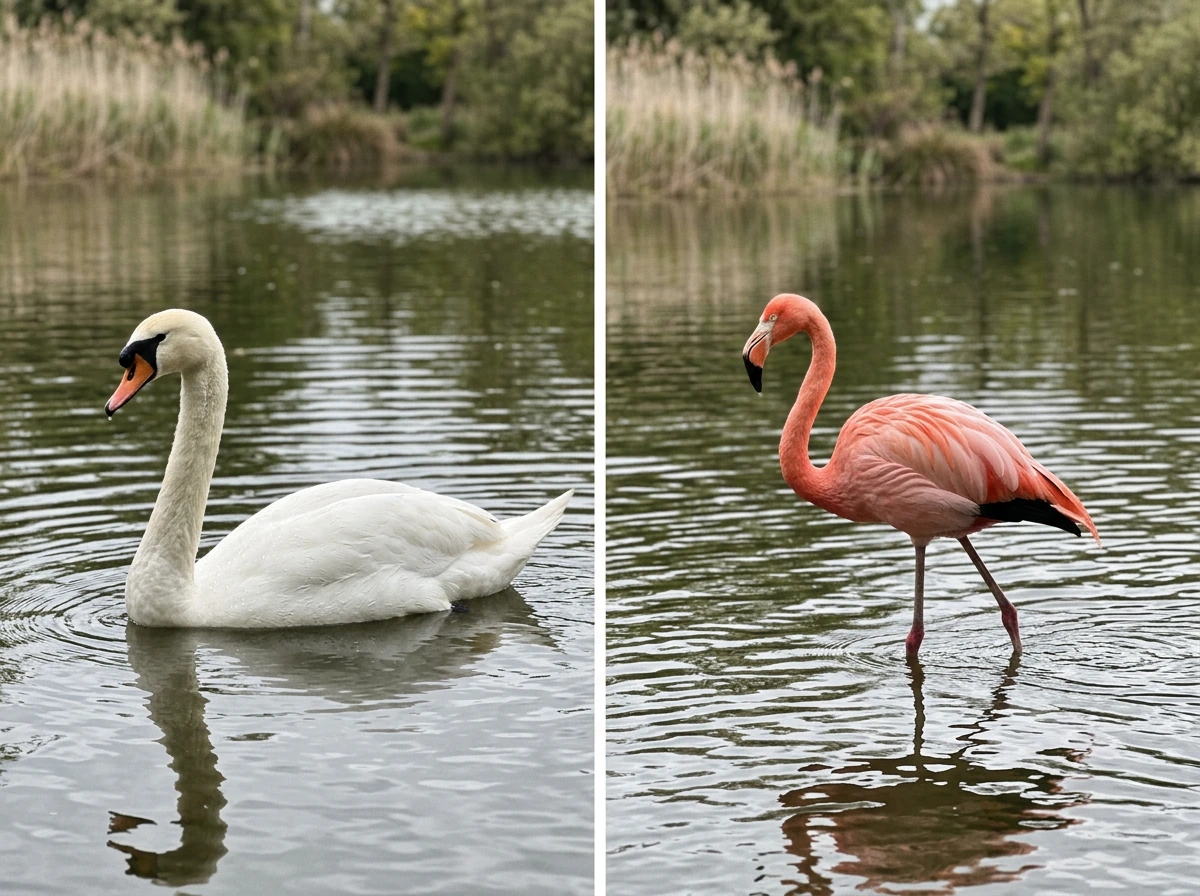
This is the most common source of confusion when readers look up राजहंस. Times Now Hindi addresses it directly: हंस means swan, राजहंस means flamingo. They are different birds, different families, and different symbols. The swan (हंस) in Indian tradition carries its own powerful symbolism, including romantic love and divine wisdom, and Jagran's writing on swans as love symbols shows how deeply that imagery runs in Hindi culture. Do not transfer that swan symbolism to the flamingo. If your poem or story uses राजहंस, the reader familiar with Hindi bird vocabulary will picture a flamingo, not a swan. If you mean a swan, use हंस.
Similarly, the personal name 'हंस राज हंस' (a well-known Sufi singer) uses हंस as a name element derived from swan symbolism, not flamingo. When राज and हंस appear as name components in people's names (like Hansraj), they typically draw from the classical swan tradition, not explicitly from flamingo symbolism. Keep that in mind if you are researching this for baby-naming purposes.
Using राजहंस in sentences and captions
Here are practical example sentences across different registers, so you can see exactly how to use the term in context.
| Register | Hindi Sentence | English Translation |
|---|---|---|
| Casual/caption | झील में फ्लेमिंगो (राजहंस) का झुंड उतर आया। | A flock of flamingos has landed on the lake. |
| Formal/journalistic | राजहंस हर साल कच्छ के रण में आते हैं। | Flamingos come to the Rann of Kutch every year. |
| Literary/poetic | राजहंस की गुलाबी परछाई जल पर बिखर गई। | The pink shadow of the flamingo scattered across the water. |
| Educational/descriptive | राजहंस एक टाँग पर खड़े होकर विश्राम करते हैं। | Flamingos rest by standing on one leg. |
| Nature writing | फ्लेमिंगो यानी राजहंस अपना भोजन कीचड़ से छानकर निकालते हैं। | Flamingos, known as raajhans, filter their food from the mud. |
Notice that the journalistic and nature-writing registers follow the pattern of using both names together, at least on first mention. After the first introduction, you can use either form consistently.
Practical use cases: poems, captions, naming, and what to avoid
For poetry and stories
राजहंस works beautifully in Hindi poetry. It has a classical sound, two clean syllables each, and the compound itself already carries imagery (royal + bird). You can build on the color (गुलाबी, pink), the posture (एक टाँग पर, on one leg), the water setting, and the seasonal arrival. These are all grounded, observable qualities, so you are not overclaiming when you use them in a poem. What to avoid: do not import swan-romance symbolism (लव बर्ड, eternal pairs, undying devotion) and apply it wholesale to the flamingo, because that symbolism belongs to हंस in the Hindi tradition, not राजहंस.
For baby names
Hansraj (हंसराज) is a recognized traditional name meaning 'King of Swans' and draws from the same root words as राजहंस but in reversed order. If you want a name inspired by the flamingo's grace and royalty, Hansraj is a natural choice, though it will be read by most as a swan reference. There is no common standalone name derived directly from राजहंस in modern naming conventions, though parents who want a distinctive nature-inspired name could use it. Just be prepared to explain the flamingo connection, because most listeners will first think of the broader royal-bird imagery.
For astrology and spiritual contexts
If someone has told you that the flamingo holds astrological significance in your chart or that a flamingo dream has a specific Indian spiritual meaning, tread carefully. The flamingo does not have a well-established astrological role in classical Vedic astrology the way planets, the peacock, or the eagle (garuda) do. Modern interpretations that assign flamingo symbolism to grace, transformation, or self-confidence are real as contemporary ideas, but they are not rooted in ancient Indian texts. Use them if they resonate, but do not present them as traditional scriptural meanings.
For school projects and language learning
If you are a student or language learner, the cleanest answer for an exam or project is: flamingo in Hindi is राजहंस. The word comes from Sanskrit roots राज (royal) and हंस (swan). It is different from हंस, which means swan. Flamingos are found in India at places like the Rann of Kutch and Sambhar Lake, and Hindi news sources like NDTV and TV9 use राजहंस regularly. blank" rel="noopener noreferrer">Sewri Flamingo Point (Mumbai) is described as a yearly gathering place for flamingos, with birds migrating from the Rann of Kutch to Sewri. That is a complete, accurate answer that will serve you well in any Hindi language or general knowledge context.
For social media captions in Hindi
Go with फ्लेमिंगो for reach and instant recognition, and add राजहंस in brackets or as a hashtag if you want to signal cultural awareness. A caption like 'फ्लेमिंगो (राजहंस) की दुनिया में आपका स्वागत है' ('Welcome to the world of the flamingo') works across audiences. If you are writing for a more literary or cultural account, lead with राजहंस and let it carry the name's inherent elegance.
If your interest in Hindi bird vocabulary extends to other striking birds, the site also covers birds like the pelican (a fellow large wading bird with its own Hindi identity), the magpie bird meaning in hindi, and mythological creatures like the phoenix bird meaning in hindi in Hindi, each with its own distinct symbolism and naming tradition that you will want to keep separate from the flamingo's story.
FAQ
Which term should I use in a school assignment, फ्लेमिंगो or राजहंस?
Most accurate for a standard Hindi answer is राजहंस. Use फ्लेमिंगो when your audience is casual or younger, for example captions, reels, and spoken conversation. If you are writing once and want to be safe for every reader, write “फ्लेमिंगो (राजहंस)” on first mention, then choose one form afterward.
Does राजहंस mean the same as हंस (swan) in Hindi?
In Hindi, हंस commonly means swan, and राजहंस is not the same word. If your text uses राजहंस, readers will usually picture a flamingo or swan-like “royal bird” based on context, but they should not map it automatically to swan symbolism like romance or divine wisdom. If you specifically mean swan, use हंस.
Is one-leg standing in flamingos considered an ancient Indian symbol?
Standing on one leg is a well-known visible trait, so it can support a poetic connection to balance or yogic stillness. But avoid presenting it as a fixed classical “symbol” with a specific scripture source. Frame it as a modern interpretive layer, for example “आकृतिगत संतुलन का भाव” rather than “प्राचीन ग्रंथों के अनुसार.”
What is the traditional astrological meaning of a flamingo in Hindi traditions?
No widely accepted Vedic or classical astrological rule ties flamingo directly to planets or zodiac roles. If someone claims chart-based flamingo “effects” or a strict spiritual meaning for dreams, treat it as a modern interpretation. A safer approach is to describe it as personal or contemporary symbolism rather than traditional astrology.
Do flamingo dreams have a fixed meaning in Hindi spirituality?
For Hindi dream interpretations, details matter, for example flamingo flying, flock size, color intensity, or where the dream takes place. Since there is no single canonical flamingo dream rule in classical texts, keep your explanation generic and avoid claiming a guaranteed outcome. You can say “समकालीन मान्यताओं के अनुसार” if you are sharing such interpretations.
How can I tell whether राजहंस in older Hindi poetry means flamingo specifically?
If you write राजहंस in older literature, it might refer to a “royal bird” concept, sometimes swan-like imagery, not always strictly a flamingo species. Always check nearby cues like color, habitat (salt lakes, wetlands), or behavior (long-legged posture, flock arrival). When those match, then flamingo is the best fit.
What is the correct pronunciation of राजहंस in Hindi?
For romanization and pronunciation, treat it as two clean parts: रा-ज (rā) and हंस (haṃsa). The nasal in हंस is important, it is closer to “haṃ” than “han.” If you say it for recitation, keep stress even across both parts and do not merge the syllables too quickly.
If I name a baby Hansraj, will people think it means flamingo?
Baby-name resources may link related forms like Hansraj to “King of Swans,” because they reuse the swan-root vocabulary. If you want flamingo-inspired meaning specifically, be prepared to explain the flamingo connection, because most listeners will interpret the name through swan symbolism (हंस) rather than flamingo symbolism (राजहंस).
Can you suggest a safe way to write flamingo symbolism in a Hindi caption?
Use a contextual template. For example, in a caption: “फ्लेमिंगो (राजहंस) का रंग पिंक क्यों होता है” or “राजहंस की एक टाँग वाली मुद्रा, नम झील के किनारे.” Then add one grounded detail, color, posture, or seasonal arrival, to prevent the symbolism from turning into unsupported claims.
Next Article
Phoenix Bird Meaning in Hindi: Name, Marathi, Tattoo Symbolism
जानिए phoenix bird का हिंदी नाम, मराठी अर्थ, और rebirth व immortality प्रतीक, साथ में phoenix tattoo meaning हिंदी में