
In Hindi, the most widely used name for the magpie today is मैगपाई (maigapāī), a direct borrowing from English. Older and more traditional Hindi sources also record मुटरी (muṭarī) and the compound मुटरी पक्षी (muṭarī pakṣī, literally 'muṭarī bird'), while the name नीलकंठ (nīlakaṇṭha) appears in some dictionaries as a gloss for magpie. Culturally, the magpie and several magpie-like birds carry a rich web of omen traditions, folk beliefs, and literary associations across northern India, though the picture is complicated by the fact that 'magpie' in Indian contexts can refer to several quite different birds depending on region and era.
Magpie Bird Meaning in Hindi: Names, Symbolism & Local ID Guide

Rajesh Sharma
4 Aug 2026
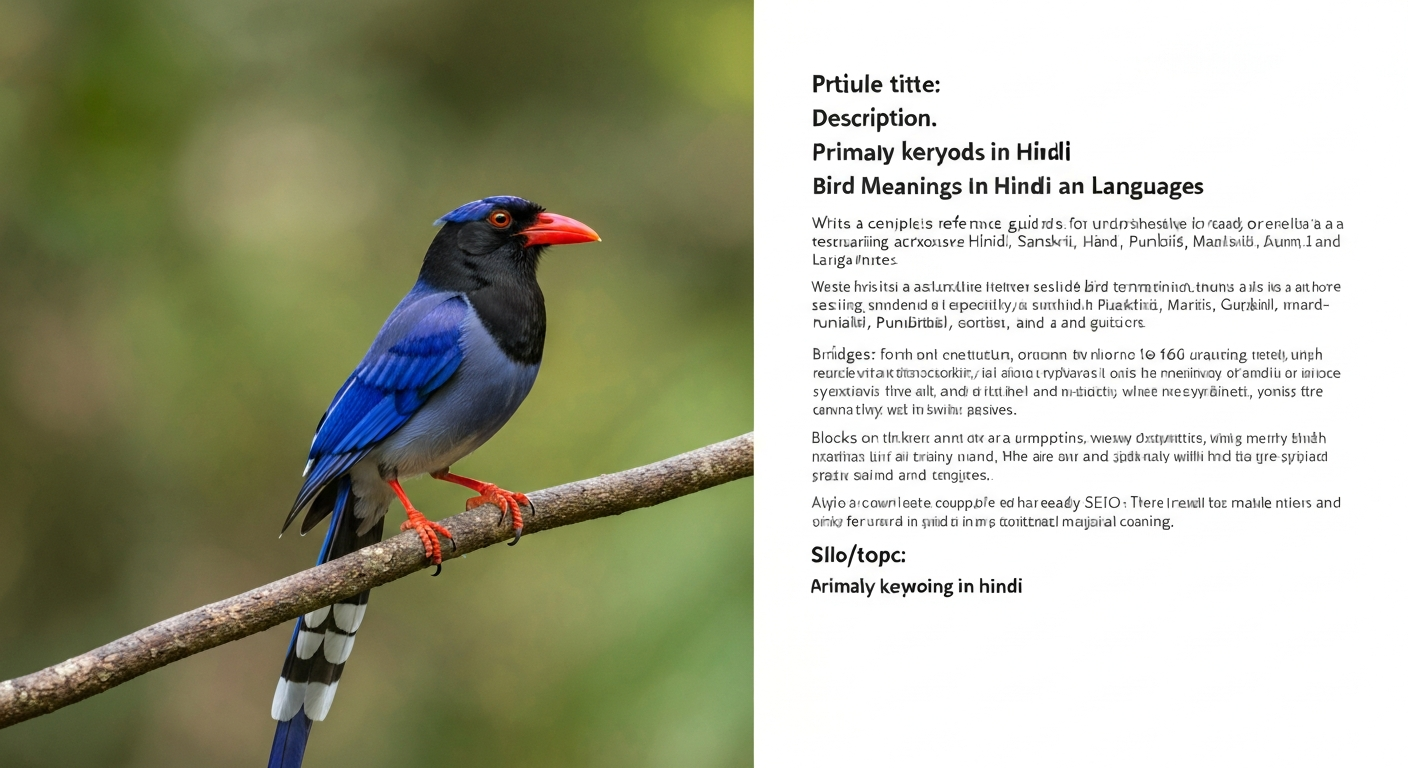
What this article covers
This article is for language learners who want the Hindi name with correct script and pronunciation, cultural enthusiasts curious about magpie symbolism in Indian tradition, birdwatchers who want to know which magpie-like species they might actually encounter in India, and anyone puzzled by the overlap between names like नीलकंठ and मैगपाई in dictionaries and field guides. I have pulled together dictionary evidence, Sanskrit lexica, folklore ethnographies, and current ornithological checklists so you get a clear, honest picture, including where things are uncertain or vary by region.
Hindi names for magpie: script, romanization, and pronunciation
The dominant contemporary Hindi term is मैगपाई, a phonetic adaptation of the English word 'magpie'. Bilingual dictionaries and learner lexicons (HinKhoj, ShabdKhoj) record two Devanagari spellings in active circulation: मैगपाई and मेगपाई. The first reflects the diphthong of the English vowel more closely; the second is a simplified variant. In romanized Hindi as used in learner materials, you will see these written as maigapāī or megapāī. A simple English-friendly pronunciation is roughly MY-guh-pie or MAY-guh-pie, close enough that any Hindi speaker familiar with the English bird will understand immediately.
Alongside the loanword, Collins's Hindi-English dictionary records मुटरी पक्षी as its Hindi gloss for 'magpie', and HinKhoj lists मुटरी (muṭarī) as a standalone synonym. The form नीलकंठ (nīlakaṇṭha) also appears in some Hindi dictionary entries as a sense associated with magpie. It is worth being aware that these traditional names are not always used consistently across dictionaries or regions, and in everyday spoken Hindi the English loanword मैगपाई has become the default for most urban speakers.
| Devanagari | Romanization (IAST / learner) | Approximate pronunciation | Notes |
|---|---|---|---|
| मैगपाई | maigapāī | MY-guh-pie | Primary loanword from English; most common in contemporary Hindi |
| मेगपाई | megapāī | MAY-guh-pie | Simplified variant spelling; also found in learner dictionaries |
| मुटरी | muṭarī | moo-TAR-ee | Traditional Hindi gloss; recorded in Collins and HinKhoj |
| मुटरी पक्षी | muṭarī pakṣī | moo-TAR-ee PUCK-shee | Compound form meaning 'muṭarī bird'; Collins Hindi gloss for magpie |
| नीलकंठ | nīlakaṇṭha | nee-luh-KUNTH | Literally 'blue-throated'; appears in some Hindi dict. entries as a magpie gloss |
Literal meaning and etymology of the Hindi names
मैगपाई / मेगपाई carry no independent meaning in Hindi; they are phonological imports from English. The English word 'magpie' itself is a compound of 'Mag' (a pet form of the name Margaret, historically applied to the bird for its chattering) and 'pie' (from Old French 'pie', derived from Latin 'pica', the magpie). So the Hindi loanword is effectively a name without a literal Hindi sense.
मुटरी is more interesting, though its etymology is uncertain. It appears in older Hindi lexica and bilingual glossaries, but I have not found a confident Sanskrit or Prakrit root traced in published dictionaries. It may be a vernacular regional form of uncertain origin. If you encounter it in print, treat it as an established Hindi dictionary word rather than a transparent descriptive term.
नीलकंठ (nīlakaṇṭha) is fully transparent: नील (nīla) means 'blue' or 'dark blue/indigo' in Sanskrit and Hindi, and कंठ (kaṇṭha) means 'throat'. The compound means 'blue-throated'. This is also one of the epithets of Shiva (who held the cosmic poison in his throat, turning it blue), and it is the standard Hindi-Sanskrit name for the Indian Roller (Coracias benghalensis), a brilliantly blue bird sacred in many traditions. Its use as a Hindi gloss for 'magpie' in some dictionaries likely reflects the visual association of blue plumage, particularly relevant to the Blue Magpies (Urocissa spp.) found in the Himalayas, but this mapping is not universally accepted and creates real confusion in texts. When you see नीलकंठ in a Hindi ornithological context, the Indian Roller is the primary referent unless explicitly stated otherwise.
Magpie in Sanskrit, Marathi, Punjabi, and Gujarati
Sanskrit classical lexica, especially Monier-Williams's Sanskrit-English dictionary, record several terms associated with magpie-like birds. The forms चाषः (cāṣaḥ), किकिः (kikiḥ), and किकीदिवि (kikīdivi) appear under the English gloss 'magpie' in Sanskrit dictionary entries. Of these, चाषः is well attested and is classically used for blue corvid-like birds; Monier-Williams notes it can refer to the blue jay or roller as well, so the taxonomic mapping is loose. किकिः and किकीदिवि are rarer and their precise referents in ancient ornithology are uncertain. Sanskrit also has the broader term काक (kāka) for crow-type birds and शारिका (śārikā) for certain talking/mimicking passerines, neither maps cleanly to magpie but both appear in the same semantic neighborhood in classical texts.
In Marathi, the English loanword 'magpie' is often used directly in ornithological writing, and the Oriental Magpie-Robin (a very common bird) is known as दयाळ (dayāḷa) or दयाळ पक्षी, with regional variants. For the Himalayan blue magpies, Marathi birding guides tend to use descriptive compounds or borrow the English name. Attestation of a standalone traditional Marathi word specifically for 'true magpie' (Pica-type) is limited in the sources I have consulted.
In Punjabi, the magpie-robin is widely known as ਦਹੀਅਲ (dahial) or a close variant, a cognate of the Hindi/Urdu dhayal, and the Eurasian/Oriental Magpie is sometimes referred to using the loanword or descriptive phrases. Traditional Punjabi augury traditions do reference a black-and-white bird associated with omens, which regional ethnographers have linked to magpie-type birds, but specific attested Punjabi vocabulary for true magpies beyond folk descriptions is not well documented in major dictionaries.
Gujarati ornithological literature similarly tends to use loanwords or descriptive forms for the magpie. The magpie-robin is called ધૈયલ (dhaiyal) in Gujarati, a form cognate with the Hindi dhayal. For the Himalayan blue magpies, I have not found a widely attested standalone traditional Gujarati term in the sources available to me, and that uncertainty is worth flagging clearly rather than papering over.
| Language | Term / Script | Romanization | Notes on usage and attestation |
|---|---|---|---|
| Hindi (loanword) | मैगपाई / मेगपाई | maigapāī / megapāī | Modern default; borrowed from English |
| Hindi (traditional) | मुटरी / मुटरी पक्षी | muṭarī / muṭarī pakṣī | Recorded in Collins, HinKhoj; etymology uncertain |
| Hindi / Sanskrit | नीलकंठ | nīlakaṇṭha | Primarily = Indian Roller; applied to blue-plumaged magpies in some sources |
| Sanskrit (classical) | चाषः | cāṣaḥ | Monier-Williams: blue corvid/roller/magpie; taxonomic mapping loose |
| Sanskrit (classical) | किकिः / किकीदिवि | kikiḥ / kikīdivi | Rare; listed under 'magpie' in Sanskrit lexica; referents uncertain |
| Marathi | मॅगपाई / दयाळ (for magpie-robin) | maigapāī / dayāḷa | Loanword for true magpie; dayāḷa for Oriental Magpie-Robin specifically |
| Punjabi | ਦਹੀਅਲ (for magpie-robin) | dahial | Cognate of Hindi dhayal; traditional Punjabi term for true magpie not well attested |
| Gujarati | ધૈયલ (for magpie-robin) | dhaiyal | Cognate form; standalone term for true/blue magpie not firmly attested in sources consulted |
Cultural and symbolic meanings in India
The magpie's cultural significance in India is real but layered, and it is important to separate what is well documented from what is often repeated without clear sourcing. The most robust evidence for magpie-associated beliefs in northern India comes from nineteenth- and early twentieth-century ethnographic compilations of folk religion and augury, notably W. Crooke's 'The Popular Religion and Folk-Lore of Northern India', a public-domain ethnographic source that documents bird-omen traditions across Hindi-speaking regions. In that tradition, corvid-like black-and-white birds (including what observers recorded as magpies) were associated with messages from departed ancestors, predictions of visitors, and general augury, practices consistent with pan-Asian magpie symbolism.
In broader South Asian folk belief (folklore source), a magpie or magpie-like bird calling or appearing near a house is commonly interpreted as a sign that a guest is arriving or that news is on its way. This belief is particularly noted in northern Indian and Himalayan folk traditions and has parallels in Chinese and Korean folklore involving the same Pica genus. The number of calls or birds seen is sometimes interpreted as predicting good or bad news, one bird for bad luck, two for good, though regional variants exist and this counting tradition is more firmly documented in East Asian sources than in Indian ones.
The name नीलकंठ creates an important cultural overlap. As an epithet of Shiva and as the popular name for the Indian Roller, the 'blue-throated bird' carries deep religious weight in Hindu tradition, the roller is released or honored during Dussehra in several regions as a sacred bird. When the same name is applied to blue magpies (Urocissa) in folk or dictionary contexts, it inherits some of this sacred coloring. That said, it would be an overreach to claim that Himalayan blue magpies are formally venerated in the same way; the association is nominal and etymological rather than consistently ritualized, and I flag this as an inference from name overlap rather than a directly attested religious practice.
The Oriental Magpie-Robin (called dhayal or dayal in Hindi-area vernacular) has its own set of cultural associations, distinct from those of true magpies. Its beautiful song makes it a symbol of musical talent and of the beloved in classical Urdu-Hindi poetry. This is a well-attested literary tradition, but it belongs properly to the magpie-robin's own entry rather than to the magpie. The name and plumage overlap between the two birds means cultural notes sometimes get conflated in popular writing, so it is worth keeping them separate.
Proverbs, phrases, and metaphorical uses in Hindi
Hindi is rich in bird-based idioms, but strongly attested proverbs specifically naming मुटरी or मैगपाई as the subject are relatively rare in the major Hindi proverb collections I have consulted. The magpie's most prominent metaphorical role in Hindi and broader Indian usage draws on two characteristics: its chattering voice and its reputation as a thief or hoarder of shiny objects. A person who talks excessively or gossips can be compared to a magpie-like bird, the same figure appears across several Indian languages, usually referencing काक (crow) or an unspecified chattering bird rather than the magpie by its specific Hindi name. The loanword मैगपाई is too recent a borrowing to have accumulated a body of proverbs in the classical mold.
In Urdu-influenced Hindi usage, the word 'magpie' sometimes appears in translated or adapted proverbs echoing the Persian and Arabic traditions that passed through the Mughal literary world, for example, the idea of a bird that collects bright things without understanding their value, used as a metaphor for superficial learning or accumulation of knowledge without wisdom. However, these uses are more literary and translational than rooted in organic Hindi folk speech, and I note that attestation is thin. If you encounter such a phrase in a literary Hindi source, it is likely a calque from another tradition rather than a native Hindi proverb.
Which magpies and magpie-like birds actually occur in or near India
This is where ornithology gets interesting for anyone working with Indian bird names. 'Magpie' in an Indian context can refer to several quite different birds, and knowing which one is being discussed matters enormously for both field identification and name interpretation.
Yellow-billed Blue Magpie (Urocissa flavirostris)
This is a striking Himalayan corvid with deep blue plumage, a long graduated tail, and a bright yellow bill. It occurs in montane forests and wooded Himalayan valleys, with its Indian range running through Uttarakhand, Himachal Pradesh, Sikkim, and the northeast hill states. It is a resident of higher elevations, generally found in forest and forest-edge habitat, and is the bird most likely to come to mind as a 'blue magpie' in a northern Indian birding context. State of India’s Birds factsheet records the Yellow‑billed Blue Magpie (Urocissa flavirostris) as a Himalayan species occurring in montane forests and wooded valleys in Uttarakhand, Himachal Pradesh, Sikkim, and the north‑east hill states State of India’s Birds factsheet records the Yellow‑billed Blue Magpie (Urocissa flavirostris) as a Himalayan species occurring in montane forests and wooded valleys in Uttarakhand, Himachal Pradesh, Sikkim, and the north‑east hill states.. State of India's Birds and BirdLife International treat it as a range-restricted Himalayan species; it does not occur in the plains or peninsular India.
Red-billed Blue Magpie (Urocissa erythroryncha)
Very similar in build and behavior to the Yellow-billed, but with a bright red bill (and red eye-ring) instead of yellow. Its range covers the Himalaya from northwest India eastward through Nepal, Bhutan, and the northeast states. The India Biodiversity Portal confirms it as a species of montane and foothill forest. Like its yellow-billed cousin, it is gregarious, noisy, and strikingly beautiful, the kind of bird that makes an immediate impression in the field. Neither blue magpie is reliably found outside Himalayan and foothill zones.
Rufous Treepie (Dendrocitta vagabunda)
The treepie is arguably the bird that most people across the Hindi heartland think of when they picture a 'magpie-like' bird in everyday life. The Rufous Treepie is common across India's lowlands, plains, towns, and gardens, from the Himalayan foothills down to peninsular India. It is a corvid with a long tail, rufous-brown body, black head, and pale wing patches, noisy and conspicuous. Avibase and Indian checklists list it as one of the most widespread corvids in India. It is not a true magpie (genus Pica) but shares family membership (Corvidae) and the long-tail, bold pattern that gives magpies their character. Regional Hindi-area vernacular names for the treepie vary, and it is important not to conflate it with either the blue magpies or the true Pica magpies in cultural or linguistic discussions.
Oriental Magpie-Robin (Copsychus saularis)
Despite the name, the Oriental Magpie-Robin is not a corvid at all but an Old World flycatcher (family Muscicapidae). It is called 'magpie-robin' because its black-and-white plumage superficially resembles a magpie's, and because it has the melodious voice of a robin. It is one of the most common birds across the Indian subcontinent, found in gardens, forests, and human settlements from Kashmir to Kerala. Its Hindi-area vernacular name is दहियल or दयाल (dhayal/dayal), and it is the bird most frequently labeled 'magpie' by non-specialist speakers in many parts of India. The Oriental Magpie-Robin (Copsychus saularis) is widespread across the Indian subcontinent and is commonly called dhayal or dayal in local Hindi vernacular The Oriental Magpie-Robin (Copsychus saularis) is widespread across the Indian subcontinent and is commonly called dhayal or dayal in local Hindi vernacular.. Keeping this species conceptually separate from true magpies and blue magpies is important when interpreting Hindi names and cultural references.
Eurasian / Oriental Magpie complex (Pica spp.)
The 'classic' black-and-white magpie of European tradition belongs to the genus Pica. Modern taxonomy (following Song et al. 2018 in the Journal of Avian Biology and the IOC World Bird List) splits the old 'Eurasian Magpie' (Pica pica) into multiple species. Some Pica-group taxa reach the extreme northwest of the Indian subcontinent and adjacent Himalayan regions, but the genus is largely absent from most of peninsular and central India. If you are birdwatching in Ladakh, northern Kashmir, or the extreme northwest, you may encounter a Pica magpie; if you are in the plains or south, you will not. This means the image most English speakers have of 'the magpie', a bold black-and-white bird with an iridescent tail, is not the default bird in most of India.
Field identification: magpies vs. crows, treepies, and other black-and-white birds
If you are trying to identify a black-and-white or blue corvid in India, a few quick features will help you separate the main possibilities. True magpies (Pica) have a very long, iridescent green-black tail, bold black-and-white body plumage, and a relatively compact, rounded body. Blue magpies (Urocissa) are larger, brighter blue, with an extremely long graduated tail tipped with white, and a red or yellow bill, unmistakable once seen. The Rufous Treepie is distinctly rufous-brown on the body (not black-and-white), with a long tail and black hood; it looks nothing like a Pica magpie to a careful observer. The Oriental Magpie-Robin is much smaller, roughly starling-sized, with a short cocked tail, and the male's song is a dead giveaway: rich, melodious fluting quite unlike the harsh calls of corvids.
| Species | Size | Key plumage | Tail | Call | Typical habitat in India |
|---|---|---|---|---|---|
| Eurasian/Oriental Magpie (Pica spp.) | 40–46 cm | Bold black and white; iridescent green-black wings | Very long, iridescent, graduated | Harsh chattering | Extreme NW India / Himalayan fringe only |
| Yellow-billed Blue Magpie (Urocissa flavirostris) | ~66 cm incl. tail | Deep blue; yellow bill and eye-ring | Very long, white-tipped | Loud, varied calls | Himalayan montane forest (N India) |
| Red-billed Blue Magpie (Urocissa erythroryncha) | ~68 cm incl. tail | Deep blue; red bill and eye-ring | Very long, white-tipped | Loud, varied calls | Himalayan and foothill forest (N/NE India) |
| Rufous Treepie (Dendrocitta vagabunda) | ~46–50 cm | Rufous-brown body; black head; pale wings | Long, graduated, black-tipped | Loud, metallic, varied repertoire | Widespread across India; plains, towns, gardens |
| Oriental Magpie-Robin (Copsychus saularis) | ~19 cm | Male: black above, white below; female: grey-black above | Short, often cocked upward | Rich, melodious song | Widespread across subcontinent; gardens, forest edge |
How to tell a treepie from a true magpie
The single most useful pointer: if the bird has a rufous or brownish body with a black head, it is a Rufous Treepie, not a magpie. True Pica magpies are crisply black-and-white with no brown in the plumage. Blue magpies (Urocissa) are unmistakably blue, no confusion there. For separating magpies from House Crows or Jungle Crows, look at the tail: crows have short, rounded tails and uniform dark plumage without the dramatic white belly or iridescent wing panels of a true magpie. Crows also walk and strut on the ground more readily; magpies tend to hop with their long tail held clear. If you are in a garden or city park across most of India, the boldly patterned black-and-white bird with a long cocked tail and a beautiful song is almost certainly the Oriental Magpie-Robin, not a magpie at all.
Quick-reference guide: magpie names across Indian languages
| Language | Script | Transliteration | Symbolic / cultural note |
|---|---|---|---|
| Hindi (modern) | मैगपाई | maigapāī | English loanword; no independent Hindi symbolic meaning |
| Hindi (traditional) | मुटरी | muṭarī | Recorded dictionary term; etymology uncertain |
| Hindi / Sanskrit | नीलकंठ | nīlakaṇṭha | 'Blue-throated'; sacred epithet of Shiva; primarily = Indian Roller; also used for blue magpies |
| Sanskrit | चाषः | cāṣaḥ | Classical term for blue corvid-type birds; augury associations in classical literature |
| Marathi | मॅगपाई / दयाळ* | maigapāī / dayāḷa* | *dayāḷa is for magpie-robin specifically; no firmly attested standalone Marathi term for true magpie |
| Punjabi | ਦਹੀਅਲ* | dahial* | *For magpie-robin; augury traditions exist but Punjabi-specific vocabulary for true magpie is not well attested |
| Gujarati | ધૈયલ* | dhaiyal* | *For magpie-robin; standalone Gujarati term for true or blue magpie not firmly attested in consulted sources |
Suggested images and captions for this article
Good visual material for this topic falls into three categories: identification shots, habitat context, and cultural reference imagery. Here are the visuals that would serve readers best.
- Red-billed Blue Magpie (Urocissa erythroryncha) perched in Himalayan forest — caption: 'Red-billed Blue Magpie, one of the Himalayan corvids referred to as magpie in Indian birdlists; Hindi: नीलकंठ in some sources.'
- Yellow-billed Blue Magpie (Urocissa flavirostris) in montane woodland — caption: 'Yellow-billed Blue Magpie (Urocissa flavirostris) in its Himalayan foothill habitat; note yellow bill and long white-tipped tail.'
- Rufous Treepie (Dendrocitta vagabunda) in a garden or open woodland — caption: 'Rufous Treepie, the most familiar magpie-like corvid across India's lowlands; not a true magpie but a corvid cousin.'
- Oriental Magpie-Robin (Copsychus saularis) male singing — caption: 'Oriental Magpie-Robin (दहियल / दयाल, dhayal): a common source of name confusion with true magpies; entirely unrelated to corvids.'
- Eurasian/Oriental Magpie (Pica sp.) showing bold black-and-white plumage — caption: 'A Pica magpie: the 'classic' magpie image in Western tradition, but largely absent from most of India except the extreme northwest.'
- A Devanagari calligraphy or dictionary entry panel showing मैगपाई, मुटरी, and नीलकंठ side by side — caption: 'Key Hindi names for the magpie: the modern English loanword, the traditional dictionary term, and the classical Sanskrit name.'
- A folk-art or traditional painting depicting bird augury or crow/magpie omens in a North Indian domestic setting — caption: 'Bird omens are woven into North Indian folk tradition; magpie-like birds carry messages from ancestors in regional folklore (source: ethnographic tradition).'
How uncertainty is handled in this article
Throughout this article I have flagged claims by source type: statements marked as 'folklore' or 'ethnographic source' draw on tradition rather than ornithological fact; classical Sanskrit attestations come from Monier-Williams and similar lexica; field-guide statements on distribution and appearance draw on Avibase, BirdLife International, the India Biodiversity Portal, and the State of India's Birds factsheets. Where a name or symbolic association is recorded in dictionaries but the etymology is unclear, I have said so explicitly rather than inventing a derivation. Where a cultural claim is common in popular writing but not well documented in primary sources, I have noted the limitation.
Other birds worth exploring on this site
If the interplay between Hindi names, Sanskrit roots, and symbolic meanings interests you, there is rich related material in this same language and symbolism series. See the related article 'plover bird meaning in Hindi' for the Hindi name and cultural notes on plovers. See also an article on pheasant bird meaning in Hindi for the corresponding Hindi name, script, and cultural associations. The phoenix (in its Sanskrit and Hindi contexts) offers a fascinating parallel: like the magpie, it sits at the intersection of foreign name, ancient Indian equivalent terms, and layered mythological meaning. The flamingo similarly presents a case where a striking, visually unforgettable bird has acquired both a modern Hindi loanword and older vernacular names in regional languages. For birds with particularly deep South Asian symbolic histories, the goldfinch, partridge, pelican, pheasant, and plover all have their own name-meaning pages in this series, each revealing something different about how Indian languages absorb, translate, and symbolize bird life. See the goldfinch (meaning in Hindi) for its Hindi name, script, and symbolic associations within South Asian traditions. The bird of paradise makes another interesting comparison case, since like the magpie it is known in Hindi primarily through a borrowed English name, yet carries associations from a very different cultural tradition. For a related entry exploring how English bird names are adopted into Hindi, see the article on pelican bird meaning in Hindi. See bird of paradise meaning in Hindi for its Hindi name, pronunciation, and cultural notes on how the English name is adopted and its differing symbolic associations.
FAQ
What is the common Hindi name for 'magpie' and how do you pronounce it?
Common modern Hindi renderings include the English loan मैगपाई / मेगपाई (Roman: maigapāī / megapāī; simple pronunciation: 'maig-gah-PAI' or 'meg-gah-PAI') and traditional Hindi glosses such as मुटरी (muṭarī; 'MUT‑ree') and नीलकण्ठ (nīlakaṇṭha; 'nee‑la‑kunth'). Sources: Hindi learner lexica and bilingual dictionaries (commercial learner dictionaries; Collins). Note: IAST romanization (nīlakaṇṭha) follows standard transliteration tables (IAST).
What is the literal meaning and etymology of the Hindi names?
- मैगपाई / मेगपाई: loanword from English 'magpie' used in modern Hindi (dictionary attestation). - मुटरी (muṭarī): listed as a Hindi gloss in dictionaries; likely a colloquial/vernacular label (dictionary source). - नीलकण्ठ (nīlakaṇṭha): Sanskrit/Hindi compound nīla 'blue' + kaṇṭha 'throat' meaning 'blue‑throated'; historically applied to blue‑throated or blue‑necked birds and used in Hindi for certain magpie‑like species (Monier‑Williams / Sanskrit lexica). Sources: commercial Hindi dictionaries; Sanskrit lexica (Monier‑Williams entries).
Which magpie or magpie‑like species occur in or near India?
Principal magpie or magpie‑like taxa reported in Indian checklists and field guides: - Rufous Treepie (Dendrocitta vagabunda): common across plains, towns and gardens in much of India. - Oriental Magpie‑robin (Copsychus saularis): the 'magpie‑robin', widespread in gardens and woodlands. - Yellow‑billed Blue‑magpie (Urocissa flavirostris): Himalayan/montane species in northern India. - Red‑billed Blue‑magpie (Urocissa erythroryncha): Himalayan/NE hill species. - Eurasian magpie (Pica spp.): Pica‑group taxa reach extreme NW India/adjacent Himalaya depending on taxonomy. Note: English name 'magpie' maps to different genera (Pica, Urocissa, Dendrocitta and even the unrelated magpie‑robin Copsychus) — see Avibase, India Biodiversity Portal and field guides. Sources: Avibase, India Biodiversity Portal, State of India’s Birds, IOC World Bird List (taxonomic notes).
How can I distinguish a magpie from crows and other black‑and‑white birds in India?
Key ID tips (concise): - True magpies (Pica, Urocissa) and treepies (Dendrocitta) often have long tails, contrasting colors (blue, rufous, white patches) and glossy plumage; crows (Corvus spp.) are generally uniformly black with shorter tails and stouter bills. - Oriental magpie‑robin is smaller, with a black‑and‑white pattern and a upright tail‑wagging habit; treepies have rufous or grey body parts and long tails. - Pay attention to bill color (yellow/red in some blue‑magpies), tail length, flight (undulating vs direct), and habitat (montane vs urban). Use regional field guides for local comparisons (e.g., Rufous Treepie vs House Crow). Sources: regional field guides and species factsheets (State of India’s Birds, India Biodiversity Portal).
What are the cultural and symbolic meanings of magpies in Indian sources?
Summary of attested meanings and caveats: - Folklore and popular belief: magpie/magpie‑like birds appear in omen lore and folk superstition in parts of northern India; specific meanings vary regionally and by tradition (ethnographic sources). - Literary/religious: older Sanskrit names like nīlakaṇṭha are lexical and descriptive (’blue‑throated’) rather than a fixed symbolic role; some folk stories mention magpie‑like birds in tales and proverbs (public‑domain folklore collections). - Uncertainty/variation: there is no single pan‑Indian symbolic meaning for 'magpie' comparable to some Western omens; attributions (good luck/bad omen, talkative/clever) differ by region and may conflate multiple species (treepies, magpie‑robins, true magpies). Claims are best read as regionally specific (folklore, ethnography) rather than universal. Sources: ethnographic compilations of northern Indian folklore, Sanskrit/classical literature references, and regional folklore studies (public‑domain and academic sources).
Are there specific Hindi proverbs or metaphorical uses involving magpies?
Attested forms are limited and regionally variable. Some Hindi/vernacular proverbs use bird‑imagery (talkative or quarrelsome birds) where local names for treepies or magpie‑robins may appear in folk speech; however, well‑documented, commonly cited pan‑Hindi proverbs specifically naming 'magpie' are not widespread. When such phrases occur, they are best sourced to local proverb collections or oral folklore studies. (Flag: claims should be cited when used.) Source types: proverb compendia and regional folklore records (few direct mainstream attestations).
Next Articles
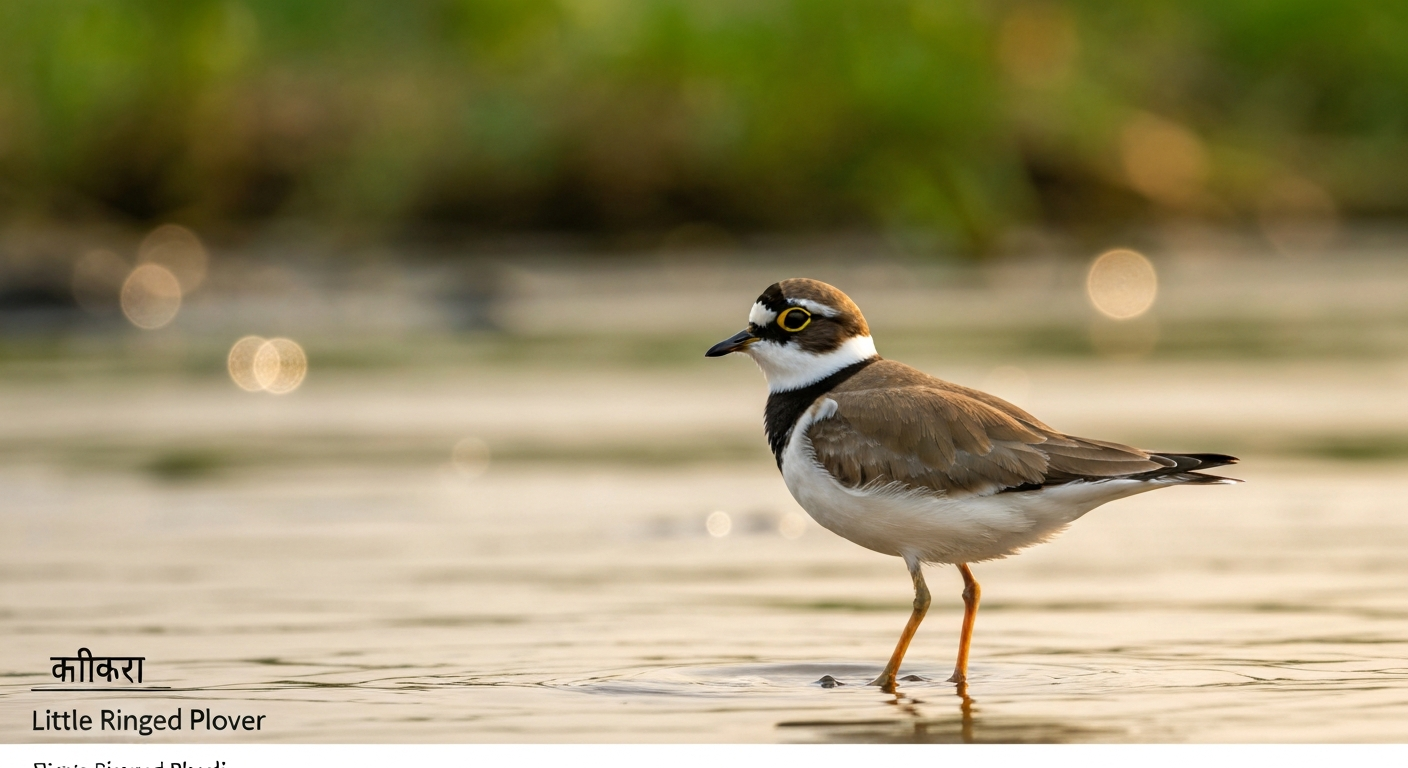
Plover Bird Meaning in Hindi: Names, Symbolism & ID
Plover bird meaning in Hindi: names, pronunciation, species, symbolism, habitats, and where to spot them in India.
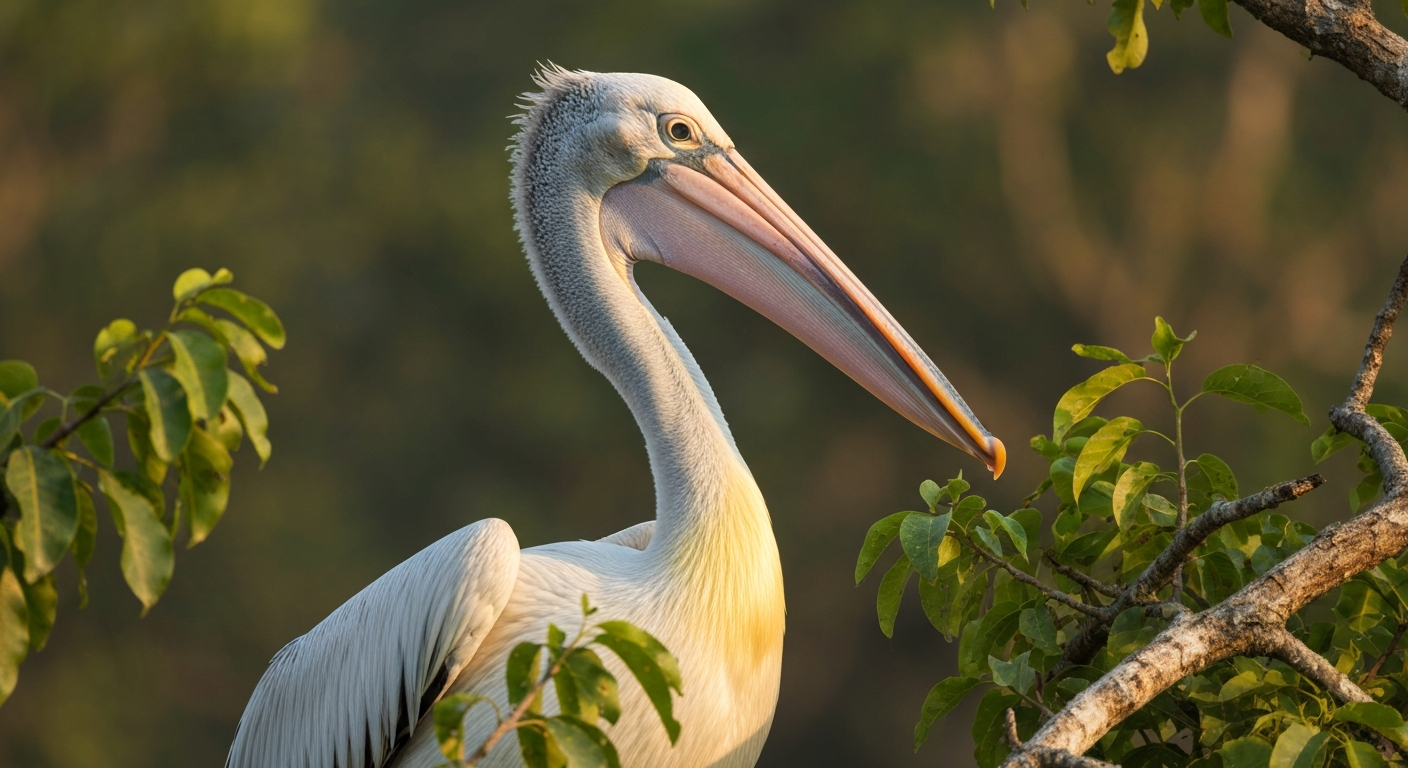
Pelican Bird Meaning in Hindi: Name, Significance & Facts
पेलिकन का हिंदी नाम, वैज्ञानिक जानकारी, भारतीय प्रजातियाँ व सांस्कृतिक‑मिथक संक्षेप में।
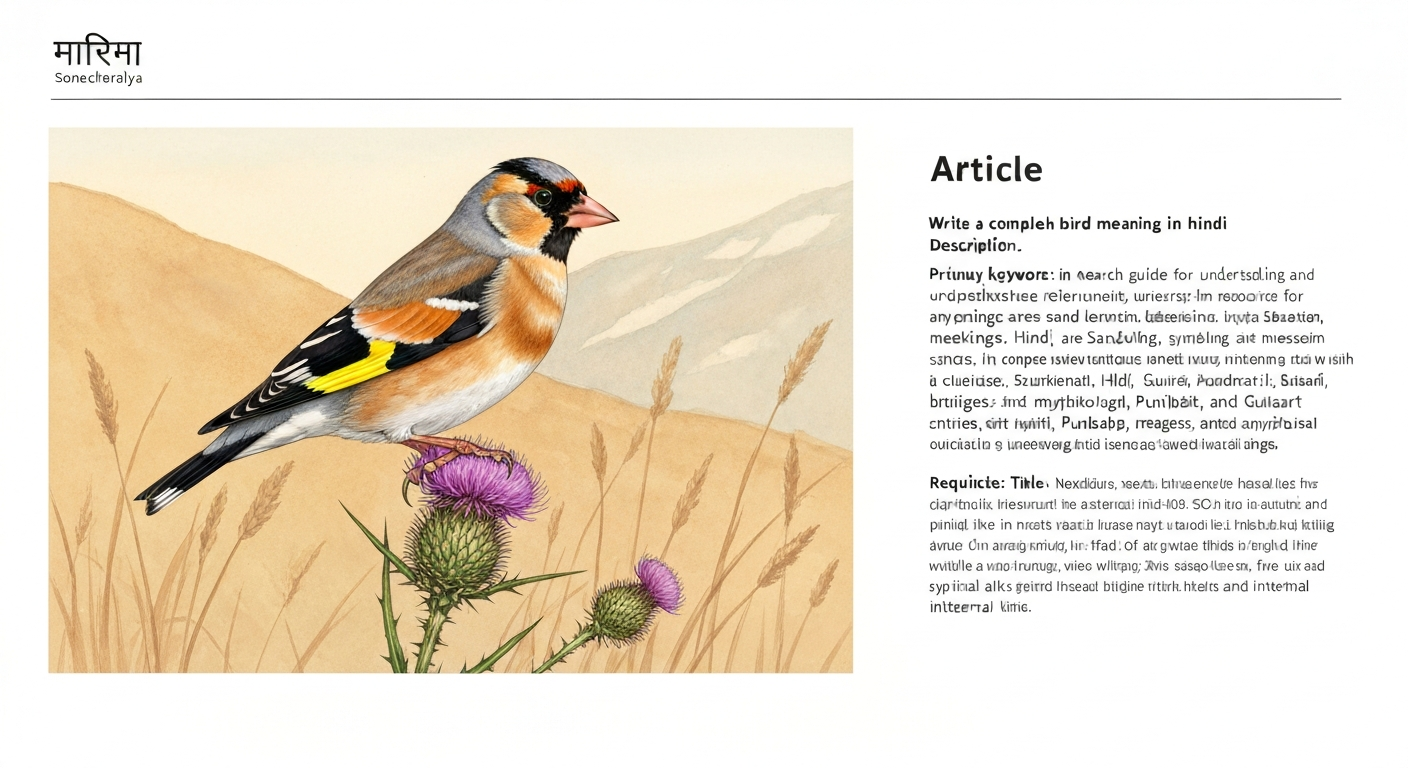
Goldfinch Bird Meaning in Hindi: Names, Symbolism & ID
गोल्डफिंच का हिन्दी नाम, पहचान, प्राकृतिक जीवन, सांस्कृतिक अर्थ व भारत में देखने के सुझाव