The Hindi equivalent for hummingbird is गुंजन पक्षी (Gunjan Pakshi), a descriptive translated name, or more commonly in everyday Hindi usage, हमिंगबर्ड (Hamingbard), a direct phonetic borrowing from English. Both terms are in active use, and knowing which one fits your context (linguistic, symbolic, or ornithological) makes all the difference.
Humming Bird Meaning in Hindi: Name, Meaning and Symbolism

Rajesh Sharma
6 Apr 2026
The Hindi name for hummingbird: exact words and pronunciation

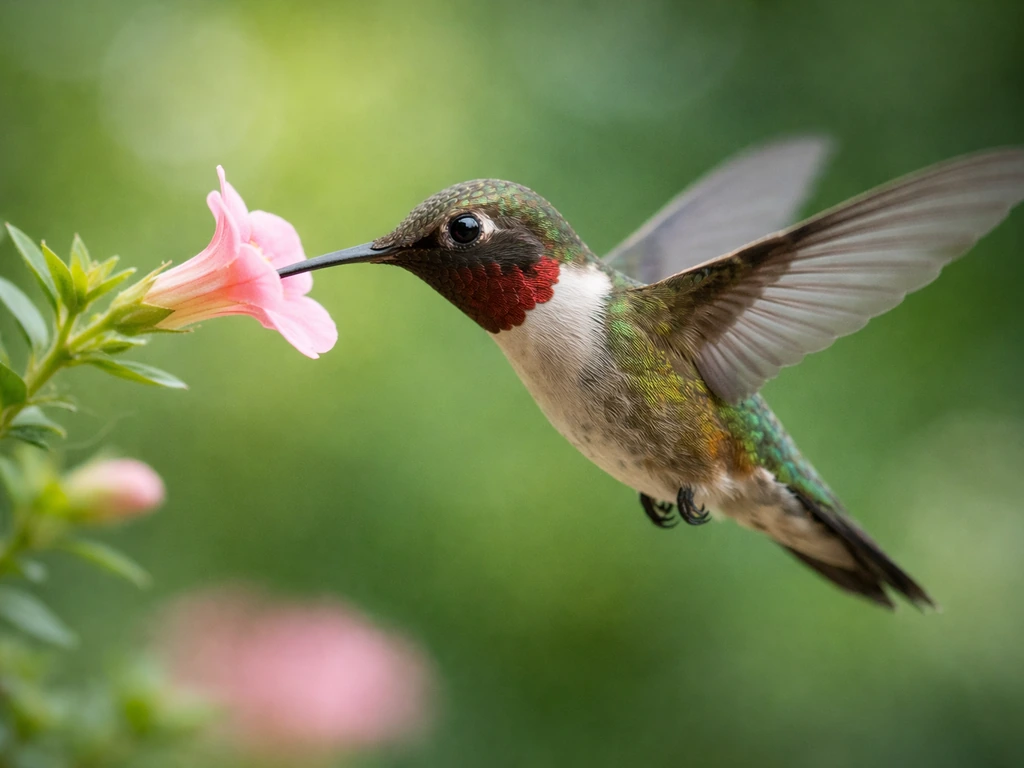
There are two terms you'll encounter, and both are correct depending on the setting. The first is हमिंगबर्ड, a phonetic transliteration of the English word. It's pronounced roughly as "ha-ming-bard" and you'll see it widely in Hindi media, DW Hindi, for example, uses हमिंगबर्ड in science and nature reporting, as in the headline "पीछे की ओर कैसे उड़ पाती है हमिंगबर्ड" (How does the hummingbird fly backwards?). This is your go-to when you're writing or speaking in a journalistic or conversational Hindi context.
The second term, गुंजन पक्षी (Gunjan Pakshi), is the descriptive Hindi translation. "गुंजन" (gunjan) means a humming or buzzing sound, and "पक्षी" (pakshi) means bird. So गुंजन पक्षी literally translates to "the humming bird", a beautifully accurate rendering that appears in Hindi Wikipedia (IIIT hiwiki) alongside the transliterated form, formatted as गुंजन पक्षी (हमिंगबर्ड). Pronounced "gun-jan pak-shee," this is the more Sanskritized, formal version you'd find in educational or literary contexts.
| Term | Script | Pronunciation | Best Used In |
|---|---|---|---|
| Phonetic transliteration | हमिंगबर्ड | ha-ming-bard | Everyday speech, journalism, social media |
| Descriptive Hindi name | गुंजन पक्षी | gun-jan pak-shee | Educational, formal, literary contexts |
| Combined reference | गुंजन पक्षी (हमिंगबर्ड) | Both together | Wikipedia entries, bilingual reference |
Using the Hindi name in real sentences
Once you know the words, putting them to use is straightforward. Here are a few natural Hindi sentences that show how both terms work in practice:
- हमिंगबर्ड बहुत तेज़ी से अपने पंख फड़फड़ाती है। (The hummingbird flaps its wings very fast.)
- गुंजन पक्षी फूलों का रस पीता है। (The hummingbird drinks the nectar of flowers.)
- क्या तुमने कभी हमिंगबर्ड देखी है? (Have you ever seen a hummingbird?)
- गुंजन पक्षी की उड़ान अद्भुत होती है। (The flight of the hummingbird is extraordinary.)
In casual conversation, most Hindi speakers will use हमिंगबर्ड simply because it's the borrowed term they've heard on TV or read online. गुंजन पक्षी lands better in writing, poetry, or when you want to explain the bird to someone unfamiliar with the English word. Both are understood, so don't overthink the choice.
Literal vs symbolic: what people usually mean by 'meaning'
When someone searches for "humming bird meaning in Hindi," they're often asking two different questions at once. The first is linguistic: what is this bird called in Hindi? That's answered above. The second is deeper: what does a hummingbird mean, symbolically or spiritually? This is the layer that reflects cultural interpretation, and it's worth separating the two clearly.
On the literal side, गुंजन पक्षी is purely descriptive. It names the bird by its most distinctive behavior: its humming wingbeat. There's no hidden metaphor in the name itself, just precise observation. On the symbolic side, hummingbirds carry a rich body of meaning that people in India are increasingly engaging with, partly through global wellness culture and partly through the bird's own fascinating biology. If you're searching for what a hummingbird "means" in a dream, in art, or in spiritual practice, that's a separate conversation, and an equally valid one.
What hummingbirds symbolize in Indian cultural contexts
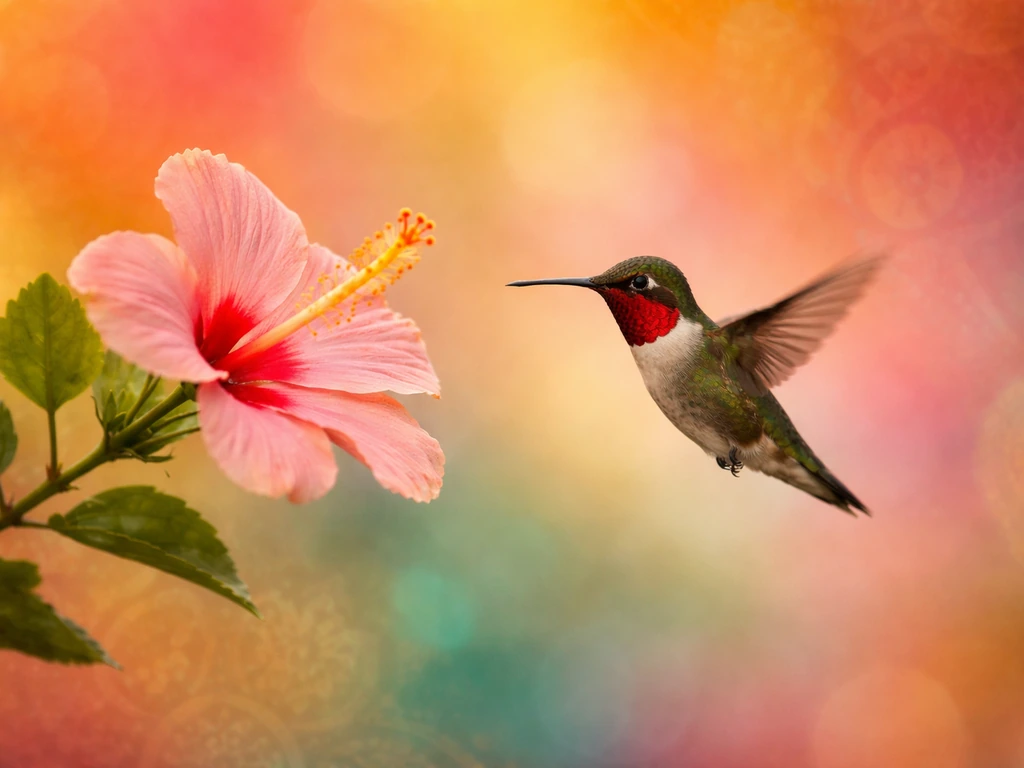
Hummingbirds are not native to India, they're found only in the Americas, so there is no ancient, rooted Indian folk tradition around this specific bird the way there is for crows, peacocks, or parrots. That said, the hummingbird has entered Indian symbolic consciousness through several routes: global spirituality literature translated into Hindi, nature documentaries, and the growing interest in bird symbolism as a spiritual practice.
In contemporary Indian spiritual interpretation, the hummingbird is most often associated with joy, lightness, and resilience. The fact that it can hover in place, fly backwards, and visit hundreds of flowers daily is read as a symbol of tireless effort and the ability to find sweetness even in difficult circumstances. Indian wellness and motivational content in Hindi frequently uses the hummingbird as a metaphor for adaptability and living fully in the present moment.
There's also a meaningful parallel drawn to bees and certain small birds in Indian tradition. The Sanskrit word "भ्रमर" (bhramar, meaning bumblebee or large bee) and the idea of a creature that hums while gathering nectar is not foreign to Indian poetic sensibility. In classical Hindi and Urdu poetry, the image of a humming creature moving from flower to flower is a well-established metaphor for love and devotion. The hummingbird, when introduced into this framework, slots in naturally as the "gunjan pakshi" that embodies that same romantic restlessness.
Mythology, folklore, and how interpretations vary
Because the hummingbird has no historical presence in the Indian subcontinent, you won't find it in the Puranas, Panchatantra, or classical Sanskrit texts. It's important to be honest about this: any "Indian mythology" around the hummingbird is a modern or syncretic interpretation, not an ancient tradition. That doesn't make it less meaningful, but it does mean you should be cautious about sources that claim a specific Hindu mythological story for the hummingbird, those are almost always invented or misattributed.
Where genuine Indian symbolism applies is in its closest native counterparts. The sunbird (सूर्यपक्षी, Suryapakshi), often called the Indian hummingbird, occupies a very similar ecological role: it hovers near flowers, drinks nectar, and has iridescent plumage. In some regional folk traditions of South India and tribal communities, the sunbird carries associations with good fortune and the arrival of positive news. This symbolism is sometimes extended to the hummingbird in popular Indian spiritual writing, which is why you'll see overlap when reading Hindi content about hummingbird meaning.
Interpretations also vary significantly by region. Someone from Bengal may associate the concept of a nectar-drinking, hovering bird with the bee imagery in Vaishnava poetry. A reader from Maharashtra or Gujarat might draw on local folk traditions about small birds as omens. This is why it's always worth noting that the way blue jay bird meaning in Hindi differs from its Western symbolism is a useful pattern to keep in mind: Indian interpretations of non-native birds are always filtered through local cultural frameworks.
In dream symbolism, which is a major reason people search for bird meanings, the hummingbird in an Indian interpretive context is generally seen as an auspicious sign. Dreaming of a hummingbird is commonly read as a message to slow down and appreciate beauty, or as an indication that hard work will yield sweetness. These are not fixed canonical interpretations, they vary by the interpreter and the tradition they're drawing from.
How to verify the right Hindi term for your specific context

If you need the Hindi term for a specific hummingbird species, the process is a bit more involved. There are over 360 hummingbird species, and while none are native to India, birding communities and ornithological texts do document them when sighted as rare vagrants or in zoo/captive contexts. For species-level precision, the best approach is to check the Hindi Wikipedia article on the specific species, or consult the Bombay Natural History Society (BNHS) and eBird India databases, which sometimes carry Hindi common names.
For regional variations, keep in mind that Marathi, Gujarati, and Punjabi speakers may use their own phonetic adaptations of "hummingbird" rather than the Hindi गुंजन पक्षी. In Marathi, you might encounter गुंजणारा पक्षी (Gunjanara Pakshi), following the same descriptive logic. In Punjabi and Gujarati, the transliterated "hummingbird" tends to dominate. Just as the mocking bird meaning in Hindi shows how borrowed English bird names get adapted across Indian languages, the hummingbird follows a similar pattern of phonetic borrowing alongside descriptive translation.
To double-check your term, run a quick search on Hindi Wikipedia (hi.wikipedia.org) using हमिंगबर्ड, cross-reference with DW Hindi's science section, and compare with any bilingual bird guides you have on hand. If you're using the term in an academic or publishing context, गुंजन पक्षी is safer because it follows standard Hindi word-formation patterns and will be recognized by educated readers even without the English gloss.
The deeper linguistic root: why 'gunjan' is a perfect fit
The word गुंजन (gunjan) comes from the Sanskrit root गुञ्ज् (gunj), meaning to buzz, hum, or resonate. It's the same root that gives us the word गुंजाइश (gunjaaish, meaning scope or room), and it's used in classical Sanskrit poetry to describe the humming of bees. Understanding this root helps you see why गुंजन पक्षी is such a well-formed translation: it captures the bird's defining physical characteristic in a word that has deep Sanskrit resonance. If you want to go further into bird meaning in Sanskrit more broadly, you'll find that Sanskrit bird names are consistently built this way, from roots that describe behavior, sound, or appearance, making them memorable and meaningful rather than arbitrary labels.
Hummingbirds alongside other symbolic birds in Indian thought

The hummingbird's symbolic profile in Indian cultural interpretation is best understood in relation to the birds that do have deep mythological roots. The peacock is the national bird and a symbol of divine beauty and Kartikeya's vehicle. The crow is a messenger of ancestors. The parrot is associated with Kamadeva, the god of love, and with learning. Against this backdrop, the hummingbird is a newcomer, but its symbolism maps naturally onto existing Indian values: devotion, tireless effort, and the pursuit of sweetness in life.
The love bird meaning in Hindi offers a useful comparison here. Love birds (तोता जोड़ा or प्रेमपक्षी) carry well-established romantic symbolism in Indian culture, and the hummingbird is increasingly being placed in a similar emotional register, associated with beauty, lightness, and romantic energy in contemporary Hindi-language content.
Quick summary and related bird meanings worth exploring
The hummingbird in Hindi is either हमिंगबर्ड (ha-ming-bard) for everyday use or गुंजन पक्षी (gun-jan pak-shee) for formal and literary contexts. The descriptive name traces back to the Sanskrit root गुञ्ज् (to hum), making it linguistically precise. Symbolically, the hummingbird is not rooted in ancient Indian mythology but carries strong contemporary associations with joy, resilience, devotion, and the ability to find sweetness in life, interpretations that align well with existing Indian poetic and spiritual values.
If you're exploring bird symbolism in Indian languages more broadly, there's a lot of ground worth covering. The jay bird meaning in Hindi is another example of how a non-native bird name gets translated and interpreted through an Indian cultural lens, and comparing these cases helps you build a sharper sense of how Hindi handles bird terminology from outside its native avifauna. Each bird brings its own linguistic and symbolic story, and putting them side by side is one of the best ways to understand how Indian languages absorb and reinterpret the natural world.
FAQ
Is hummingbird always called हमिंगबर्ड in Hindi?
Not always. गुंजन पक्षी (Gunjan Pakshi) is the standard Hindi form that many readers will understand immediately, but spelling variants can show up when लोग लिखते हैं, for example “हम्मिंगबर्ड” or “हैमिंगबर्ड”. In publishing or academic use, stick to हमिंगबर्ड and गुंजन पक्षी exactly as written in Hindi Wikipedia.
When should I use हमिंगबर्ड versus गुंजन पक्षी?
Yes, both are correct, but they signal different registers. Use हमिंगबर्ड in informal talk, science/nature captions, and media. Use गुंजन पक्षी when you want a more “Hindi-formed” name (clear word meaning, more literary tone), or when writing for audiences that may not recognize English phonetics.
Does “humming bird meaning in Hindi” refer to the name or to symbolism?
In Hindi, the “meaning” people search usually splits into two things: the name translation (which is literal) and the symbolism interpretation (which is cultural and can vary). If your goal is symbolism, include what context you mean, like dream, love/spiritual practice, or art, because the Hindi interpretations differ by tradition and interpreter.
Is गुंजन पक्षी a mythological name?
“Gunjan” refers to humming or buzzing sound, so the name is descriptive. A common mistake is to treat the name itself as a mythological reference, but the article’s framing is that it comes from observable behavior, then later gets layered with spiritual or motivational readings.
What is the correct meaning of a hummingbird dream in Hindi?
Dream interpretations are not fixed rules. If you are using the hummingbird meaning for self-reflection, treat it as a prompt (slowing down, enjoying beauty, perseverance) rather than a guaranteed prediction. Different readers in Hindi wellness spaces may emphasize different lessons.
Can I find an ancient Hindu myth about hummingbirds?
Because hummingbirds are not native to India, “Indian mythology” claims are often modern blends or misattributions. The safer approach is to rely on symbolic ideas that map to existing Indian themes (devotion, joy, tireless effort) rather than insisting on an ancient story for the hummingbird specifically.
What Hindi name should I use for a specific hummingbird species?
For species-level accuracy, translate the species name you already have rather than guessing from the generic term. Many Hindi resources carry Hindi common names per species, but there can be differences across databases, so verify on Hindi Wikipedia for that species or check ornithology lists used by Indian birding groups.
How do I write it correctly in a document or blog post?
If you are writing for an international audience, you can use one Hindi term and include the other in parentheses the first time, for example: गुंजन पक्षी (हमिंगबर्ड). After that, keep only one term for consistency. This prevents confusion because both forms appear in Hindi media.
Do Marathi, Gujarati, or Punjabi speakers use the same Hindi term?
Yes, regional languages can have their own phonetic adaptations, and sometimes they mix descriptive and borrowed forms. If you are addressing a multilingual audience, the simplest way is to lead with Hindi (हिंदी term) and optionally add a note like “स्थानीय रूप अलग हो सकते हैं” rather than forcing one spelling across languages.
How can I verify the best Hindi term before publishing?
To double-check, search Hindi Wikipedia using the exact Devanagari word (हमिंगबर्ड) and compare with DW Hindi or other science/nature reporting that uses that term. Also confirm whether the page uses a transliteration or a translated form, because both are “correct” but can point to different style choices.