
The Sanskrit word for 'bird' is पक्षी (pakṣī, pronounced roughly 'pak-SHEE'). It comes from the root पक्ष (pakṣa), meaning 'wing', so the word literally means 'the winged one'. The full base form is पक्षिन् (pakṣín), and पक्षी is its nominative singular, which is the form you'll encounter most often in texts, dictionaries, and everyday reference. If you're a Hindi speaker, this will feel familiar instantly because Hindi पक्षी is borrowed directly from this Sanskrit word.
Bird Meaning in Sanskrit: Word, Pronunciation, and Usage

Rajesh Sharma
14 May 2026

The Sanskrit word for bird: forms and pronunciation
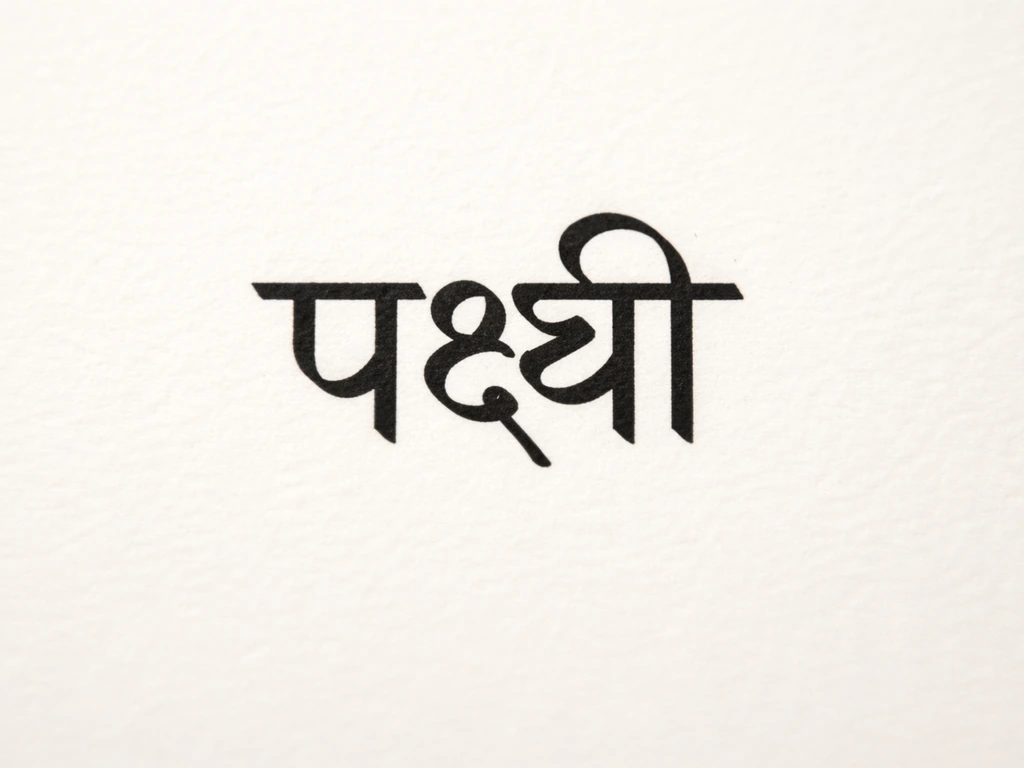
Sanskrit has a few ways to refer to a bird, but पक्षी (pakṣī) is the primary, most widely cited term. The Monier-Williams Sanskrit-English Dictionary and Wiktionary both confirm it as a masculine noun meaning 'a bird' or 'any winged animal'. The base noun पक्षिन् (pakṣín) is what grammarians work from, but in practice, पक्षी is the form you'll see quoted when someone asks for the Sanskrit word for bird.
Pronunciation tip: the 'kṣ' cluster (क्ष) sounds like a combined 'k' and 'sh', so pakṣī sounds like 'pak-shee' with a slightly held 'k' before the 'sh'. The final vowel 'ī' is a long 'ee' sound. If you're learning Devanagari, the script form is पक्षी and that is exactly what you'll find in both classical texts and modern Hindi borrowings.
There are a few related Sanskrit terms worth knowing. पक्षालु (pakṣālu) also carries the sense of 'winged, a bird'. पक्षगुप्त (pakṣagupta) is glossed as 'a species of bird' in Monier-Williams. These are more specialized or poetic forms, though, and for general use, पक्षी is the word you want.
Bird in Hindi and English: the quick mapping
Hindi actually gives you multiple words for 'bird' depending on register and context, which often confuses learners. Here is how the main terms line up:
| Hindi Word | Transliteration | Gender | Register / Notes |
|---|---|---|---|
| पक्षी | pakṣī / pakshī | Masculine | Formal/literary; direct Sanskrit borrowing |
| पंछी | paṅchhī | Masculine | Common everyday speech; Hindustani register |
| चिड़िया | ciṛiyā | Feminine | Very common; used for smaller birds especially |
| परिन्दा | parindā | Masculine | Urdu-influenced; used in poetry and songs |
So when you look up 'bird' in a Cambridge English-Hindi dictionary, you'll see both पक्षी and पंछी listed. Both are correct. पक्षी feels more formal and is directly traceable to Sanskrit, while पंछी and चिड़िया are what you hear in conversation. Wiktionary confirms that Hindi पक्षी is borrowed straight from Sanskrit पक्षी, so the semantic thread is unbroken: Sanskrit pakṣī → Hindi pakṣī, same script, same meaning, same pronunciation.
Common Sanskrit-related bird terms you'll come across

Once you have पक्षी as your anchor, a whole cluster of related terms opens up. Sanskrit bird vocabulary tends to be built either on the pakṣa (wing) root or on descriptive names tied to the bird's behavior, appearance, or mythological role. Here are the most practically useful terms for anyone exploring Sanskrit bird references:
- पक्षी (pakṣī): the general word for bird, 'winged one'
- पक्षिन् (pakṣín): the grammatical base form; used in compound words and declined forms like पक्षिणः (pakṣiṇaḥ), which means 'birds' (plural)
- खग (khaga): another classical Sanskrit word for bird, literally 'sky-goer' from kha (sky/space) + ga (going); common in poetry
- विहग (vihaga): 'one who moves through the sky'; another poetic synonym found in Sanskrit epics
- शकुन (śakuna): bird, but specifically in the context of omens; a bird as a portent or sign — this is where the Sanskrit root for omens and auspicious signs comes from
- गरुड (Garuḍa): the mythological great eagle/kite; Vishnu's vahana (mount) and a major bird figure in Sanskrit epic literature
- हंस (haṃsa): swan or goose; associated with wisdom, the divine breath, and Brahma in Sanskrit tradition
- मयूर (mayūra): peacock; the national bird of India and vehicle of the god Kartikeya
If you are searching Sanskrit texts for a specific bird rather than 'bird' generically, you almost always need the specific Sanskrit name rather than पक्षी. पक्षी works like the English word 'bird': it covers the category. हंस, मयूर, and गरुड refer to particular birds the way 'swan', 'peacock', and 'eagle' do in English.
Why birds matter so much in Indian cultural tradition
Birds occupy a genuinely central place in Indian mythology, ritual, and language, not just as animals but as messengers, symbols, and divine vehicles. Understanding this helps you decode why Sanskrit and Hindi have so many bird-related terms and why they show up so persistently in texts, names, and idioms.
The most prominent example is Garuda (गरुड), the vast eagle-kite figure who blank" rel="noopener noreferrer">serves as Vishnu's vahana (divine mount) in Hindu mythology. Britannica and World History Encyclopedia both describe Garuda as a central bird figure in Hindu and Buddhist epic tradition, and his association with Vishnu makes him perhaps the most symbolically loaded bird in all of Sanskrit literature. The story of Garuda blank" rel="noopener noreferrer">stealing amrita (the nectar of immortality) from the gods is one of the great early bird narratives of the Mahabharata.
Beyond Garuda, the swan (हंस, haṃsa) is a profound symbol of spiritual discernment. In Sanskrit philosophical texts, the hamsa represents the ability to separate truth from illusion, just as the mythological swan is said to separate milk from water when both are mixed. Brahma, the creator, rides the hamsa as his vahana. The peacock (मयूर, mayūra) is associated with rain, beauty, and divine grace, connected to Kartikeya (Murugan) and celebrated in classical poetry.
The word शकुन (śakuna), meaning both 'bird' and 'omen', shows how deeply birds were woven into ritual observation. Watching birds' flight patterns and calls was a formal practice in ancient India, and that semantic overlap between 'bird' and 'auspicious sign' is preserved in the word itself. In everyday Hindi too, शकुन still carries the meaning of a good omen.
This cultural depth is exactly why sites like this one track bird meanings not just linguistically but mythologically. A word like पक्षी connects you to centuries of literature, ritual, and storytelling, not just to the animal in the tree outside.
How 'bird' looks across Indian languages
One of the most useful things to know is how closely the Sanskrit root travels into modern Indian languages. Across Hindi, Marathi, Punjabi, and Gujarati, the pakṣ- root shows up consistently, though everyday spoken forms sometimes diverge. Here's a clean comparison:
| Language | Script | Transliteration | Notes |
|---|---|---|---|
| Sanskrit | पक्षी | pakṣī | Root form; masculine noun; 'winged one' |
| Hindi | पक्षी / पंछी | pakṣī / paṅchhī | pakṣī is formal; paṅchhī is common spoken form |
| Marathi | पक्षी | pakṣī | Same script and form; masculine noun; direct inheritance from Sanskrit |
| Punjabi | ਪੰਛੀ | paṅchhī | Gurmukhi script; mirrors Hindi spoken form closely |
| Gujarati | પક્ષી | pakṣī | Very close to Sanskrit form; Gujarati script version |
What strikes most learners here is how consistent this is. Marathi and Gujarati essentially kept the Sanskrit form intact. Punjabi and Hindi converged on the spoken paṅchhī in informal use but retained pakṣī in formal and literary contexts. If you know Sanskrit पक्षी, you can recognize 'bird' in any of these languages with very little adjustment.
This site covers specific birds across these languages too. If you're curious about how particular birds translate across Indian languages, entries on lovebirds, hummingbirds, mockingbirds, blue jays, and jays in Hindi give you a sense of how both common Hindi names and regional terms map onto birds that may have no classical Sanskrit equivalent (since many of those species are not native to the Indian subcontinent). If you are looking for the love bird meaning in Hindi, the most helpful step is to check which common Hindi name is being used for lovebirds. If you are looking for the blue jay bird meaning in Hindi, you can also check how the name is used in everyday conversation and local references blue jays, and jays in Hindi. For the mocking bird meaning in Hindi, you can look up the common Hindi name used for mockingbirds in everyday conversation. If you are specifically looking for the humming bird meaning in Hindi, the best approach is to check the common Hindi name used in local conversation and then compare it with the closest translation used in dictionaries hummingbirds.
How to find the right bird term for what you actually need
If you're a language learner or researcher, the challenge is usually not finding पक्षी but deciding whether it's the right word for your specific context. Here's a practical way to approach that decision:
- If you want the generic word for 'bird' in Sanskrit, use पक्षी (pakṣī). It's confirmed across Monier-Williams, Wiktionary, and SanskritDictionary.org as the standard term.
- If you're writing or reading Hindi and want the formal/literary word, पक्षी works there too. For casual speech, पंछी (paṅchhī) or चिड़िया (ciṛiyā) are more natural.
- If you're looking for a specific bird (peacock, swan, parrot, sparrow, eagle), you need that bird's individual Sanskrit or Hindi name rather than the generic पक्षी. Use this site's individual bird entries or search for the specific bird name directly.
- If you're researching mythology or texts, learn to recognize the poetic synonyms too: खग (khaga) and विहग (vihaga) both mean bird but appear frequently in classical Sanskrit poetry where पक्षी might feel too plain.
- For cross-language checking across Marathi, Punjabi, or Gujarati, start with पक्षी as your anchor and then verify the regional script form using the language-specific resources on this site.
One quick verification tip: when in doubt about a Sanskrit bird term, look for the pakṣa (wing) root in the word. If it's built on that root, it's almost certainly bird-related. The same logic works in reverse: when you see पक्षी or any pakṣ- form in a Hindi or Marathi text, you can be confident you're reading a direct descendant of the Sanskrit original, not a borrowing from some other source.
For most practical purposes, here is your reliable three-word toolkit: पक्षी (pakṣī) for Sanskrit and formal contexts, पंछी (paṅchhī) for everyday Hindustani conversation, and चिड़िया (ciṛiyā) when you're specifically talking about small birds in Hindi. Those three cover the vast majority of situations a learner or cultural researcher will encounter.
FAQ
When should I use पक्षिन् instead of पक्षी?
Use पक्षिन् (pakṣín) when you are matching grammatical form, for example in texts or exercises that require a stem or a different case ending. पक्षी (pakṣī) is the nominative singular that shows up most often in dictionaries and general lookup, but it is not the only form you may encounter in actual Sanskrit sentences.
Does शकुन always mean a bird, or can it mean something else?
Yes, शकुन is closely tied to birds in meaning and usage. Even though the article treats it as an overlap between “bird” and “omen,” in practice you must check the sentence context, because many occurrences of शकुन function as “auspicious sign” rather than literal “bird.”
How do I pronounce पक्षी correctly, and what goes wrong with common transliterations?
In Devanagari, the spelling and the consonant cluster matter: पक्षी has क्ष (kṣ). If you transliterate it loosely as “pakshi” in casual Latin script, most readers will still understand it, but it can hide the correct pronunciation. For accurate chanting or learning, keep it as pakṣī and treat the first consonant as a combined k-plus-sh sound.
If I want “bird” in general versus a specific bird, which Sanskrit word should I choose?
Prefer पक्षी when you mean the general category “bird,” including in literary or formal contexts. If your goal is “a particular bird species,” the more reliable approach is to use the species word (for example हंस, मयूर, गरुड) rather than forcing पक्षी, since Sanskrit, like English, uses category words and specific species words differently.
Why do different Indian languages say “bird” differently if they share the same Sanskrit root?
For cross-language use, treat पक्षी as a Sanskrit anchor, then compare how each language writes and pronounces the descendant. Hindi commonly gives पंछी (paṅchhī) in speech and पक्षी in more formal register, while other languages may retain the pakṣ- shape more consistently. Don’t assume one spoken form always matches the Sanskrit script form.
What if the exact bird I want (like a specific modern species) has no classical Sanskrit name?
Not always. For instance, some modern “bird” names in English refer to species that may not have classical Sanskrit equivalents, so Hindi may rely on descriptive or borrowing-based names. In those cases, the best method is mapping by common Hindi usage (the article suggests checking the everyday Hindi name), then only using पक्षी as the generic fallback.
What quick checks can I use to confirm a word is truly bird-related in Sanskrit?
Look for morphological cues and compare with the pakṣa “wing” root. If the word you see contains a pakṣ- or closely related consonant pattern (pakṣ, pakṣā, pakṣin, etc.), it is very likely bird-related. Also check whether the word behaves like a noun describing an animal, since some pakṣ- family words may become poetic descriptors rather than straightforward “bird = bird.”
Is पक्षी masculine, and does that affect translation into Hindi or English?
In Sanskrit it is safer to treat पक्षी as a masculine noun category word, but when you translate into English you may still choose “a bird” or “birds” based on number and case. If you are translating into Hindi, remember that Hindi agreement behaves differently, so “bird” translation can feel genderless even when Sanskrit specifies grammatical gender.
Are पक्षी and पंछी interchangeable in everyday Hindi, or do they differ by tone?
Yes, in Hindi you may encounter both पक्षी and पंछी, and they can differ by register. पक्षी tends to sound more formal and closer to the Sanskrit lineage, while पंछी is common in everyday speech. If you are aiming for conversational tone, choose पंछी, but if you are writing formally or doing Sanskrit-linked study, choose पक्षी.