If you searched for "mocking bird meaning in Hindi," here is the direct answer: the most common Hindi translation is "नकलची पक्षी" (nakalchi pakshi) or "नकलची चिड़िया" (nakalchi chidiya), both meaning "the bird that imitates" or "the mimic bird." The transliterated form "मॉकिंगबर्ड" is also used, especially in more technical or scientific contexts. Which one you should use depends on whether you are talking about the specific American bird species or mimicry in general, and that distinction matters more than most people realize.
Mocking Bird Meaning in Hindi: Name, Symbolism, and Use

Rajesh Sharma
8 Apr 2026
What exactly is a mockingbird in English?
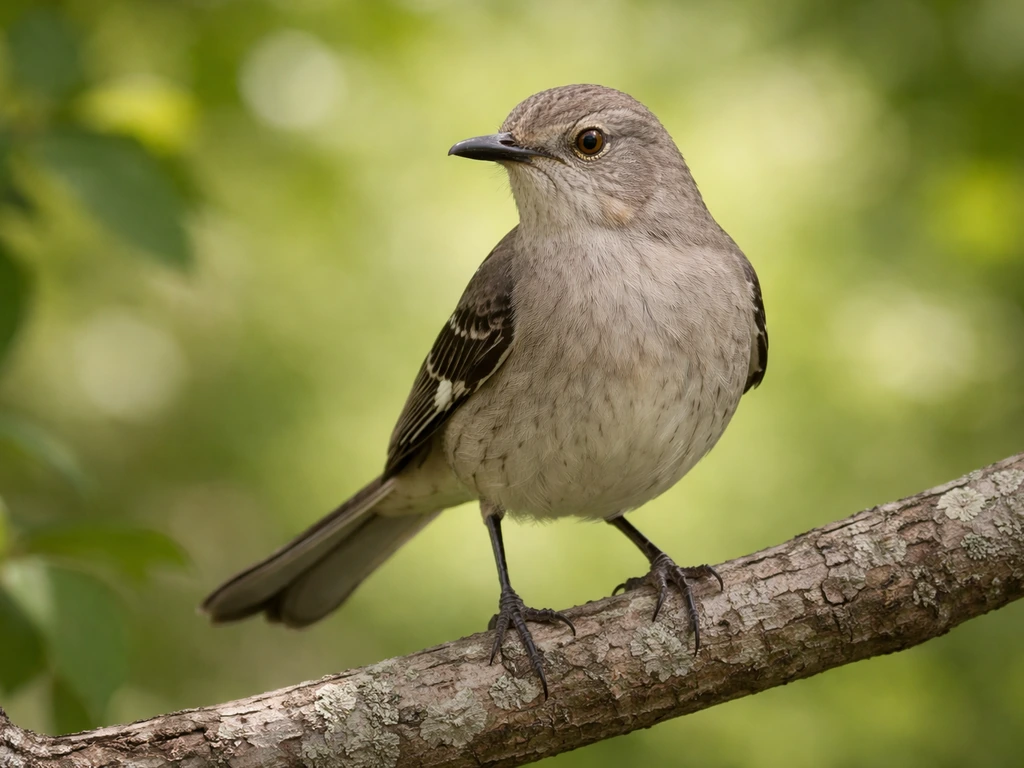
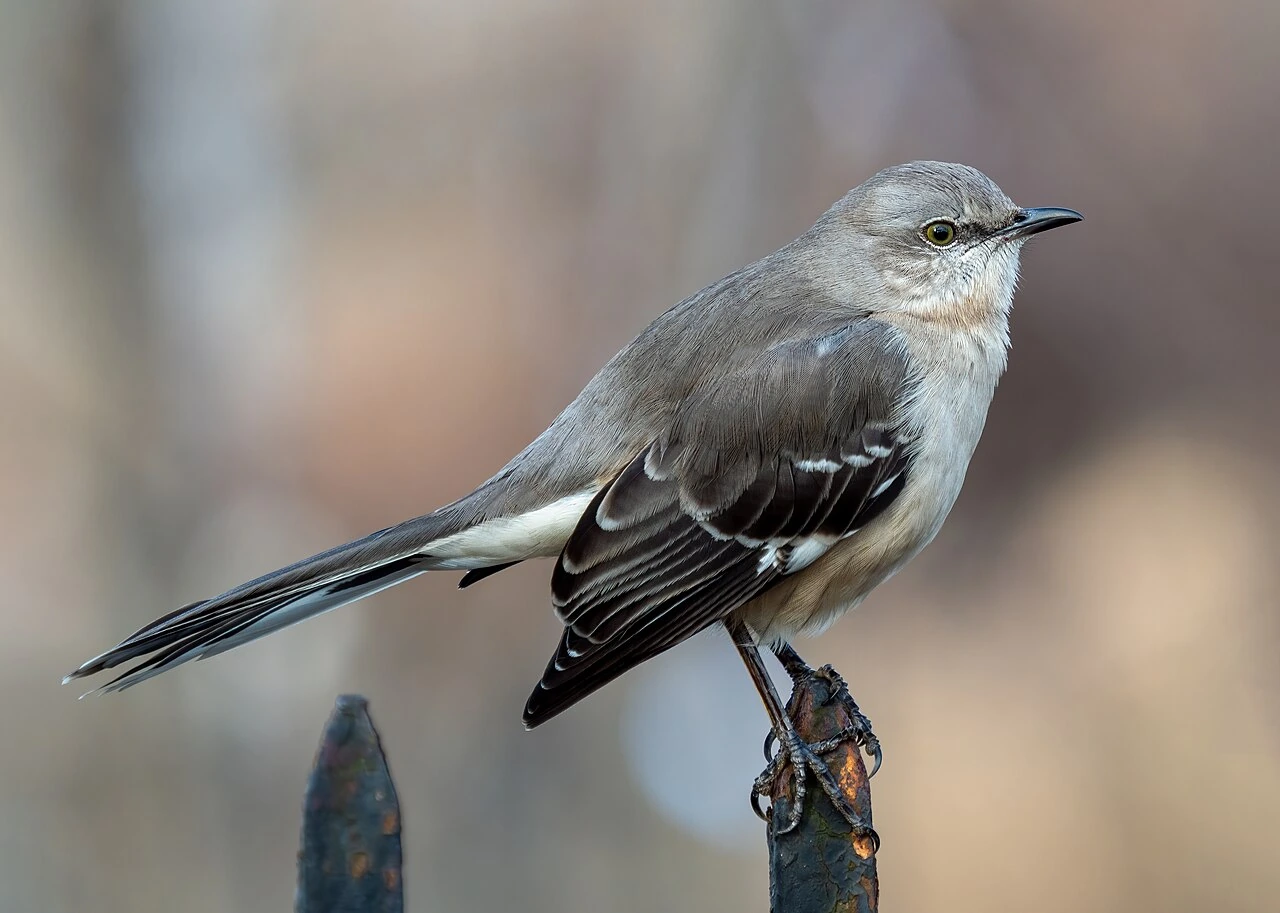
Before jumping to the Hindi, it helps to be precise about the bird itself. "Mockingbird" written as one word refers primarily to the Northern Mockingbird (Mimus polyglottos), a common grayish North American songbird famous for mimicking the calls of other birds with remarkable accuracy. The Latin name Mimus polyglottos literally means "many-tongued mimic," which tells you everything about why this bird got its name. It does not just repeat a sound once or twice, it learns dozens of other species' songs and strings them together in long, varied phrases.
The Northern Mockingbird belongs to the family Mimidae, a group of New World songbirds all known for vocal versatility. When people write "mocking bird" as two words, they usually mean the same thing, just a spelling variation. Dictionaries treat both as referring to this same flagship species. So the core meaning is not mockery in the sense of making fun of someone, it is precise vocal imitation, copying, and echoing.
Hindi translation and how to choose the right term
Hindi does not have a single ancient, fixed name for the Northern Mockingbird the way it does for native Indian birds like the crow (कौआ) or the parrot (तोता). This is because the mockingbird is not native to India, it is an American species. So the Hindi naming works differently here: you either transliterate the English word or you describe the bird's defining behavior.
| Hindi Term | Transliteration | Best Used When |
|---|---|---|
| नकलची पक्षी | nakalchi pakshi | General conversation, describing any mimicking bird |
| नकलची चिड़िया | nakalchi chidiya | Informal or everyday speech, especially with female noun preference |
| मॉकिंगबर्ड | mockingbird (loan word) | Scientific, ornithological, or species-specific reference |
| नॉर्दर्न मॉकिंगबर्ड | Northern Mockingbird | When specifically identifying the Mimus polyglottos species |
| नकल करने वाला पक्षी | nakal karne wala pakshi | When explaining the concept descriptively in sentences |
The key decision point is your intent. If you are writing a nature essay or talking to a birdwatcher about the American species, "मॉकिंगबर्ड" or "नॉर्दर्न मॉकिंगबर्ड" keeps the species identity clear. If you are having a casual conversation about a bird that mimics other birds, "नकलची पक्षी" or "नकलची चिड़िया" communicates the meaning naturally. A common mistake is just using "मॉकिंग पक्षी," which can imply mockery or ridicule (उपहास) rather than the actual meaning of mimicry. Always pair it with a word that signals imitation.
Literal meaning versus metaphorical meanings
The literal layer: imitation and echo
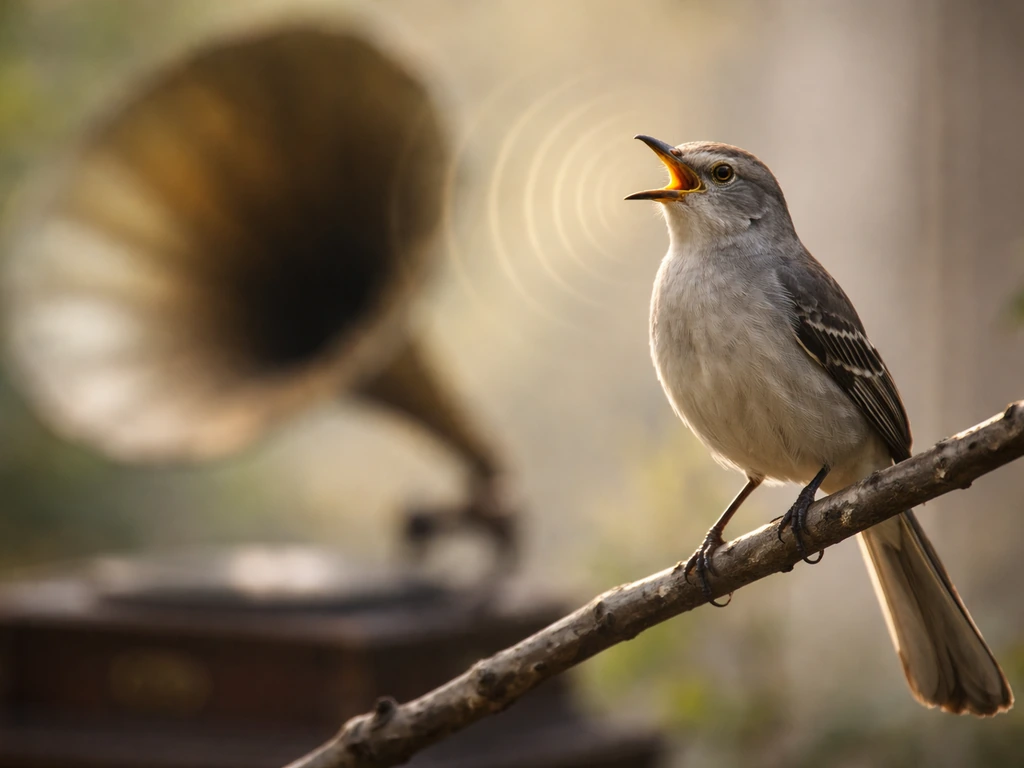
Literally, the mockingbird is a mimic. Its behavior is vocal borrowing: it listens, learns, and reproduces. In Hindi the word "नकल" (nakal) captures this well, it means copying or imitation, and "नकलची" is someone (or something) that habitually imitates. This is the accurate, ornithological meaning and the one you should lead with when translating.
The metaphorical layer: satire, clever speech, and echo
In a broader cultural and metaphorical sense, the idea of a "mocking bird" touches several different imaginative spaces in Hindi and Indian thought. First, there is the echo idea: a bird that reflects back what it hears, which can symbolize responsiveness, adaptability, or even a kind of sycophantic behavior depending on context.
Second, there is the satire angle: in English literature (think Harper Lee's novel), the mockingbird is innocent, something that only gives pleasure by singing, never harming anyone, and killing it is morally wrong. This literary symbolism does not have a direct parallel in classical Indian tradition, but the innocence-of-imitation idea resonates. Third, in a more critical metaphorical use in Hindi, calling someone "नकलची" is not a compliment. It implies they have no original voice of their own.
The idea of mimicry as performance art also has a strong Indian cultural presence. "मिमिक्री" (mimicry) as a Hindi word refers to the popular stage and television art form where performers impersonate voices and personalities, something celebrated in Indian entertainment culture. So when you describe a mockingbird as a "मिमिक्री करने वाला पक्षी," an Indian listener immediately understands the talent and craft involved.
Cultural and spiritual symbolism in the Indian context
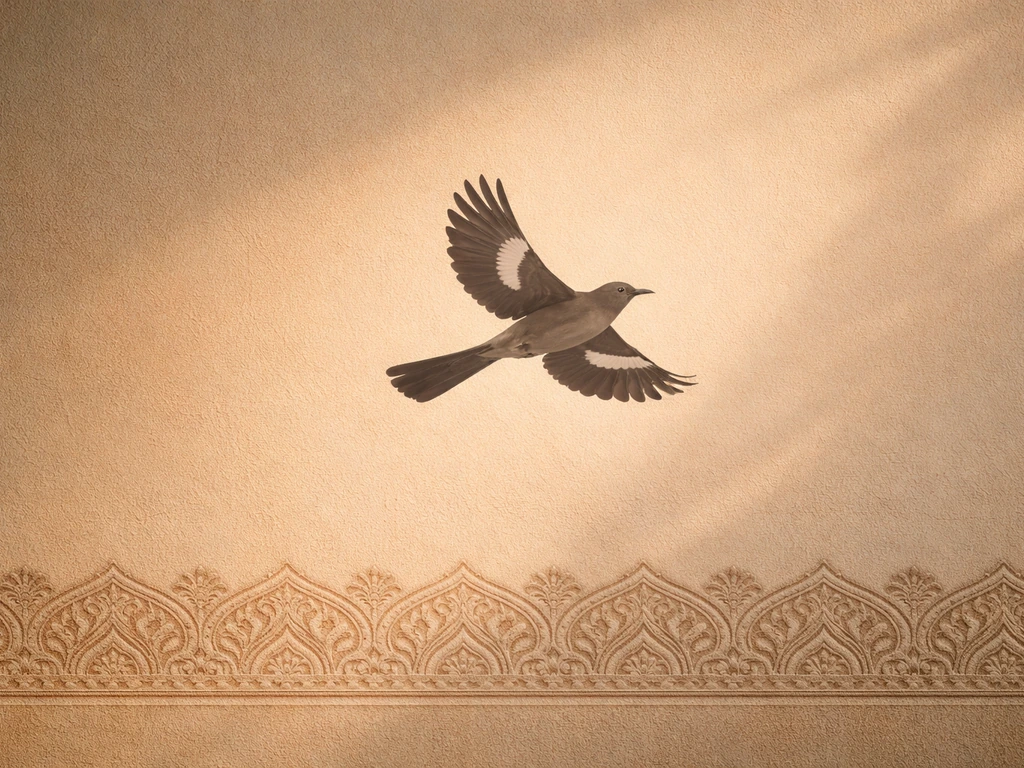
India has a rich tradition of bird symbolism rooted in mythology, astrology, and folk belief, but the Northern Mockingbird is not a native bird, so it does not appear in classical Sanskrit texts, Puranas, or regional folklore by name. What does exist is a strong symbolic framework around birds that mimic or echo, and that framework can be meaningfully applied.
In Indian thought, birds known for vocal imitation are often associated with intelligence, adaptability, and a kind of divine play (leela). The Indian Rose-Ringed Parakeet (तोता) has for centuries been associated with Kamadeva (the god of love) and is revered as a messenger and a mimic that repeats sacred names. The idea that a bird can "speak" divine words by imitation is seen as spiritually significant, not shallow. This is the Indian lens through which mockingbird behavior would most naturally be understood: a being gifted with the ability to carry and reflect sacred or meaningful sound.
In folk contexts, birds with unusual voices are often seen as omens or messengers. A bird that seems to echo human speech or repeat familiar sounds can be interpreted as a sign that a message is being sent back to you, a kind of cosmic reflection. In dream symbolism specifically, Hindi dream-interpretation traditions treat birds broadly as signs of news, travel, freedom, or spiritual communication, but specific meanings for individual species like the mockingbird are not standardized. If you encounter a dream-interpretation site claiming a very specific spiritual outcome for a mockingbird dream in a Hindu context, treat it with caution: those interpretations are faith-based and interpretive rather than grounded in classical Indian scripture.
The closest classical Indian parallel to the mockingbird archetype is Narada Muni, the divine sage who travels all realms carrying messages and is sometimes associated with stirring things up by repeating what he has heard in different places. Like the mockingbird, Narada's power lies in transmission and repetition, and his role is ambiguous: neutral, wise, and sometimes a catalyst for conflict. This is a poetic parallel, not a direct mythological association, but it gives you a culturally grounded way to explain mockingbird symbolism to an Indian audience.
India's own avian world also offers fascinating vocal mimics worth noting. Research on Indian birds like Sykes's lark has shown that male birds with a greater vocal repertoire, more voices in their library, attract more mates, pointing to the same evolutionary logic behind the mockingbird's mimicry. If you are interested in how bird names and symbolism connect across traditions, exploring bird meaning in Sanskrit gives you the deeper linguistic and mythological roots of how Indian languages have always engaged with avian life.
How to use the Hindi term correctly in everyday sentences
Using "नकलची पक्षी" or "मॉकिंगबर्ड" correctly in Hindi sentences is straightforward once you understand the grammar pattern. Hindi treats it as a noun, and you can use it with standard descriptive constructions. Here are practical examples:
- "मॉकिंगबर्ड एक नकलची पक्षी है जो दूसरे पक्षियों की आवाज़ों की नकल करता है।" (The mockingbird is a mimic bird that imitates the calls of other birds.)
- "यह नकलची चिड़िया कई तरह की आवाज़ें निकाल सकती है।" (This mimic bird can produce many different sounds.)
- "मॉकिंगबर्ड को हिंदी में नकलची पक्षी कहते हैं।" (The mockingbird is called nakalchi pakshi in Hindi.)
- "उसकी आवाज़ सुनकर लगा जैसे कोई नकलची पक्षी बोल रहा हो।" (Hearing his voice felt like a mimic bird was speaking.)
- "नॉर्दर्न मॉकिंगबर्ड अमेरिका में पाया जाने वाला एक प्रसिद्ध नकल करने वाला पक्षी है।" (The Northern Mockingbird is a famous mimicking bird found in America.)
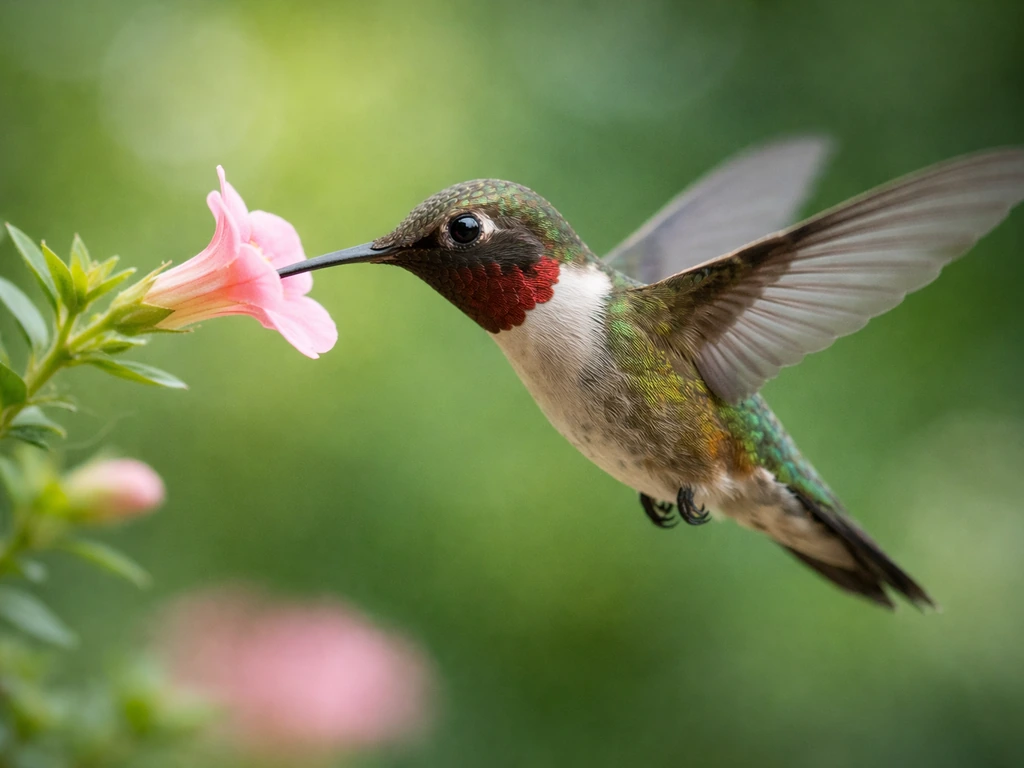
Notice how the descriptive phrase "नकल करने वाला" or the adjective "नकलची" always anchors the meaning in imitation. Dropping that descriptor and just saying "मॉकिंग पक्षी" risks suggesting a sarcastic or taunting bird, which is not what the species name means. The mimicry-first framing is essential. Just as humming bird meaning in Hindi relies on describing the bird's signature behavior to arrive at its Hindi name, mockingbird naming in Hindi follows exactly the same logic.
How this compares to other birds with similar naming patterns
The mockingbird is not alone in presenting this translation challenge. Several American bird species that are popular in English but not native to India require either transliteration or descriptive naming in Hindi. The blue jay, for instance, follows a similar pattern: it is not native to India, so Hindi names for it rely on color and behavior descriptors rather than an ancient indigenous name. You can see how this works in detail if you look at blue jay bird meaning in Hindi, which navigates the same transliteration-versus-description choice.
There is also a useful distinction to draw between the mockingbird and its relative, the jay family more broadly. The jay and mockingbird are sometimes confused by casual observers because both are known for vocal complexity, but they belong to different families entirely. Mockingbirds belong to Mimidae, while jays belong to Corvidae. If you are exploring bird families and want to see how the jay is named and understood in Hindi, jay bird meaning in Hindi covers that territory well. And for a completely different kind of vocal marvel, love bird meaning in Hindi shows how birds associated with emotional expression rather than mimicry are named and symbolized in Indian culture.
Common confusion and how to verify which bird you mean
Confusion 1: Two words vs. one word
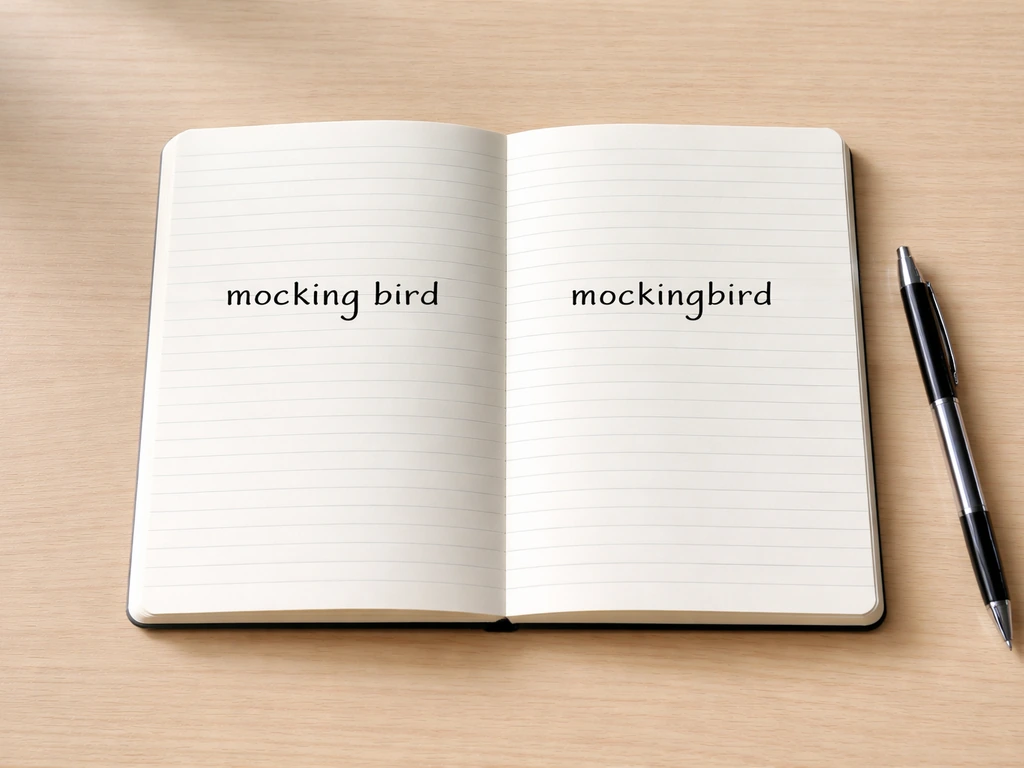
"Mocking bird" (two words) and "mockingbird" (one word) mean the same thing in practice. Standard dictionaries list the one-word version as the entry, but both spellings appear widely online. If you see either spelling in an English-to-Hindi translation query, you can treat them identically.
Confusion 2: Mockery vs. mimicry
This is the most important confusion to clear up. "Mocking" in English has two meanings: one is to ridicule or make fun of (उपहास करना), and the other, in the compound word "mockingbird," is to imitate or mimic (नकल करना). The bird's name comes from the second meaning, not the first. Always translate with नकल/मिमिक्री language, not उपहास/व्यंग्य language.
Confusion 3: Is this an Indian bird?
No. The Northern Mockingbird (Mimus polyglottos) is native to North America. It does not occur naturally in India. So if someone tells you they spotted a mockingbird in India, they either mean a different mimicking bird species, or the term is being used loosely. India has its own remarkable vocal mimics, including the Shama, the Hill Myna, and several larks, but these are not mockingbirds in the scientific sense.
How to verify the exact bird in translation
- Check whether the source is referring to a specific species (Mimus polyglottos / Northern Mockingbird) or using "mockingbird" loosely for any mimic bird.
- If it is the specific species, use "नॉर्दर्न मॉकिंगबर्ड" or "मॉकिंगबर्ड (Mimus polyglottos)" for precision.
- If it is a general concept of a mimicking bird, use "नकलची पक्षी" or "नकल करने वाला पक्षी" in Hindi.
- For dream or spiritual interpretations, confirm that the source explicitly names the mockingbird and not just a generic bird, since Hindi dream traditions use broad bird categories rather than species-level symbolism.
- Use audio recordings and location context (North America) to confirm species identity if you are doing ornithological work.
Getting the right Hindi term for mockingbird is ultimately about being honest with your reader about what the bird actually does: it listens, it learns, it reflects. In Hindi, "नकलची पक्षी" carries all of that. Whether you use it as a simple bird name, a metaphor for adaptability, or a symbol of the mirroring power of sound, you now have the full picture to use it correctly.
FAQ
Which Hindi wording should I choose, मॉकिंगबर्ड or नकलची पक्षी?
Use “मॉकिंगबर्ड” or “नॉर्दर्न मॉकिंगबर्ड” when you mean the specific American species, especially in writing for birdwatchers or nature content. Use “नकलची पक्षी/नकलची चिड़िया” when you mean mimicry in general (a bird or person who imitates voices).
Is “मॉकिंग पक्षी” correct Hindi for mockingbird?
If your sentence has any hint of teasing, sarcasm, or ridicule, avoid “मॉकिंग पक्षी.” Instead, pair with imitation language like “नकल करने वाला पक्षी” or “नकलची” so the meaning stays on mimicry (नकल) rather than mockery (उपहास).
Does the English spelling (mocking bird vs mockingbird) change the Hindi meaning?
In meaning, “mocking bird” (two words) and “mockingbird” (one word) match, but in Hindi writing you should still pick one consistent style. For clarity, many writers use the one-word transliteration “मॉकिंगबर्ड” and reserve “नकलची…” for descriptive phrasing.
Can I write “मिमिक्री करने वाला पक्षी” instead of नकलची पक्षी?
“मिमिक्री करने वाला पक्षी” is usually safest when you want a clear general description, but it can sound more like a performance context than an ornithological name. If you want species identity, prefer “मॉकिंगबर्ड” or “नॉर्दर्न मॉकिंगबर्ड.”
How should I interpret “mockingbird” in Hindi metaphors or dreams without getting misleading meanings?
If you are describing a dream or metaphor and want to sound neutral, use “नकलची” framing (imitation, echo) rather than “उपहास/व्यंग्य.” Hindi dream-interpretation sites may assign specific spiritual outcomes, but there is no single standard species-specific meaning you can treat as universally accepted.
What if I saw “mockingbird” in India, can I still use the same Hindi term?
Yes, but be careful with ambiguity. If you claim “mockingbird” in Hindi, add a clarifier like “अमेरिकी पक्षी” or use “नॉर्दर्न मॉकिंगबर्ड” to show you mean the American bird, since it is not native and many casual reports in India use the term loosely.
How do I avoid the common mistake of confusing mocking (उपहास) with mockingbird (नकल)?
When translating, check whether the context is about sound imitation (birds, voices, calls) or about teasing someone (ridicule). The translation should follow imitation terms (नकल, नकलची, मिमिक्री) and avoid ridicule words (उपहास, व्यंग्य) unless the author is explicitly talking about making fun of someone.
What is the best way to introduce the word in an essay so readers understand it instantly?
For accuracy, include either behavior or scientific context. Common improvement is adding a descriptor like “जो दूसरे पक्षियों की आवाज़ की नकल करता है” the first time you mention it, then you can shorten to “नकलची पक्षी” later in the same text.
Next Article
Humming Bird Meaning in Hindi: Name, Meaning and Symbolism
हम्मिंगबर्ड का हिंदी नाम और उच्चारण जानें, साथ ही भारत में इसका प्रतीकात्मक अर्थ व सांस्कृतिक संदर्भ समझें