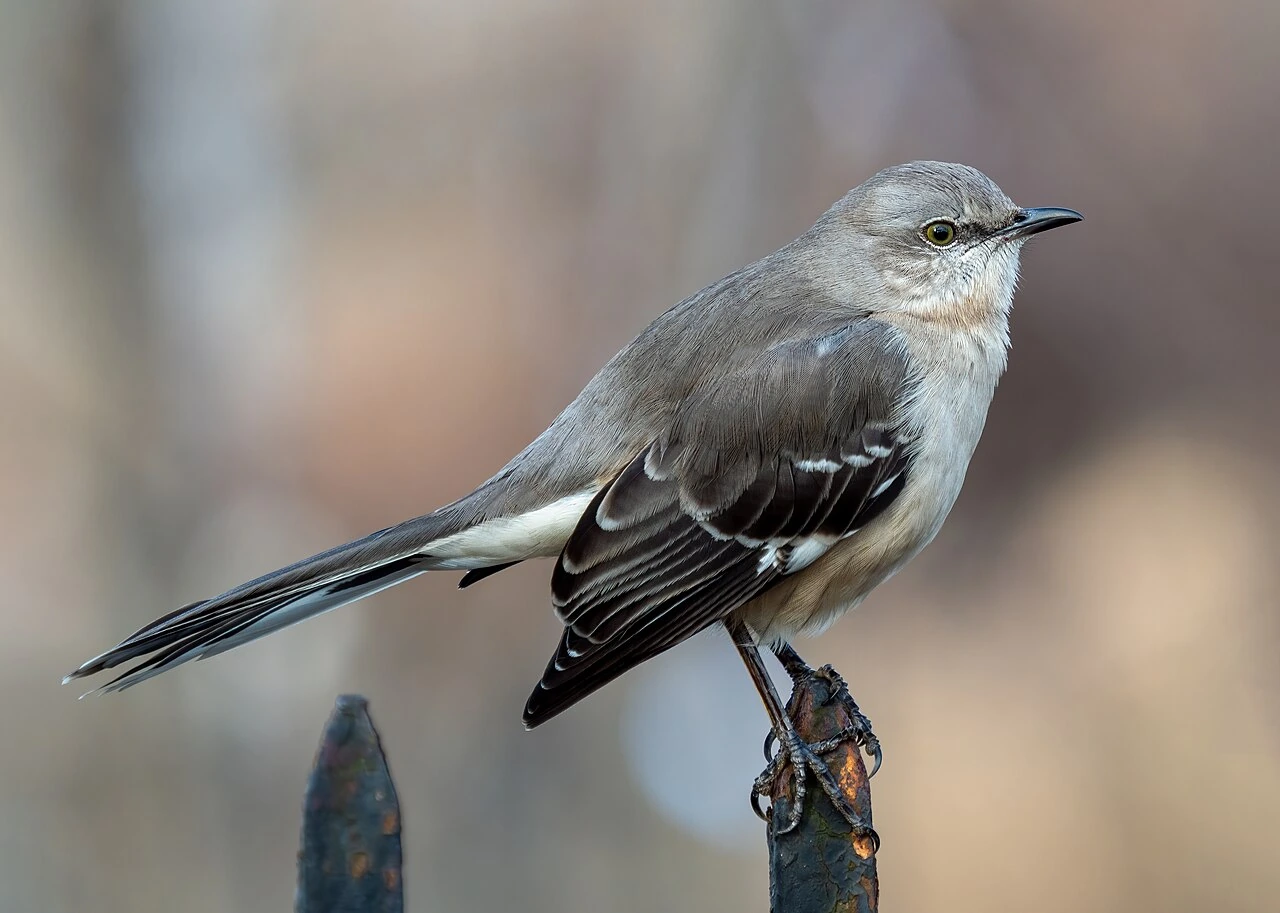
When someone searches 'jay bird meaning in Hindi,' they are almost always asking about the Eurasian Jay (Garrulus glandarius), the bright, noisy woodland bird whose harsh call gave the English word 'jay' its very name. In Hindi, this bird is most commonly rendered as जे (je) or जै (jai), a direct phonetic transliteration from English, since the Eurasian Jay does not have a long-established classical Hindi name the way native Indian species do. Some Hindi dictionaries, including Reverso, also list नीलकंठ (Nilkanth) as a translation, though that term more precisely refers to the Indian Roller, a different species. For clean, unambiguous usage, जे (je) is your safest bet when writing or speaking about the jay bird in Hindi.
Jay Bird Meaning in Hindi: नाम, उच्चारण और प्रतीक

Rajesh Sharma
15 May 2026
What 'Jay Bird' Usually Refers to (and the Common Name Confusion)
The word 'jay' in English is onomatopoeic. It grew from the harsh, shrieking call of Garrulus glandarius, the Eurasian Jay, the bird originally known simply as 'the jay' in Britain and Europe. Over time, the label expanded into a loose category name covering several corvid species, including the Blue Jay of North America. If you mean the North American Blue Jay, the same Hindi transliteration guidance applies, with the bird called जै or जे (bird context) depending on your source. So when someone says 'jay bird' without further specification, they usually mean one of two things: the Eurasian Jay (the original referent) or, in an American context, the Blue Jay. Both are members of the crow family, Corvidae.
Here is where the confusion gets interesting in an Indian-language context. 'Jay' in English looks and sounds almost identical to 'जय' (Jai/Jaya) in Hindi, which means victory, triumph, or cheers, as in the familiar phrase 'Jai Hind.' It is also a very common male given name. So when a Hindi speaker or language learner encounters the word 'jay,' there is a real risk of it being read as the cheer or the name rather than the bird. This article is specifically about the bird, so keeping that distinction sharp matters.
The Hindi Name for Jay Bird and How to Say It
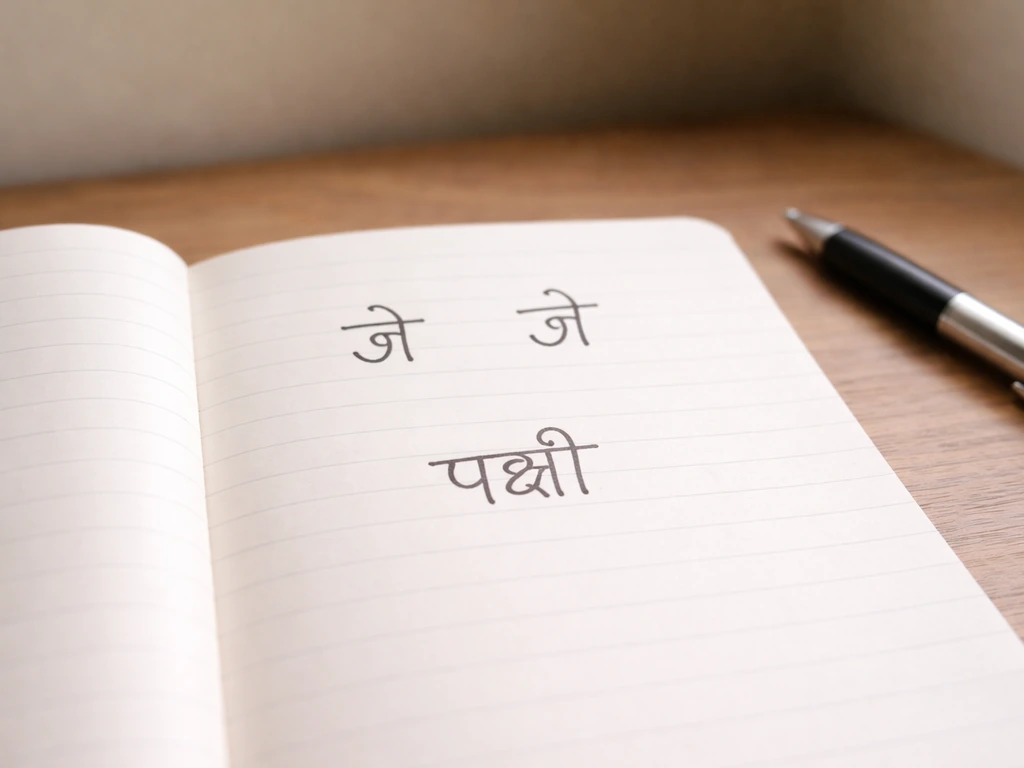
The standard Hindi translation for 'jay' (the bird) is जे (je), pronounced roughly like the English letter 'J' said on its own. You may also see जै (jai), pronounced like the English word 'jai' as in 'Jai Hind,' which is why the confusion with the victory-cheer spelling is so persistent. Both forms appear in major dictionaries like Shabdkosh, where 'jay' is explicitly listed as a noun referring to the bird, with the Hindi IPA noted as dʒeɪ. For the plural, you would say जे (plural context is usually handled by adding context words, similar to English 'jays').
If you want to be entirely unambiguous in Hindi, you can say 'जे पक्षी' (je pakshi), which simply means 'the jay bird,' using the Hindi word for bird (पक्षी, pakshi) to anchor it clearly as a species reference rather than a name or exclamation. This is especially useful in writing, where the reader cannot rely on spoken tone to tell them you are talking about a bird and not shouting a victory slogan.
A Quick Look at the Bird Itself
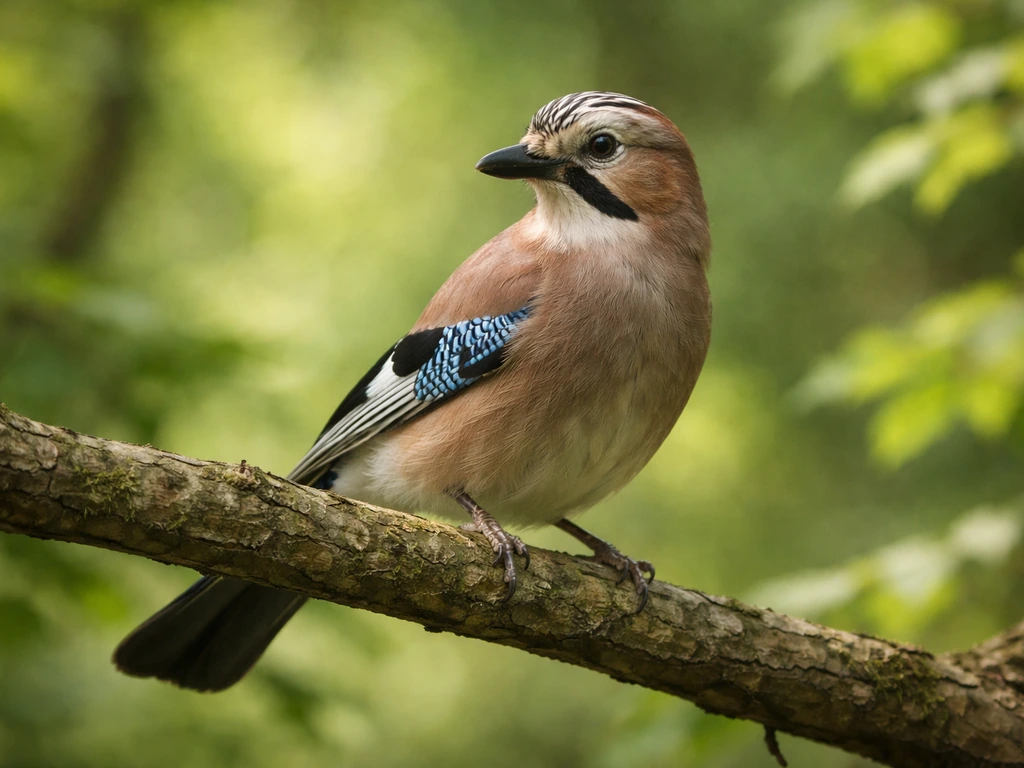
The Eurasian Jay (Garrulus glandarius) is a stocky, medium-sized member of the crow family. It has a stout black bill, a pinkish-brown body, a black-and-white wing pattern, and its most striking feature: a vivid patch of bright blue on the shoulder of each wing. oiseaux.
net identifies the Eurasian jay by its vivid blue wing patch and its black-and-white wing barring or banded pattern when the wing is closed [black-and-white wing pattern](https://www. oiseaux. net/birds/eurasian. jay.
html). In flight, it flashes a bold white rump. The call is a loud, harsh shriek described by ornithologists as 'kschaach,' an alarm sound that woodlands birds and human walkers learn to recognise quickly. It lives in broadleaf and coniferous woodland, scrubland, and increasingly in urban parks and gardens across Europe and parts of Asia.
One of its most well-known behaviors is acorn caching, storing hundreds of acorns in autumn to retrieve during winter, a habit that actually helps oak forests regenerate. In the Indian subcontinent, the Eurasian Jay's range extends into parts of the Himalayan foothills, which is one reason it appears in some Hindi ornithological texts.
Symbolism and Cultural Meanings in Hindi Tradition

The jay does not carry the deep mythological weight that birds like the peacock (mor, मोर), the crow (kauwa, कौआ), or the cuckoo (koyal, कोयल) do in classical Hindi and Sanskrit literature. Those birds appear repeatedly in the Ramayana, the Mahabharata, and in devotional poetry. The jay, as a primarily European and Himalayan-fringe species, never became a central figure in mainstream Hindu iconography.
That said, in Indian folk traditions and in the broader symbolic grammar shared across cultures, the jay is associated with a cluster of meanings that resonate with how Indian storytelling reads birds in general. Its noisy, alert nature links it to the idea of a messenger or herald, the bird that warns the forest. Its intelligence, particularly the acorn-caching behavior, connects it symbolically to foresight and resourcefulness. And its striking beauty, that flash of electric blue on the wing, associates it in some folk readings with good luck and auspicious sighting, similar to how the blue of the Indian Roller (Nilkanth) is considered sacred and lucky, especially around Dussehra.
In the context of omens and bird-reading (shakun shastra, शकुन शास्त्र), a branch of Indian folk knowledge concerned with reading bird behavior as signs, a loud, alarming bird call is often interpreted as a warning of incoming news or a change in situation. The jay's signature shriek fits this reading naturally. If you come across references to a noisy, colorful forest bird acting as a herald or warning-bringer in Hindi folk tales or regional lore, there is a reasonable chance the bird in question carries jay-like attributes, even if the species name used is local or approximate.
Using 'Jay Bird' Correctly in Hindi Sentences
For language learners, here are practical ways to work the term into conversation or writing without creating the जय (victory/name) confusion. If you were actually looking for a term like love bird meaning in hindi, you may want to focus on relationship vocabulary instead of the jay bird name confusion discussed above.
- जे एक चतुर पक्षी है। (Je ek chatur pakshi hai.) — The jay is an intelligent bird.
- उसने एक जे पक्षी देखा। (Usne ek je pakshi dekha.) — He/she saw a jay bird.
- जे पक्षी बलूत के बीज इकट्ठा करता है। (Je pakshi baloot ke beej ikatta karta hai.) — The jay collects acorns.
- जे की आवाज़ बहुत तेज़ होती है। (Je ki awaaz bahut tez hoti hai.) — The jay's call is very loud.
- यूरेशियन जे एक कौवा परिवार का पक्षी है। (Eurasian je ek kauwa parivaar ka pakshi hai.) — The Eurasian jay is a bird of the crow family.
Notice that using 'पक्षी' (pakshi, meaning bird) right next to 'जे' clears up ambiguity immediately. In spoken Hindi, your tone and context do the work. In written Hindi, always add पक्षी or a species descriptor like यूरेशियन (Eurasian) when the context is ornithological, so that readers do not misread जे/जै as the name 'Jay' or the cheer 'Jai.' Also note that 'Garrulus glandarius' can simply be written in its scientific form in academic or naturalist contexts, since scientific names are internationally consistent.
How the Word Looks Across Other Indian Languages
The Eurasian Jay does not have a single unified common name across the major Indian languages the way it does in English or French. Here is a quick cross-language snapshot to help you avoid lookup mistakes.
| Language | Term Used for Jay (Bird) | Caution / Note |
|---|---|---|
| Hindi | जे (je) / जे पक्षी | Do not confuse with जय (jai) = victory/name |
| Marathi | जे / जे पक्षी (je pakshi) | No distinct regional name; same transliteration applies |
| Punjabi | ਜੇ ਪੰਛੀ (je panchhi) | Panchhi = bird; same phonetic borrowing from English |
| Gujarati | જે પક્ષી (je pakshi) | Consistent with Hindi/Marathi transliteration pattern |
| Sanskrit | No classical term; शाखाशुक or corvid descriptors used | Classical Sanskrit names favor native species; jay would need a descriptive phrase |
The takeaway across all these languages is that the jay bird does not carry a deep indigenous name the way Sanskrit does for the parrot (शुक, shuka) or the crow (काक, kaka). If you are reading a Sanskrit text and encounter a colorful, noisy forest bird, it is more likely a reference to a native species. The jay as a named bird in Indian-language texts is almost always a modern, transliterated borrowing.
This is worth keeping in mind if you are comparing notes with similar entries for the hummingbird or mockingbird in Hindi, both of which face the same challenge of being non-native species without classical Indian names. You might also be searching for the humming bird meaning in Hindi, since these English bird names often get translated in different ways hummingbird in Hindi.
How to Quickly Verify Which 'Jay' Someone Means

Because 'jay' can mean the bird, the English name Jay (a person), or the Hindi word जय (victory/cheer), it is worth running a quick mental checklist when you encounter the word in any context.
- Is there a species or nature context? If the text mentions forests, feathers, calls, or wildlife, it is the bird.
- Is 'Jay' capitalised as a proper noun with no bird context? It is likely a person's name.
- Is जय followed by a place name or used as an exclamation (जय हिंद, जय श्री राम)? That is the victory/cheer meaning, not the bird.
- Does the text use scientific language like Garrulus glandarius or Corvidae? You are definitely in bird territory.
- Does the text mention a blue wing patch, acorn-storing, or a shrieking alarm call? Those are definitive Eurasian Jay identifiers.
- Is the context about the Blue Jay specifically? That is a North American species (Cyanocitta cristata), distinct from the Eurasian Jay, though both are corvids and both translate as जे (je) in Hindi.
If you are still unsure, the safest approach is to look up the scientific name in context. The Eurasian Jay is always Garrulus glandarius. If a source gives a different species name but still calls it a 'jay,' it is using the broader category label. Either way, the Hindi rendering stays जे (je) and the bird-family context (corvid, crow family) applies.
For those wanting to go deeper into how bird names work in Sanskrit and classical Indian languages, the Sanskrit treatment of bird terminology offers a rich layer of meaning that connects to mythology, Ayurveda, and poetic tradition in ways the jay's transliterated name simply cannot. In Sanskrit and classical Indian languages, the naming and interpretation of birds often carries layered meanings and traditional associations.
FAQ
जे (je) और जै (jai) में कौन सा सही है, और बोलते समय कैसे पहचानें?
दोनों रूप ‘jay’ के उच्चारण को पकड़ते हैं। जे (je) आमतौर पर “ज” जैसी ध्वनि (English J letter) के करीब रहता है, जबकि जै (jai) ‘Jai Hind’ वाली ध्वनि के करीब। अगर आप लिख रहे हैं, तो भ्रम से बचने के लिए हमेशा ‘जे पक्षी’ या ‘जै पक्षी’ लिखें, और साथ में यूरेशियन (Eurasian) भी जोड़ दें।
क्या नीलकंठ (Nilkanth) को ‘jay bird’ के लिए इस्तेमाल कर सकते हैं?
बेहतर नहीं, क्योंकि नीलकंठ का आम अर्थ अक्सर इंडियन रोलर से जुड़ा होता है, जो jay की अलग प्रजाति है। अगर किसी स्रोत में नीलकंठ लिखा है लेकिन साथ में वैज्ञानिक नाम या “roller” जैसा संकेत नहीं है, तो उसे अलग पक्षी मानकर ही चलें।
अगर मुझे ‘Blue Jay’ का मतलब हिंदी में चाहिए, तो लिखूं कैसे?
उसी transliteration सिद्धांत को रखें, पर unambiguous करने के लिए ‘ब्लू जे’ या ‘जै/जे पक्षी (ब्लू जे)’ जैसा संदर्भ जोड़ें। क्योंकि ‘जय’ (victory/name) वाली गलत पढ़त का जोखिम रहता है, लिखित रूप में ‘पक्षी’ शब्द साथ रखना जरूरी है।
‘jay bird’ को बिना किसी ambiguity के हिंदी में कैसे लिखूं?
सबसे सुरक्षित फॉर्मेट है ‘यूरेशियन जे पक्षी’ (या ‘जे पक्षी’ साथ में यूरेशियन). इससे यह स्पष्ट हो जाता है कि आप पक्षी की बात कर रहे हैं, जय (विजय/नाम) नहीं।
क्या ‘jay’ को बहुवचन (jays) में भी जे ही लिखना सही होगा?
ज्यादातर मामलों में बहुवचन को शब्द बदलकर नहीं, बल्कि संदर्भ वाक्य से स्पष्ट किया जाता है, जैसे “कई जे (पक्षी)” या “जे पक्षी जंगल में”. अगर आप केवल ‘जेस’ या ‘जे’ के रूप में बहुवचन लिखते हैं, तो पाठक शब्द-रूप से भ्रमित हो सकते हैं, इसलिए ‘पक्षी’ जोड़ना बेहतर है।
अगर कोई हिंदी पाठ में ‘जय’ शब्द देखे तो कैसे तय करें कि वह पक्षी है या विजय/नाम?
जैसे ही ‘पक्षी, चिड़िया, जंगल, पेड़, पंख’ जैसे bird-context वाले शब्द साथ हों, संभावना बढ़ती है कि पक्षी का आशय है। अगर वाक्य में “जै हिंद, विजय, नारा, अभिवादन” जैसी भावना हो, तो वह सामान्यतः victory/नाम वाला ‘जय’ है।
क्या ‘jay’ शब्द शकुन शास्त्र (omens) में अलग अर्थ रखता है?
लोक-व्याख्याओं में jay जैसी तेज और चेतावनी देने वाली पुकार को आने वाली खबर, बदलाव, या अलर्ट संकेत की तरह पढ़ा जा सकता है। हालांकि ये व्याख्याएं क्षेत्रीय होती हैं, इसलिए किसी कथन में अगर ‘कौन सा पक्षी’ स्पष्ट नहीं है, तो ‘jay-like’ गुणों (तेज पुकार, रंग, सतर्कता) के साथ ही संदर्भ देखें।
जब कोई source “jay” कहे लेकिन scientific name न दे, तो मुझे क्या करना चाहिए?
पहला कदम संदर्भ से है, कि वह यूरोप/हिमालय क्षेत्र, या अमेरिकन संदर्भ (Blue Jay) की बात कर रहा है या नहीं। दूसरा कदम है scientific name ढूंढना, क्योंकि ‘Garrulus glandarius’ ही Eurasian Jay की स्थिर पहचान है। बिना वैज्ञानिक नाम के “jay” कभी-कभी सिर्फ category label भी होता है, उसी के अनुसार हिंदी transliteration वही रखनी चाहिए, पर species मानने से पहले सावधानी रखें।