
The Nepali word for quail is बट्टाई, romanized as 'battai' (pronounced roughly buh-TAA-ee). It refers to the common quail (Coturnix coturnix), a small, ground-dwelling bird found across Nepal's fields and grasslands. If you've been searching for the exact Nepali term to use in writing, conversation, or a translation project, बट्टाई is the word you need.
Quail Bird Meaning in Nepali: Name, Pronunciation, Symbolism

Rajesh Sharma
2 Jun 2026
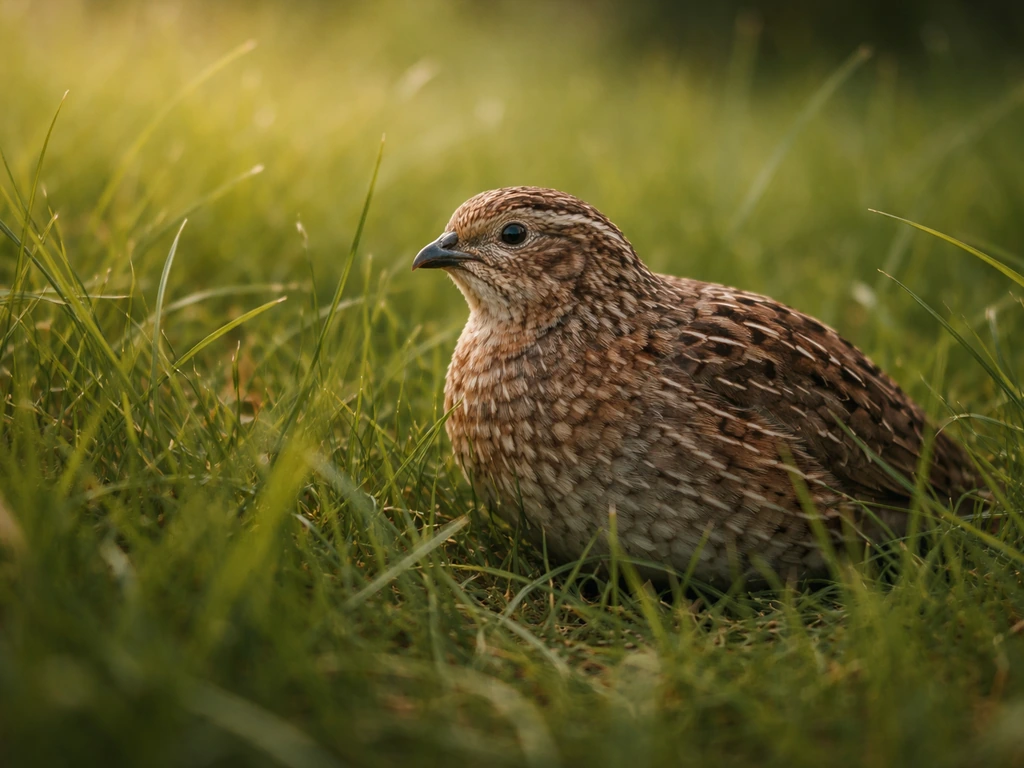
The Nepali word for quail: script, spelling, and pronunciation
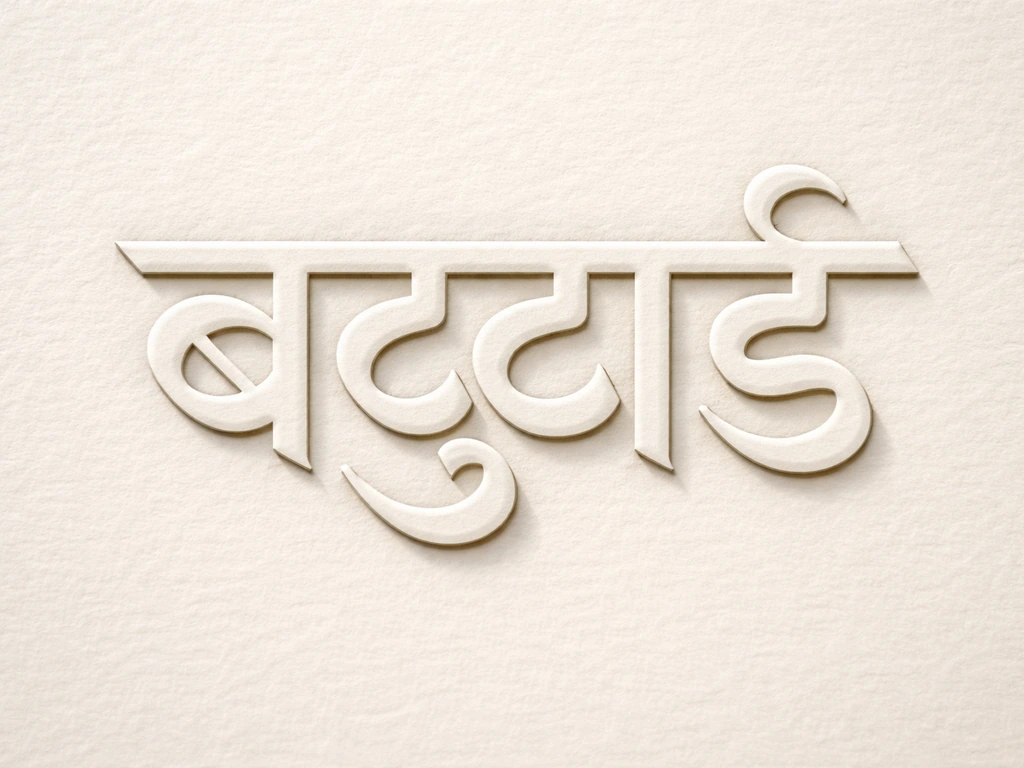
In Nepali Devanagari script, quail is written as बट्टाई. You'll sometimes see it spelled as बट्टाई in dictionary entries, which is simply a typographic variation of the same word. The romanized form is baṭṭāī in formal transliteration, but in everyday casual writing, you'll almost always see it written as battai. The double 'tt' in the romanized version signals the retroflex consonant ट, which is a harder 't' sound made by curling the tongue back slightly toward the roof of the mouth. The word ends with a long 'ee' sound, so the stress falls on the second syllable: buh-TAA-ee.
Nepal's official livestock and agricultural resources documentation (पशुपन्छी तथा जलीय कृषि जनवार, २०८२) lists the quail entry as: Common name: Quail, Nepali name: बट्टाई, Scientific name: Coturnix coturnix. The official Birds of Nepal checklist published by the Department of National Parks and Wildlife Conservation also recognizes the Common Quail (Coturnix coturnix) as a species found in Nepal, with local naming aligned to बट्टाई. So whether you're looking at a wildlife guide or an agricultural text, this is the accepted standard term.
Common names vs. scientific reference: how Nepali maps to the bird
In Nepal, बट्टाई is the general common name used for quail across everyday speech, birding communities, and official documentation. It applies primarily to the Common Quail (Coturnix coturnix), which is the most widely distributed quail species in South Asia. Nepal also has the Rain Quail (Coturnix coromandelica) recorded within its borders, and while some regional speakers may simply call all quail बट्टाई, birding literature will distinguish species by using the scientific name alongside the local term.
It's worth knowing that the quail family (Phasianidae) in Nepal sits alongside other ground birds like partridges and francolins. Nepali speakers don't always draw a sharp linguistic line between these birds in casual speech, but in formal contexts, बट्टाई specifically refers to quail rather than partridge (which would be तित्रा or तितर in other South Asian languages). Keeping this distinction in mind is useful if you're using the term in a wildlife, culinary, or academic context.
What quail symbolizes in South Asian tradition
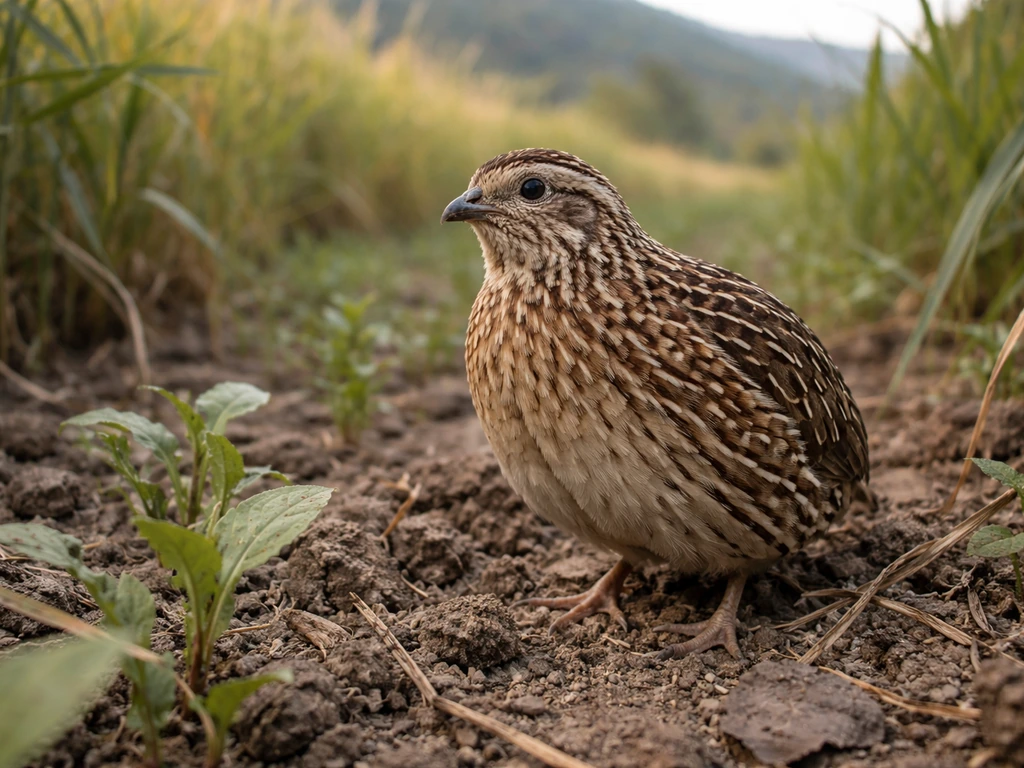
The quail occupies a quietly significant space in South Asian cultural symbolism. Across the broader Indian subcontinent, it is associated with courage that outweighs its size, vigilance, and a kind of humble resourcefulness. The bird lives low to the ground, moves through tall grass mostly unseen, and rises explosively when threatened. These behavioral traits have shaped how people in this region understand the quail symbolically: it represents the idea that strength and alertness can exist in a small, unassuming form.
In Nepali and broader Himalayan folk culture, the quail is also tied to agricultural cycles. Its appearance in the fields during certain seasons was historically read as a sign of the rains or of harvest, making it a bird associated with good timing and natural attunement. Farmers who noticed quail settling near their crops sometimes interpreted it as a favorable omen for the growing season ahead.
Quail in mythology and folklore
The quail has a striking presence in ancient Vedic and Sanskrit literature. In the Rigveda, one of Hinduism's oldest texts, the quail (called वर्तिका or वर्तक in Sanskrit) appears in the famous story of the Ashvins rescuing Vartika, a quail, from the jaws of a wolf. The Ashvins, the twin divine physicians of Vedic tradition, are celebrated for this act of rescue, and the quail in this story becomes a symbol of the vulnerable being protected by divine intervention. This is one of the oldest bird-rescue narratives in Indian literary tradition.
There is also a well-known Jataka tale from the Buddhist tradition in which a quail, as a past life of the Bodhisattva (the future Buddha), demonstrates remarkable wisdom and community leadership. In the story, a flock of quail outwit a hunter by cooperating: they lift a net together and fly away as one. But when discord enters the flock and they lose their unity, the hunter catches them. The moral is direct: unity protects, division destroys. This tale was likely well known in Nepal given the country's deep Buddhist heritage, especially in regions like Mustang, the Kathmandu Valley, and areas bordering Tibet.
In folk traditions across the subcontinent, quail fighting was historically a popular pastime, somewhat like cockfighting in other cultures. This background lends the quail an association with fighting spirit and courage. A small bird willing to stand its ground earned genuine admiration in communities where such contests took place.
Positive and negative symbolic traits
The quail's symbolic profile is mostly positive, but it carries a few dual-edged associations worth knowing.
| Symbolic Trait | Interpretation | Tone |
|---|---|---|
| Courage | Small bird, big fight — stands up to threats despite its size | Positive |
| Vigilance | Always alert, rises quickly when danger is near | Positive |
| Unity and cooperation | Jataka tale of the quail flock lifting a net together | Positive |
| Humility | Lives close to the earth, unpretentious and grounded | Positive |
| Seasonal attunement | Arrival linked to monsoon and harvest timing | Positive |
| Vulnerability | Easily hunted, dependent on community for survival | Neutral / cautionary |
| Discord as downfall | When the quail flock fights, they are caught — disunity is fatal | Cautionary |
In dream symbolism and informal omen reading across South Asia, seeing a quail is generally considered auspicious, often read as a sign of upcoming good fortune, a productive season, or protection from unseen danger. A quail calling near the home is sometimes taken as a positive sign in rural Nepali and North Indian communities.
How to use बट्टाई: practical guide for language learners
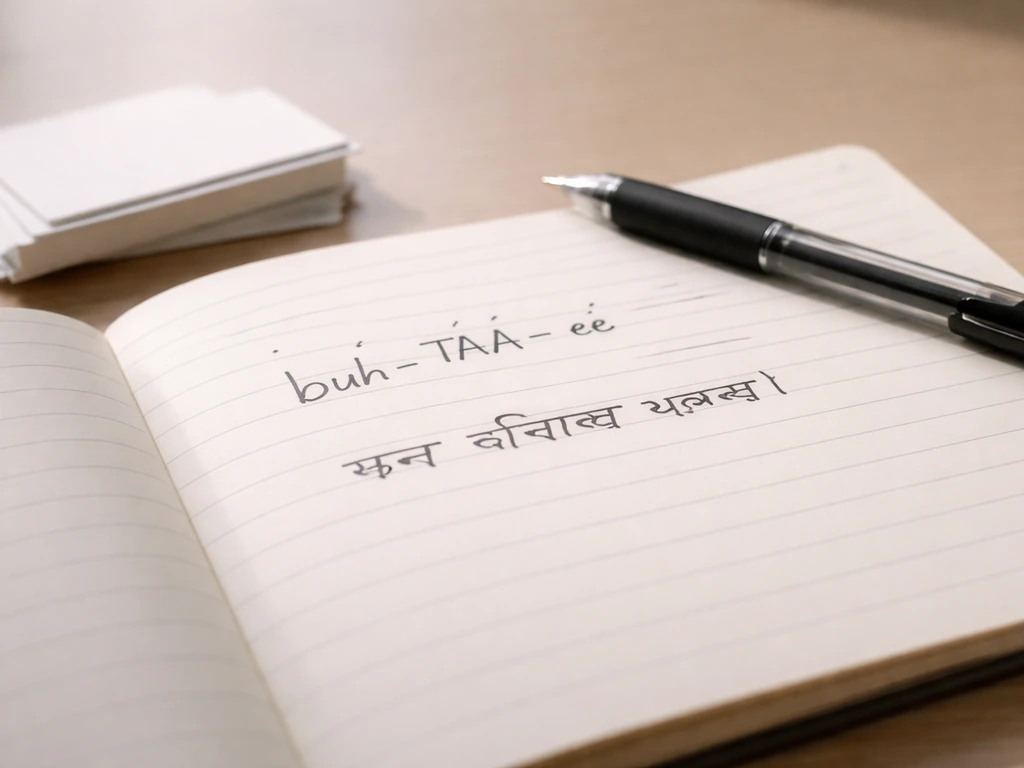
Pronunciation guide
- बट्टाई = buh-TAA-ee (stress on the second syllable)
- The 'ट' sound is a retroflex 't' — harder than an English 't', made by curling the tongue back slightly
- The final 'ई' is a long, clear 'ee' vowel, not a short 'i'
- In everyday speech, Nepali speakers say it fluidly as one word: battai
Example phrases in Nepali
- बट्टाई एउटा सानो चरा हो। (Battai euta sano chara ho.) — The quail is a small bird.
- यो बट्टाई हो। (Yo battai ho.) — This is a quail.
- बट्टाई खेतमा पाइन्छ। (Battai khetma painchha.) — Quail are found in the fields.
- नेपालमा बट्टाईको वैज्ञानिक नाम Coturnix coturnix हो। (Nepalma battaiko vaigyanik naam Coturnix coturnix ho.) — The scientific name of quail in Nepal is Coturnix coturnix.
- बट्टाई साहसी चरा मानिन्छ। (Battai sahasi chara maninchha.) — The quail is considered a courageous bird.
If you're writing the word in an English-language document and want to clarify the Nepali term, a clean format is: quail (Nepali: बट्टाई, battai). This is how you'd see it in a bilingual wildlife guide or a language learning resource.
Quail across Indian languages: a quick cross-language comparison
Since this site covers bird terminology across Hindi, Sanskrit, Marathi, Punjabi, and Gujarati, it's worth seeing how quail naming patterns connect across the region. The Nepali बट्टाई shares roots and sound similarities with terms used in neighboring language traditions, which makes sense given the shared Devanagari script base and intertwined cultural history.
| Language | Word for Quail | Script / Romanization | Notes |
|---|---|---|---|
| Nepali | बट्टाई | battai | Standard term; used in official wildlife and agricultural texts |
| Hindi | बटेर | bater | Common everyday term in North India; same bird, slightly different form |
| Sanskrit | वर्तिका / वर्तक | vartika / vartak | Classical term; appears in Vedic texts including the Rigveda |
| Marathi | लावा / लाव | lava / laav | Used in Maharashtra; 'lava' also has poetic connotations |
| Punjabi | ਬਟੇਰ | bater | Similar to Hindi; used in Punjab for common quail |
| Gujarati | બટેર | bater | Close to Hindi/Punjabi form; used across Gujarat |
What you notice immediately is that Hindi, Punjabi, and Gujarati all use a variation of 'bater,' while Nepali uses 'battai. In Gujarati, the kite bird meaning is typically explained with context from local naming traditions. In Gujarati, you may also come across the term associated with the papiha bird, so check its meaning and usage in that language for accurate understanding papiha bird meaning in gujarati.
' Both forms likely trace back to the same Sanskrit root, with regional sound shifts over centuries. The Marathi 'lava' is a distinct regional name and carries its own poetic and folk associations in Marathi literature, which makes the quail terminology in Marathi particularly interesting to explore separately. If you are also curious about bird symbolism and what names mean in Gujarati, you may want to check crane bird meaning in gujarati as a related comparison point.
If you're curious about how quail naming and symbolism plays out in Marathi specifically, the quail bird meaning in Marathi is worth looking at alongside this article. If you want the Marathi meaning of the quail bird name, that guide will help you with the exact wording and context too quail bird meaning in Marathi. The quill bird meaning in Hindi is often discussed alongside the Hindi equivalents of quail naming and symbolism quail bird meaning in Marathi.
The Sanskrit term वर्तिका (vartika) is the classical ancestor that ties all of these regional names together. It appears in both Vedic hymns and Buddhist Jataka tales, giving the quail a documented literary history going back over 3,000 years in this part of the world. That's a remarkable lineage for a small ground bird that most people today would overlook in a field.
Putting it all together
If you came here needing the Nepali word for quail, you have it: बट्टाई (battai), the standard term validated by Nepal's official wildlife checklists and agricultural documentation, referring to Coturnix coturnix, the Common Quail. Beyond the translation, the quail carries a genuinely rich symbolic history in South Asian tradition: it stands for courage, vigilance, unity, and seasonal attunement.
From a Vedic rescue story to a Buddhist tale about the fatal cost of discord, this small bird has been carrying big meaning for a very long time. Whether you're a language learner building vocabulary, a cultural enthusiast exploring South Asian bird symbolism, or just someone who wanted a quick answer before a translation job, bट्टाई is your word and the tradition behind it is deeper than most people expect.
If you're also looking for the quail meaning in Hindi, that related guide covers the same bird-name question in an easy, direct way.
FAQ
How do you write quail in Nepali if you are using Unicode without Devanagari input tools?
You can write it in Devanagari as बट्टाई. If you are typing in plain text, use the transliteration battai or baṭṭāī, but for formal documents prefer बट्टाई to avoid confusion with similarly spelled words.
Is बट्टाई always the correct Nepali word for any quail species, including Rain Quail?
In everyday speech, many people use बट्टाई for all quail. For accuracy, especially in birding or writing, specify the scientific name (for example, Coturnix coromandelica) or mention it as Rain Quail alongside बट्टाई.
What is the correct pronunciation of बट्टाई, and do I need to pronounce the double “t” differently?
Say it roughly buh-TAA-ee, with the “t” sound feeling harder and slightly curled (retroflex) before the final long “ee.” In casual speech, slight variation happens, but keeping the stress on the second syllable helps listeners recognize the word.
I saw the spelling बट्टाई in a dictionary. Is that a different word from बट्टाई?
It is the same word with a typographic variant. The extra marker reflects how the retroflex “ट” is represented in some dictionaries, so you can treat बट्टाई and बट्टाई as identical for meaning.
How should I translate quail in a menu or culinary context in Nepali?
Use बट्टाई as the general term, but add “common” or the scientific/common bird name if you know which species is involved. If the dish refers to a different game bird, using only बट्टाई can be misleading because casual speech sometimes blends names for ground birds.
In Nepali, is बट्टाई the same as partridge or titar in other South Asian languages?
No, in formal usage बट्टाई refers specifically to quail. Partridge is typically تित्रा or related forms, so if your text needs precision, use the correct local bird name or include the scientific name.
What should I write in a bilingual sentence if I want clarity for English readers?
A clean format is “quail (Nepali: बट्टाई, battai).” This avoids disputes over spelling or pronunciation when readers copy the transliteration from a printed or digital source.
Does quail symbolism in Nepali culture depend on the bird’s behavior, like calling vs. appearing in fields?
Yes, informal interpretations often link meaning to what the bird is doing. Calling near a home is commonly read as positive, while presence in fields is sometimes tied to seasonal timing, but these are folk readings, not fixed “official” meanings.
If I am writing academically, what is the safest way to identify the bird called बट्टाई?
Use both the local name and scientific name, such as बट्टाई (Coturnix coturnix). This prevents problems where multiple ground birds get mixed in casual usage, and it also makes your claim checkable across regions.
Next Articles

Papiha Bird Meaning in Gujarati: Name, Species, Symbolism
પપિહા પક્ષીનું ગુજરાતી અર્થ, કયું પક્ષી કહેવાય છે, તેની ઓળખ કેવી રીતે કરવી અને મોનસૂન-પ્રતીકો શું દર્શાવે છે
Bird Beak Meaning in Hindi: Chonch, Bill, Pronunciation
Bird beak in Hindi chonch or bill, pronunciation, examples, beak vs bill differences, and figurative Hindi use
Bird Pankh in English Meaning: Wings or Feathers?
Learn bird pankh in English meaning: pankh means feathers or wings, with context rules, examples, and regional equivalen