
If you searched for 'quill bird meaning in Hindi,' you are most likely looking for one of two things: the Hindi word for a quill (a feather or feather-pen), or the Hindi word for a quail (the small ground bird). These are two completely different English words that sound similar and get confused constantly in search queries. The Hindi word for a feather or quill is पंख (paṅkh), the Hindi word for a quill pen is पंख की कलम (paṅkh kī kalam), and the Hindi word for the bird quail is बटेर (baṭer). There is no distinct bird in Indian ornithology called a 'quill bird,' so one of these three meanings is almost certainly what you need.
Quill Bird Meaning in Hindi: Translation, Pronunciation & Culture

Rajesh Sharma
15 Jul 2026
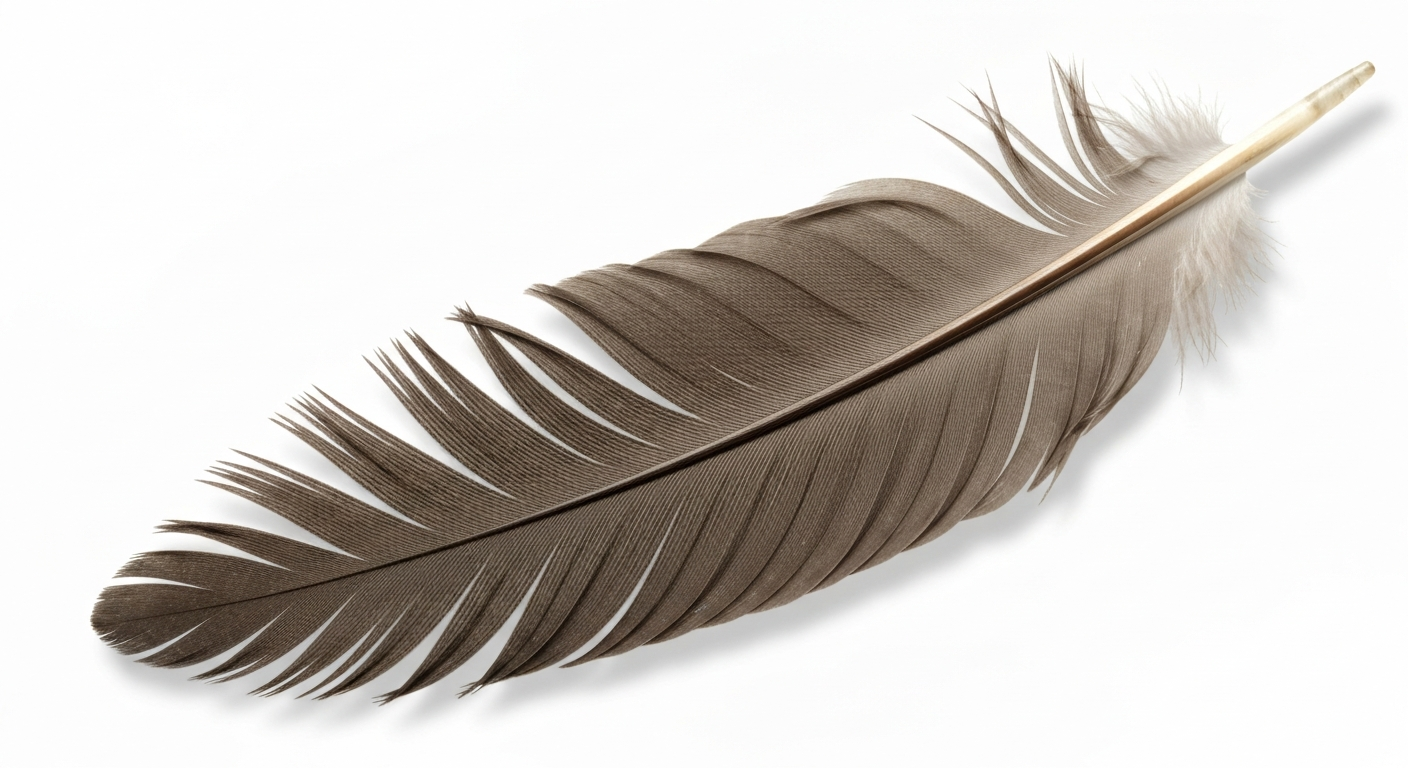
Quill, quail, or something else? Sorting out the confusion
The confusion here is entirely understandable. In English, 'quill' and 'quail' differ by a single vowel sound, and when typed quickly or searched by non-native English speakers, the two get mixed up regularly. Online Hindi dictionaries reflect this: searches for 'quill meaning in Hindi' return results about feathers and feather-pens, while 'quail meaning in Hindi' pulls up बटेर (the ground bird). Both searches are common, and the overlap happens because users are often unsure which spelling they mean.
Here is the quick disambiguation. A quill (noun, English) refers to either a large flight feather from a bird's wing or tail, or the old-fashioned writing pen made from such a feather. The two have the same Hindi root: पंख. A quail is an entirely separate thing: a small, plump ground bird found across India, Asia, and beyond. Its Hindi name is बटेर. And just to complete the picture: no bird in common Indian usage goes by the local nickname 'quill bird,' so if you saw that phrase somewhere, it was almost certainly a misspelling or mistranslation of 'quail bird.'
Hindi translations at a glance
Below are the three core entries you need, each with Devanagari script, standard IAST romanization, an informal romanization used in everyday typing, and IPA pronunciation. These forms follow ISO 15919 and IAST conventions for publication-grade accuracy.
| English sense | Hindi (Devanagari) | IAST romanization | Informal romanization | IPA pronunciation |
|---|---|---|---|---|
| Quill (feather) | पंख | paṅkh | pankh | /pəŋkʰ/ |
| Quill pen (writing tool) | पंख की कलम | paṅkh kī kalam | pankh ki kalam | /pəŋkʰ kiː kələm/ |
| Quail (the bird) | बटेर | baṭer | bater | /bə.ʈeːɾ/ |
A note on script: पंख uses the anusvara (the dot above the line, called अनुस्वार in Hindi) to represent the nasal sound before the kh. If you are typing in Hindi on a phone keyboard, this character is usually accessible through the vowel marker menu. बटेर uses the retroflex ट, which is the distinctively Indian 't' sound made with the tongue curled back.
What each word actually means and when to use it
पंख (paṅkh), feather or quill
पंख is the everyday Hindi word for a feather, a wing, or a quill in the feather sense. It covers a broad range of meanings: a single fallen feather you might pick up, the wing of a bird in flight, or the large flight feather that historical scribes trimmed into writing instruments. In poetic Hindi and Urdu, you will also see the softer spelling पाँख (pāṃkh), which carries the same meaning but has a more literary, classical tone. Use पंख in any context where you are talking about a bird's feather physically or describing something wing-like.
पंख की कलम (paṅkh kī kalam), quill pen
When the meaning is specifically a writing quill, Hindi uses the compound पंख की कलम, literally 'the pen of the feather' or 'feather pen.' You may also encounter पंखलेखनी (paṅkh-lekhanī), a more Sanskritized compound that combines paṅkh (feather) with lekhanī (writing instrument). In modern Hindi prose and historical fiction, पंख की कलम is the more natural and widely understood form. Use it whenever the context is writing, manuscripts, or historical descriptions of scribes.
बटेर (baṭer), the quail bird
बटेर is the standard Hindi name for the quail, and it is the translation you need if you were actually searching for the bird. The word appears in Hindi dictionaries from Collins to HinKhoj and Shabdkosh with no ambiguity. It is used in everyday spoken Hindi across northern India, in wildlife journalism, and in traditional poetry. The word has a warm, rustic feel to it, it belongs to the vocabulary of fields, harvests, and monsoon rains rather than formal zoological writing.
Sanskrit roots and regional equivalents
The Sanskrit lexical trail here is genuinely interesting. The Monier-Williams Sanskrit dictionary records vartīra, vartikā, and vārtika as ancient Sanskrit names for quail-type birds. These forms are cognates of the modern Hindi baṭer, showing a clear phonological evolution: Sanskrit vartika (with the retroflex cluster) shifted over centuries into the Prakrits and eventually into the Hindi baṭer we use today. For the feather/wing concept, Sanskrit uses pakṣa (पक्ष), which also means 'side' or 'wing' in the broader philosophical and astronomical sense, the same root that gives us पक्षी (pakṣī), the common Sanskrit-origin word for bird.
Across the major regional languages of India, the word for quail is strikingly consistent, reflecting the shared Indo-Aryan base. Here is how the term looks in each language:
| Language | Script | Romanization | Notes |
|---|---|---|---|
| Hindi | बटेर | baṭer | Standard across northern India; used in literature and journalism |
| Sanskrit | वर्तिका / वर्तीर | vartikā / vartīra | Classical names in Monier-Williams; root of modern baṭer |
| Marathi | बटेर / लावा | baṭer / lāvā | baṭer is used alongside lāvā for quail in Marathi bird literature |
| Punjabi | ਬਟੇਰ | baṭer | Gurmukhi script; same pronunciation as Hindi; used in folk songs |
| Gujarati | બટેર | baṭer | Same cognate form; bird is known in Gujarati rural vocabulary |
| Nepali | बटेर | baṭer | Shared Devanagari spelling; used across hill and Terai regions |
For the feather/quill sense, regional equivalents include Marathi पंख (paṅkh), identical to Hindi, and Gujarati પાંખ (pāṃkh), which shares the same Sanskrit pakṣa root. Punjabi uses ਖੰਭ (khambh) for feather, which is a slightly different phonological development from the same Sanskrit base. If you are exploring bird vocabulary across Indian languages, the quail entry pairs well with quail in Marathi and quail in Nepali, where regional usage and local species names add further texture. For the Nepali term and meaning of the quail, see quail bird meaning in Nepali (Nepali translation and usage).
Pronunciation guide for learners
Hindi pronunciation trips up learners most often at two points in these words: the nasal consonant cluster in पंख and the retroflex consonants in बटेर. Let me walk through each.
For पंख (/pəŋkʰ/): the vowel is a short, central schwa sound, similar to the 'u' in English 'but.' The ṅ is a velar nasal, like the 'ng' in 'sing,' and it runs directly into the aspirated kh sound. Do not insert a vowel between the nasal and the kh. The whole word is one syllable. A common learner mistake is saying 'pa-an-kha' with three syllables, keep it tight and one-beat: pankh.
For बटेर (/bə.ʈeːɾ/): this is a two-syllable word with stress on the second syllable. The ट is a retroflex stop, curl your tongue tip back toward the roof of your mouth before releasing. This is the sound that distinguishes Indian languages from European ones, and it takes practice. The long ē in the second syllable should be held slightly longer than a short 'e.' A rough English approximation: 'buh-TAIR,' with the T made retroflexly. Avoid saying 'ba-ter' with a flat British or American T; the retroflex quality is essential for native-sounding pronunciation.
- पंख: one syllable, nasal-aspirate cluster, schwa vowel — do NOT split into multiple syllables
- बटेर: two syllables, stress on second, retroflex ट is essential
- पंख की कलम: three words, natural pause after paṅkh; kī is a short linking particle
- Do not confuse the aspirated kh in पंख with a simple 'k' — the breath puff on kh is audible
- In colloquial fast speech, बटेर can sound close to 'bter' with the first vowel nearly swallowed
What does a quail actually look like? Field notes for the curious
If you were searching for the bird, here is a quick picture of what बटेर actually is. India hosts several quail species, the most widespread being the Common Quail (Coturnix coturnix) and the Rain Quail (Coturnix coromandelica). See India Biodiversity Portal, Coturnix coturnix (Common Quail) species page for distribution and identification details India Biodiversity Portal — Coturnix coturnix (Common Quail) species page. The Common Quail is a small, rounded bird roughly 16 to 18 centimetres long, brown-streaked above and pale below, built low to the ground with short wings and a very short tail. It looks like a tiny, rotund chicken and moves through grassland and agricultural fields with a bobbing, secretive walk.
The Rain Quail (called वर्षा बटेर or बारिश बटेर in Hindi) is slightly smaller and the male has a striking black chest patch. As the name suggests, it is closely associated with the monsoon season, arriving or becoming more vocal as the rains begin. This seasonal timing has given it cultural resonance in parts of India, where its call is treated as a herald of the rains. The Jungle Bush Quail (Perdicula asiatica) is another Indian species, found in scrub and dry grass, small, boldly barred, and often heard before seen. All three species are ground-dwellers that prefer to run rather than fly.
- Common Quail (Coturnix coturnix): 16-18 cm, brown-streaked, migratory, found in open farmland and grasslands
- Rain Quail (Coturnix coromandelica): smaller, male has black breast patch, strongly associated with monsoon arrival
- Jungle Bush Quail (Perdicula asiatica): heavily barred, dry scrub and grassy hills, often in coveys
- All species are ground-nesters, mostly crepuscular, and more often heard than seen
- Call of the Common Quail is a loud, rhythmic 'wet-my-lips' whistle repeated from dense grass
Cultural and literary life of feathers and quail in Hindi tradition
The feather in mythology and poetry
पंख carries enormous symbolic weight in Hindu mythology and Hindi literature. The peacock feather (मोर पंख, mor paṅkh) worn by Krishna in his crown is perhaps the most iconic image in all of Indian religious art. Feathers appear in the Mahabharata and Ramayana as symbols of divine grace, swiftness, and the soul's capacity to transcend the earthly. The verb उड़ना (uṛnā, to fly) and the noun पंख together form one of Hindi poetry's most enduring metaphors for aspiration and freedom. You will find this throughout the ghazals of Mir and Ghalib as well as in modern Hindi film song lyrics: पंख होते तो उड़ जाते (if I had wings, I would fly away) is a phrase that resonates across generations.
The quill pen and the art of writing
Historically, the association between feathers and writing (पंख की कलम) is not just Western. In medieval Indian manuscript culture, scribes used reed pens and occasionally feather quills. The image of a learned scholar writing by lamplight with a feather pen appears in miniature paintings from the Mughal court tradition. The feather-as-pen therefore sits at the crossroads of bird symbolism and intellectual culture in the Indian imagination. To call someone a 'man of the pen' (कलम का आदमी) in Hindi is still a respectful idiom for a writer or intellectual.
The quail in folk tradition and monsoon culture
बटेर does not carry the grand mythological weight of the peacock or the eagle, but it has a quiet, persistent presence in rural Indian culture. The Rain Quail's arrival and call are traditionally read as signs that the monsoon is imminent, giving it a folk-calendrical significance in agricultural communities. In Punjabi folk songs and Hindi rural poetry, the quail often appears as a symbol of the small and vulnerable creature that survives by staying close to the earth. Quail fighting (बटेर-बाज़ी, baṭer-bāzī) was historically a pastime in northern India, particularly in Awadh and parts of Punjab, and the word बटेर appears in classical Urdu and Braj poetry in this context. The idiom बटेर जैसी चाल (a quail-like gait) describes someone who moves in a small, hurried, ground-hugging way.
Sample sentences for language learners
Here are practical Hindi sentences using each of the three key terms, with English glosses. These are written at an intermediate learner level and cover both formal and colloquial registers.
- उसने ज़मीन पर एक सफेद पंख देखा। (Usne zamīn par ek safed paṅkh dekhā.) — He/she saw a white feather on the ground. [पंख as feather, everyday register]
- पुराने ज़माने में लोग पंख की कलम से लिखते थे। (Purāne zamāne meṃ log paṅkh kī kalam se likhte the.) — In the old days, people used to write with a quill pen. [historical/descriptive]
- मोर का पंख बहुत सुंदर होता है। (Mor kā paṅkh bahut sundar hotā hai.) — A peacock's feather is very beautiful. [cultural/descriptive]
- उस खेत में एक बटेर बोल रही थी। (Us khet meṃ ek baṭer bol rahī thī.) — A quail was calling in that field. [बटेर as bird, rural/natural context]
- वर्षा बटेर मानसून का संकेत माना जाता है। (Varṣā baṭer mānsūn kā saṃket mānā jātā hai.) — The Rain Quail is considered a sign of the monsoon. [cultural note, formal register]
- बच्चे ने पूछा: 'यह पंख किस चिड़िया का है?' (Bacce ne pūchā: 'Yah paṅkh kis ciṛiyā kā hai?') — The child asked: 'Which bird does this feather belong to?' [conversational, learner-friendly]
- बटेर ज़मीन पर दौड़ती है, उड़ती कम है। (Baṭer zamīn par dauṛtī hai, uṛtī kam hai.) — The quail runs on the ground; it rarely flies. [natural history context, present tense]
Quick reference translation table
| English | Hindi (Devanagari) | Romanization | IPA |
|---|---|---|---|
| Feather / quill (feather) | पंख | paṅkh | /pəŋkʰ/ |
| Wing | पंख | paṅkh | /pəŋkʰ/ |
| Quill pen / feather pen | पंख की कलम | paṅkh kī kalam | /pəŋkʰ kiː kələm/ |
| Quill pen (Sanskritized) | पंखलेखनी | paṅkh-lekhanī | /pəŋkʰ leːkʰəniː/ |
| Quail (bird) | बटेर | baṭer | /bə.ʈeːɾ/ |
| Rain Quail | वर्षा बटेर | varṣā baṭer | /ʋərʂaː bə.ʈeːɾ/ |
| Bird (general) | पक्षी / चिड़िया | pakṣī / ciṛiyā | /pəkʂiː/ /tʃɪɽɪjaː/ |
| Peacock feather | मोर पंख | mor paṅkh | /moːɾ pəŋkʰ/ |
Suggested images for publication
The following image suggestions are sourced from freely licensable repositories including Wikimedia Commons and the India Biodiversity Portal. Always verify the specific licence (CC BY, CC BY-SA, etc.) before publishing.
- Image: A large flight feather (ideally peacock or crane) against a plain background. Caption: 'A bird's flight feather — called पंख (paṅkh) in Hindi, the same word used for both feather and wing.' Alt text: 'Close-up of a large bird feather representing the Hindi word paṅkh meaning quill or feather.'
- Image: A traditional quill pen (feather with trimmed nib) resting on an old manuscript or ink pot. Caption: 'A feather quill pen — पंख की कलम (paṅkh kī kalam) in Hindi, historically used by scribes across South Asia.' Alt text: 'A quill feather pen on an old manuscript, illustrating the Hindi term pankh ki kalam meaning quill pen.'
- Image: Male Common Quail (Coturnix coturnix) or Rain Quail (Coturnix coromandelica) in grassland. Caption: 'The Common Quail — बटेर (baṭer) in Hindi — a small ground bird found across India in open farmland and grassy fields.' Alt text: 'A Common Quail bird standing in grass, known as baṭer in Hindi, illustrating the quail bird meaning in Hindi.'
- Image: Krishna miniature painting showing the peacock feather crown (mor paṅkh). Caption: 'The peacock feather (मोर पंख, mor paṅkh) in Krishna's crown — one of the most iconic uses of feather symbolism in Hindu tradition.' Alt text: 'Miniature painting of Krishna wearing a peacock feather crown, illustrating the cultural symbolism of pankh in Hindi and Hindu mythology.'
Exploring related bird terms across Indian languages
If this entry led you here from a broader interest in bird vocabulary across Indian languages, there are several closely related areas worth exploring. The quail in Marathi and the quail in Nepali each have their own regional names and cultural contexts that build on the shared baṭer root, the Marathi entry in particular notes the alternate term लावा (lāvā) used in some regional and wildlife contexts. For Gujarati bird vocabulary, the crane, kite, and papiha entries offer a window into how Gujarat's distinct linguistic tradition names and symbolizes these birds differently from standard Hindi. The papiha (the pied cuckoo or Jacobin cuckoo) is especially rich in monsoon symbolism across all Indian languages and makes for a fascinating comparison with the Rain Quail's own seasonal associations. For example, you can also look up the papiha bird meaning in Gujarati to compare regional monsoon symbolism for the pied cuckoo.
FAQ
What does a search for “quill bird meaning in Hindi” most likely intend?
Most users mean one of two things: (A) “quill” as a feather or quill‑pen (English senses: feather / writing tool), or (B) “quail” the small ground bird (often confused because quill and quail are similar in sound). Less commonly it could refer to a local bird nicknamed “quill.” Clarify intent by asking whether they mean a feather/quill‑pen (पंख / पंख की कलम) or the bird quail (बटेर).
What is the correct Hindi word for “quill” meaning a feather? Provide script, romanization and pronunciation.
Feather (quill): पंख — Romanization (IAST-style): paṅkh; common romanization: pankh. Pronunciation (approx. IPA): /pəŋkʰ/. Use पंख (pankh / paṅkh) for ordinary 'feather' or 'quill' (flight feather) in Hindi sources (Wiktionary, Hindi dictionaries).
What is the Hindi term for “quill” meaning a quill‑pen (writing instrument)?
Quill pen: पंख की कलम or पंखलेखनी. Romanization: paṅkh kī kalam or paṅkh-lekhanī. Literal meaning: 'pen of a feather.' This phrase is standard in bilingual Hindi–English dictionaries for the writing‑instrument sense of 'quill.'
What is the Hindi word for the bird “quail”? Give script, romanization and pronunciation.
Quail (bird): बटेर — Romanization (IAST-style): baṭer; common romanization: bater. Pronunciation (approx. IPA): /bə.ʈeːɾ/. This is the standard Hindi name for quail in dictionaries and field guides (Collins, Shabdkosh, etc.).
How can I disambiguate ‘quill’ vs ‘quail’ in a short Hindi explanation for readers?
Explain both senses with examples: 'Quill (feather) = पंख (pankh). Quill (quill‑pen) = पंख की कलम (pankh kī kalam).' 'Quail (bird) = बटेर (bater).' Note their different etymologies and meanings so readers do not confuse the feather/pen sense with the bird. Provide sample sentences to show usage differences (see sample sentences FAQ).
What regional and related language equivalents should I include (Marathi, Punjabi, Gujarati, Nepali, Sanskrit)?
Regional equivalents: - Marathi: बटेर (baṭer) for quail; पिसारा/पंख (pankha) used for feather in colloquial Marathi. - Punjabi (Gurmukhi): ਬਟੇਰ (baṭer) for quail; ਪੰਘ (paṅgh) / ਪੰਖ (pankh) for feather. - Gujarati: બટેર (baṭer) for quail; પંખ (pankh) for feather. - Nepali: बटेर (baṭer) for quail; पिको / पखेटा sometimes used for feathers in dialectal contexts, standard is पख (pakh)/पख्म. - Sanskrit: possible roots and names include पक्ष (pakṣa — wing/feather) and vartīra / vartikā attested as names for quail‑type birds in Sanskrit lexica (Monier‑Williams). Cite regional bird lists and Sanskrit dictionaries for verification.