
If you searched for "hawk bird meaning in Marathi," the most direct answer is this: the bird you are probably thinking of is called <strong>घार (ghār)</strong> in Marathi, and it refers most commonly to the black kite (Milvus migrans), a raptor that Marathi speakers have traditionally grouped under the broader hawk-and-kite family. The word घार is pronounced with a soft, open "gh" sound followed by a long "ā", roughly "ghaar." That said, the English word "hawk" is genuinely ambiguous, and the Marathi world has a whole family of raptor names worth knowing before you confidently use just one.
Hawk Bird Meaning in Marathi: Name, Pronunciation, Symbolism

Rajesh Sharma
12 Apr 2026
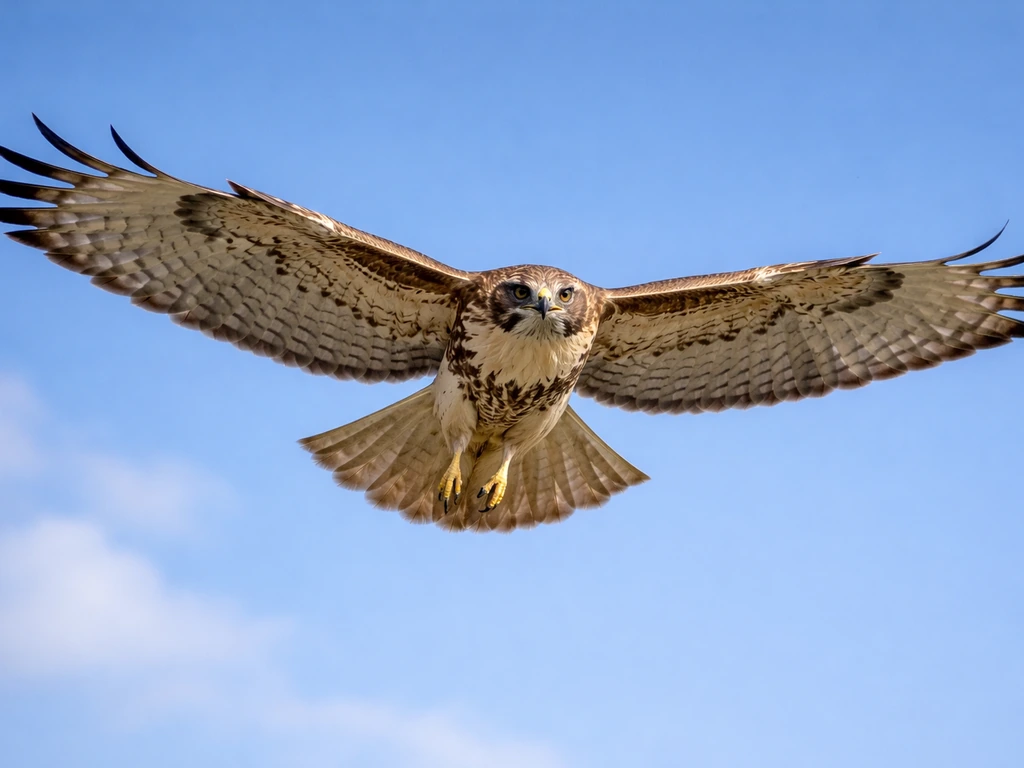
"Hawk" is not one bird, here's the disambiguation you need
The English word "hawk" gets applied loosely to a wide range of birds of prey: true hawks (Accipitridae), falcons, kites, kestrels, and sometimes even eagles. Indian languages handled this variety long before English arrived, and they carved up the raptor world with their own logic. In Hindi, the standard dictionary term बाज़ (bāz) is glossed as "hawk; falcon (properly female)," so even in Hindi the line between hawk and falcon was blurry from the start. The Hindi word चील (cīl) maps specifically to "kite (the bird)," which is a different bird again. In Marathi, the same layered distinction exists, and if you just say "hawk" in Marathi without context, a native speaker might picture a घार (kite-type raptor), a ससाणा (falcon-type), or even a गरुड (eagle-type). Knowing which one you actually mean matters both for language learning and for getting the symbolism right.
For most everyday conversations, when someone in Maharashtra points to a soaring bird circling overhead and calls it a hawk, they almost certainly mean घार. It is the most visually familiar, widely seen raptor across the subcontinent, and the name has deep roots in Marathi folk usage. The general category of bird meaning in Marathi covers dozens of species, but among raptors, घार is the one that carries the most cultural and symbolic weight in everyday speech.
Hawk in Marathi: the word, how to say it, and spelling variants
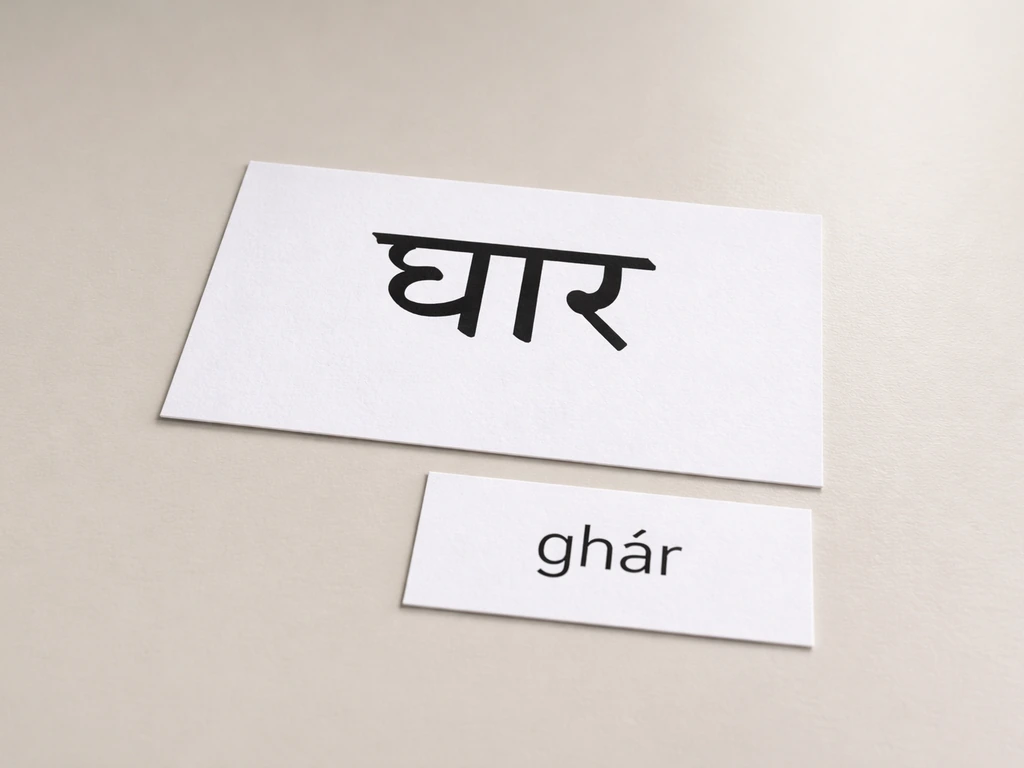
The primary Marathi word for hawk (in the kite/raptor sense) is <strong>घार</strong>, spelled g-h-ā-r in transliteration. Pronunciation: the "gh" is a voiced velar fricative, similar to the "gh" in Urdu/Hindi words, and the vowel is a long open "a" sound, so the full word rhymes loosely with "star" in English. Wiktionary's Marathi label for the black kite confirms this as <strong>ghār</strong>. You will also see it spelled as "ghaar" in informal romanization, which is perfectly acceptable in text messages or casual writing.
| Marathi Word | Transliteration | English Equivalent | Notes |
|---|---|---|---|
| घार | ghār | Kite / Hawk (black kite type) | Most common everyday Marathi raptor term; Accipitridae family |
| ससाणा | sasāṇā | Falcon | Masculine noun; dictionary-confirmed Marathi term for falcon; used for Falconidae |
| गरुड | garuḍ | Eagle (also mythological) | Used for large eagle-like birds; broad usage in Marathi Vishwakosh |
| बहिरी ससाणा | bahirī sasāṇā | Peregrine Falcon | Compound term; listed in Marathi Vishwakosh raptor entries |
| गिधाड | gidhāḍ | Vulture | Also within Accipitridae context in Marathi encyclopedic usage |
The Marathi Vishwakosh (the authoritative Marathi encyclopedia) places घार squarely within the Accipitridae family, grouping it alongside गरुड, ससाणा, and गिधाड as related raptors. This is actually really useful context: it tells you that Marathi does not isolate "hawk" as a narrow species category the way English ornithology does. Instead, घार functions as a label for a cluster of kite-type birds, with ससाणा covering the falcon side. If you are comparing this to a related raptor, falcon bird meaning in Marathi goes deeper into ससाणा specifically, which is worth reading alongside this article.
One more spelling note: you may encounter the compound phrase <strong>मोरांगी घार (mōrāṅgī ghāra)</strong>, which Wisdomlib defines as "a kind of kite" in Marathi. The NatureWeb Marathi bird names list also includes entries like <strong>मोहोळ घार</strong>, showing that घार appears in compound names for multiple kite-type raptors across Maharashtra. So if you see घार as part of a longer bird name, you are still in the right hawk/kite territory.
What the hawk actually means: spiritual and cultural symbolism
In Indian cultural traditions, the hawk and its close relatives carry a set of consistent symbolic meanings that have been shaped by centuries of mythology, folk observation, and religious storytelling. The core associations are: <strong>sharp vision and awareness, speed and decisive action, authority and power, and protection (with a hawk-eye watching over something).</strong> These are not arbitrary associations. They come directly from the way people observed these birds hunting in real life.
In Hindu mythology, the eagle-hawk continuum is represented most powerfully by <strong>Garuda (गरुड)</strong>, the divine vahana (vehicle) of Vishnu. Garuda is not a simple eagle in the narrow English sense; Marathi Vishwakosh notes that गरुड is used broadly for eagle-like birds across multiple taxa. Garuda symbolizes speed, divine protection, fearlessness, and the destroyer of serpents (representing evil). When Marathi speakers use गरुड symbolically, they are drawing on this mythological weight. The घार (kite/hawk) shares some of this symbolic territory at a folk level, even if it does not carry the same scriptural grandeur.
At the folk and everyday level, a hawk circling overhead has long been read as a sign of watchfulness. There are Marathi and Hindi folk traditions where a hawk seen before a journey is taken as a mixed omen: the bird's sharp, predatory nature means it could signal an alert to be cautious, or in some interpretations, it signals that you will have the upper hand in a coming challenge. The hawk's association with predatory clarity maps neatly onto the idea of "seeing through things," which is why it shows up in folk wisdom about perception and awareness.
One interesting cross-reference from Wisdomlib's concept page on hawks is the dual-natured symbolism: the hawk as guardian versus the hawk as predator. In some folk interpretations it is protective (it guards its territory with fierce vigilance), while in others it represents a threat (a hawk to pigeons, for instance, is a symbol of danger). This duality is very much part of how raptor symbolism works across Indian traditions. You see a similar duality with bat bird meaning in Marathi, where the bat flips between being a creature of bad omens and a symbol of adaptability depending on the cultural lens you apply.
Why the hawk got these meanings: ornithology behind the symbolism
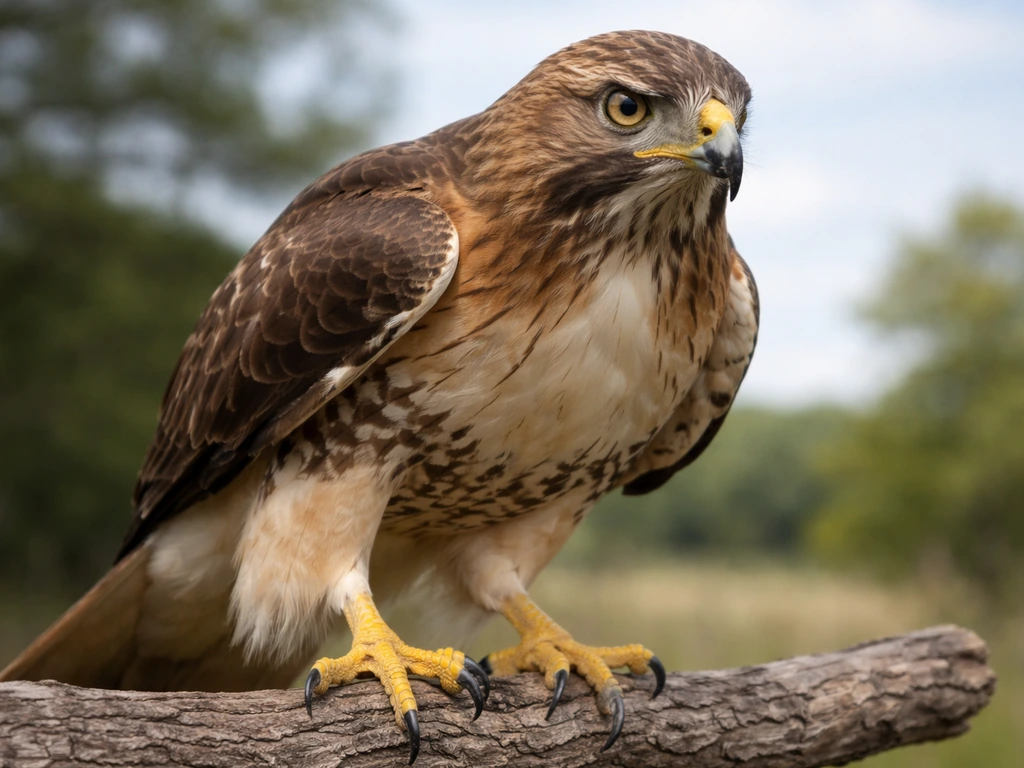
The hawk's symbolic associations with sharp vision, focus, and decisive action are not poetic inventions. They are grounded in real biology that traditional cultures observed accurately over generations. Raptors like the hawk have some of the most sophisticated visual systems of any vertebrate. Research from the University of Minnesota Raptor Center confirms that raptors have powerful binocular vision, with both eyes focusing on the same object simultaneously, giving them the precise depth perception they need to catch fast-moving prey mid-flight.
Peer-reviewed studies on diurnal raptors (birds of prey active during daylight hours) show that these birds have specialized retinal organization with multiple foveae, the high-density cone regions that act like biological zoom lenses. A study measuring spatial resolution in Harris's hawk found contrast sensitivity and visual acuity far beyond what humans can perceive. In practical terms, a hawk circling at height can spot and track prey that is nearly invisible to a human observer on the ground. When traditional Indian communities watched these birds and associated them with "seeing what others cannot see," they were making an empirically accurate observation, even without knowing the biology.
The speed dimension of hawk symbolism comes from the same predatory ecology. Diurnal raptors are built for fast, accurate strikes. Research on how fast raptors can process visual information confirms that their vision is synchronized with their hunting speed, meaning they can track and react to prey during high-speed pursuit. That combination of sharpness + speed is exactly what makes the hawk a natural symbol for decisive, focused action in myth and folklore. When you see a hawk in Indian art representing alertness or swift justice, the artists were drawing on something real.
The bustard bird meaning in Marathi offers a useful contrast here: the bustard is a large, slow-moving ground bird whose symbolism in Indian tradition leans toward patience and groundedness, almost the opposite of the hawk's aerial quickness. Comparing the two gives you a clearer sense of how ornithological behavior directly shapes cultural meaning.
Hindi, Marathi, and Sanskrit: how the language works across traditions
If you are coming to this from a Hindi background, a few quick notes will help you navigate the cross-language mapping. In Hindi, the word most commonly used for hawk is <strong>बाज़ (bāz)</strong>, which McGregor's Oxford Hindi-English dictionary (accessible through the DSAL portal at the University of Chicago) glosses as "hawk; falcon (properly female)." That parenthetical note about "female" is actually a falconry reference: in traditional falconry, the female raptor was the prized hunting bird, and the term stuck in common usage beyond its technical origin.
Hindi also has <strong>श्येन (śyena)</strong> from Sanskrit, which is the classical term for hawk or falcon in Vedic and epic literature. The Rigveda contains hymns where śyena appears as a divine bird that carries Soma from the heavens, a role that marks the hawk as a messenger between worlds in Sanskrit symbolic tradition. This is distinct from Garuda mythology but overlaps with it in the broader sense of raptors as divine intermediaries.
In Marathi, घार does not carry the same elevated scriptural weight as गरुड or the Sanskrit śyena, but it has strong folk and vernacular presence. The Marathi Vishwakosh's encyclopedic grouping of घार within Accipitridae family alongside गरुड and ससाणा tells you that educated Marathi usage treats these as related categories, not disconnected ones. For a language learner, the practical takeaway is: use घार when talking about the everyday kite-type hawk you see circling over markets and fields; use गरुड when you mean the mythological eagle-hawk; and use ससाणा when the context is specifically falcon or falconry.
It is also worth noting that in Punjabi and Gujarati, raptor names follow similar logic with regional variations, but the bāz/ghār/garuḍ triad largely covers the same conceptual ground across North and West Indian linguistic traditions. Much like the proverb explored in the early bird catches the worm meaning in Hindi, bird-related wisdom in Indian languages often travels across linguistic borders with the same core meaning preserved even as the specific words shift.
Putting it to use: dreams, omens, art, and everyday meaning
Dream interpretation
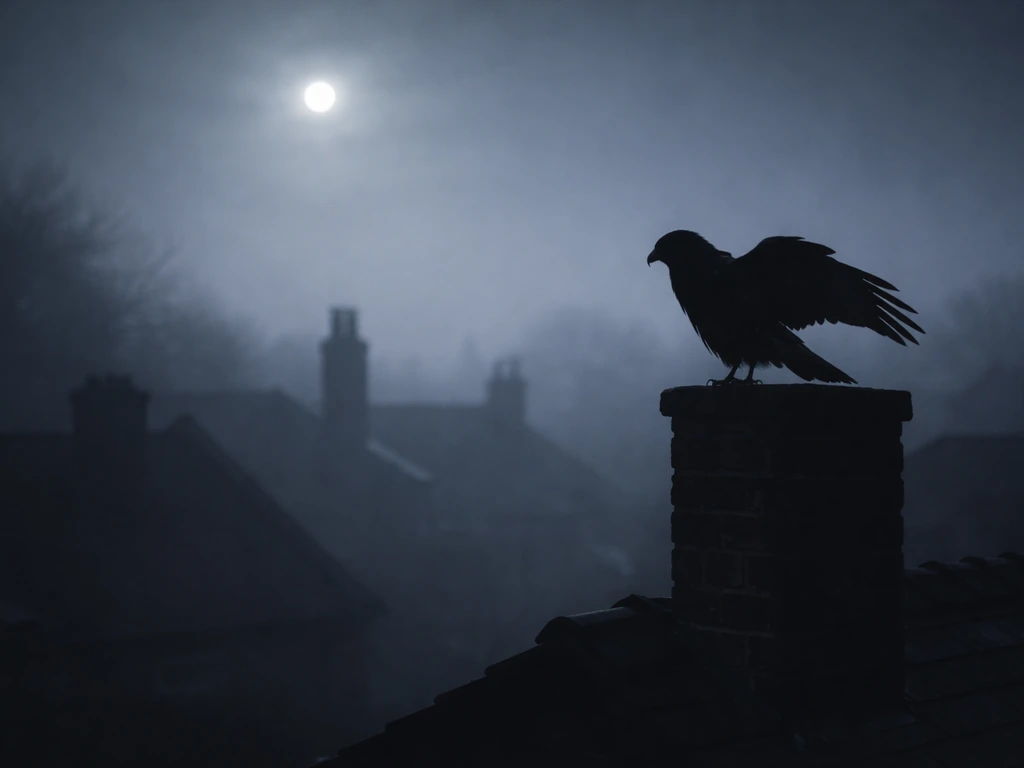
In Marathi folk dream interpretation traditions, seeing a hawk or घार in a dream is generally read in one of two ways depending on the dream's emotional tone. If the hawk is soaring freely and clearly, it is taken as a positive sign: clarity of purpose, a coming decision that will work in your favor, or a reminder to trust your own perception in a situation where you feel confused. If the hawk is diving aggressively or appears threatening, it is read as a caution: someone in your life may be watching you with predatory intent, or a challenge is coming that requires you to be fully alert. These are folk readings, not religious doctrine, and they vary by region and family tradition. Marathi dream-interpretation portals and publications like Lokmat have covered similar bird-omen content, though hawk-specific detailed interpretations are less standardized than, say, owl-dream meanings.
Art, iconography, and mythology
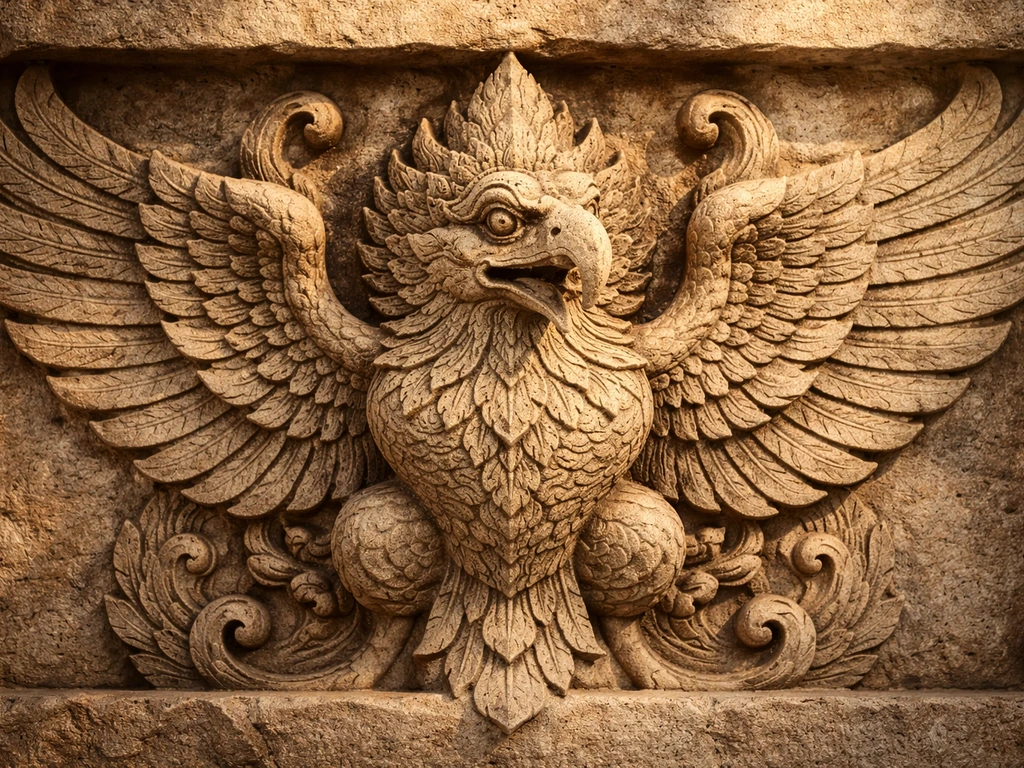
In Indian visual art and iconography, the hawk's clearest presence is through the Garuda tradition. Garuda appears in temple sculpture, manuscript illustrations, and folk art across Maharashtra, Karnataka, and Andhra Pradesh, often depicted with a hawk-like beak and spread wings. When you see a large raptor image in a temple context, especially associated with Vishnu, you are looking at the hawk-eagle symbol in its most elevated form. At the folk art level, kite-type birds (घार) appear in regional paintings and wall art as symbols of watchfulness and freedom, particularly in Warli art from Maharashtra, where birds of prey sometimes appear in hunting scene compositions.
Practical next steps for getting the right word
- If you want the standard everyday Marathi word for the hawk/kite you see soaring overhead, use घार (ghār). This is safe and widely understood across Maharashtra.
- If your context is falconry, formal birdwatching, or specifically talking about a peregrine-type falcon, use ससाणा (sasāṇā) or बहिरी ससाणा for the peregrine specifically.
- If you are writing, speaking, or referencing mythology (Vishnu's vehicle, divine birds in Puranas), use गरुड (garuḍ).
- To verify the exact Marathi name for any specific raptor species, cross-check the Marathi Vishwakosh and the NatureWeb Marathi bird names list, both of which carry well-researched regional Marathi common names.
- If you are in a Hindi-speaking context and need the hawk equivalent, बाज़ (bāz) is the standard conversational word, with श्येन (śyena) reserved for classical or scriptural contexts.
The hawk in Marathi tradition is not a single, simple symbol. It is a layered idea: a real bird with extraordinary sensory capabilities, a folk presence in omens and dreams, a literary symbol of vision and focus, and a distant cousin of the divine Garuda in the mythological imagination. Whether you are learning Marathi, researching Indian bird symbolism, or just curious about what that circling bird overhead is actually called, घार is your starting point, and the cultural meanings attached to it are genuinely rich once you know where to look.
FAQ
If I say “hawk” in Marathi, will people always understand it as the same bird (ghār)?
In everyday Marathi, the bird people usually mean by “hawk” is घार (black-kite/kite-type raptor). If you are not sure, look at size and silhouette, if it has a forked tail it often fits kite-type birds more closely than true hawks, and in Maharashtra the default expectation is घार for a circling raptor.
How do I pronounce घार correctly, especially the “ā” sound?
Yes, but be careful with pronunciation in text and conversation. The long आ sound is important, ghār, rhymes roughly with “star” more than “short a.” In romanization you will see both ghār and ghaar, both are acceptable, but ghár is closer to the actual vowel length for learners.
Can I use गरुड (Garuda) to mean the same thing as घार (hawk/kite)?
In Marathi symbolism, घार and गरुड are related ideas, but they are not interchangeable in meaning. घार is the folk and everyday kite/raptor symbol, while गरुड is the elevated mythological figure of Vishnu’s vehicle with stronger scriptural weight, so using गरुड for the bird you saw overhead can sound like a myth reference rather than a name.
What should I do if the bird I saw does not look like the black kite, but I still want the right Marathi word?
If the bird is smaller and more common near towns and fields, घार is the safer Marathi match. If it looks bulkier with a more “falcon-like” stance, people might instead think of ससाणा (falcon-type). When in doubt, describe the bird’s behavior (hovering, stooping, or slow circling) and tail shape rather than relying only on the English label “hawk.”
What is the difference in Marathi folk dream meaning if the hawk looks calm versus aggressive?
Marathi dream interpretations are tone-dependent. A freely soaring घार is often read as clarity and a favorable decision, but a diving or threatening hawk is read as caution, someone watching with intent, or a situation requiring heightened alertness. If you remember your fear or excitement level in the dream, that emotional “tone” is usually what guides the reading.
I saw compound words like मोरांगी घार and मोहोळ घार, does that still mean hawk/kite?
Spelling can vary in informal writing because Marathi transliteration is not standardized. If you see מोरांगी घार or मोहोळ घार, you should treat घार as the core raptor/kite element of the name, the modifier (like mōrāṅgī or mohoḷ) narrows the specific kite-type bird.
How can I say it more precisely in Marathi when I do not know the exact raptor species?
If you want to be precise in conversation, avoid using a single English-to-one-Marathi mapping. In Marathi, “hawk” often needs context, for example “घार” for kite-type circling raptors, “ससाणा” for falcon-type contexts, and “गरुड” only for mythic or eagle-like references. A simple “खाली/वर उडणारी घार” (circling bird overhead) usually pins it down.
Are hawk/घार omens in Marathi reliable, or are they more like advice?
Use the folk and cultural meanings for conversation, but do not treat them as fixed guarantees. For example, an omen read as protection or an upper hand may still depend on your real-world situation and actions. Think of the symbolism as advice to pay attention and respond decisively, not as a deterministic prediction.
If I am translating between Hindi and Marathi, what is the safest way to avoid mistranslation?
In many Indian language communities, “hawk” and related words travel across borders with similar overlap, but the exact word mapping differs (for example Hindi बाज़ versus Marathi घार). When translating, the most practical approach is to translate the concept you mean (kite-type circling raptor versus mythic eagle-hawk) rather than translating the label “hawk” literally.