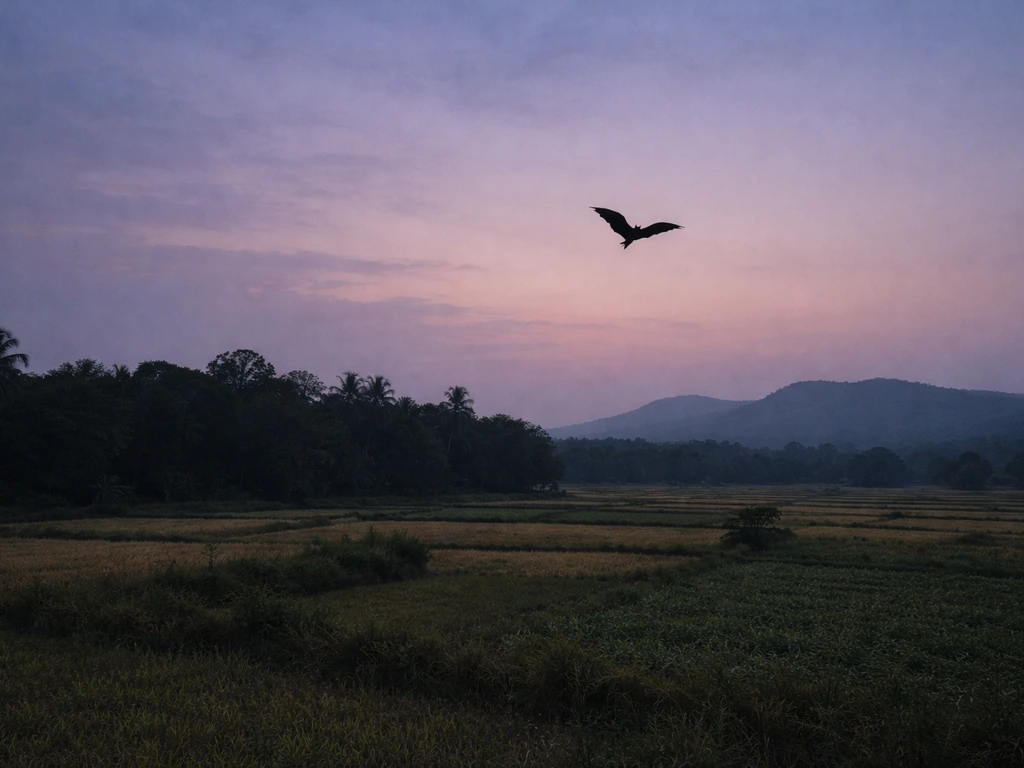
In Marathi, falcon is called ससाणा (sasaana), and this word is specifically tied to the Falconidae family, making it a precise term rather than a generic bird-of-prey label. In Hindi, the most common word is बाज़ (baaz), though that one carries a little more ambiguity, as you'll see below. If someone asks you what "falcon bird" means in Marathi, ससाणा is the word to reach for first.
Falcon Bird Meaning in Marathi and Hindi Explained

Rajesh Sharma
23 Apr 2026
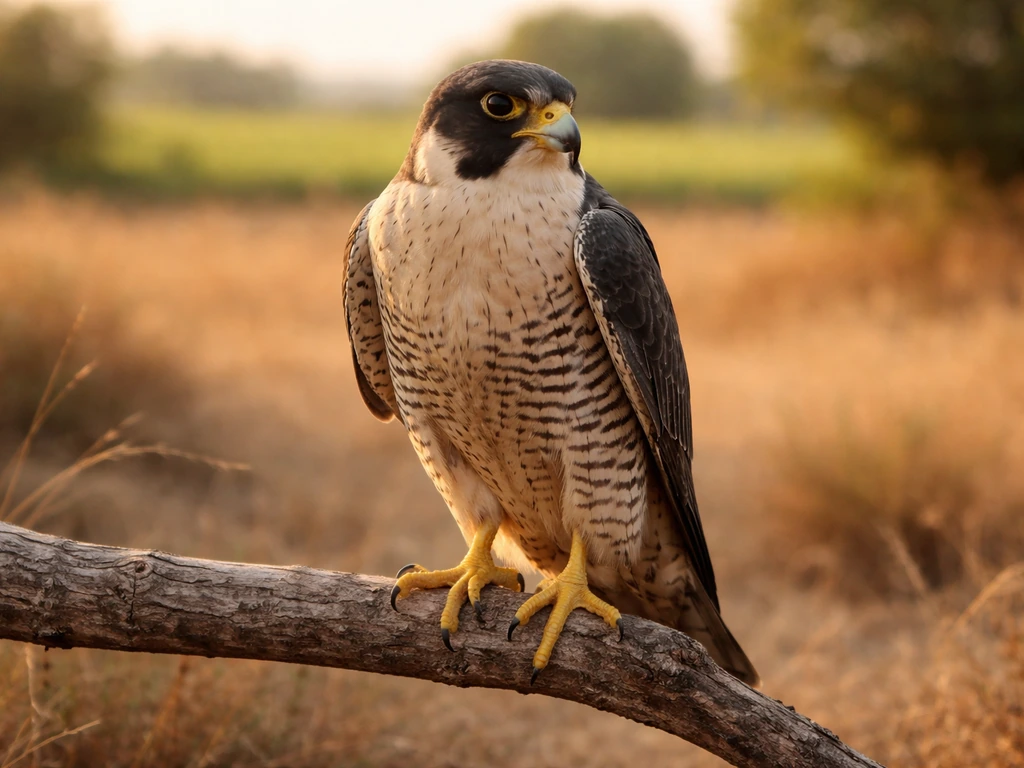
Direct translation: "falcon" in Marathi and Hindi
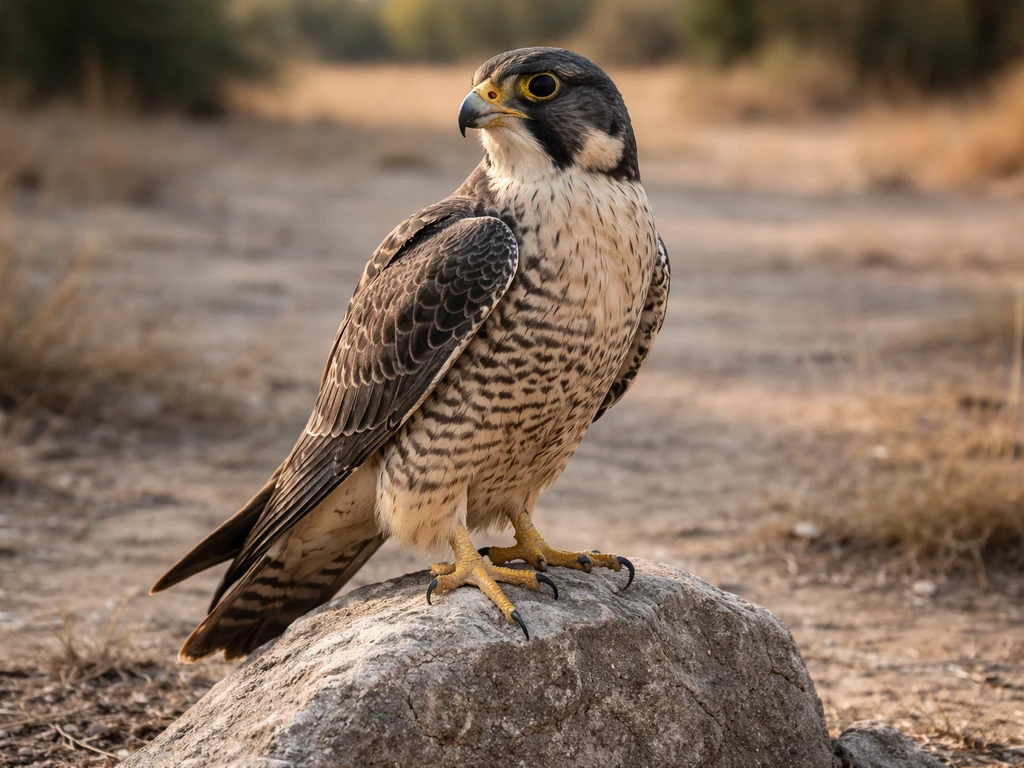
The Marathi Vishwakosh, which is essentially Maharashtra's authoritative encyclopaedia, defines ससाणा directly as a bird of the Falconidae family. The entry even uses the family name फॅल्कॉनिडी (Falconidae) alongside ससाणा, so there is strong institutional grounding behind this word. It is not a loose folk name but an established Marathi term for the falcon group.
| Language | Word | Script | Pronunciation guide | Scope |
|---|---|---|---|---|
| Marathi | sasaana | ससाणा | sa-SAA-na | Specifically Falconidae (falcon family) |
| Hindi | baaz | बाज़ | baaz (rhymes with 'cars') | Broadly birds of prey; often falcon or hawk |
| Hindi (formal/species) | shaheen / amur pairing | शाहीन / अमूर बाज़ | shah-heen / a-MOOR baaz | Used when specifying a falcon species |
For Hindi, बाज़ is what most dictionaries, including Rekhta, list as the primary translation for falcon. It shows up in everyday speech, poetry, and news. The catch is that it sits in a zone where falcon and hawk meanings overlap, which is worth understanding before you use it in a specific context.
Common names vs bird accuracy: falcon vs hawk/eagle confusion
This is where most learners trip up. In Hindi, बाज़ can mean falcon in one sentence and hawk in another, because the word has historically served as a generic term for sharp-taloned hunting birds. Rekhta's dictionary entry for बाज़ lists both falcon and hawk as meanings, and in colloquial use many speakers do not distinguish between the two. If you say बाज़ to a Hindi speaker, they will picture a fast, fierce raptor, but they may not picture a Falconidae specifically.
Marathi handles this better. ससाणा is mapped directly to Falconidae in formal references, while a different bird, the hawk-eagle or eagle type, would get a different label. So when you need precision, Marathi is actually the cleaner tool. Hawks (Accipitridae family) have their own terminology in Marathi, keeping ससाणा reasonably unambiguous. If you are curious about how hawk terminology works alongside this, the article on hawk bird meaning in Marathi covers exactly where those lines get drawn.
Eagles are a separate matter entirely. The Marathi word for eagle is गरुड (garuda) in mythological or large-eagle contexts, or गिधाड / ससाणा variants in ornithological ones, but garuda carries so much mythological weight that it rarely causes confusion with ससाणा in practice. The real danger zone is the falcon/hawk overlap, not the falcon/eagle one.
How to use ससाणा and बाज़ in real phrases
Knowing the word is useful; knowing how to drop it into a sentence is what makes it stick. Here are some practical phrase patterns for both languages, the kind you would actually encounter in news, birdwatching conversations, or writing.
Marathi phrase examples
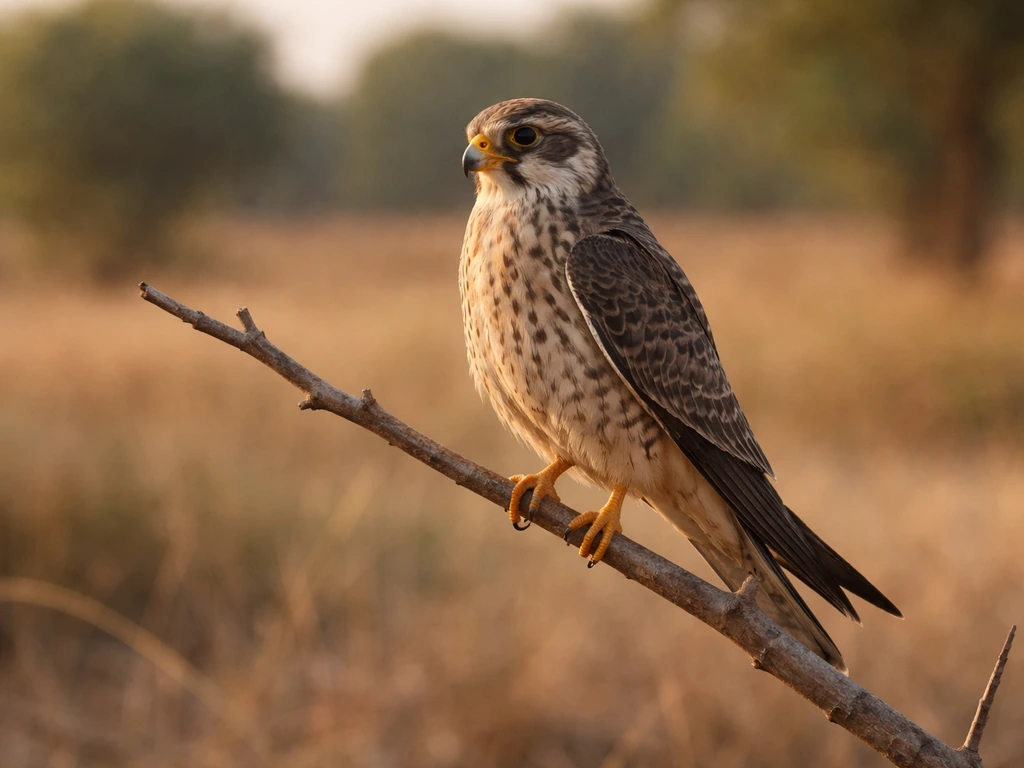
- अमूर ससाणा हा स्थलांतरित पक्षी आहे. (Amur sasaana ha sthalanatarit pakshi aahe.) — The Amur Falcon is a migratory bird.
- शाही ससाणा भुदरगड तालुक्यात दिसला. (Shahi sasaana Bhudhargad talukayat disla.) — The Shaheen Falcon was spotted in Bhudhargad taluka.
- ससाणा उंच ठिकाणावरून शिकार पाहतो. (Sasaana uncha thikaanaavarun shikaar paahato.) — The falcon watches for prey from a high spot.
- हा ससाणा फॅल्कॉनिडी कुटुंबातील आहे. (Ha sasaana Falconidae kutumbaatil aahe.) — This falcon belongs to the Falconidae family.
Hindi phrase examples
- बाज़ बहुत तेज़ी से शिकार करता है। (Baaz bahut tezi se shikaar karta hai.) — The falcon hunts very swiftly.
- पेरेग्रीन बाज़ दुनिया का सबसे तेज़ पक्षी है। (Peregrine baaz duniya ka sabse tez pakshi hai.) — The Peregrine Falcon is the world's fastest bird.
- शाहीन बाज़ पहाड़ी इलाकों में पाया जाता है। (Shaheen baaz pahaadi ilakon mein paaya jaata hai.) — The Shaheen Falcon is found in hilly areas.
- उसकी नज़र बाज़ जैसी तेज़ है। (Uski nazar baaz jaisi tez hai.) — His eyesight is as sharp as a falcon's.
Notice how in Hindi you can add a species prefix (पेरेग्रीन, शाहीन, अमूर) before बाज़ to pin down exactly which falcon you mean. The same pattern works in Marathi with ससाणा. This species-plus-local-name format is what birdwatching clubs, Marathi newspapers, and wildlife organisations in Maharashtra actually use in practice.
Symbolic and cultural meanings of the falcon in Indian traditions
The falcon does not carry the same mythological weight as the eagle (गरुड) in mainstream Hindu tradition, but it is far from absent in Indian cultural consciousness. In royal and warrior traditions across the subcontinent, falcons were prized as symbols of power, precision, and nobility. Falconry, known as शिकार (shikaar) culture in Mughal and Rajput courts, elevated the falcon to a status symbol tied to sovereignty and martial excellence. The Shaheen Falcon in particular, whose Marathi name शाही ससाणा literally means "royal falcon," carries this regal association directly in its name.
In Urdu and Hindi poetry, बाज़ appears frequently as a metaphor for sharp vision, decisive speed, and an uncompromising spirit. Allama Iqbal, whose poetry is widely read across South Asia, used the image of the baaz (falcon) as a symbol of the free, sovereign soul, soaring above pettiness. This poetic tradition has made बाज़ a culturally loaded word in North India beyond its literal ornithological meaning.
In Maharashtrian folk culture, the ससाणा is respected more as a bird of the natural world than as a mythological figure, but its hunting precision, scanning from a height and diving with speed, has made it a folk metaphor for alertness and sharp judgment. Some folk sayings use the image of a sasaana watching from a height to describe a careful, patient observer who strikes only when the moment is right.
It is worth noting that the falcon is often placed in contrast to the garuda (eagle) in symbolic discussions. Where garuda represents divine authority and cosmic scale, the falcon represents earthly skill and disciplined power. This distinction shapes how the two birds appear in stories, art, and proverbs across different Indian regions.
Quick verification checklist for the exact bird you mean
Before you commit to ससाणा or बाज़ in a specific context, run through this checklist to make sure you are using the right word for the right bird.
- Is the bird a member of Falconidae? If yes, ससाणा (Marathi) is the correct family-level word. For Hindi, बाज़ works but add the species name if precision matters.
- Do you know the species? Add it as a prefix: अमूर ससाणा (Amur Falcon), शाही ससाणा (Shaheen Falcon), पेरेग्रीन बाज़ (Peregrine Falcon). This follows the exact pattern used in Marathi newspapers and bird guides.
- Are you talking about a hawk instead? Hawks (family Accipitridae) have distinct Marathi names. If it has a longer tail and broader wings compared to a falcon's pointed shape, you may want hawk-specific terminology.
- Is it an eagle? Then neither ससाणा nor बाज़ is the right fit. गरुड or ससाणा variants won't apply. Check the bat bird meaning in Marathi or bustard bird meaning in Marathi articles for how different families get their own precise terms on this site.
- Is your context literary or colloquial Hindi? In poetry or idiomatic speech, बाज़ is widely understood as falcon and carries cultural weight. In ornithological or educational writing, pair it with the scientific name to avoid confusion.
- Check the Marathi Vishwakosh entry for ससाणा if you want formal verification: it explicitly names the family फॅल्कॉनिडी, which is the strongest confirmation that you are in falcon territory.
Related bird terms to learn next
Once you have ससाणा and बाज़ sorted, the natural next step is building out your Marathi and Hindi raptor vocabulary so you do not accidentally swap terms. Here are the key words that sit closest to the falcon in the Indian bird lexicon.
| English bird | Marathi term | Hindi term | Key distinction |
|---|---|---|---|
| Falcon (family) | ससाणा (sasaana) | बाज़ (baaz) | Falconidae; pointed wings, fast dive |
| Hawk | ससाणा / ससाण्यासारखा (context-dependent) | बाज़ / श्येन (shyen) | Accipitridae; broader wings, different flight style |
| Eagle | गरुड (garuda) / गरुडपक्षी | गरुड (garuda) / चील (cheel, for some kites) | Larger; mythological weight in Indian tradition |
| Kite (bird) | घार (ghaar) | चील (cheel) | Accipitridae; soaring scavenger, often confused with eagle |
| Bat | वटवाघूळ (vatvaaghul) | चमगादड़ (chamgaadadad) | Not a bird; covered separately under bat bird in Marathi |
The hawk bird meaning in Marathi is probably the most important companion article to read after this one, because the hawk/falcon boundary is where most learners make mistakes. If you want the exact hawk bird meaning in Marathi, the companion article breaks down the terminology and common mix-ups. The general bird meaning in Marathi article is also a good grounding resource if you are building vocabulary from scratch, covering the base word for bird (पक्षी, pakshi) and how Marathi names birds across categories. For Hindi learners, spending time on how बाज़ appears in idioms and proverbs will give you a feel for when the word is being used loosely versus when it means a falcon specifically.
The bottom line: when you want to say "falcon" in Marathi, use ससाणा. If you are also looking for the bustard bird meaning in Marathi, use the related Marathi term for bustard to avoid confusion with other bird names falcon. It is precise, encyclopaedia-backed, and used in real Marathi birdwatching and news contexts. In Hindi, reach for बाज़, and if you need to be specific, prefix it with the species name. Add the cultural layer of the falcon's symbolism as a royal, precise, and swift hunter, and you have everything you need to use these words confidently. BirdWeb also describes Falconidae as a predatory-bird family, noting that many falcons are built for speed and commonly hunt prey in flight blank" rel="noopener noreferrer">Falconidae as predatory birds built for speed and hunting prey in flight. The same “bat bird meaning in Marathi” style of lookup helps you translate bird names more accurately in everyday speech. The phrase “the early bird catches the worm” meaning in Hindi is a popular way to express this idea of acting early the early bird catches the worm meaning in hindi.
FAQ
If I want to write about falconry in Marathi, should I still use ससाणा, or a different term?
Use ससाणा for the Falconidae bird group, and in cases where the context looks like “trained hunting bird” or falconry, stick to species names like शाही ससाणा (शाही ससाणा literally indicates a royal falcon) if you want to sound natural in Marathi.
How do I avoid confusion when using Hindi बाज़ in a sentence?
In Hindi, if the sentence is about a specific “type” of raptor, add a species prefix such as शाहीन, अमूर, या पेरेग्रीन before बाज़. Without the prefix, बाज़ may be understood as either falcon or hawk.
I’m translating an English article that says “falcon,” but it might be about an eagle. What should I watch out for?
When translating from English “falcon” to Marathi, prefer ससाणा. If your source text is actually describing “large eagle-like” birds, do not force it into ससाणा, because Marathi uses अलग labels for eagles, and mixing them makes the meaning drift.
Can I use बाज़ as a general translation for “bird of prey” in Hindi?
If you only know “bird of prey” in Hindi, avoid using बाज़ as a catch-all, because many speakers treat it as a general hunting raptor. A safer approach is to write the full phrase “hawk-eagle” or “falcon (species name)” rather than relying on बाज़ alone.
Is ससाणा always unambiguous for birdwatching, or can real-life sightings still cause mix-ups?
In birdwatching contexts, Marathi tends to stay clearer because ससाणा is tied to Falconidae in formal references. Still, confirm the exact species by adding the local or species label, since some wild sightings might be between fast-flying raptors that people loosely describe with similar words.
For formal Marathi writing, what’s the best practice to keep falcon and hawk terms accurate?
Yes. If you’re writing a formal document or wildlife report in Marathi, choose ससाणा for Falconidae, and reserve hawk-eagle or hawk terms for Accipitridae contexts. This mirrors how references and checklists separate falcons and hawks.
In Hindi poetry, does बाज़ always mean the bird species, or can it be metaphorical?
When you quote poetry or idioms, बाज़ may be metaphorical (sharp sight, decisive speed) rather than strictly ornithological. If the line is about freedom or uncompromising spirit, keep the metaphor meaning, but if the line is describing a bird, add the species detail in your explanation.
What is the quickest, most correct way to answer “falcon bird meaning in Marathi” in one line?
If your goal is “falcon bird meaning in Marathi,” the direct translation answer is ससाणा. If you need additional specificity (for example, Shaheen), include the Marathi species phrase together, because that is what most readers and clubs will interpret first.
How should I translate “swift falcon” or “diving falcon” descriptions into Hindi without changing the meaning?
In English, “falcon” sometimes appears next to words like “swift,” “diver,” or “trained hunter.” In Hindi, pair बाज़ with those context cues only if you also add a species term; otherwise the reader might default to hawk.
I’m unsure whether the word should be falcon or hawk in Hindi. What’s a practical fallback?
If you’re unsure between falcon and hawk in Hindi, do not guess based only on speed, because both can feel fast to observers. Use the species prefix when available, or describe physical traits (tail shape, size, habitat) in the sentence to guide the listener.
Next Article
Bat Bird Meaning in Marathi: Disambiguation, Term Map
Bat bird चा मराठीत अर्थ शोधा: संदर्भानुसार योग्य शब्द ओळखा आणि बॅटसंबंधित प्रतीकवाद समजून घ्या