The Marathi word for "bird" is पक्षी (pakṣī, pronounced roughly as "puk-SHEE"). That is the standard, dictionary-correct translation you will find across modern Marathi textbooks, the Cambridge English-Marathi dictionary, and older grammatical treatises going back to the nineteenth century. It is a masculine noun, and it works in everyday conversation, formal writing, school worksheets, and cultural contexts alike.
Bird Meaning in Marathi: Word, Spelling, Examples & Symbolism

Rajesh Sharma
28 Apr 2026

The Direct Marathi Translation for "Bird"
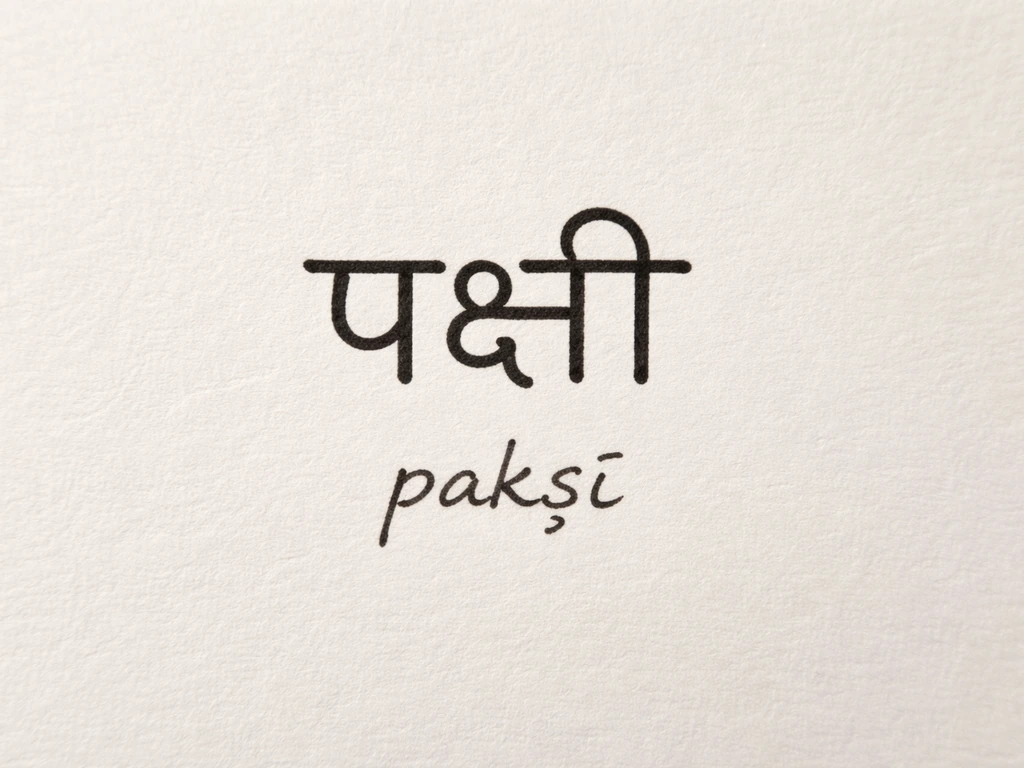
The primary Marathi word for bird is पक्षी (pakṣī). The spelling uses the Devanagari script, the same script shared by Hindi, Sanskrit, and several other Indian languages. In romanized form you will see it written as pakṣī or pakshi. Historical Marathi grammar explicitly glosses it as "a bird" and marks it as masculine (m.), so when you use case suffixes (विभक्ती vibhaktī) to build sentences, you treat it as a masculine noun.
You may also encounter the word खग (khaga) in more literary or Sanskrit-influenced Marathi writing. In Sanskrit, खग (khaga) is a lexical item meaning “bird” or an avian creature. Khaga is a Sanskrit-origin term used in poetry and scripture, but pakṣī is the word a native Marathi speaker will reach for in daily life. Think of the difference between "fowl" and "bird" in English: same animal, very different registers. Stick with पक्षी unless you are writing verse or working with classical texts.
| Form | Devanagari | Romanized | Notes |
|---|---|---|---|
| Standard / everyday | पक्षी | pakṣī / pakshi | Masculine noun; use in conversation, school, writing |
| Literary / Sanskrit-origin | खग | khaga | Found in poetry, scripture, classical Marathi |
| Plural (birds) | पक्षी / पक्ष्यांचे | pakṣī / pakṣyāṃce | Plural form; e.g., पक्ष्यांचे नाव = names of birds |
How to Pronounce पक्षी and Use It Every Day
The pronunciation breaks down as: "pak" (like the English word "puck" with a short a) + "shee" (a long ee sound). So: puk-SHEE, with a slight stress on the second syllable. The "kṣ" combination (क्ष) is a conjunct consonant that sounds like a compressed "ksh." If you have ever heard the Sanskrit word "Lakshmi," the "ksh" in the middle of that word is the same sound. Forvo has native-speaker audio for पक्षी in both Marathi and Hindi, which is worth a quick listen if the romanization alone feels abstract.
One thing worth knowing: spoken Marathi varies regionally. Marathi phonology describes simplification patterns where certain consonant clusters shift slightly in different dialects. Marathi phonology provides background on how consonant clusters can simplify differently across dialects, which helps explain pronunciation variation blank" rel="noopener noreferrer">Marathi phonology describes simplification patterns. So if you hear a Konkan speaker and a Vidarbha speaker say पक्षी, there may be a subtle difference in how crisp or soft the kṣ sounds. Neither is wrong. The written form stays consistent, which is why learning the Devanagari spelling alongside the pronunciation is genuinely useful.
Example Sentences Using पक्षी in Marathi

Marathi follows a Subject-Object-Verb (SOV) order, so the verb comes at the end of the sentence. Case suffixes attach to nouns to show their grammatical role. Here are practical sentences that show पक्षी working in different positions and forms:
- तो पक्षी उडतो. (To pakṣī uḍato.) — "That bird flies." Simple subject + verb.
- मी एक पक्षी पाहिला. (Mī ek pakṣī pāhilā.) — "I saw a bird." Object in a past-tense sentence.
- पक्षी झाडावर बसला आहे. (Pakṣī jhāḍāvar basalā āhe.) — "The bird is sitting on the tree." Common nature description.
- मोर हा आपल्या भारत देशाचा राष्ट्रीय पक्षी आहे. (Mor hā āpalyā Bhārat deśācā rāṣṭrīya pakṣī āhe.) — "The peacock is the national bird of our country India." A sentence you will encounter in school textbooks and general knowledge contexts.
- पक्ष्यांचे नाव सांगा. (Pakṣyāṃce nāv sāṃgā.) — "Tell me the names of the birds." Plural possessive form.
Notice how the noun changes slightly in the plural possessive (पक्ष्यांचे). This is the vibhakti (case-ending) system at work. As a beginner, start with the base form पक्षी and add context words; the grammar will become clearer as you build vocabulary around it.
Birds in Indian Cultural and Spiritual Tradition
The word पक्षी carries more cultural weight in Indian traditions than the English word "bird" often does. Birds appear in Hindu mythology as vahanas (वाहन), the divine vehicles or mounts of deities. Garuda, the great eagle-like bird, is the vahana of Vishnu himself. A vahana is not just a ride: it represents the deity's qualities and power in animal form. That is why Garuda in Hindu and Buddhist iconography is not just a big bird but a symbol of speed, courage, and divine protection. The very word pakṣī derives from pakṣa (wing or side), which in Sanskrit also refers to a lunar fortnight, suggesting a deep conceptual link between birds, time, and movement across the sky.
Beyond mythology, birds appear throughout Indian folk belief, poetry, and ritual. The peacock (मोर, mor) is India's national bird and is strongly associated with Kartikeya (also called Murugan in South India) as a vahana, and with Lord Krishna's iconic feather. Owls are associated in folk belief with prophecy and with Lakshmi as a vahana in some regional traditions. Crows (कावळा, kāvaḷā in Marathi) are deeply embedded in ancestor-ritual (shraddha) practice.
Even the arrival of a particular bird at a specific time can carry meaning in traditional interpretation. Even traditional sayings like the early bird catches the worm often get interpreted in terms of timing and opportunity in Hindi-speaking contexts a particular bird at a specific time can carry meaning. The point is that "bird" in Indian cultural life is almost never symbolically neutral.
Why Bird Symbolism Depends Entirely on the Specific Bird
This is the single most important thing to understand if you are researching "bird meaning" in an Indian context: there is no single unified meaning. The symbolic meaning of a bird in Indian tradition shifts dramatically depending on which bird you are talking about, which religious tradition you are looking at (Hindu, Buddhist, folk/regional), and even which region of India you are in.
- Peacock (मोर): Good omen, beauty, national pride; vahana of Kartikeya; symbol of rain and fertility. Also appears in Buddhist symbolism where it represents the transmutation of poison into wisdom.
- Garuda (गरुड): Divine eagle-like bird; Vishnu's vahana; symbolizes power, speed, and the destruction of evil (specifically serpents). Central to both Hindu and Buddhist iconography.
- Owl (घुबड, ghubaḍ): In some Indian folk traditions linked to prophecy, in others to misfortune. Associated with Lakshmi in certain regional customs, but also considered inauspicious by other communities.
- Crow (कावळा, kāvaḷā): Strongly tied to ancestor rituals (pitru paksha); its cawing is read as a signal of incoming guests or messages in folk belief.
- Dove/Pigeon (कबूतर, kabutar): Used cross-culturally as a peace symbol; in Indian urban folk practice, feeding pigeons is considered an act of merit.
- Hawk and Falcon: Linked to the soul and protection in some Indian traditions; birds of prey carry their own distinct symbolic weight that differs from songbirds or waterfowl.
This is exactly why searching for "bird meaning" without a specific species in mind will only get you so far. A crow and a peacock sitting at your window mean very different things in Indian symbolic interpretation. The same caution applies across traditions: a dove means one thing in a Buddhist context and a slightly different thing in a Maharashtrian folk context. The species, the tradition, and the regional setting all shape the meaning.
A Practical Way to Think About It
Think of पक्षी as the umbrella category and bird-specific symbolism as the real content underneath it. Learning the word pakṣī is your first step. The meaningful layer is always one level deeper: which pakṣī are you asking about? Once you know that, the cultural and spiritual interpretation becomes specific and usable.
Where to Go Next for Specific Bird Meanings
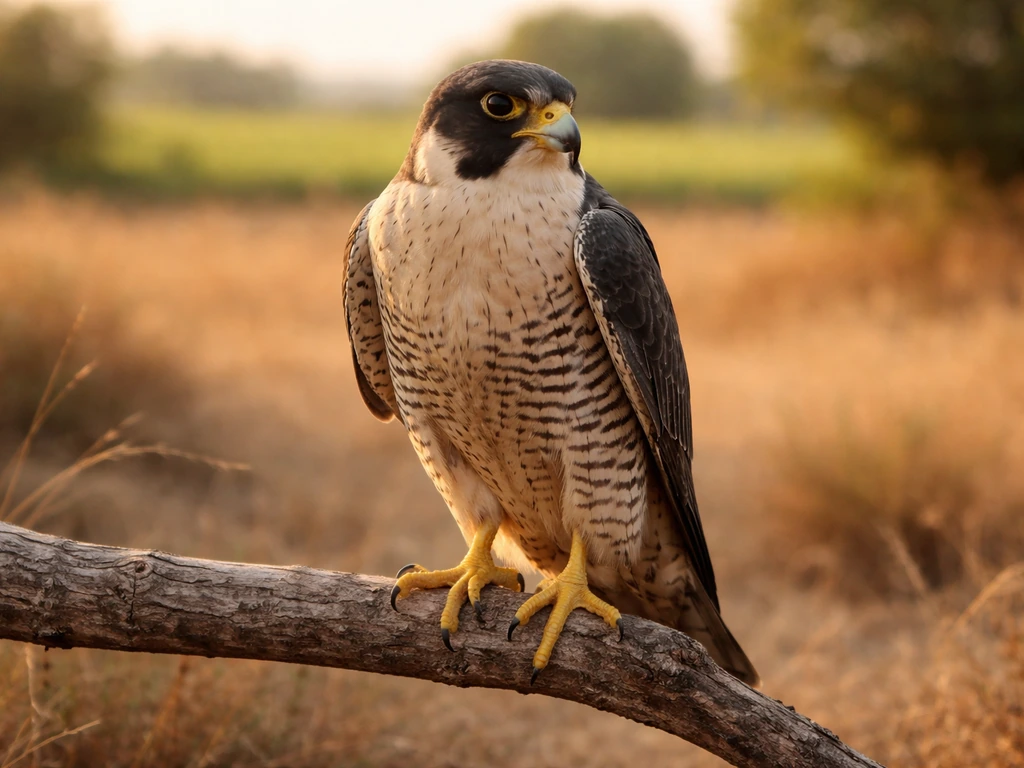
If you have landed here because you want the Marathi name and meaning of a specific bird, this site has detailed entries for many of them. For birds of prey, the hawk and falcon each have their own symbolism in Indian tradition that goes well beyond their Marathi names. For example, the falcon has its own distinct symbolism, and you can find the falcon bird meaning in Marathi in the dedicated entry.
For the hawk bird meaning in Marathi, check the dedicated entry so you get the right Marathi name and cultural interpretation. If you are researching nocturnal birds, the bat sits in a peculiar category in Marathi and Indian classification, which deserves its own look. The bat bird meaning in Marathi depends on the specific species and the local folk interpretation, so check the dedicated entry for the exact context you mean.
For larger ground birds, the bustard has a specific Marathi identity worth knowing. If you are specifically looking for bustard bird meaning in Marathi, the dedicated entry will cover the correct Marathi meaning and usage bustard has a specific Marathi identity worth knowing. Each of these entries follows the same format: Marathi name with spelling and pronunciation, cultural and symbolic context, and usage in sentences.
The core answer here is straightforward: पक्षी (pakṣī, puk-SHEE) is the word you need. Write it, say it, and use it as your base. Then let the specific bird species guide you toward the deeper symbolic and cultural meaning you are actually looking for. Indian bird symbolism rewards that specific, species-by-species approach far more than any general answer about "birds" as a category.
FAQ
How do I use पक्षी in Marathi sentences with case endings?
Yes. पक्षी (पक्ष्याला, पक्षीला; पक्षीने; पक्षीसाठी) takes vibhakti endings like other masculine nouns, and the exact ending depends on the grammatical role (object, instrument, destination). If you are unsure, start with a simple SOV sentence like “पक्षी आला” (a bird came) and then add only one suffix at a time.
Does the word पक्षी change when I say “birds” or “of the birds”?
In Marathi, पक्षी is masculine, but plural forms still follow the same Devanagari stem-based system. For example, possession commonly uses plural possessive endings like पक्ष्यांचे. If you are translating from English “birds” (plural), check whether the Marathi structure needs a plural possessive or just plural nominative.
When should I use खग instead of पक्षी?
khग (खग) is mainly used in more literary, scripture-influenced Marathi and Sanskrit contexts, so it can sound bookish in everyday speech. If your goal is casual conversation, use पक्षी. Also, when you write in Devanagari, khग starts with a different consonant sound than पक्षी, so avoid swapping them if you care about correct pronunciation.
I keep pronouncing क्ष wrong, how should पक्षी be pronounced?
A common mistake is romanizing क्ष as “ks” or pronouncing it like a separate “k” plus “s.” In पक्षी, क्ष compresses into a single sound (a ksh-like cluster). A practical fix is to listen for the mid-cluster sound in “पक्क्षी/Lakshmi-style ksh” and keep the second syllable “shee” long.
Why does “bird meaning in Marathi” give different answers for different sources?
Choose the species, then ask for the bird meaning, because symbolism changes by bird. For instance, peacock, crow, owl, and Garuda each carry different associations, and even within folk belief, timing or local practice can shift interpretation. If you search generally, you will often get mixed or overly broad results.
What if I’m using bird symbolism for a real situation, like seeing a bird at a certain time?
When a traditional interpretation depends on time or circumstance, the “bird at a specific time” idea can be sensitive to region and the exact practice being referenced. If you want a reliable meaning for a real-life situation (like seeing a particular bird in the morning), note the local tradition and the bird species, not just “bird.”
What is the safest Marathi word for “bird” in both formal and casual contexts?
If you need a generic word in Marathi for writing or speaking, पक्षी is the safe default. If you need a more formal animal category, Marathi may still prefer पक्षी in most contexts, but for specialized writing you may need a different taxonomy term. For most readers, staying with पक्षी avoids mismatched register.
Why do I see multiple roman spellings for पक्षी, and which one should I trust?
Marathi spelling should be learned in Devanagari alongside the sound, because multiple romanization systems exist (pakshi, pakṣī, pakshi). The “correct” meaning remains the same, but inconsistent romanization can confuse learners. Use पक्षी in Devanagari as your anchor, then compare your pronunciation.
How do I combine the umbrella word पक्षी with a specific bird name in Marathi?
For writing, keep the species-specific Marathi name as the noun and then apply the same case-suffix approach. The article’s key takeaway still holds: पक्षी is the umbrella, but your sentence should ultimately point to the exact pakṣī you mean. This prevents the meaning from becoming vague or culturally inaccurate.
Next Article
Falcon Bird Meaning in Marathi and Hindi Explained
Falcon bird meaning in Marathi and Hindi, with common local names and real raptor context plus usage examples.