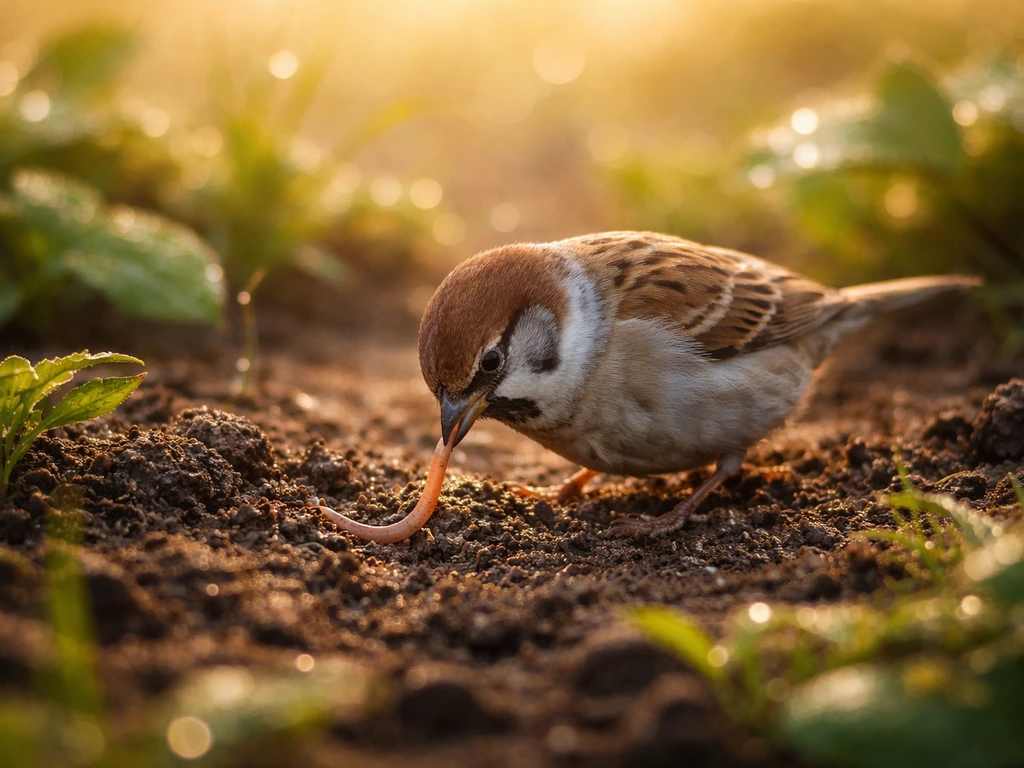
When someone searches for 'bat bird meaning in Marathi,' the most likely answer they need is 'रातवा' (raatva), the Marathi name for the nightjar, a nocturnal bird that looks and behaves so much like a bat at dusk that the two are constantly confused. But before you land on that answer, it is worth pausing for a moment, because 'bat bird' can mean three genuinely different things depending on the context: the actual bat (a mammal, not a bird at all), a bat-like night-flying bird such as the nightjar, or a creature from Indian folklore or mythology that blurs the line between both. Getting the right Marathi word depends entirely on which of these you actually mean.
Bat Bird Meaning in Marathi: Disambiguation, Term Map

Rajesh Sharma
20 Apr 2026
What 'bat bird' most likely means in Marathi
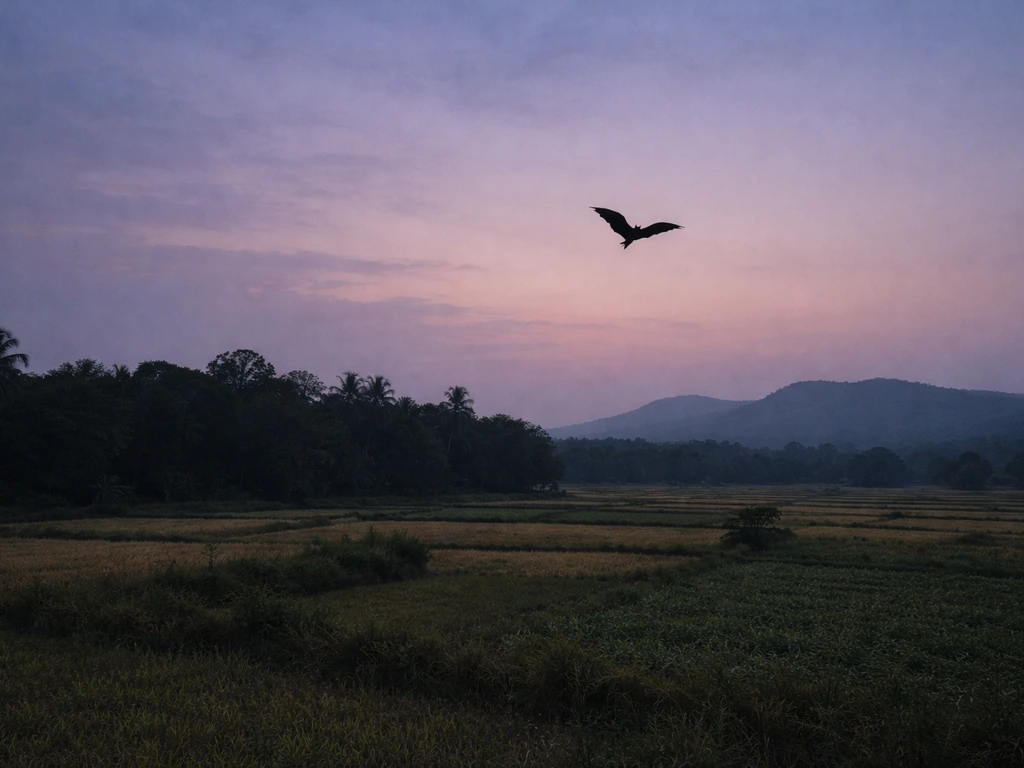
In everyday Marathi usage, if someone calls something a 'bat bird,' they almost always mean a night-flying creature they spotted at dusk, darting low, erratically, in near-silence. If that creature turns out to be a bird (and not a mammal), the Marathi word that fits best is 'रातवा' (raatva). This is the established Marathi name for the Indian nightjar (Caprimulgus asiaticus), [confirmed in birding references including Avibase, which explicitly lists 'रातवा' as the Marathi name for this species](https://avibase. bsc-eoc.
org/species. jsp? avibaseid=65D4C83B7790076A). The full Marathi name often seen in sources like Wikimedia captions is 'भारतीय रातवा', literally 'Indian raatva.
' For the Indian jungle nightjar (Caprimulgus indicus), the Marathi name is 'रान रातवा' (raan raatva), where 'रान' means 'wild' or 'forest. ' Regional Marathi media like Loksatta and other birding platforms routinely use 'साईक्सचा रातवा' (Saaykscha raatva) for Sykes's nightjar, sometimes adding the transliteration 'नाईटजार' in brackets for readers who know the English term.
If the person asking means the actual bat, the mammal, then the correct Marathi (and widely used Hindi) word is 'चमगादड' (chamgaadad). Bats are not birds; they are the only flying mammals. The Cambridge English-Marathi Dictionary confirms this: 'bat' maps to 'चमगादड.' This distinction matters a lot, especially when you are writing, translating, or trying to look something up in a Marathi nature guide. Using 'रातवा' for a bat would be inaccurate, and using 'चमगादड' for a nightjar would be equally wrong.
Bat, nightjar, or folklore creature: how to figure out which one
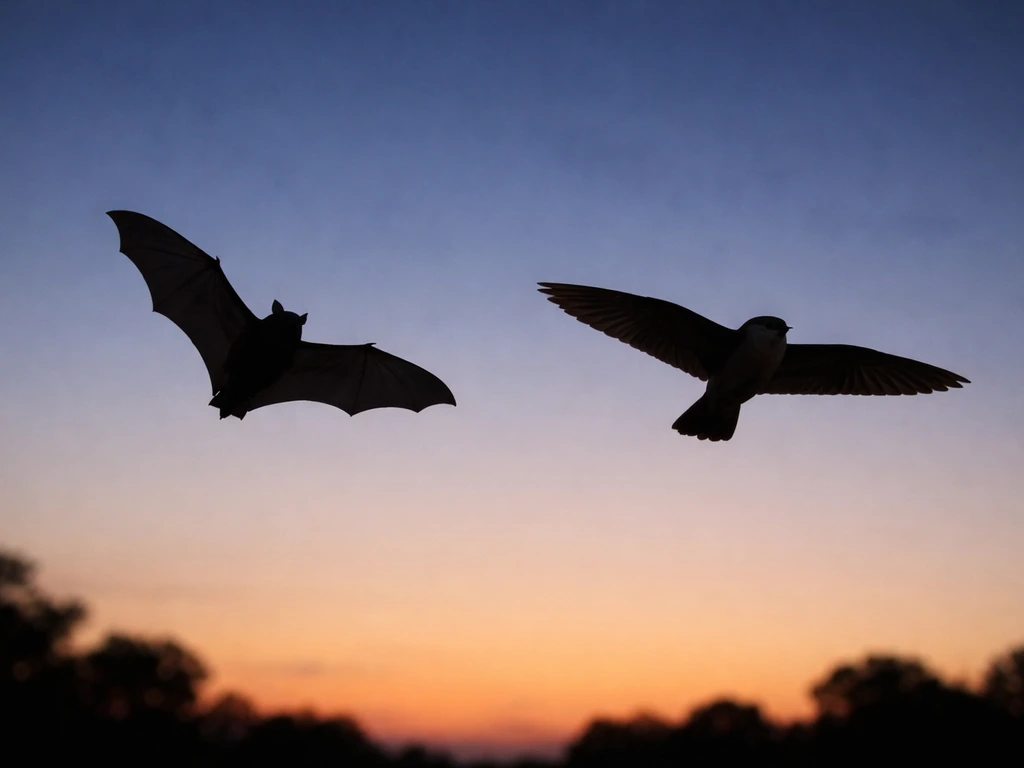
The confusion between bats and nightjars is genuinely understandable. Both are most active at dusk and dawn, both fly with erratic swooping movements, and at a distance the silhouette looks almost identical. Here are the clearest ways to separate them.
- Does it make a sound? Nightjars produce a distinctive, loud churring or clicking call, especially during breeding season. Bats are generally silent to human ears (their echolocation is ultrasonic). If the creature is calling at night, it is almost certainly a nightjar — a 'रातवा.'
- Can you see it roosting during the day? Nightjars rest on the ground or on bare branches in full camouflage — they lie flat and are nearly invisible. If a local person says 'it was sitting on the ground, looked like a stone,' that is classic nightjar behavior. Bats roost hanging upside down in trees, caves, or roof spaces.
- What is the source of the reference? If it comes from a birding article, a nature walk, or a wildlife report, you are almost certainly dealing with the nightjar (रातवा). If the source is a cultural story, a wedding omen, a superstition thread, or a folktale, it is more likely referring to the bat (चमगादड) as a symbolic creature.
- Is it from mythology or folklore? References to a flying, bat-like creature in Hindu mythology — particularly figures like Vetala (वेताळ in Marathi) — are neither birds nor bats but spirits associated with cremation grounds. These are distinct from both रातवा and चमगादड and should not be conflated with any real species.
Marathi bird terminology: mapping the nightjar species
Marathi has a well-established vocabulary for nightjar species, and if you are doing any serious birding, language learning, or nature writing in Marathi, it helps to know these distinctions clearly.
| English Name | Scientific Name | Marathi Name | Notes |
|---|---|---|---|
| Indian Nightjar | Caprimulgus asiaticus | रातवा / भारतीय रातवा | Most common nightjar in peninsular India; confirmed in Avibase |
| Indian Jungle Nightjar | Caprimulgus indicus | रान रातवा | Forest species; 'रान' = wild/forest; listed on NatureWeb |
| Sykes's Nightjar | Caprimulgus mahrattensis | साईक्सचा रातवा | Reported in Pune; covered in Loksatta birding articles |
| Bat (not a bird) | Order Chiroptera | चमगादड | Mammal, not a bird; included here for disambiguation only |
Notice that the species name Caprimulgus mahrattensis literally contains 'mahrattensis,' a nod to Maharashtra, these birds have a deep regional association. When you search in Marathi, the anchor word is always 'रातवा. If you are looking up the bustard bird meaning in Marathi, still remember that the Marathi word in this article for the bat-bird confusion is 'रातवा'. ' You can add qualifiers: 'रान रातवा' for the forest species or 'साईक्सचा रातवा' for Sykes's.
If you only know the English term 'nightjar,' searching 'nightjar Marathi' or 'नाईटजार मराठी' will also surface 'रातवा' in most birding databases and local news sources. This kind of keyword pairing, English term plus Marathi, is a useful habit for anyone learning Marathi bird names, whether the topic is the nightjar here, a hawk (ससाणा), or a falcon. This kind of keyword pairing, English term plus Marathi, is a useful habit for anyone learning Marathi bird names, whether the topic is the nightjar here, a hawk (ससाणा), or a falcon.
If you are specifically asking about the falcon bird meaning in Marathi, the best results come from linking the falcon term with its Marathi name and context. If you are also looking up the hawk bird meaning in Marathi, you will want the commonly used term ससाणा and the right context-specific description hawk (ससाणा).
What bats and bat-like birds mean in Indian traditions
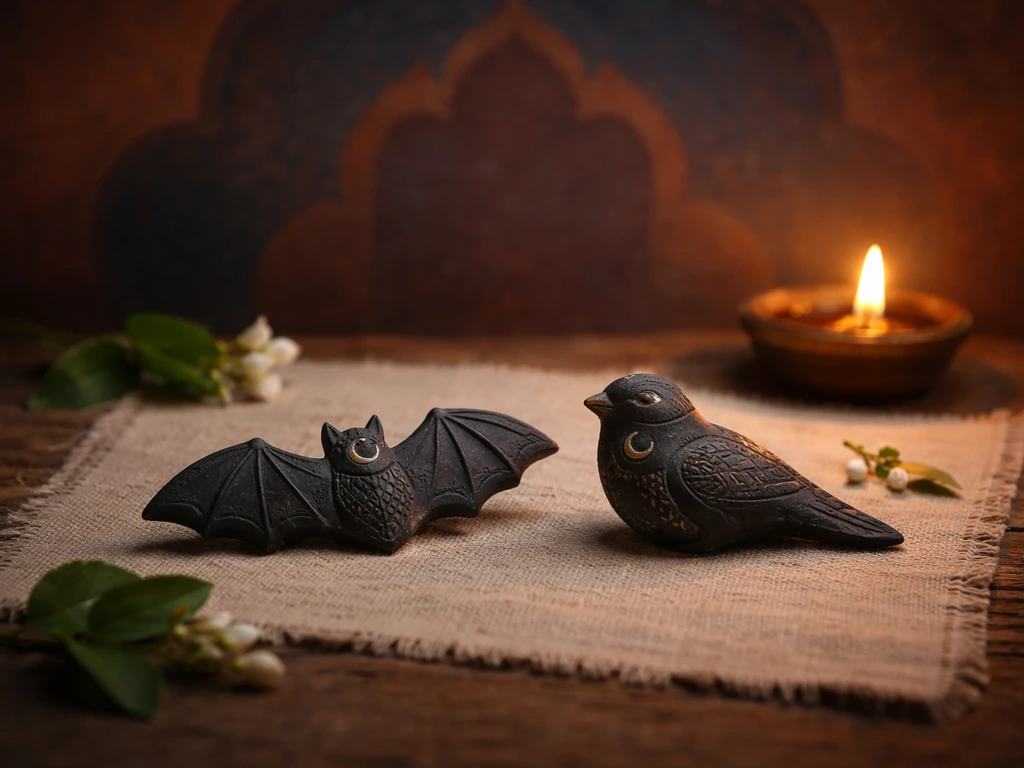
Culturally, bats carry a heavy symbolic load in India, and most of it leans negative. In Indian folk belief, across Marathi, Hindi, and many other regional traditions, a bat entering the home or appearing at an auspicious event like a wedding is widely seen as a bad omen. Indian media has documented this: the Times of India and Indian Express have both reported instances where a bat's appearance during a ceremony was interpreted as foreboding, and this superstition has even contributed to people harming bat colonies. Globally, this contrasts sharply with Chinese symbolism where bats represent good fortune, but in the Indian context the bat's association with darkness, cremation grounds, and inverted sleeping posture has historically fed negative readings.
The nightjar (रातवा) carries a somewhat different cultural weight. Because it is almost invisible during the day and suddenly 'appears' at dusk with an eerie call, it has picked up associations with mystery and the threshold between day and night. In some rural Marathi communities, hearing a nightjar at night is noted with mild wariness, though it does not carry the same strong omen-weight as the bat. The nightjar's call, a sustained churring sound that can seem to come from nowhere, contributes to this atmosphere of the uncanny.
Symbolism and omens across Marathi, Hindi, and Sanskrit traditions
Sanskrit literature uses the term 'Jatayu' for a large mythological bird and has specific terms for night-moving creatures, but the bat does not have an elevated mythological role in classical Sanskrit texts the way the owl (uluka/उलूक) or the crow (kaaka/काक) does. In Hindi and Marathi folk belief systems, the bat (चमगादड) occupies a liminal space, it is a creature of the 'in-between,' neither fully of the day nor fully animal in the way a bird is, given that it is a mammal that flies. This liminality is what drives its omen associations.
The Vetala (वेताळ) figure from Marathi and Sanskrit storytelling, best known through the Baital Pachisi tales, is described as a bat-like spirit that hangs from trees in cremation grounds. This figure is not literally a bat but uses the bat's visual imagery as a symbol of the uncanny. Recognizing this distinction is important: when Indian folk speech refers to a 'bat-like creature' in a mythological context, it is often invoking the Vetala archetype, not describing either the mammal bat or the nightjar bird. Treating these folklore symbols as species identification will lead you in the wrong direction entirely.
Across Marathi, Hindi, and broader Indian traditions, the shared symbolic thread is this: darkness-dwelling, flying creatures of the night are associated with transitions, thresholds, and the unseen world. Whether the specific creature is a bat, a nightjar, or a mythological spirit, the cultural reading draws from the same symbolic well. The difference is that for language and birding purposes, these distinctions are critical, but for cultural interpretation, understanding that shared symbolic framework helps you read the omen or the story in its intended spirit.
How to use this knowledge: naming, writing, and learning Marathi bird terms
If you are a language learner, the most practical takeaway is to memorize the pair: 'bat' (mammal) = 'चमगादड,' and 'nightjar / bat-bird' (actual bird) = 'रातवा. The U. S. Fish & Wildlife Service provides species-level facts for the Jungle Nightjar (Caprimulgus indicus), supporting the framing of the nightjar as a specific bird species [nightjar / bat-bird" (actual bird) = 'रातवा](https://www.
fws. gov/species/jungle-nightjar-caprimulgus-indicus). If you are arriving with the phrase the early bird catches the worm meaning in hindi, remember that idioms also depend on context, much like “bat bird” does. For the exact bird meaning in Marathi, keep reading how “रातवा” is used for the nightjar and how context changes the answer.
' These two words cover the vast majority of situations where someone says 'bat bird' in a Marathi context. If you are writing in Marathi about birds, use 'भारतीय रातवा' when referring to the Indian nightjar specifically, and add the scientific name in brackets if the audience is technical.
For cultural or spiritual writing, it is good practice to signal clearly when you are moving from ornithological fact to folk interpretation. A sentence like 'In Marathi folk belief, the bat (चमगादड) is considered inauspicious, though the nightjar (रातवा) is simply a nocturnal bird' keeps the two registers cleanly separated. This matters because blurring the line between folklore and natural history is what generates misinformation, and, as Indian conservationists have pointed out, superstitions about bats have led to real harm to bat populations.
For naming purposes, 'रातवा' has a poetic quality in Marathi, it evokes night (रात) and carries the sense of something belonging to the dark hours. Writers and poets working in Marathi have used this quality well. If you are naming a character, a place, or a creative project with this resonance in mind, 'रातवा' works beautifully. 'चमगादड,' by contrast, carries stronger negative cultural connotations and would need careful framing in a naming context.
Quick reference: verifying which Marathi term you need

- Ask: is the creature a mammal or a bird? Bat = चमगादड (mammal). Nightjar = रातवा (bird).
- Check the behavior: calling at night, camouflaged on the ground by day? That is a nightjar — रातवा.
- Search in Marathi using 'रातवा' plus a region or species qualifier (रान रातवा for forest, साईक्सचा रातवा for Sykes's).
- For cultural/omen content, identify whether the source is describing a real animal or a mythological creature like Vetala — and keep those contexts separate.
- Cross-check with the English-Marathi pair: use a bilingual dictionary or birding database to confirm you have the right term before publishing or translating.
The broader Marathi bird vocabulary follows similar logic for other species. If you find yourself working through terms for other birds of prey or night birds, the same method applies: start with the English name, find the confirmed Marathi equivalent in a reliable source like Avibase or NatureWeb, and then layer the cultural meaning on top. That separation of identification from symbolism is the most useful habit you can build when navigating Marathi bird terminology.
FAQ
If I search “bat bird meaning in Marathi,” should I always choose “रातवा,” or can it be something else?
In Marathi, “bat bird” is rarely treated as a single fixed term. Most people use it informally to point to a nightjar they saw at dusk, so the default answer to memorize is “रातवा” (night-flying bird). Use “चमगादड” only if the subject is clearly a mammal (for example, it has no feathers like a bird, it behaves like a bat, or you see it roosting like bats).
What Marathi word should I use if I only know it is a nightjar, not the exact type?
If the bird is actually a nightjar but you cannot identify the exact species, you can still use “रातवा” as the safe umbrella term. Then, add qualifiers only when you have evidence (such as region and field marks). For example, “रान रातवा” can be used when you mean the forest nightjar, and “साईक्सचा रातवा” for Sykes’s, but “रातवा” alone is the most broadly correct choice in everyday use.
How do I avoid the most common translation error between bat (mammal) and nightjar (bird)?
A common mistake is to translate “bat” as a bird term. In Marathi, “चमगादड” is the correct word for the mammal bat, so if your text is about a flying mammal, “चमगादड” is non-negotiable. Conversely, do not use “चमगादड” to describe a nightjar you saw flying at dusk, because that swaps the entire animal category.
If a story says “bat-like creature” in Marathi folklore, does that mean “चमगादड” or “रातवा”?
In folklore contexts, “bat-like” may refer to Vetala imagery rather than an animal species. If your source mentions a spirit that hangs from trees in cremation grounds, treat it as a mythological archetype and not as a literal bat or nightjar. A good practical check is whether the description focuses on supernatural behavior and setting, rather than wings, calls, and flight style.
What is a good Marathi writing pattern to keep folklore symbolism separate from real species identification?
If you want to sound accurate in Marathi for birding and writing, separate identification from interpretation in one sentence. For example, first name the animal category (चमगादड for bat, रातवा for nightjar), then add the cultural meaning as a separate clause. This prevents readers from mixing myth symbolism with real species identification.
Which search keywords in Marathi and English usually give cleaner results for “bat bird meaning”?
For search queries, include both scripts and variants. Try “nightjar Marathi” plus “नाईटजार मराठी,” and also try the Marathi anchor “रातवा” when you want birding databases and local reports. If you use only “bat bird,” results may blend folklore and species descriptions.
What quick checks can I do in the field to decide between “चमगादड” and “रातवा”?
If you are unsure whether the animal you saw was a bat or a nightjar, do not rely only on “looks similar at dusk.” Use at least one additional clue, such as: the presence of bird-like feathers, a bird-like flight silhouette, and whether you can hear a sustained churring call associated with nightjars. When in doubt for Marathi naming, “रातवा” is safer only if you are confident it is a bird.
For a Marathi character or place name, which word fits better, “रातवा” or “चमगादड,” and why?
When naming or character-building in Marathi, “रातवा” often reads more neutral and poetic because it evokes night imagery without automatically triggering the same strong negative superstition as bats. If your character concept is directly tied to ill omen or “inauspicious,” then “चमगादड” fits better, but you should still provide context so readers know it is symbolic choice, not species confusion.
Next Article
the early bird catches the worm meaning in Hindi
Meaning of the proverb in Hindi and its real sense: act early, be alert, seize chances. Plus usage examples.