In Hindi, the jacana bird is most commonly called जलपक्षी (Jalpakshi) in general usage, but its more specific and widely recognised name is जलपीपी (Jal-pipi) or पानकौवा in some regional registers. The name most anchored to ornithological Hindi is जलपीपी, where 'जल' (jal) means water and 'पीपी' echoes its sharp piping call. Pronounced roughly as 'jull-pee-pee,' it is a descriptive, evocative name that tells you exactly what kind of bird you are dealing with: a loud, water-loving creature that seems to walk on the surface of ponds.
Jacana Bird Meaning in Hindi: Name, Symbolism & ID

Rajesh Sharma
19 Jul 2026
Hindi name: Devanagari, transliteration and pronunciation
The standard Hindi name used in Indian ornithological references and field guides for the jacana is जलपीपी. Broken down, the word combines जल (jal, water) with पीपी (pipi, a phonaesthetic rendering of a piping or whistling call). In transliteration this is written as Jal-pipī. The stress falls on the first syllable: JULL-pee-pee. Some Hindi-speaking birdwatchers also use the simpler descriptive पानी पक्षी (pānī pakṣī, water bird) in casual speech, but this is too generic to mean jacana specifically. For the Pheasant-tailed Jacana in particular, you may also encounter तीतर-पूँछ जलपीपी (Tītar-pūñch Jalpipī), literally 'pheasant-tailed water-pipi,' which mirrors the English common name almost exactly. The Bronze-winged Jacana is similarly rendered as कांस्य-पंख जलपीपी (Kānsya-pankh Jalpipī) in descriptive scientific Hindi.
| Form | Script / Text | Notes |
|---|---|---|
| Standard Hindi name | जलपीपी | Used in field guides and ornithological Hindi |
| Transliteration | Jal-pipī | Jal = water, pipī = piping call |
| Pronunciation guide | JULL-pee-pee | Stress on first syllable |
| Pheasant-tailed Jacana (Hindi) | तीतर-पूँछ जलपीपी | Tītar-pūñch Jalpipī |
| Bronze-winged Jacana (Hindi) | कांस्य-पंख जलपीपी | Kānsya-pankh Jalpipī |
| Casual / general Hindi | पानी पक्षी | Pānī pakṣī — generic 'water bird,' not jacana-specific |
Scientific context and taxonomy
Jacanas belong to the family Jacanidae, a group of wading birds within the order Charadriiformes. The two species that matter for anyone studying Indian birds are Hydrophasianus chirurgus (Pheasant-tailed Jacana) and Metopidius indicus (Bronze-winged Jacana). Both are accepted as full species by the IOC World Bird List, the global standard checklist for bird taxonomy. Hydrophasianus chirurgus is placed in its own monotypic genus, reflecting its dramatically different breeding plumage and elongated tail. Metopidius indicus sits in a separate genus, also monotypic, and is essentially South Asian in its core range. The family name Jacanidae is thought to derive from the Tupi-Guarani word 'jaçanã,' a reminder that though jacanas are found across the tropics, the name itself has South American roots, not Indian ones.
| Attribute | Pheasant-tailed Jacana | Bronze-winged Jacana |
|---|---|---|
| Scientific name | Hydrophasianus chirurgus | Metopidius indicus |
| Family | Jacanidae | Jacanidae |
| Genus | Hydrophasianus | Metopidius |
| IOC status | Full species | Full species |
| IUCN Red List | Least Concern (LC) | Least Concern (LC) |
| Core global range | South and Southeast Asia | South Asia (India-centred) |
India's two jacana species: brief profiles
Pheasant-tailed Jacana (Hydrophasianus chirurgus)
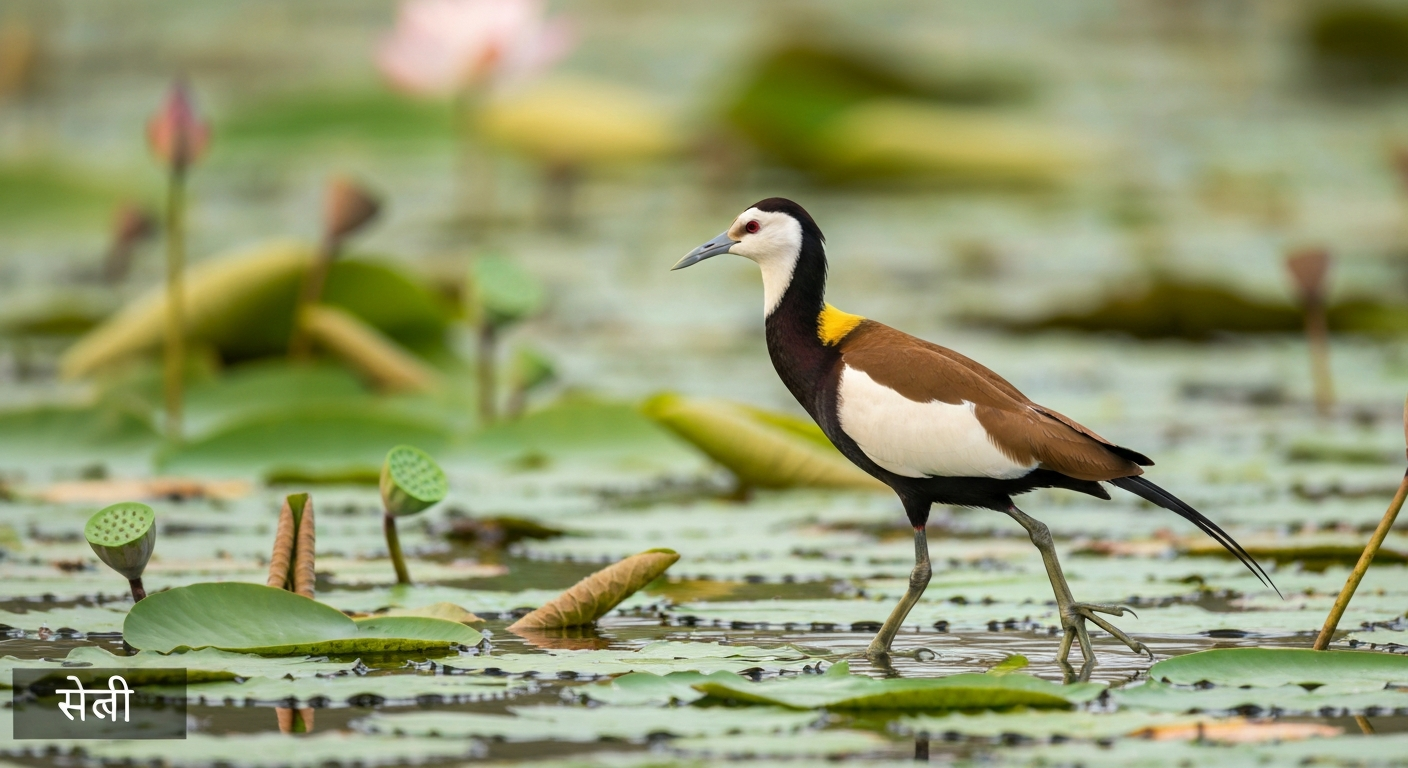
The Pheasant-tailed Jacana is the showier of the two. In breeding plumage the male (and the female, though females are typically larger in this sex-role-reversed species) develops extraordinarily long, drooping central tail feathers that can reach 20 to 30 cm, giving the bird its English name. The neck turns a rich chocolate-brown with a bright yellow patch at the nape, set against white underparts. Outside the breeding season the long tail is moulted and the bird becomes much plainer, making field identification trickier. It is found across the Indian subcontinent, Southeast Asia, and extends to southern China and the Philippines, making it the more widespread of the two species. In India, GBIF occurrence records confirm its presence in wetland-rich states from Gujarat and Rajasthan in the northwest to West Bengal and Assam in the northeast, as well as across the Deccan plateau.
Bronze-winged Jacana (Metopidius indicus)
The Bronze-winged Jacana is essentially a resident South Asian specialist. Unlike the Pheasant-tailed, it does not grow a dramatic tail. Instead, look for the glossy bronzy-green sheen on the wings (which gives it its name), a bold white supercilium (eyebrow stripe) that cuts sharply against the dark head, and a rich chestnut lower body that deepens in adults. See eBird species account, Bronze‑winged Jacana (identification notes & photos) for identification notes and photos confirming the glossy bronze‑green wings, bold white supercilium, and chestnut underparts eBird species account — Bronze‑winged Jacana (identification notes & photos). The species name indicus is itself a nod to India as its heartland. The BirdLife DataZone factsheet and eBird's Status and Trends data confirm it is widespread across the Indian peninsula, Sri Lanka, and into mainland Southeast Asia, though it is less migratory than its pheasant-tailed relative.
What a jacana looks like and how it behaves
If you have spent any time near a lily-covered pond in India, you have almost certainly seen a jacana without realising what made it so striking. The feature that defines this family is the feet: absurdly, improbably long toes and claws that spread body weight over a wide surface area, letting the bird walk across floating lily pads and water hyacinth as if on solid ground. This is not a trick or exaggeration, it is their primary foraging adaptation, and watching a jacana stride confidently across a mat of vegetation while other waders are stuck at the water's edge is genuinely one of the more delightful sights in Indian birdwatching.
- Body length: Pheasant-tailed Jacana 29–31 cm (non-breeding), up to 58 cm including breeding tail; Bronze-winged 28–31 cm
- Distinguishing feature: extraordinarily long toes and claws (hallux claw up to 4 cm) for walking on floating vegetation
- Pheasant-tailed breeding plumage: white face, rich brown neck, yellow nape patch, very long drooping black tail
- Bronze-winged plumage: bold white supercilium, dark glossy head, bronzy-green wing sheen, chestnut belly
- Bill: straight, pointed, used to probe vegetation and pick invertebrates
- Call: Pheasant-tailed gives a mewing, nasal piping call; Bronze-winged produces a sharp, metallic note
- Flight: direct with rapid wingbeats; white wing patches visible in Pheasant-tailed
Behaviourally, both Indian jacanas are famous among ornithologists for a striking reversal of the typical avian sex roles. Females are larger and hold territories; males incubate the eggs and provide all parental care. A single female may mate with several males simultaneously, a system called polyandry. A 2021 study published in Frontiers in Ecology and Evolution confirmed high rates of social polyandry in Hydrophasianus chirurgus, with females actively competing for male partners rather than the other way around. Research by Butchart (1999, Journal of Animal Ecology) on Bronze-winged Jacanas documented similar polyandrous competition in Metopidius indicus. Nests are built on floating vegetation platforms, and clutch size is typically four eggs. The male's ability to tuck chicks under his wings, with only tiny feet visibly poking out, is one of the most photographed parental behaviours in Indian ornithology.
Where to find jacanas in India
Both jacana species are birds of still or slow-moving freshwater with abundant floating vegetation. Lily pads, water hyacinth, lotus beds, and dense aquatic grass mats are their preferred terrain. In India, this translates to a remarkably wide distribution: lowland wetlands, village ponds, river backwaters, reservoir margins, and rice paddies all support them wherever the water remains relatively undisturbed. The Pheasant-tailed Jacana is partially migratory within the subcontinent, moving to wetter areas during the monsoon breeding season (roughly June to September) and dispersing more widely in winter. The Bronze-winged Jacana is a year-round resident in most of its Indian range.
- Keoladeo National Park (Bharatpur, Rajasthan): one of the most reliable sites for both species, especially during breeding season
- Chilika Lake (Odisha): large shallow lagoon supporting good jacana numbers
- Loktak Lake (Manipur): floating phumdis (vegetation islands) are ideal jacana habitat
- Kolleru Lake (Andhra Pradesh): historically one of India's largest freshwater lakes, with strong jacana records
- Western Ghats wetlands and backwaters (Kerala, Karnataka): particularly good for Bronze-winged Jacana year-round
- Assam's Brahmaputra floodplains and beel wetlands: important for Pheasant-tailed during the breeding season
- Village tanks and agricultural ponds across Madhya Pradesh, Uttar Pradesh and Bihar: often overlooked but regularly productive
eBird's monthly bar charts (accessible via the species pages for both phtjac1 and brwjac1) show that Pheasant-tailed Jacana numbers in India peak between July and October, corresponding with the monsoon breeding season. State of India's Birds monitoring data and eBird Status and Trends outputs suggest that Bronze-winged Jacana populations are broadly stable, though local wetland degradation and water hyacinth overgrowth (which can both help and harm, depending on density) remain factors to watch.
Jacana names across Indian languages
One of the things I find most interesting about researching bird names in Indian languages is that for less culturally prominent species, the names often do exactly what Hindi does with जलपीपी: they describe the bird's habitat, call, or most obvious feature rather than borrowing an older classical term. Jacanas are well-known wetland birds in India but they do not carry the mythological weight of, say, the peacock or the crane, so their vernacular names tend to be functional and descriptive. That said, there is genuine regional variation worth documenting. It is also worth noting that for some languages, a standardised ornithological name for jacana has not been widely published, and in those cases I have indicated that below rather than inventing a name.
| Language | Name / Term | Script | Transliteration | Notes |
|---|---|---|---|---|
| Hindi | जलपीपी | Devanagari | Jal-pipī | Standard ornithological Hindi name; widely used in field guides |
| Sanskrit | जलचर पक्षिन् / जलपाद | Devanagari | Jalachara pakṣin / Jalapāda | 'Water-walking bird' / 'water-footed'; no classical Sanskrit name specific to jacana is confirmed in Monier-Williams; these are descriptive constructions based on classical roots |
| Marathi | पाणकोंबडी / जलपिपी | Devanagari | Pāṇkoṃbaḍī / Jalpipī | Pāṇkoṃbaḍī ('water-hen') is used in Maharashtra for water birds including jacana; Jalpipī mirrors Hindi usage; cross-verify with BNHS Maharashtra checklists |
| Punjabi | ਜਲਪੀਪੀ | Gurmukhi | Jalpipī | Follows the Hindi form; a distinctly Punjabi folk name for jacana is not widely documented in available checklists; treat as an adopted form |
| Gujarati | જળ પીળી / જળ પક્ષી | Gujarati script | Jaḷ pīḷī / Jaḷ pakṣī | Regional usage; 'water bird' descriptives are used; a specific standardised Gujarati ornithological name for jacana is not confirmed in widely available sources — cross-reference Gujarat Forest Department checklists for verification |
A note on Sanskrit: classical Sanskrit literature, including the Monier-Williams dictionary and the scholarly compilation 'Birds in Sanskrit Literature' by K.N. Dave, does not appear to record a dedicated classical Sanskrit name for the jacana as a distinct species concept. The descriptive constructions given above (Jalachara pakṣin, Jalapāda) are grounded in genuine Sanskrit roots and accurately describe the bird, but they should be understood as modern descriptive renderings rather than attested classical names. This is actually useful information for language learners: it tells you that the jacana, despite being a common Indian wetland bird, was not prominently named in the Sanskrit literary tradition in the way that cranes (sārasa), herons (baka), or kingfishers (matsyarāja) were.
Cultural, mythological and symbolic meanings in Indian tradition
I want to be honest here: the jacana does not occupy a prominent, well-documented place in mainstream Hindu mythology, classical Sanskrit poetry, or Puranic literature in the way that more iconic Indian birds do. The peacock (mayūra) is Kartikeya's vehicle, the crane (sārasa) appears throughout the Mahabharata, and the Garuda is a cosmic figure in Vaishnavism. The jacana has no equivalent mythological anchoring that I can point to with confidence based on available scholarship. Making up symbolic meanings or attributing invented mythological roles to the bird would mislead readers, so I have not done that.
What can be said with reasonable confidence is more indirect but still genuinely interesting. Wetlands and lotus-covered waters carry strong symbolic weight in Indian culture and religion. The lotus (kamal) is one of the most sacred symbols in Hinduism and Buddhism, representing purity, spiritual awakening, and the divine seat of Lakshmi and Brahma. The jacana's intimate ecological relationship with the lotus and lily pad, it literally walks on these sacred surfaces, gives it at least an associative proximity to this symbolism, even if the bird itself is not named in the texts. There is a certain poetic resonance in the idea of a bird that treads on water, walking across the very flowers that represent purity and transcendence.
In folk traditions, birds associated with water and wetlands are broadly considered auspicious in many parts of India. Wetland birds appearing near village ponds or agricultural water sources are sometimes regarded as signs of good water quality and healthy harvests. This is ecological observation dressed in traditional language rather than a specific mythological claim about jacanas, but it reflects the way Indian folk culture weaves practical observation and symbolic interpretation together. If you come across specific regional folklore about jacanas in, say, Assamese or Odia oral tradition, I would treat such accounts with curiosity but also cross-verify them, since wetland bird folklore is often applied loosely across species.
The jacana's polyandrous behaviour, one female, multiple male partners, with males raising the young, is the kind of biological fact that invites cultural commentary, and in modern nature writing in Hindi and other Indian languages, this reversal of conventional 'roles' is increasingly discussed with genuine fascination. Whether this will eventually generate a richer layer of symbolic or proverbial usage in Indian languages remains to be seen. For now, it is more a talking point in ornithological outreach than a settled piece of cultural symbolism.
Conservation status and what observers should know
Both Indian jacana species are currently assessed as Least Concern (LC) on the IUCN Red List, reflecting their broad range and reasonably stable population trends. This is broadly good news, but 'Least Concern' does not mean 'without pressures.' The primary threats to jacanas in India are the degradation and drainage of lowland freshwater wetlands, pesticide runoff into agricultural ponds (which reduces the invertebrate prey base), and the uncontrolled spread of water hyacinth at very high densities (which can degrade the open-water and sparse-vegetation patches jacanas prefer for nesting). eBird Status and Trends monitoring and the State of India's Birds framework are the most current data sources for tracking population trends at the state and regional level, and I would encourage anyone interested in Indian wetland birds to engage with these citizen-science monitoring programmes directly. State‑level and national trend data are available via eBird Status and Trends, Bronze‑winged Jacana trends map eBird Status and Trends — Bronze‑winged Jacana trends map.
- IUCN Red List status: Least Concern for both Hydrophasianus chirurgus and Metopidius indicus
- Primary threat: freshwater wetland loss, drainage, and degradation across the Indian lowlands
- Secondary threats: pesticide runoff reducing invertebrate food sources; dense water hyacinth monocultures reducing nesting habitat quality
- Monitoring tools: eBird (species accounts phtjac1 and brwjac1), State of India's Birds factsheets, India Biodiversity Portal species pages
- What you can do: submit eBird checklists from wetland sites; avoid disturbing nesting birds on floating vegetation during monsoon months (June to September)
Quick-reference facts table
| Feature | Pheasant-tailed Jacana | Bronze-winged Jacana |
|---|---|---|
| Scientific name | Hydrophasianus chirurgus | Metopidius indicus |
| Hindi name | तीतर-पूँछ जलपीपी (Tītar-pūñch Jalpipī) | कांस्य-पंख जलपीपी (Kānsya-pankh Jalpipī) |
| Family | Jacanidae | Jacanidae |
| Size | 29–31 cm body; up to 58 cm with breeding tail | 28–31 cm |
| Key ID feature | Long drooping tail (breeding); yellow nape; white wing patches | Bold white supercilium; bronzy-green wings; chestnut belly |
| Behaviour | Polyandrous; male incubates and broods young | Polyandrous; male provides all parental care |
| Breeding season in India | June to September (monsoon) | May to August |
| Clutch size | 4 eggs | 4 eggs |
| Nest type | Floating vegetation platform | Floating vegetation platform |
| IUCN status | Least Concern | Least Concern |
| Migration | Partially migratory within subcontinent | Largely resident |
| Range in India | Widespread; lowland wetlands nationwide | Widespread; strongest in peninsular India and NE India |
How this compares to other 'X bird meaning in Hindi' entries
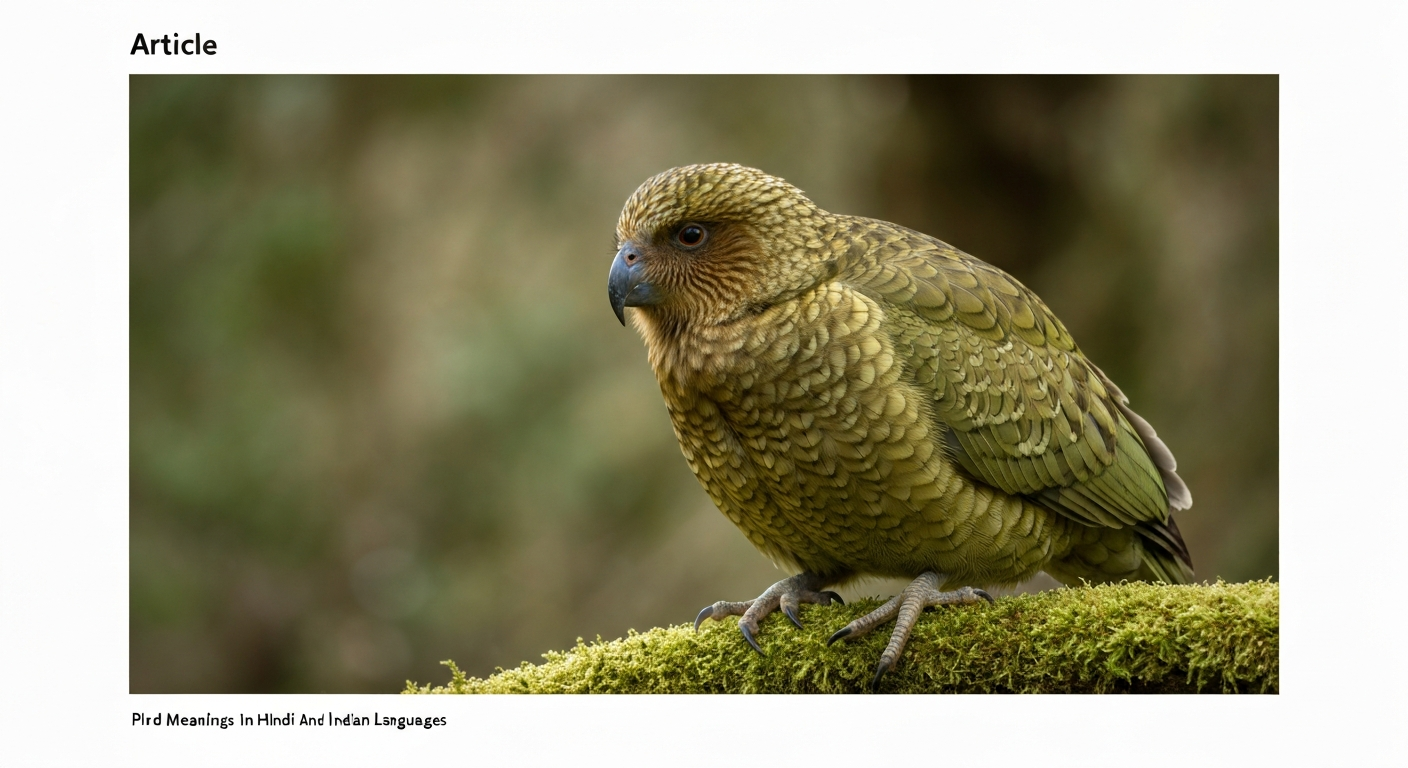
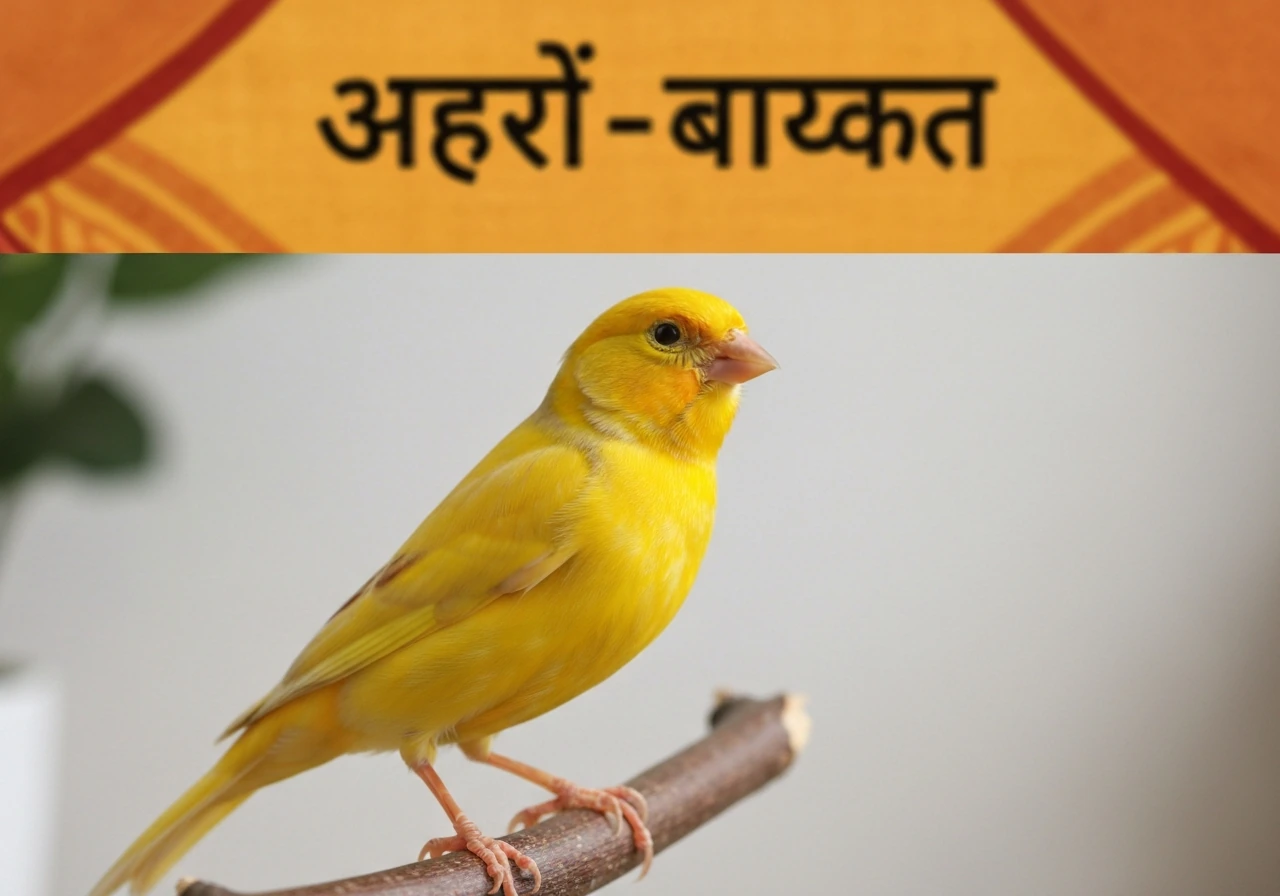
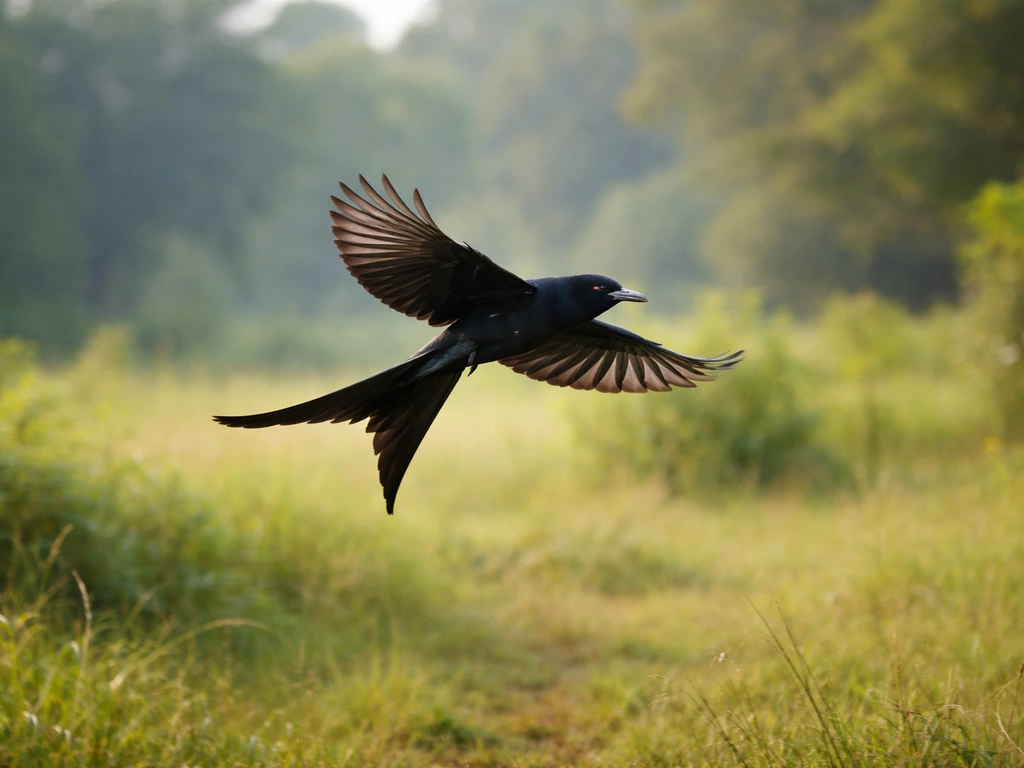
If you have been reading through other entries on this site, you may have noticed that some birds carry much richer Hindi and Sanskrit name histories than others. See the cockatiel bird meaning in Hindi entry for a contrasting example of how pet birds are named. The drongo, for instance, has deep roots in Indian bird culture and even a distinct cultural connotation in modern Hindi slang. Read more on the drongo's Hindi names and cultural connotations in drongo bird meaning in Hindi. The canary, on the other hand, is an introduced cage bird without any classical Indian-language name, so its Hindi references are all transliterations or modern constructions, somewhat similar to the jacana situation in that regard. The dodo occupies an even more distant position: it never existed in India, so its Hindi name is purely a translation exercise. See the dodo bird meaning in Hindi entry for the standard Hindi translation and background on naming non-Indian species. The jacana sits in an interesting middle ground: it is a genuinely Indian bird, well-known to anyone who spends time near wetlands, but it never acquired the mythological prominence that might have anchored it in classical Sanskrit or regional folk literature. For contrast, see the kakapo bird meaning in Hindi entry for how an entirely non-Indian species is handled in translation and cultural notes.
For birdwatchers who are also language learners, the jacana is actually a useful study case. The name जलपीपी is a perfectly formed Hindi compound that demonstrates how Indian languages build descriptive bird names from roots, jal (water) plus a phonaesthetic element referencing the call, rather than always borrowing or transliterating. That same logic applies across many wetland and forest birds in Hindi ornithological vocabulary, and recognising it helps you decode unfamiliar names more quickly.
FAQ
What should the article title and meta description look like for SEO and clarity?
Title: Jacana bird meaning in Hindi — Names, Identification & Cultural Significance. Meta description (≤160 chars): हिंदी में जैकाना (jacana) का नाम, पहचान, सांस्कृतिक अर्थ और संरक्षण — प्रमुख प्रजातियाँ, लोक‑नाम और उच्चारण।
What is the concise short answer to “jacana bird meaning in Hindi” that the article must display up front?
Hindi name (Devanagari): जैकाना. Transliteration: jaikānā (jacana). Pronunciation guide: JAY‑kaa‑naa (IPA approximation: /ˈdʒaɪkɑːnɑː/). Note: many Indian languages use a transliterated form rather than an ancient native name.
Which authoritative scientific facts must be included to give correct ornithological context?
Include scientific names and taxa: Pheasant‑tailed Jacana — Hydrophasianus chirurgus; Bronze‑winged Jacana — Metopidius indicus. Cite IOC World Bird List, Avibase/Clements, GBIF occurrences and regional field guides (Grimmett, Inskipp & Inskipp). Mention family: Jacanidae, and note that both species occur in India with differing ranges and seasonal movements. Provide IUCN/ BirdLife conservation status (confirm current assessments at time of publishing).
What identification and ecology details are essential for readers (appearance, behaviour, habitat, range)?
Describe morphology: very long toes and claws, low body weight, wader‑like legs. Pheasant‑tailed: long central tail streamers in breeding plumage, seasonal plumage shift; Bronze‑winged: compact body, bronze/olive wing tones, distinctive facial/neck pattern. Behaviour: walking on floating vegetation, foraging for invertebrates, sex‑role reversal and male incubation in many jacana species (cite primary literature). Habitat and range: freshwater wetlands, marshes with floating plants; map Indian states for each species using GBIF/eBird occurrence and describe breeding vs passage/wintering status. Provide typical size metrics (wing, bill, length) from field guide measurements.
What language and vernacular name data should be collected and how should it be presented?
Provide a Languages & names block with labels in Devanagari and transliteration for: Hindi, Sanskrit, Marathi, Punjabi, Gujarati. Use authoritative lists (BNHS/BirdLife India, India Biodiversity Portal) to verify spellings. Note if a vernacular name is rare/absent and offer transliterated ‘जैकाना / jaikānā’ when no traditional local name exists. Where multiple regional names exist, list them with state/region tags and source citations.
How should the article treat cultural, mythological and symbolic meanings without making unsupported claims?
Report documented references only: search Sanskrit/vernacular literature, folktales and regional bird lore collections and cite sources (Monier‑Williams, regional ethnographic studies, BirdLife/BNHS notes). Qualify statements (e.g., “reported in X village lore” or “appears in 19th‑century nature writing”) and avoid asserting pan‑Indian symbolism unless supported. Mention common symbolic associations (wetland, balance, agility) only as cultural motifs if sourced. Where evidence is limited, state that references are scarce and give possible reasons (transliterated name usage, niche wetland ecology limiting presence in folklore).