In Hindi, the drongo bird is most commonly called 'भुजंगा' (Bhujanga) or 'कोतवाल' (Kotwal). The Black Drongo specifically, which is the species most people in India actually see, goes by 'काला भुजंगा' (Kala Bhujanga) or 'जंगल कोतवाल' (Jungle Kotwal). Kotwal literally means 'policeman' or 'town guard,' and that name tells you everything about the bird's personality. These two names cover both the linguistic meaning and the cultural flavor of drongo in one go.
Drongo Bird Meaning in Hindi: नाम, अर्थ और प्रतीक

Rajesh Sharma
1 Jul 2026
What 'drongo' actually means (bird vs. other uses)
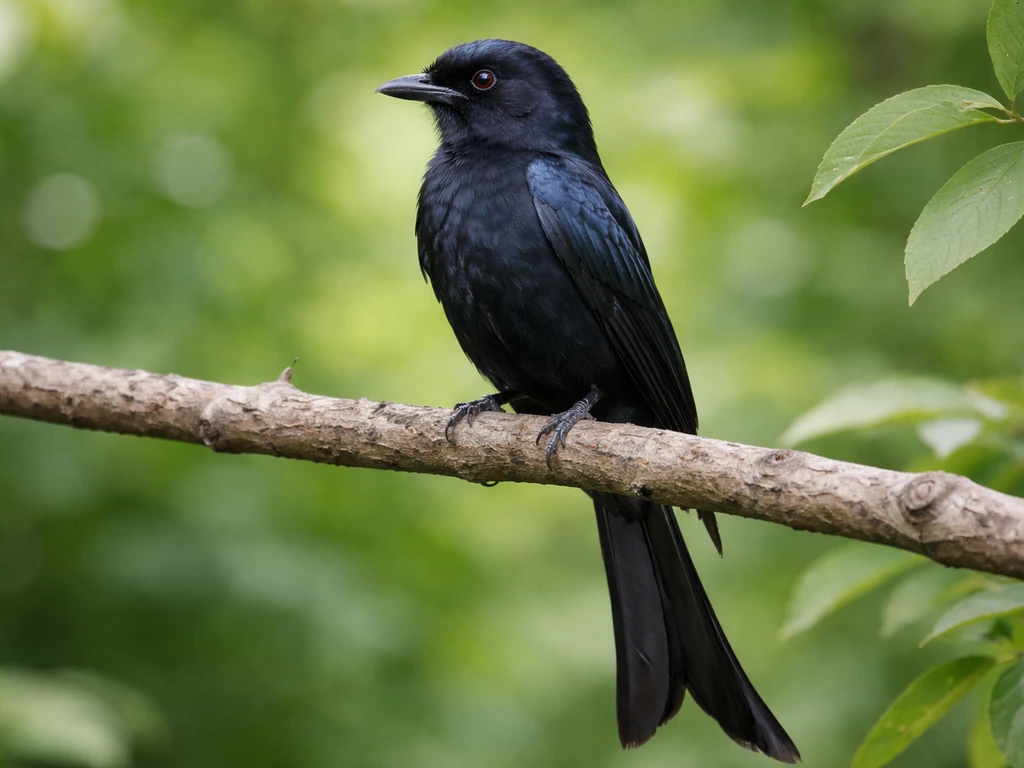
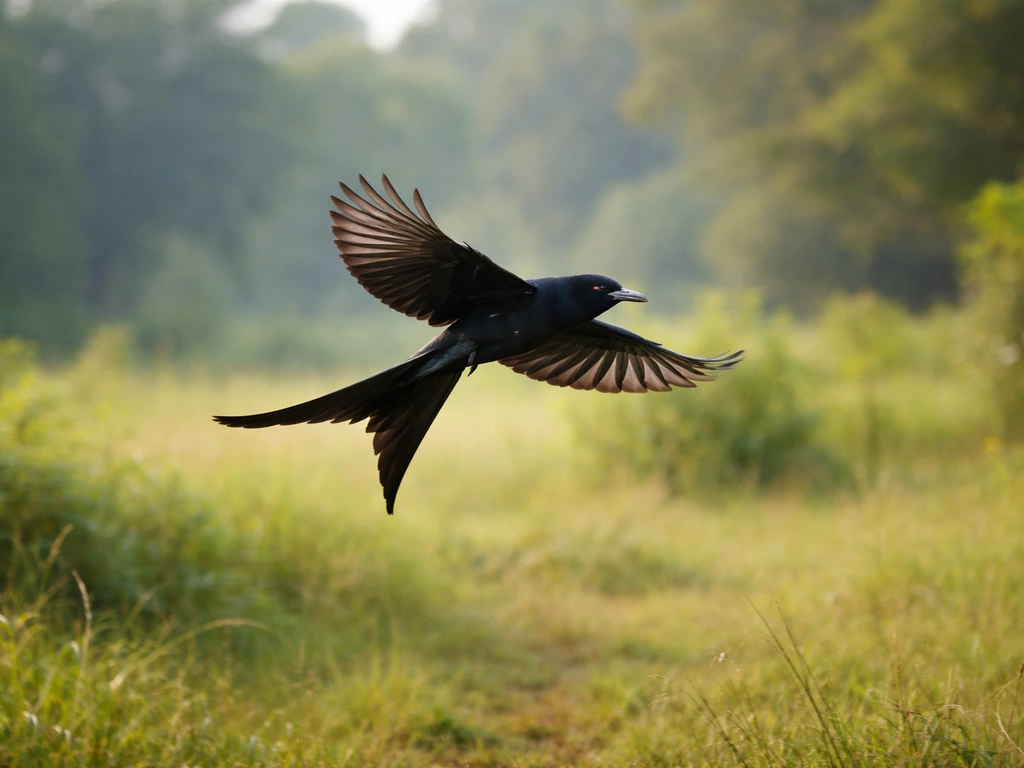
Drongo is the English common name for the entire Dicruridae family, a group of perching birds found across Africa, Asia, and Australia. In the Indian context, when someone searches for 'drongo bird meaning in Hindi,' they almost always mean a bird they've seen sitting on a wire or fence post, jet black, with a long forked tail and surprisingly bold behavior. In other words, the drongo bird meaning in Hindi usually points to the names लोग use for this bird, like भुजंगा and कोतवाल. That's the Black Drongo, Dicrurus macrocercus, the most widespread drongo across South Asia.
One thing worth flagging: in Australian English, 'drongo' also works as a slang insult meaning a fool or an incompetent person. Some online Hindi translation tools pick this up and give you odd or unrelated meanings. If you've seen a Hindi dictionary site or translation app return something like 'अक्षम व्यक्ति' (an incapable person) for 'drongo,' that's the Australian slang bleeding into the results, not the bird. For the bird, stick with भुजंगा or कोतवाल.
Hindi names for drongo and what they mean
The two main Hindi names you'll encounter are भुजंगा (Bhujanga) and कोतवाल (Kotwal). Bhujanga appears in Hindi Wikipedia and several biodiversity references specifically as the Dicruridae group label. The fuller form for the Black Drongo is काला भुजंगा (Kala Bhujanga), where काला simply means 'black.' Kotwal or Jungle Kotwal is the name used more widely in rural and field contexts, and it's the more culturally evocative of the two.
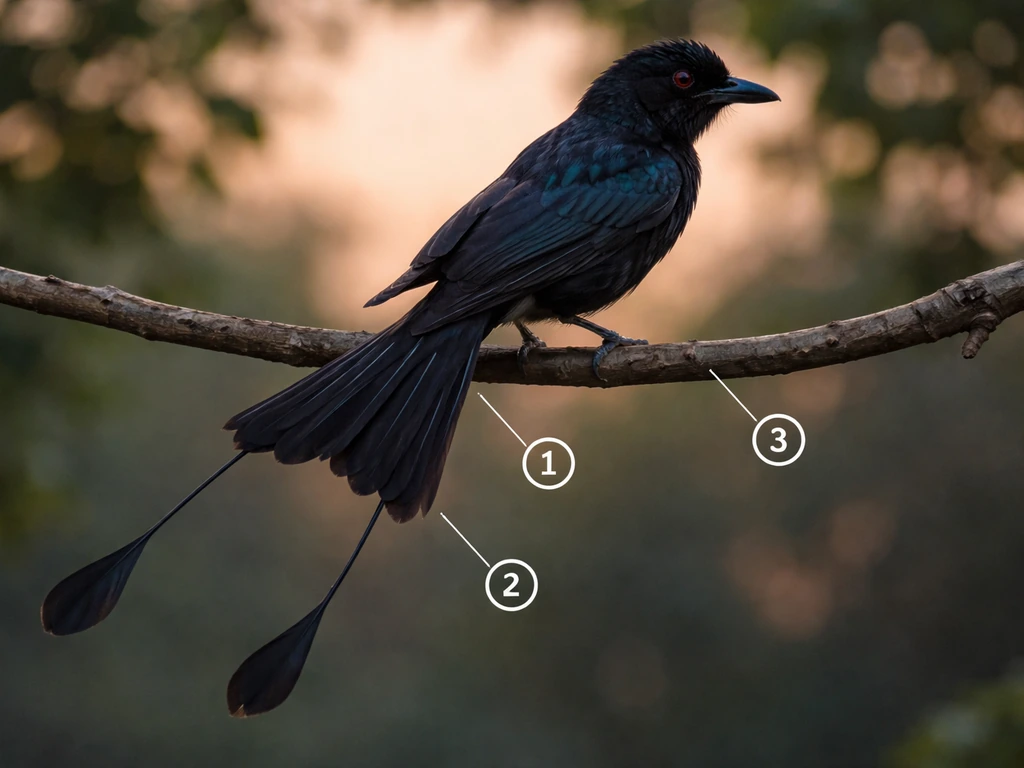
Kotwal in Hindi refers to the head constable or police officer of a town. The drongo earned this name because it aggressively chases away larger birds, including crows, hawks, and even eagles, from its territory. This fearless behavior is so striking that people across different regions independently gave it a 'law-keeper' name. The Greater Racket-tailed Drongo (Dicrurus paradiseus) is also called 'kothwal' in some regions, and local explanations connect this to its call, which resembles a night watchman's whistle. So when you hear Kotwal, you're hearing centuries of behavioral observation compressed into one word.
| Hindi Name | Transliteration | Literal Meaning | Which Drongo |
|---|---|---|---|
| भुजंगा | Bhujanga | Drongo (group name) | Dicruridae family (all drongos) |
| काला भुजंगा | Kala Bhujanga | Black drongo | Dicrurus macrocercus |
| कोतवाल / जंगल कोतवाल | Kotwal / Jungle Kotwal | Town guard / forest policeman | Black Drongo (most common usage) |
| कोलसा | Kolsa | Regional variant (some areas) | Black Drongo (regional) |
How to avoid confusing drongo with other black birds
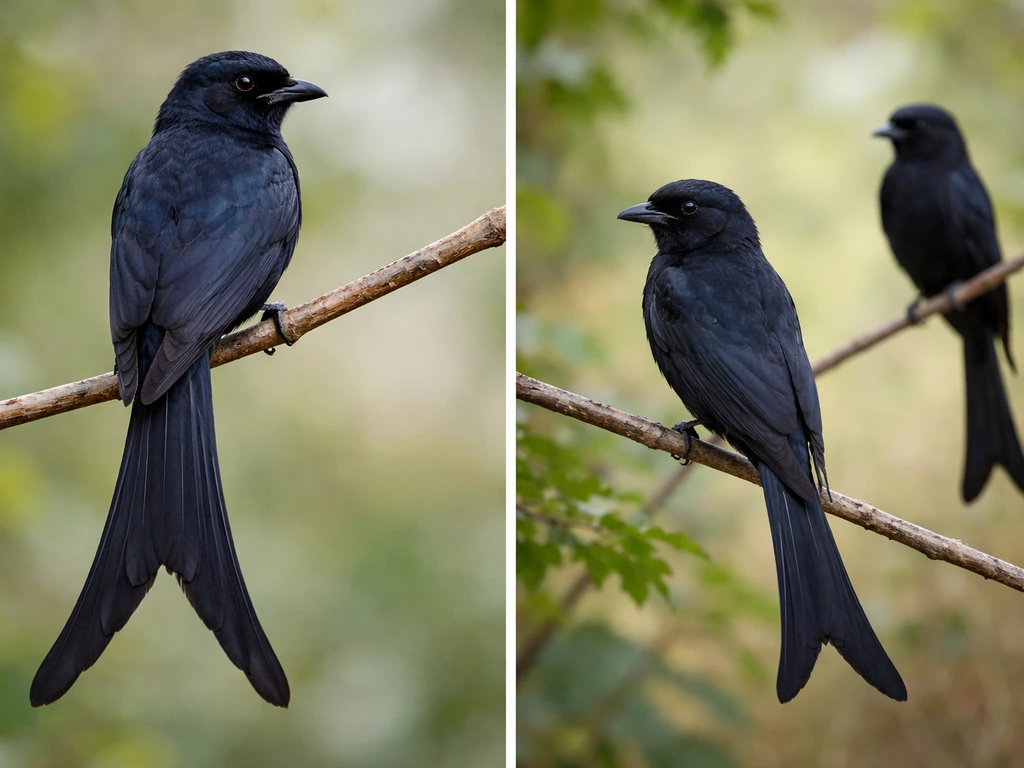
This is where people trip up most. The Black Drongo is glossy black, about 31 cm long, and its defining feature is its deeply forked tail, which looks like a fish tail when it spreads. It also has a small white spot near the base of its bill called a 'rictal spot,' visible in adults. If you can see both the forked tail and that white spot, you're looking at a drongo, not a crow or a myna.
The Crow-billed Drongo (Dicrurus annectens) is entirely black with a more shallowly forked tail and can look very similar. Juvenile Black Drongos can also look brownish and might be confused with other species. Mynas, while sometimes dark-feathered, have white wing patches and a very different tail shape. Nightjars are sometimes mixed up in folklore contexts because their nocturnal calls get associated with 'black mysterious birds,' but they're completely different in structure, being cryptically patterned and ground-nesting.
- Deeply forked tail: the clearest drongo marker, visible in flight and at rest
- Rictal spot: small white patch at the gape (base of bill), present in adult Black Drongos
- Upright perching posture on open wires, fences, or bare branches
- Bold mobbing behavior: actively chases larger birds, even raptors
- Glossy blue-black plumage, not dull black like a crow
- Juveniles can be brownish, so tail shape matters more than color in young birds
Drongo in Indian symbolism and cultural meaning
Indian cultural associations with the drongo tend to cluster around two themes: protection and boldness. The Kotwal name itself is a form of symbolic recognition, acknowledging the bird as a guardian figure in the natural world. In agricultural settings across central and northern India, farmers have long valued the drongo because it escorts cattle and follows plows, catching insects disturbed by livestock and farm work. That proximity to humans and domesticated animals gave it a familiar, almost trustworthy status.
There is also a well-documented folk superstition from central India recorded in Wikipedia: if a newly fledged drongo lands on a cow, the cow's horns may fall off. This is clearly a superstition rather than fact, but it shows how closely the bird was observed in village life. The fact that such a specific belief exists tells you this wasn't a bird people ignored. It was noticed, talked about, and woven into everyday rural reasoning.
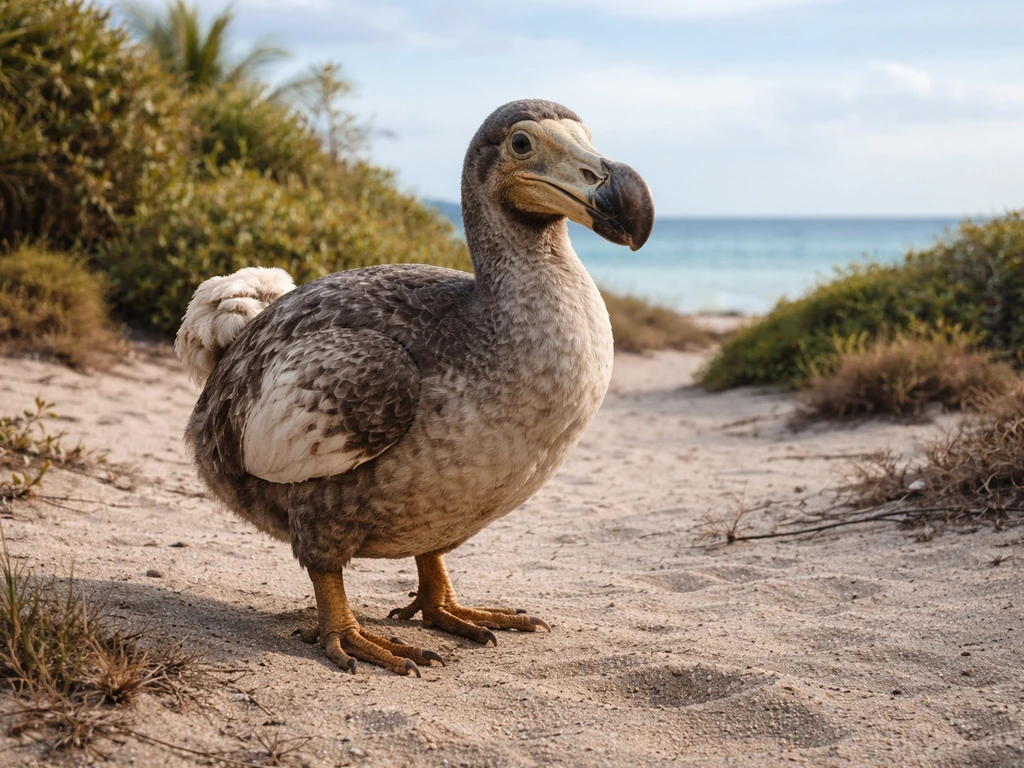
Some spiritual symbolism websites list drongo as a bird associated with death omens or predictions, but these claims are largely anecdotal and not rooted in classical Indian texts like Shakuna Shastra (the traditional science of bird omens). The established Vedic and folk omen traditions do include birds as messengers and signs, but the drongo does not hold a major canonical role the way birds like the crow (कौआ), owl (उल्लू), or peacock (मोर) do. Some people also search for the dodo bird meaning in hindi, but that is a separate topic from drongo's symbolism and bird-name usage death omens. Treat such claims with appropriate skepticism and check whether they cite any traditional source.
Where these names and symbols come from
The name Bhujanga has Sanskrit roots. In Sanskrit, 'bhujanga' or 'bhujang' can refer to a snake or a creeping/moving creature, and in some folk etymologies the drongo's twisting, swooping flight style may have contributed to this association. The Kotwal name, however, is purely behavioral and administrative in origin. It comes from the Persian-influenced Hindi administrative term for a chief constable, which was part of the Mughal-era governance vocabulary. That the drongo picked up a Mughal-era administrative title says something about how deeply the bird's territorial personality impressed people across centuries of Indian observation.
The Greater Racket-tailed Drongo's connection to a night watchman's call is particularly telling. In India, bird names frequently encode ecological behavior rather than physical description. Compare this to names found for other birds on this site, like the jacana (known for walking on floating leaves) or the canary (named for its singing). If you’re also checking other bird names, the jacana bird meaning in Hindi is often explained through its distinctive habit of walking on floating leaves. With drongos, the behavior, specifically the aggressive guarding and loud calls, is the story.
How to confirm you're looking at the right bird
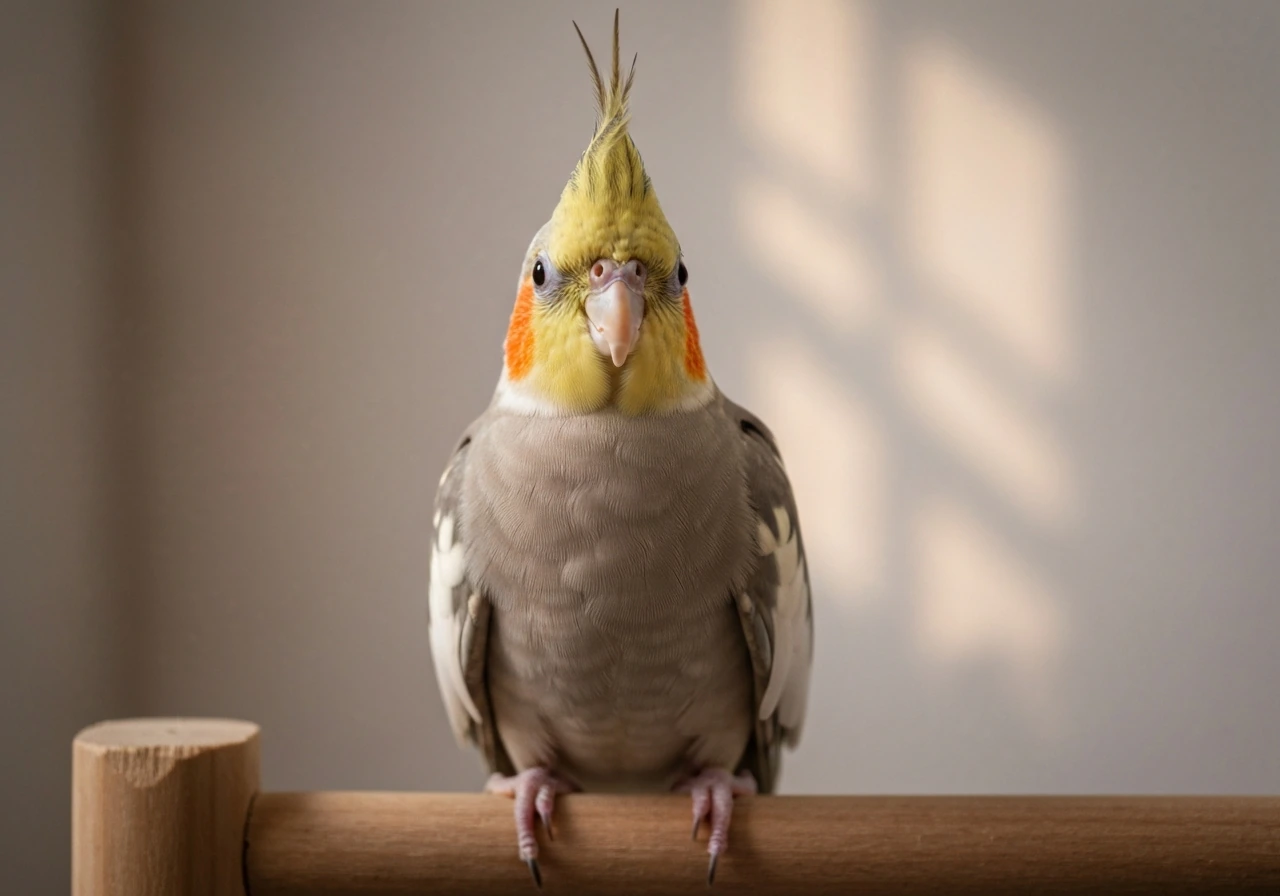
If you want to move from 'I think it's a drongo' to 'I'm sure it's a drongo,' here's a practical approach that works well in Indian field conditions. In Hindi, the cockatiel bird meaning is often explained as a pet parrot, known for its crest and friendly nature cockatiel bird meaning in hindi.
- Check the tail first: a deeply forked tail that fans open in flight is the most reliable drongo marker. Crow-billed Drongo has a shallower fork, so depth matters.
- Look for the rictal spot: a small white patch near the base of the bill in adults. Crows and mynas don't have this.
- Note the posture and behavior: drongos perch upright and conspicuously on exposed spots. If the bird is aggressively chasing away a crow or a hawk, it's almost certainly a drongo.
- Use the Merlin Bird ID app (Cornell Lab): it supports India bird packs with photos, songs, and calls. You can upload a photo or record the call and get a reliable AI-assisted identification.
- Cross-check on iNaturalist: search for Black Drongo (Dicrurus macrocercus) observations in your state or district. You'll find recent photo records with GPS locations that confirm whether the bird is resident in your area.
- For the Hindi name confirmation: use 'काला भुजंगा' or 'कोतवाल' in any serious Indian bird field guide (like Salim Ali's Book of Indian Birds) to cross-reference the species.
The Black Drongo is a common resident breeder across South Asia, from Pakistan through India, Bangladesh, and Sri Lanka, so if you're in the Indian subcontinent and you saw a glossy black bird with a forked tail being aggressively territorial near open farmland or scrub, you almost certainly saw Dicrurus macrocercus. [Merlin Bird ID](https://play. google. com/store/apps/details?
hl=en_US&id=com. labs. merlinbirdid. app) का Google Play app listing बताती है कि यह packs में photos, songs और calls के साथ पक्षी पहचान में मदद देने का दावा करता है, और इसमें India का उल्लेख भी है।.
The Hindi name is कोतवाल or काला भुजंगा, the cultural meaning is rooted in its bold, guardian-like behavior, and the most trustworthy symbolism comes from that behavioral reality rather than from spiritual omen lists of uncertain origin.
FAQ
“ड्रोंगो” और “कोतवाल” क्या हमेशा एक ही पक्षी के लिए इस्तेमाल होते हैं?
अक्सर “कोतवाल” नाम ब्लैक ड्रोंगो के साथ, और कुछ क्षेत्रों में रैकेट-टेल्ड ड्रोंगो जैसी दूसरी प्रजातियों के लिए भी सुनाई देता है। इसलिए पहचान करते समय सिर्फ नाम पर नहीं, पूंछ की बनावट (गहराई से फॉर्क्ड), और वयस्क में बिल के पास दिखने वाले छोटे white रिच्टल स्पॉट पर ध्यान दें।
अगर कोई अनुवाद ऐप “ड्रोंगो” को गाली जैसे अर्थ में दिखाए, तो क्या करूं?
हाँ, “ड्रोंगो” का ऑस्ट्रेलियन slang (मूर्ख या नालायक) कुछ ऑनलाइन टूल्स में गलत अर्थ दे देता है। अगर किसी साइट ने “अक्षम व्यक्ति” जैसा अर्थ दिया है, तो उसे पक्षी-meaning नहीं मानें और खोज में “भुजंगा” या “काला भुजंगा” लिखकर मिलान करें।
मैं ड्रोंगो को कौआ या मेनॉया से कैसे अलग पहचानूं?
प्लेन ब्लैक रंग वाले पक्षियों में कन्फ्यूजन हो सकती है, खासकर कौआ या मेनॉया जैसे पक्षियों से। सबसे भरोसेमंद संकेत, ड्रोंगो की टेल का बहुत गहरा फॉर्क (मछली की पूंछ जैसा) और साथ में उसके “गार्डियन” जैसा aggressive व्यवहार है। केवल रंग देखकर निष्कर्ष न निकालें।
जुवेनाइल ड्रोंगो दिखे तो पहचान कैसे पक्की करूं?
अगर पक्षी juvenile (छोटा/कम चमकीला) हो तो रंग भूरा-सा लग सकता है, जिससे पहचान कठिन होती है। ऐसे में पूंछ की फॉर्क गहराई, चालू व्यवहार (टेरीटरी के लिए डर न दिखाना), और कॉल की गुणवत्ता देखें, क्योंकि juvenile में रंग कम भरोसेमंद होता है।
“नए उड़ने वाले ड्रोंगो” के बारे में लोक-विश्वास सच है क्या?
हाँ, भारतीय ग्रामीण लोककथाओं में “अगर नव-उड़े drongo ने गाय पर बैठा तो सींग गिर सकते हैं” जैसी मान्यता मिलती है, लेकिन इसे तथ्य मानकर चलने का कोई वैज्ञानिक आधार नहीं है। इसे एक स्थानीय विश्वास या अवलोकन के रूप में लें, व्यावहारिक निर्णय के आधार की तरह नहीं।
क्या ड्रोंगो सच में मृत्यु-ओमेन से जुड़ा पक्षी है?
अगर आपको किसी आध्यात्मिक वेबसाइट से “ड्रोंगो मृत्यु का संकेत” जैसी बात मिले, तो बिना स्रोत वाली बातें सावधानी से लें। लेख में यह स्पष्ट किया गया है कि शास्त्रीय शुकुन परंपरा में ड्रोंगो की कोई प्रमुख canonical भूमिका स्थापित नहीं मानी जाती, इसलिए ऐसे दावों को तथ्य नहीं मानें।
भुजंगा (Bhujanga) नाम का अर्थ किस तरह समझें, और क्या यह सांप से जुड़ता है?
“भुजंगा” का Sanskrit root snake जैसे अर्थ से जुड़ता है, यह संबंध नाम-उत्पत्ति की लोक-व्याख्याओं तक सीमित हो सकता है। दूसरी ओर “कोतवाल” का संबंध व्यवहार से जोड़कर बताया जाता है, यानी यह अधिक प्रत्यक्ष और observational interpretation है।
मेरे इलाके में कोतवाल दिखे, तो वह Black Drongo ही है, यह कैसे पुष्टि करूं?
अगर आप उप-प्रजाति या नजदीकी species (जैसे Greater Racket-tailed Drongo) के बीच कन्फ्यूज हों, तो “कॉल” और पूंछ के आकार की तुलना मदद करती है। Greater Racket-tailed Drongo के नाम से जुड़ी स्थानीय व्याख्या अक्सर night watchman जैसी whistle-like call पर जाती है, जबकि ब्लैक ड्रोंगो की पहचान उसके गहरे फॉर्क और रिच्टल स्पॉट से ज्यादा पक्की होती है।
भारत में ड्रोंगो देखने की सबसे सही जगह और समय क्या है?
ड्रोंगो आमतौर पर खुले खेत, झाड़ियां, और इंसानी गतिविधि के पास की जगहों पर ज्यादा दिखते हैं, और अपने क्षेत्र की रखवाली करते हैं। इसलिए समय चुनते समय, सुबह-सुबह या कृषि-गतिविधि के आसपास की जगहों को प्राथमिकता दें, वहां पहचान की संभावना ज्यादा रहती है।