
In Hindi, 'nightingale' is most commonly translated as बुलबुल (Bulbul). That's the word you'll find in virtually every English-to-Hindi dictionary, and it's the term that shows up across Urdu and Hindi poetry when writers want to invoke the image of a small, melodious bird singing with its whole heart. If you've seen 'nightingale' in a poem, a film song title, or a vocabulary list and want the Hindi equivalent, बुलबुल is your answer.
Nightingale Bird Meaning in Hindi: Name and Symbolism

Rajesh Sharma
19 Jun 2026
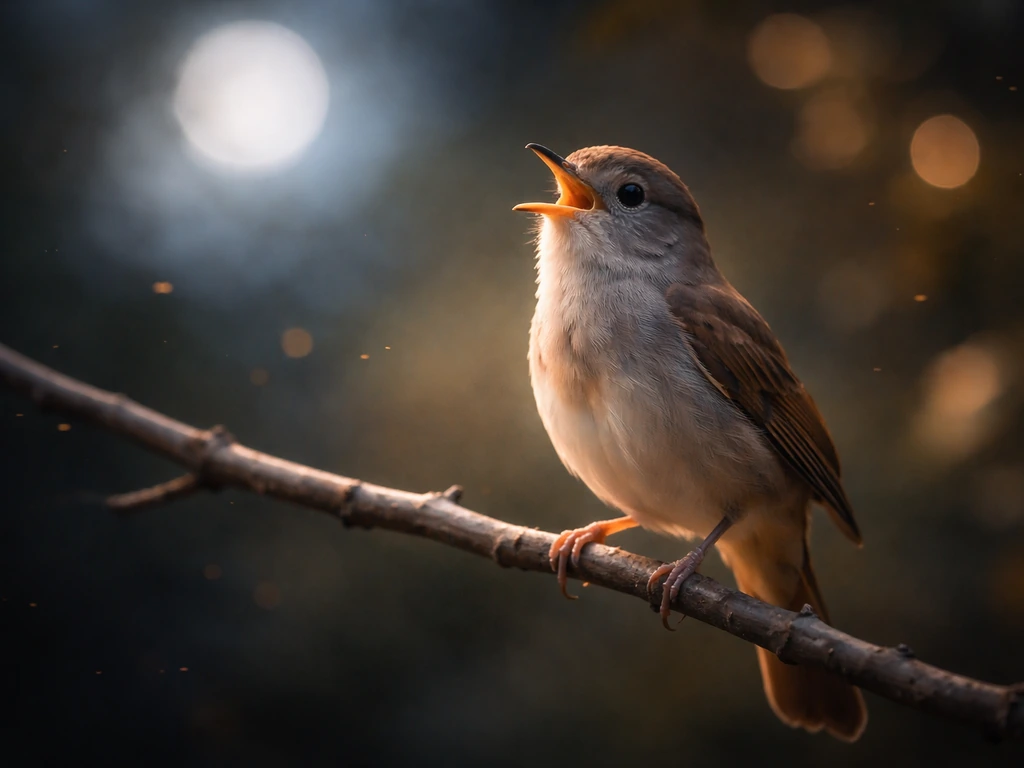
How to say 'nightingale' in Hindi and what it looks like
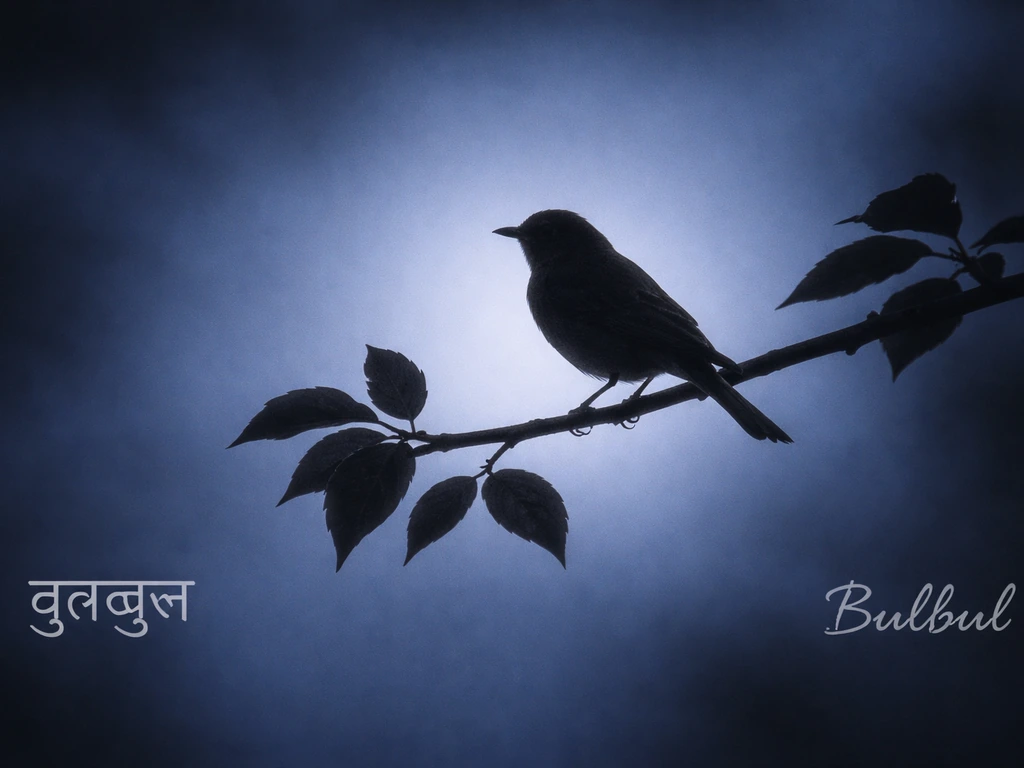
The standard Hindi word is बुलबुल, romanized as Bulbul and pronounced roughly as 'bool-bool' with equal stress on both syllables. It comes directly from the Persian/Arabic word for the bird, which entered Hindi through centuries of Urdu and Persian literary influence on the subcontinent. In Devanagari script it's written बुलबुल, which is also exactly how you'll see it in Hindi dictionaries, from old printed ones to modern online resources like Rekhta and HinKhoj.
You'll also encounter a few other forms alongside बुलबुल in poetic or literary texts. The word अंदलीब (Andlib or Andalib) is a Persian-origin poetic epithet for the nightingale that surfaces in classical Urdu shayari. हजारदास्ताँ (Hajārdāstā̃) is another poetic variant, literally meaning 'thousand tales' or 'one who tells a thousand stories,' which beautifully captures the bird's reputation for complex, varied song. And in modern transliterated Hindi, you'll sometimes just see नाइटिंगेल written in Devanagari as a borrowed word, especially in English-learning materials.
| Term | Script | Origin | Context |
|---|---|---|---|
| Bulbul | बुलबुल | Persian/Arabic via Urdu | Everyday Hindi, dictionaries, modern use |
| Andlib | अंदलीब | Persian | Classical Urdu and Hindi poetry |
| Hajārdāstā̃ | हजारदास्ताँ | Persian (lit. 'thousand tales') | Poetic/literary epithet |
| Shah Bulbul | शाह बुलबुल | Urdu compound | Some regional/dialectal references |
| Naitingel | नाइटिंगेल | English transliteration | Vocabulary lists, learner materials |
Translation vs. real bird: what 'bulbul' actually refers to
Here's where it gets genuinely interesting, and where most learners get tripped up. The word बुलबुल in Hindi and Urdu has two lives: one as a translation equivalent for 'nightingale,' and another as a name for a completely different real bird. In the context of bird droppings, the phrase bird droppings meaning in Hindi refers to गोबर like मल, but the exact meaning depends on the specific Hindi usage name for a completely different real bird.
The actual common nightingale is a specific European and Asian songbird with the scientific name Luscinia megarhynchos. It's a small, brown, unassuming bird famous for its extraordinarily powerful and varied song, and it breeds across Europe, North Africa, and parts of western Asia.
In India, the true nightingale (Luscinia megarhynchos) is not a common resident bird. Common nightingale का scientific name Luscinia megarhynchos है।.
Meanwhile, बुलबुल in everyday Indian usage often refers to birds of the bulbul family (Pycnonotidae), such as the Red-whiskered Bulbul or the Red-vented Bulbul, which are genuinely common across the subcontinent. So when a dictionary lists बुलबुल as the Hindi word for 'nightingale,' it's making a cultural and poetic equivalence, not an ornithological one.
In poetry and literature, translators use the two words interchangeably because both birds occupy the same symbolic space: the small, singing bird that represents the spirit of a lover. For language learning and literary purposes, बुलबुल = nightingale works perfectly. In Hindi, the phrase “bird lover” can be understood as someone who loves birds, though the exact wording may vary by context bird lover meaning in hindi. For birdwatching or species identification, they are different birds.
What the nightingale symbolizes in Indian culture
The बुलबुल/nightingale image in Indian cultural tradition is rich, layered, and deeply tied to Persian and Urdu literary heritage. The bird is almost never just a bird in a poem. It carries a whole universe of emotional and spiritual meaning that has been refined across centuries of ghazals, qawwalis, and nazms.
Music and the beauty of the voice
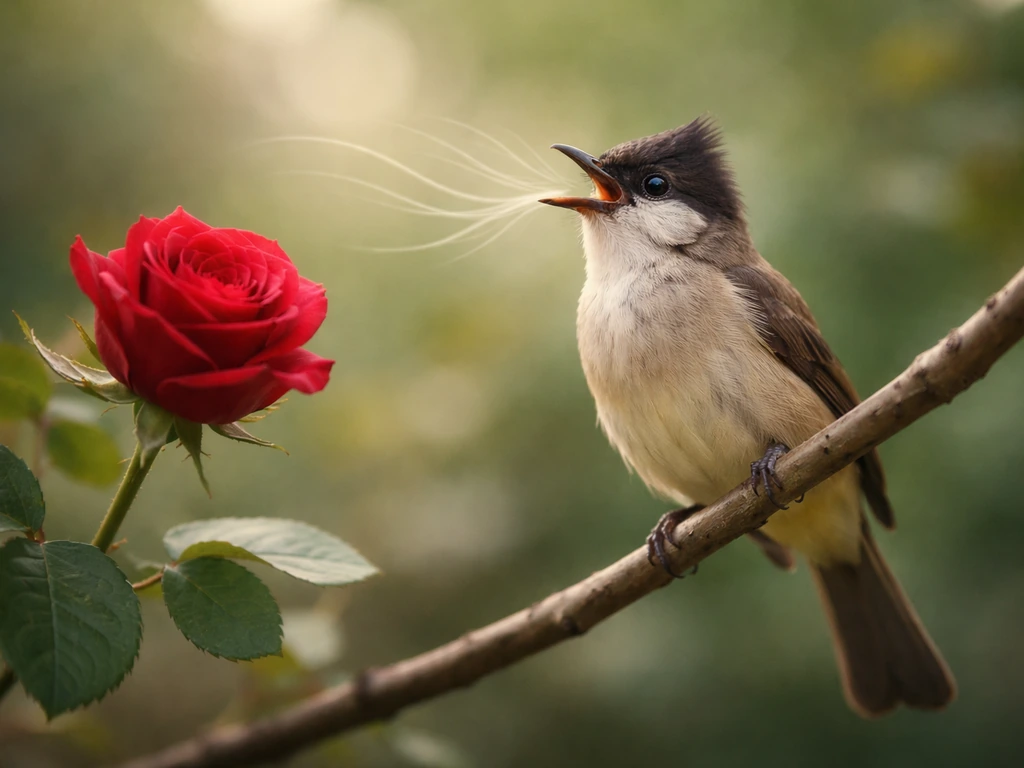
First and most obviously, the bulbul stands for musical excellence and the beauty of the singing voice. When someone is called a 'bulbul' in Hindi or Urdu, it's a profound compliment: they sing with feeling, with natural grace, and with an expressiveness that moves the listener. This is why great singers from the subcontinent have historically been given the title. The bird's song is understood not as mere chirping but as a form of art and spiritual expression.
Love, longing, and separation (viraha)
The most powerful symbolic role of the bulbul in Urdu-Hindi poetry is as the voice of the lover in pain. The classic pairing in Persian and Urdu literature is the bulbul and the rose (gul/gulab). The nightingale loves the rose completely and hopelessly. The rose blooms and fades; the nightingale sings its longing, its joy, and its grief at the rose's thorns and inevitable departure. This bulbul-gul motif entered Hindi literary culture directly from Persian, and you'll find it in thousands of Urdu shers (couplets) and ghazals. The birdsong becomes the voice of viraha, the Sanskrit and Hindi concept of the agony of separation from the beloved.
Devotion and spiritual yearning
In Sufi-influenced poetry, which has deeply shaped the Hindi and Urdu literary imagination, the bulbul's longing for the rose becomes a metaphor for the soul's longing for the divine. The bird singing in the dark of night, calling out to something it loves but cannot reach, is a perfect image for the Sufi concept of ishq (divine love) and the devotee's yearning for union with God. This gives the nightingale/bulbul a spiritual dimension that goes well beyond romance. When you encounter the word in a devotional ghazal or a qawwali, that layer of meaning is usually present.
The nightingale in poetry: love, the rose, and the night singer
In Urdu shayari, searching for 'Bulbul' on any major poetry database like Rekhta or UrduPoint brings up an enormous number of verses. The most common imagery you'll find includes the bulbul singing at night (Bulbul-e-shab, the night bulbul), the bulbul weeping in the garden, and the bulbul's complaint or lament (shikwa). These are not random poetic flourishes. They map onto an entire emotional vocabulary: the bird's night-singing represents grief and longing that cannot be contained by daylight, the kind of love that wakes you at 3 a.m.
The epithet हजारदास्ताँ (hajārdāstā̃, meaning 'thousand tales') captures the sense that the bird's song is infinitely varied and expressive, never repeating the same story twice. This is also why classical Indian literary tradition holds the nightingale/bulbul as a symbol of the poet: someone who turns inner feeling into endlessly varied song. The poet and the bulbul become the same figure.
Common mix-ups when translating 'nightingale' into Hindi

Several sources of confusion come up repeatedly when people try to pin down the 'nightingale' in Hindi texts, and it's worth naming them clearly. Bird poop is commonly called पक्षी की बीट या चिड़िया की बीट in Hindi.
- Bulbul as a literal bird vs. a poetic stand-in: As discussed above, the real birds called 'bulbul' in India (Pycnonotidae family) are not the same species as the common nightingale (Luscinia megarhynchos). When reading poetry, bulbul means the nightingale as a symbol. When reading a field guide, bulbul means a different, locally common bird.
- Nightjar confusion: 'Nightjar' (a completely separate nocturnal bird family, Caprimulgidae) sometimes gets mixed up with 'nightingale' because both have 'night' in their name. Nightjars are not songbirds and have nothing to do with the bulbul or its symbolism. The Hindi references to nightjar are separate dictionary entries entirely.
- Koyal/Kokila overlap: The koyal (कोयल, Indian cuckoo) is another famous singing bird in Indian tradition and poetry, and it sometimes appears in the same literary contexts as the bulbul. Both are celebrated for their voices, but they carry different symbolic weights: the koyal is associated with spring, the arrival of the rains, and a more joyful longing, while the bulbul leans more toward the Persian-influenced lover's lament. Mixing them up changes the emotional register of the verse.
- Andlib and hajārdāstā̃ appearing unexplained: If you encounter these words in a Hindi or Urdu poem and don't know they mean 'nightingale,' you might completely miss the bird reference. Both are poetic epithets, not everyday vocabulary.
The practical rule: if you're reading a poem and see बुलबुल, अंदलीब, or हजारदास्ताँ, you're looking at the nightingale figure. If you're looking at a nature text or field guide and see बुलबुल, it's likely referring to one of the Indian bulbul species. Context is everything. In Hindi, “bird feeder” can be translated as “पक्षियों का भोजन रखने वाला बर्तन.” bird feeder meaning in hindi.
How to verify the term and use it correctly
If you want to check your understanding of 'nightingale' in a Hindi or Urdu source, here's a practical workflow that actually works.
- Start with a bilingual dictionary: HinKhoj and ShabdKhoj both list बुलबुल as the primary Hindi translation of 'nightingale.' This is your first confirmation.
- Cross-check on Rekhta Dictionary: Rekhta is the best resource for Urdu-Hindi literary vocabulary. Search 'bulbul' there and you'll see its full range of poetic usage, which confirms whether a particular verse is using it as the nightingale symbol.
- Use the scientific name as an anchor: If you need to confirm you're dealing with the actual bird and not a poetic figure, look up Luscinia megarhynchos. Britannica, Wikipedia, and the U.S. Fish & Wildlife Service all confirm this as the common nightingale. If the text you're reading is biological/ornithological, the scientific name should be findable.
- Search for the poetic variant: If you've found अंदलीब or हजारदास्ताँ in a text and aren't sure what it means, search either term on Wiktionary or Rekhta alongside 'nightingale' and you'll find the confirmed link.
- Check pronunciation in context: For speaking and writing, बुलबुल is always safe and universally understood. For poetic or literary writing, अंदलीब gives a more classical, elevated tone. For a simple vocabulary list or translation exercise, नाइटिंगेल (transliterated) is also acceptable and commonly seen in English-learning materials.
- Distinguish the context: Ask yourself whether the source is literary/poetic (use the symbolic reading) or ornithological/naturalistic (verify species identity). This single question resolves most of the confusion.
Related bird terms you'll see alongside 'bulbul' in Hindi references
If you're studying Hindi bird vocabulary or reading poetry and want to build out your understanding, these are the terms that most commonly appear in the same semantic neighborhood as बुलबुल/nightingale. Knowing them will help you navigate texts with confidence. The koyal (कोयल) and the chatak (चातक) are two other birds with strong symbolic lives in Hindi-Urdu poetry, each with their own distinct meanings.
The chatak, for instance, is a bird said to drink only rainwater and is used as a symbol of single-minded, patient longing, a different emotional flavor from the bulbul's passionate lament. Nocturnal birds as a category also come up in this literary world, and there are fascinating differences in how night-singing versus night-calling birds are treated symbolically in Hindi tradition.
If you’re wondering about the nocturnal bird meaning in hindi, this is the lens that helps interpret those night appearances in poetry Nocturnal birds.
For anyone building a broader vocabulary of bird terms in Hindi, it's also worth knowing words related to those who interact with birds: the traditions around bird lovers, bird catchers, and even how birds and their droppings are referenced in everyday Hindi speech all form part of the full picture of how Indian languages relate to the natural world. The nightingale sits at the more exalted end of this spectrum, firmly in the realm of poetry, music, and spiritual metaphor.
FAQ
If I see “bulbul” in Hindi, does it always mean the real nightingale bird?
No. बुलबुल is a poetic and dictionary-level Hindi equivalent for “nightingale,” but in everyday Indian speech it is often used for the local bulbul family (pycnonotids). If you are reading a field guide or a birdwatching post, treat बुलबुल as “bulbul-type bird,” not automatically the European nightingale.
What is the difference between बुलबुल and अंदलीब in Hindi texts?
In Hindi poetry, अंदलीब and बुलबुल both typically point to the nightingale figure, but translators and writers may choose them for different flavor. अंदलीब is more overtly Persian-classical in tone, while बुलबुल is the most common everyday and dictionary-friendly term.
How can I tell whether बुलबुल in a Hindi poem is symbolic or referring to a real bird?
The safest way is to look at surrounding cues. If the text mentions roses, the garden at night, lover’s longing, or spiritual yearning, बुलबुल is being used symbolically. If the text mentions habitat, size, call type, or local bird names, it is likely using बुलबुल for a real bulbul species.
When Hindi text spells “nightingale” in Devanagari, does it still mean the same symbolic bulbul?
The word нाइटिंगेल written in Devanagari usually signals a direct borrowed English term used in learning materials. In such cases, it is less likely to carry the Urdu-Hindi “bulbul and rose” cultural symbolism unless the surrounding lines are clearly literary.
Is the true European/Asian nightingale (Luscinia megarhynchos) commonly found in India when Hindi texts say बुलबुल?
Not always. Some bird names overlap in common usage, but the nightingale’s scientific name Luscinia megarhynchos is not a common Indian resident bird. So if the context is India-focused bird identification, “bulbul” is more likely a different species than the true nightingale.
Should I learn “bulbul = nightingale” as a translation rule or as a poetic analogy?
If you are using bulbul meaning for language learning, focus on the “singing with longing” imagery rather than a strict species match. For ornithology, you need local species names (like Red-vented or Red-whiskered bulbul) because बुलबुल alone can be too broad.
What common confusion should I avoid when looking up nightingale-related Hindi words?
A practical mistake is confusing symbolic nightingale/bulbul with “bird droppings” vocabulary. If you see terms tied to waste, look for the specific Hindi phrasing used for droppings, not for the bird-meaning terms like बुलबुल, अंदलीब, or हजारदास्ताँ.
Can the nightingale/bulbul meaning in Hindi be spiritual instead of romantic?
Yes, but by interpretation. In many devotional ghazals or Sufi-influenced verses, bulbul’s night-singing can represent the soul’s yearning for the divine, not romantic love with a human beloved. So “meaning” can shift from love-story to spiritual metaphor depending on the devotional tone.
Next Article
Bird Droppings Meaning in Hindi: शब्द, अर्थ और संकेत
पक्षियों के पाखाने का अर्थ हिंदी में, साथ ही संकेत, स्वास्थ्य-सफाई टिप्स और सांस्कृतिक मान्यताएं समझें