
In everyday Hindi, bird poop is most commonly called बीट (beet). This is the word you will hear from a street vendor wiping a splash off their cart, a grandmother warning you to move away from a roosting tree, or a birder noting field signs. It specifically refers to the droppings of birds, not general animal waste, which makes it more precise than many people expect from a casual word.
What Is Bird Poop Called in Hindi? Terms and Meanings

Rajesh Sharma
11 May 2026
The Hindi word for bird droppings
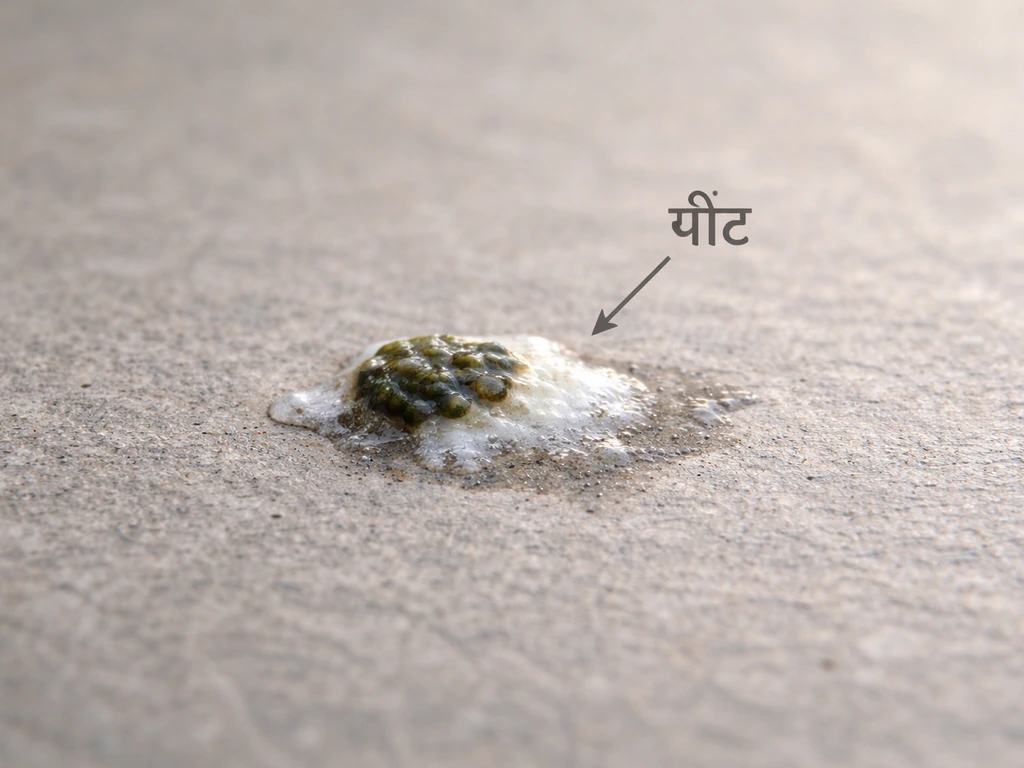
The core term is बीट (romanized: beet, sometimes written bīṭ or bīṭa). In Devanagari it is spelled: ब-ी-ट. The pronunciation is straightforward, rhymes with the English word 'beat'. The retroflex ट at the end gives it a slightly sharper finish than the English 't', so aim for a crisp, tongue-curled stop at the end. You may also see it written in older dictionaries or formal contexts as बीट् (with the halant diacritic), but in modern usage बीट is standard.
A slightly more formal phrase you will encounter in written Hindi is पक्षियों की विष्ठा (pakṣiyoṃ kī viṣṭhā), which translates literally as 'excrement of birds'. विष्ठा (viṣṭhā) is the Sanskritic word for excrement or feces, used across formal registers, scientific writing, and religious texts. Another phrase, चिड़िया का मल (ciṛiyā kā mal), is also used in dictionaries and means 'waste/stool of a bird'. In practice though, if you want to be understood instantly and naturally in conversation, बीट is your word.
Everyday terms vs formal and technical ones
There is a real gap between how people talk about bird droppings in daily life and how a zoology textbook or a Sanskrit-influenced dictionary handles the same thing. Knowing both registers helps you read, write, and speak accurately.
| Context | Term | Script | Notes |
|---|---|---|---|
| Everyday spoken Hindi | Beet | बीट | Most widely understood, casual and natural |
| Formal/written Hindi | Viṣṭhā / pakṣi viṣṭhā | विष्ठा / पक्षि विष्ठा | Sanskritic, used in texts and signage |
| Dictionary/literary Hindi | Mal | मल | Generic term for excrement; needs qualifier like 'chiṛiyā kā' |
| Old/classical register | Gūh / Guh | गूह / गुह | Archaic form found in older lexicons; rarely used in speech |
| Descriptive phrase | Chiṛiyā kā mal | चिड़िया का मल | Literal: 'waste of a (small) bird'; common in definitions |
The word गूह (gūh) deserves a brief note. It surfaces in classical Hindi and Urdu-influenced dictionaries as a root connected to dung or waste broadly, and some older sources use it in compound forms when referring to bird-dung contexts. You are unlikely to need it in conversation, but you may spot it if you are reading older Hindi literature or consulting the Rekhta dictionary for historical vocabulary.
How other Indian languages say it
Because this site covers the full range of Indian bird terminology across languages, it is worth knowing how these regional languages handle the same idea. The word बीट (bīṭa) actually travels across several languages with very similar form and meaning, which makes it easy to remember.
| Language | Term | Script | Pronunciation |
|---|---|---|---|
| Hindi | Beet / Bīṭ | बीट | Rhymes with English 'beat' |
| Marathi | Bīṭa | बीट / बीटा | Nearly identical to Hindi; used for bird dung specifically |
| Sanskrit | Viṣṭhā / Pakṣi-viṣṭhā | विष्ठा / पक्षिविष्ठा | Formal/classical; pakṣi = bird |
| Punjabi | Bīṭ / Pankhi di bīt | ਬੀਟ / ਪੰਛੀ ਦੀ ਬੀਟ | Same root; 'pankhi' = bird in Punjabi |
| Gujarati | Bīṭ / Pakṣī nī bīṭ | બીટ / પક્ષી ની બીટ | Same core word; 'pakṣī' = bird |
The consistency of बीट / bīṭ across Hindi, Marathi, Punjabi, and Gujarati tells you something useful: this is likely a well-established vernacular term with deep roots in the subcontinent, not a recent borrowing. Sanskrit's viṣṭhā is the literary ancestor, but bīṭ seems to have developed as the common spoken form across much of North and West India independently.
Spelling, script, and pronunciation guide
If you are typing in Hindi, the Devanagari spelling is बीट. Breaking it down: ब (ba) plus the long vowel marker ी (ī) gives you बी (bī), and then ट (ṭa, the retroflex 't') gives you बीट. On a standard Hindi keyboard layout (Inscript or Phonetic), you type: b + ii + T (capital T for the retroflex in most phonetic input schemes).
For pronunciation, the key point is the ट. In English we only have one 't' sound, but Hindi has two: a dental त (like a soft 't' with tongue behind upper teeth) and a retroflex ट (tongue curled back to the roof of the mouth). बीट uses the retroflex ट, so the ending is slightly heavier and sharper than just saying 'beat'. Native speakers will understand you even if you use a dental 't', but the retroflex is technically correct. In romanization you may see it written as bīṭ, beet, bīṭa, or simply beet depending on the source.
Bird droppings in Indian culture, symbolism, and sayings
Bird droppings have a surprisingly active presence in Indian folk belief and popular culture. Across many regions of India, being pooped on by a bird, especially a crow or a pigeon, is considered good luck, a sign of incoming wealth or fortune. The logic connects to the idea that birds carry divine messages in Hindu tradition: Garuda is Vishnu's vehicle, crows are linked to ancestors (pitṛ), and parrots appear as messengers in Sanskrit literature. If the 'messenger' marks you, it is seen as auspicious contact rather than a mishap.
In spoken Hindi, you will sometimes hear the light, joking phrase 'बीट पड़ी तो किस्मत खुली' ('beet paṛī to kismat khulī'), meaning roughly 'when the dropping fell, fortune opened up'. It is used humorously when something initially unpleasant turns out to bring good results. This reflects a broader Indian cultural tendency to fold everyday natural events into a framework of omens and meaning, something deeply connected to how birds are read as signs throughout Hindu and folk tradition.
In Ayurvedic and older medicinal texts, bird droppings (पक्षि विष्ठा) were actually catalogued as substances with various properties, including some applications in traditional remedies. The pigeon's dropping was noted in a few classical texts. While this is not common knowledge today, it is a reminder that Indian traditional knowledge systems treated bird waste as meaningful, catalogued material rather than simple refuse.
At sacred sites, particularly temples with large bird populations like pigeons and mynas, the cleaning of बीट from surfaces is a daily ritual task. The contrast between the sacredness of the bird itself and the practical nuisance of its droppings creates an interesting cultural tension, the bird is welcomed as divine, the droppings are cleaned away as impure, yet both are acknowledged as part of the sacred space.
What actually counts as bird poop (and what does not)
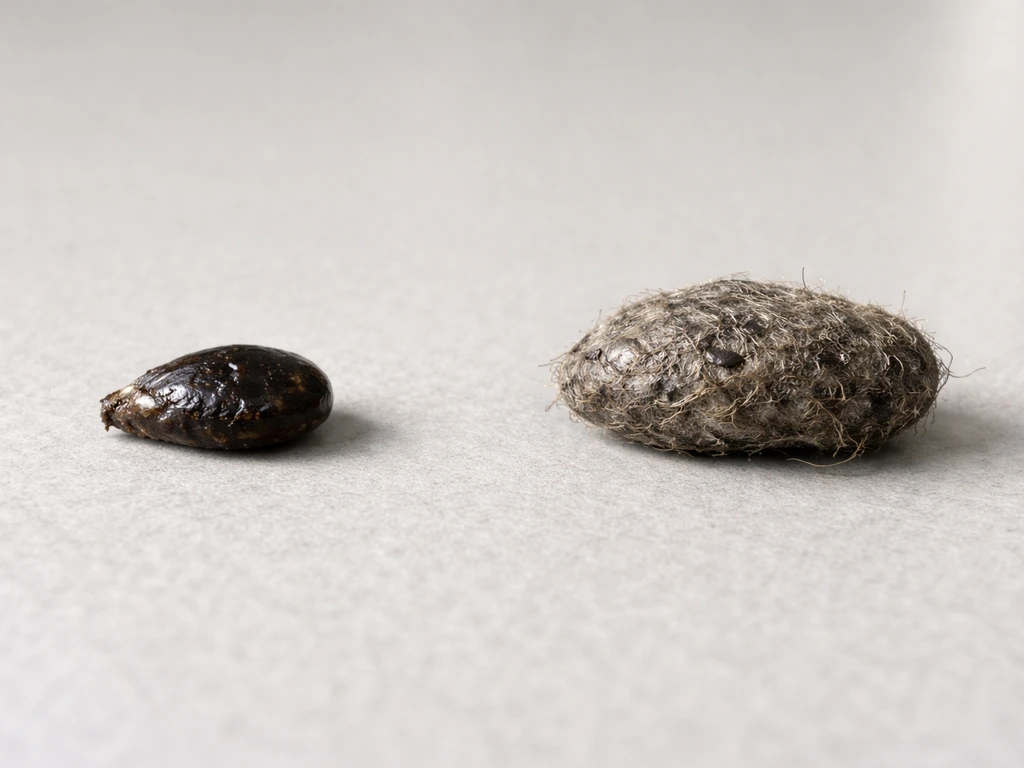
This is a practical question that comes up especially for birdwatchers, wildlife educators, and anyone identifying signs of bird presence. blank" rel="noopener noreferrer">Bird droppings (बीट) are the liquid or semi-solid waste excreted by a bird, the white and dark combined material you see on surfaces. If you are wondering what bird droppings means in Hindi, बीट is the common everyday term. The white part is uric acid (birds do not produce liquid urine separately the way mammals do), and the darker part is the fecal material.
What is not bīṭ, and should not be confused with it, is the owl pellet. blank" rel="noopener noreferrer">Owl pellets are the compact pellets owls cast, and you may find multiple pellets from the same roosting location. Nocturnal bird meaning in hindi is sometimes confused with owl-related terms like pellets, so it helps to know the distinction. Owls and some raptors regurgitate undigested material (bones, fur, feathers) as compact oval pellets from their mouths, not from their digestive exit. In Hindi, these are sometimes called उल्टी की गोली (ulṭī kī golī, literally 'vomit pill') or more technically आमाशय पिंड (āmāśay piṇḍ). These are field signs often found beneath roost trees and are entirely different from droppings. Similarly, shed feathers (पंख, pankh) are neither droppings nor pellets and have their own vocabulary and significance.
If you are consulting a related article on bird droppings meaning in Hindi on this site, you will find the term bīṭ anchors that discussion as well. If you are also wondering about other bird names, you may want to read the nightingale bird meaning in Hindi too. If you are wondering about what a bird feeder means in Hindi, that phrase is often discussed alongside everyday bird terms like this one bird droppings meaning in Hindi. The linguistic overlap is intentional, the everyday word and the more formal reference both converge on the same core term.
Related terms and what to search next
If this lookup was part of broader language learning or cultural research, here are the most useful related terms and directions to explore. Each one connects to how birds are understood, named, and symbolized in Hindi and across Indian languages, which is exactly the territory this site covers.
- पक्षी (pakṣī) — the standard Sanskrit-rooted Hindi word for bird; used in formal and literary contexts
- चिड़िया (ciṛiyā) — the common everyday Hindi word for a small bird or bird generally
- विष्ठा (viṣṭhā) — formal Hindi/Sanskrit word for excrement; pair with 'pakṣi' for bird droppings in written contexts
- मल (mal) — generic Hindi word for waste or stool; not bird-specific but used in descriptive phrases
- उल्लू की उल्टी गोली (ullū kī ulṭī golī) — owl pellet; different from droppings, worth knowing if you are doing field identification
- पंख (pankh) — feather; completely separate from droppings but often found alongside field signs
- पक्षी पालक (pakṣī pālak) — bird keeper or bird lover; useful if you are exploring bird-related roles and relationships in Hindi
- निशाचर पक्षी (niśācar pakṣī) — nocturnal bird; relevant when discussing owls, whose pellets are often mistaken for droppings
- Bird droppings meaning in Hindi — a sibling topic on this site that expands on the cultural and linguistic dimensions of bīṭ
- Bird feeder meaning in Hindi — related vocabulary for anyone setting up a space for birds and needing to know the terminology around bird care
The word you need is बीट (beet). It is correct, natural, widely understood across Hindi-speaking India and in closely related languages like Marathi, Punjabi, and Gujarati, and it carries just the right specificity: bird droppings, not generic animal waste. If you are wondering about the bird catcher meaning in Hindi, you can cross-check how everyday terms like बीट are used versus the more literal phrases in dictionaries. Pair it with पक्षियों की (pakṣiyoṃ kī) if you want to be emphatic, or use चिड़िया की बीट (ciṛiyā kī bīṭ) for the casual, everyday version. That covers you in virtually any context where this word might come up.
FAQ
Can I use बीट for any animal poop, or is it only for birds?
The word बीट (bīṭ) is specifically bird droppings. If you say it for cow or dog waste, people will likely understand you but it will sound imprecise, and in field contexts it can cause confusion.
Why do I sometimes see बीट् instead of बीट?
In writing, you may see spellings like बीट् (with a halant) in older or more formal references. In modern everyday Hindi, stick to बीट (no halant) for clarity.
What is a natural Hindi sentence to say “bird poop”?
If you want a phrase instead of a single word, use पक्षियों की विष्ठा for a formal, dictionary-like register. For casual speech, चिड़िया का मल or बीट works better, and they sound more natural in day-to-day conversation.
How do I tell the difference between bird poop (बीट) and an owl pellet in Hindi?
Yes, there is a common confusion with owl pellets. Owl pellets are regurgitated undigested material and are called उल्टी की गोली or आमाशय पिंड, while बीट comes from the bird’s droppings at the digestive exit.
If I see white and dark droppings, do they mean different things?
“Bird poop” often includes a white portion and a darker portion, and the white part is mainly uric acid. If you are describing what you see, you can say सफेद हिस्सा (white part) and काला/गहरा हिस्सा (dark part) to be specific.
What’s the correct Devanagari spelling to type, and what do I avoid like बीटा?
For typing, the standard Devanagari spelling is बीट. On many Hindi keyboards you can type b + ii + T (retroflex) or just use the built-in transliteration for बीट, but avoid writing it as बीटा, which changes the word form.
Is the phrase “बीट पड़ी तो किस्मत खुली” meant literally?
If someone says “बीट पड़ी तो किस्मत खुली,” they usually mean it as a joking omen, not a literal “fortune caused by waste.” In contexts like conversation with locals, it is safer to treat it as folklore.
When should I use पक्षि विष्ठा instead of बीट?
The classical and more formal term पक्षि विष्ठा (viṣṭhā meaning feces) appears in older or scholarly contexts, but in current spoken Hindi people almost always default to बीट. If you are speaking to non-specialists, choose बीट.
I’m searching for “nocturnal bird” terms, but how do I avoid mixing them up with droppings?
Yes, people sometimes look for meanings like “nightingale bird meaning in hindi” or “nocturnal bird meaning in hindi,” but those refer to bird names or types, not droppings. For droppings, use बीट, and only use owl-related terms when you mean pellets.
Next Articles

Nocturnal bird meaning in Hindi: रात में सक्रिय पक्षी
नोक्टर्नल बर्ड का मतलब हिंदी में, रात में सक्रिय पक्षी के वचन और प्रतीकात्मक अर्थ, उदाहरण व शब्दावली सहित
Bird Beak Meaning in Hindi: Chonch, Bill, Pronunciation
Bird beak in Hindi chonch or bill, pronunciation, examples, beak vs bill differences, and figurative Hindi use
Bird Pankh in English Meaning: Wings or Feathers?
Learn bird pankh in English meaning: pankh means feathers or wings, with context rules, examples, and regional equivalen