
The phrase 'nocturnal bird' translates most naturally into Hindi as 'रात्रिचर पक्षी' (raatrichar pakshi) or 'निशाचर पक्षी' (nishaachar pakshi). Both terms are widely used and understood, and if you need just one to use in everyday writing or conversation, go with 'निशाचर पक्षी', it is the more commonly recognised form across dictionaries and general Hindi usage.
Nocturnal bird meaning in Hindi: रात में सक्रिय पक्षी

Rajesh Sharma
18 Apr 2026
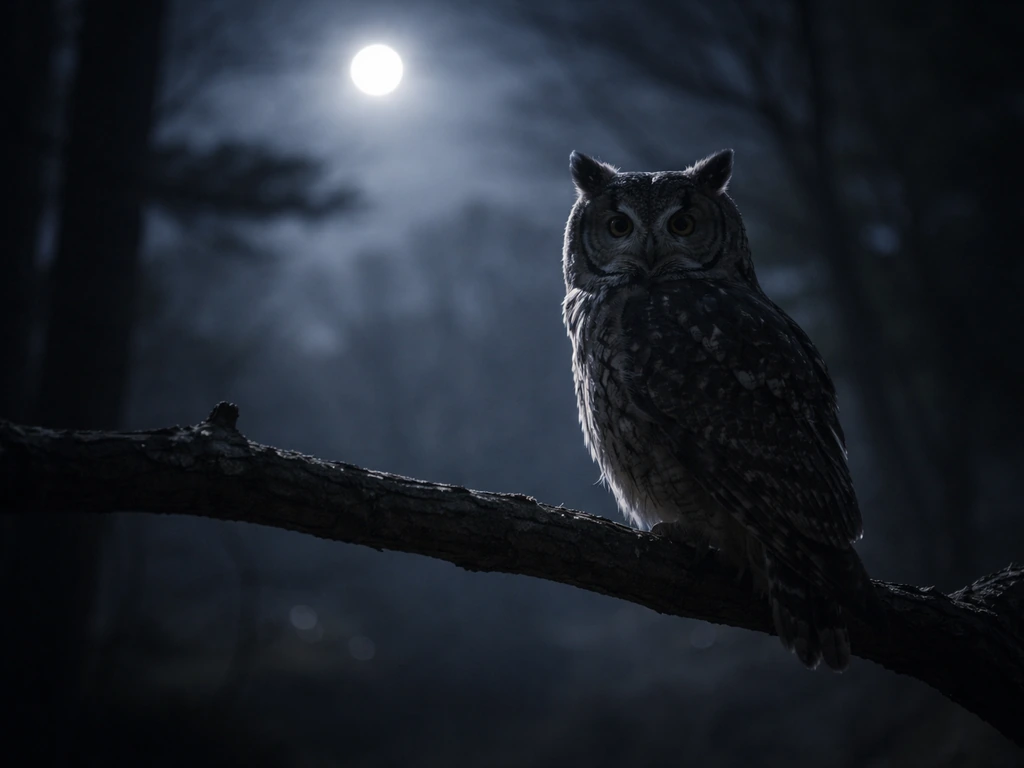
Meaning of 'Nocturnal Bird' in Hindi

Let's break this down properly. The English word 'nocturnal' maps onto two Hindi words: 'रात्रिचर' (raatrichar) and 'निशाचर' (nishaachar). Both carry the meaning of 'one who moves or is active at night.' The word 'रात्रिचर' is a compound of 'रात्रि' (raat, meaning night) and 'चर' (char, meaning one who moves or roams). Similarly, 'निशाचर' combines 'निशा' (nisha, another Sanskrit word for night) with 'चर.' So a nocturnal bird is literally 'a bird that roams at night.'
IIT Bombay's Hindi Shabdamitra gives a clear example sentence: 'उल्लू एक रात्रिचर पक्षी है', meaning 'The owl is a nocturnal bird. blank" rel="noopener noreferrer">Hindi Shabdamitra by IIT Bombay is a Hindi e-learning resource for language teaching and learning, built in coordination with other Indian Institutes and based on Hindi Wordnet with layered, learner-friendly information like grammar and audio-visual features. ' That single sentence is probably the most natural way you would encounter this phrase in formal Hindi. Hinkhoj dictionary lists 'निशाचर' as the primary Hindi translation for 'nocturnal,' and blank" rel="noopener noreferrer">DictZone also gives the alternatives 'रात का' and 'रात्रिकालीन' (raatrikaali) for contexts that simply mean 'of the night' rather than 'active at night.' So you have a small family of options depending on how formal or literary your context is.
| Hindi Term | Transliteration | Literal Meaning | Best Used When |
|---|---|---|---|
| निशाचर पक्षी | nishaachar pakshi | Night-roaming bird | General use, dictionaries, conversation |
| रात्रिचर पक्षी | raatrichar pakshi | Night-active bird | Formal writing, science, textbooks |
| रात्रिकालीन पक्षी | raatrikaalin pakshi | Nocturnal / nighttime bird | Descriptive or literary contexts |
| रात का पक्षी | raat ka pakshi | Bird of the night | Casual speech, poetry, folklore |
Hindi Bird Vocabulary for Night-Active Birds
Knowing the core term is a start, but Hindi bird vocabulary around night-time behaviour is richer than most people expect. Here are some words and phrases you will genuinely encounter when reading about nocturnal birds in Hindi texts, wildlife articles, or folklore narratives.
- निशाचर (nishaachar): nocturnal, one who is active at night — used for both birds and other animals
- रात्रिचर (raatrichar): night-mover — more literary, often found in scientific Hindi writing
- रात्रिकालीन (raatrikaalin): of or relating to the nighttime — an adjective that modifies any behaviour
- उल्लू (ulluu): owl — the most iconic nocturnal bird in Indian languages and culture
- चपका (chapka): local Hindi/regional name for the Indian Nightjar
- नाइट जार (Nait Jar): the Hindiised transliteration of Nightjar, used in newspaper and wildlife writing
- सायंकालीन (saayankaalin): crepuscular / evening-active — used when a bird is active at dusk rather than deep night
- शिकारी पक्षी (shikari pakshi): bird of prey — often overlaps with nocturnal raptors like owls
- रात्रिजागी (raatrijagi): one who stays awake at night — a poetic descriptor sometimes applied to owls in verse
One important distinction worth noting: 'निशाचर' in Sanskrit and classical Hindi also carries a mythological meaning of 'demon' or 'evil spirit that wanders at night.' This dual usage explains why nocturnal birds, especially owls, carry such heavy symbolic weight in Indian culture. The word itself already comes loaded with associations of darkness and the supernatural.
Symbolism of Nocturnal Birds in Indian Traditions
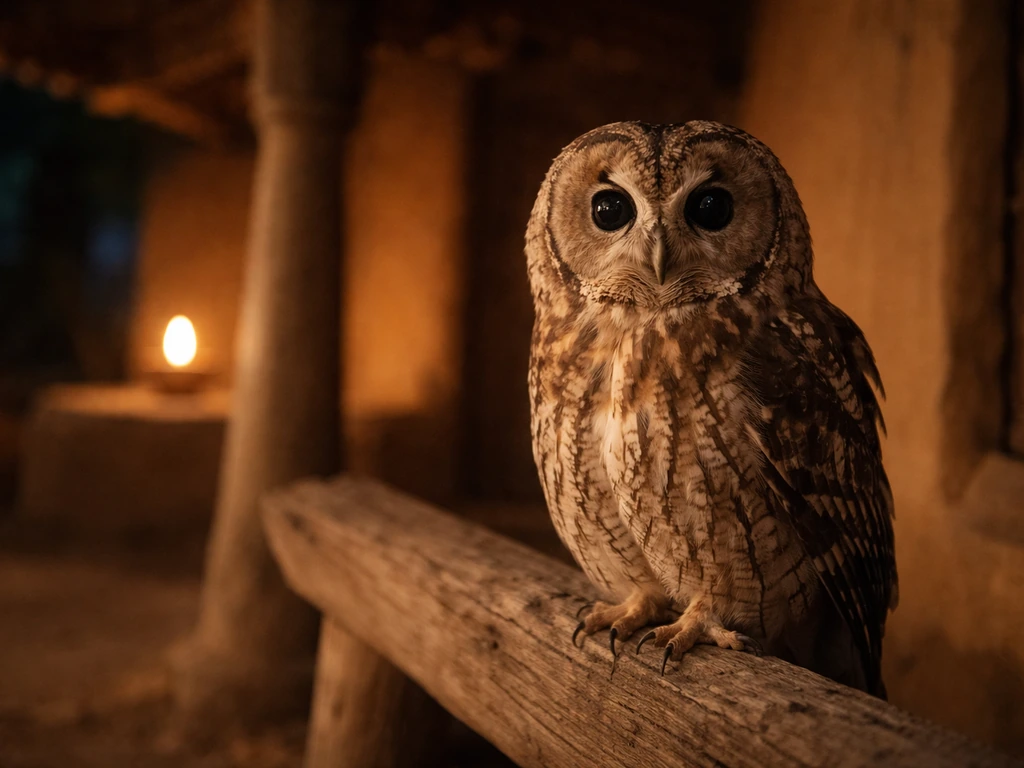
Here is where the literal meaning opens up into something far more complex. In Indian traditions, a nocturnal bird is rarely just a bird that flies at night. The specific bird, the direction it calls from, the time of night, and the context all carry layers of meaning that vary widely across regions and communities.
The owl (उल्लू) is the most symbolically loaded nocturnal bird in Indian culture, and its symbolism is genuinely contradictory depending on the tradition. On one hand, the owl is the vahana (vehicle) of Goddess Lakshmi, representing alertness, wisdom in darkness, and steady prosperity. AajTak and Dainik Tribune have both discussed how the owl as Lakshmi's mount symbolises vigil, discernment, and the ability to see what others cannot, qualities deeply valued in the Lakshmi tradition. In Haridwar, owls are actually worshipped, recognised as sacred messengers of the goddess.
On the other hand, in many folk traditions, especially in villages across North India, an owl calling near a home is considered a bad omen, a sign of imminent misfortune or death. The Dainik Tribune also notes that the owl is sometimes associated with 'Alakshmi,' the goddess of misfortune, depending on the specific regional mythology. This double nature, wisdom and ill-omen, sacred vehicle and dark messenger, is characteristic of how many nocturnal birds function symbolically in Indian culture. They belong to the night, and the night has always been a space of both spiritual power and existential fear.
Other nocturnal birds like the Nightjar are less symbolically prominent in mainstream Hindu mythology but carry folk significance in the regions where they are common. Their habit of calling after dark and their cryptic camouflage make them birds that people notice without quite seeing, which in folk imagination easily becomes mysterious or ominous.
Mythology and Folk Interpretations of Night Birds
In the Ramayana and Mahabharata traditions, 'निशाचर' is one of the standard epithets for rakshasas (demons) who operate under cover of darkness. When this term crosses over into the natural world and attaches itself to an actual bird, the bird inherits those mythological associations almost automatically. This is why calling an owl a 'निशाचर पक्षी' in literary Hindi carries far more atmosphere than simply saying it is 'active at night.'
In shakun-shastra (the Indian system of interpreting omens from birds and animals), the timing and direction of an owl's call is interpreted as a specific message. A call from the east might be read differently from a call from the west. Navbharat Times has covered these folk traditions in detail, showing that people consult shakun-shastra references even today when they hear an owl at an unexpected hour. The owl is at once the goddess's companion and the omen-giver of the village, and these two identities have coexisted in Indian imagination for centuries.
The nightingale, known in Hindi as 'बुलबुल' (bulbul), is worth mentioning here for contrast. Though sometimes associated with night songs in Urdu poetry and classical literature, the bulbul is not strictly a nocturnal bird in the ornithological sense. If you are looking for the meaning of nightingale in Hindi, that is a separate and beautifully layered topic involving Mughal poetry and romance traditions, quite different from the omen-heavy world of the owl and nightjar.
The unfortunate intersection of symbolism and conservation is also worth acknowledging: TV9 Hindi, citing WWF India, has reported that owl poaching in India is partly driven by superstitions and tantric rituals, a direct consequence of the bird's powerful symbolic status. Cultural meanings attached to a nocturnal bird can, in practice, determine whether it survives in the wild. This gives the question of 'nocturnal bird meaning in Hindi' a weight that goes beyond simple vocabulary. If you are also trying to understand how this phrase is used conversationally in Hindi, the bird lover meaning in Hindi is a related search.
Common Nocturnal Birds with Their Hindi Names
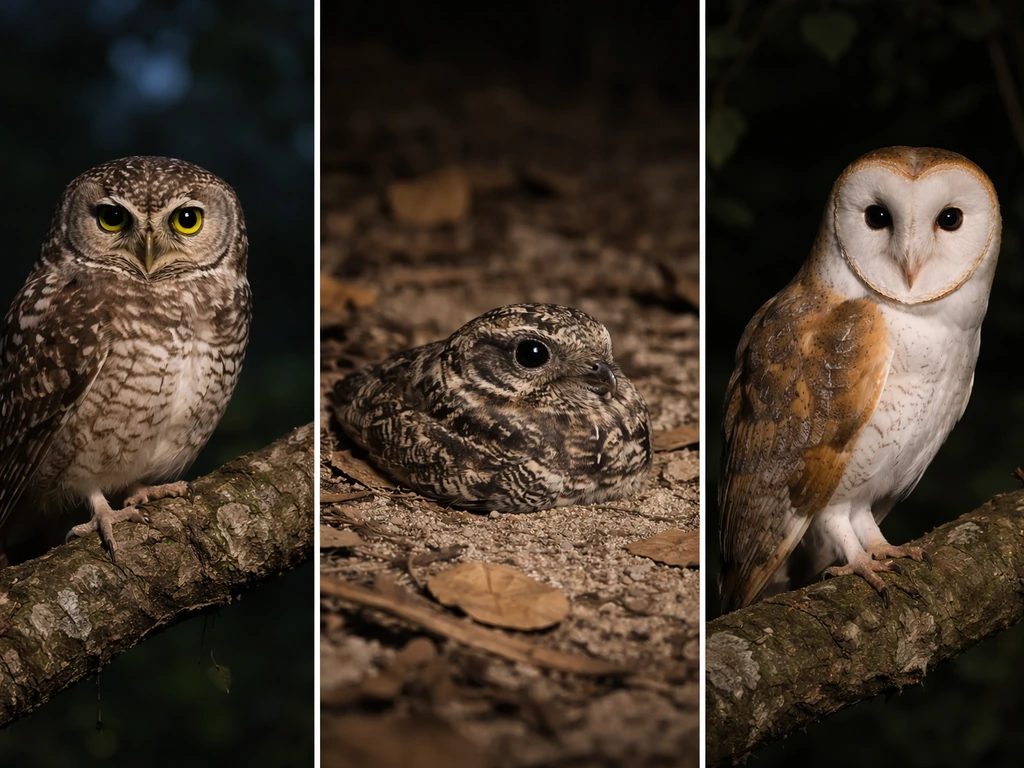
Here are the most recognisable nocturnal birds you will encounter in Indian contexts, along with their Hindi names and a brief note on why each qualifies as निशाचर.
| English Name | Hindi Name | Scientific Name | Why Nocturnal |
|---|---|---|---|
| Owl (various species) | उल्लू (ulluu) | Strigiformes (order) | Hunts at night using exceptional low-light vision and silent flight; rests during the day |
| Indian Nightjar | चपका (chapka) / नाइट जार | Caprimulgus asiaticus | Emerges at dusk and hunts insects in flight through the night; camouflaged on ground during day |
| Jungle Nightjar | जंगली नाइटजार | Caprimulgus indicus | Strictly crepuscular and nocturnal; catches insects mid-air after dark |
| Indian Scops Owl | छोटा उल्लू / स्कॉप्स उल्लू | Otus bakkamoena | Nocturnal raptor, calls persistently after dark; common in Indian forests and gardens |
| Brown Fish Owl | मछमंगा / भूरा मछली उल्लू | Ketupa zeylonensis | Hunts fish and frogs at night along riverbanks; largely inactive during daylight |
| Common Barn Owl | तिलसमी उल्लू / खलिहान उल्लू | Tyto alba | Exclusively nocturnal; nearly silent flight makes it a ghostly nighttime presence |
The Indian Nightjar (चपका) deserves a special mention because it is less famous than the owl but equally fascinating as a nocturnal bird. Amar Ujala has covered how this bird never builds a nest, it simply lays eggs on the ground, and spends its entire life as a night hunter. Dainik Bhaskar described sightings in Jaisalmer where it appeared at night catching insects in flight. For readers coming from a wildlife or birdwatching angle, the nightjar is a genuinely remarkable subject that tends to get overshadowed by the culturally dominant owl.
Using This Meaning in Context: Spiritual vs Literal
The most practical question is: why are you looking up 'nocturnal bird meaning in Hindi' in the first place? Many readers also come to understand the bird droppings meaning in Hindi and how the phrase is used in everyday conversation. If you came here because you want to know what bird droppings are called in Hindi, that is a different but related question worth checking next what is bird poop called in hindi. If you want the bird-catching sense of the phrase in Hindi, look up how 'bird catcher' is used in your context (story, proverb, or wildlife setting) bird catcher meaning in hindi. The answer shapes how you should use this knowledge. If you are also searching for the exact wording you can use in sentences, the bird feeder meaning in hindi is a related, practical vocabulary check.
If you want the literal, ornithological meaning, for a school project, a nature article, or to identify a bird you heard at night, then use 'निशाचर पक्षी' or 'रात्रिचर पक्षी' confidently. These are the correct, standard Hindi terms. To ask someone 'What nocturnal birds are found here?' you would say: 'यहाँ कौन से निशाचर पक्षी पाए जाते हैं?' And to describe a bird as nocturnal: 'यह पक्षी रात में सक्रिय होता है' (this bird is active at night).
If you are researching the spiritual or symbolic meaning, for understanding an omen, interpreting a dream, or exploring Hindu iconography, then you are entering the world of shakun-shastra and Puranic symbolism. In that context, the specific bird matters enormously. An owl near a temple has one set of associations; an owl calling at midnight near a home has another. The phrase to use would be 'निशाचर पक्षी का प्रतीकात्मक अर्थ' (the symbolic meaning of the nocturnal bird) when searching Hindi-language resources on spirituality and folklore.
If you are a language learner or translator working with Hindi text and you encounter 'रात्रिचर' or 'निशाचर' in a sentence, check the context carefully. In a mythology text, 'निशाचर' almost certainly means a demon or supernatural night-being, not a bird. In a wildlife article, it means nocturnal in the biological sense. If you specifically want the bird catcher meaning in Hindi, look at the context to see whether it refers to a mythic hunter or an actual device or person nocturnal in the biological sense. In poetry, it could be either, or deliberately both at once. That ambiguity is intentional in classical Hindi and Sanskrit literature, and understanding it is what separates a surface-level translation from a real cultural reading.
One useful way to narrow your search: if you want information about a specific nocturnal bird's symbolism, search in Hindi using the bird's name plus 'का शुभ अशुभ अर्थ' (its auspicious or inauspicious meaning) or 'पौराणिक महत्त्व' (mythological significance). For ornithology, add 'रात्रिचर व्यवहार' (nocturnal behaviour) to your search. These phrasing choices will take you to very different, and much more relevant, results.
FAQ
“निशाचर पक्षी” और “रात्रिचर पक्षी” में कौन सा शब्द ज्यादा सुरक्षित है जब मुझे पक्षी ही मतलब हो?
पक्षी के जैविक अर्थ में लिखना है तो “निशाचर पक्षी” सबसे भरोसेमंद विकल्प है, क्योंकि रोजमर्रा के हिन्दी लेखन में यह अक्सर “रात में सक्रिय” के लिए ही आता है। शुद्ध शैक्षिक/लिटररी टोन के लिए “रात्रिचर” भी सही है, पर बातचीत या स्कूल-वर्क में “निशाचर” ज्यादा स्वाभाविक बैठता है।
अगर किसी वाक्य में “निशाचर” लिखा हो, तो मैं कैसे पहचानूं कि उसका मतलब पक्षी है या “राक्षस/अशुभ” वाला?
संदर्भ देखें। अगर साथ में पक्षी, पंख, चिड़िया, उल्लू जैसे शब्द हों तो अर्थ “रात में सक्रिय” होगा। अगर “दुष्ट”, “राक्षस”, “भूत”, “आत्मा”, “रात में विचरने” जैसी भाषा आए, तो “निशाचर” का शास्त्रीय/पौराणिक अर्थ (देमन या अशुभ रात-भटकने वाला) होने की संभावना ज्यादा है।
“निशाचर” का प्रयोग “रात का” या “रात्रिकालीन” की तरह कर सकते हैं, या ये अलग हैं?
ये अलग सूक्ष्म स्तर पर हैं। “रात्रिकालीन” और “रात का” आम तौर पर समय बताते हैं, जरूरी नहीं कि गतिविधि/व्यवहार का संकेत दे। “निशाचर” में रात में सक्रिय होने का संकेत भी शामिल होता है, इसलिए “निशाचर पक्षी” लिखने पर पाठक उम्मीद करेगा कि वह रात में देखे/सुने जाएंगे, सिर्फ रात में पाए नहीं जाएंगे।
क्या “निशाचर पक्षी” का शाब्दिक अनुवाद “night roaming bird” की तरह ही होता है?
अर्थ लगभग उसी दिशा में है, लेकिन हिन्दी में “चर” का भाव “चलना/रोमिंग” से आगे, “रात में सक्रिय होना” के रूप में समझा जाता है। इसलिए प्राकृतिक लेखन में “यह पक्षी रात में सक्रिय होता है” वाली व्याख्या सबसे सटीक बैठती है।
अगर मैं वाक्य बनाना चाहूं, तो “nocturnal bird meaning in hindi” पूछने के बजाय सही वाक्य क्या होगा?
आम बोलचाल में आप कह सकते हैं, “यहाँ रात में सक्रिय पक्षी कौन से हैं?” (या “यहाँ कौन-कौन से निशाचर पक्षी पाए जाते हैं?”)। यह वाक्य अनुवाद पूछने की बजाय सीधे सूची/जानकारी मांगता है और ज्यादा स्वाभाविक उत्तर दिलाता है।
ओwl को हिन्दी में “निशाचर पक्षी” कहना ठीक है, या सिर्फ “उल्लू” ही पर्याप्त है?
“उल्लू” अकेले में पर्याप्त है, लेकिन “निशाचर पक्षी” जोड़ने से श्रोता को तुरंत व्यवहार का संकेत मिल जाता है, खासकर जब लोग “उल्लू” को किसी प्रतीक के रूप में भी सोच सकते हों। अगर आप विज्ञान/बर्ड-वाचिंग संदर्भ में हैं, तो “उल्लू, एक निशाचर पक्षी” टाइप संरचना मदद करती है।
क्या “bulbul” को भी “निशाचर पक्षी” कहना चाहिए?
आम तौर पर नहीं। “बुलबुल” को रात के गीतों के साथ जोड़ा जा सकता है, पर वह हर जगह “strictly nocturnal” पक्षी की तरह नहीं लिया जाता। अगर आपका लक्ष्य रात में सक्रियता का वैज्ञानिक संकेत है, तो “निशाचर” की जगह आप “रात में गाने वाला” या “रात में भी सुना जाने वाला” जैसी भाषा बेहतर रहेगी।
अगर मैं खोज (search) करूं, तो कौन सा हिन्दी वाक्यांश सबसे सही परिणाम देगा?
दो अलग जरूरतों के हिसाब से शब्द चुनें। जैविक अर्थ के लिए “रात्रिचर व्यवहार” या “रात में सक्रिय” जोड़ें। प्रतीकात्मक/आस्था वाला अर्थ चाहिए तो “का शुभ अशुभ अर्थ” या “पौराणिक महत्त्व” जैसे वाक्यांश जोड़ें, और साथ में “उल्लू” या “निशाचर पक्षी” की तुलना करें ताकि मिश्रित संदर्भ कम आए।
Next Articles
Bird Beak Meaning in Hindi: Chonch, Bill, Pronunciation
Bird beak in Hindi chonch or bill, pronunciation, examples, beak vs bill differences, and figurative Hindi use
Bird Pankh in English Meaning: Wings or Feathers?
Learn bird pankh in English meaning: pankh means feathers or wings, with context rules, examples, and regional equivalen
Bird Peck Meaning in Hindi: Translation, Examples
bird peck meaning in Hindi: pecking, pecks at, pecked action और वाक्य उदाहरण, साथ ही शब्द चयन व tense guide