
If you've just found a dead bird and you're wondering what it means in Hinduism, here's the short answer: context matters more than the bird itself. The tradition around bird omens is ancient and specific, not a single blanket meaning. A dead crow near your door carries a different weight than a sparrow that hit a window, and a bird found inside a temple courtyard is read differently than one lying on a highway. This guide walks you through the most grounded interpretations, what the Sanskrit and Hindi traditions actually say, and what practical steps you should take today, both spiritually and for your own safety.
Dead Bird Meaning in Hinduism: Omens, Karma, and What to Do

Rajesh Sharma
23 Mar 2026
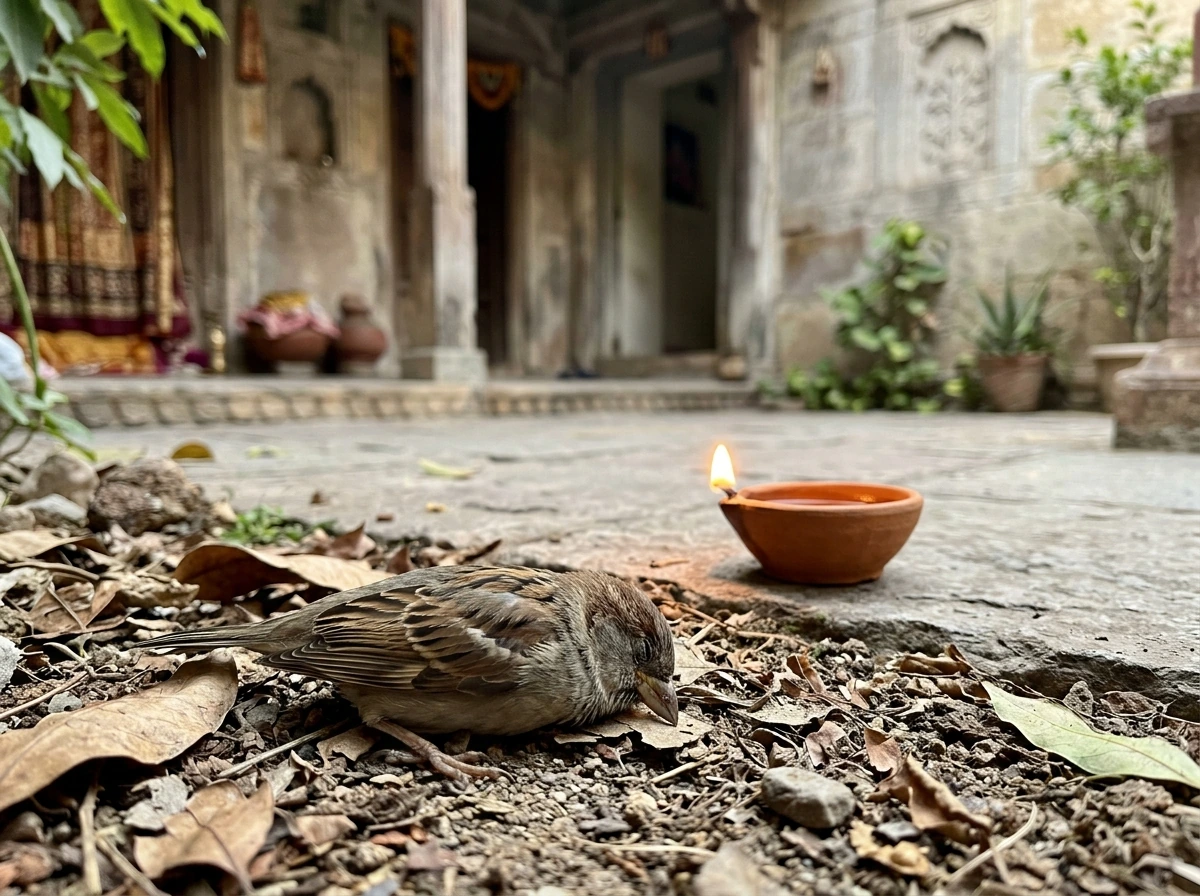
What people actually mean when they ask about a dead bird in Hinduism
When most people search this question, they're sitting with a mix of unease and genuine curiosity. They're not looking for a philosophy lecture. They want to know: is this a bad sign, should I do something, and how should I think about it? The honest answer is that Hindu tradition gives you multiple frameworks, and none of them says you should panic.
The three most common interpretations people bring to a dead bird are: an omen or warning (something is about to change), a karma or soul-transition signal (the bird's death is spiritually meaningful for someone nearby), and an ancestral or pitru connection (the bird, especially a crow, may be linked to the spirits of deceased ancestors). All three come from real threads in Hindu thought, not just superstition.
The classical Sanskrit framework for bird-based omens is called 'Sakuna' (शकुन). This is a formal category of sign-reading connected specifically to birds, and it's referenced in texts associated with teachers like Chandrashekarendra Saraswati of Kanchi. Sakuna readings involve not just whether a bird is dead, but which direction it came from, which side it appeared on (left vs. right), and what species it is. So the tradition is quite precise, and a dead bird sitting still is actually a more open reading than, say, a bird crossing your path.
How location changes the meaning
Where you find the bird shapes everything in Sakuna-based interpretation. Here's how each setting is generally understood.
Inside or at the threshold of your home
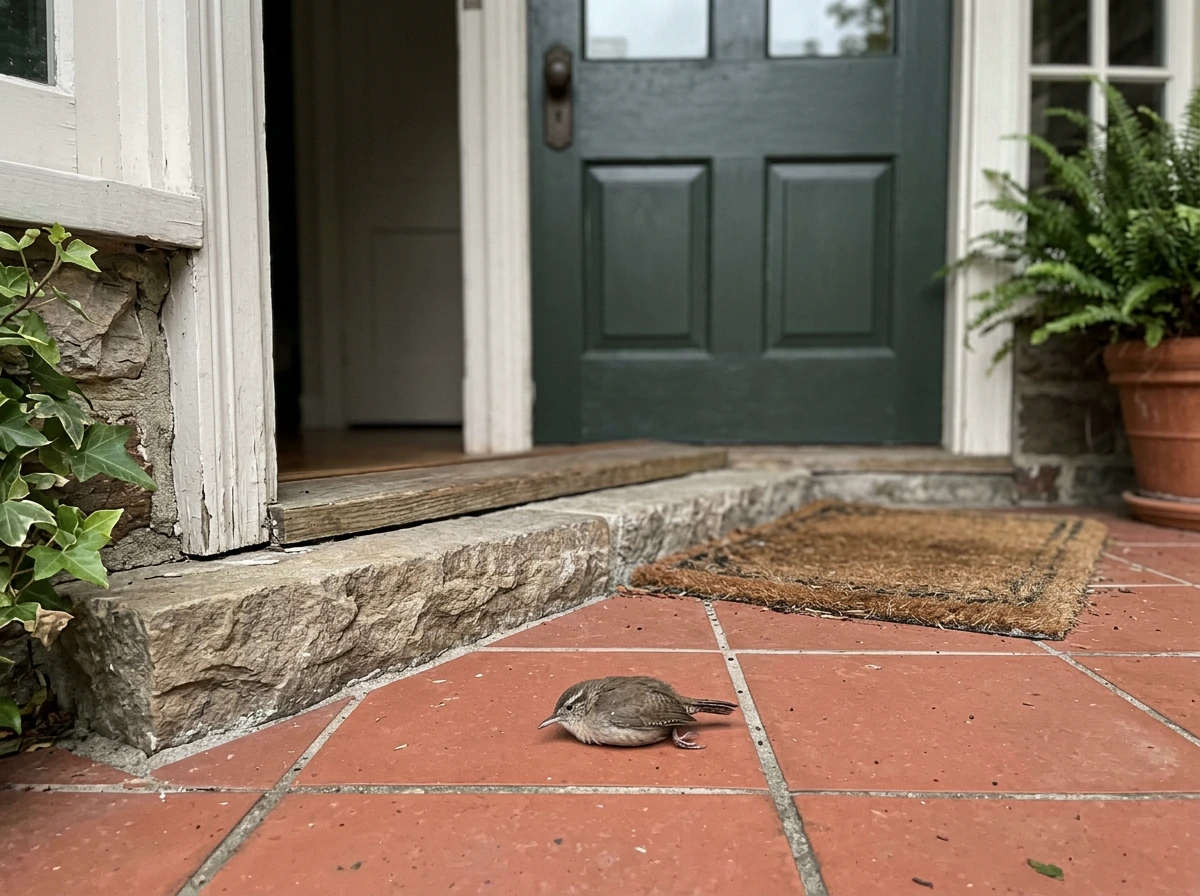
A dead bird inside the home, or right at the entrance, is the one that rattles people most. In folk Hindu belief, the home is a protected space, and an uninvited death crossing that threshold can be read as a signal of disruption, either a warning to pay attention to something in family life, or, in some regional readings, an indication that an ancestral spirit is trying to communicate. In Marathi-speaking households especially, a dead bird near the main door (dehaḷī, देहळी) is taken seriously enough to warrant calling a priest or performing a brief shanti prayer.
On the road or outside the compound
Finding a dead bird on the street or while walking is generally considered less personally significant. The Sakuna tradition pays more attention to live birds crossing your path (direction, side, call) than to a dead bird you happen to walk past. Most practitioners would say a roadside dead bird is more of a neutral event, something to note respectfully but not to read deeply into unless other signs accompany it.
Near a temple
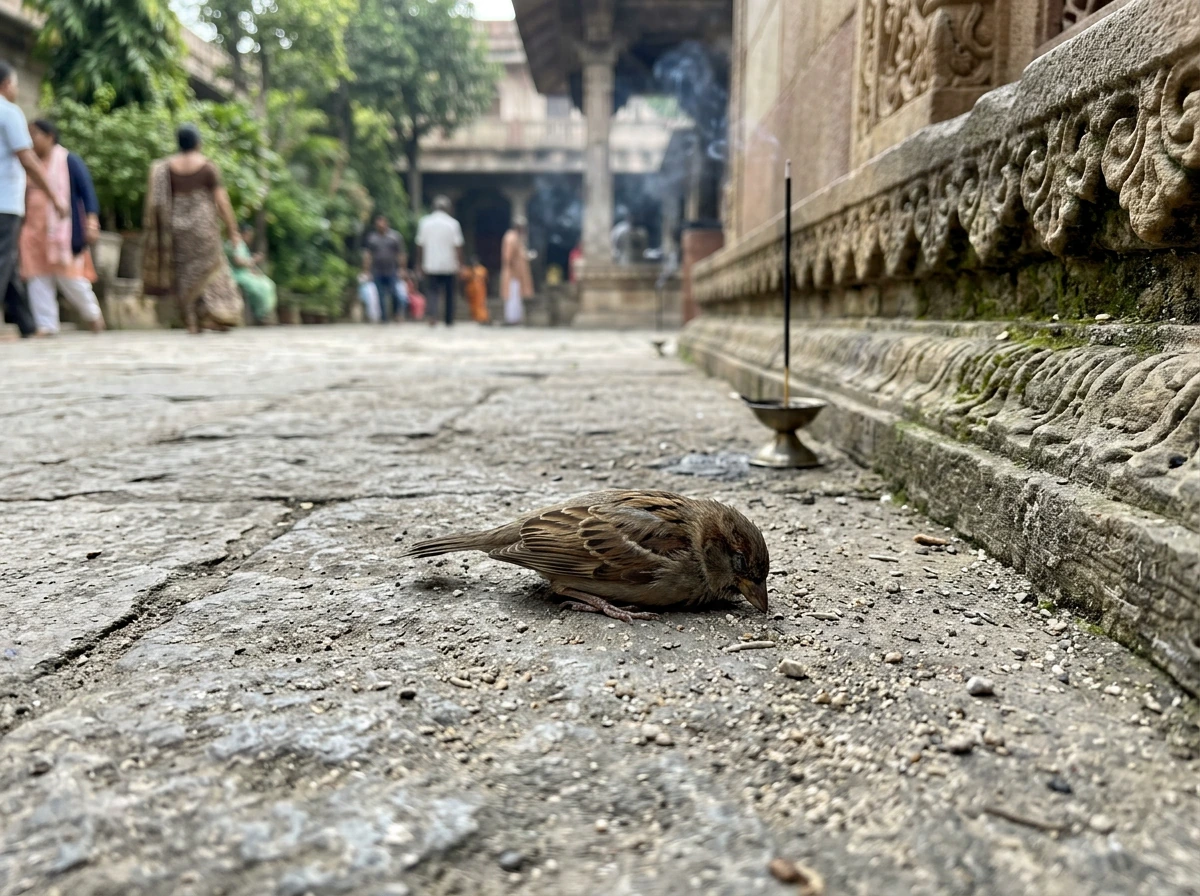
A dead bird in a temple courtyard or near a shrine is often treated with more ritual seriousness. Temple spaces are considered sacred geography, and the unexpected presence of death within them (outside of prescribed ritual contexts) can be interpreted as spiritually dissonant. The typical response is to inform the temple priest, who can perform a suitable shuddhi (purification) ritual. You wouldn't just leave it there or handle it casually.
In the garden, field, or outdoors generally
An outdoor find is the most common and usually the least loaded symbolically. Birds die in nature constantly. If you find one in your garden, the spiritual read is often gentler: give it a respectful acknowledgment, perhaps offer a brief prayer, and move on. Unless there's a pattern (multiple dead birds in a short time), most traditional guidance would not treat this as an omen requiring action.
Spiritual meanings worth knowing: omens, karma, and ancestors
The omen angle
Sakuna-based readings in Sanskrit texts assign auspicious or inauspicious values based on the species, direction, timing, and behavior of a bird. A dead bird doesn't fit neatly into this system because it isn't exhibiting behavior. That said, folk tradition has layered in meanings over centuries. A dead owl near a home, for example, tends to be read with more concern than a dead sparrow, because the owl (ullu, उल्लू) already carries a dual symbolism: it's the vahana (vehicle) of Lakshmi, but also associated with darkness and inauspiciousness in many regional folk interpretations.
Karma and soul transition
Hindu philosophy holds that every creature has a jiva (जीव), a living soul, passing through cycles of birth and death according to karma. Seeing a dead bird can serve as a reminder of impermanence (anitya), the kind of quiet dharmic prompt that many traditions build into daily life. Some teachers interpret a dead bird as a nudge to reflect on your own conduct, generosity, or spiritual practice, not as a curse, but as an invitation.
The ancestor connection (Pitru paksha and Shraddha)
This is the thread most people find most compelling, and it has deep scriptural grounding. In the Shraddha (श्राद्ध) tradition, ancestors (pitṛs, पितृ) are believed to visit the living in the form of birds, most classically crows. During Pitru Paksha, feeding crows is a central ritual act because crows are understood as messengers or temporary vessels for ancestral souls. The Tihar festival in Nepal takes this further: crows are literally worshipped on Kaag Tihar day as messengers of Yama, the god of death. So a dead crow, in particular, may be read as an ancestral message, a signal that a pitru is asking for prayers, offerings, or Shraddha rites.
That said, it's worth keeping a grounded head here. The ancestral interpretation is meaningful and traditional, but it's also easy to spiral into anxiety over it. The tradition doesn't say a dead crow means something terrible is coming. It says: pay attention, offer prayers, and perform your duties to your ancestors with sincerity. That's a genuinely useful spiritual prompt.
Bird names, Sanskrit terms, and how language shapes the meaning
Understanding the Sanskrit and Hindi names for birds gives you real insight into why they carry the symbolism they do. The core Sanskrit word for bird is 'pakṣi' or 'pakṣin' (पक्षी), from the root 'pakṣa' meaning wing. Understanding the Sanskrit and cricket bird meaning in hindi gives you real insight into why they carry the symbolism they do. You'll see this in Hindi as 'pakshi' (पक्षी), which is used across formal and religious contexts. In Punjabi, 'chiddi' (ਚਿੜੀ) refers to small birds generally, while Gujarati uses 'pakshi' similarly to Hindi. Marathi uses 'pakshi' (पक्षी) as well, keeping close to the Sanskrit root.
The species name often embeds the symbolic meaning. The crow is 'kāka' (काक) or 'kauwa' (कौवा) in Hindi, and its association with ancestors is so strong that the crow-feeding ritual during Shraddha is called 'kaka-bali' in some traditions. The peacock is 'mayūra' (मयूर) in Sanskrit and 'mor' (मोर) in Hindi: it's Saraswati's and Indra's bird, almost always auspicious. An owl is 'ulūka' (उलूक) in Sanskrit and 'ullu' (उल्लू) in Hindi, carrying that complex dual symbolism of Lakshmi's vehicle but also ill-omen in folk readings. The myna (मैना, mainā) is generally read as an auspicious household bird in Hindi-speaking traditions, myna bird in hindi meaning is often understood as a positive, home-friendly sign. If you're finding a dead bird and want to understand its symbolic weight, identifying the species first matters significantly. roc bird meaning in hindi
| Bird | Hindi / Sanskrit Name | Primary Symbolism | Dead Bird Reading |
|---|---|---|---|
| Crow | Kauwa (कौवा) / Kāka (काक) | Ancestral messenger, Yama's link | Strong ancestral connection; prompt for Shraddha prayers |
| Owl | Ullu (उल्लू) / Ulūka (उलूक) | Lakshmi's vahana; folk ill-omen | Mixed: purification prayer recommended, especially near home |
| Peacock | Mor (मोर) / Mayūra (मयूर) | Sacred to Saraswati, Kartikeya, Indra | Treated with great reverence; considered deeply inauspicious to ignore |
| Sparrow | Chidiya (चिड़िया) / Caṭaka (चटक) | Household bird, generally neutral | Gentle acknowledgment; no major omen traditionally assigned |
| Myna | Maina (मैना) | Auspicious household bird, voice/communication | Mild omen of disruption to communication or household harmony |
| Pigeon/Dove | Kabutar (कबूतर) / Kapota (कपोत) | Peace, messenger, love | Often read as a soul in transit; respectful burial encouraged |
If you're curious about how specific birds are named across Indian languages more broadly, related entries on birds like the myna or crane cover that linguistic ground in more depth and are worth exploring alongside this topic.
Traditional remedies and respectful next steps
Hindu tradition gives you a clear set of responses that are both spiritually grounded and practically useful. None of them require panic or elaborate ceremony if you're not in a position for that. Here's what most traditional guidance recommends.
- Acknowledge and offer a brief prayer: Stand near the bird (without touching it) and offer a simple prayer for the departed soul. The Mahamrityunjaya mantra (ॐ त्र्यम्बकं यजामहे...) or a simple 'Om Shanti' three times is widely used across traditions for any death, human or animal.
- Identify the species if possible: This shapes the spiritual response. A crow calls for Shraddha-style acknowledgment; a peacock calls for a more formal prayer and potentially informing a temple priest.
- Perform a simple charitable act (daan): Offering food to crows, feeding birds generally, donating grain to a temple, or lighting a diya (lamp) in the name of the departed soul are all recognized forms of response that address the karma and ancestral dimensions.
- Consult a local priest if the bird is found inside your home or temple: This is when a formal shanti or shuddhi ritual is appropriate. A priest familiar with your regional tradition will know the right mantra or brief rite for your specific context.
- Recite or listen to the Garuda Purana briefly: The Garuda Purana is the primary Vaishnava text dealing with death, the soul's journey, and proper rites. Even reading a passage or listening to a recording is considered a spiritually appropriate response to encountering death.
- Avoid fixating on worst-case interpretations: Traditional teachers consistently emphasize that omens are prompts for awareness and correct action, not sentences. The recommended response is always prayer, charity, and a calm mind, not fear.
The practical side: health and safety come first
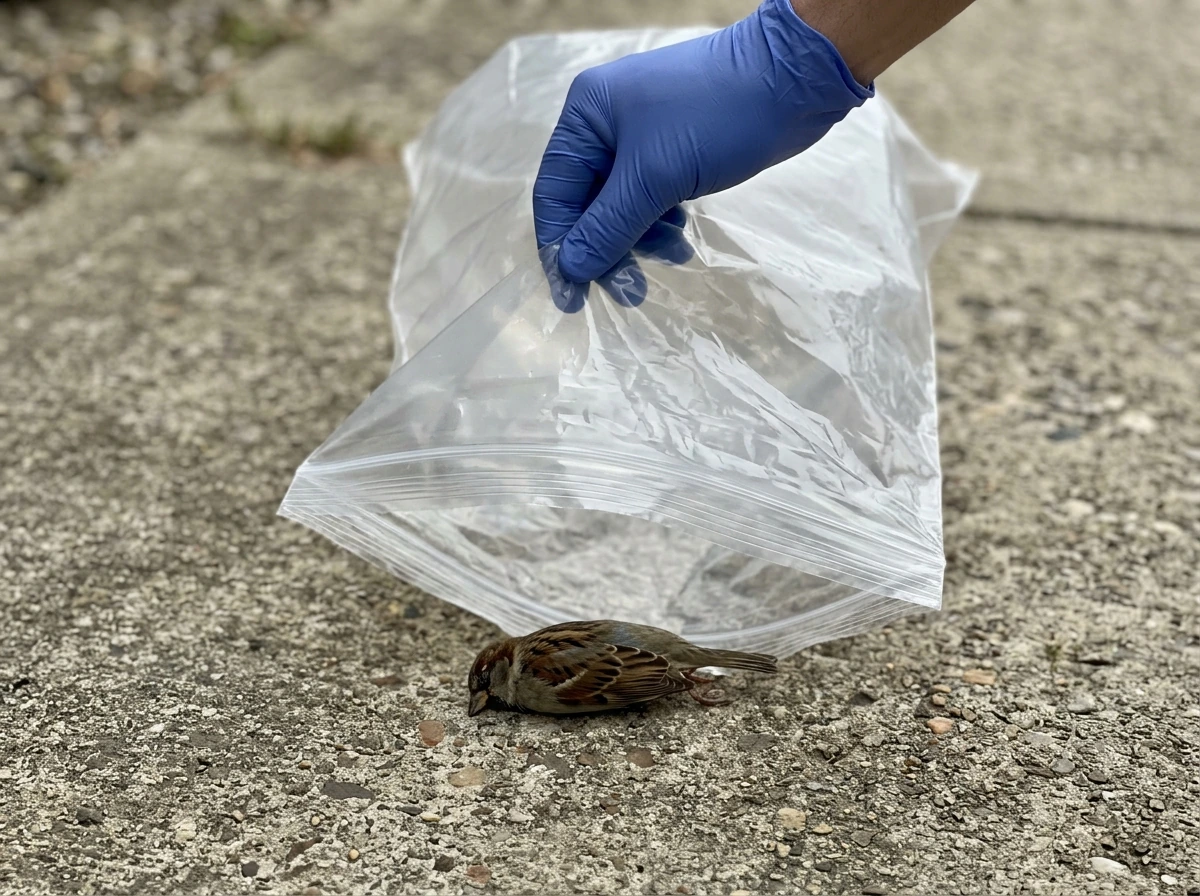
Whatever the spiritual meaning, the first physical rule is: do not touch a dead bird with your bare hands. This isn't just cautious modern thinking. It's common sense that any responsible traditional or public health authority agrees on. Dead birds can carry avian influenza (bird flu), West Nile virus, and other pathogens. The Indian government's Department of Animal Husbandry and Dairying has issued advisories specifically asking people to avoid bare-handed contact with dead birds and to use protective gear if handling is unavoidable. The FSSAI and Delhi health authorities have echoed this. Internationally, the CDC and OSHA carry the same guidance.
If you need to move the bird for safe disposal, use a thick plastic bag turned inside out over your hand as a glove, pick up the bird, then seal the bag. Wash your hands thoroughly with soap and water afterward. If you notice multiple dead birds in the same area over a short period, that's a signal to report it to your local municipal authority or animal husbandry department, as it may indicate a disease cluster worth monitoring.
Blending both approaches is actually quite natural in Hindu practice. You perform the prayer and charitable act for the spiritual dimension, and you handle the physical situation with care and hygiene for the practical one. These aren't in conflict. Dharma includes taking care of your own health and the wellbeing of your community, and that includes responsible handling of public health risks.
A simple combined action plan
- Do not touch the bird with bare hands under any circumstances.
- Observe the species, location, and condition, then use this guide to frame the spiritual context.
- Offer a brief verbal prayer or mantra from a safe distance.
- If the bird is in a sacred or home space, contact a priest for appropriate shuddhi or shanti.
- Perform a small charitable act: feed birds, donate grain, or light a diya.
- Handle physical disposal with a bag and gloves if needed, then wash hands thoroughly.
- Report multiple deaths in one area to local animal husbandry or civic authorities.
- Seek medical advice if you have had any direct contact with the bird or its secretions.
Superstition vs. tradition: keeping a clear head
There's a difference between the living Sakuna tradition, which is a careful, context-sensitive system of reading natural signs, and the kind of spiral thinking that leads someone to believe a dead sparrow means imminent disaster. Classical Hindu thought on omens is actually quite balanced. Texts on Sakuna consistently note that direction, species, time of day, and surrounding circumstances all modify the reading. A single event, poorly contextualised, is not a verdict.
The wisest traditional stance is this: take the event as a gentle prompt. Maybe it's time to perform Shraddha rites you've been postponing, or to give more attention to charitable acts, or simply to sit with the reality of impermanence for a few moments. That's a spiritually healthy response. Fear, obsessive interpretation, or guilt are not what the tradition calls for, and any priest worth consulting will tell you the same thing.
The Sakuna tradition, the Shraddha framework, the ancestral crow symbolism, and the linguistic depth of pakṣi symbolism in Sanskrit are all part of a rich interpretive culture around birds in Hinduism. A dead bird invites you into that culture thoughtfully, not anxiously. Treat it with respect, do what you can spiritually, stay safe practically, and move forward with a clear mind.
FAQ
If I find a dead bird near my door, should I immediately do any specific Hindu ritual?
Not automatically. Traditional responses usually start with respecting the space and handling safely, then offering a simple shanti prayer or inform a local priest only if it feels disruptive (for example, inside the home, near the main entrance, or alongside other unusual signs). If it is just one isolated case outdoors, many practitioners treat it as a quiet prompt rather than a call for elaborate rites.
Does Hinduism say a dead crow always means something bad is coming?
No. The ancestral, pitru-connected reading is typically about attention and duty, not disaster. A more dharmic approach is to offer prayers and sincerity in Shraddha or ancestor-focused practices, while avoiding doom-thinking or repeated checking for “more signs.”
What if I touched or cleaned up a dead bird with my bare hands, even briefly?
Stop contact and wash immediately with soap and running water, then disinfect the area. If you have cuts on your hands, feel unwell, or the bird was in a place with many die-offs, consider contacting a local health authority for advice. Traditional caution aligns with public health guidance about pathogens.
How should I dispose of a dead bird the Hindu way, without ignoring hygiene?
Hygiene comes first. Use protective handling methods (for example, a thick plastic bag used as a glove), seal and dispose properly, then wash hands thoroughly. After disposal, you can do a brief prayer or charity (daana) as the spiritual “close,” keeping ritual intent separate from the physical cleanup.
I found more than one dead bird in the same area in a few days. Does that change the meaning?
In folk omen-reading it can still invite reflection, but the practical priority shifts to reporting. Multiple dead birds may indicate a disease cluster or environmental issue, so notify municipal or animal husbandry services rather than assuming a purely spiritual cause.
Which interpretation should I trust more, Sakuna omen-reading or ancestral Shraddha ideas?
Use a layered approach. Sakuna emphasizes context (species, direction, timing), while the Shraddha tradition emphasizes the pitru connection, especially for crows. If you cannot identify the bird or location details well, the safer “default” is a calm, respectful prayer and ancestor remembrance rather than overconfident omen conclusions.
What if the bird dies near a temple, but I am not sure if I’m allowed to move it?
Do not handle it casually. Inform the temple priest or caretaker so they can arrange a suitable purification or shuddhi response within temple rules. This also prevents safety risks and avoids violating local temple protocols.
If the bird hit a window and died indoors, is that treated differently than a bird found already dead?
Many Sakuna-based folk readings focus on the moment and context rather than only the fact of death. A collision inside a home is usually treated less like an intentional “threshold omen” and more as an accident, but if it lies near entrances or repeated collisions happen, practitioners may still do a brief prayer and check for contributing factors (like window safety).
What species should I identify first, and what if I cannot tell what bird it was?
Identify what you realistically can, because symbolism is species-sensitive (for example, crow versus sparrow, owl versus others). If you genuinely cannot identify it, avoid firm omen claims and use a low-stakes dharmic response (impermanence reflection, gratitude, or a small charitable act), plus safety steps.
Is it harmful to keep thinking about the omen for days, searching for “proof” of meaning?
Yes, it can become anxiety rather than dharma. Classical-style sign-reading is meant to be modulating and brief, not obsessive. A healthier next step is to take one sincere action (prayer, daana, or ancestor remembrance) and then return to normal duties.
Should I tell other people at home what the dead bird “means”?
Avoid spreading fear or certainty. A good middle path is to mention it as a respectful prompt (like doing a short shanti or remembering ancestors) without declaring a specific prediction. If others are already anxious, focus on practical safety and calm reflection.
Next Article
What Is Crane Bird Called in Hindi, English, and Marathi
Hindi, English, and Marathi names for crane birds, including white crane, plus how to confirm the right translation.