
The crane bird is called सारस (sāras) in Hindi. That is the word you are looking for. If you have seen it written as सारस पक्षी, that simply adds the word for bird (पक्षी, pakshī) to make the meaning explicit, but सारस alone is understood by any Hindi speaker to mean the crane bird. This is the traditional, rooted Hindi word, not a borrowed English term.
What Is Crane Bird Called in Hindi, English, and Marathi

Rajesh Sharma
23 Mar 2026

What does "crane bird" mean in Hindi?
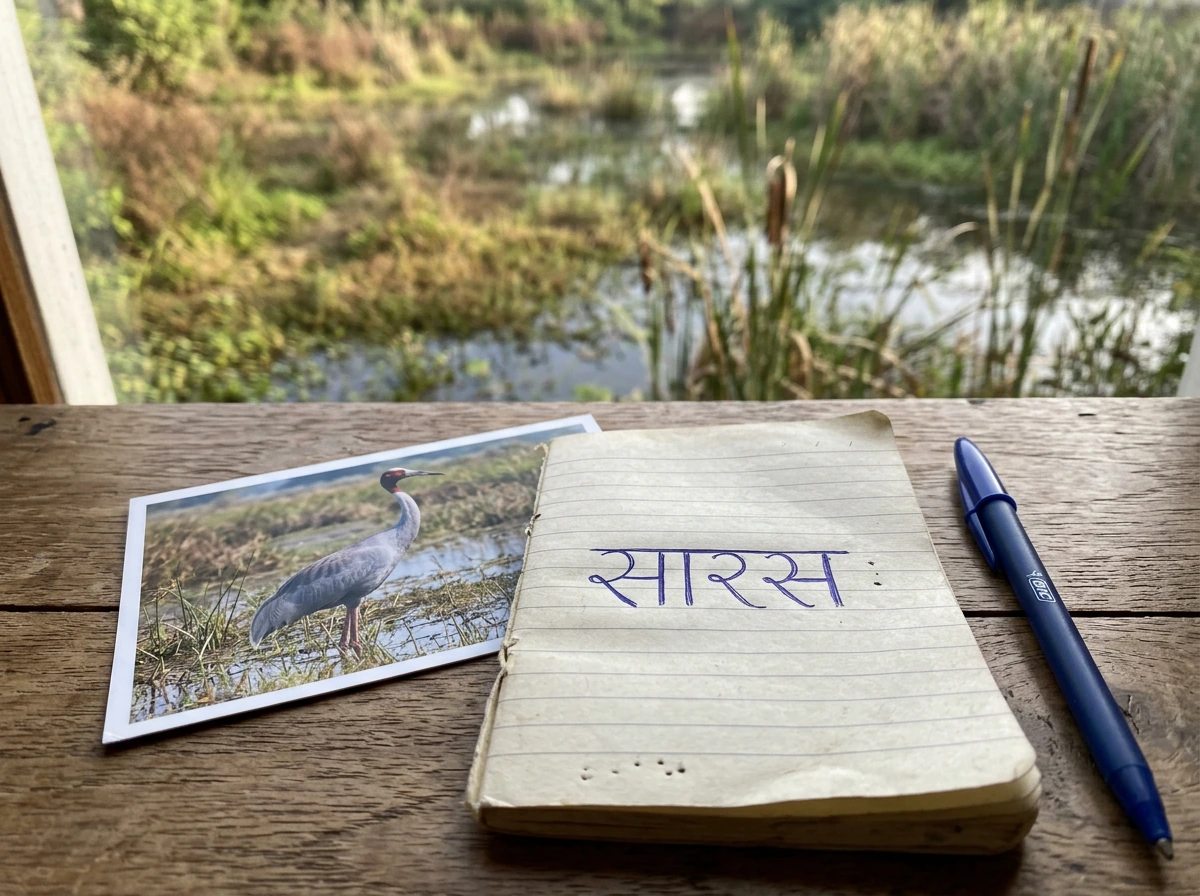
सारस (sāras) comes from Sanskrit and has been used in Indian language and literature for centuries. It refers specifically to the tall, long-necked wading bird that belongs to the crane family. The most iconic species connected to this word in India is the Sarus crane (Antigone antigone), the world's tallest flying bird and a species deeply woven into North Indian culture and mythology. In Hindi-speaking regions, especially Uttar Pradesh and parts of Madhya Pradesh and Rajasthan where the Sarus crane is commonly found, सारस is the everyday word people use when they see or speak about this bird.
सारस pairs are celebrated in Indian folklore as symbols of lifelong fidelity and love, because the birds are known to mate for life. This symbolism echoes through Hindi poetry and folk songs, much as other birds like the मैना (myna) carry their own layers of meaning across Indian traditions.
"Crane" in English and the confusion you need to avoid
In English, the word "crane" has two completely different meanings: the bird, and the large machine used on construction sites to lift heavy objects. This double meaning creates a real translation problem when you move between English and Hindi, because Hindi uses two entirely separate words for these two things.
- Crane (the bird): सारस (sāras) — this is the traditional Hindi word
- Crane (the lifting machine): क्रेन (krēn) — this is a direct phonetic borrowing from English
Major dictionaries, including Collins English-Hindi and Shabdkosh, list these as separate entries. Collins explicitly flags सारस for the bird and क्रेन for the machine. Shabdkosh similarly distinguishes the two by their definitions: the bird is a "large long-necked wading bird" and the machine "lifts and moves heavy objects." So when you read Hindi materials about construction or industry, क्रेन means the machine. When you read Hindi materials about wildlife, nature, or mythology, सारस means the bird. The two words never overlap in practice.
The Hindi name for crane: how to spell it and recognize it
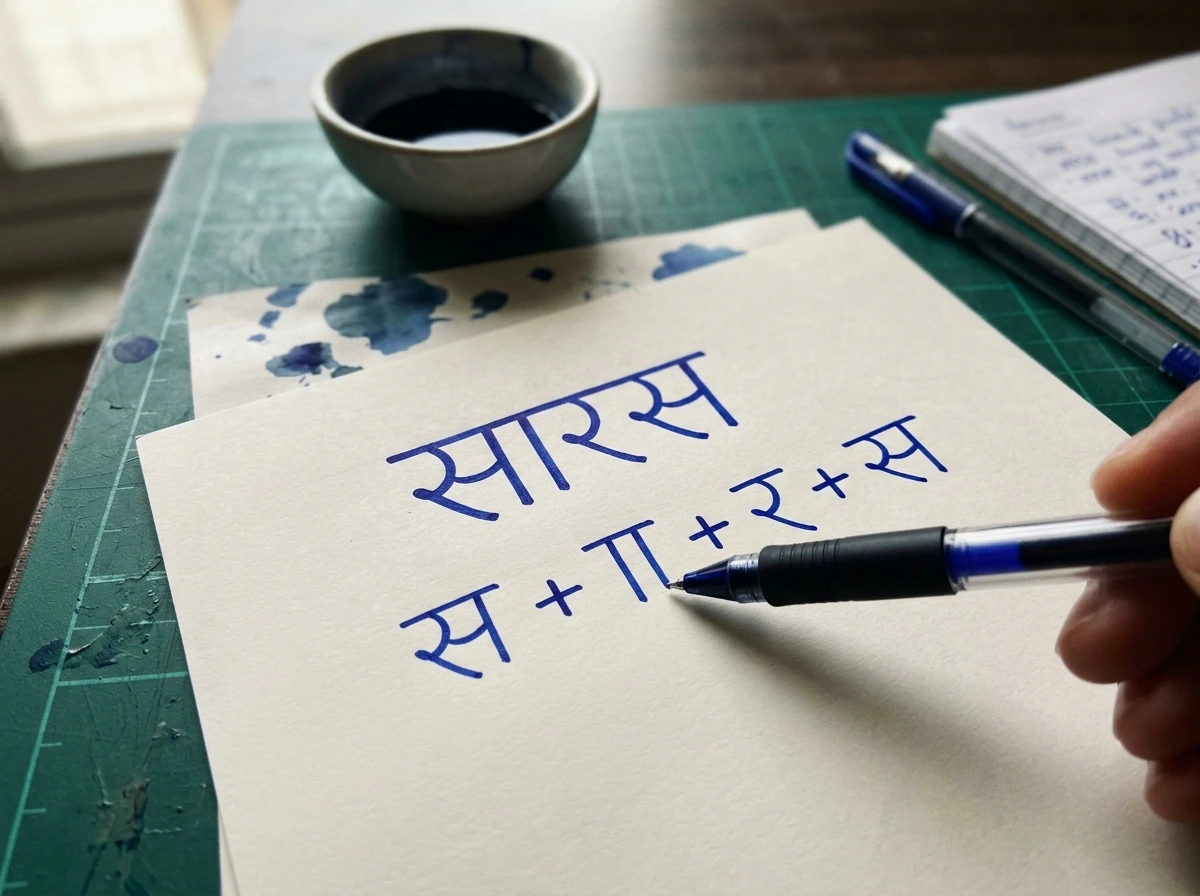
The correct Devanagari spelling is सारस. Broken down, it is written with three characters: स (sa) + ा (ā vowel sign) + र (ra) + स (sa), giving you sā-ras. The stress falls lightly on the first syllable. You will also encounter it written in the longer form सारस क्रेन (sāras krēn) in Hindi news articles and wildlife publications, where writers combine the traditional Hindi word with the English loanword for extra clarity, especially when discussing specific crane species like the Siberian crane or Demoiselle crane.
When you are searching online in Hindi, using सारस as your search term will consistently bring up bird-related results. Using क्रेन on its own will pull up construction and machinery content. If you want bird results and are unsure, adding पक्षी (bird) to your search, so सारस पक्षी, removes any lingering ambiguity and narrows results to ornithology.
How Marathi speakers say "crane bird"
Marathi follows the same pattern as Hindi here. The Marathi word for the crane bird is also सारस (sāras), written identically in Devanagari. The Marathi Vishwakosh (the Marathi-language encyclopedia) has a dedicated entry for सारस as the crane bird, confirming it as the standard vernacular term in Marathi. This shared word makes sense given the common Sanskrit root that both languages draw from.
Just as in Hindi, Marathi also borrows क्रेन (krēn) from English for the lifting machine. The Khandbahale English-Marathi dictionary maps crane to both क्रेन (mechanical crane) and सारस (bird), keeping the same distinction. So if you are translating a wildlife article or a nature poem from English into Marathi, सारस is the right word. If you are writing about a construction project, क्रेन is what you want.
The white crane in Hindi and English
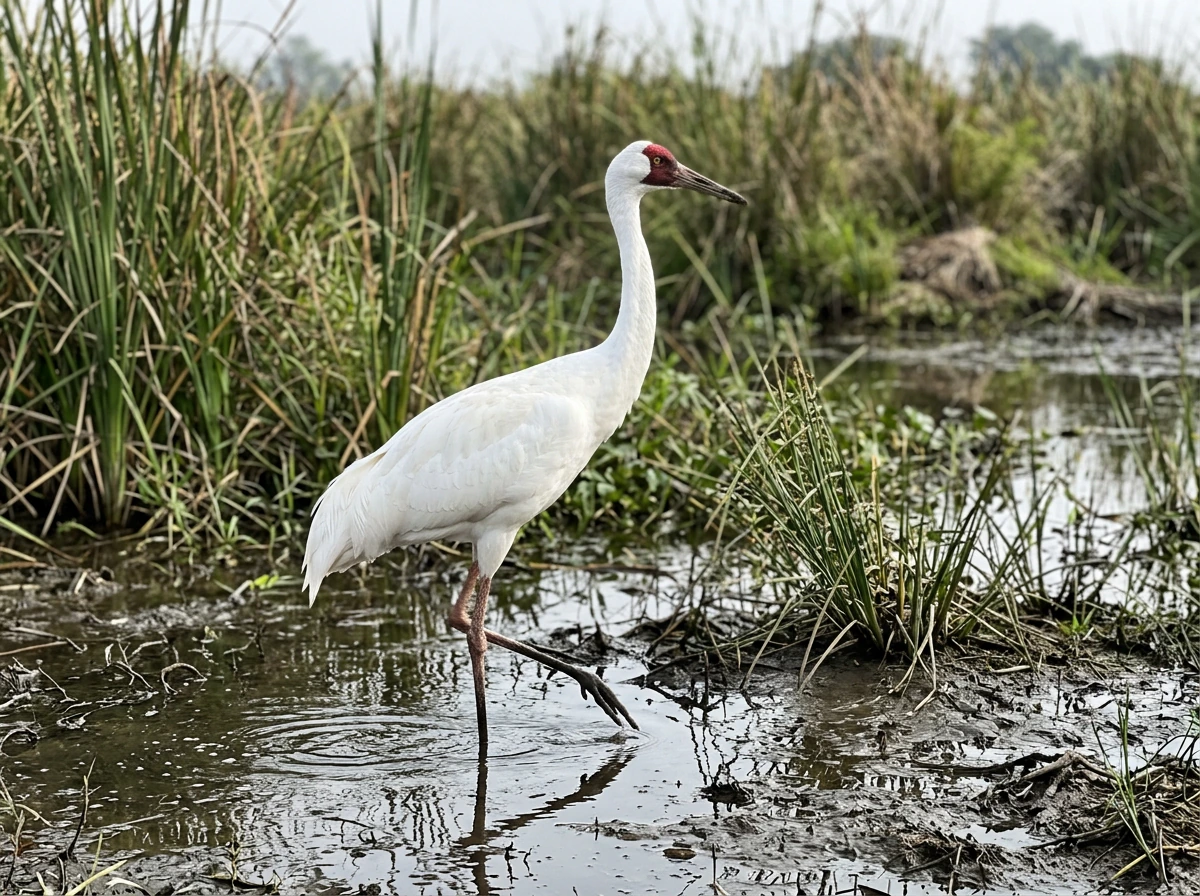
If you specifically want to say "white crane" in Hindi, the phrase is सफेद सारस (safed sāras). सफेद (safed) is the common Hindi adjective for white, and it simply precedes सारस to describe the color. You may also see सफ़ेद सारस written with the nuqta (the dot below the फ), which is a more precise Urdu-influenced spelling but means exactly the same thing.
In English, the white crane most commonly referred to in Indian wildlife contexts is the Siberian crane (Leucogeranus leucogeranus), a critically endangered migratory bird that historically wintered at Keoladeo National Park in Rajasthan. Hindi sources covering this species often use सफेद सारस or the phrase साइबेरियन क्रेन alongside the descriptive सफेद (white) to make the identification clear. The English meaning of "white crane" is straightforward: a crane species (or individual bird) with predominantly white plumage, and in the Indian context it almost always refers to the Siberian crane or, in informal usage, white egrets that are sometimes loosely grouped with cranes.
In Marathi, the same white crane is पांढरा सारस (pāndhara sāras). पांढरा is the Marathi word for white, and it modifies सारस in exactly the same structural way that सफेद does in Hindi. So Hindi speakers say सफेद सारस, Marathi speakers say पांढरा सारस, and both are pointing to the same bird.
Hindi vs Marathi vs English: a quick comparison
| Concept | English | Hindi (Devanagari) | Hindi (Roman) | Marathi (Devanagari) | Marathi (Roman) |
|---|---|---|---|---|---|
| Crane (bird) | Crane | सारस / सारस पक्षी | sāras / sāras pakshī | सारस | sāras |
| Crane (machine) | Crane | क्रेन | krēn | क्रेन | krēn |
| White crane | White crane | सफेद सारस | safed sāras | पांढरा सारस | pāndhara sāras |
| Crane bird (full phrase) | Crane bird | सारस पक्षी | sāras pakshī | सारस पक्षी | sāras pakshī |
| Sarus crane (species) | Sarus crane | सारस क्रेन | sāras krēn | सारस | sāras |
How to make sure you are using the right word
The fastest way to confirm you have the right term is to check the context of the surrounding text. The fastest way to confirm you have the right term is to check the context of the surrounding text. Bird-related content, whether in a wildlife article, a Hindi poem, or a nature documentary script, will use सारस. Construction, engineering, or logistics content will use क्रेन. If you are translating and the English source says "crane" without context, look for nearby words like "nest," "migration," "feathers," or "wetland" to confirm it is the bird, and then use सारस.
- Check the context first: bird-related words nearby confirm सारस; construction or machinery words confirm क्रेन
- Add पक्षी (bird) when searching online to force bird-specific results: सारस पक्षी
- For white crane specifically, use सफेद सारस in Hindi and पांढरा सारस in Marathi
- When writing formally about a crane species, combining the Hindi name with the English species name (e.g., सारस क्रेन) is standard in modern Indian wildlife writing
- When in doubt about regional usage, consult bilingual dictionaries like Shabdkosh or Khandbahale, which list both meanings and mark them separately
One more thing worth knowing: because सारस is so culturally loaded in Hindi, you may encounter it in non-literal contexts too, such as idioms about devotion or in references to the mythological origin of Sanskrit poetry (the Ramayana tradition links the sarus crane to the birth of the shloka verse form), which is also where you may come across deeper symbolic interpretations like <dead bird meaning in hinduism>. If you are exploring bird symbolism across Indian languages more broadly, there are similarly rich layers of meaning attached to other birds like the मैना (myna) and even lesser-known mythological birds, all of which follow the same pattern of having distinct Sanskrit-rooted names alongside borrowed or regional variants. scratching bird meaning in hindi
FAQ
Is सारस पक्षी the only correct way to say “crane bird” in Hindi?
In standard Hindi, use सारस for the crane bird. सारस पक्षी is fine when you want extra clarity, but it is not required for correct meaning.
How do I ensure I am using the correct spelling of crane bird in Hindi?
Yes, Devanagari spelling is सारस. If you see a form like सारस पक्षि or similar variations online, treat them as misspellings or formatting errors, unless the surrounding text clearly indicates the bird.
If I translate the English word “crane” into Hindi, how do I avoid choosing the wrong word?
When “crane” appears in English translation, the safest Hindi word choice depends on topic. For wildlife, wetlands, migration, feathers, nests, or mythology, use सारस. For construction, lifting, engineering, load, or logistics, use क्रेन.
What is “white crane” called in Hindi versus Marathi?
For Hindi, “white crane” is सफेद सारस. For Marathi, it is पांढरा सारस. Avoid mixing adjectives across languages, since the adjective word changes even though सारस stays the same.
Does “white crane” always mean the Siberian crane in Hindi wildlife contexts?
In wildlife writing, सफेद सारस usually points to the Siberian crane context in India, but some informal uses may loosely describe white egrets. If the text mentions Siberian migration or Keoladeo, it is almost certainly the Siberian crane.
If I only have Romanized text like “saaras,” how can I confirm the correct Hindi term online?
If your source uses transliteration like saaras or saaras bird, confirm by searching the Hindi script सारस (or by adding पक्षी). Transliteration can vary, but Devanagari सारस consistently returns the bird meaning.
Should I write सारस या सारस क्रेन when I want to be extra clear?
Some Hindi users write “सारस क्रेन” to reduce ambiguity, especially in news or species-specific articles. You can use it, but in wildlife-only text, सारस alone is typically sufficient.
How can I tell that क्रेन (machine) is needed instead of सारस (bird)?
The machine “crane” in Hindi is क्रेन. If the sentence includes words like tower, hoisting, site, boom, or heavy load, then क्रेन is the correct choice even if the word “crane” was used in English.
Can सारस be used in non-literal meanings in Hindi texts?
Yes. सारस can appear in idioms or myth-related references, not just in literal bird descriptions. In those cases, surrounding words like devotion, fidelity, poetry, shloka, or Ramayana-related references signal symbolic usage.