The roc is a legendary giant bird of myth, not a real species. In Hindi, it is most commonly referred to as "रुख" (rukh) or described using the phrase "पौराणिक विशाल पक्षी" (pauránik vishaal pakshi), meaning "mythological giant bird." If you searched "roc bird meaning in Hindi" hoping to find a real bird species with a Hindi name, you won't, because the roc exists only in legend. But if you want to understand what it means, where it comes from, and how to talk about it confidently in Hindi, you're in exactly the right place.
Roc bird meaning in Hindi: पौराणिक रूक का अर्थ

Rajesh Sharma
23 Mar 2026
What the roc actually is (myth, not zoology)

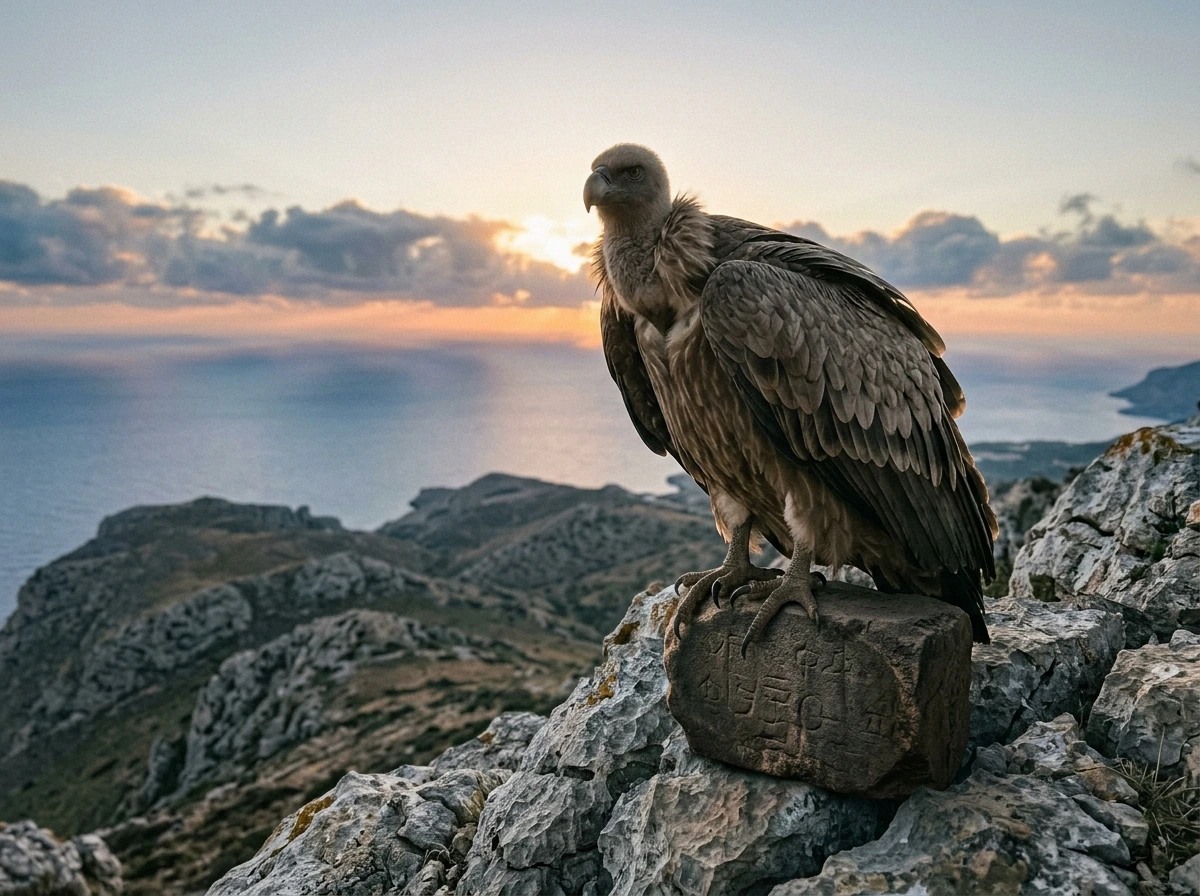
The roc is described across multiple reference sources as a gigantic legendary bird of prey, so enormous and powerful that it could carry off an elephant in its claws. That is not a metaphor or exaggeration within the myth, the stories literally describe the roc snatching full-grown elephants and dropping them from the sky to kill and eat them. Wikipedia summarizes the roc as a legendary bird of prey from Middle Eastern mythology, depicted as enormous in size and able to dispatch elephants blank" rel="noopener noreferrer">snatching full-grown elephants and dropping them from the sky to kill and eat them. The American Museum of Natural History puts it plainly: the roc was "large and strong enough to carry an elephant in its claws."
This creature belongs firmly to the world of mythology and folklore, not ornithology. Britannica labels it a "legendary bird" outright, and Wikipedia classifies it as a legendary bird of prey from Middle Eastern mythology, consistently depicted at enormous size. So whenever you see the roc come up in a Hindi dictionary, a folklore retelling, or a school passage, the word you are looking for is prefixed with terms like पौराणिक (mythological), मिथकीय (mythic), or काल्पनिक (imaginary/fictional). It has no Latin species name, no field guide entry, and no real-world sighting record.
Roc bird meaning in Hindi: the spelling and terms you'll encounter
The English word "roc" traces back through French to Arabic "ruḵḵ" and Persian "ruḵ" (also romanized as rokh or rukh). That Persian/Arabic root is what gives us the most accurate Hindi-Urdu spelling: "रुख़" (ruḵ) or simply "रुख" (rukh). You'll see this in Rekhta's Hindi-Urdu dictionary, where "रुख़" appears as a legitimate lexeme in South Asian script. In everyday Hinglish writing, people often just write "रॉक पक्षी" (roc pakshi) or spell it in Roman script as "roc bird" alongside Hindi explanation.
The Hinkhoj dictionary defines "roc" in Hindi as a "mythical bird of prey having enormous size and strength", and this is pretty much the standard phrasing you'll find whenever English-to-Hindi resources handle this word. The key Hindi descriptor cluster to remember is: "पौराणिक/मिथकीय विशाल शिकारी पक्षी", mythological/mythic giant predatory bird. That four-word phrase captures the roc completely.
| Form | Script/Spelling | Context |
|---|---|---|
| English | roc / rukh / rokh | Most common in mythology books and dictionaries |
| Hindi-Urdu (Devanagari) | रुख / रुख़ | Used in Hindi-Urdu literary and dictionary contexts |
| Hinglish description | रॉक पक्षी / roc pakshi | Common in informal Hindi searches and explainer content |
| Descriptive Hindi phrase | पौराणिक विशाल पक्षी | Used in textbooks, folklore retellings, and cultural writing |
| Arabic/Persian root | رخ (rukh/ruḵ) | Original source form, seen in Urdu-heavy contexts |
Where the roc legend comes from and how Indian retellings present it
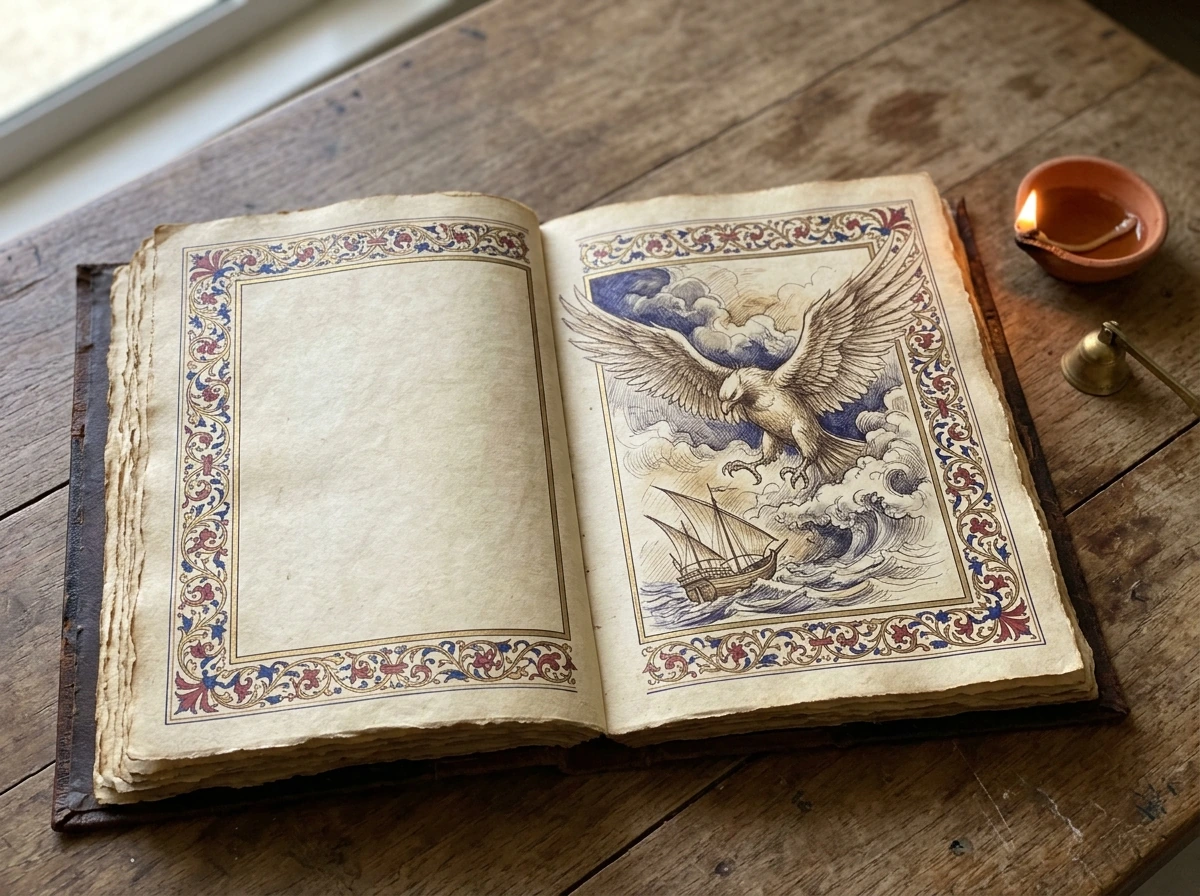
The roc's most famous appearances are in the "One Thousand and One Nights" (Alf Layla wa Layla), specifically in tales like "Sinbad the Sailor" and "Abd al-Rahman the Maghribi's Story of the Rukh." These are Arabic story collections that spread across the Islamic world and later into Europe through translations, including Antoine Galland's 18th-century French version, which is where the English spelling "roc" comes from.
In Indian retellings and cultural discussions, the roc often gets introduced as a bird from "Arab aur Persian katha-kathaaon" (Arab and Persian tales) or positioned alongside other great mythological birds from the subcontinent. The narrative detail that Indian audiences tend to latch onto is the elephant-carrying element, it is the most dramatic and memorable feature, and it maps neatly onto a visual imagination already shaped by stories of Garuda, the eagle-deity of Hindu tradition who also battles serpents and enormous creatures. Marco Polo-era accounts also referenced a version of the roc, helping spread its fame into medieval European and eventually Indian literary consciousness.
It is worth noting that while the roc comes from Middle Eastern mythology, the motif of a vast supernatural bird powerful enough to subdue elephants or giant serpents is not foreign to Indian storytelling at all. The roc plugs into a familiar narrative slot that Indian audiences recognize intuitively, which is why it sits comfortably in Hindi encyclopedias and mythology compilations alongside local bird-legends.
What the roc symbolizes in Indian cultural storytelling
In Indian cultural contexts, the roc is not worshipped or ritually significant the way Garuda is in Hindu tradition, but as a borrowed mythological figure, it carries a clear symbolic weight. It represents overwhelming, almost incomprehensible power. In a Hindu context, people sometimes connect such a symbol of immense power to broader bird symbolism, though the roc itself is not a Hindu deity dead bird meaning in hinduism. A creature that can lift an elephant is not just strong; it is a symbol of force beyond human reckoning, of nature at its most terrifying and sublime.
When Hindi writers and storytellers invoke the roc (or "rukh"), the symbolic register is typically: vastness, fearsome predatory strength, divine or supernatural scale, and the smallness of even the mightiest earthly creatures before such a being. These symbolic qualities parallel what Garuda represents in Hindu iconography, a parallel that scholars of comparative mythology have noted explicitly, pointing out how the roc and Garuda share the archetype of the giant divine or semi-divine bird that dominates elephants and serpents as a display of cosmic authority.
If you are exploring bird symbolism in Indian tradition more broadly, the roc sits in interesting company. While it is not a Hindu mythological figure by origin, it rhymes culturally with Garuda's associations with protection, divine power, and the vanquishing of evil. In that sense, the roc in Indian retellings often carries a similar emotional charge: awe, reverence, and a touch of terror. For readers interested in how bird scratching behavior signifies symbolically, the same cultural framework of birds as spiritual messengers and cosmic symbols applies across these legends.
Roc vs other giant bird names: a quick guide to avoid confusion
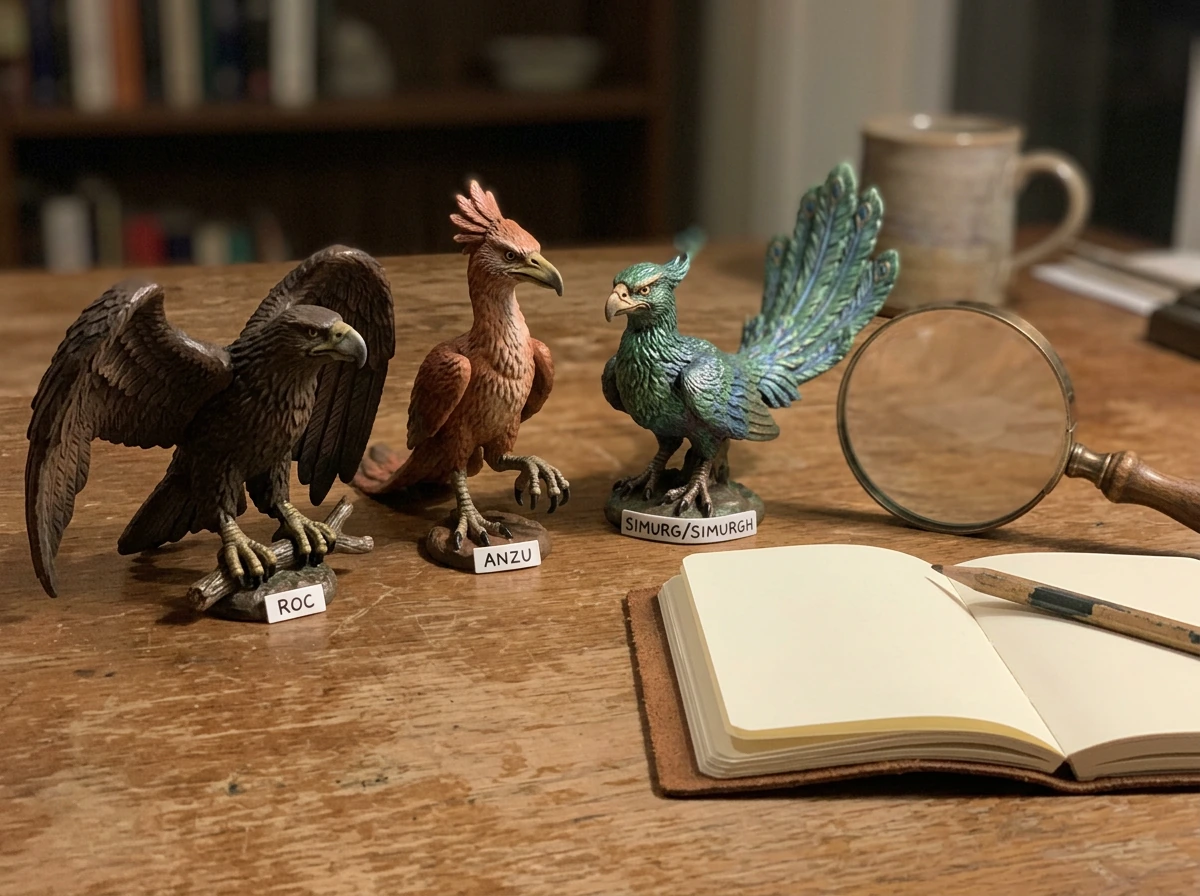
This is where a lot of Hindi searches go sideways. There are several mythological giant birds from different traditions, and they are easy to mix up, especially when you're searching in Hindi and the dictionary results start blurring together. Here's a clean breakdown of the main players:
| Bird Name | Origin Tradition | Hindi/Devanagari | Key Trait |
|---|---|---|---|
| Roc (Rukh) | Arabic/Persian mythology | रुख / रुख़ | Giant bird; carries elephants; from One Thousand and One Nights |
| Garuda (गरुड़) | Hindu/Vedic mythology | गरुड़ | Eagle-deity; mount of Vishnu; slays serpents (Nagas) |
| Simurgh | Persian mythology | सिमुर्ग | Wise, benevolent giant bird; phoenix-like; from Persian poetry |
| Anqa (عنقاء) | Arabic/Islamic mythology | अनक़ा | Enormous legendary bird; sometimes conflated with roc/simurgh |
| Thunderbird | Native American mythology | (no standard Hindi term) | Storm-controlling giant bird; unrelated to South Asian tradition |
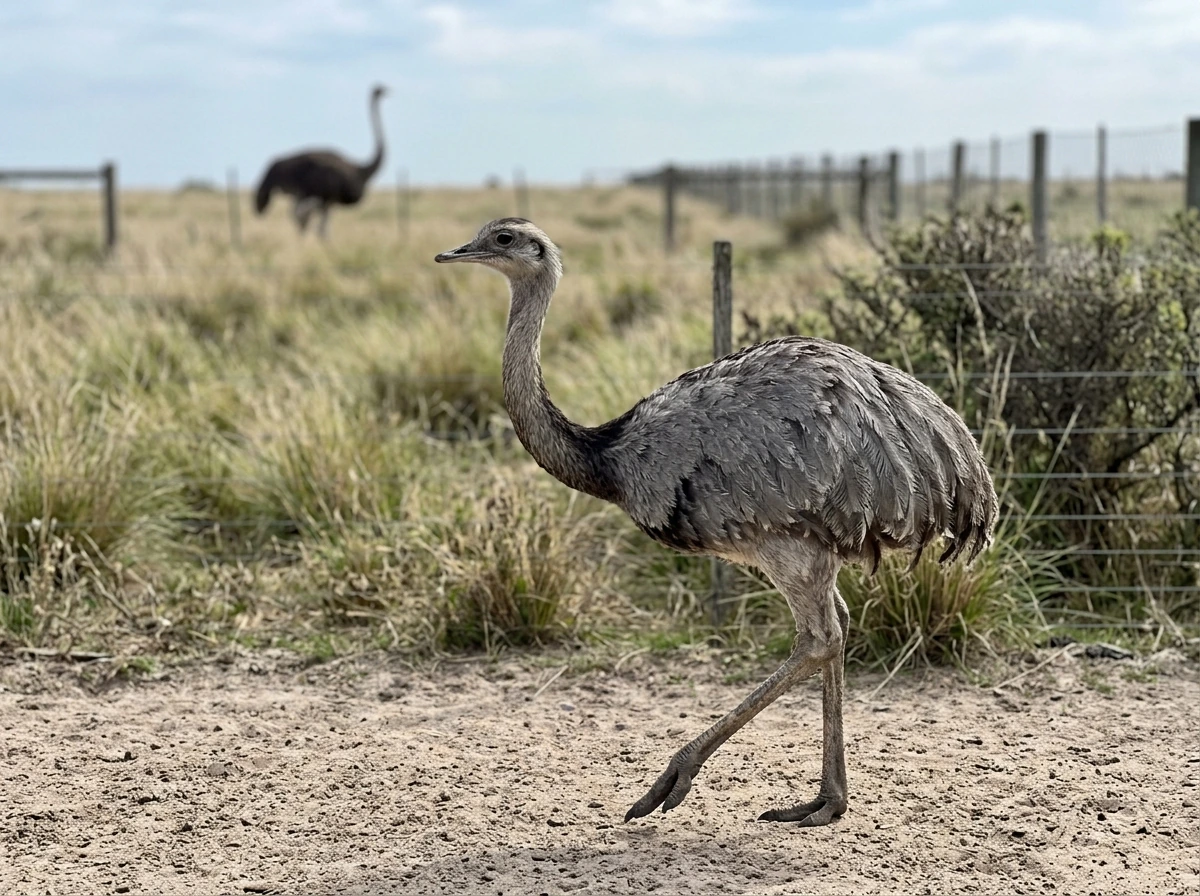
The confusion that comes up most often in Hindi searches is between "रोक" (rok, which is a common Hindi word meaning "stop" or "obstruction") and the mythological "रुख़" (ruḵ). If you search "रोक पक्षी" in Hindi, you may get completely unrelated results. Always use "रुख पक्षी" or "पौराणिक विशाल पक्षी" to stay on track. Similarly, the roc is not the same as Garuda, Garuda is a Hindu deity with a rich worship tradition, while the roc is a foreign mythological borrowing with no ritual standing in Hindu practice. They share a structural similarity as giant birds of power, but they are distinct entities from different traditions. If you're researching something like the rhea bird in Hindi or crane bird terminology in Hindi, those are real bird species with proper Hindi names, a very different category from the roc. The rhea bird meaning in Hindi is different because rhea is a real bird species with its own Hindi name rhea bird in Hindi.
How to search and ask about the roc in Hindi
If you want to look this up in Hindi or ask someone about it, here are the most effective phrases and search terms to use. For the exact phrasing, you can also check this related guide on cricket bird meaning in hindi. The goal is to signal "mythological creature" rather than "real bird species" right from the start, so you get relevant results.
Useful Hindi search phrases
- roc bird ka arth kya hai (roc पक्षी का अर्थ क्या है?) — What is the meaning of the roc bird?
- roc पक्षी / पौराणिक पक्षी किसे कहते हैं? — What is called the roc bird / mythological bird?
- रुख पक्षी का अर्थ — Meaning of the rukh bird
- पौराणिक विशाल पक्षी रुख / roc — Mythological giant bird roc/rukh
- मिथकीय पक्षी जो हाथी उठा सकता है — Mythical bird that can lift an elephant
Example sentences to use or look for
- "रुख एक पौराणिक विशाल पक्षी है जो अरब और फ़ारसी लोककथाओं में मिलता है।" (Rukh ek pauránik vishaal pakshi hai jo Arab aur Farsi lokkathaon mein milta hai.) — The rukh is a mythological giant bird found in Arab and Persian folklore.
- "यह पक्षी इतना बड़ा था कि हाथी को अपने पंजों में उठा सकता था।" (Yah pakshi itna bada tha ki haathi ko apne panjon mein utha sakta tha.) — This bird was so large that it could lift an elephant in its claws.
- "roc bird koi asli pakshi nahi hai, yah ek kalpanic prani hai." — The roc bird is not a real bird; it is an imaginary/fictional creature.
- "सिंदबाद की कहानियों में रुख पक्षी का उल्लेख मिलता है।" (Sindbad ki kahaniyon mein rukh pakshi ka ullekh milta hai.) — The rukh bird is mentioned in the stories of Sinbad.
When you find a Hindi dictionary or encyclopedia entry for the roc, look for these confirmation anchors: the entry should mention it as a "mythological" or "legendary" bird (पौराणिक/मिथकीय), reference its enormous size (विशाल आकार), note its ability to carry or kill elephants (हाथी), and ideally mention the "One Thousand and One Nights" (हजार और एक रात / अलिफ़ लैला) or Sinbad. If those elements are present, you have the right entry. If the result talks about a real bird species with a scientific name, you've landed in the wrong place and should refine your search using the phrases above.
The bottom line: roc bird meaning in Hindi is "रुख" (rukh/ruḵ), a पौराणिक विशाल शिकारी पक्षी (mythological giant predatory bird) from Arabic and Persian legend, made famous by the tales of Sinbad and One Thousand and One Nights. If you are comparing roc with other mythical bird meanings in Hindi, you may also want to check the myna bird in hindi meaning.
FAQ
“रुख” और “रोक” में फर्क कैसे समझें, ताकि roc bird meaning in Hindi गलत न मिले?
“रोक” (rok) आमतौर पर “stop/obstruction” जैसा सामान्य शब्द है, जबकि roc के लिए “रुख़/रुख” (ruḵ/rukh) सही है। सर्च में “रुख पक्षी”, “पौराणिक रुख”, या “पौराणिक विशाल शिकारी पक्षी” लिखें।
क्या “रॉक” (rock) लिखने पर लोग roc ही समझते हैं?
नहीं। “रॉक” spelling अक्सर गलत वर्तनी या किसी और शब्द (जैसे rock/चट्टान) के साथ भ्रम पैदा कर देती है। roc के लिए देवनागरी में “रुख़/रुख” या अंग्रेजी में “roc” के साथ “mythological” जरूर जोड़ें।
Hindi में roc को बोलचाल में कैसे लिखें, क्या “roc pakshi” ठीक है?
अनौपचारिक Hinglish में “roc pakshi” या “roc bird” लिखा मिल सकता है, पर अधिक भरोसेमंद रूप “रुख”/“रुख़” और “पौराणिक” के साथ है। औपचारिक लेखन या पढ़ाई में “पौराणिक विशाल शिकारी पक्षी” लिखना बेहतर रहता है।
क्या “roc” का कोई वैज्ञानिक/असली पक्षी वाला Hindi नाम भी होता है?
नहीं। roc का कोई वास्तविक प्रजाति-नाम या field guide entry नहीं है, यह पूरी तरह कथा आधारित “legendary/mythical bird” है। अगर किसी परिणाम में scientific name या real-world sightings का दावा हो, तो समझें कि वह सही नहीं है।
स्कूल प्रोजेक्ट के लिए roc का अर्थ बताने में कौन-सी 2-3 लाइन सबसे उपयोगी रहेंगी?
“roc (रुख़/रुख) एक पौराणिक विशाल शिकारी पक्षी है, जिसकी कथाओं में उसका आकार इतना भयानक बताया जाता है कि वह हाथी को अपने पंजों में उठाकर मार सकता है.” इसके बाद “One Thousand and One Nights, Sinbad” का संदर्भ जोड़ दें।
क्या roc को Garuda के जैसा ही मानना सही है?
नहीं। Garuda हिंदू परंपरा का धार्मिक/देव-आइकन है, जबकि roc अरब और फारसी कथा-परंपरा का मिथकीय पात्र है। दोनों में “अत्यंत शक्तिशाली विशाल पक्षी” जैसा archetype मिल सकता है, पर पहचान और सांस्कृतिक आधार अलग है।
अगर किसी Hindi dictionary में roc के लिए “legendary” नहीं लिखा दिखे, तो क्या करें?
ऐसे में entry पर भरोसा न करें। सत्यापन के लिए चेक करें कि उसमें “mythological/पौराणिक/मिथकीय”, “विशाल आकार”, और “हाथी को उठाना/मारना” जैसी कहानी-विशेषताएं आती हैं या नहीं।
Hindi में roc का सही spelling बताने का आसान नियम क्या है?
रूट संकेत यह है कि roc के लिए “ruḵ/rokh” परिवार की देवनागरी spelling आती है: “रुख़” (अक्सर उर्दू-स्टाइल असर के साथ) या “रुख”। “रोक” से बचें और “पौराणिक/मिथकीय” जोड़कर संदर्भ पक्का करें।
क्या “Alf Layla wa Layla” को Hindi में अलग नाम से भी खोज सकते हैं?
हाँ। खोज में “हजार और एक रात” या “अलिफ़ लैला” लिखें, साथ में “रुख/roc” जोड़ें। इससे roc वाली Sinbad/सम्बंधित कहानियों तक पहुंचने की संभावना बढ़ती है।