
In Hindi, the puffin bird is most commonly called "पफ़िन" (Paffin), a direct transliteration since puffins are not native to the Indian subcontinent and have no traditional Hindi name rooted in Sanskrit or folk usage. The word is pronounced roughly as "PAF-in" (पैफ़-इन), with a short "a" sound at the start. You may also see it written as "पफ़िन पक्षी" (Paffin Pakshi) when people want to clarify it is a bird.
Puffin Bird Meaning in Hindi: नाम, उच्चारण और प्रतीकात्मक अर्थ

Rajesh Sharma
5 Jul 2026

Hindi names for the puffin and how to say them
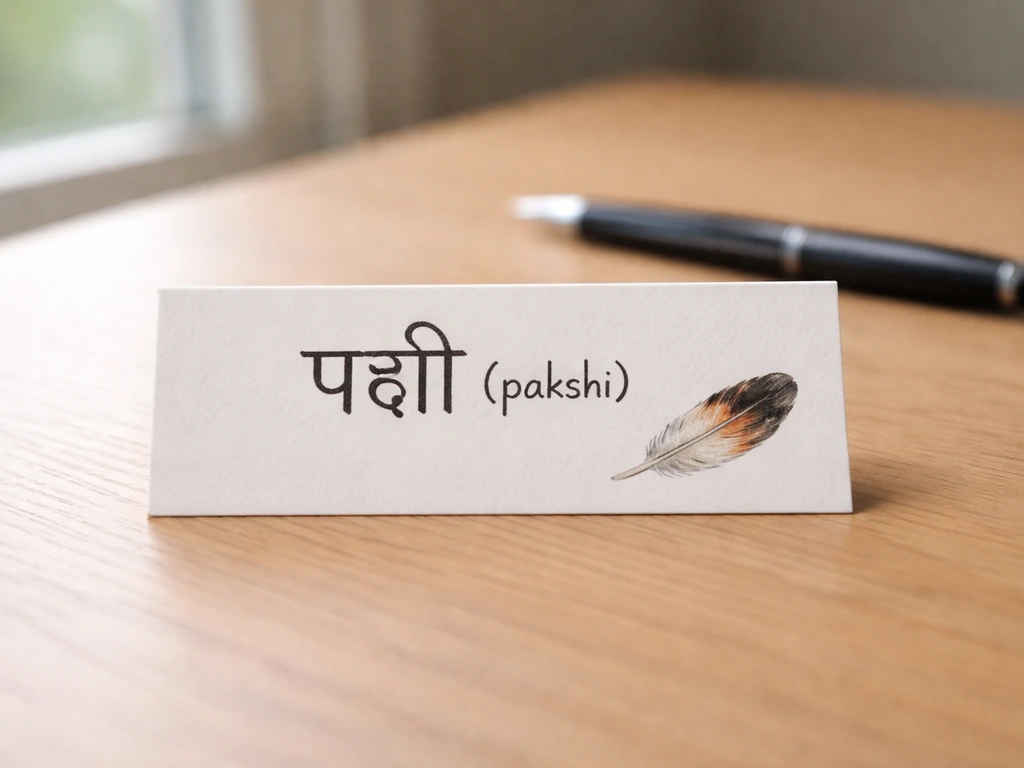
Because the puffin (scientific name: Fratercula arctica) is a North Atlantic and Arctic seabird with no natural range in South Asia, classical Hindi and Sanskrit never developed an indigenous name for it. In Merriam-Webster’s dictionary, “puffin” is defined as a seabird from the Northern Hemisphere, and it notes the genus Fratercula Northern Hemisphere seabird; genus Fratercula. When Hindi speakers and writers need to refer to this bird today, they use one of a few forms:
- पफ़िन (Paffin) — the standard transliteration, used in most modern Hindi writing and wildlife content
- पफ़िन पक्षी (Paffin Pakshi) — literally "puffin bird," used when more descriptive context is needed
- समुद्री तोता (Samudri Tota) — a descriptive phrase meaning "sea parrot," occasionally used in informal writing because of the puffin's brightly colored beak, though this is not a fixed or dictionary-listed name
- बोतलनाक चिड़िया (Botalnāk Chidiya) — rare, informal, meaning "bottle-nosed bird," echoing an old English folk name for the puffin
For pronunciation: "पफ़िन" is two syllables, "पफ़" (like the English word "puff" without the final "f" being doubled) + "इन" (like "in"). The stress falls on the first syllable. If you are speaking Hindi and want to be clearly understood, saying "PAF-in pakshi" works perfectly in any conversation or classroom.
Where the word "puffin" actually comes from
The English word "puffin" goes back to Middle English, appearing in written records from around the mid-14th century (roughly the 1300s) in forms like "poffin" and "poffoun." Etymologists trace the name to the concept of something "puffed" or "swollen", and interestingly, the word was originally applied not to the bird we know today but to the fat, round nestlings of shearwaters, which were harvested as food in North Atlantic coastal communities. The name later shifted to the bird we now recognize as the puffin, a compact alcid in the genus Fratercula. Puffins are small alcids (auk family) in the genus Fratercula small alcids in the genus Fratercula. Some scholars also suggest a possible Celtic language connection, though the "puffed" origin remains the most widely cited explanation.
The genus name Fratercula comes from Latin and means "little friar" or "little brother," a reference to the puffin's black-and-white plumage, which resembles the habits worn by medieval friars. This is a charming detail that translates well into Hindi cultural vocabulary: you could describe the puffin as "छोटा संन्यासी पक्षी" (Chhota Sannyasi Pakshi), meaning the "little monk bird," which captures both its appearance and the Latin meaning of its scientific name.
Puffin in Indian languages: usage and alternate spellings

Across the major Indian languages, the puffin is handled similarly, as a borrowed or transliterated word, since there is no folk tradition around this bird in South Asia. Here is a quick look at how different languages handle it:
| Language | Common Term | Pronunciation Guide | Notes |
|---|---|---|---|
| Hindi | पफ़िन / पफ़िन पक्षी | PAF-in / PAF-in pak-shee | Standard transliteration; most widely used |
| Marathi | पफिन / पफिन पक्षी | PAF-in / PAF-in pak-shee | Nearly identical to Hindi; Marathi nature writing uses this |
| Gujarati | પફિન / પફિન પક્ષી | PAF-in / PAF-in pak-shee | Direct transliteration into Gujarati script |
| Punjabi | ਪਫ਼ਿਨ / ਪਫ਼ਿਨ ਪੰਛੀ | PAF-in / PAF-in pan-chhee | Gurmukhi script; "ਪੰਛੀ" is the Punjabi word for bird |
| Sanskrit | No classical term | — | Sanskrit has no record of puffins; descriptive phrases like समुद्रशुक (Samudra-shuka, sea-parrot) are sometimes coined |
One thing to watch for is inconsistent spelling in Hindi digital content. You may encounter "पफिन" (without the nuktā dot under the "फ") and "पफ़िन" (with the dot, giving it the correct "f" sound borrowed from English/Arabic). The version with the dot, पफ़िन, is more accurate if you want to preserve the original English pronunciation. Both are understood, but formal writing should use the nuktā form.
Symbolic and cultural meanings of the puffin
This is where I want to be upfront with you: the puffin carries no traditional symbolic meaning in Indian mythology, Hindu scripture, Sanskrit literature, or folk tradition. Unlike birds such as the pigeon (associated with love and peace in Indian symbolism) or the kingfisher (connected to swiftness and good fortune in regional traditions), the puffin simply does not appear in any classical Indian cultural framework. It is a seabird of the North Atlantic, and Indian mythological and folk traditions naturally centered on birds that people could actually see and interact with.
That said, there are a few layers of symbolic meaning attached to puffins in global and Western cultural contexts that Hindi speakers who study or write about nature may find useful to know:
- Resilience and adaptability: Puffins breed in large colonies on rocky cliffs and can dive deep underwater to catch fish, leading to associations with determination and the ability to thrive in harsh conditions
- Community and family: Puffins are monogamous and return to the same burrow and partner year after year, making them a symbol of loyalty and long-term commitment in Western wildlife writing
- The "little monk" (Fratercula) image: The black-and-white coloring and the Latin etymology connect puffins to images of humility, simplicity, and spiritual dedication in European traditions
- Charm and approachability: Their distinctive colorful beak and upright waddle have made puffins popular symbols of quirky charm, especially in children's literature and environmental campaigns
If you are a Hindi poet, writer, or storyteller looking to use the puffin as a symbol, the most culturally resonant angles would be its monogamy and its bold, colorful beak as a contrast to its modest black-and-white body. In Hindi literary tradition, the contrast between outer appearance and inner nature is a recurring theme (think of how poets use the crow versus the cuckoo), and the puffin's vivid beak set against its otherwise plain plumage offers a similar metaphorical opportunity.
Using the Hindi term correctly in everyday sentences
Once you know the right term, using it in Hindi sentences is straightforward. Here are some practical examples across different contexts, nature writing, conversation, and educational use:
- पफ़िन एक समुद्री पक्षी है जो उत्तरी अटलांटिक महासागर में पाया जाता है। (Paffin ek samudri pakshi hai jo uttari Atlantic mahasagar mein paya jata hai.) — "The puffin is a seabird found in the North Atlantic Ocean."
- पफ़िन का वैज्ञानिक नाम Fratercula arctica है, जिसका अर्थ है 'छोटा तपस्वी।' (Paffin ka vaigyanik naam Fratercula arctica hai, jiska arth hai 'chhota tapasvi.') — "The puffin's scientific name is Fratercula arctica, which means 'little friar.'"
- यह पक्षी अपनी चमकीली चोंच के कारण 'समुद्री तोते' के नाम से भी जाना जाता है। (Yah pakshi apni chamkeeli chonch ke kaaran 'samudri tote' ke naam se bhi jaana jaata hai.) — "This bird is also known as the 'sea parrot' because of its bright beak."
- पफ़िन हर साल एक ही साथी के साथ लौटता है, जो इसे वफ़ादारी का प्रतीक बनाता है। (Paffin har saal ek hi saathi ke saath lauta hai, jo ise wafadaari ka prateek banata hai.) — "The puffin returns to the same partner every year, making it a symbol of loyalty."
- बच्चों की किताबों में पफ़िन पक्षी को अक्सर हास्यपूर्ण और प्यारे पात्र के रूप में दिखाया जाता है। (Bacchon ki kitaabon mein Paffin pakshi ko aksar haasyapurna aur pyaare paatr ke roop mein dikhaya jaata hai.) — "In children's books, the puffin is often depicted as a funny and endearing character."
Notice that in each of these sentences, "पफ़िन" works exactly like a noun, it takes the same grammatical treatment as any other bird name in Hindi. In Hindi, you can often interpret this borrowed word as simply the “pigeon bird,” but the standard usage is still “पफ़िन” (puffin). You do not need to add any special suffix or modifier. Just pair it with "पक्षी" when you need to make it clear you are talking about the bird, and drop "पक्षी" in contexts where that is already obvious.
How to verify the right term and avoid common mistakes
Because puffins are unfamiliar birds in India, misinformation and loose translations float around online. In Hindi, you may also search for the meaning and usage of the term "puffin" in context, which helps avoid confusion with other similar birds. Here is how to check what you find and spot errors quickly.
Where to verify
- Oxford Hindi-English Dictionary: Does not list an indigenous Hindi word for puffin, which itself confirms that the transliteration "पफ़िन" is the correct approach
- Merriam-Webster (English only): Confirms the English definition and etymology — useful for checking the bird's identity before translating
- Wikipedia Hindi (hi.wikipedia.org): Search "पफ़िन" to find the Hindi-language article on the bird, which uses the standard transliteration and gives scientific details
- iNaturalist India or eBird: Useful for confirming whether puffins are genuinely found in South Asian waters (they are not, which explains the absence of a native Hindi name)
- NCERT or CBSE Hindi science textbooks: If you are a student, these will show you how transliterated English bird names are handled in formal Hindi education
Common confusions to avoid
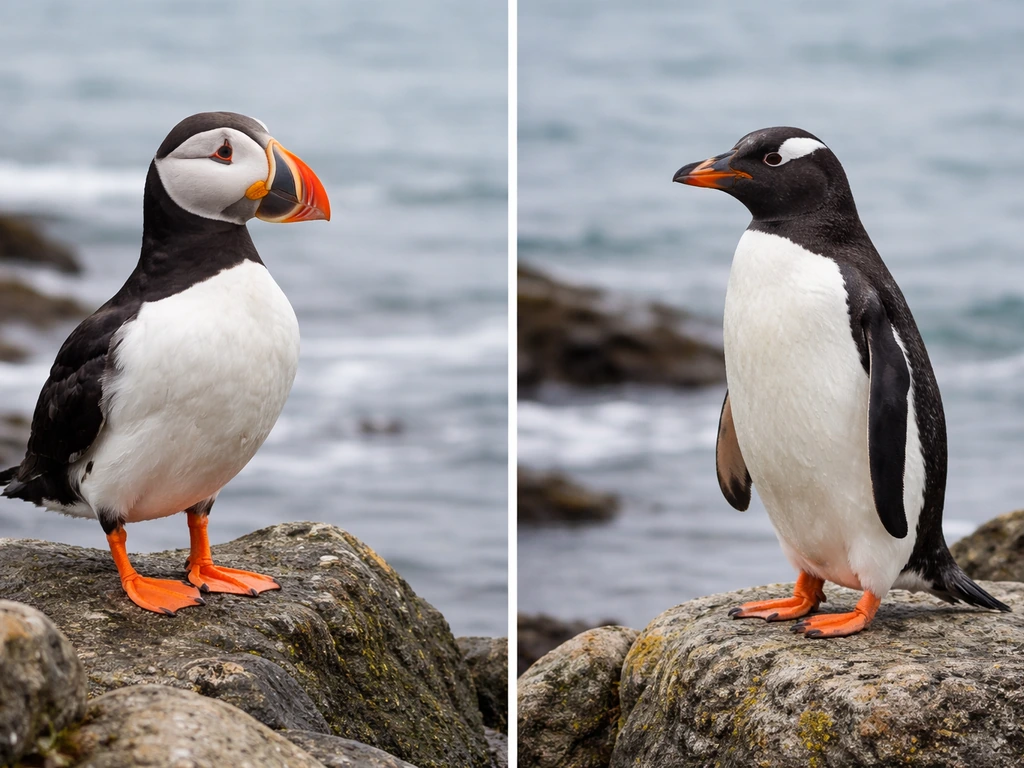
- Do not confuse "पफ़िन" (puffin, the seabird) with "पेंगुइन" (penguin) — both are non-Indian seabirds with no native Hindi name, but they are completely different birds. The penguin article on this site covers that term separately.
- "समुद्री तोता" (sea parrot) is a descriptive nickname, not an official Hindi name. Do not use it in formal or academic writing as if it were a fixed term.
- Some online translation tools will return no result or an incorrect one for "puffin" in Hindi. If a tool gives you a Hindi word that looks like a real Sanskrit/Hindi word (not a transliteration), be suspicious — it is likely a mistranslation.
- The Latin genus name Fratercula is sometimes confused with other Latin bird names in Hindi wildlife writing. Always double-check the scientific name Fratercula arctica when you need precision.
- The puffin is sometimes loosely grouped with penguins in popular Hindi content because both are black-and-white seabirds. They are not related — puffins can fly, penguins cannot.
If you are exploring other birds with similarly interesting Hindi naming challenges, the kingfisher (which does have a rich Sanskrit heritage) and the finch (another case of transliteration-heavy usage in Hindi) offer useful comparisons. Birds like the pigeon and goose, on the other hand, have deep classical Hindi and Sanskrit roots that give them a very different linguistic profile from imported names like "पफ़िन. You can also look up the goose bird meaning in Hindi to compare how native-rooted bird names differ from borrowed transliterations like puffin. "
The bottom line: call it "पफ़िन" or "पफ़िन पक्षी," pronounce it PAF-in, and remember that its symbolic weight comes from global wildlife tradition rather than Indian mythology. That distinction will keep your writing accurate and credible, whether you are a student, a nature writer, or just someone satisfying their curiosity about this remarkable little North Atlantic bird.
FAQ
हिंदी वाक्यों में “पफ़िन” के साथ “पक्षी” लगाना जरूरी है या नहीं?
हिंदी में “पफ़िन” को आमतौर पर अलग से किसी उपसर्ग या प्रत्यय की जरूरत नहीं होती, आप इसे सीधे संज्ञा की तरह लिखते और बोलते हैं, जैसे “यह पफ़िन पक्षी है” या “पफ़िन को समुद्री पक्षी कहा जाता है”। अगर वाक्य में पहले ही bird clear है, तो “पक्षी” हटाकर भी लोग समझ लेते हैं, पर औपचारिक लेखन में “पफ़िन पक्षी” बेहतर रहता है।
पफ़िन और पफिन में क्या फर्क है, कौन-सा सही माना जाता है?
आप अक्सर “पफिन” (बिना नुक्ता) और “पफ़िन” (नुक्ता के साथ) देखेंगे। अनौपचारिक चैट में दोनों समझ आ जाते हैं, लेकिन सही ध्वनि और औपचारिकता के लिए “पफ़िन” लिखें ताकि अंग्रेजी के “f” ध्वनि वाली उधार शब्द पहचान बनी रहे।
पफ़िन का सही उच्चारण (stress सहित) कैसे करें, ताकि लोग गलत न समझें?
“PAF-in” बोलते समय शुरुआत में “a” को छोटा रखें, यानी “पै” जैसा, और stress पहली syllable पर रखें। लोग कभी-कभी “फ़िन” को जरूरत से ज्यादा जोर दे देते हैं, इससे उच्चारण अंग्रेजी से दूर जा सकता है, इसलिए पहले भाग पर जोर देना उपयोगी है।
अगर पाठक को भ्रम हो, तो मैं पफ़िन को हिंदी में कैसे स्पष्ट करूं?
अगर आप किसी संक्षिप्त पहचान के लिए लिख रहे हैं, तो “पफ़िन” को न केवल bird के रूप में, बल्कि “सीबर्ड” और “उत्तर अटलांटिक” जैसे संदर्भ शब्दों के साथ जोड़ना सबसे साफ रहता है। इससे पाठक को यह भी संकेत मिल जाता है कि यह भारतीय लोक परंपरा वाला पक्षी नहीं है, बल्कि एक specific species वाला seabird है।
भारत में लोग पफ़िन को किन पक्षियों से गलत मिला देते हैं, और मैं गलती कैसे पकड़ूं?
ऑनलाइन गलतफहमी अक्सर “similar-looking” seabirds या अन्य रंगीन पक्षियों से तुलना में होती है। तेज़ जांच के लिए आप साथ में एक “context clue” लिखें, जैसे “बीक वाला seabird” या “North Atlantic seabird”, और फिर खोज परिणामों में scientific context या habitat विवरण देखें।
क्या हिंदी में scientific name जोड़ना चाहिए, और कब जोड़ना best है?
वैज्ञानिक नाम (Fratercula arctica) को आप चाहें तो एक बार पहली बार परिचय में दे सकते हैं, फिर आगे सिर्फ “पफ़िन” लिखें। इससे लेखन की credibility बढ़ती है और यह भी स्पष्ट हो जाता है कि आप एक specific species की बात कर रहे हैं, generic “bird” की नहीं।
अगर मैं कहानी या कविता में puffin का प्रतीक इस्तेमाल करूं, तो किन थीम्स से लिखना अधिक सही रहेगा?
वैश्विक/पश्चिमी संदर्भ में puffin के symbol की बात करते समय, कविता या storytelling में आप उसके monogamy या contrast (सादा शरीर बनाम रंगीन beak) जैसे विचारों का इस्तेमाल कर सकते हैं। ध्यान रखें, इसे सीधे भारतीय मिथकीय प्रतीक की तरह प्रस्तुत न करें, क्योंकि हिंदी-भारतीय परंपरा में इसके लिए पारंपरिक आधार नहीं माना जाता।
Next Articles

Kingfisher Bird in Hindi Meaning: What Is It Called?
किंगफिशर को हिंदी में क्या कहते हैं, शब्द का मतलब, उच्चारण और असली पक्षी पहचान के आसान तरीके
Finch Bird Meaning in Hindi: नाम, मतलब और पहचान
फिंच बर्ड का हिंदी अर्थ, नाम पहचान और भारतीय सांस्कृतिक प्रतीकात्मकता, साथ में पहचान व सामान्य FAQ

Pigeon Bird Meaning in Hindi: Name, Pronunciation & Symbolism
Pigeon bird meaning in Hindi: Hindi name, pronunciation, everyday usage, and symbolism across Indian cultures and prover