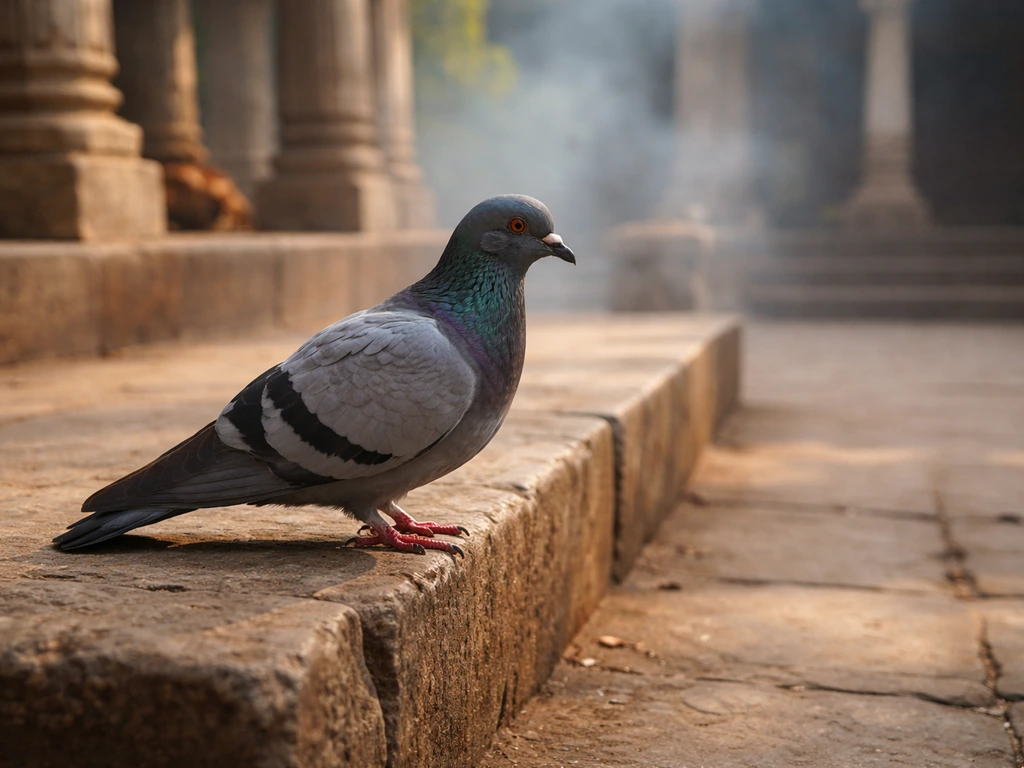
In Hindi, 'finch' is most commonly rendered as फ़िंच (pronounced 'finch', just as in English), and you'll find this transliteration used consistently across Hindi dictionaries like Hindwi, OneIndia, and Glosbe. There isn't a single ancient Sanskrit or classical Hindi word that maps perfectly onto the entire finch family, but descriptively, a finch is called एक छोटी गानेवाली चिड़िया (ek chhoṭī gānevālī chiṛiyā), 'a small singing bird.' One well-known member of the finch family, the weaver finch, is traditionally known in Hindi as बया (bayā), and that name carries its own rich cultural weight. If you want the penguin bird meaning in hindi, look up the Hindi name and the common symbolic interpretations for that specific bird बया (bayā).
Finch Bird Meaning in Hindi: नाम, मतलब और पहचान

Rajesh Sharma
12 May 2026
The Hindi name and translation for 'finch'
When Hindi dictionaries handle the word 'finch,' they almost universally use the transliteration फ़िंच. You might also see it spelled फिंच or फिन्च in older texts, but फ़िंच is the standard modern form. The nuqta (the dot under फ़) signals that the 'f' sound is borrowed from a foreign language, which is accurate since 'finch' is an English word of Germanic origin. Practically speaking, if you're writing about this bird in Hindi, in a school project, a birdwatching journal, or a social media post, फ़िंच is the word to use, and any educated Hindi reader will understand it immediately.
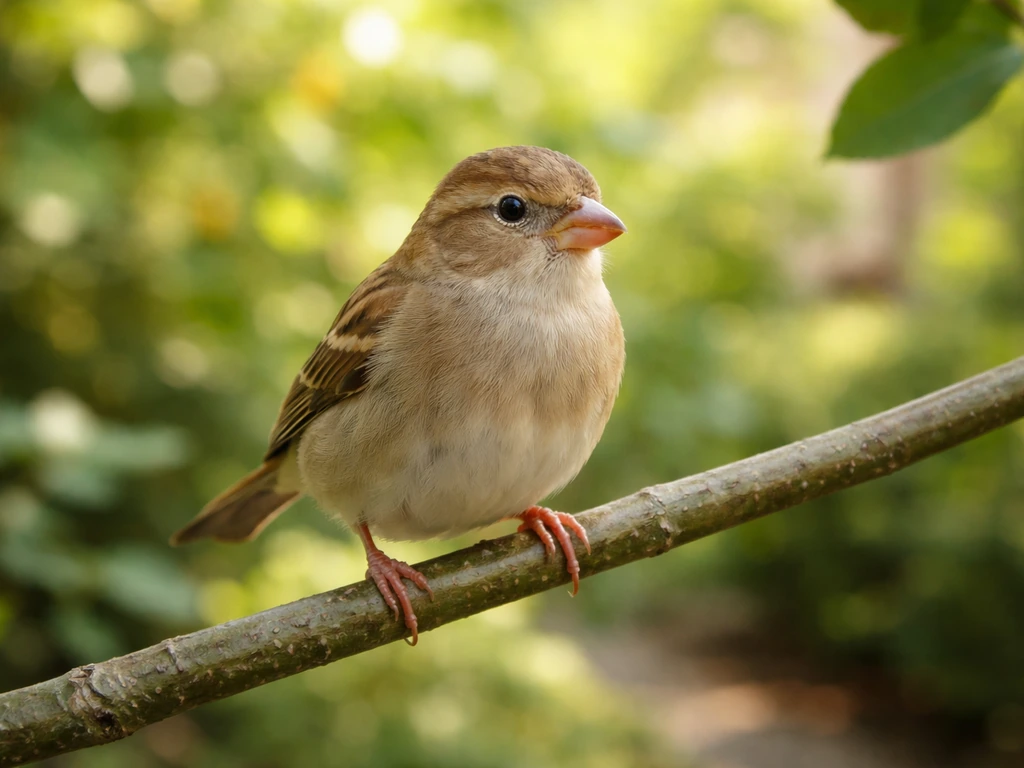
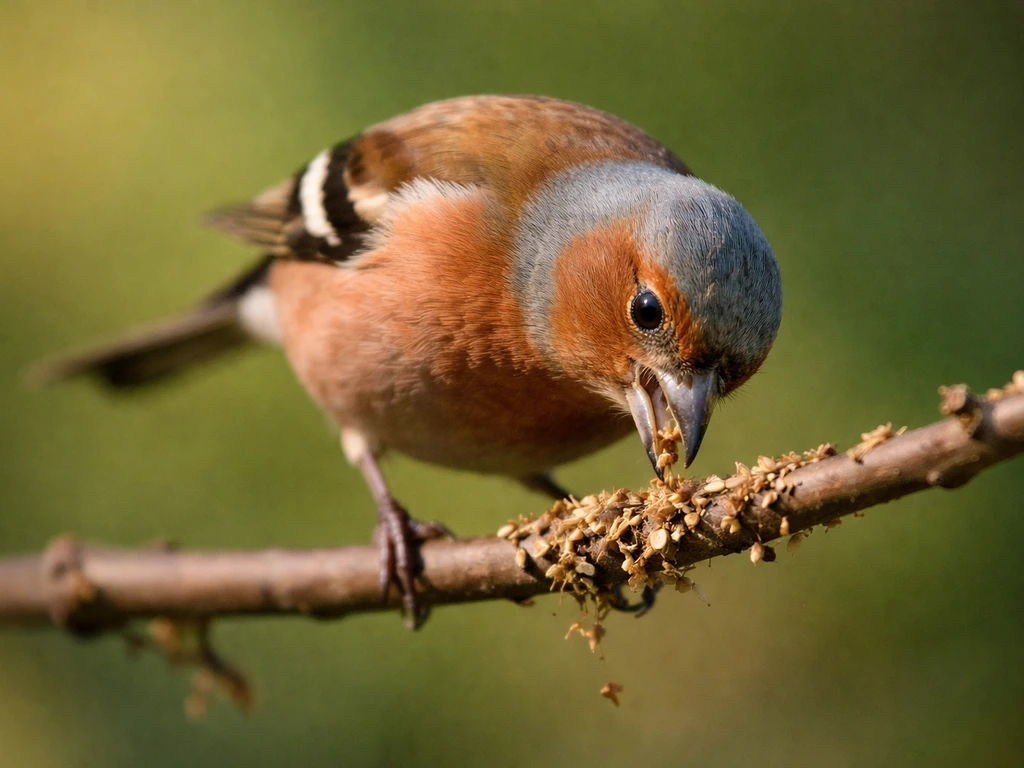
The definitional gloss that Hindi dictionaries attach to फ़िंच is equally useful: 'बीज खाने वाली छोटी चिड़िया जिसकी चोंच शंकु-आकार की होती है' (bīj khāne vālī chhoṭī chiṛiyā jiskī choṃc śaṃku-ākār kī hotī hai), a small seed-eating bird with a cone-shaped bill. That description is not just ornithology; it's also how a Hindi speaker would naturally identify the bird if they encountered it without knowing its name.
Hindi synonyms and common names used for finches
Because 'finch' is a large family of birds (Fringillidae and related families) rather than a single species, different members have their own Hindi names that have been in use for centuries. The most culturally prominent of these is बया (bayā), referring to the Baya Weaver (Ploceus philippinus), which is technically classified in a related weaver-finch group. Baya is the bird famous for weaving its elaborate hanging nest, and it shows up in Hindi poetry and folk song. Another commonly used term is मुनिया (muniā), which refers to small finch-like birds in the Estrildidae family, sparrow-sized birds with reddish or brown plumage that are popular as pet birds across India. You'll also encounter चिड़िया (chiṛiyā) used loosely for any small bird including finches, though that's more of a general term than a specific name.
| Hindi Name | Devanagari | Bird it refers to | Notes |
|---|---|---|---|
| Finch (transliteration) | फ़िंच | Finch family broadly | Standard dictionary form |
| Bayā | बया | Baya Weaver / Weaver Finch | Most culturally recognized finch-type bird in India |
| Muniā | मुनिया | Munias / Estrildid finches | Common name for small cage-kept finches |
| Chiṛiyā | चिड़िया | Any small bird | Generic; used loosely for finches too |
| Tuntuni | टुनटुनी | Wren / small passerine | Used regionally, sometimes overlaps with finch-type birds |
What finches symbolize in Hindi and Indian traditions
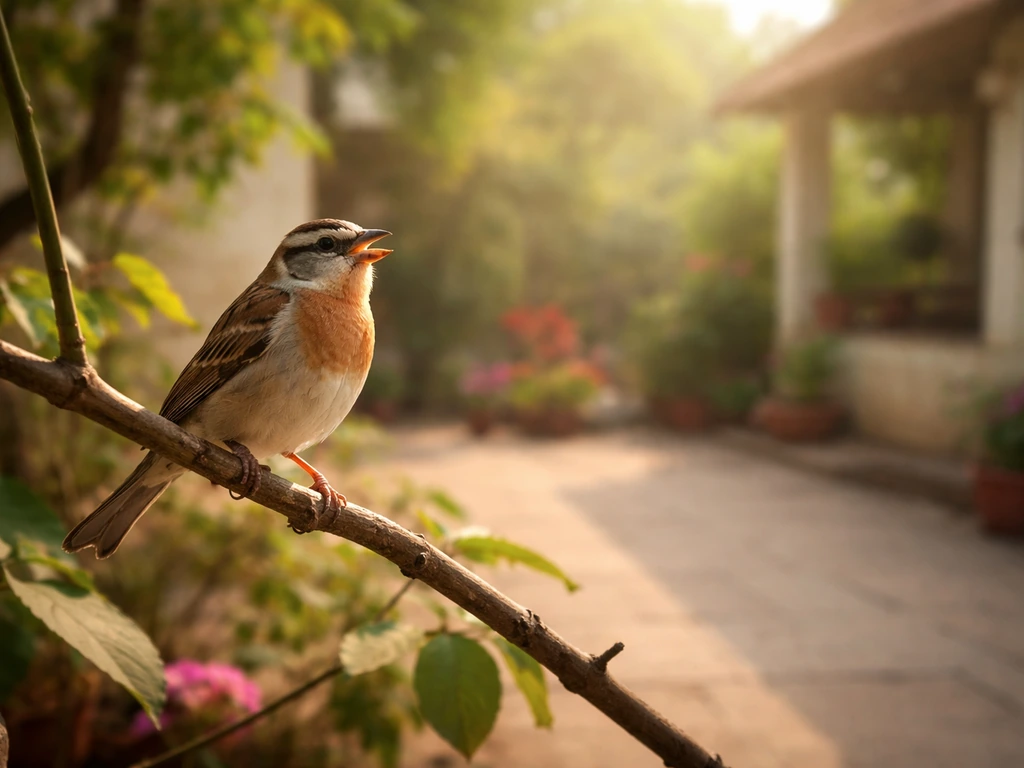
Finches in Indian cultural and folk traditions are most strongly associated with joy, cheerfulness, domestic harmony, and the sweetness of song. The small size of the bird paired with its bright, persistent singing makes it a natural symbol of happiness despite modest circumstances, a theme that resonates deeply in Hindi folk poetry and village life. The बया (bayā) finch in particular is associated with industriousness and devotion, because of the extraordinary nest it builds for its mate. In folk belief, a bayā's nest near a home is considered auspicious, a sign that the household is stable and welcoming.
In a broader spiritual sense, small singing birds like finches are often seen in Indian tradition as messengers of the natural world's contentment, birds that sing not out of alarm but out of simple existence. Unlike crows (associated with ancestors and omens) or owls (associated with Lakshmi but also with ill fortune in folk belief), finches carry no heavy mythological baggage. They are simply joyful. This makes them a positive symbol, particularly in contexts related to love, spring, and domestic happiness.
The मुनिया (muniā), a finch-type bird kept widely as a pet across India, is associated with companionship and affection. In many Hindi-speaking households, keeping a pair of munias is seen as bringing warmth and liveliness to a home. The paired birds became a folk symbol for devoted couples, similar to how the chakravaka (ruddy shelduck) is celebrated in Sanskrit poetry for its legendary inseparability.
How finch symbolism looks across Indian languages
Across Indian languages, the finch-type bird is understood through locally familiar species rather than the English word 'finch' itself. Here's how the symbolism and naming shift region by region.
| Language | Common Name Used | Symbolic Meaning | Notes |
|---|---|---|---|
| Hindi | बया, मुनिया, फ़िंच | Joy, song, domestic harmony, industriousness | Bayā nest = auspicious sign |
| Sanskrit | चटक (chaṭaka) | Cheerfulness, devotion, thirst (spiritual longing) | Chaṭaka is the sparrow/finch-type bird of Sanskrit verse; associated with longing for rain |
| Marathi | बाया, मुनिया | Auspiciousness, nesting, domesticity | Same bayā bird recognized; baya weaver nests celebrated in rural Maharashtra |
| Gujarati | બયો (bayō), મુનિયો (muniyo) | Happiness, sweet song, companionship | Muniyo kept as pet bird; associated with liveliness |
| Punjabi | ਮੁਨੀਆ (muniā), ਚਿੜੀ (chiṛī) | Playfulness, freedom, folk romance | Small birds appear in Punjabi folk songs (boliyaan) as symbols of young love |
The Sanskrit word चटक (chaṭaka) is particularly interesting. Classical Sanskrit poets used the chaṭaka, a small sparrow-like or finch-like bird, as a symbol of spiritual longing and devotion. The chaṭaka was said to drink only rainwater that falls directly from the clouds, making it a metaphor for single-minded devotion to one source. Bhakti poets like Kabir and Mirabai borrowed this imagery to describe the devotee's soul thirsting only for God. So while the English 'finch' doesn't map perfectly onto chaṭaka, the symbolic spirit, a small, persistent, singing bird devoted to its nature, connects across these traditions.
Finches in Indian sayings, poetry, and folk references
The बया (bayā) bird is one of the most beloved small birds in Hindi folk song and poetry. A well-known Hindi folk saying goes: 'बया का घोंसला और मेहनत की मिसाल' (bayā kā ghonsalā aur mehnat kī misāl), 'the bayā's nest is a model of hard work.' The bird's intricate woven nest, constructed strand by strand, made it a natural emblem of patient skill and loving effort. Rural communities in north India would say that spotting a bayā's nest in a mango or palm tree near your home was a good omen for the coming season.
In Punjabi folk songs called boliyaan, small birds (chiṛī, muniā) frequently appear as stand-ins for young women or as symbols of freedom and longing. Lines like 'उड़ जा री मुनिए, अपने देस' (uṛ jā rī muniē, apne des, 'fly away, little munia, to your own homeland') use the bird's flight as a metaphor for a bride leaving her family home. This emotional register, the small bird as both free spirit and tender companion, is very much part of how finch-type birds are experienced poetically in Indian tradition.
In devotional literature, the chaṭaka image I mentioned earlier appears directly in Kabir's dohas, where the longing soul is compared to a small bird waiting only for the grace of the divine, refusing all substitute comforts. While not named 'finch,' these references functionally describe the same small, seed-eating, song-giving passerine that English speakers call a finch, making the symbolic continuity real even when the exact species label differs.
Identifying the right bird: ornithology basics for the 'finch' family
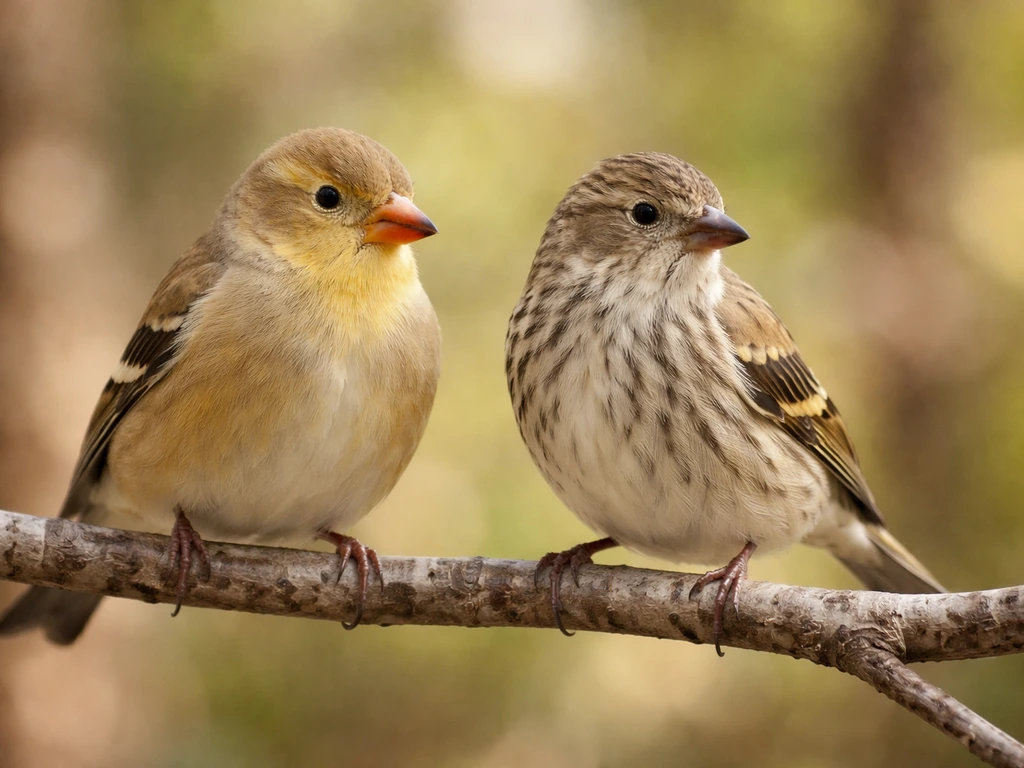
One practical reason to understand finch ornithology is that the word 'finch' in English covers a wide range of birds, and knowing which type you're looking at helps you find the right Hindi name and the right symbolic meaning. If you’re also searching for the geese bird meaning in hindi, you can read the related guide to understand how names and symbolism work together in Hindi कैसी भी शिक्षित हिंदी पाठक. Finches belong primarily to the family Fringillidae, but the term is applied loosely to several related families. Here's what ties them all together: they are small passerine (perching) birds, they have strong, cone-shaped bills adapted for cracking seeds, and most of them are capable singers.
- True finches (Fringillidae): includes House Finch, Goldfinch, Greenfinch — rarely seen across most of India but found in Himalayan regions
- Weaver Finches / Weavers (Ploceidae): includes बया (Baya Weaver) — very common across India, one of the most culturally recognized 'finch-type' birds
- Estrildid Finches (Estrildidae): includes मुनिया (Munias like Scaly-breasted Munia, Indian Silverbill) — common across India, popular as cage birds
- Buntings and sparrows: often confused with finches due to similar size and seed-eating habits; locally called चिड़िया (chiṛiyā)
If you spotted a small bird in India and are trying to find its Hindi name, the most likely candidates are the बया (if it was near an elaborate hanging nest), the मुनिया (if it was a small brownish or reddish bird, possibly in a cage or a flock in grassland), or just a गौरैया (gauraiyā, sparrow) if it was plain brown and near human habitation. A names-focused reference similarly treats “Munia/मुनिया” as a South Asian name linked to small colorful, finch-like birds blank" rel="noopener noreferrer">मुनिया (muniā). Each of these has its own set of cultural associations, so matching the bird correctly before looking up symbolism will give you a much more accurate reading. Other small birds on this site, such as the kingfisher and pigeon, follow a similar logic: the Hindi name and cultural meaning are most useful once you're confident about which species you're actually looking at. In Hindi, the word “pigeon” is often used alongside other birds in everyday meaning, so it helps to know the exact bird name and context. If you want the kingfisher bird in Hindi meaning, look for the common Hindi name used for the bird in your region.
Is a finch a good omen? Common questions answered
Yes, finches and finch-type birds in Indian tradition are generally considered positive omens. They are not associated with death, misfortune, or inauspicious events the way some other birds are in folk belief. A बया's nest near your home is actively considered auspicious, a sign of a stable, fertile household. Seeing or hearing मुनिया in a garden is simply a pleasant, cheerful sign, not a signal of anything ominous.
Does finch meaning differ by culture? Somewhat, yes. In Hindi folk tradition, the emphasis is on the bayā's industriousness and the muniā's companionship. In Hindi folk belief, this is why people ask for the puffin bird meaning in Hindi as well, often comparing how different birds symbolize different qualities. In Sanskrit literary tradition, the chaṭaka-type small bird shifts toward spiritual longing and singular devotion. In Punjabi folk culture, the small bird leans toward themes of freedom, youth, and longing. But across all of these, the bird is positive, none of the Indian linguistic traditions paint finch-type birds as bad omens or malevolent symbols.
How do you find the exact Hindi word for the finch you saw? Start with the bird's appearance. If it had a hanging woven nest, it's likely a बया (bayā). If it was a small reddish-brown bird in a flock or a cage, it's almost certainly a मुनिया (muniā). If it was a bright yellow-green bird in the Himalayas, it could be a true finch like the Yellow-breasted Greenfinch, sometimes called हरी फ़िंच (harī finch) in field guides. Matching the visual description to the species first will always give you a more useful and culturally accurate Hindi name than starting with the English word 'finch' alone.
FAQ
अगर मैं “finch” का सामान्य Hindi अर्थ “फिंच” ढूंढ रहा हूँ, तो किस परिस्थिति में “बया” या “मुनिया” इस्तेमाल करूँ?
Hindi में “फिंच” लिखने के साथ-साथ आप “बया” और “मुनिया” जैसे लोकल नामों से अधिक सटीक पहचान कर सकते हैं। अगर आपके पास तस्वीर है, तो पहले व्यवहार और संकेत देखें (जैसे बया का लटकता बुना हुआ घोंसला, या मुनिया का छोटे झुंड में रहना), फिर उसी अनुसार Hindi नाम खोजें, क्योंकि “फिंच” एक बड़ी फैमिली है और सबमें एक ही नाम नहीं चलता।
क्या “फिंच”, “फिन्च” और “फ़िंच” में कोई फर्क है, और सही स्पेलिंग कौन-सी मानी जाती है?
हाँ, “फिंच” बनाम “फिन्च” जैसी पुराने स्पेलिंगें कुछ पुराने टेक्स्ट में दिख सकती हैं, लेकिन आधुनिक स्कूल-वर्क, फील्ड नोटबुक या सोशल पोस्ट के लिए “फ़िंच” (नुक्ते के साथ) सबसे स्टैंडर्ड माना जाता है। नुक्ता (फ़) का असर यह है कि पढ़ने वाला इसे अंग्रेज़ी के “f” जैसा ध्वनि-समूह समझता है।
मैं “finch bird meaning in hindi” को बच्चों के लिए आसान भाषा में कैसे लिखूँ, और क्या यह पहचान की गलती कर सकता है?
अगर आप किसी बच्चे या गैर-विशेषज्ञ पाठ के लिए लिख रहे हैं, तो “छोटी गानेवाली चिड़िया” जैसी सरल परिभाषा ठीक रहती है। लेकिन पहचान में गलती से अर्थ की भी गलत व्याख्या हो सकती है, इसलिए प्रतीकात्मक अर्थ पढ़ने से पहले यह पक्का करें कि आप किस टाइप के पक्षी की बात कर रहे हैं (बया, मुनिया, या साधारण गौरैया जैसा लुक)।
क्या मैं “चिड़िया” कहकर फिन्च का अर्थ समझा सकता हूँ, या यह बहुत सामान्य है?
“चिड़िया” शब्द रोज़मर्रा में किसी भी छोटे पक्षी के लिए बोल दिया जाता है, इसलिए यह फिन्च-टाइप की गारंटी नहीं देता। अगर आपकी पोस्ट में “फिंच” के प्रतीकात्मक अर्थ का दावा है, तो बेहतर है कि आप “बया” या “मुनिया” जैसे अधिक विशिष्ट शब्दों का उपयोग करें, या कम से कम साफ करें कि पक्षी कौन-सा दिखा (रंग, आकार, झुंड, घोंसले का प्रकार)।
बीज खाने वाली छोटी चिड़िया का वर्णन पर्याप्त है, या मुझे किन संकेतों से सही finch-type पहचान करनी चाहिए?
बहुत बार लोग “seed-eating” के आधार पर निष्कर्ष निकालते हैं, लेकिन सही पहचान के लिए बिल के आकार के साथ-साथ व्यवहार भी देखें। फिन्च-टाइप में आमतौर पर बीज फोड़ने वाली शंकु-आकार की चोंच होती है, पर भारत में छोटे चिड़ियों के लुक से भ्रम हो सकता है, खासकर अगर पक्षी पालतू पिंजरे में हो। इसलिए, आप जिस क्षेत्र में दिखा (घर के पास, बगीचा, घास का मैदान, या जंगल किनारा) उसी के हिसाब से Hindi नाम मिलान करें।
अगर घोंसला दिखाई नहीं दे रहा है, तो “बया” मान लेना कब गलत हो सकता है?
कई लोग बया को “हर जगह” समान समझ लेते हैं, लेकिन वास्तव में बया का सबसे मजबूत पहचान-चिन्ह उसका लटकता, बुनावट वाला घोंसला है। अगर कोई छोटा पक्षी दिख रहा है पर घोंसला ऐसा नहीं है, तो उसे सीधे “बया” मानना गलत हो सकता है। संदेह में रहें तो “मुनिया” जैसे विकल्पों या साधारण “गौरैया” की तरफ तुलना करें।
“चटक” (chaṭaka) का मतलब finch से कैसे जुड़ता है, और क्या इसे एक ही प्रजाति समझना ठीक है?
अगर आप आध्यात्मिक या साहित्यिक अर्थ ढूंढ रहे हैं, तो “chaṭaka” का संदर्भ अक्सर “फिन्च जैसी छोटी गानेवाली चिड़िया” की भावधारा से जुड़ता है, पर यह हमेशा अंग्रेज़ी “finch” की exact species नहीं होता। इसका ध्यान रखें कि प्रतीक का केंद्र है, पक्षी की सही जैविक वर्गीकरण हमेशा नहीं।
क्या finch-type birds को सकारात्मक मानना हर स्थिति में शाब्दिक रूप से “शुभ भविष्य” की गारंटी है?
सिर्फ “positive omen” मानकर किसी एक घटना की व्याख्या तय कर लेना ठीक नहीं है। अगर आप कथा, तंत्र-लोकविश्वास या परंपरागत काव्य-प्रतीक पढ़ रहे हैं, तो बेहतर है कि आप उस संदर्भ को देखें जिसमें पक्षी दिखा (घोंसला घर के पास, या बगीचे में झुंड की मौजूदगी) और उसी अनुसार “औसत शुभ संकेत” वाली बात करें, निश्चित भविष्यवाणी जैसी नहीं।