
The phoenix bird in Hindi is most commonly called "फ़ीनिक्स" (Feeniksa), which is a direct transliteration of the English/Greek name. But the more meaningful Hindi equivalent you'll find in dictionaries is "अमरपक्षी" (Amarpakshi), which literally means "immortal bird." You'll also see it referred to as "मायापंछी" (Mayapanchhi), roughly "magical/illusory bird." In Marathi, the standard name is "फिनिक्स" (Finiks), again a transliteration, sometimes written as "फिनिक्स पक्षी" when speakers want to make clear they're talking about the legendary bird specifically. None of these are names for a real species, something worth flagging early because people searching Indian bird names sometimes expect a living creature. If you are also searching for real bird-name meanings in Hindi, you may want to look up the flamingo bird meaning in Hindi as well.
Phoenix Bird Meaning in Hindi: Name, Marathi, Tattoo Symbolism

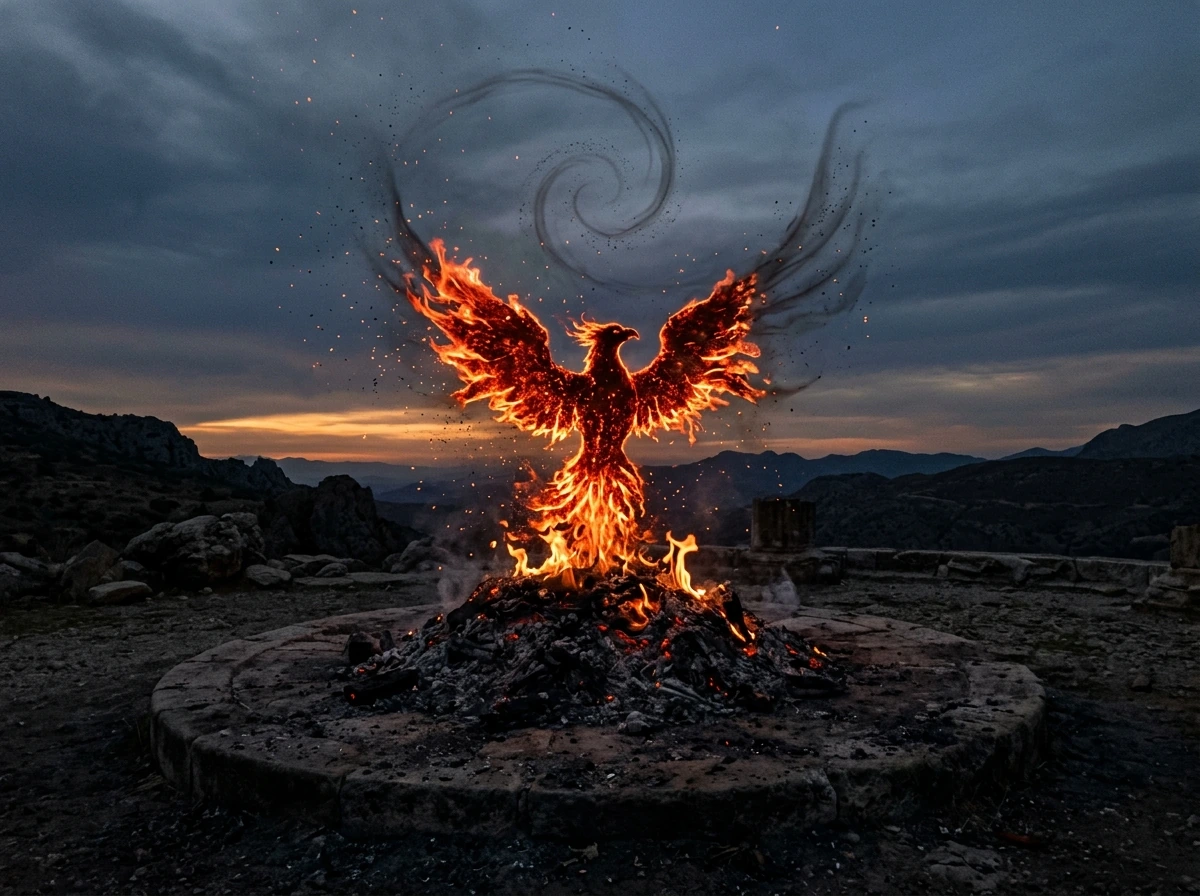
Phoenix bird names in Hindi
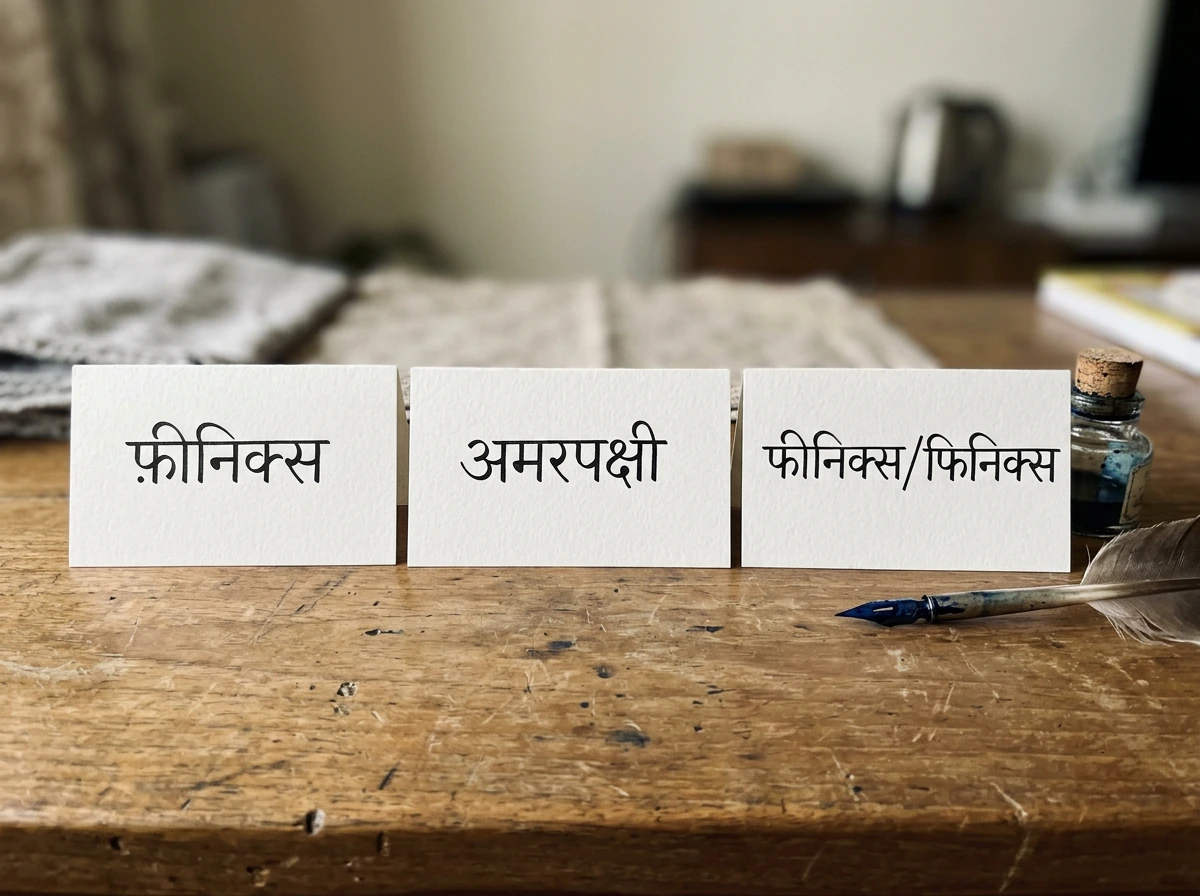
Hindi has essentially three ways to refer to the phoenix, and each tells you something different about how the language treats this mythological creature.
| Hindi Term | Script | Literal Meaning | Best Used When |
|---|---|---|---|
| Feeniksa / Finiks | फ़ीनिक्स | Transliteration of 'Phoenix' | General reference, modern usage, tattoo discussions |
| Amarpakshi | अमरपक्षी | Immortal bird | Explaining symbolism, spiritual or literary contexts |
| Mayapanchhi | मायापंछी | Magical/illusory bird | Mythological storytelling, folklore contexts |
| Agni Pakshi | अग्नि पक्षी | Fire bird | Describing the fire/burning aspect of the myth |
"फ़ीनिक्स" is what you'll type into a search bar or use in everyday conversation. "अमरपक्षी" is what you'd find in a Hindi dictionary entry or literary text. "मायापंछी" appears in the Hindi Wikipedia description of the creature, capturing the sense that it belongs to the world of myth and illusion. "अग्नि पक्षी" (Agni Pakshi, or fire bird) is another label that surfaces in Hindi astronomy and mythology contexts, where the phoenix is equated with the firebird concept. If you're writing a tattoo caption or explaining the bird's meaning to someone, "अमरपक्षी" or "अग्नि पक्षी" will communicate much more than "फ़ीनिक्स" alone.
Phoenix bird meaning in Marathi
In Marathi, the phoenix is consistently referred to as "फिनिक्स" or "फिनिक्स पक्षी." What's interesting is how Marathi popular culture has absorbed and used this creature. You'll find it on Marathi news sites like Navarashtra explaining the myth as: the bird senses its own death, builds a nest, bursts into flames, and then rises again reborn. Marathi Vastu and home decor content (like Webdunia Marathi) recommends placing a phoenix painting in specific directions of the home for prosperity, showing how the bird has moved from pure mythology into everyday Marathi household tradition.
Unlike Sanskrit-rooted Hindi terms like "अमरपक्षी," Marathi doesn't have a widely adopted native-language equivalent. Speakers simply say "फिनिक्स पक्षी" and explain the meaning in plain Marathi: "हा पक्षी जळतो आणि राखेतून पुन्हा जन्म घेतो" (This bird burns and is reborn from its ashes). The cultural resonance in Marathi is strong through the rebirth and resilience framing, especially in motivational and spiritual contexts.
What the phoenix actually symbolizes
The core mechanism of the phoenix myth is straightforward: the bird builds a nest of aromatic wood, sets itself on fire, burns completely to ash, and then a new phoenix (or a new egg) rises from those ashes. This cycle is what drives all its symbolic meanings. In Hindi popular-spirituality and Vastu contexts, the phoenix is explicitly described as a symbol of "अमरता, पुनरुत्थान, शक्ति और सौभाग्य" (immortality, resurrection, power, and good fortune). Those four Hindi words are a reliable shorthand for the bird's symbolic weight.
The rebirth-from-ashes story maps naturally onto Indian philosophical ideas about cycles of life, death, and renewal. The Hindi astronomy blog OSR frames it as the bird whose daily death and rebirth mirrors the rising and setting of the sun, which gives it a cosmic, almost universal quality. In Indian spiritual contexts, the phoenix's self-renewal resonates with concepts like punarjanma (पुनर्जन्म, reincarnation) even though the phoenix is not a Hindu mythological creature itself. This crossover is why the bird feels familiar and meaningful to Indian audiences despite being originally from Greek and Egyptian mythology.
- अमरता (Amarta): Immortality, because the bird never truly dies
- पुनर्जन्म (Punarjanma): Rebirth/reincarnation, the most cited symbolic meaning
- पुनरुत्थान (Punarutthaan): Resurrection, often used in more spiritual or literary Hindi
- नई शुरुआत (Nayi Shuruaat): New beginning, the everyday conversational framing
- शक्ति (Shakti): Power and inner strength
- सौभाग्य (Saubhagya): Good fortune, used in Vastu and home decor contexts
Phoenix tattoo meaning in Hindi
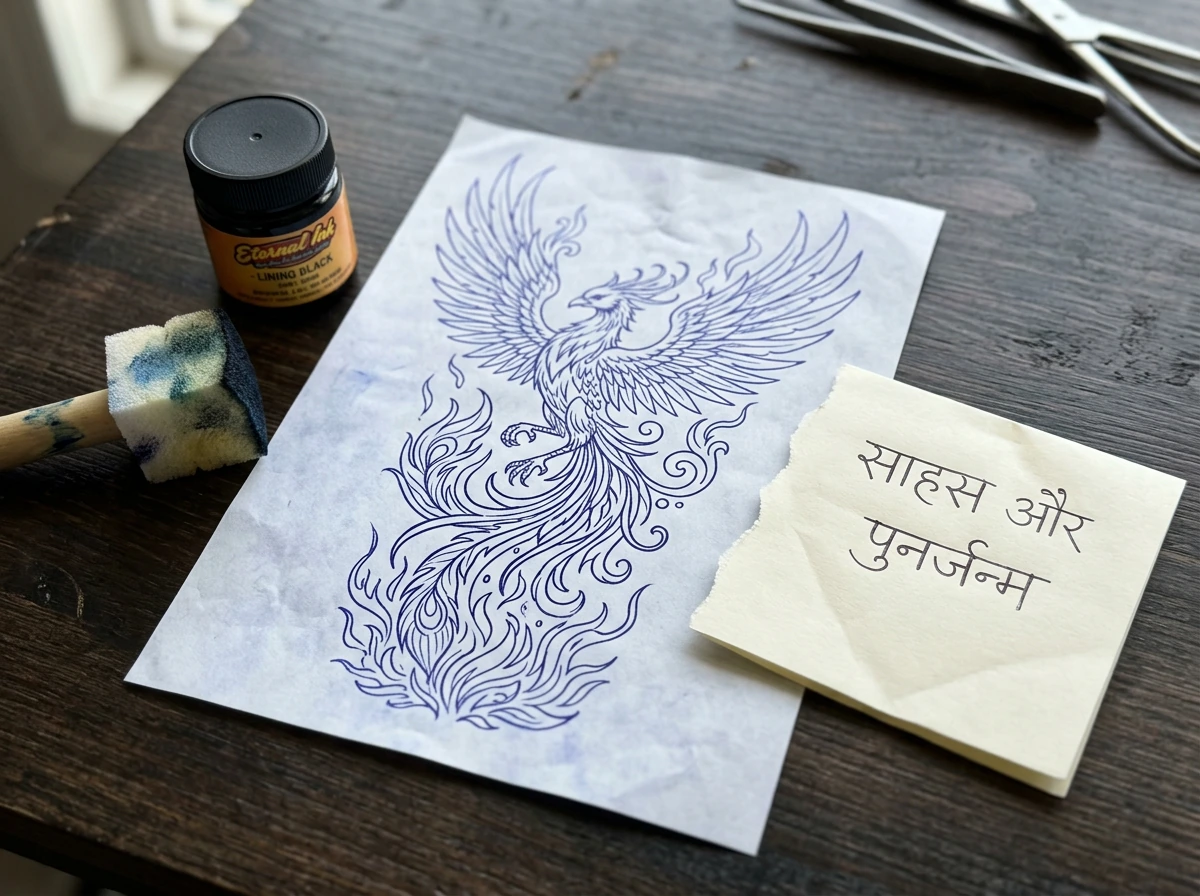
When someone searches "phoenix bird tattoo meaning in Hindi," they're usually looking for one of two things: either the Hindi phrase to write alongside or inside the tattoo design, or an explanation in Hindi of what a phoenix tattoo is supposed to convey. The answer to both comes down to the same core phrase: "पुनर्जन्म / नई शुरुआत" (Punarjanma / Nayi Shuruaat), meaning rebirth or new beginning. That combination is the standard way Hindi-speaking tattoo enthusiasts and artists explain phoenix tattoo symbolism.
If you're planning a phoenix tattoo and want a Hindi caption or inscription, here are the phrases that actually work in context, depending on the feeling you want to convey.
| Hindi Phrase | Transliteration | Meaning in English | Tattoo Context |
|---|---|---|---|
| पुनर्जन्म | Punarjanma | Rebirth / Reincarnation | Most universally understood, clean and direct |
| नई शुरुआत | Nayi Shuruaat | New beginning | Personal reinvention, starting over after hardship |
| राख से उठना | Raakh se uthna | Rising from the ashes | Literal poetic phrase, narrative tattoos |
| अमर हूँ मैं | Amar hoon main | I am immortal | Bold personal statement tattoos |
| अग्नि से जन्म | Agni se janm | Born of fire | Fire-themed phoenix designs |
"पुनर्जन्म" is the single most used Hindi word in phoenix tattoo discussions online. It's instantly recognizable and carries the right cultural weight because the concept of punarjanma is already deeply embedded in Indian religious thought. If you want something that feels both personal and rooted in Indian tradition, that's the word to go with. "राख से उठना" (rising from the ashes) is a beautiful phrase for a more narrative-style design, but make sure a native Hindi speaker checks the script before it's permanently inked.
How to phrase it in Hindi and Marathi
Here are ready-to-use sentences for different situations, whether you're explaining the phoenix to someone, writing about it, or searching for the right description.
In Hindi
- फ़ीनिक्स एक पौराणिक पक्षी है जो अपनी राख से दोबारा जन्म लेता है। (The phoenix is a mythological bird that is reborn from its own ashes.)
- अमरपक्षी को पुनर्जन्म और नई शुरुआत का प्रतीक माना जाता है। (The immortal bird is considered a symbol of rebirth and new beginning.)
- फ़ीनिक्स टैटू का अर्थ है पुनर्जन्म, शक्ति और जीवन में नई शुरुआत। (A phoenix tattoo means rebirth, strength, and a new beginning in life.)
- यह काल्पनिक पक्षी अमरता, पुनरुत्थान और सौभाग्य का प्रतीक है। (This imaginary bird is a symbol of immortality, resurrection, and good fortune.)
In Marathi
- फिनिक्स हा एक पौराणिक पक्षी आहे जो जळतो आणि राखेतून पुन्हा जन्म घेतो. (The phoenix is a mythological bird that burns and is reborn from its ashes.)
- फिनिक्स पक्षी हा पुनर्जन्म आणि नव्या सुरुवातीचे प्रतीक आहे. (The phoenix bird is a symbol of rebirth and new beginnings.)
- घरात फिनिक्स पक्ष्याचे चित्र लावणे सौभाग्य आणि शक्तीचे प्रतीक मानले जाते. (Placing a phoenix bird image in the home is considered a symbol of good fortune and strength.)
Common confusion to sort out
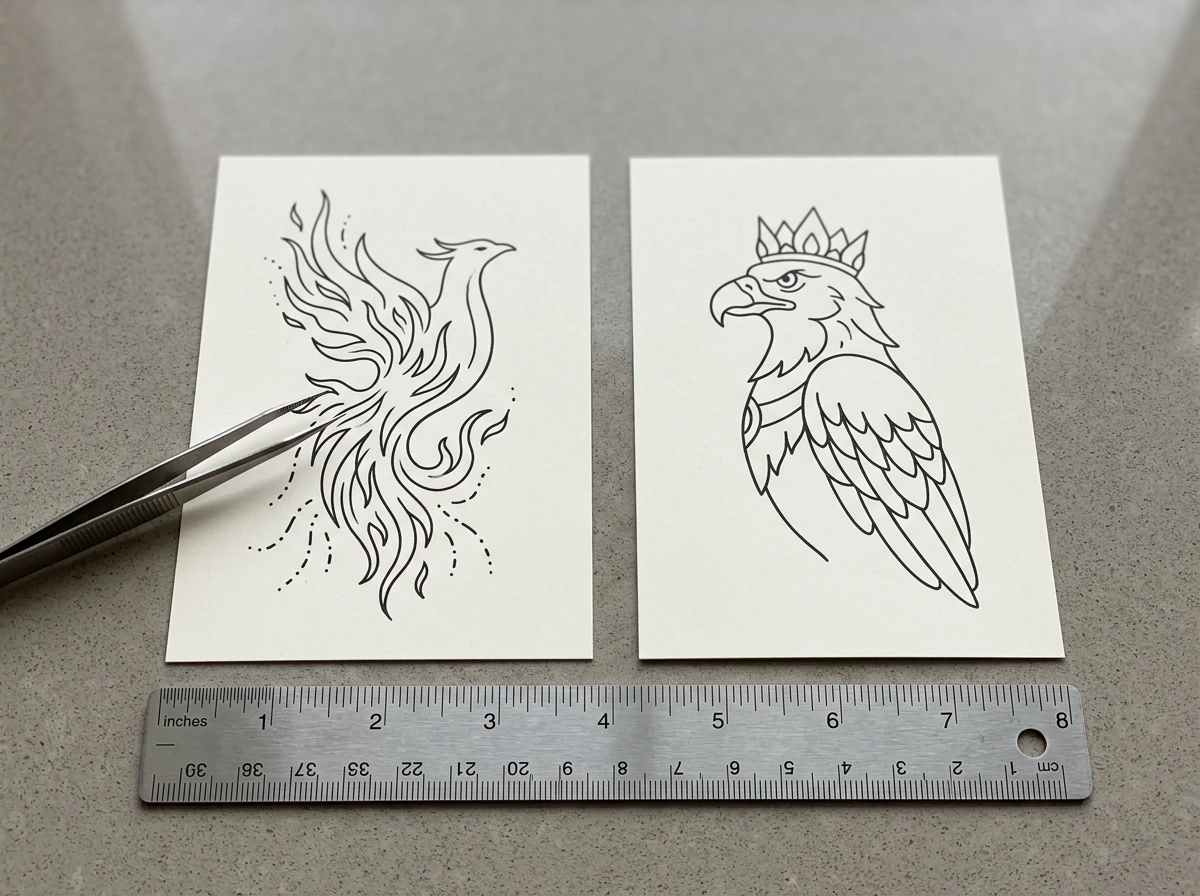
The phoenix causes a few specific mix-ups that are worth clearing up directly.
Phoenix vs. Garuda
The most common confusion in an Indian context is between the phoenix and Garuda (गरुड़), the great eagle of Hindu mythology who serves as Lord Vishnu's vehicle. Both are large, powerful, legendary birds, and both carry solar symbolism. But they are completely different creatures from different traditions. Garuda does not die and regenerate; he is a divine being with his own mythology, family, and role. The phoenix is from Greek and Egyptian tradition, with no direct equivalent in the Hindu pantheon. When people describe the phoenix as "India's Garuda," that's an analogy for symbolic purposes, not a factual equivalence.
Phoenix vs. the constellation
"Phoenix" in Hindi also refers to the Phoenix constellation (फ़ीनिक्स तारामंडल), a faint southern constellation. If you're searching in Hindi and getting astronomy results, that's the reason. The mythological bird and the constellation share a name, but they're entirely different topics. The constellation is visible from southern India and was formally named after the myth.
Phoenix vs. other rebirth birds
The phoenix is sometimes loosely compared to the Huma bird in Persian/Urdu tradition, another legendary bird associated with good fortune, royalty, and protection. Urdu speakers familiar with the Huma (ہُما) sometimes use it as a conceptual parallel to the phoenix, but the two are distinct: the Huma is not specifically a fire or rebirth bird in its own tradition. Similarly, some Indian texts reference the "Bherunda" (a two-headed mythical bird) or the "Chakora" in purely symbolic contexts, but none of these are equivalents of the phoenix. If you're exploring related mythological birds in Indian languages, our coverage of birds like the bird of paradise meaning in hindi touches on how legendary and real birds intersect in Indian cultural vocabulary. bird of paradise meaning in hindi
Is the phoenix a real bird?

No, and this matters practically. Unlike entries for the partridge, pheasant, or plover in Hindi the pheasant bird meaning in hindi article explains a real bird name, but the phoenix has no living species equivalent. If you’re also wondering about real bird names like partridge bird meaning in Hindi, that’s a different (literal) kind of entry than the phoenix’s myth-only equivalent partridge, pheasant, or. When Hindi dictionaries give "अमरपक्षी" as a translation, they are giving you a semantic equivalent for a mythological concept, not a species name. If someone asks you "फ़ीनिक्स को हिंदी में क्या कहते हैं?" (What do you call the phoenix in Hindi?), the honest answer is: "अमरपक्षी" as a meaning-equivalent, and "फ़ीनिक्स" as the name everyone actually uses.
FAQ
“phoenix bird meaning in hindi” पूछने पर “फ़ीनिक्स” और “अमरपक्षी” में कौन सा सही है?
हाँ, दोनों के बीच फर्क समझना ज़रूरी है। “अमरपक्षी” (मिथक के लिए अमर/immortal bird वाला अर्थ) और “फ़ीनिक्स” (नाम की तरह इस्तेमाल होने वाला transliteration) दोनों शब्द phoenix के लिए आते हैं, लेकिन “फ़ीनिक्स” आम बोलचाल में ज़्यादा, और “अमरपक्षी” अर्थ बताने में ज़्यादा काम आता है।
Phoenix tattoo के लिए हिंदी caption में “पुनर्जन्म” और “राख से उठना” में क्या अंतर है?
टैटू की भाषा चुनते समय शब्द नहीं, भावना मैच करें। अगर आप rebirth theme लिखना चाहते हैं तो “पुनर्जन्म” सबसे कॉमन और पढ़ने में आसान विकल्प है। अगर आपकी design ज्यादा storyline वाली है, “राख से उठना” अच्छा रहता है, लेकिन सही spelling और गद्य-शैली के लिए किसी native speaker से आख़िरी बार जाँच कराना बेहतर है।
टैटू में “अग्नि पक्षी” लिखूँ या “अमरपक्षी”, कौन सा ज्यादा उपयुक्त रहेगा?
“अग्नि पक्षी” आम तौर पर आग और solar myth imagery पर ज़ोर देता है, इसलिए यह fire-themed tattoo या मजबूत energy वाले symbolism के साथ बेहतर जाता है। “अमरपक्षी” immortality और resurrection के भाव के लिए ज़्यादा सीधा है, खासकर अगर caption में “अमरता” वाला framing चाहिए।
क्या phoenix को हिंदी में गरुड़ कहा जाता है?
ऐसा कई लोग गलती से “Garuda” या “गरुड़” मान लेते हैं, क्योंकि दोनों में पक्षी, शक्ति, और solar symbolism जैसी बातें दिख सकती हैं। Garuda विष्णु का वाहन है और उसकी खुद की अलग mythological पहचान है, जबकि phoenix की कहानी मृत्यु और पुनर्जन्म वाले cycle पर आधारित है, वह ग्रीक और मिस्र परंपराओं से जुड़ा माना जाता है।
अगर हिंदी search में “Phoenix तारामंडल” आ रहा है, तो इसका मतलब phoenix पक्षी वाला उत्तर गलत है?
नहीं। “फ़ीनिक्स तारामंडल” अलग चीज़ है, यह एक constellation है। अगर आपके search results में astronomy वाले पेज दिख रहे हैं, तो संभव है कि लोग “phoenix” नाम की वजह से तारामंडल भी जोड़कर दिखा रहे हों, इसलिए “mythological bird” या “tattoo meaning” जैसे शब्द साथ में जोड़ें।
क्या “अमरपक्षी” किसी असली भारतीय पक्षी का नाम है?
अगर आपका उद्देश्य असली “भारतीय पक्षी नाम” ढूंढना है, तो phoenix मदद नहीं करेगा क्योंकि यह किसी living species का नाम नहीं है। आप “अमरपक्षी” को concept-equivalent की तरह इस्तेमाल कर सकते हैं, लेकिन उसे वास्तविक पक्षी की तरह मत समझिए।
हिंदी और मराठी में spelling और उपयोग कैसे अलग हो जाते हैं?
भाषा-स्विच में यह ध्यान रखें कि लिखित रूप में “फिनिक्स” और “फ़ीनिक्स” spelling में अलग दिख सकते हैं, पर अर्थ वही रहता है (transliteration)। अगर आप Marathi context चाहते हैं तो “फिनिक्स पक्षी” natural लग सकता है, जबकि Hindi में “फ़ीनिक्स” ज्यादा common entry टाइपिंग के लिए रहती है।
सिर्फ “पुनर्जन्म” लिखने से caption पूरा माना जाता है या उसे संदर्भ के साथ रखना चाहिए?
अक्सर लोग केवल “पुनर्जन्म” लिख देते हैं और संदर्भ गायब रहता है। बेहतर यह है कि design में concept clear हो, जैसे “पुनर्जन्म” के साथ “राख से” या “नई शुरुआत” जैसी लाइन जोड़कर rebirth narrative को तुरंत समझा दिया जाए।
क्या phoenix के लिए Huma या अन्य भारतीय-क्षेत्रीय पक्षियों जैसी सीधी तुलना सही रहती है?
हाँ, कई भाषाओं में related legendary birds मिलते हैं, लेकिन direct equivalent नहीं होते। Huma (हُमा) जैसे parallel concepts में good fortune या protection की थीम हो सकती है, पर phoenix की distinctive fire-and-regeneration कहानी उसका default हिस्सा नहीं मानी जाती, इसलिए symbolism mix करते समय सावधानी रखें।

Bird of paradise meaning in Hindi: name of the bird and flower, plus Tamil meaning and how to avoid confusion.

bird peck meaning in Hindi: pecking, pecks at, pecked action और वाक्य उदाहरण, साथ ही शब्द चयन व tense guide

પપિહા પક્ષીનું ગુજરાતી અર્થ, કયું પક્ષી કહેવાય છે, તેની ઓળખ કેવી રીતે કરવી અને મોનસૂન-પ્રતીકો શું દર્શાવે છે