
The Hindi word for 'bird' is पक्षी (pakṣī), written in Devanagari script. That is the direct answer. If you came here to find the exact spelling, pronunciation, and a bit of context about when and how this word is used, you are in the right place. This guide also covers the Sanskrit root, common everyday variants you will actually encounter in speech and texts, and a few practice tips so you can reproduce the word confidently on your own.
How to Write Bird in Hindi and Sanskrit in Devanagari

Rajesh Sharma
10 Apr 2026
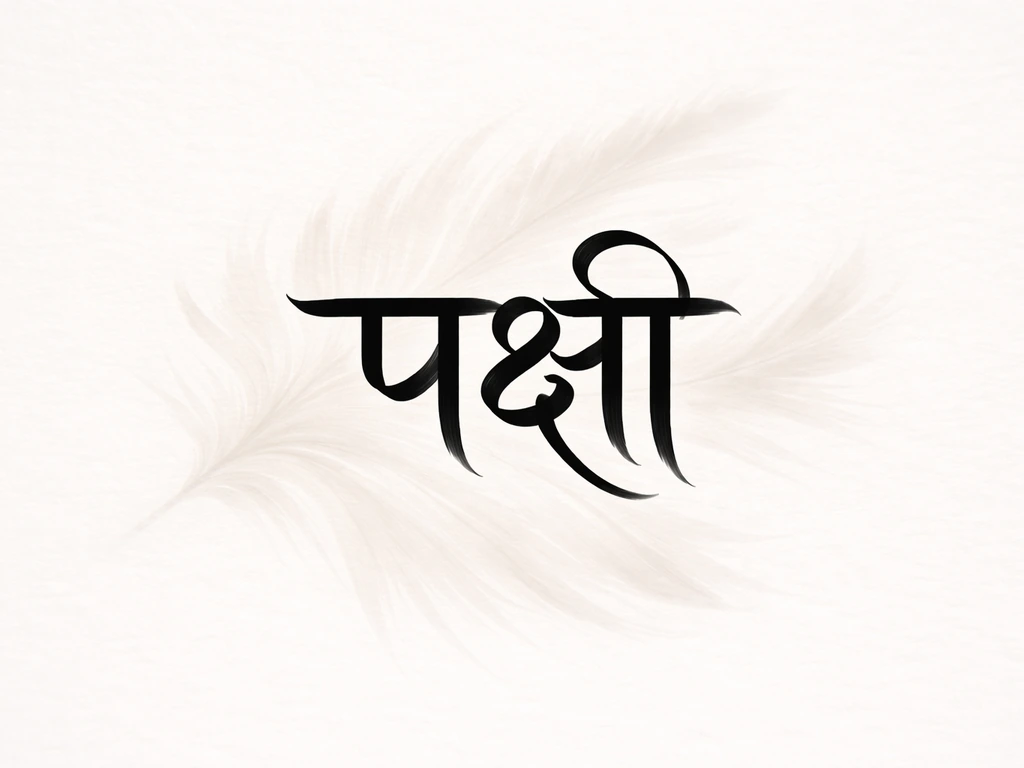
Hindi word for 'bird': Devanagari, pronunciation, and spelling
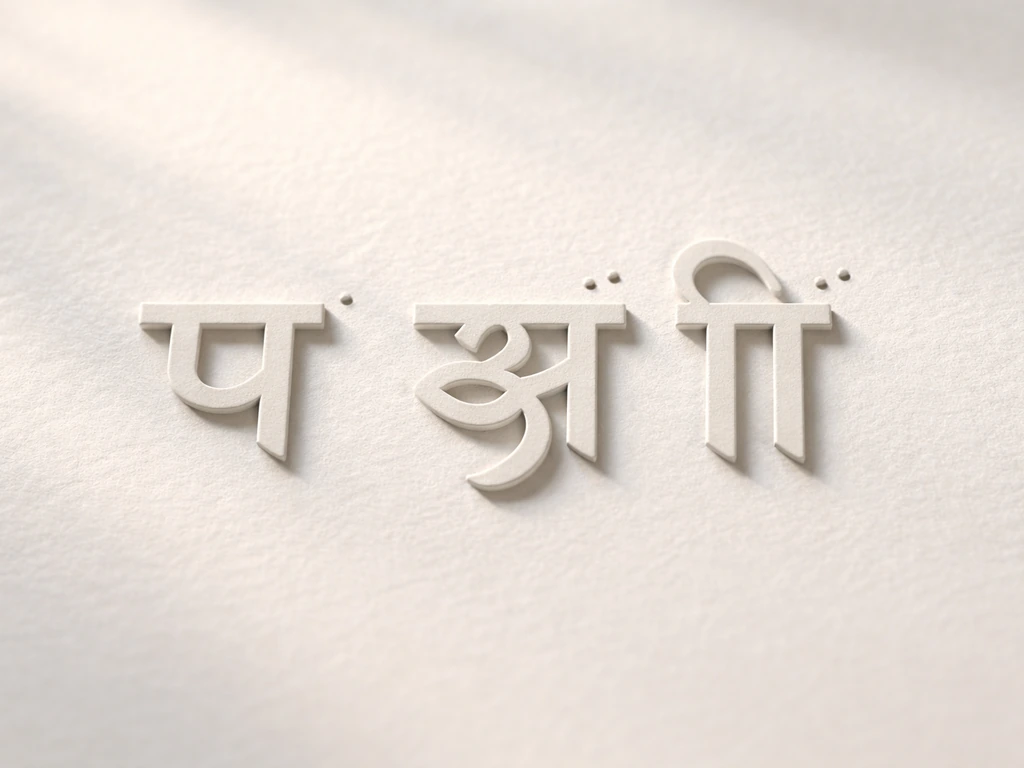
In standard Hindi, 'bird' is written as पक्षी and romanized as pakṣī. The IPA pronunciation is /pək.ʂiː/, with an alternate rendering of [pɐk.ʃiː] in some regional accents. Breaking it down: 'pak' rhymes roughly with the English word 'puck', and 'ṣī' is a long 'ee' sound, made with the tongue curled slightly back (a retroflex fricative). So the whole word sounds something like 'puk-SHEE', with the stress falling on the second syllable. Multiple cross-dictionary sources, from Collins English-Hindi to learner vocabulary lists, confirm पक्षी as the standard written form. If you are copying it into a document or flashcard, that Devanagari spelling is the one to use.
One quick clarification worth making: when people search for 'how to write bird in Hindi,' they sometimes mean 'how do I draw or sketch a bird?' This article is about the linguistic sense, specifically how to write the word 'bird' in Hindi script (Devanagari). If you needed the script spelling for a language class, a cultural project, or just personal curiosity, you are covered.
Sanskrit word for 'bird': the classical root
The Sanskrit word for 'bird' is also written पक्षी (or its earlier form पक्षि, pakṣi), and it sits at the etymological root of the Hindi word. Hindi inherited पक्षी directly from Sanskrit, which is why the spelling is virtually identical. In classical Sanskrit, the form पक्षि (pakṣi) appears prominently in texts like the Ramayana and Mahabharata as a straightforward noun meaning 'a bird.' The IPA for the Sanskrit form is /pɐk.ʂiː/, almost indistinguishable from the Hindi pronunciation. The literal meaning of the root is 'one who has wings' (pakṣa = wing/side), which connects beautifully to the idea of a winged creature.
One thing to keep in mind when practicing Sanskrit spellings: Sanskrit words frequently appear in compounds and sentence contexts where sandhi (sound combination rules) changes how letters are written at word boundaries. Visarga (ः), for example, is very common at the ends of Sanskrit words, and its pronunciation and written form shift depending on the sound that follows. While पक्षी itself does not end in a visarga, learners working through Sanskrit bird vocabulary will quickly run into this feature, so knowing that visarga behaves differently before different consonants and vowels is genuinely useful.
Common usage variants: which word fits which situation
Hindi is rich with synonyms for 'bird,' and knowing which one to use (or recognize) in which context makes a real difference. पक्षी is the formal, standard, and most universally understood term, the one you will find in textbooks, official writing, and news media. But spoken Hindi and literary Hindi each have their own preferred vocabulary. Here is a practical breakdown:
| Word (Devanagari) | Romanization | Register / Context |
|---|---|---|
| पक्षी | pakṣī | Formal, standard Hindi; textbooks, dictionaries, official writing |
| चिड़िया | ciṛiyā | Everyday colloquial Hindi; used for a small or generic bird in daily speech |
| पंछी | pãchī | Poetic and folk usage; common in songs, proverbs, and rural speech |
| परिंदा / परिन्दा | parindā | Urdu-influenced Hindi; common in film, music, and casual conversation |
| खग | khag | Classical/literary Hindi and Sanskrit poetry; rarely used in speech |
| विहंग / विहंगम | vihaṅg / vihaṅgam | Poetic, literary; evokes a soaring or graceful bird in verse |
| पखेरू | pakherū | Folk and dialectal; used in rural or Awadhi/Bhojpuri-influenced speech |
| पंखी / पाँखी | pãkhī / pāṃkhī | Dialectal variant; heard in Rajasthani and Braj-influenced Hindi |
In everyday spoken Hindi, you are most likely to hear चिड़िया for a small bird and पक्षी in more formal contexts. The word चिड़िया is so embedded in daily life that it shows up in compound words: 'Chidiya Ghar,' for instance, is the common Hindi term for a zoo (literally 'house of birds/animals'). If you are building a sentence like 'the bird is sitting on the tree in Hindi', you would most naturally use either पक्षी or चिड़िया depending on the register you are going for.
For less common or borrowed birds, the formal term is usually the safest bet. If you are curious about a specific species, the formal term often provides the clearest communication. For example, understanding what a turkey bird is called in Hindi shows how species-specific names diverge from the general word for 'bird' entirely.
Birds in Indian culture: quick symbolism you should know

In Indian traditions, birds are far more than animals. They are messengers, metaphors, divine vehicles, and omens. The Garuda, a giant eagle-like being, is the vahana (mount) of Vishnu and represents freedom, power, and protection from fear. The Suparṇākhyāna, one of the oldest Sanskrit texts, is essentially 'the chapter of the bird,' centering on Garuda's quest to win freedom for himself and his mother. This mythological weight is why the word पक्षी carries more cultural resonance in Sanskrit literature than a plain English 'bird' ever could.
The hamsa (हंस), often translated as swan or goose, holds a particularly special place. It is described in classical texts as a bird of wisdom and discernment, sacred in both Hindu and Buddhist traditions. The Nadabindu Upanishad opens with a direct metaphor comparing the Atman (the Self) to a hamsa bird, a strikingly poetic way to convey the idea of consciousness moving freely through existence. Even the concept of the mind itself has a Sanskrit bird-term: Manaḥ-Pakṣī, literally 'the bird of the mind,' from yogic literature.
Folk traditions add another layer. The Indian roller, for example, is considered auspicious in several regions, with sightings treated as omens of good fortune. [The Pancha Pakshi Shastra, a traditional system of divination historically used by Hindu astrologers in southern India](https://en. wikipedia.
org/wiki/PanchaPakshiShastra), assigns each person a 'bird' (pakṣi) based on birth details, and that bird governs auspicious and inauspicious periods throughout the day. This is why the phrase India is a golden bird (Sone ki Chidiya) carries such deep cultural weight: it fuses the symbolism of birds with the country's legendary wealth and historical glory.
If you want to go deeper into how terminology works for less familiar species, exploring exotic bird meanings in Hindi is a natural next step from here.
Practice tips: how to write, memorize, and check your pronunciation
Getting पक्षी into muscle memory takes a bit of deliberate practice, but the word is short enough that a few focused sessions will do it. Here is what actually works:
- Copy the Devanagari character by character: प (pa) + क्ष (kṣa, a conjunct consonant combining क and ष) + ी (long ī vowel mark). Writing it as three components helps you understand the structure rather than just memorizing a visual shape.
- Use the IPA as your pronunciation anchor: /pək.ʂiː/. The dot in the middle marks syllable division. 'pək' is the short first syllable, and 'ʂiː' is the long second syllable with the retroflex sound. Practice saying it slowly, then at natural speed.
- Cross-check your spelling using a reliable dictionary. Wiktionary's entry for पक्षी shows the IPA alongside the Devanagari, and their IPA key explains every symbol if you are new to reading IPA notation. Collins English-Hindi and Translate.com both confirm the same spelling as a cross-verification point.
- Practice recognition in context, not just isolation. Search for पक्षी in a Hindi news headline or a song lyric, and try reading it in flow. This trains your eye to spot it in connected text.
- For the Sanskrit form, write पक्षि (without the long ī ending in some classical contexts) and say it aloud. Then compare with पक्षी. The difference is subtle, but noticing it builds genuine literacy.
- Use spaced repetition flashcard apps (Anki is popular) with the card front showing 'bird' in English and the back showing पक्षी with the IPA. Adding an audio clip from a native speaker recording helps lock in the pronunciation.
One practical note on the conjunct consonant क्ष: this is one of the trickier Devanagari combinations for new learners because it looks like a single unfamiliar character. It is worth spending a few minutes just writing क्ष on its own until it feels natural, because you will encounter it in many Hindi and Sanskrit words, not just पक्षी.
Where to go next: other bird names across Indian languages
Once you have पक्षी solid, the logical next step is expanding into specific bird names and regional language variants. The same root pakṣī appears in Marathi (पक्षी), Gujarati (પક્ષી), and is recognizable across most languages that draw from Sanskrit. Punjabi tends to use ਪੰਛੀ (pañchī), which is closer to the folk Hindi variant पंछी. These cross-language connections make it much easier to learn bird vocabulary in multiple Indian languages simultaneously rather than starting from scratch each time.
For species-specific names, the divergence gets more interesting and sometimes surprising. Working through a reference that covers terminology in Hindi, Sanskrit, Marathi, Punjabi, and Gujarati side by side is the most efficient approach. Start with common birds you already know in English, find their Hindi (पक्षी-class) names, and then look up the Sanskrit classical name if one exists. Many species have both a Sanskrit literary name and a modern colloquial Hindi name, and knowing both opens up a lot of classical literature and poetry that would otherwise stay closed.
The vocabulary of Indian birds is genuinely vast, and the cultural layer that sits on top of the language is what makes it worth exploring deeply. Whether you came here for a school assignment, a translation project, or pure curiosity about Indian languages and traditions, you now have the core word, the right script, a pronunciation guide, and a clear sense of where to take it from here.
FAQ
When should I use पक्षी versus चिड़िया in Hindi?
If you are writing the English word “bird” in a sentence, “पक्षी” works in formal and general contexts, while “चिड़िया” is more common for a small bird in everyday speech. For “the bird is sitting on the tree,” you will usually choose “पक्षी” for a neutral/formal tone, and “चिड़िया” for a more natural, childlike or casual tone.
What is the most common spelling mistake people make when writing “bird” in Hindi?
In Devanagari, the word is not written as “पक्शी” with an extra “ा” or “ि”. The correct spelling is पक्षी, with the conjunct क्ष forming “kṣ”, and the vowel marker “ी” giving the long “ee” sound at the end.
How do I verify my Devanagari writing for पक्षी is correct?
If you are copying handwritten Devanagari, focus on the conjunct क्ष as a unit, then add the final vowel sign “ी”. A helpful check is the last sound should be long “ee” (written by “ी”), so anything that ends like “पक्षि” will sound wrong in this case.
My keyboard typing “pakshi” sometimes shows a different Hindi spelling. How should I correct it?
If your input method gives you only “pakshi,” Devanagari conversion may produce “पक्षि” depending on settings. Make sure it outputs “पक्षी” (ending with “ी”), not “पक्षि” (ending without the long “ee” vowel sign).
How should I transliterate पक्षी so the pronunciation stays right?
For transliteration, the most learner-safe form is “pakṣī” (or “pakshi” without the diacritic for simple typing). The important part to preserve is the long “ī” at the end, because that corresponds to “ी” in Devanagari.
Will पक्षी look different in Sanskrit sentences because of sandhi?
If you need the word in Sanskrit-style spelling in a context where sandhi applies, the internal letters of पक्षी usually stay the same, but endings in compounds and sentences can change adjacent sounds. This is why the standalone dictionary form may look different from what you see in full lines of text.
How do I write bird-related idioms or titles in Hindi using पक्षी correctly?
If you are translating a phrase like “bird of peace” or “bird of wisdom,” do not assume you must translate word-for-word. Often you keep पक्षी as “bird” but adapt the modifier as an adjective or genitive phrase, so the best next step is to find the established Hindi phrasing used for that fixed expression.
What practice method helps me memorize पक्षी faster?
If your goal is to practice handwriting, spend a few minutes separately on क्ष and then immediately practice पक्षी at normal speed. Many learners get stuck because they only practice the full word once, instead of building the conjunct first, then joining it smoothly with “ी”.
In Devanagari typography, how should the vowel “ी” attach in पक्षी?
For calligraphy or printing, make sure the “ी” vowel sign is placed with the correct attachment to the base consonant cluster, and not written as a standalone vowel character. The visual attachment is what signals it modifies the final consonant of the cluster.
Next Articles
What Is Turkey Bird Called in Hindi and Marathi
Hindi and Marathi names for turkey bird in Devanagari, with spelling, pronunciation tips, and common translation confusi

India Is Golden Bird: Meaning, Origins, and Evidence
Explains why India is called the golden bird, its origins, who used it, meanings, and how to verify sources today.
Bird Beak Meaning in Hindi: Chonch, Bill, Pronunciation
Bird beak in Hindi chonch or bill, pronunciation, examples, beak vs bill differences, and figurative Hindi use