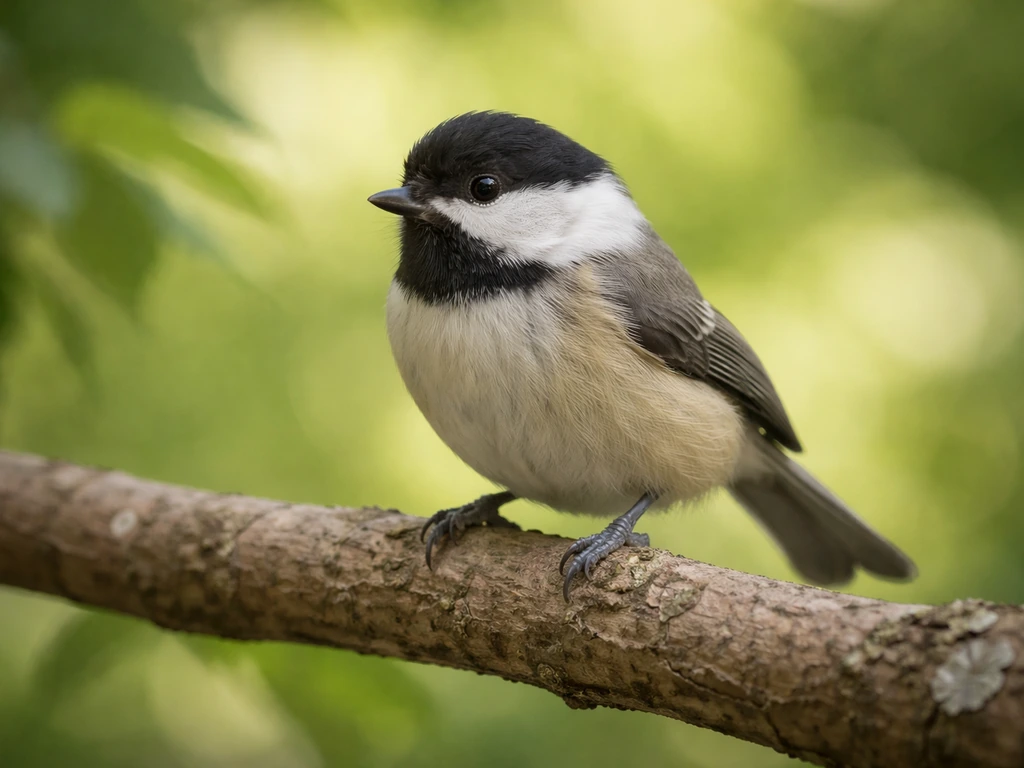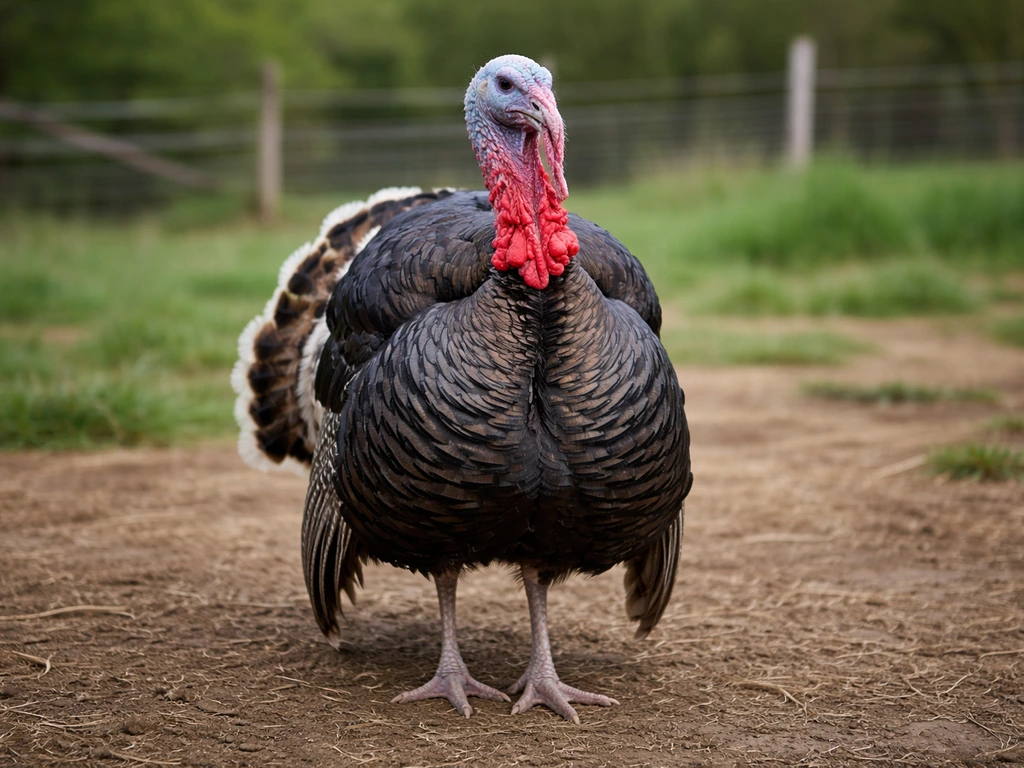
In Hindi, 'exotic bird' is most naturally said as 'विदेशी पक्षी' (videshi pakshi), which literally means 'foreign bird.' Depending on what you actually want to express, you might also say 'दुर्लभ पक्षी' (durlabh pakshi) for a rare bird, 'अनोखा पक्षी' (anokha pakshi) for an unusual or striking one, or 'अद्भुत पक्षी' (adbhut pakshi) when you want to convey something that looks almost miraculous. Each of these carries a slightly different shade of meaning, so the right phrase depends on whether you mean the bird comes from a faraway place, is hard to find, or simply looks extraordinary.
Exotic bird meaning in Hindi: translation and symbolism

Rajesh Sharma
4 May 2026
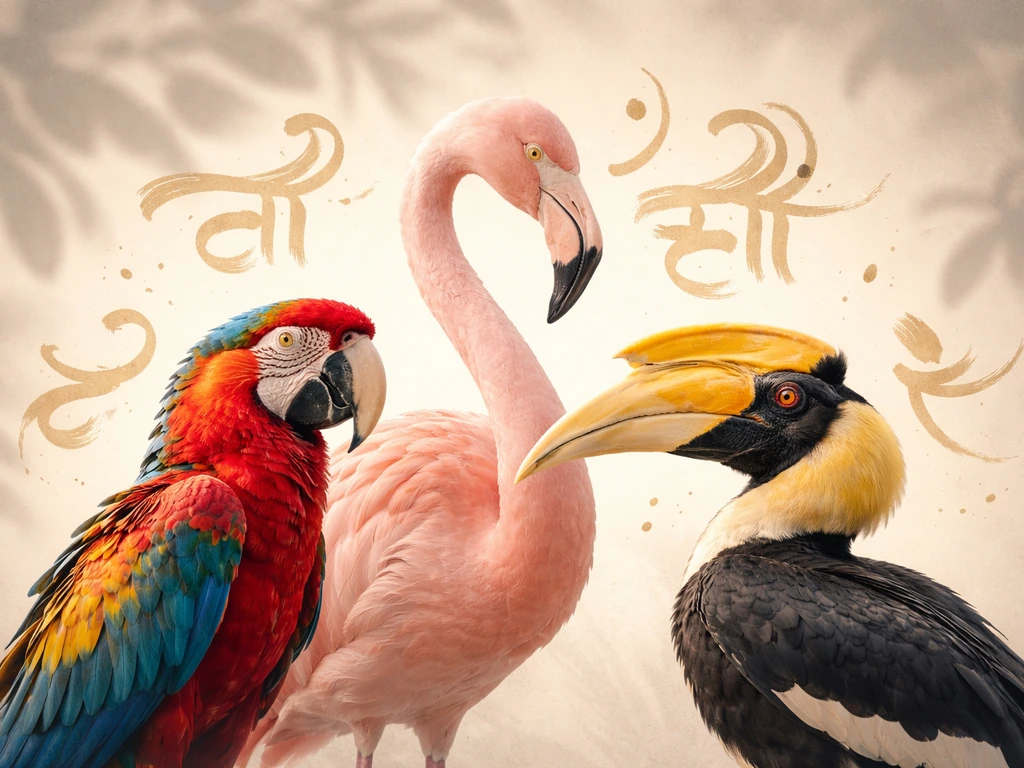
The actual Hindi translation: what to say in real conversation

The word 'exotic' in English bundles together two ideas: foreign origin and unusual appearance. Hindi splits these into separate words, which is why there is no single perfect one-to-one translation. In everyday speech and in Hindi news media, 'विदेशी पक्षी' (videshi pakshi) is the most common and immediately understood phrase.
You will see it in newspaper headlines about migratory birds visiting Delhi or Bharatpur, and in official or legislative contexts discussing registration rules for 'विदेशी प्रजाति के पक्षी' (videshi prajati ke pakshi), meaning birds of a foreign species. Wild Life (Protection) Act, 1972 के Section 49D में “Convention”, “export”, “import”, “species”, “specimen”, “trade” जैसे परिभाषात्मक शब्द दिए गए हैं, जो विदेशी और आयात-निर्यात/ट्रेड-प्रसंग में टर्मिनोलॉजी समझने में मदद करते हैं। विदेशी प्रजाति के पक्षी.
If someone asks you what a macaw or a cockatoo is called in Hindi, the most honest answer starts with: it is a 'विदेशी पक्षी. '
For written or slightly more formal Hindi, 'अनोखा पक्षी' (anokha pakshi) works beautifully when the emphasis is on how strikingly different the bird looks rather than where it is from. The word 'अनोखा' means something never seen before, unique, one of a kind. Similarly, 'अद्भुत पक्षी' (adbhut pakshi) leans into a sense of wonder and astonishment, closer to 'marvellous bird' than simply 'foreign bird.' Both show up in literary Hindi and in bird-watching coverage.
Literal meaning vs. that 'exotic' vibe: the nuance you need to know
Here is where it gets interesting. When an English speaker says 'exotic bird,' they usually mean one of two things: (1) a bird from a tropical or faraway country that looks nothing like local birds, or (2) something so bizarre and colourful it seems almost alien. Hindi handles these two feelings differently.
| Hindi phrase | Transliteration | Core feeling | Best used when... |
|---|---|---|---|
| विदेशी पक्षी | videshi pakshi | Foreign / from outside India | The bird's origin is the point (migratory birds, pet parrots from South America, etc.) |
| दुर्लभ पक्षी | durlabh pakshi | Rare / hard to find | The bird is uncommon, not necessarily foreign (e.g., a Great Indian Bustard) |
| अनोखा पक्षी | anokha pakshi | Unusual / striking / one of a kind | The bird's appearance or behaviour is the surprise |
| अद्भुत पक्षी | adbhut pakshi | Wondrous / astonishing | Literary or poetic contexts; conveys awe |
| विचित्र पक्षी | vichitra pakshi | Strange / odd / peculiar | The bird seems strange or even slightly unsettling, not just foreign |
Notice that 'विचित्र पक्षी' (vichitra pakshi) sits at the 'weird/odd' end of the scale rather than the 'glamorous/tropical' end. If you describe a peacock as 'विचित्र पक्षी,' it sounds like you find it bizarre rather than beautiful. For a peacock, 'अद्भुत पक्षी' or 'अनोखा पक्षी' is far more appropriate. Getting this nuance right matters a lot, especially if you are writing or speaking about a specific bird in a cultural or spiritual context.
Common Hindi words and phrases actually used for unusual or foreign birds

Beyond the single-word translations, here are the real phrases you will encounter in Hindi conversations, news articles, and wildlife content when people are talking about birds that are not local or not commonly seen.
- विदेशी पक्षी (videshi pakshi): the standard, go-to phrase for any non-native or imported bird
- विदेशी परिंदे (videshi parinde): a more poetic variant; 'परिंदे' (parinde) is a warmer, more colloquial word for birds often used in Hindi literature and film
- विदेशी प्रजाति के पक्षी (videshi prajati ke pakshi): formal/official usage, meaning 'birds of a foreign species,' as seen in wildlife protection regulations
- दुर्लभ किस्म का पक्षी (durlabh kism ka pakshi): 'a rare variety of bird,' used when rarity is the focus rather than foreign origin
- अनोखी प्रजाति का पक्षी (anokhi prajati ka pakshi): 'a bird of an unusual species,' works well for conservation writing
- प्रवासी पक्षी (pravasi pakshi): 'migratory bird,' a very specific and widely used term for birds that visit India seasonally from other countries
One thing worth knowing: if you are looking up a specific bird's Hindi name, say a flamingo or a toucan, those birds have their own dedicated Hindi names or transliterations that are far more precise than any general 'exotic bird' label. For instance, flamingo is often written as 'फ्लेमिंगो' in Hindi media, while the more indigenous word 'राजहंस' (rajhans) is sometimes used but technically refers to the goose or swan in classical Sanskrit. Getting the exact bird name right makes a real difference when you are researching symbolism.
How 'exotic' birds are seen in Indian mythology and culture
Indian traditions have always treated unusual birds as carriers of deep meaning. The idea that a rare or foreign bird is somehow special, lucky, or spiritually significant runs through Sanskrit literature, folk stories, and regional mythology. The Garuda, the divine eagle of Hindu mythology, is the ultimate 'extraordinary bird': enormous, golden, capable of flying across worlds. He is not labelled as foreign, but he is absolutely extraordinary, 'अद्भुत' in every sense.
Folk idioms add another layer. The phrase 'सोने की चिड़िया' (sone ki chidiya), meaning 'golden bird,' has long been used to describe something of extraordinary value, a lucky find, a rare treasure. India itself was famously called 'सोने की चिड़िया' to describe its legendary wealth. When a rare or exotic-looking bird appears in this cultural framework, it naturally carries connotations of good fortune, spiritual significance, or unusual power. This is why in many Indian villages, spotting an unfamiliar bird sparks curiosity about its name and omen rather than just its species.
Classical Sanskrit and Hindi poetry also celebrate birds like the 'मयूर' (mayur, peacock), 'कोकिल' (kokil, Indian cuckoo), and the mythical 'हंस' (hans, swan) as symbols of beauty, wisdom, and devotion. These are not foreign birds, but in literary tradition they carry an 'exotic' quality in the sense of being extraordinary and set apart from the ordinary world. When you encounter a truly foreign bird in Indian tradition, such as a parrot from a distant land appearing in a folk tale, it often symbolises news from afar, love messages, or the unknown.
Regional language variations worth knowing
Across Indian languages, the concept of an 'exotic bird' maps onto similar but distinct vocabulary. In Marathi, 'परदेशी पक्षी' (pardeshi pakshi) is the natural equivalent of 'videshi pakshi. ' In Punjabi, 'ਵਿਦੇਸ਼ੀ ਪੰਛੀ' (videshi panchhi) works the same way. In Gujarati, you would say 'વિદેશી પક્ષી' (videshi pakshi), nearly identical to Hindi.
The Sanskrit root 'विदेश' (videsha, meaning a foreign land) underlies all of these, which makes the concept travel well across the language family. Rekhta Dictionary में [“पक्षी” (pakshii) का अर्थ (bird)](https://www. rekhtadictionary. com/meaning-of-pakshii?
lang=hi) दिया है, इसलिए यह शब्द की पहचान के लिए भरोसेमंद हिंदी शब्दकोश-स्रोत माना जा सकता है।. If you are researching a bird's symbolism across multiple Indian traditions, starting with its Sanskrit or regional-language name will give you the most culturally grounded results.
Identifying the exact bird you mean: why it matters
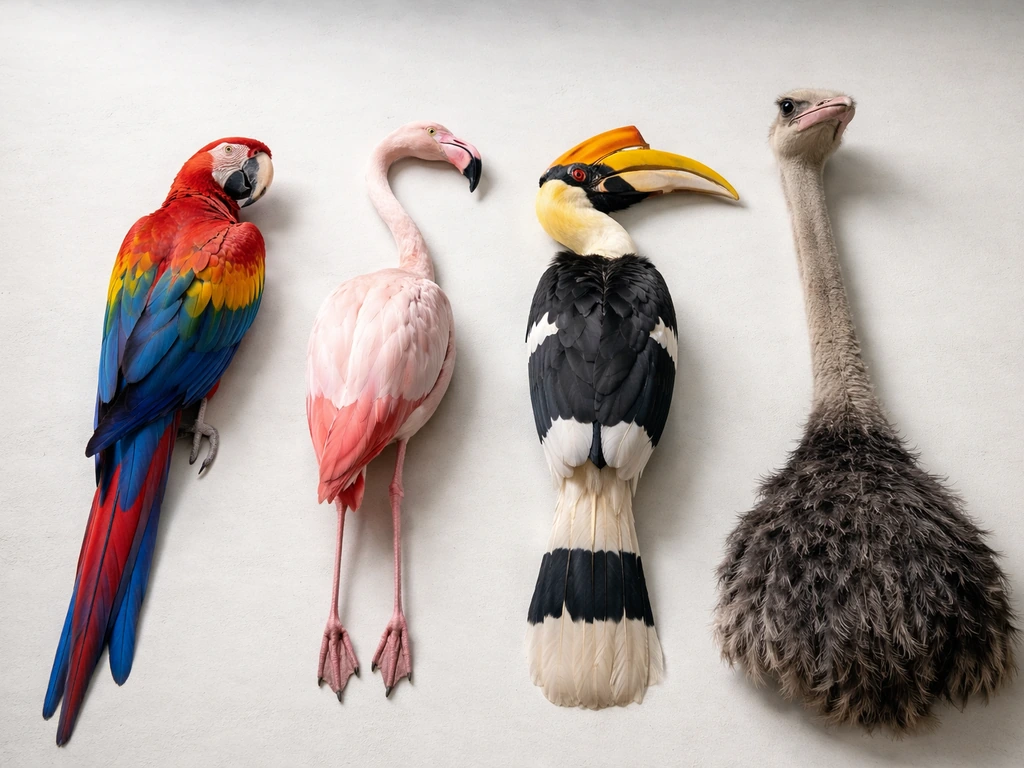
The phrase 'exotic bird' is broad enough to cover a macaw, a flamingo, a hornbill, or an ostrich. Each of these has a specific Hindi name, its own symbolic associations, and sometimes its own place in Indian folklore or wildlife law. Using the general term 'विदेशी पक्षी' is fine for a casual conversation, but if you want to understand the meaning or symbolism of a specific bird, you need to pin down which one you are actually asking about.
Ask yourself these questions before you search further: Is this a bird you have seen in real life, in a dream, in a painting, or in a story? Is it a pet bird or a wild one? Do you know its English name, its appearance, or its call? Once you have even one of these anchors, you can look up its precise Hindi name and from there trace its cultural significance. For example, knowing a bird is called 'धनेश' (dhanesh, hornbill) in Hindi immediately opens up its associations with tribal culture and forest ecology in central India, which is far richer than anything a generic 'exotic bird' search would give you.
It is also worth noting that several birds people casually call 'exotic' in India are actually native species that just look unusual. The Indian Roller (नीलकंठ, neelkanth) is a vivid turquoise bird deeply embedded in Hindu worship, particularly associated with Lord Shiva. A visitor seeing it for the first time might call it exotic, but to Indians it carries specific sacred meaning. This is exactly the kind of confusion that a precise bird name resolves instantly.
Practical examples and next steps for finding the exact name and meaning
Here is how to move from the general phrase 'exotic bird meaning in Hindi' to a genuinely useful answer for your specific situation.
- Identify the bird by its English or scientific name if you can. Even a rough description (blue feathers, large beak, found in South America) is enough to narrow it down with a quick image search.
- Search for its Hindi name using a reliable bilingual dictionary like Shabdkosh or the Oxford Hindi-English Dictionary. Type the English name plus 'Hindi name' or 'Hindi mein kya kehte hain.'
- Once you have the Hindi name, search for its cultural or mythological associations by adding 'symbolism,' 'Indian mythology,' or 'Hindu tradition' to your query.
- For birds native to India, look for the Sanskrit name as well, since Sanskrit names often carry the richest symbolic meaning and connect directly to classical literature and mythology.
- For birds you are keeping as pets or have seen in a wildlife context, check whether they fall under India's Wildlife Protection Act, where they will be listed as 'विदेशी प्रजाति' (foreign species) or 'संरक्षित प्रजाति' (protected species), which affects not just terminology but also legal meaning.
- If your interest is in writing Hindi for language learning or translation, use 'विदेशी पक्षी' as your base phrase and refine it with 'दुर्लभ,' 'अनोखा,' or 'अद्भुत' depending on whether you want to emphasise rarity, uniqueness, or wonder.
A few real-world examples help make this concrete. If someone asks how to say 'turkey bird' in Hindi, that is a specific case of naming a foreign bird in an Indian language context, and it has a dedicated answer rather than just 'विदेशी पक्षी. If you mean the bird commonly called a turkey in English, you can find its exact Hindi name and usage by looking up the specific species name rather than only saying विदेशी पक्षी turkey bird.
' Similarly, when people discuss the idea that India itself was called a 'golden bird,' they are drawing on the same cultural vocabulary of rare and precious birds that underpins how Indians have always thought about extraordinary creatures. And when you explore something as simple as [how to write 'bird' in Hindi](/exotic-mythical-birds/how-to-write-bird-in-hindi), you are building the exact vocabulary foundation that makes phrases like 'विदेशी पक्षी' or 'दुर्लभ पक्षी' come naturally.
The bottom line: 'exotic bird meaning in Hindi' has a practical translation answer ('विदेशी पक्षी' or 'अनोखा पक्षी' depending on context) and a cultural depth that only opens up when you know which specific bird you are talking about. Start with the translation, pin down the bird, then follow its Hindi name into the folklore and symbolism where the real meaning lives.
FAQ
If I want to say “exotic bird” as a pet or bird breed, what’s the best Hindi wording?
In everyday Hindi, “विदेशी पक्षी” can sound a bit generic, so for a foreign-looking pet you can say “विदेशी नस्ल का पक्षी” (videshi nasl ka pakshi), which clearly shifts the meaning to breed rather than origin alone. This avoids confusion when the bird is actually native but simply looks unusual.
How do I express the “symbolic” or lucky-omen meaning of an exotic bird in Hindi?
If someone is asking about omens, use “शुभ” or “लकी” framing, for example “ऐसा विदेशी/अनौखा पक्षी शुभ संकेत हो सकता है” (aisa videshi/anaukha pakshi shubh sanket ho sakta hai). That matches the cultural use of rare birds as valued signs, instead of using only “विदेशी पक्षी” which just describes foreignness.
What if the bird looks exotic but is actually native to India, what should I say?
Yes, “विदेशी पक्षी” may be understood as “foreign species,” but “अनोखा पक्षी” and “अद्भुत पक्षी” focus on looks and wonder. If you want to avoid implying it is truly foreign, prefer “अनोखा पक्षी” (striking/unusual) or add a clarifier like “स्थानीय होते हुए भी” (sthaniy hote hue bhi, although local).
How can I distinguish “exotic” meaning as rare versus meaning as foreign origin in Hindi?
A common mistake is translating word for word and using only “विदेशी” even when the context is rarity or uniqueness. For rare sightings, “दुर्लभ पक्षी” is more accurate than “विदेशी पक्षी,” and in official style “दुर्लभ प्रजाति के पक्षी” (durlabh prajati ke pakshi) reads clearer.
What Hindi phrase should I use for “exotic bird” in dream interpretation or folklore?
If your source is a dream or story, the most natural phrasing is usually “अनोखा/अद्भुत पक्षी” rather than “विदेशी पक्षी.” For example, “स्वप्न में अनोखा पक्षी” feels better because dream symbolism is about the unusual and surprising image, not a literal geographic origin.
Which Hindi wording is better for news or legal writing about foreign birds?
For wildlife or law-related contexts, “विदेशी प्रजाति के पक्षी” is safer than “विदेशी पक्षी,” because it signals species-level language used in governance. Also include “आयात/निर्यात” (import/export) if you are discussing trafficking or regulations.
I don’t know the exact species, how do I avoid giving the wrong meaning or symbolism in Hindi?
If you do not know the exact species, do not overspecify a symbolism. Start general, “विदेशी पक्षी जैसा लगता है,” then confirm the bird using its Hindi/region name. This prevents wrong cultural associations like treating a sacred native bird as a generic exotic.
Should I translate “exotic bird” into a general phrase, or should I look up the bird’s specific Hindi name first?
When you know the bird, use its specific Hindi name rather than a general label. If the English name is different from the Hindi usage, rely on the Hindi bird name first, because some classical terms (like “हंस” in literature) can shift meaning depending on context.