
The turkey bird is called <strong>टर्की</strong> (pronounced roughly "ṭar-kee") in Hindi. That's the direct, dictionary-backed answer. Whether you're reading a poultry-farming guide, watching a nature documentary dubbed in Hindi, or just trying to settle a translation debate, "टर्की" is the word you're looking for.
What Is Turkey Bird Called in Hindi and Marathi

Rajesh Sharma
9 Apr 2026
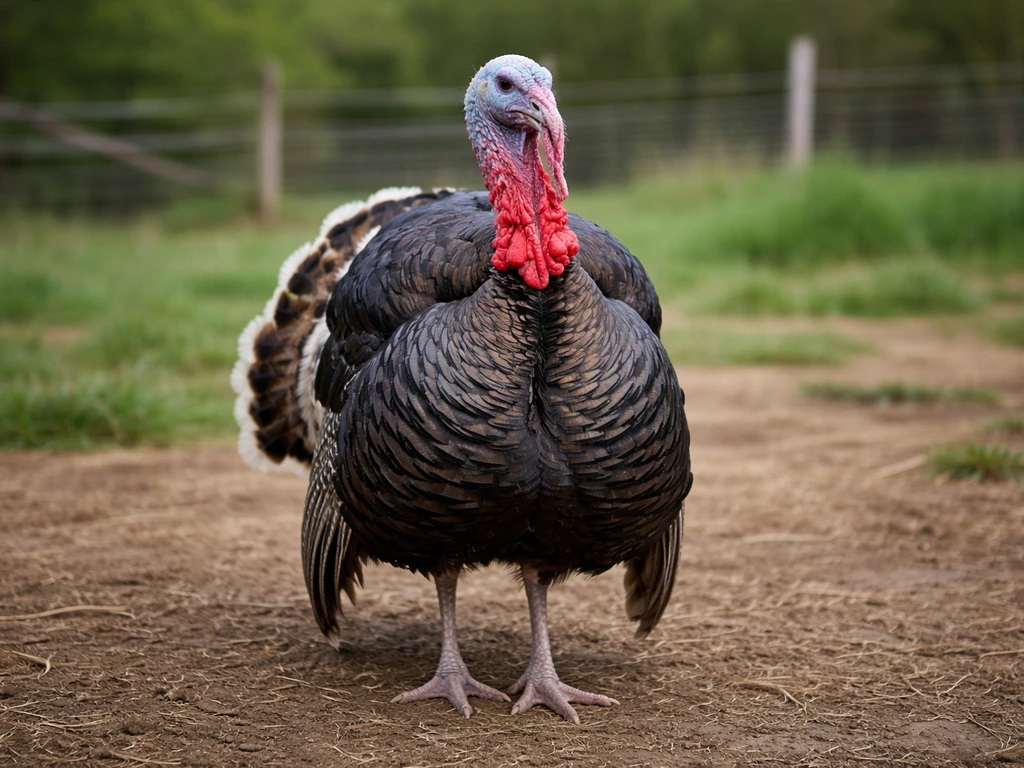
The Hindi name for turkey bird, spelled out clearly
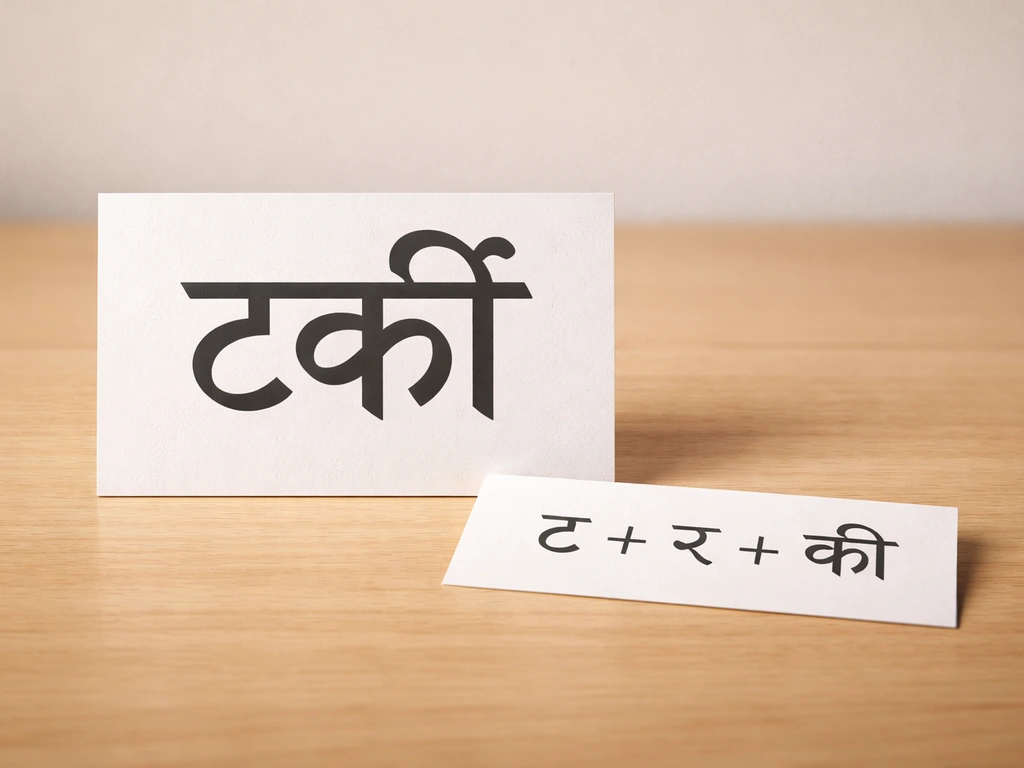
In Hindi, the turkey bird is written in Devanagari as <strong>टर्की</strong>. The pronunciation follows a simple pattern: ट (ṭa) + र (ra) + की (kī), giving you "ṭar-kee." If you want to be explicit that you're talking about the bird and not something else, you can say <strong>टर्की पक्षी</strong> (ṭar-kee pakshī), which literally means "turkey bird", पक्षी being the Hindi word for bird. This fuller phrase leaves zero room for misunderstanding and is exactly the kind of phrasing you'd encounter in agricultural bulletins or poultry-farming literature. For example, Indian Council of Agricultural Research publications list "टर्की" alongside other poultry birds like मुर्गियों (hens), treating it as a distinct and recognized poultry category in Hindi-language farming resources.
How टर्की is actually used in Hindi conversation and writing
The word "टर्की" functions as a borrowed term (a loanword from English) in Hindi, which means it doesn't have a classical Sanskrit root or an ancient Hindi equivalent the way a sparrow or peacock would. It's simply the English word "turkey" transliterated into Devanagari script. This is completely normal for modern Hindi, many bird names introduced from outside the subcontinent work the same way. The Cambridge English–Hindi Dictionary lists "turkey" in its bird sense explicitly as "टर्की," confirming this is the standard, accepted translation.
In everyday spoken Hindi, you'd use it like this:
- "टर्की एक बड़ा पक्षी है।" — Turkey is a large bird.
- "वह टर्की पालता है।" — He raises turkeys. (poultry-farming context)
- "तुर्की के पक्षी विक्रेता" — Turkey bird dealers (as seen in business directory listings)
Notice that last example uses "तुर्की" rather than "टर्की", and that difference matters a great deal. More on that in just a moment. For now, the key takeaway is that when you're in a bird, food, or farming context, "टर्की" is the correct and natural Hindi term for the turkey bird. If you're curious about how exotic bird meaning in Hindi is handled more broadly, you'll find that borrowed and transliterated names like "टर्की" are far more common than people expect.
Turkey bird in Marathi: same script, same word
If you're looking for the Marathi equivalent, the good news is it's identical in script: <strong>टर्की</strong> or <strong>टर्की पक्षी</strong>. Marathi, like Hindi, uses Devanagari script and has borrowed the English name directly. In Marathi media, you'll regularly see headlines like "जंगली टर्की पक्षी" (wild turkey bird), which appeared in NDTV Marathi's wildlife reporting. Marathi farming publications also use "टर्की पक्षाचा फायदा" (the benefit of the turkey bird) when discussing poultry farming profitability.
So across both Hindi and Marathi, the core word is the same: टर्की. The only Marathi-specific nuance is that the grammatical suffixes change slightly due to Marathi's different noun-case system, so "टर्की पक्षाचा" (of the turkey bird) vs. Hindi's "टर्की पक्षी का", but the root word itself stays consistent.
Don't mix up टर्की (bird) and तुर्की (country)
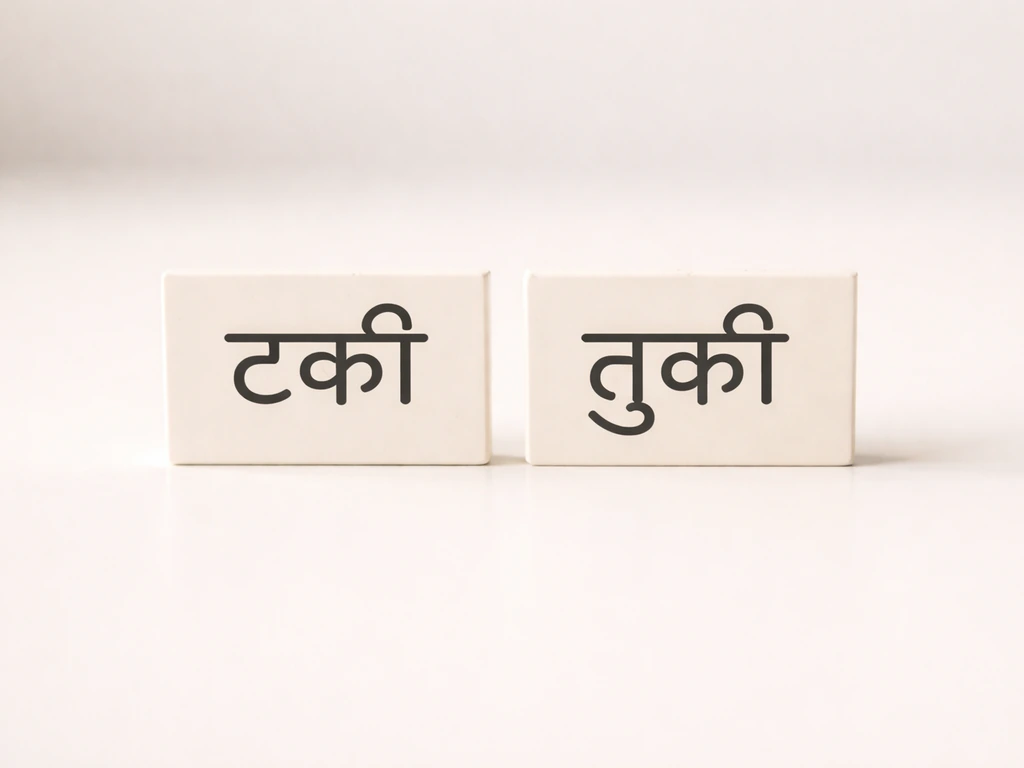
This is the most important disambiguation in this entire article. In Hindi, "Turkey" the country is written as <strong>तुर्की</strong> (pronounced "tur-kee"), while "turkey" the bird is written as <strong>टर्की</strong> ("ṭar-kee"). The difference is subtle but real: the country uses the Devanagari character <strong>त</strong> (ta), while the bird uses <strong>ट</strong> (ṭa), a retroflex consonant where the tongue curls back slightly.
| Word | Devanagari | Refers to | First character |
|---|---|---|---|
| Turkey (bird) | टर्की | The domesticated/wild bird | ट (retroflex ṭa) |
| Turkey (country) | तुर्की | The nation of Turkey | त (dental ta) |
| Turkey bird (full phrase) | टर्की पक्षी | Explicitly the bird, no ambiguity | ट (retroflex ṭa) |
Wiktionary's Hindi entries confirm this distinction clearly: "तुर्की" derives from Persian ترکي and refers to the country, while "टर्की" is the transliteration of the English bird name. Machine translations and casual writing sometimes blur this, which is exactly why checking the Devanagari spelling is your best verification tool. If you ever see "तुर्की" in a sentence about birds or poultry, treat it with some suspicion and look at the context, it may be a translation error.
How to confirm you have the right translation
The fastest way to verify you're looking at the correct word is to check the context and the opening Devanagari character. Here's a practical checklist:
- Check the first character: If it starts with ट (ṭa, the retroflex sound), it's the bird. If it starts with त (ta, the dental sound), it's likely the country.
- Look at surrounding vocabulary: Words like पक्षी (bird), पालन (rearing/farming), मुर्गी (hen/chicken), or जंगली (wild) all confirm you're in bird territory.
- Try the Cambridge English–Hindi Dictionary: It gives an explicit bird-sense entry for "turkey" → "टर्की," which is the most reliable quick reference.
- Use पक्षी as a qualifier: When in doubt, just say or write "टर्की पक्षी" — the added word पक्षी makes it unambiguous in any context.
- Cross-check with Wiktionary: The Hindi entry for तुर्की includes etymology (Persian origin, country meaning), so if your word has that background, you've accidentally landed on the country, not the bird.
This kind of careful attention to Devanagari spelling is the same skill you'd apply when learning how to write bird in Hindi more generally, small script differences carry big meaning distinctions.
Related bird vocabulary worth looking up next
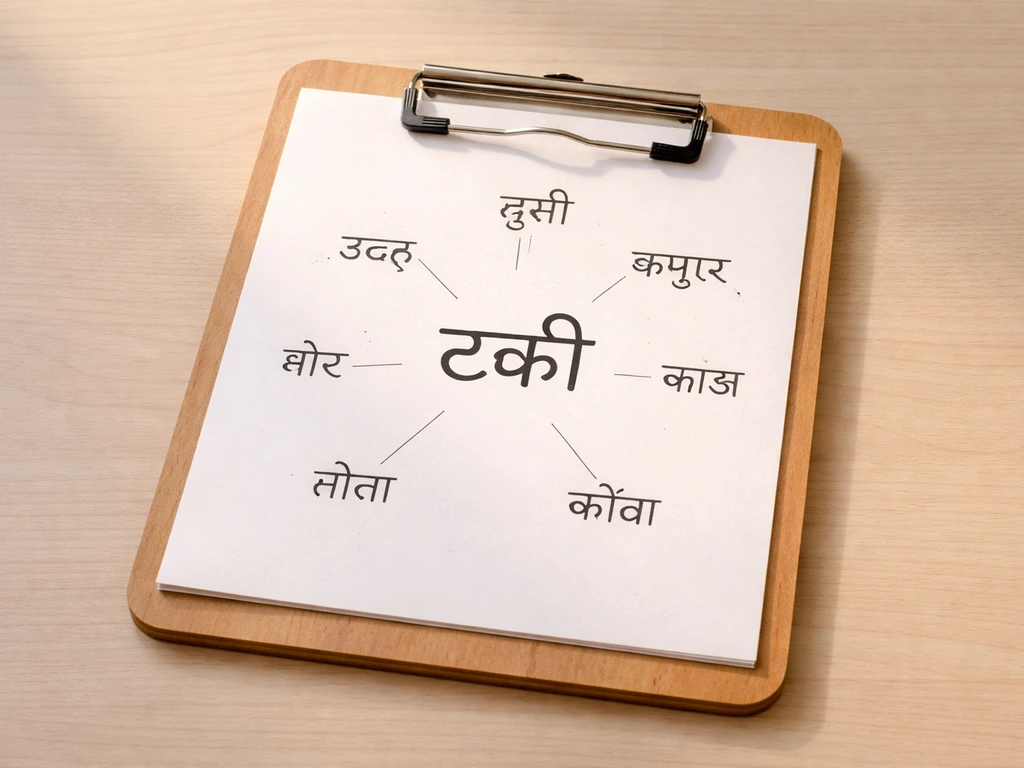
Once you have "टर्की" locked in, the natural next step is building out your Hindi and Marathi bird vocabulary around the poultry and large-bird category. Here are the most useful related terms:
- मुर्गी (murgī) — hen/chicken in Hindi; the most common domestic poultry bird, often listed alongside टर्की in farming resources
- कोंबडी (kombḍī) — hen/chicken in Marathi; the Marathi equivalent of मुर्गी
- पक्षी (pakshī) — the general Hindi/Marathi word for "bird"; used as a qualifier (e.g., टर्की पक्षी)
- जंगली (janglī) — wild; as in जंगली टर्की पक्षी (wild turkey bird), used in wildlife reporting
- पालतू (pāltū) — domesticated; पालतू टर्की would mean domesticated turkey
- पोल्ट्री / कुक्कुट पालन (poultry / kukkuṭ pālan) — poultry farming in Hindi, where टर्की frequently appears as one of the listed bird types
It's also worth noting how Indian languages have historically thought about birds in a broader cultural sense. The idea of India as a golden bird, a metaphor rooted in Sanskrit and folk tradition, shows how deeply birds are woven into the Indian linguistic imagination, even when a specific bird like the turkey doesn't carry that same mythological weight.
If you're building sentences using this vocabulary, it helps to see how bird terms work in practical Hindi constructions. A simple example like the bird is sitting on the tree in Hindi gives you a structural template you can adapt: swap in "टर्की" for the bird, and the sentence pattern holds the same way.
The short version, if you need it fast
Turkey bird in Hindi is <strong>टर्की</strong> (ṭar-kee). In Marathi, it's the same: <strong>टर्की</strong> or <strong>टर्की पक्षी</strong>. The country Turkey is written differently: <strong>तुर्की</strong>. Always check that first Devanagari character (ट vs. त) to make sure you're talking about the bird and not the nation. For practical use, the phrase "टर्की पक्षी" is your most reliable and unambiguous option in both languages.
FAQ
How do I avoid confusing the turkey bird name with Turkey the country in Hindi?
In Hindi, the bird “turkey” is टर्की. If you’re writing in mixed English text, still use टर्की in Devanagari, because the country name will be तुर्की (ta), not टर्की (ṭa).
When should I write टर्की पक्षी instead of just टर्की?
In everyday speech and casual writing, people may drop पक्षी and just say टर्की, since the context (poultry, meat, farming, wildlife) usually makes it clear. For formal notes or if the sentence could be about international travel, use टर्की पक्षी to be safe.
Is there an older Hindi word for the turkey bird, or is टर्की the only standard term?
There is no common “pure Hindi” alternative that replaces the borrowed term, so टर्की is the standard word. If you see a different spelling or form, it is usually a transliteration variation or a machine-translation error rather than a different accepted Hindi name.
Why do I sometimes see different spellings for turkey bird in Hindi online?
Because it is a loanword, you will sometimes see variant spelling attempts in non-Devanagari contexts (like English letters or phonetic spellings). In Hindi or Marathi writing, rely on the exact Devanagari spelling, especially ट vs. त, and not on how it “sounds” to you.
What is “wild turkey” called in Hindi or Marathi?
“Wild turkey” is typically written as जंगली टर्की (Hindi) or जंगली टर्की (Marathi). If your context is hunting, wildlife, or forests, adding जंगली makes the meaning unambiguous compared with farm poultry.
How should I refer to turkey meat in Hindi so it stays clear it is the bird?
For “turkey bird meat” or food context, you usually keep the bird name as टर्की and add a food noun (for example, टर्की का मांस). The key is that टर्की stays the bird term, not तुर्की, the country.
Do I change टर्की when it appears with “of,” “from,” or other grammar in Hindi/Marathi?
If you need to use it in a sentence that changes form, keep the root spelling टर्की and then attach the correct case ending. For instance, “of the turkey bird” is usually handled as “टर्की पक्षी का/के/की” style in Hindi, and a corresponding suffix pattern in Marathi.
What quick context check can I do to confirm I translated “turkey” correctly?
If you are translating from English “turkey,” always check whether the surrounding words indicate the bird (farm, eggs, meat, feathers, wildlife) or the country (travel, visas, borders, geography). The same transliteration letters can mislead, but Devanagari character choice (ट vs. त) is the reliable fix.