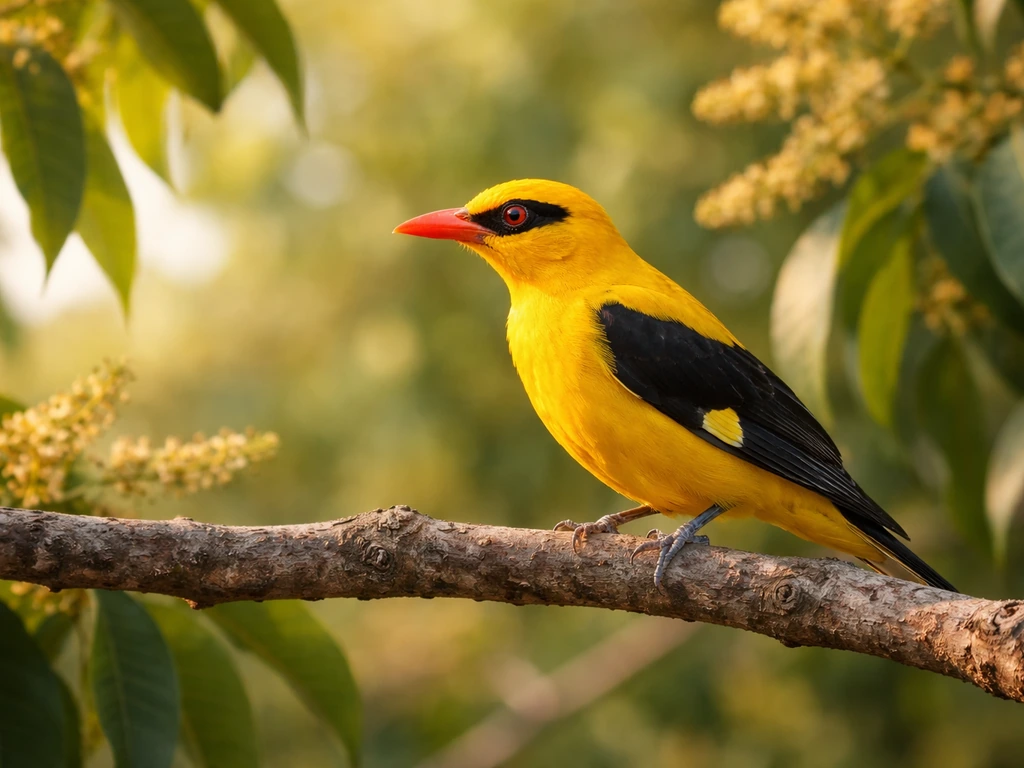
In Hindi, a heron is called बगुला (bagulā), sometimes also spelled बगला (baglā). Both forms are correct and widely used across different regions, with bagulā being the more standard dictionary form and baglā appearing commonly in local wildlife references, folk speech, and older Hindustani texts. If you are looking for a direct translation, blank" rel="noopener noreferrer">bagulā is your answer.
Heron Bird Meaning in Hindi: Naam, Symbols, and Identify

Rajesh Sharma
17 Jun 2026

The Hindi Name for Heron and How It Is Spelled
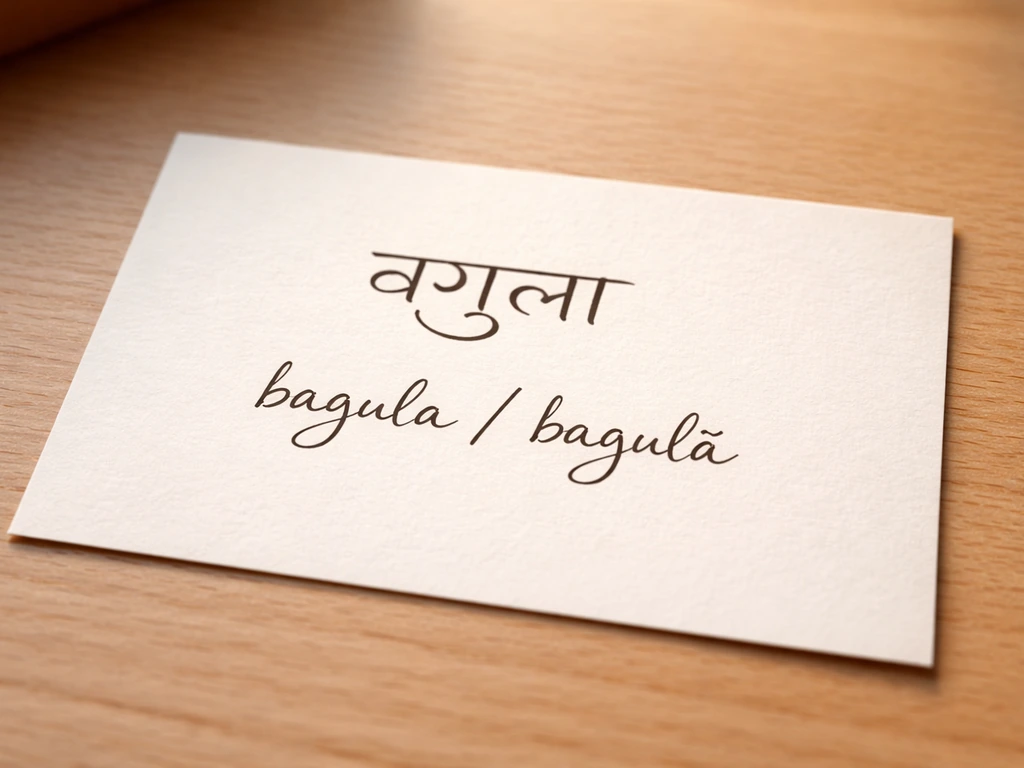
The word बगुला (bagulā) has a long documented history. A 19th-century Hindustani-English dictionary already records 'Bagla, or Bagula' as the name for a species of heron, and Wiktionary traces its lineage directly from Old Hindi बगुला. Wiktionary: बगला / बगुला records बगुला (bagulā) as a heron term and provides the historical lineage from Old Hindi बगुला Wiktionary traces its lineage directly from Old Hindi बगुला. This is not a modern coinage or a borrowed foreign word. It is a native term rooted in everyday subcontinental speech, which is why it has survived so consistently across centuries and dialects.
In practice, you will encounter a handful of spelling variants in Roman transliteration: bagula, bagulā, bagla, baglā. In Devanagari, बगुला and बगला are both found. Regional wildlife references, such as Rajasthan district gazetteers, also use compound forms like 'Bada Bagla' (large heron) and 'Safed Bagula' (white heron or cattle egret), showing how the root word builds into descriptive names.
| Form | Script | Context |
|---|---|---|
| bagulā | बगुला | Standard dictionary Hindi, most widely cited |
| baglā | बगला | Common in local/folk usage, older Hindustani texts |
| Bada Bagla | बड़ा बगला | Literally 'large heron', used in regional wildlife naming |
| Safed Bagula | सफेद बगुला | Literally 'white heron', often applied to cattle egret locally |
Heron vs. Egret, Stork, and Crane: How to Tell Them Apart
One of the most common points of confusion in both Hindi and English is that bagulā can be used loosely to refer to several long-legged wading birds. In strict ornithological terms, herons (family Ardeidae) are distinct from storks (Ciconiidae) and cranes (Gruidae), though they all share a similar silhouette. Here is a practical way to tell them apart when you are in the field or looking at a photograph.
- Heron (बगुला, bagulā): Flies with its neck folded in an S-curve, not stretched out. Typically hunts alone, standing motionless at the water's edge. The Grey Heron is the most common species across the Indian subcontinent.
- Egret (सफेद बगुला, safed bagulā): A type of heron, technically, just usually white and slightly smaller. In Hindi, the distinction is often made by adding 'safed' (white) before bagulā. Cattle egrets and great egrets both carry this informal label locally.
- Stork (सारस का संबंधी / Saras): Storks fly with necks extended, are usually much larger, and are classified under a separate family. In Hindi, the painted stork is often called 'rang-birangi saras' or by its regional names.
- Crane (सारस, sāras): The Sarus Crane is one of the most culturally significant birds in India and is specifically called सारस (sāras) in Hindi. It is taller than a heron, flies with a stretched neck, and pairs for life, which gives it a very different symbolic weight in Indian tradition.
The simplest field check: watch how the bird flies. A folded neck in flight means heron (or egret). A straight, extended neck means stork or crane. This single cue clears up most confusion without needing to study feather patterns.
How Bagulā Is Used in Everyday Hindi
In daily Hindi speech, बगुला is not just a bird name. It has become embedded in a well-known idiom: 'बगुला भगत' (bagulā bhagat). This phrase describes someone who appears outwardly pious, calm, or virtuous but is secretly scheming or waiting for an opportunity to exploit others. The image is of a heron standing completely still at the water's edge, looking meditative, but actually hunting with total focus. It is used commonly in conversation and literature to call out hypocrisy, and it shows up in proverbs, political commentary, and folk stories across Hindi-speaking regions.
The idiom is powerful because it draws directly on the heron's observable behavior. Anyone who has watched a bagulā at work understands immediately why the metaphor landed. That stillness is not peace. It is predatory patience. This dual reading of the bird as both serene and cunning runs through a lot of how the heron is perceived in Indian cultural thought.
Cultural and Spiritual Symbolism of the Heron in Hindi Traditions
The heron occupies a layered symbolic space in Indian tradition. It is not as mythologically prominent as the crane (sāras) or the peacock (mayūr), but it carries consistent associations that show up across folk traditions, astrology, and rural life. If you are also curious about broader symbolic lore, you may find related context in mythical-bird meaning searches like mythological birds in Hindi, including the mythical bird meaning in hindi keyword.
Patience and stillness

The most universal reading of the heron in Indian folk thought is patience. The bird stands motionless for extended periods, watching the water, waiting for exactly the right moment. In a contemplative sense, this is admired. Spiritual teachers in the Vedantic tradition have used the image of a bird waiting at water as a metaphor for the quality of dharana, the sustained focus that precedes deeper meditation. The heron, in this framing, becomes a model of single-pointed attention.
Water, the liminal, and the in-between
Herons live at the edge. They are neither fully water birds nor fully land birds. In Indian symbolic thinking, creatures of the threshold carry significance precisely because of that in-between quality. Water itself is associated with the unconscious, with purification, with transition. A bird that stands perfectly still at the water's edge, half in each world, carries an implicit association with introspection, perception beyond the surface, and the ability to see what lies beneath. In folk omens across parts of north India, a heron seen near a body of water before a journey is sometimes interpreted as a prompt to pause and reflect before proceeding.
The shadow side: deception and false piety

The 'bagulā bhagat' idiom discussed earlier represents the shadow symbolism. The same quality of stillness that looks like meditation can also look like deception. In folk stories collected across the Hindi belt, the heron frequently appears as a trickster figure: a bird that lures fish or small creatures into false security before striking. This dual symbolism, genuine stillness and false stillness, makes the heron one of the more psychologically nuanced birds in Hindi cultural imagination.
Omens and folk beliefs
Folk omen traditions vary by region and community, and it is worth noting that the heron is not consistently read as either auspicious or inauspicious across the Hindi-speaking world. In some agricultural communities, a heron's arrival near fields or water sources is seen as a sign of rain or a good monsoon season, since herons follow fish populations that increase with rainfall. In other traditions, a solitary heron is simply a neutral presence, associated with solitude and quiet reflection rather than any specific forecast.
Core Themes the Heron Represents
Pulling together the cultural and linguistic threads, the heron in Hindi tradition tends to cluster around a few consistent themes. Understanding these helps whether you are interpreting a dream, reading a folk text, or simply exploring what the bird means symbolically.
- Patience: The heron's most recognized quality, admired when genuine and questioned when it conceals ulterior motive.
- Water and perception: Association with liminal water spaces links the heron to introspection, the subconscious, and seeing beneath the surface.
- Meditation and focus: The posture of the hunting heron visually echoes the posture of a meditating ascetic, a comparison Indian folk tradition makes frequently.
- Deception or hidden intent: The 'bagulā bhagat' archetype is one of Hindi's most recognizable idioms for false piety.
- Solitude: Herons are largely solitary hunters. Their presence often signals quiet, separation from the crowd, and self-sufficiency.
- Monsoon and seasonal change: In agricultural folk belief, herons near water are sometimes read as signs of the monsoon's approach.
Quick Check: Are You Looking for the Right Bird?
Search terms can be ambiguous. If you searched for 'heron bird meaning in Hindi' but one of the following applies, you may actually be looking for something slightly different. If you meant the halcyon bird meaning in Hindi, the interpretation can differ from the heron symbol used for bagulā.
- If you are looking for a tall, grey or white wading bird that flies with a curved neck and stands still at rivers or ponds, you have the right entry. That is बगुला (bagulā), the common heron.
- If the bird you are thinking of is pure white, smaller, and often seen near cattle, it is likely a cattle egret, also called सफेद बगुला (safed bagulā) in local Hindi. The symbolism overlaps significantly but the birds are distinct species.
- If the bird has a very long neck that it holds straight in flight, is much taller, and often seen in open fields or near Bharatpur-type wetlands, it is more likely a crane (सारस, sāras), which carries its own distinct cultural symbolism in Hindi tradition.
- If you are thinking of a mythical or legendary bird from Indian texts, such as the Garuda or the Hamsa, those entries belong in a different category entirely. The mythical bird tradition in India is rich and separate from the heron's folk symbolism.
- If your search is about the harrier (a hawk-like bird), the halcyon, or the oriole, those are distinct birds with their own Hindi names and symbolic associations that deserve their own focused lookup.
- If you came across the word 'bagulā' in a proverb or literary text and are unsure it means heron, the context almost always confirms it: bagulā in idiom nearly always refers to the heron's characteristic still-hunting posture.
How to Confirm the Meaning and Keep Exploring
If you want to verify that बगुला is the right term for the bird you have in mind, the fastest approach is a visual one. Search for 'Grey Heron India' or 'Great Egret India' in an image search, compare what you see with what you observed or read about, and match the Hindi name from there. For the most common heron encountered across the Indian subcontinent, Grey Heron (Ardea cinerea) translates cleanly to बगुला (bagulā).
For deeper linguistic exploration, checking the bird's name across other Indian languages adds useful context. In Sanskrit, the heron is sometimes referenced as baka, a term that also carries the trickster/deceptive connotation, reinforcing the bagulā bhagat idiom's cultural roots. In Marathi, Punjabi, and Gujarati, cognates of bagulā are used with slight phonological variation, so the core term is recognizable across these languages even if you are not a native speaker of each.
If you are building vocabulary or doing cultural research, the most productive next step is to look at related bird entries in the same semantic cluster: the sāras (crane), which carries the symbolism of devoted partnership and is one of India's most storied birds; the hamsa (mythical swan), which holds a central place in Vedantic and poetic tradition; and the various egret forms that fall under the bagulā umbrella in everyday Hindi speech. The harrier, the oriole, and the halcyon also each have their own distinct Hindi names and cultural weight if you are working through the full landscape of bird meanings in Indian languages. If you are also researching oriole bird meaning in Hindi, it helps to compare how each bird’s name carries its own cultural symbolism. Each of those entries unpacks symbolism that is both linguistically specific and culturally grounded in ways that connect back to the traditions shaping how bagulā is understood.
The core takeaway: बगुला (bagulā) is the standard, historically attested Hindi word for heron. The phrase harrier bird meaning in hindi is different from bagulā, which is the Hindi name for a heron बगुला (bagulā). It describes a real bird, a real idiom embedded in everyday language, and a symbolic figure that Indian tradition reads simultaneously as patient, meditative, solitary, and in some contexts, deceptively still. Whether you came looking for a translation, a symbolic interpretation, or a cultural explanation, those three layers together give you the complete answer.
FAQ
Is बगुला (bagulā) always the exact same bird as heron, or can it mean other birds too?
Yes. In Hindi, बगुला (bagulā) is commonly used for herons and sometimes for closely related long-legged wading birds in everyday speech, so the “bird meaning” you infer depends on context (idiom vs exact species). If you need the exact bird name, confirm the species by appearance and where it was seen, not just by the one Hindi word.
What’s the difference between बगुला and बगला, are they different birds?
If you see “बगला” (baglā) in a local list or older text, it is still the same root word and is treated as a spelling variant of बगुला. When writing formally, prefer बगुला, but for matching what someone else wrote (especially in local references), baglā is acceptable and understandable.
How do I use “बगुला भगत” correctly in conversation (what kind of person does it describe)?
The idiom “बगुला भगत” points to a specific behavior pattern, the outward calm and stillness that is not actually harmless. So, when you use it, it is best suited for describing someone who looks peaceful but is waiting to act, rather than just someone who is quiet or thoughtful.
Is the heron symbol in Hindi more positive or negative, and how do I tell which meaning applies?
A heron symbol in Hindi tradition can be read as positive (patience, focus, contemplative waiting) or shadowy (deceptive stillness, predatory patience), depending on the story or proverb. If you are interpreting a text or dream, look for nearby cues like water, waiting, hypocrisy, or betrayal, because those cues shift the meaning.
If the neck cue in flight is unclear in a photo, how can I still distinguish heron from similar birds?
Yes. The neck cue mentioned in the article is helpful, but if a photo is unclear, combine it with additional checks: storks and cranes often show different posture while standing and walking, and egret-like birds can look similar while using different feeding styles. When in doubt, rely on multiple cues rather than only the neck position.
If I saw a bird and searched in Hindi, how do I choose the right “bagulā” subtype (like grey heron vs white egret)?
If your goal is translation for a specific bird you saw, start with the most common match given in the article, Grey Heron. Then verify by looking at the bird’s color and size category (grey heron vs white egret types), because people often mix “egret” and “heron” loosely under bagulā in everyday usage.
What should I watch out for if I searched “heron bird meaning in hindi” but my real query was “halcyon bird meaning”?
If you are searching for “halcyon bird meaning in hindi,” do not substitute it for heron meanings, because halcyon belongs to a different cultural and symbolic set. Use the bird name you actually mean (or its closest English common name) to avoid carrying the wrong symbolism over to bagulā.
What’s the best way to write the name correctly in Hindi and in Roman letters when I’m taking notes or quoting sources?
For handwriting or typing, the safest approach is to keep both spellings in mind and standardize only for your final write-up. In digital notes, you can store both forms, बगुला and बगला (and bagulā, baglā), then later decide the canonical spelling based on whether you are quoting a local source or writing your own explanation.
Next Article
Oriole Bird Meaning in Hindi: Name, Literal Sense, Symbolism
ओरिओल बर्ड का हिंदी नाम, शब्दार्थ और भारतीय सांस्कृतिक प्रतीक अर्थ, साथ ही भ्रम से बचाने की सही पहचान