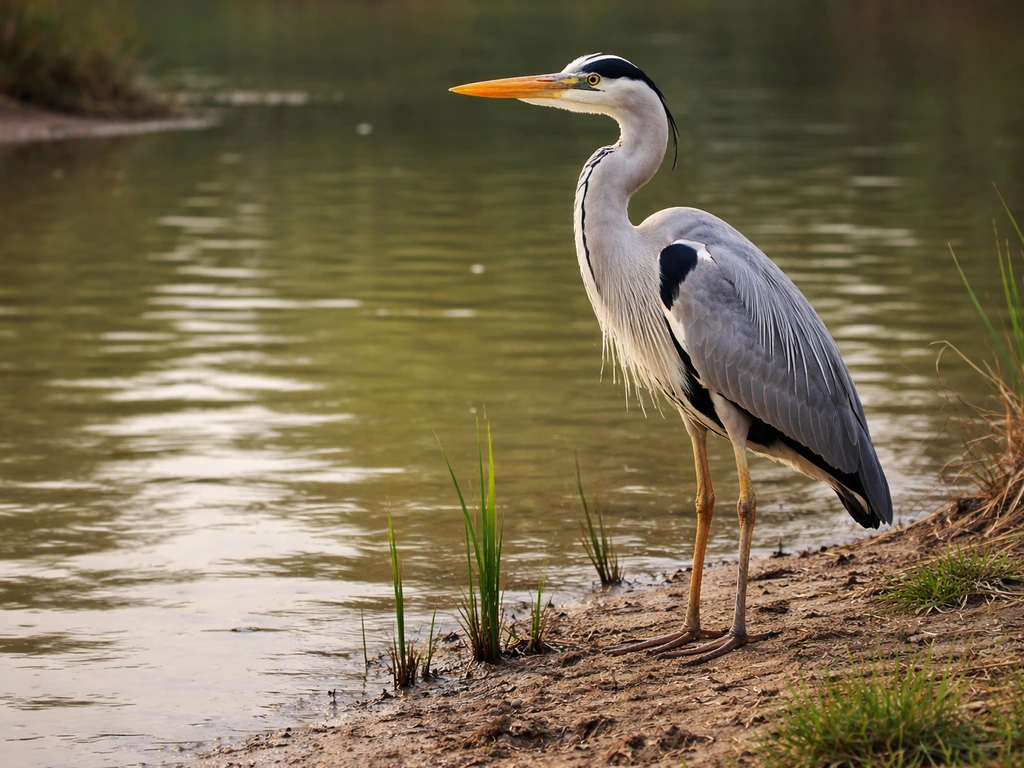
The halcyon bird in Hindi is most accurately called "राजमछलीमार" (rāj machhlīmār) or more commonly "किलकिला" (kilkilā), both of which point to the kingfisher family. The albatross bird meaning in Hindi is often explained through its cultural and descriptive use of the term kingfisher. When someone uses "halcyon bird" in a text, they are almost always referring to either the real kingfisher-type bird or the legendary Greek-origin symbol of peace and calm that inspired its name. In Hindi and Sanskrit contexts, the kingfisher is the closest living equivalent, and the symbolic meanings of peace, serenity, and auspicious calm translate directly into Indian cultural and mythological frameworks.
Halcyon bird meaning in Hindi: real bird vs symbolism

Rajesh Sharma
22 Jun 2026

What "Halcyon" Actually Means in English

In English, "halcyon" is both a noun and an adjective. As an adjective, it means calm, peaceful, and serene, often with a nostalgic flavor, as in "halcyon days" meaning a golden, tranquil period in the past. As a noun, the halcyon is the legendary bird at the center of that meaning. The phrase "halcyon days" originally referred to a specific stretch of about 14 days around the winter solstice when, according to ancient belief, the seas turned unusually calm. That stillness was attributed to the halcyon bird nesting on the water's surface.
The word itself comes from Greek "halkyōn" (also spelled "alkyōn"), which referred to a kingfisher-like bird. Latin absorbed it as "halcyon" or "alcyon," and English inherited the full package, word, bird, and meaning together. Merriam-Webster traces the English use directly to the Greek myth of Alcyone, a figure transformed into a bird whose nesting triggered a miraculous period of calm on the seas. So every time someone uses "halcyon" in English, they are drawing on this layered tradition of a real bird (the kingfisher), a legendary creature, and an idea about peace.
Halcyon Bird Name in Hindi and How to Say It
There is no single Hindi word that translates "halcyon" as a proper noun, because the halcyon is a Greek mythological bird rather than a creature from Indian mythology. If you are searching for the mythical bird meaning in Hindi, remember that halcyon is typically expressed as kingfisher names like किलकिला rather than a single direct translation mythological bird rather than a creature from Indian mythology.
However, since the halcyon is universally identified with the kingfisher in natural history, Hindi speakers use kingfisher names when referring to the halcyon bird in a biological sense. The most widely used Hindi name for the kingfisher (and by extension the halcyon) is "किलकिला" (kilkilā). You may also encounter "रामचिरैया" (rām-chiraiiyā), which translates roughly as "Ram's little bird" and is especially common in northern India for the common kingfisher (Alcedo atthis).
| Hindi Name | Script | Pronunciation Guide | Notes |
|---|---|---|---|
| Kilkilā | किलकिला | kill-kill-aa | Common for pied or collared kingfisher types |
| Rām-chiraiiyā | रामचिरैया | raam-chi-rye-yaa | Common kingfisher (Alcedo atthis), northern India |
| Rāj machhlīmār | राजमछलीमार | raaj-mach-hlee-maar | Literally 'royal fish-striker,' more descriptive |
| Nīlkanth machhlīmār | नीलकंठ मछलीमार | neel-kanth-mach-hlee-maar | Used for blue-throated varieties, connects to Shiva symbolism |
If you are translating a literary or poetic use of "halcyon" that emphasizes peace and calm rather than the bird itself, the best Hindi equivalent for the concept is "शांत" (shānt) or "सुखद" (sukhaद), meaning serene or pleasant. For the nostalgic sense of "halcyon days," "सुनहरे दिन" (sunahare din, golden days) or "शांत काल" (shānt kāl, period of calm) works naturally in Hindi prose.
The Halcyon Bird Across Indian Languages
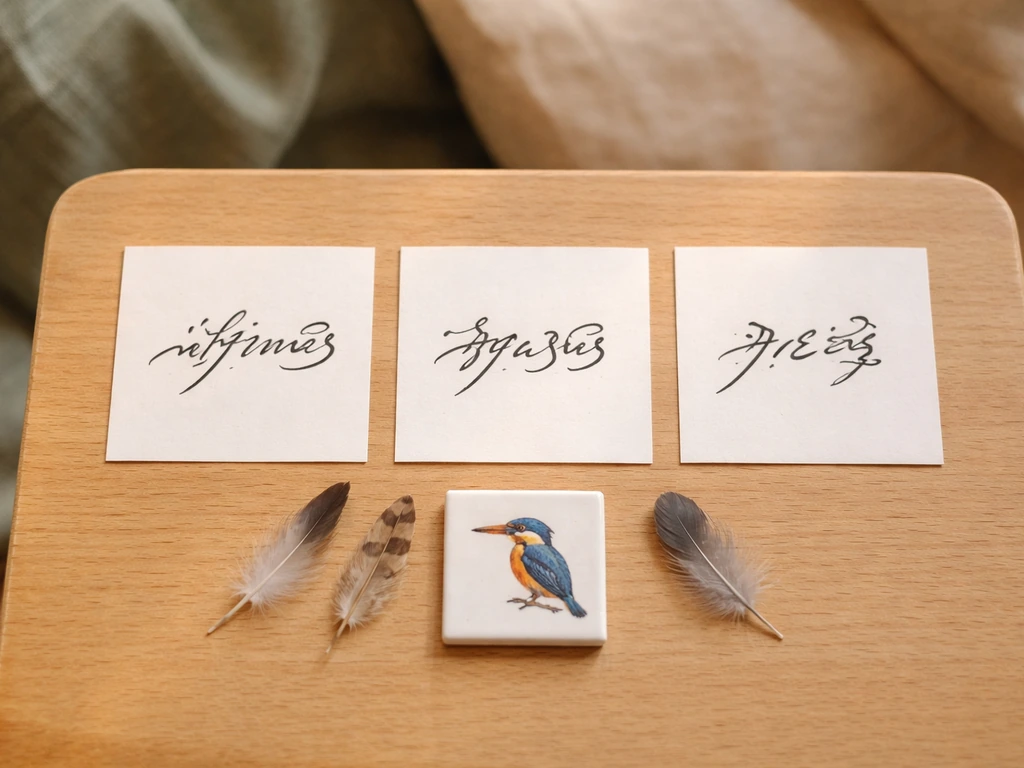
Because the halcyon is essentially the kingfisher under a mythological name, looking at how Indian languages name the kingfisher gives you the full picture. Sanskrit, which is the root of most Indian language bird terminology, calls the kingfisher "मीनरंक" (mīnaraṅka) or "चक्रवाक" in some older texts, though the latter more precisely refers to the ruddy shelduck. The clearest Sanskrit term tied to the kingfisher's fishing behavior is "मत्स्यरंक" (matsyaraṅka), meaning "fish-seizer."
| Language | Name for Kingfisher / Halcyon-type Bird | Script | Literal Meaning |
|---|---|---|---|
| Hindi | Kilkilā / Rām-chiraiiyā | किलकिला / रामचिरैया | Onomatopoeic / Ram's little bird |
| Sanskrit | Matsyaraṅka / Mīnaraṅka | मत्स्यरंक / मीनरंक | Fish-seizer |
| Marathi | Khandyā | खंड्या | From 'khanda' (piece/cut), the bird that cuts into water |
| Punjabi | Kilkilā | ਕਿਲਕਿਲਾ | Shared with Hindi, onomatopoeic |
| Gujarati | Kalkaliyo | કલકલિયો | Onomatopoeic variant |
What is striking across these languages is how often the kingfisher's name is onomatopoeic, built from the sharp, rattling call of the bird itself. The Marathi "Khandyā" is an exception, focusing instead on the bird's dramatic dive into water, which is poetic in its own right. If you are reading a text in any of these languages and encounter a bird described as living near water, diving for fish, and associated with calm or auspicious qualities, you are almost certainly looking at the halcyon-kingfisher.
Mythology and Symbolism in Hindi and Sanskrit Tradition
The halcyon's Greek myth does not have a direct parallel in Hindu mythology, but the kingfisher carries its own rich symbolic weight in Indian tradition. In Sanskrit literature, the kingfisher is often associated with water, abundance, and the protective grace of Vishnu, partly because of its vivid blue coloring, which echoes the divine blue of Vishnu and Krishna. The bird's stillness before a dive and its precision were read as qualities of a focused, spiritually aware mind.
The name "Rām-chiraiiyā" (Ram's little bird) in Hindi directly connects the kingfisher to the deity Rama, making it an auspicious creature in the folk imagination of northern India. Sighting a kingfisher near a river before a journey or an important task was traditionally considered a good omen in several regions. This maps closely onto the Western halcyon's role as a sign of calm and positive fortune, even though the mythological pathways are different.
In the broader Indian symbolic framework, birds that live at the border of water and land, like the kingfisher and the heron, are often seen as liminal creatures connecting different realms. In Hindi, people may also encounter discussions that compare the kingfisher (used for halcyon) with the heron when describing birds as spiritual or symbolic signs. The kingfisher specifically, with its brilliant blue plumage and its ability to pierce the water's surface without a splash (in many species), became a symbol of clarity, precision, and the union of the visible and hidden worlds. This is worth keeping in mind if you encounter the halcyon in a Sanskrit or Hindi devotional or literary text, the bird is rarely just a bird.
Telling the Halcyon Apart from Similar Birds

The confusion around "halcyon" often comes from the fact that "kingfisher" is itself a large family (Alcedinidae) with over 90 species globally, and several of them live in India. The most commonly encountered in Indian contexts are the common kingfisher (Alcedo atthis, called Rām-chiraiiyā), the white-throated kingfisher (Halcyon smyrnensis, whose genus name is literally "Halcyon"), and the pied kingfisher (Ceryle rudis, called Kilkilā). The white-throated kingfisher is the species most directly connected to the halcyon name at the scientific level, since its genus is Halcyon.
- Common Kingfisher (Alcedo atthis): Small, intensely colored blue-orange bird along rivers and streams. Hindi: Rām-chiraiiyā. Most people picture this one.
- White-throated Kingfisher (Halcyon smyrnensis): Larger, with a chestnut body and white throat. Hindi: Kilkilā or Shvet-kanth kilkilā. Genus name is literally Halcyon.
- Pied Kingfisher (Ceryle rudis): Black-and-white, often hovers over water before diving. Hindi: Kilkilā. Very common across India.
- Stork-billed Kingfisher (Pelargopsis capensis): Very large, found near forests and wetlands. Hindi: Bada kilkilā or Koṭhiyā.
If a text uses "halcyon bird" and seems to be talking about a real species in an Indian setting, the white-throated kingfisher (Halcyon smyrnensis) is the most scientifically precise match, since it literally carries the halcyon name in its genus. But if the text is poetic, literary, or mythological, the specific species matters less than the cluster of meanings: calm, beauty, water, and auspicious presence. Compare this to how the heron or the oriole appears in Indian poetry, those birds too carry symbolic roles that sometimes matter more than exact species identification. In Hindi, the oriole bird meaning is often described in symbolic terms, so knowing the context helps you interpret it correctly.
Where You Will Find Halcyon Meanings in Stories, Sayings, and Spiritual Use
In Hindi and Sanskrit literary traditions, the kingfisher most often appears in nature poetry (Prakrit and Sanskrit kavya) as a marker of riverside beauty and the changing seasons. Kalidasa's works, for instance, are full of birds that signal seasonal transitions, and while he does not use the Greek word "halcyon," the kingfisher-type bird appears as a companion to lovers, rivers, and auspicious moments. In folk traditions, the bird's call near water at dawn is considered a blessing, a natural alignment with the idea of "halcyon calm" even without the Greek framing.
The phrase "halcyon days" has been borrowed into educated Indian English usage, particularly in journalism and literature, to describe a golden era or a time of peace before disruption. You will encounter it in Hindi-English bilingual writing where the author might say "वो हैल्सियन दिन" (vo halcyon din) or simply translate it as "वो सुनहरे दिन" (vo sunahare din, those golden days). The underlying feeling, a longing for a quieter, more peaceful past, translates perfectly across cultures.
Spiritually, the kingfisher's connection to water ties it to purification rituals and to the idea of Saraswati (goddess of knowledge and arts, associated with rivers). In some regional traditions, particularly in Bengal and Odisha, birds of the kingfisher type near sacred water bodies are seen as signs of divine favor. This is not a mainstream pan-India doctrine but a folk-level association that surfaces in local stories and temple art.
How to Pin Down the Exact Meaning You Need
The key question to ask yourself is: is the source using "halcyon" as a bird name or as a feeling? Here is a practical way to work through it.
- Check the context: Is the source describing a physical bird near water, with colors and behavior mentioned? If yes, you want the kingfisher name in Hindi, most likely Kilkilā or Rām-chiraiiyā depending on the region.
- Look for the genus: If the text is scientific or ornithological and mentions Halcyon smyrnensis, that is the white-throated kingfisher specifically. Its Hindi name is Kilkilā or Shvet-kanth kilkilā.
- Look for the adjective: If "halcyon" appears before a noun like "days," "period," or "time," it is being used as an adjective meaning calm and golden. Translate it as "शांत" (shānt) or "सुनहरा" (sunaharā) in Hindi.
- Check for mythological framing: If the text references Greek myth, Alcyone, or sea-calm, it is using the legendary symbolism. You can keep the word transliterated as "हैल्सियन" (halcyon) in Hindi or explain it as the legendary bird of peace.
- Cross-reference with Sanskrit sources: If you are working with a Sanskrit text and want a culturally parallel concept, look for "mīnaraṅka" for the bird or "shānti" (शांति) for the peace concept.
- Use a bilingual dictionary or ornithological field guide: For India-specific species verification, the Salim Ali field guides list Hindi names alongside scientific names, which is the fastest way to match a species to its correct Hindi equivalent.
One more thing worth noting: if you are exploring related birds in Hindi, the mythical bird category (which includes legendary creatures from Indian epics) and birds like the heron or harrier each carry their own symbolic registers in Indian tradition. In Hindi, the term harrier bird meaning in hindi is usually discussed with its regional names and bird-character differences. The halcyon sits somewhat uniquely as a Western mythological bird that maps cleanly onto a real Indian bird (the kingfisher), making it easier to bridge than fully invented mythical creatures. That overlap is what makes it genuinely useful as a cultural and linguistic reference point.
FAQ
“Halcyon bird” को हिंदी में लिखते समय मुझे “किलकिला” ही लिखना चाहिए, या अलग शब्द इस्तेमाल करना बेहतर है?
अगर संदर्भ प्रकृति, पक्षी-देखना, या वैज्ञानिक/स्थानीय नाम जैसा लगे, तो “किलकिला” (kingfisher) सबसे व्यावहारिक और समझने में आसान रहता है। अगर संदर्भ साहित्यिक/पौराणिक है और “शांति, सुकून, शुभ” का भाव ज़्यादा है, तो केवल “किलकिला” लिखने से भाव कम हो सकता है, तब “शांत/सुखद” या “शांत काल” जैसे भाव-बोधक शब्द जोड़ना बेहतर रहता है।
“Halcyon” शब्द हिंदी टेक्स्ट में किस तरह की तरह से समझना चाहिए, नाम के तौर पर या विशेषण की तरह?
यदि वाक्य में bird-like संदर्भ है (पानी के पास, गोता, मछली पकड़ना), तो इसे पक्षी (kingfisher) मानिए। यदि “time” या “days” जैसा संदर्भ है, तो यह विशेषण/भाव (शांत, सुनहरा, बीता हुआ सुखद दौर) की तरह काम कर रहा होता है। ऐसे मामलों में “सुनहरे दिन” या “शांत दिन” का अनुवाद ज्यादा नैचुरल बैठता है।
“Halcyon days” को हिंदी में शाब्दिक “हैल्सियन” कहकर छोड़ देना ठीक है?
समझ आने के लिए हिंदी में अनुवाद साथ देना बेहतर है, जैसे “वो सुनहरे दिन” या “वो शांत काल”। सिर्फ “हैल्सियन दिन” छोड़ने पर कुछ पाठक इसे पश्चिमी मुहावरे की तरह नहीं, सीधे किसी नाम की तरह ले सकते हैं।
अगर किसी लेख में “Halcyon bird” लिखा है लेकिन जगह भारत/भारत-जैसी संस्कृति नहीं बताई गई है, तो मुझे कौन सा अर्थ प्राथमिक रखना चाहिए?
ऐसी अस्पष्टता में पहले भाव-आधारित अर्थ प्राथमिक रखें, क्योंकि “halcyon” का बड़ा प्रयोग peace और calm वाले प्रतीकात्मक अर्थ में भी होता है। फिर भी अगर साथ में पानी, नदी, गोता, मछली जैसी इमेजरी हो, तो “kingfisher/किलकिला” की ओर झुकें।
क्या “रामचिरैया” और “किलकिला” दोनों ही halcyon के लिए इस्तेमाल होते हैं?
हाँ, लेकिन अलग तरह से। “रामचिरैया” उत्तरी भारत के लोक-उपयोग में common kingfisher से जुड़ता है। “किलकिला” kingfisher-type पक्षियों के लिए ज्यादा व्यापक और सामान्य नाम है। इसलिए halcyon की पहचान संदर्भ पर निर्भर होती है, पर common समझ के लिए “किलकिला” ज्यादा सार्वभौमिक विकल्प रहता है।
क्या “halcyon” को हिंदी में किसी एक शब्द से 100% translate किया जा सकता है?
नहीं, क्योंकि halcyon का “ग्रीक myth” वाला नाम सीधे हिंदी में कोई एक-से-एक उचित संज्ञा नहीं बनता। व्यावहारिक अनुवाद दो भागों में बंटता है, पक्षी के लिए kingfisher नाम (किलकिला आदि), और भाव के लिए शांत, सुखद, शांत काल, या सुनहरे दिन।
अगर मैं किसी कविता/भक्ति-लेख में “halcyon” पढ़ रहा हूं, तो गलत अर्थ निकालने से कैसे बचूं?
पहले देखें कि लेखक “पक्षी” दिखा रहा है या “मन की शांति/शुभ समय” बोल रहा है। पक्षी-इमेजरी (जल, गोता, नमी, नदी किनारा, मछली) हो तो kingfisher तरफ जाएं। केवल टोन calm/serenity/auspiciousness हो तो “शांत/शुभ” वाले भाव-बोधक विकल्प ज्यादा सही रहेंगे।
“Halcyon bird” का अर्थ समझने के लिए किस तरह के संकेत शब्द मदद करते हैं?
ऐसे कीवर्ड्स से अर्थ जल्दी पकड़ा जा सकता है, जैसे पानी/झील/नदी, sunrise/dawn, fish, dive, birdsong, auspicious sign, peace, golden era, और “days/time/period”। इन संकेतों के आधार पर तय करें कि यह पक्षी है या मुहावरा-भाव।
यदि संदर्भ में “kingfisher” लिखा हो, तो क्या “halcyon bird” को automatically वही मानना सही है?
अधिकांश मामलों में हाँ, खासकर भारतीय संदर्भ में क्योंकि kingfisher family ही halcyon के प्राकृतिक समकक्ष के रूप में आती है। फिर भी यदि लेखक विशेष रूप से ग्रीक myth या “Alcyone”/समुद्र के शांत होने वाली कहानी का संकेत देता है, तो उसे symbolic sense में भी मान सकते हैं, सिर्फ species-name में नहीं।
क्या “halcyon” से जुड़ा प्रतीकात्मक अर्थ हमेशा positive होता है?
ज्यादातर प्रयोगों में यह peace, calm, और शुभ समय के लिए positive होता है, लेकिन भाव-आधारित लेखन में यह nostalgia (बीते शांत दौर की याद) जैसा भी हो सकता है। इसलिए अगर टेक्स्ट में “पहले जैसा नहीं रहा” या “खोया हुआ समय” टोन है, तो शांतता के साथ longing भी जोड़कर समझना उपयोगी होगा।
Next Article
Heron Bird Meaning in Hindi: Naam, Symbols, and Identify
हेरन के हिंदी नाम, पहचान संकेत और भारतीय आध्यात्मिक व लोक-मान्यताओं में उसका प्रतीकात्मक अर्थ जानें