In Gujarati, the swallow bird is most commonly called તારોડીયુ (tarodiyu), and for the barn swallow specifically (Hirundo rustica), the local Gujarati name used in bird lists is શિયાળુ તારોડીયુ (shiyalu tarodiyu). If you came here just for the translation, that is your answer. But there is quite a bit more worth knowing, especially if you want to use the term correctly, understand why there are multiple Gujarati names for swallows, or explore the cultural symbolism that often comes bundled with this bird in Indian tradition.
Swallow Bird Meaning in Gujarati: Translation and Symbolism

Rajesh Sharma
4 Jul 2026
"Swallow" the bird vs "swallow" the verb

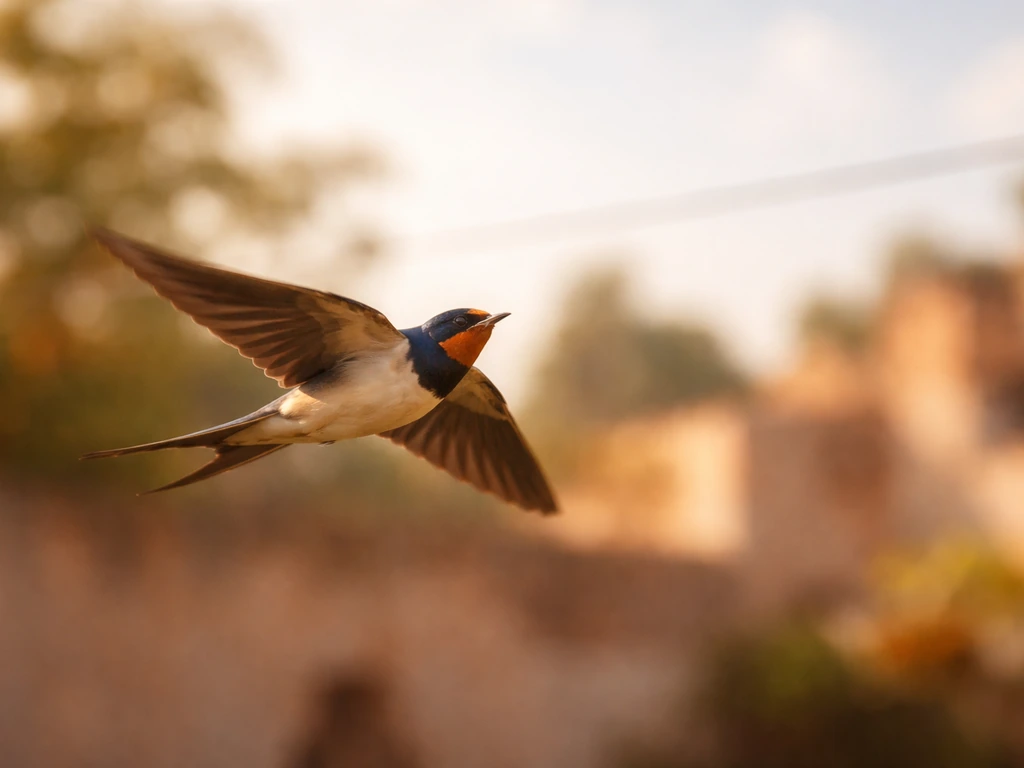
English is a little tricky here because "swallow" does double duty. As a noun, it refers to small, fast-flying birds of the family Hirundinidae, the most familiar being the barn swallow (Hirundo rustica). Collins English Dictionary defines “swallow” (noun) as any passerine songbird of the family Hirundinidae, including the barn swallow (Hirundo rustica) small, fast-flying birds of the family Hirundinidae. As a verb, it means the act of ingesting something through the throat, or figuratively enclosing or absorbing something. These are two completely unrelated meanings that just happen to share the same spelling and pronunciation in English.
This distinction matters enormously when you are working with Gujarati, because the Gujarati translations for the two senses are completely different. If you look up "swallow" on a general Gujarati translation website, you will very likely land on the verb sense, which gives you something like ગળી જવું (gali javu), meaning to gulp or ingest. That is not the bird. Always make sure you are specifically searching for the noun (bird) sense, not the verb.
The Gujarati word for the swallow bird
The core Gujarati term used for swallow-type birds is તારોડીયુ (tarodiyu). This is the word that appears in Gujarati bird name listings for multiple swallow species found in Gujarat. For the barn swallow specifically, the full Gujarati local name is:
- Gujarati script: શિયાળુ તારોડીયુ
- Transliteration: shiyālu tarodiyu
- Species: Hirundo rustica (barn swallow / common swallow)
The word શિયાળુ (shiyalu) in this compound name refers to the wintery or cold-season quality associated with this bird's appearance in Gujarat. A quick note of caution: do not confuse શિયાળુ with the standalone Gujarati word શિયાળ (shiyāl), which means jackal. The combined name શિયાળુ તારોડીયુ is a fixed bird-specific term, and the context makes it unambiguous.
In Hindi, the umbrella term for swallows (and martins) is આbaबील (ababil in Devanagari: आबाबील). This Arabic-origin word is widely used in Hindi bird references and is sometimes encountered in Gujarati contexts too, since bird literature in the region often blends Hindi and regional-language names. If you are reading about the swallow bird in Hindi materials alongside Gujarati, you will likely see ababil mentioned. If you want the swallow bird in Hindi meaning, look up the term ababil (आबाबील) used for swallows. The swallow is also discussed under this Hindi name in related articles on this site.
Multiple names for multiple species
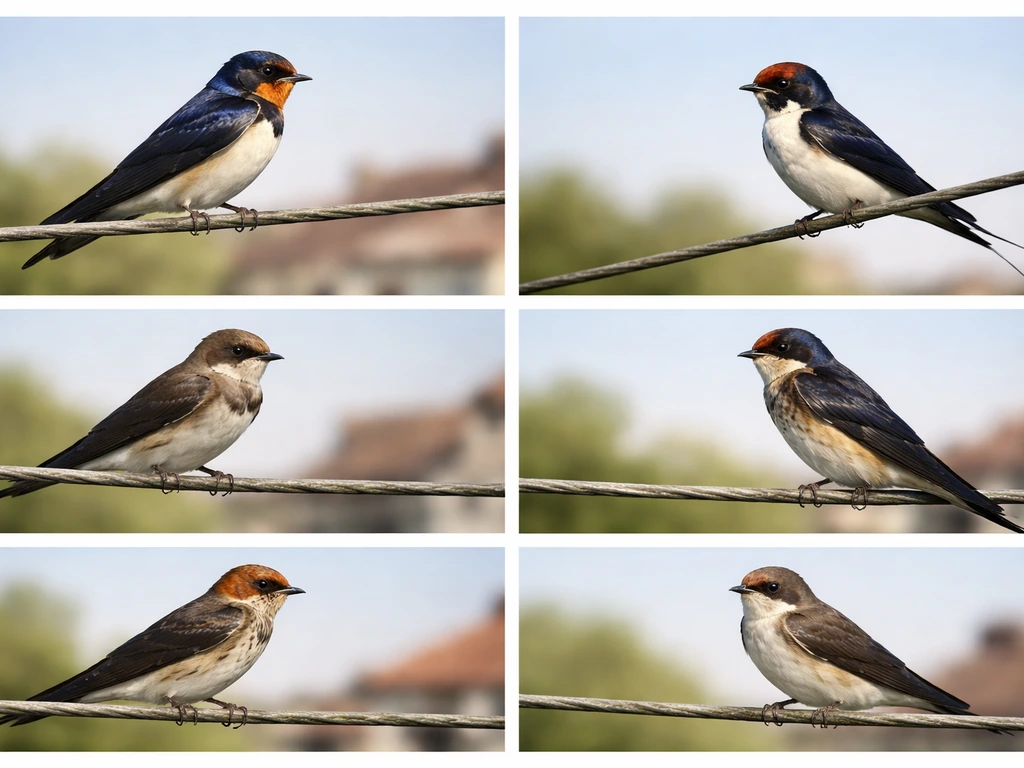
Gujarati does not have a single universal word for "all swallows" the way English does. Instead, the names tend to be species-specific and locality-influenced. Gujarat hosts several swallow and martin species, and bird lists from the region give distinct Gujarati local names for each. For example, the streak-throated swallow carries a different variant of the tarodiyu name. Some orthographic variation also exists across sources, so you may see spellings like તારોડિ (tarodiya) or slight vowel differences depending on the publication.
The practical takeaway is this: if you need the Gujarati name for a specific swallow species for a school project, birding guide, or translation work, always cross-reference a Gujarat-specific bird list rather than relying on a generic dictionary. A general dictionary will likely give you the verb sense anyway.
Pronunciation and script guide for learners
If you are new to Gujarati script, here is a quick breakdown of how to read and say the key bird term:
| Gujarati Script | Transliteration | Approximate English Sound |
|---|---|---|
| શ | sh | like "sh" in "shine" |
| િ / ી | i / ī | short 'i' as in 'bit' / long 'ee' as in 'see' |
| ા | ā | long 'a' as in 'father' |
| ળ | ḷ | retroflex 'l', tongue tip curled back slightly |
| ુ | u | short 'u' as in 'put' |
| ત | t | soft dental 't', not the English hard 't' |
| ડ | ḍ | retroflex 'd', tongue tip curled back |
Putting it together: shiyālu tarodiyu. Say it as "shee-YAA-lu taa-RO-dee-yu". The stress falls naturally on the longer vowels. The trickiest sounds for English speakers are the retroflex consonants (ળ and ડ), where the tongue tip curls slightly back toward the palate rather than touching the teeth. Gujarati also preserves vowel length distinctions carefully, so that long 'ā' in shiyālu is noticeably held longer than a short vowel. If you are serious about pronunciation, a Gujarati phonology reference or IPA guide for Gujarati will give you the precise articulation points.
One more learning tip: when typing Gujarati script digitally, use a transliteration tool such as those available at Indic typing platforms. Typing 'shiyalu tarodiyu' in a phonetic Gujarati keyboard should produce the correct script output, which you can then verify against the form shown above.
What the swallow means culturally in Gujarati and Indian tradition

The swallow carries rich symbolic weight across Indian folk traditions, and this symbolism circulates in Gujarati cultural contexts just as much as elsewhere in the subcontinent. The bird is broadly associated with good luck, glad tidings, and the arrival of positive change. One of the most widespread folk beliefs in India is that if a swallow builds its nest in or near your home, it is a sign of prosperity and good fortune to come. In Hindi, you can also look up the swallow's name and its meaning when it is seen as a good-omen bird swallow meaning in Hindi. The bird chose your space, which is read as an auspicious endorsement.
The swallow's seasonal arrival also carries meaning. These birds migrate, and their appearance in a region signals a shift in weather and season. This maps onto the old English proverb "one swallow does not make a spring," but the Indian version of this symbolism leans more toward hope and renewal. The return of swallows is associated with the end of hardship and the beginning of a favorable period.
In Islamic tradition, which has deeply influenced Gujarati culture through centuries of trade and the Muslim community in Gujarat, the swallow (called ababil in Arabic and carried into Hindi/Urdu usage) holds a specific sacred significance. If you are also looking up the thrush bird meaning in Hindi, you may see the same idea of ababil and related naming used in bird references. The ababil appears in the Quran in connection with the story of Abraha's army, making it a bird of divine protection in that tradition. This layer of meaning is present in the cultural consciousness of Gujarati Muslims and adds a spiritual dimension that goes beyond simple luck symbolism.
More broadly across Indian bird symbolism, swallows are characterized as birds of comfort, joy, and home. Their nest-building behavior close to human dwellings reinforces this association. Unlike birds of prey or nocturnal birds that carry more ambivalent symbolism in Indian lore, the swallow is consistently read as a positive, gentle, domestic presence.
Using the term in Gujarati sentences and phrases
Here are some practical ways the term appears in real usage, which will help you both understand it in context and use it correctly:
- આ તારોડીયુ ખૂબ ઝડપથી ઊડે છે. (Ā tarodiyu khūb zaḍapathī ūḍe che.) — This swallow flies very fast.
- અમારા ઘરની નીચે તારોડીયુ નો માળો છે. (Amārā gharnī nīche tarodiyu no māḷo che.) — There is a swallow's nest under our house.
- શિયાળુ તારોડીયુ ગુજરાતમાં સામાન્ય છે. (Shiyālu tarodiyu Gujarātmā sāmānya che.) — The barn swallow is common in Gujarat.
- તારોડીયુ ઘરે આવ્યો એટલે સારા દિવસો આવ્યા. (Tarodiyu ghare āvyo eṭale sārā divaso āvyā.) — The swallow came home, so good days have arrived. (A folk-saying type expression)
You may also encounter the term in bird-watching conversations or naturalist writing about Gujarat, where it appears in species lists and field notes. In those contexts, the full compound name শিয়াળু તારોડીyou (shiyalu tarodiyu) is preferred over the standalone generic tarodiyu, to specify the species clearly.
How to verify the correct term and avoid common mistakes
The biggest trap when searching for "swallow meaning in Gujarati" is landing on the verb translation instead of the bird. Here is a simple trust hierarchy to follow:
- For sense distinction (bird vs verb): use the Cambridge English to Gujarati dictionary, but make sure you are reading the noun/bird entry, not the verb entry. The two senses are listed separately.
- For the actual Gujarati bird name: use a Gujarat-specific bird list or bird guide that provides local Gujarati names per species. These are more reliable for regional bird terminology than any general translation website.
- For cultural symbolism: cross-check any claim you read with folklore references, major encyclopedias, or academic material on Indian folk tradition. General astrology or symbolism websites can be a useful starting point but should not be treated as authoritative.
- For script and typing verification: use an Indic transliteration tool to convert your phonetic input into Gujarati script, then compare the output against the forms shown in this article (શિયાળુ તારોડીયુ).
- Avoid copying Gujarati translations from generic bilingual dictionaries without checking the sense: a word like ગળી જવું (gali javu) means to swallow/ingest, not the swallow bird.
A quick sanity check: if the Gujarati translation you found looks like a verb phrase (ends in જવું or similar action-word endings), you have the wrong sense. The bird name will be a noun and will look more like a compound descriptive name, as in the tarodiyu forms. In Hindi, the phrase cull bird meaning in Hindi is often clarified by linking the bird name to its correct sense.
If you are exploring bird names across Indian languages more broadly, it is worth knowing that the swallow in Hindi is discussed under the name ababil, just as the cuckoo and other migratory birds have their own distinct regional names across Hindi, Marathi, Punjabi, and Gujarati. You can also look up the cuckoo bird meaning in Hindi, since cuckoos have their own regional name and interpretation. Each language tends to develop local bird names that reflect local ecological observation rather than direct translations of English names, which is exactly why consulting language-specific bird guides beats relying on a single bilingual dictionary.
FAQ
If I type “swallow” in Gujarati, how can I quickly tell whether I’m getting the bird name or the verb meaning (gulp)?
Check the script and the grammatical shape. The verb sense usually appears as an action form (often ending in patterns like “જવું”), while the bird sense is a noun-like compound (tarodiyu forms such as તારોડીયુ and shiyalu tarodiyu). If the result reads like an action, you have the wrong meaning.
What is the most reliable Gujarati term to use if I need a single word for a swallow bird in Gujarat contexts?
Use તારોડીયુ (tarodiyu) as the core umbrella term found in Gujarat bird lists for swallow-type birds. If your source specifically talks about the barn swallow, then use શિયાળુ તારોડીયુ (shiyalu tarodiyu) rather than the generic form.
Why do some sources show different spellings for tarodiyu, like તારોડિ (tarodiya)?
Gujarati publications can differ in how they represent vowel length and how they segment the word, especially when the same local name is transcribed from field notes or different bird lists. When comparing, focus on whether the term still contains the tarodiyu root (tarod-) and whether the context indicates it is a swallow/martin rather than another bird group.
Is “શિયાળુ” in shiyalu tarodiyu the same as the standalone word “શિયાળ” (jackal)?
No. In the compound name, શિયાળુ is part of a fixed bird-specific label connected to the bird’s seasonal or cold-season association. Standalone શિયાળ means jackal, so context matters, and you should not treat શિયાળુ as “jackal” by itself.
If I only know the English species “barn swallow,” should I always translate it as શિયાળુ તારોડીયુ?
In Gujarati bird-listing contexts for Gujarat, barn swallow is commonly given as શિયાળુ તારોડીયુ. However, if you are using a different region’s list or a different bird guide, cross-check the species name, since some sources may use broader labels for multiple swallow species.
How do I write or type the swallow bird name correctly in Gujarati script on my phone or computer?
Use a Gujarati input method or transliteration keyboard and type the phonetic form “shiyalu tarodiyu.” Then verify the output against the expected Gujarati spelling (especially the “ળ” and “ડ” sounds). After converting, recheck that it is a noun-like bird label, not a verb form.
Does the Hindi name “ababil” also apply in Gujarati when people discuss Islamic tradition or Quranic references?
Often, yes. In Gujarati discussions that reference broader South Asian religious or literary sources, you may encounter ababil (आબाबील) as the swallow name due to its Arabic-origin usage carried into Hindi/Urdu. Still, for Gujarat bird identification, prioritize Gujarati bird-list terminology.
What should I do if a translator gives me a Gujarati phrase ending like an action (for example, something meaning “gulp”)?
Treat it as a mismatch. Go back and confirm you are translating the noun (bird) sense, not the verb sense. A quick sanity check is whether the term looks like a bird label compound (tarodiyu forms) rather than an action phrase.
Is there a single universal Gujarati word for all swallows the way English uses “swallow”?
Not really. Gujarati usage is typically more species-specific and locality-influenced, so the wording you see in Gujarat bird lists can vary by species and variant. If you need a general discussion, tarodiyu is the safest starting point, but for exact species use the specific compound name from a Gujarat list.
Next Article
Gull Bird Meaning in Hindi: नाम, उच्चारण और अर्थ
गुल या सीगल पक्षी का हिंदी नाम, उच्चारण देवनागरी में, अर्थ और प्रतीकात्मक भाव, साथ में भ्रमित पक्षियों की पहचान