
The Hindi word for thrush (the bird) is सारिका (saarikaa), which is the native Sanskrit-rooted term found in Hindi dictionaries. The direct transliteration थ्रश (thrash) is equally common, especially in modern Hindi bird guides and media, where species names like नीलगिरि लाफिंग थ्रश appear routinely. If someone asks you "thrush bird meaning in Hindi," the short answer is सारिका or थ्रश, but there is quite a bit more to know about which word to use, when, and what cultural weight (if any) the thrush carries in Indian tradition.
Thrush Bird Meaning in Hindi: Word, Pronunciation, Symbolism

Rajesh Sharma
20 May 2026
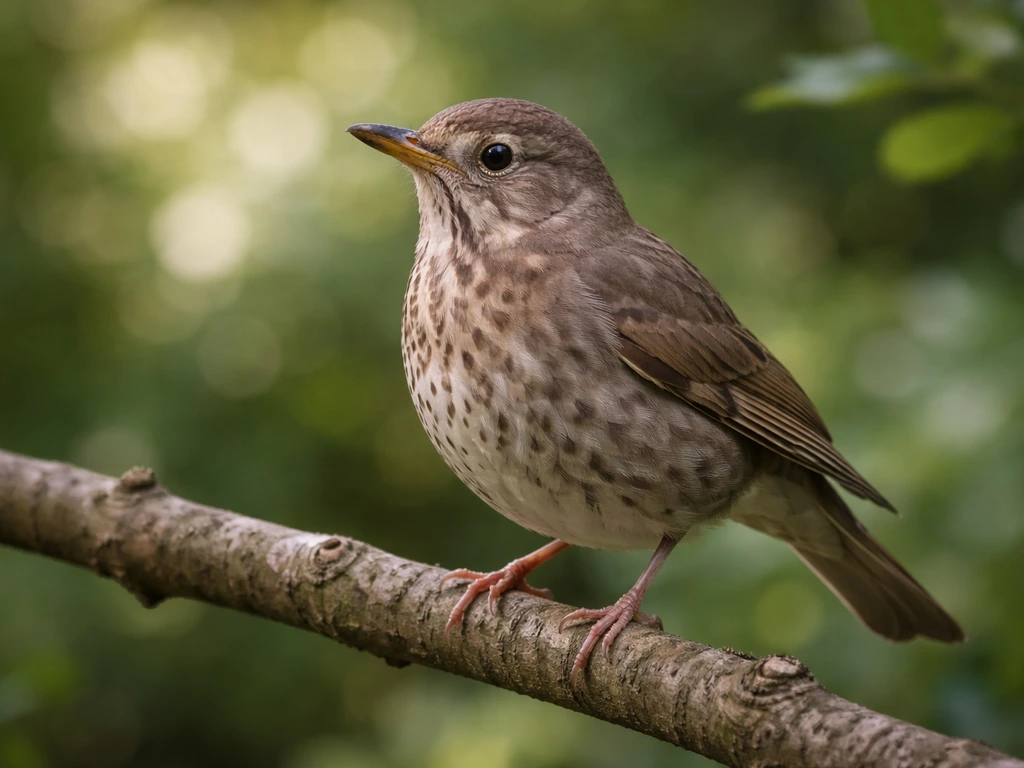
What "thrush" actually refers to (real bird vs poetic use)
Before diving into the Hindi, it helps to pin down what "thrush" means in ornithology, because the word is broader than most people realize. Thrush is not a single species, it is an entire bird family, Turdidae, with hundreds of species distributed worldwide. The Latin genus name Turdus literally means "thrush," and well-known members include the Song Thrush, Mistle Thrush, Blackbird, and India's own blank" rel="noopener noreferrer">Tickell's Thrush. In India, the family shows up in common bird names like the Malabar Whistling Thrush (मालाबार व्हिसलिंग थ्रश) and the Nilgiri Laughingthrush (नीलगिरि लाफिंग थ्रश). So when someone searches "thrush bird meaning in Hindi," they are usually asking about the family-level concept, not one specific bird.
There is also an important disambiguation to flag early: the English word "thrush" has a completely unrelated medical meaning (an oral or vaginal fungal infection). Hindi dictionaries like Shabdkosh list both senses, the bird sense as सारिका and the medical sense as योनि संक्रमण. If you are searching for the bird, always pair the term with "bird" or "पक्षी" to avoid confusion.
The Hindi translation: word, spelling variants, and pronunciation
Hindi dictionaries give you two main options for "thrush" in the bird sense. सारिका (saarikaa) is the classical, Sanskritic term, a feminine noun, and it carries a certain elegance that makes it the preferred choice in literary or formal contexts. थ्रश is the transliteration of the English word and is how the term appears in nature writing, conservation press releases, and modern bird guides published in Hindi.
Users searching online often write the word in different ways because Hindi speakers are approximating an English sound. HingKhoj also lists multiple roman spellings and variants for the Hindi reading of “thrush” such as थ्रश / तरुष / थरुष various roman spellings/variants. Here are the common variants you will encounter:
- थ्रश — the standard transliteration used in dictionaries like Collins and Shabdkosh
- तरुष — a romanized approximation sometimes seen in informal writing
- थरुष — another variant that appears on platforms like HingKhoj
- सारिका — the native Hindi/Sanskrit equivalent, used in formal or literary contexts
For pronunciation, the English IPA is θrʌʃ, the "th" here is the unvoiced dental fricative, the vowel is a short "uh" sound, and it ends with "sh." In Hindi, this comes out roughly as थ्रश, pronounced "thrash" (rhyming with "clash"). सारिका is pronounced saa-ri-kaa, with equal stress across all three syllables and a long first vowel. If you are teaching someone to say it, think of it like "sari" (the garment) followed by "ka."
How Indians use the word in everyday language and bird names

In day-to-day usage, most Hindi speakers who are not birdwatchers are more likely to simply say "थ्रश बर्ड" than to use सारिका. The word सारिका, while correct and beautiful, belongs to a more literary register and is less common in casual conversation. In contrast, the transliterated थ्रश has become the standard in Indian bird conservation contexts, nature documentaries, and wildlife journalism.
A key pattern worth noting: in Hindi, the word थ्रश usually stays unchanged even in plural usage. Plurality is expressed through context words like कई (several) or जोड़े (pairs) rather than by modifying थ्रश itself. For example, "कई थ्रश" means "several thrushes." Phrase-level compounds also follow a natural pattern, थ्रश गीत (thrush song), थ्रश की आवाज़ (the thrush's call), थ्रश पक्षी (thrush bird).
The Press Information Bureau (PIB) and Hindi conservation media regularly publish bird names like नीलगिरि लाफिंग थ्रश and वाइनाड लाफिंग थ्रश, always keeping "थ्रश" as a suffix to the species-specific name. This is the dominant orthographic convention in Indian Hindi media today.
Cultural symbolism of thrush in Indian traditions
This is where you need to be careful, and honest. The thrush as a named, culturally loaded symbol in Indian tradition is not as richly documented as, say, the cuckoo (कोयल / कोकिल) or the crow (कौआ). The cuckoo, for instance, carries deep associations with monsoon, longing, and the voice of spring across Sanskrit and Hindi poetry. The thrush does not have an equivalent independent mythology in classical Indian sources.
That said, the word सारिका does appear in Sanskrit and classical Hindi literature as a name for a melodious singing bird, sometimes used interchangeably with other songbird references. Because thrushes are known for their exceptional vocal ability, some Indian species are described as "कोयल से भी सुरीला" (even more melodious than the cuckoo), the bird sits naturally in the broader Indian cultural tradition of associating melodious birds with beauty, good fortune, and auspicious sound. The Malabar Whistling Thrush, locally nicknamed the "school boy" bird, is celebrated in Kerala and southern India for its haunting whistle.
In folk traditions where birds are interpreted as omens or messengers, songbirds generally, and thrushes by their melodious nature, tend to be seen as positive presences: heralds of good news, signs of fertile land, or indicators of clean water nearby. But it would be inaccurate to claim that the thrush holds a specific, named symbolic role in Hindu mythology the way the peacock (मोर), swan (हंस), or eagle (गरुड़) does. The symbolism, where it exists, is borrowed from the bird's observable qualities rather than from specific mythological stories.
What thrush represents in Hindi and Indian literature
In Hindi and broader Indian literary tradition, when poets reach for a thrush, or a bird named सारिका, they are almost always reaching for its voice. The primary association is musical beauty and joyful sound. This is consistent with how English Romantic poets used the thrush too, but in the Indian context it sits within a long tradition of bird-voice imagery where sweetness of song signals everything from divine presence to the arrival of a beloved.
- Melodious voice and musical beauty — the thrush's song is its defining quality in both ornithological and literary use
- Joy and vitality — a singing bird in Hindi poetry often signals happiness, abundance, or the start of a new season
- Auspiciousness — melodious birds broadly carry positive energy in Indian folk belief, and the thrush fits this category
- Nature's purity — thrushes tend to inhabit forests and clean water areas, associating them with unspoiled natural settings in descriptive writing
- Companionship — the name सारिका is used as a woman's name in India, carrying connotations of sweetness and charm, which reflects the cultural esteem for the bird's qualities
It is worth noting that सारिका is a genuinely popular given name for girls in Hindi-speaking India. Parents who choose this name are invoking the imagery of a sweet-voiced, graceful bird, which tells you something real about the cultural perception of the thrush, even if the mythological record is thin.
Using "thrush" correctly in Hindi sentences
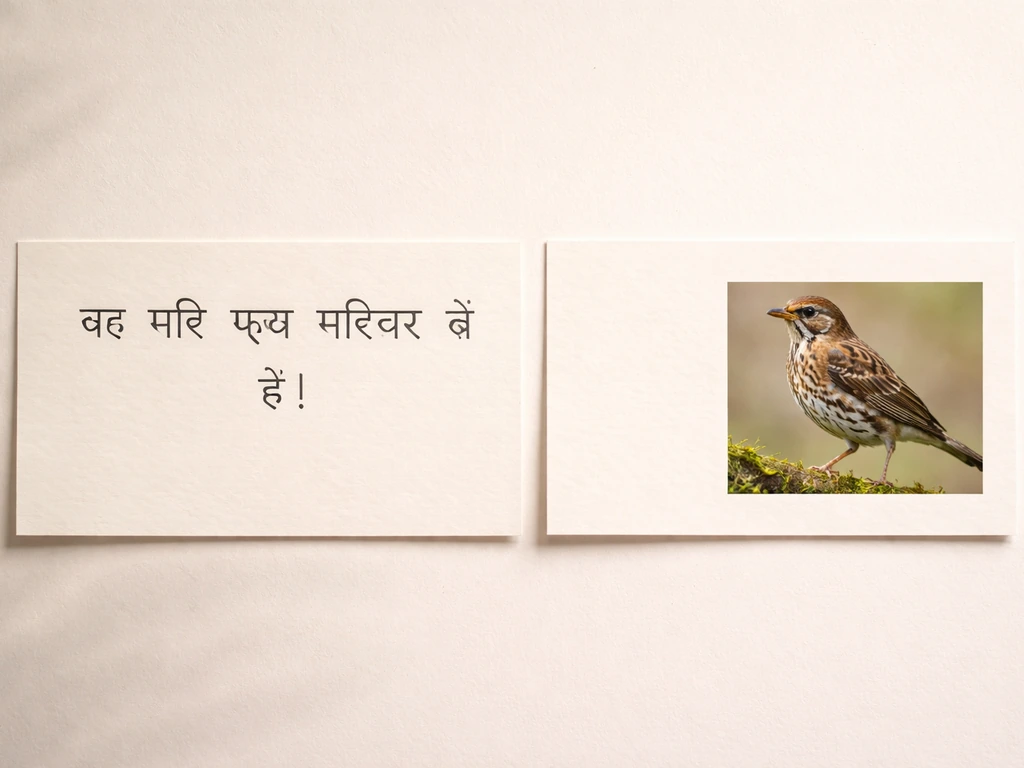
Whether you are writing a poem, a nature caption, a bird guide entry, or just trying to tell someone what thrush means in Hindi, here are some practical sentence templates to get you started.
- यह पक्षी थ्रश परिवार से है। (Yah pakshi thrash parivaar se hai.) — This bird belongs to the thrush family.
- सारिका एक मधुर आवाज़ वाला पक्षी है। (Saarikaa ek madhur aavaaz vaala pakshi hai.) — The saarikaa is a bird with a sweet voice.
- मालाबार व्हिसलिंग थ्रश की आवाज़ कोयल से भी सुरीली है। (Malabar Whistling Thrash ki aavaaz koyal se bhi sureeli hai.) — The Malabar Whistling Thrush's voice is even more melodious than the cuckoo's.
- थ्रश के जोड़े ने उस पेड़ पर घोंसला बनाया। (Thrash ke jode ne us ped par ghonsla banaaya.) — A pair of thrushes built a nest in that tree.
- थ्रश गीत सुनकर मन प्रसन्न हो गया। (Thrash geet sunkar man prasann ho gaya.) — Hearing the thrush song, the heart became joyful.
- "थ्रश" अंग्रेज़ी में पक्षी और एक बीमारी दोनों के लिए प्रयोग होता है — संदर्भ देखकर समझें। ("Thrash" angrezi mein pakshi aur ek bimari dono ke liye prayog hota hai — sandarbh dekhkar samjhen.) — "Thrush" in English is used for both a bird and a medical condition — understand it from context.
Notice how the last example is actually one of the most useful things you can learn: always check context when you see the word थ्रश in Hindi writing, because it can refer to the bird or the medical condition depending on the surrounding text.
Linguistic meaning vs spiritual symbolism: a quick checklist
| What you're looking for | The answer | Notes |
|---|---|---|
| Hindi word for thrush (bird) | सारिका (saarikaa) / थ्रश (thrash) | सारिका is literary/formal; थ्रश is used in modern bird guides and media |
| Correct Devanagari spelling | थ्रश | Standard transliteration; variant spellings include तरुष and थरुष |
| Pronunciation | थ्रश = 'thrash'; सारिका = 'saa-ri-kaa' | English IPA for thrush is θrʌʃ |
| Plural form in Hindi | कई थ्रश / थ्रश के जोड़े | थ्रश itself does not change; plurality shown through context words |
| What type of bird is a thrush? | Family Turdidae — a passerine songbird family | Not a single species; includes hundreds worldwide |
| Indian thrush species | Tickell's Thrush, Malabar Whistling Thrush, Nilgiri Laughingthrush | थ्रश appears as a suffix in Hindi names for all these |
| Named mythological role in Hinduism? | No — not a bird with a specific mythological story | Unlike peacock (मोर) or swan (हंस), the thrush lacks a dedicated myth |
| Cultural associations | Melodious voice, joy, auspiciousness, beauty | Derived from the bird's actual qualities, not scripture |
| Is 'सारिका' used as a name? | Yes — a common feminine given name in Hindi | Carries connotations of sweet voice and grace |
| Warning: other meaning of 'thrush' | Medical condition (fungal infection) | In Hindi dictionaries: योनि संक्रमण — always clarify 'thrush bird' or 'थ्रश पक्षी' |
How to move forward after reading this
If you are a language learner or translator, use थ्रश when writing about the bird family in a modern context, and सारिका when you want a native Hindi or Sanskrit-rooted word with a classical feel. If you meant the bird, the swallow bird in Hindi meaning can be found by comparing the local Hindi name used in bird guides with the context.
In Gujarati, the spelling and usage can vary, but the idea is the same: it refers to the thrush bird and its voice thrush bird meaning in Gujarati. If you are writing poetry or naming a child and want to invoke the thrush's qualities, सारिका is the right word, it is already a living name with real cultural resonance in India.
If you are doing spiritual or symbolic research, keep your claims grounded: the thrush's meaning in Indian culture is about its voice and the joy that voice brings, not about a specific mythological role. If you meant the bird in particular, “grouse bird meaning in hindi” typically points to how common bird names are formed and understood in everyday Hindi thrush's meaning in Indian culture.
And if you are simply trying to identify an Indian bird and wondered what its Hindi name is, pair the English species name with थ्रश as a suffix, that is how Indian ornithology and Hindi media handle it consistently. Just as the cuckoo (कोयल) has its own rich linguistic and symbolic life in Hindi tradition, the thrush occupies a quieter but genuinely positive place, celebrated more for its music than its mythology.
FAQ
Should I write सारिका or थ्रश when translating “thrush” into Hindi?
Use सारिका (सaarikaa) when you want the classical, Hindi/Sanskrit-rooted bird word, and use थ्रश when you are following modern bird-guide, conservation, or species-name writing. In mixed texts (journalism, social posts), थ्रश पक्षी or थ्रश बर्ड is safest because it matches how editors disambiguate bird versus illness.
Does “थ्रश” change in plural form in Hindi?
In Hindi writing, थ्रश usually stays the same, you add quantity or plurality words like कई (several) or जोड़े (pairs). If you are unsure, include a context word like पक्षी or बर्ड to make the number and meaning unambiguous.
How can I tell whether “थ्रश” in Hindi text refers to the bird or the medical infection?
Because थ्रश can also refer to a fungal infection in medical Hindi, always check the surrounding words. If the sentence mentions symptoms, infection, gynecology, or शरीर के अंग, it is medical. If it appears with पक्षी, बर्ड, चिड़िया, गीत, आवाज़, or a species name, it is the bird.
How do Hindi bird guides usually form names for specific thrush species?
For species-level bird names commonly used in India, the dominant pattern is “(species descriptor) + थ्रश” (for example, नीलगिरि लाफिंग थ्रश, वाइनाड लाफिंग थ्रश). If you translate, keep थ्रश as the suffix rather than replacing it with a standalone term, so the name stays recognizable to readers.
What is the easiest way to pronounce थ्रश and सारिका correctly in Hindi?
The Hindi pronunciation of थ्रश is commonly approximated as “thrash” (rhymes with clash). If you need to teach it clearly, focus on the final “sh” sound and keep the vowel short, then stress all parts evenly for थ्रश, and for सारिका say it like “saa-ri-kaa.”
Can सारिका in Hindi refer to a person, not a thrush bird?
Yes. सारिका is also used as a given name for girls, and that can affect translation or interpretation in poetry and names. If you see “सारिका” in a literary or personal context, it may be referring to the person, not a bird.
If I’m identifying an Indian bird, what should I do besides searching for “thrush bird meaning in Hindi”?
If your goal is identification, pair the term with the local context: use the English species name or the description (like laughing, whistling, or the region) alongside थ्रश. This helps because “thrush” is a whole family, and different species have different calls and appearances even within Indian habitats.
What’s the safest way to discuss thrush symbolism in Hindi or Indian tradition?
Be careful with symbolism claims. In Indian literary usage, the strongest association is the bird’s song and the musical quality of “voice,” rather than a widely established mythological character role. If you need cultural symbolism for a project, describe it as “music and auspicious sound from bird-voice imagery” rather than inventing a specific named mythology.
Next Articles
Swallow Bird in Hindi Meaning: Name and English Definition
Swallow bird का Hindi नाम, सही अर्थ, और English में परिभाषा जानें, साथ में bird family का स्पष्ट मतलब
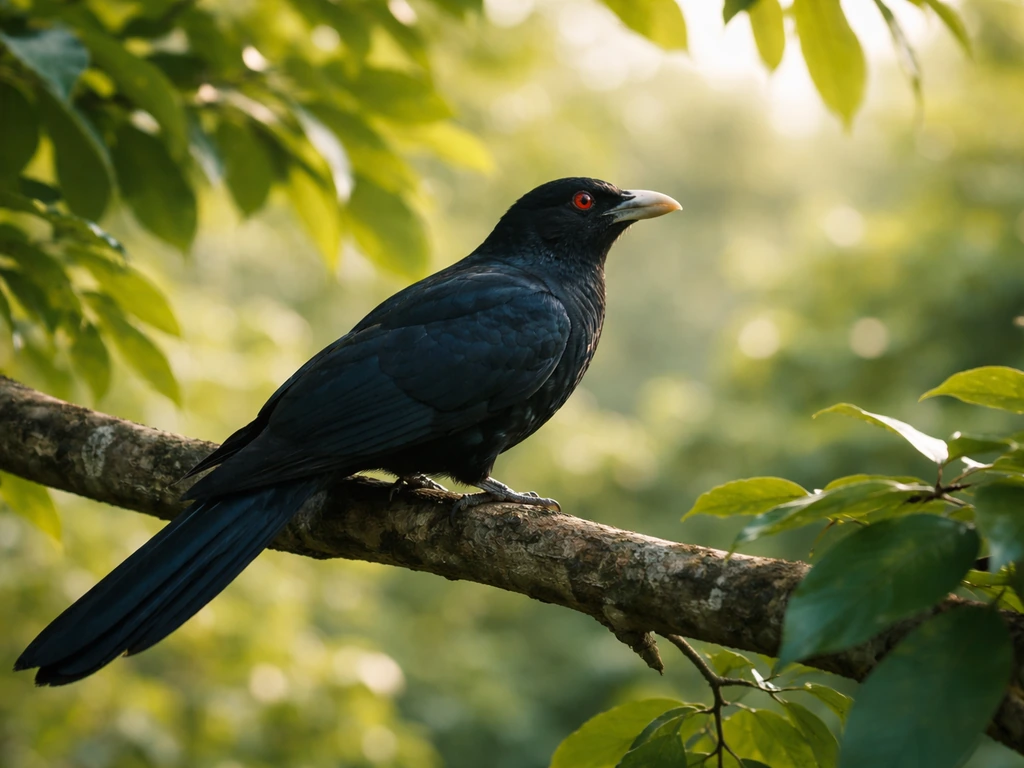
Cuckoo Bird Meaning in Hindi: नाम, उच्चारण और अर्थ
कोयल और cuckoo के हिंदी अर्थ, उच्चारण, उदाहरण व सांस्कृतिक प्रतीक, साथ ही प्रजाति भ्रम से बचाव
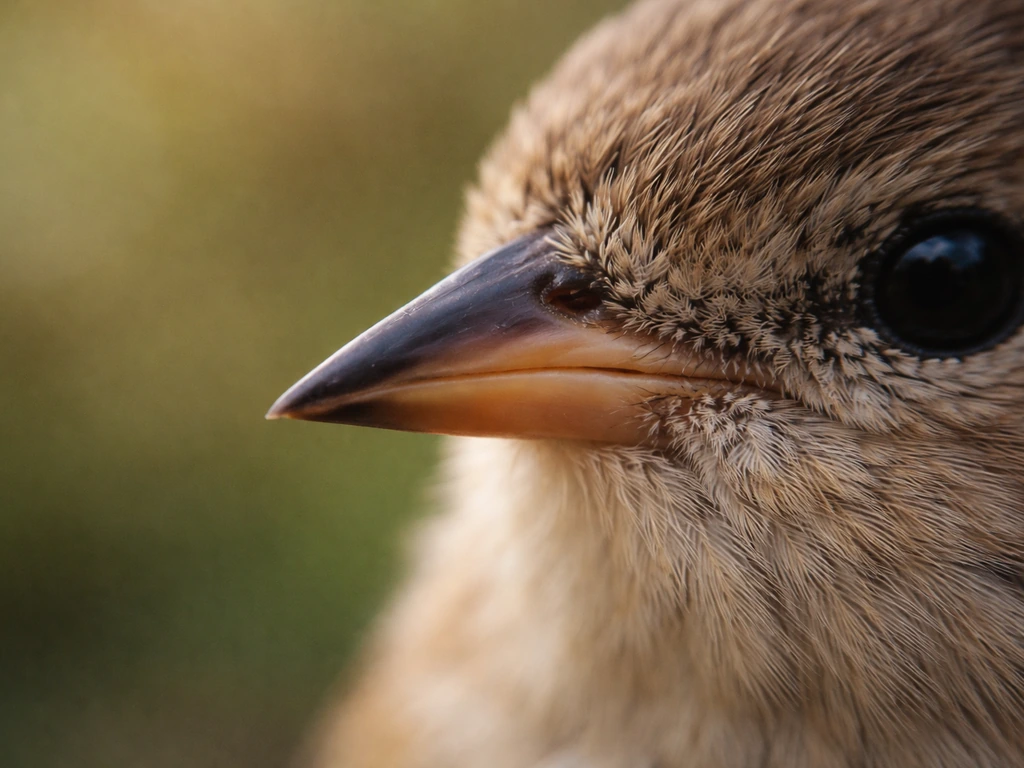
Bird Beak Meaning in Hindi: Chonch, Bill, Pronunciation
Bird beak in Hindi chonch or bill, pronunciation, examples, beak vs bill differences, and figurative Hindi use