
The Hindi word for cuckoo bird is कोयल (koyal). That is the short answer. If someone asks you "cuckoo bird meaning in Hindi" or "cuckoo bird in Hindi meaning," कोयल is the word you need. It is the standard, everyday translation used in dictionaries, textbooks, poetry, and conversation across Hindi-speaking India. Everything else in this article builds on that foundation, helping you use it correctly, understand what the bird means culturally, and avoid the common confusion between koyal, koel, and other cuckoo-family birds.
Cuckoo Bird Meaning in Hindi: नाम, उच्चारण और अर्थ

Rajesh Sharma
15 Apr 2026
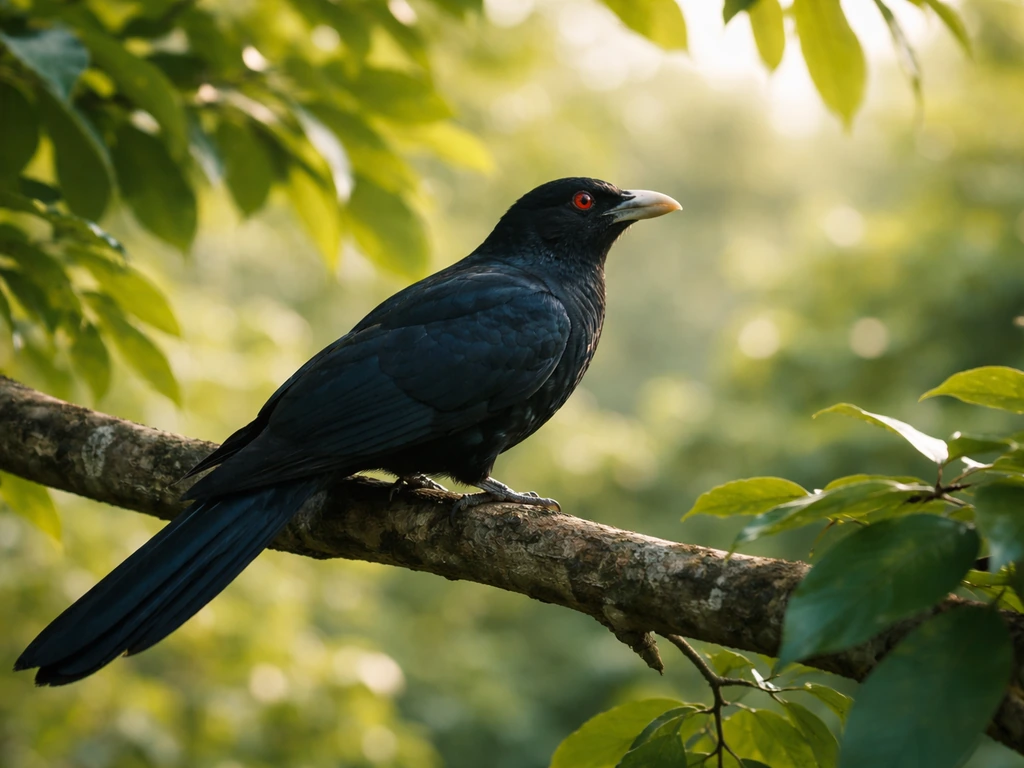
The Hindi words for cuckoo: what to use and when
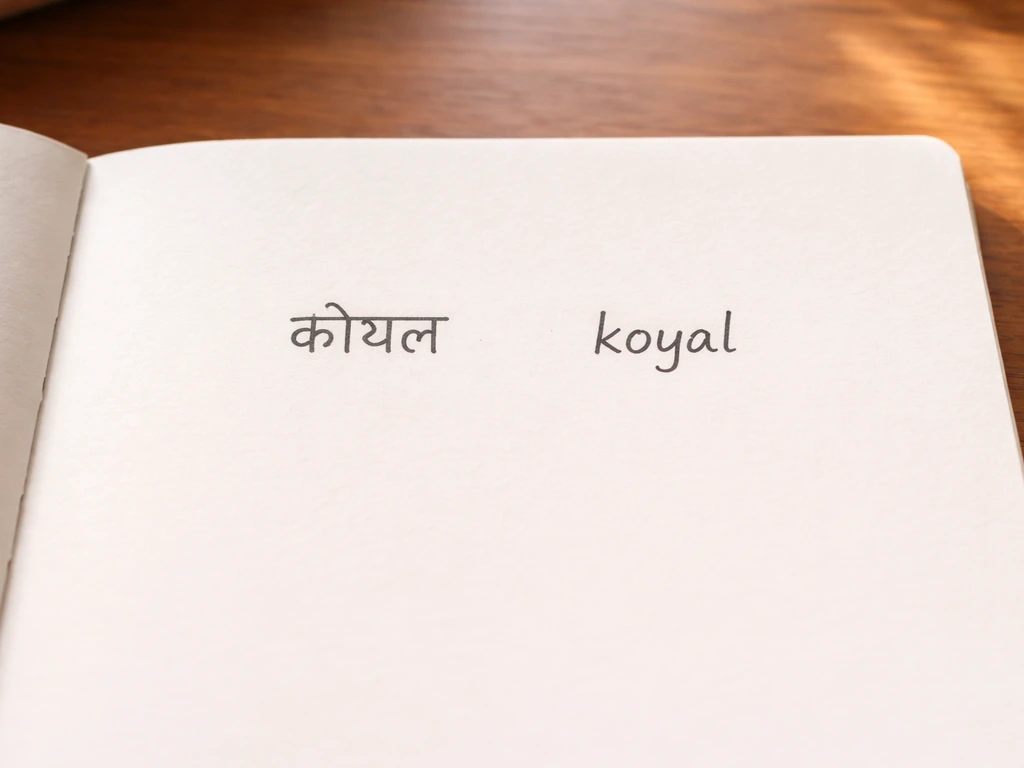
कोयल (koyal) is the go-to word for cuckoo in modern Hindi. You will find it in Collins Dictionary, Shabdkosh, and practically every English-to-Hindi reference that maps the word "cuckoo." A second, more classical form is कोकिल (kokil) or कोकिला (kokila, feminine form), which comes from Sanskrit and appears most often in poetry, classical literature, and devotional texts. Both refer to the same bird. In everyday Hindi speech, कोयल is far more natural. Some dictionaries and digital tools also show कुक्कू or कूकू as sound-based alternatives, but those are onomatopoeic spellings that mimic the call rather than formal bird names. Stick to कोयल when you want to be clearly understood.
| Hindi term | Transliteration | Context of use |
|---|---|---|
| कोयल | koyal | Everyday Hindi, modern dictionaries, conversation |
| कोकिल / कोकिला | kokil / kokila | Sanskrit, classical poetry, devotional texts |
| कुक्कू / कूकू | kukku / kuku | Onomatopoeic, mimicking the call, informal/colloquial |
Common Hindi sentences with cuckoo
Knowing the word is only half the job. Here are natural Hindi phrasings you can actually use or recognize when you come across them in conversation, reading, or listening.
- "The cuckoo bird" — कोयल / वह कोयल (vah koyal)
- "The cuckoo is calling" — कोयल कूक रही है (koyal kook rahi hai)
- "I heard a cuckoo" — मैंने कोयल की आवाज़ सुनी (maine koyal ki awaaz suni)
- "The cuckoo's call" — कोयल की कूक (koyal ki kook) — this is the fixed, widely used phrase
- "In spring, the cuckoo calls" — वसंत में कोयल कूकती है (vasant mein koyal kookti hai)
- "The cuckoo sat on the branch" — कोयल डाल पर बैठी (koyal daal par baithi)
The phrase कोयल की कूक (koyal ki kook) is particularly important. It literally means "the koel's call" or "the cuckoo's cooing," and it is a fixed idiom in Hindi. Delhi's Education Department materials explain it clearly: the act of the koel calling is specifically named कोयल की कूक, not just a generic sound word. You will see this phrase in Hindi newspapers like Dainik Jagran, in kids' poems (बाल कविताएं), and in literary prose.
Script, spelling, and pronunciation made simple
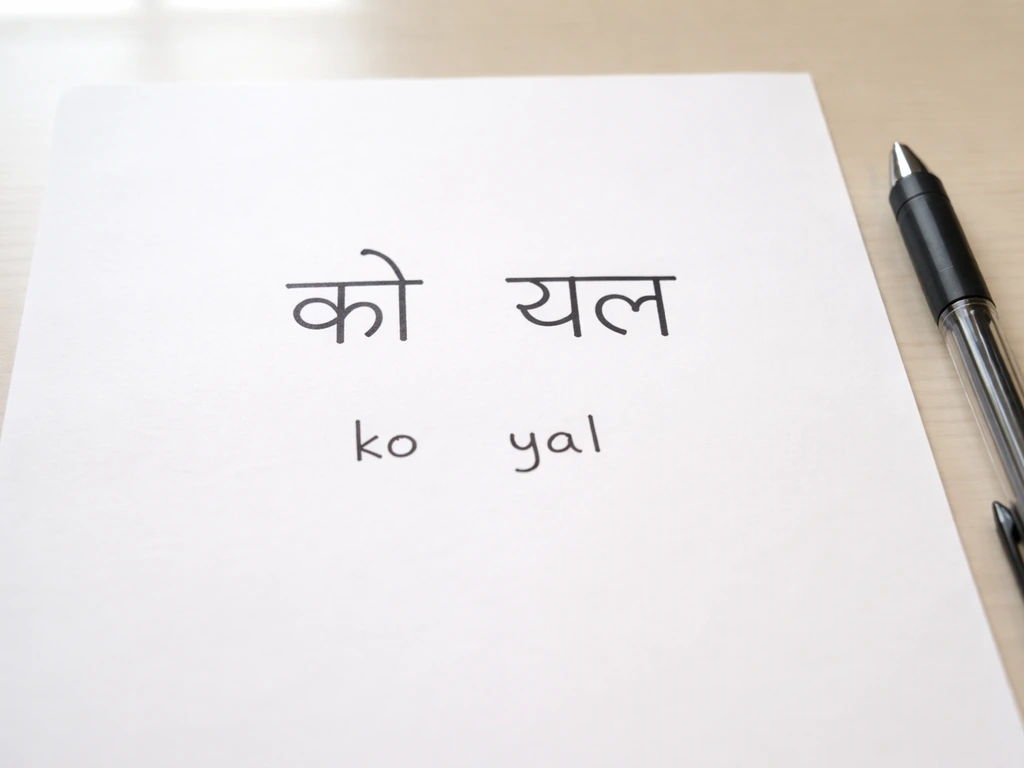
The Devanagari spelling is कोयल. Break it down phonetically: को (ko) + यल (yal). The stress is gentle and even, with no strong emphasis on either syllable. Teaching materials, including the iSpeakHindi lesson series, consistently use the transliteration "koyal" to represent this pronunciation.
The "o" in को is a clean, rounded vowel, similar to the "o" in "yolk. " The "y" in यल is soft, like a glide. Together it comes out as "KO-yal" with a light touch. If you have ever heard the word "koel" in English birding circles, that is simply the anglicised version of the same Hindi/Bengali word.
The alternate classical spelling कोकिला (ko-ki-laa) has three syllables and a long final vowel, which is why it sounds more formal and poetic when spoken aloud.
One spelling note worth keeping: some older sources or informal writing renders it as कौयल with an "औ" vowel, but this is a minority variant. In standard Hindi, कोयल with the "ो" vowel (the regular "o" matra) is the accepted form used in school textbooks and government publications.
What the cuckoo means in Indian culture and tradition
The कोयल is not just a bird in Indian tradition. It is a carrier of meaning, season, and emotion. Its call is almost universally associated with the arrival of spring (वसंत/Vasant) and the season of new beginnings. In folk belief and Hindu tradition, the koel is a symbol of fertility and auspiciousness. Hearing its call at the right time of year was considered a good omen, a sign that the season was turning and that the earth was waking up.
In poetry, especially in the Braj Bhasha and Awadhi traditions that fed into classical Hindi literature, the कोकिला is a recurring figure. Poets used its call as a metaphor for longing, separation (viraha), and the sweetness of love. The bird's song was so associated with yearning that even today, calling someone's voice "koyal jaisi awaaz" (a voice like a koel) is a compliment meaning melodious and sweet. The bird also appears in South Asian folklore more broadly: in Sri Lanka, the koel's call is tied to the new year and the month of April, a belief that echoes similar spring-arrival associations found throughout the Indian subcontinent.
If you are exploring thrush bird meaning in Hindi, you will notice that some other melodious birds share poetic associations in Hindi literature, though none carry quite the same weight of seasonal mythology that कोयल does.
Mythology and folklore vs. the real bird
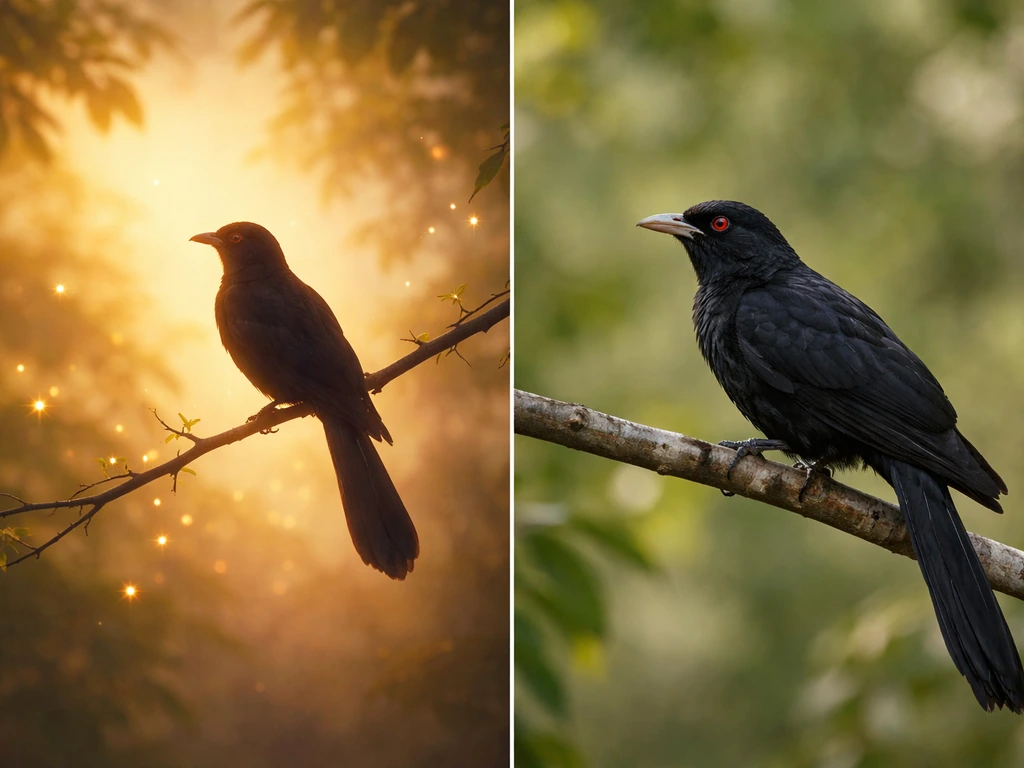
It helps to keep two tracks clear in your mind when reading about कोयल: the mythological/folk bird and the ornithological one.
In folklore and literature
In Indian mythology and folk tradition, कोयल/कोकिला is an idealized, almost magical creature: the bird of spring, of love, of sweetness, and of auspicious arrival. Its call (कोयल की कूक) signals transformation. References in the Ramayana and Mahabharata to birds with sweet calls often have koel-like imagery woven in, even when the text does not name the species directly. Classical Sanskrit poets like Kalidasa celebrated the kokila as the harbinger of Vasant Ritu (spring season). In this literary and mythological frame, the cuckoo is essentially a symbol that poets reach for, not a bird subject to ornithological scrutiny.
In real ornithology
The bird behind all of this symbolism is the Asian koel (Eudynamys scolopaceus), a member of the Cuculidae (cuckoo) family. It is a [brood parasite](https://www. nparks. gov.
sg/florafaunaweb/fauna/6/7/6767), meaning it lays its eggs in the nests of other birds, particularly crows, and lets the host raise its chicks. This biological fact was actually known in ancient India and sometimes referenced in literature as an example of cunning or deception, adding another layer to the bird's symbolic complexity. The male Asian koel is jet black; the female is brown and streaked.
Only the male produces the famous ascending call (ko-el, ko-el) that everyone associates with spring mornings in Indian cities and villages. This is important: when a Hindi poem says कोयल की कूक, the real-world sound it is describing is the male Asian koel's call.
The English word "cuckoo," in a strict ornithological sense, can refer to many species in the Cuculidae family globally, including the Common Cuckoo (Cuculus canorus) found in Europe and parts of Asia. In India, when people say "cuckoo" in English, they almost always mean the koel. Translating the English "cuckoo" into Hindi as कोयल is therefore accurate for the Indian context, even if it would not be a perfect match for, say, a European Common Cuckoo.
Koel vs. cuckoo vs. similar birds: clearing up the confusion
This is where most people get tangled up, so let us sort it out directly. In India, "koel," "koyal," and "cuckoo" are used almost interchangeably in everyday English and Hindi. They all point to कोयल (Asian koel) in the local context. But there are genuinely distinct birds in the cuckoo family that live in India, and knowing a few of them helps you read Hindi bird texts more accurately.
| English name | Hindi/common name | Key distinction |
|---|---|---|
| Asian Koel | कोयल (koyal) | The primary bird called 'cuckoo' in Hindi India; brood parasite; iconic ascending call |
| Common Hawk-Cuckoo | पपीहा (papiha) | Also called 'brainfever bird'; its call sounds like 'pee-kahan' or 'brain fever'; distinct from koel |
| Pied Cuckoo / Jacobin Cuckoo | चातक (chatak) | Associated with waiting for rain; deeply symbolic in Hindi poetry (Kabir, Mirabai references) |
| Common Cuckoo (European) | सामान्य कोयल | Rarely discussed in Hindi texts; the 'cuckoo clock' bird; different call and range |
The चातक (chatak) deserves a special mention because it is a separate symbol in Hindi and Sanskrit literature: the bird said to drink only rainwater, used as a metaphor for pure, patient longing. Confusing it with कोयल is a common error when reading classical Hindi poetry. Similarly, पपीहा (papiha) has its own symbolic register, associated with the "piya kahan" (where is my beloved?) call. If you are reading a Hindi poem and the bird seems to be crying out in anguish rather than announcing spring, it is more likely a चातक or पपीहा than a कोयल.
For a broader look at how similar translation challenges play out with other birds, the article on swallow bird in Hindi meaning shows how a common English bird name can map to multiple Hindi words depending on species and regional context. The same logic applies here with cuckoo and कोयल. And if you are ever unsure whether you are dealing with a real bird name or a slang term, checking how cull bird meaning in Hindi works is a good reminder that not every English bird-adjacent word translates cleanly into a single Hindi equivalent.
It is also worth noting that regional languages handle the cuckoo slightly differently. For instance, swallow bird meaning in Gujarati illustrates how Gujarat uses its own phonetic adaptations for bird names, and Gujarati similarly has regional variations for कोयल. In Marathi and Punjabi, the bird is called "koil" or "koyal" with minor phonetic shifts, staying close to the Hindi form. Sanskrit कोकिल/कोकिला is the root for all of them.
Some birds share the sonic space of the cuckoo in Indian poetry and can be mixed up. The gull bird meaning in Hindi is a completely different case (seabird, not a songbird), but it illustrates how English-to-Hindi bird translation can throw up unexpected results if you rely only on the English name. Similarly, the grouse bird meaning in Hindi shows that some English bird names have no clean single Hindi equivalent at all, which is why context always matters.
Quick answers and how to verify the meaning in context
Here is a fast-reference summary for the most common questions, followed by how to tell which sense of "cuckoo" is meant when you encounter the word in real Hindi text.
| Question | Answer |
|---|---|
| What is cuckoo bird in Hindi? | कोयल (koyal) |
| How do you write it in Devanagari? | क + ो + य + ल = कोयल |
| How do you pronounce it? | KO-yal (rhymes roughly with 'go pal' without the 'p') |
| What is the cuckoo's call called in Hindi? | कोयल की कूक (koyal ki kook) |
| What species does it refer to? | Asian Koel (Eudynamys scolopaceus) |
| Is it used in Indian mythology? | Yes, as a symbol of spring, fertility, sweetness, and longing |
| Classical/Sanskrit equivalent? | कोकिल (kokil) / कोकिला (kokila) |
To verify whether a Hindi text is using कोयल in a literal (ornithological) or symbolic (poetic/mythological) sense, look for these context clues. If the text mentions वसंत (spring), मधुर आवाज़ (sweet voice), or uses the fixed phrase कोयल की कूक, it is almost certainly the symbolic/poetic meaning at work. If the text talks about the bird's nesting behavior, its black plumage, or its brood parasitism, you are in ornithological territory.
Bioacoustics call studies of the Asian koel (Eudynamys scolopacea) refer to it as a well-known avian brood parasite Asian koel (Eudynamys scolopacea) as a brood parasite. A seasonal reference, especially to spring mornings or the month of Chaitra (चैत्र), is one of the most reliable signals: कोयल की कूक and वसंत go together in Hindi writing the way robins and spring go together in English.
If you are working from an English text that says "cuckoo" and you need the Hindi equivalent, कोयल is correct for the Indian context in virtually every case. If the text is specifically about a European cuckoo (think cuckoo clocks, or Cuculus canorus in a wildlife documentary), you can add सामान्य कोयल or specify the species. But for anything rooted in Indian culture, literature, language learning, or everyday conversation, कोयल is your word, कोयल की कूक is the call, and the Asian koel is the bird behind it all.
FAQ
क्या “कुक्कू” या “कूकू” कोयल (cuckoo bird) का सही नाम है, या सिर्फ आवाज़ की लिखावट?
ये आम तौर पर ध्वनि-आधारित ऑनमैटोपीया स्पेलिंग होती हैं, औपचारिक bird-name नहीं। अगर आपको संदर्भ में “कोयल” चाहिए (डिक्शनरी, स्कूल, साहित्य, या पहचान), तो Devanagari में कोयल ही लिखें।
कोयल की कूक (koyal ki kook) कब शाब्दिक लगती है और कब प्रतीकात्मक?
अगर वसंत, चैत्र, मधुर आवाज़, प्रेम या विरह जैसे भाव हों, तो यह लगभग हमेशा प्रतीकात्मक है। अगर टेक्स्ट में नर का काला रंग, मादा का भूरे रंग के साथ स्ट्रिक, या घोंसले में अंडे देने वाला व्यवहार जैसे संकेत हों, तो लेखक असल पक्षी की ओर जा रहा है।
अंग्रेज़ी में “cuckoo” शब्द का हिंदी में अनुवाद हमेशा “कोयल” ही करना चाहिए?
भारत/दक्षिण एशियाई संदर्भ में ज्यादातर मामलों में “कोयल” सही है, क्योंकि लोग आम तौर पर Asian koel/स्थानीय कोयल ही कहते हैं। लेकिन अगर टेक्स्ट में यूरोप, “cuckoo clock”, या प्रजाति का वैज्ञानिक नाम (जैसे Cuculus canorus) स्पष्ट हो, तो आप सामान्य कोयल लिखने के बजाय प्रजाति के हिसाब से स्पष्ट करना बेहतर रहेगा।
“कोयल” और “चातक” को कविता में कैसे अलग पहचानें?
चातक को अक्सर शुद्ध, धैर्यपूर्ण प्रतीक्षा और सिर्फ बारिश के पानी से जुड़ा रूपक दिया जाता है, जबकि कोयल के साथ वसंत और “कोयल की कूक” जैसी मौसमी छवियां आती हैं। अगर कविता “पिया कहाँ” टोन नहीं, बल्कि बारिश-प्रतीक्षा वाला भाव दिखाए, तो चातक की संभावना ज्यादा होती है।
“पपीहा” कोयल समझ लेना आम गलती क्यों है, और कैसे बचें?
पपीहा की ध्वनि/भावना अक्सर बेचैनी, “पिया कहाँ” जैसी तलाश से जुड़ी मानी जाती है। अगर लाइन में anguish, खोज, या प्रिय के लिए तड़प जैसी भावना प्रमुख हो, तो वह कोयल नहीं, पपीहा होने की संभावना ज्यादा है।
कोकिल/कोकिला (kokila) कोयल से अलग है क्या?
अधिकांश साहित्यिक संदर्भों में कोकिल/कोकिला को उसी bird-figure के लिए इस्तेमाल किया जाता है। फर्क मुख्यतः रजिस्टर में है, रोज़मर्रा की बोलचाल में कोयल अधिक स्वाभाविक है, जबकि कोकिला ज्यादा शास्त्रीय/काव्यात्मक सुनाई देता है।
अगर कोई पुराने स्रोत में “कौयल” जैसा रूप लिख दे, तो क्या मानना चाहिए?
यह minority variant हो सकती है। मानक, स्कूल और सरकारी प्रकाशनों में स्वीकार्य रूप कोयल (regular “o” matra) है। इसलिए परीक्षा, औपचारिक लेखन या स्पष्टता के लिए कोयल लिखें।
Hindi टेक्स्ट में कोयल का “literal” मतलब है या “symbolic”, यह जल्दी कैसे तय करें?
तीन तेज संकेत देखें, वसंत/चैत्र/स्प्रिंग mornings, “कोयल की कूक” जैसे fixed idiom, या मधुर आवाज़ और प्रेम-विरह की थीम। अगर टेक्स्ट में पक्षी की बनावट, नर-मादा का रंग, या brood parasitism जैसी बातें हों, तो वह literal ornithological अर्थ है।
कोयल की call को “को-एल” ही बोलना सही है या “कू-कू”?
कविताओं में “कोयल की कूक” जैसा वाक्य आम है, पर असल bird-call से जुड़ा पारंपरिक उच्चारण अक्सर “ko-el, ko-el” की तरह समझाया जाता है (विशेषकर मेल Asian koel के संदर्भ में)। व्यावहारिक रूप से, लिखित/सीखने के लिए कोयल की standard spelling और koyal transliteration रखें।
कोयल के बजाय कभी “सामान्य कोयल” या species बताने की जरूरत कब पड़ती है?
जब आप किसी अंग्रेज़ी wildlife/documentary या scientific विवरण का अनुवाद कर रहे हों, या किसी अलग region/species की संभावना हो। तब “सामान्य कोयल” लिखकर या वैज्ञानिक नाम/विवरण जोड़कर ambiguity कम की जा सकती है।
Next Articles
Bird Beak Meaning in Hindi: Chonch, Bill, Pronunciation
Bird beak in Hindi chonch or bill, pronunciation, examples, beak vs bill differences, and figurative Hindi use
Bird Pankh in English Meaning: Wings or Feathers?
Learn bird pankh in English meaning: pankh means feathers or wings, with context rules, examples, and regional equivalen
Bird Peck Meaning in Hindi: Translation, Examples
bird peck meaning in Hindi: pecking, pecks at, pecked action और वाक्य उदाहरण, साथ ही शब्द चयन व tense guide