
In Marathi, the bird most people call a "robin" goes by the name दयाळ (Dayaal). This name is most closely tied to the blank" rel="noopener noreferrer">Indian Robin (Saxicoloides fulicata), a small, familiar ground bird found hopping around gardens, scrublands, and urban compounds across India. If you have heard someone say "दयाळ पक्षी" in Marathi, they are almost certainly talking about this bird. The word Dayaal carries a warmth to it in Marathi, suggesting a gentle, approachable creature, which matches how people relate to this bird in everyday life.
Robin Bird Meaning in Marathi: Name, Pronunciation, Symbolism

Rajesh Sharma
7 Jul 2026
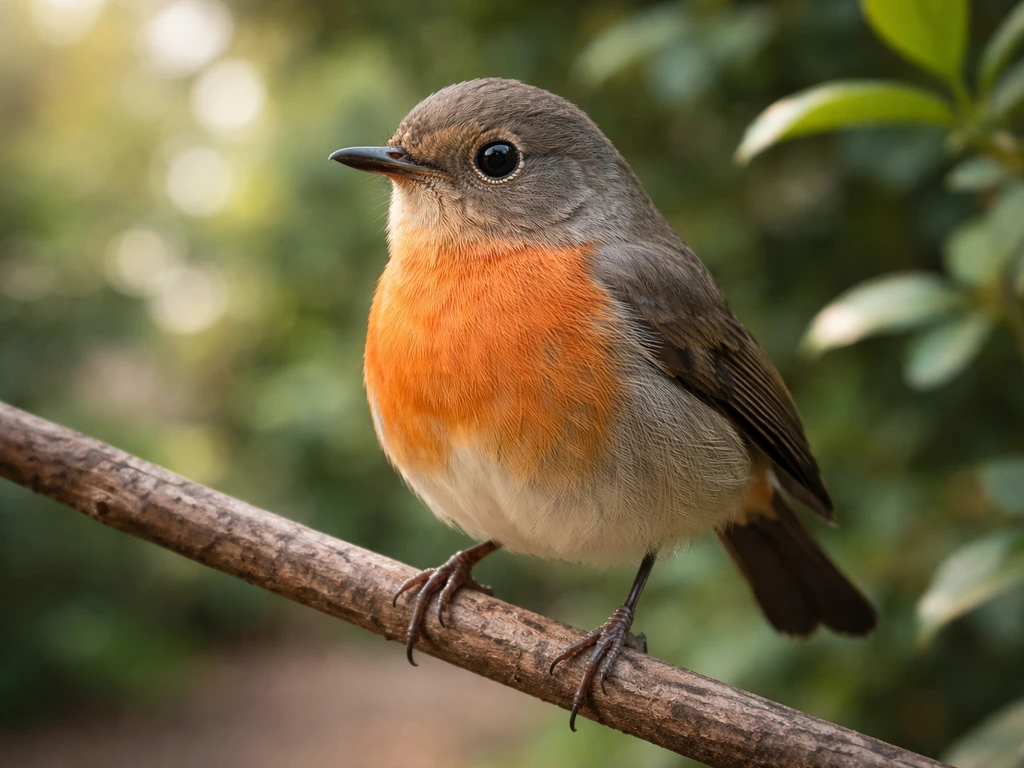
What Robin Actually Means in Marathi
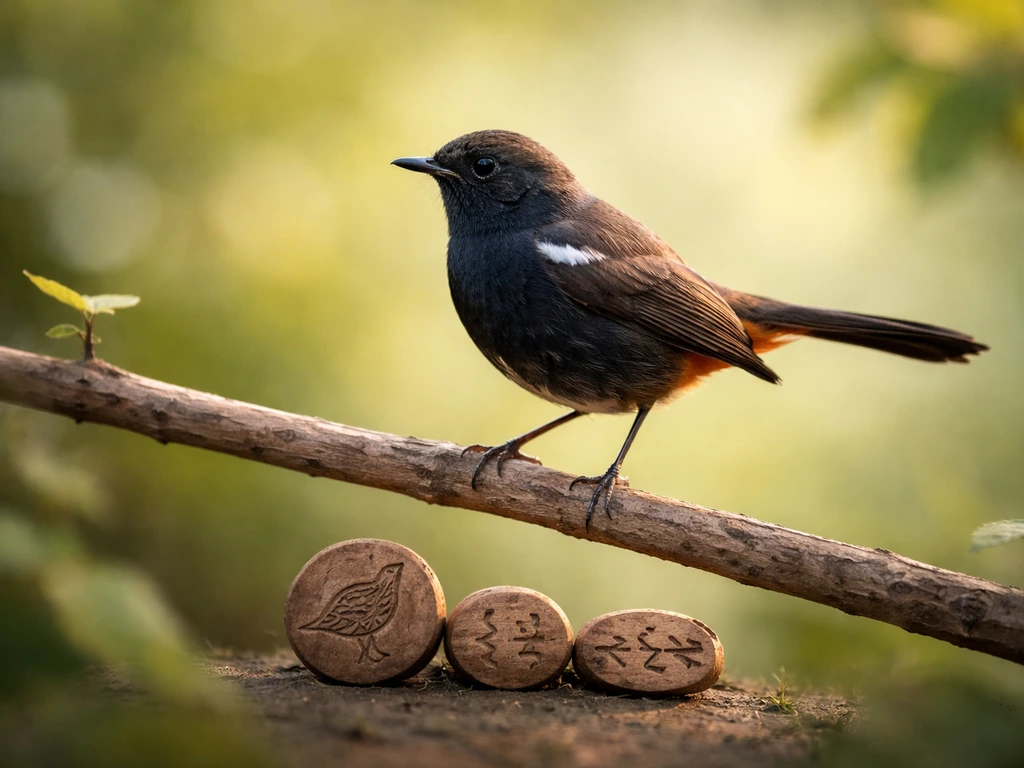
The primary Marathi name for the Indian Robin is दयाळ (Dayaal or Dayal, pronounced roughly as duh-YAAL). This name was formally recorded by ornithologist T.C. Jerdon in his documentation of Indian birds, where he explicitly listed "Dayaal" as the Marathi vernacular name for Saxicoloides fulicata. Some older Marathi and ornithological sources also list additional names for this species, including Chirak (चिरक) and blank" rel="noopener noreferrer">Kaldumnat (कालदुमनट), but दयाळ remains the most widely recognised and commonly used Marathi name today. If you were also searching for the early bird meaning in Marathi, it typically refers to someone who wakes up early or acts promptly.
It is worth knowing that दयाळ is also used in reference to the Oriental Magpie-Robin (Copsychus saularis), a closely related and similarly beloved bird. A biodiversity survey from Jain Irrigation Systems lists both Hindi and Marathi names for the Oriental Magpie-Robin as धैयाल / दयाळ, showing that the name Dayaal crosses between these two species in everyday speech. This is the source of most confusion when people search for "robin bird meaning in Marathi," so it helps to know which specific bird you have in mind.
Hindi vs Marathi: Names, Spelling, and Pronunciation
Hindi and Marathi do not always use the same name for the same bird, and the robin is a good example of this. In Hindi, the Indian Robin is most commonly called Kalchuri (कालचुरी or कलचुरी), while in Marathi it is Dayaal (दयाळ). These are genuinely different words with different sounds, so if you are switching between the two languages, you cannot simply carry one name across.
| Bird Species | Marathi Name | Hindi Name | Pronunciation Guide |
|---|---|---|---|
| Indian Robin (Saxicoloides fulicata) | दयाळ (Dayaal) | कालचुरी (Kalchuri) | duh-YAAL / kaal-CHOO-ree |
| Oriental Magpie-Robin (Copsychus saularis) | दयाळ (Dayaal) | धैयाल / सौलरी (Dhayal / Saulary) | duh-YAAL / DHAY-yaal |
| Generic robin (colloquial usage) | रॉबिन (Robin) | रॉबिन (Robin) | ROW-bin (anglicised) |
Notice that Marathi uses दयाळ for both the Indian Robin and the Oriental Magpie-Robin, while Hindi differentiates more clearly between them, using Kalchuri for the former and Dhayal or Saulary for the latter. The Hindi word Saulary, linked to the Magpie-Robin's scientific name Copsychus saularis, reportedly carries the meaning "hundred songs," a poetic nod to the bird's remarkable vocal ability. Spellings in transliteration can vary (Dayaal, Dayal, Dhayal, Dhyal), so if you see any of these, they are pointing to the same broad family of names.
Which Robin Species Do People Actually Mean in India?
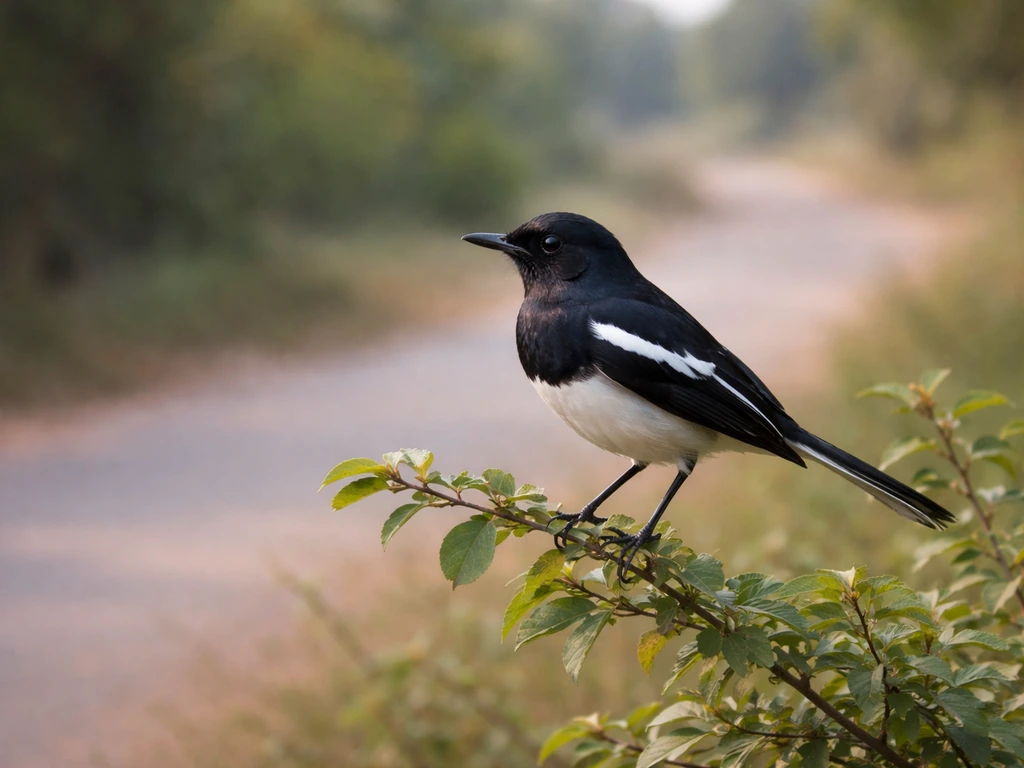
This is probably the most practically useful clarification you can get. When Indians say "robin," they are rarely thinking of the European Robin (Erithacus rubecula) that most Western sources describe. The term "Indian robin" refers to Saxicoloides fulicata, a small passerine in the Old World flycatcher family that is one of the most common birds across the Indian subcontinent.
If you are searching the phrase robin bird meaning in Marathi, the same quick species check for “Indian robin” versus Oriental Magpie-Robin also helps with “bater bird meaning in marathi” style confusion. You will see it hopping on the ground in gardens and scrublands, tail cocked upright, the male jet-black with a chestnut patch under the tail, and the female a duller brownish-grey.
The Oriental Magpie-Robin (Copsychus saularis) adds to the mix because it shares the Dayaal name and is also widely called a "robin" informally. It is larger, strikingly black and white, known for holding its long tail upright and for its rich, melodious song. Both birds are described as "Indian robins" in different contexts, which is why confirming the species before you look up the name is always a good idea. If someone describes a small plain brownish bird with a cocked tail in a garden, they likely mean Saxicoloides fulicata. If they describe a bold black-and-white singer, it is probably Copsychus saularis.
Cultural Symbolism of the Robin in Hindi and Marathi Traditions
The Indian Robin does not carry the same heavyweight mythological role as birds like the crow, peacock, or the kite in Indian tradition, but it holds a gentle, beloved place in everyday cultural life. The name Dayaal (दयाळ) itself is rooted in the Sanskrit word दया (Daya), meaning compassion or mercy. To call a bird Dayaal is to quietly mark it as a gentle, friendly presence, and this tells you something about how people in Maharashtra perceive it. It is not a bird of omen or divine authority; it is a bird of warmth.
In villages and suburban areas of Maharashtra, the Dayaal is seen as a companion bird. It frequents human habitation, hops fearlessly around courtyards and compounds, and is generally considered auspicious in a quiet, understated way. Its presence near a home is not read as a dramatic spiritual sign but as a natural, welcome part of daily life, much like seeing a sparrow or a wagtail. In this way it contrasts with other birds like the black kite, which in Indian symbolism can carry heavier associations with death rites and Pitru (ancestral) rituals.
Spiritual and Folklore Associations
Because the word Dayaal shares its root with दयाळू (Dayalu), meaning compassionate or kind-hearted in Marathi, the bird is sometimes associated with qualities of gentleness, approachability, and everyday grace. In folk contexts, a bird that lives close to humans without fear is often read as a positive sign, suggesting a harmonious household or a spiritually clean space. The Indian Robin fits this archetype naturally.
For the Oriental Magpie-Robin specifically, its extraordinary singing ability has made it a symbol of joy and good fortune in several parts of India. A bird that sings beautifully near your home is widely considered auspicious across Hindi-speaking and Marathi-speaking regions. The Magpie-Robin's song is so celebrated that it was declared the national bird of Bangladesh, reflecting just how deeply the Dayaal resonates culturally across the subcontinent. In Marathi and Hindi folk traditions, teaching children to recognise the Dayaal by its song is a small but meaningful cultural gesture, keeping a living connection between language, nature, and local identity.
There are no major Puranic stories or goddess associations tied specifically to the robin the way there are with birds like the Garuda or the peacock. But in the oral and everyday tradition of Maharashtra, the Dayaal is remembered fondly in folk songs, nature poems in Marathi, and in the kind of bird-watching culture that has always been part of rural and semi-urban life. It is a bird people name, recognise, and feel affection for, which in itself is a form of cultural meaning.
Using दयाळ in Marathi Sentences
If you are a language learner or just want to use the word correctly in conversation, here are some practical Marathi sentences built around दयाळ. These examples follow natural Marathi sentence structure so you can adapt them for writing, speaking, or cultural discussions.
- दयाळ पक्षी आपल्या अंगणात रोज येतो. (Dayaal pakshi aaplya angnat roj yeto.) — The robin comes to our courtyard every day.
- दयाळ एक गोड गाणाऱ्या पक्ष्यांपैकी एक आहे. (Dayaal ek god gaanaarya pakshyaanpaikee ek aahe.) — The Dayaal is one of the sweetly singing birds.
- या पक्ष्याला मराठीत दयाळ असे म्हणतात. (Ya pakshyaala Marathit Dayaal ase mhantaat.) — This bird is called Dayaal in Marathi.
- दयाळ पक्षी जमिनीवर उड्या मारत चालतो. (Dayaal pakshi jameeneevar udya maarat chaalto.) — The Dayaal hops along the ground.
- त्याचे गाणे ऐकून मन प्रसन्न होते. (Tyache gaane aaikun man prasann hote.) — Hearing its song, the mind becomes peaceful.
To confirm the exact species and name in a given regional context, your best approach is to cross-reference the scientific name Saxicoloides fulicata (Indian Robin) or Copsychus saularis (Oriental Magpie-Robin) against a Marathi birding resource or a bilingual field guide. Both species appear in Indian bird checklists under the Dayaal umbrella, and ornithological databases like IndiaBiodiversity and the Ali & Ripley Handbook of Birds of India and Pakistan are reliable references that list verified vernacular names.
Quick Reference: Robin Names Across Languages
| Language | Name | Script | Notes |
|---|---|---|---|
| Marathi | Dayaal / Chirak / Kaldumnat | दयाळ / चिरक / कालदुमनट | Dayaal is primary; Chirak and Kaldumnat are older/regional variants |
| Hindi | Kalchuri / Dhayal / Saulary | कालचुरी / धैयाल / सौलरी | Kalchuri for Indian Robin; Dhayal/Saulary for Magpie-Robin |
| Sanskrit root | Daya (दया) | दया | Meaning compassion/mercy; root of Dayaal |
| English (common) | Indian Robin / Indian Black Robin | — | Refers to Saxicoloides fulicata |
| Scientific (Indian Robin) | Saxicoloides fulicata | — | Most common species meant in India |
| Scientific (Magpie-Robin) | Copsychus saularis | — | Also called Dayaal; known for song |
If you enjoy exploring bird names across Indian languages, the same kind of regional variation and name-overlap you find with the robin shows up with birds like the bater (quail), the kite, and many others. If you are asking specifically about the kite bird meaning in Marathi, you may be looking for the local name and the cultural or linguistic context it carries. Indian languages are remarkably precise in their local bird names once you dig past the English label, and the robin is a fine example of how a single common name can open up an entire layered world of language, species identity, and cultural meaning.
FAQ
“रॉबिन पक्षी” आणि “दयाळ पक्षी” हे नेहमी एकच पक्षी आहे का?
“रोबिन” बोलताना बहुतेक वेळा लोक “दयाळ” म्हणतात, पण कोणता पक्षी अभिप्रेत आहे ते ठरवण्यासाठी 2 गोष्टी पहा, (1) रंग (लहान, राखाडी-तपकिरी जमिनीवर बसणारा की काळा-पांढरा आणि उठवलेली शेपटी असलेला) आणि (2) आवाज (गोड गाणे देणारा, की तुलनेने साधा झपाट्याने हालचाल करणारा). या दोन संकेतांवरून दयाळ म्हणजे Indian Robin की Oriental Magpie-Robin हे पटकन ओळखता येते.
“दयाळ” हा शब्द कसा उच्चारायचा, आणि स्पेलिंग/उच्चार बदलले तर अर्थ बदलतो का?
मराठीत “दयाळ” लिहिताना उच्चार द्या-याळ किंवा दयाळ असा ऐकू येतो, मात्र बोलीभाषेनुसार “dayal” सारखे उच्चार बदलू शकतात. म्हणून संभाषणात अडकू नये म्हणून आपण “दयाळ पक्षी” असे नावच सांगावे, इंग्लिश “robin” वर अवलंबून राहू नये.
फोटो किंवा प्रत्यक्ष पाहून मी Indian Robin आणि Oriental Magpie-Robin कसे वेगळे करू?
ज्या ठिकाणी लोक दोन्ही पक्ष्यांना “robin” म्हणून सहज संबोधतात, तिथे शोधताना गोंधळ होतो. “दयाळ” शोधल्यावर जर फोटोमध्ये काळा-पांढरा आणि टोकदार शेपूट सतत वर दिसत असेल, तर तो Oriental Magpie-Robin असण्याची शक्यता जास्त; उलट लहान तपकिरी-राखाडी आणि जमिनीवर टप-टप हालचाल दिसली तर Indian Robin समजावे.
“दयाळ”चा अर्थ फक्त शब्दशः आहे का, की सांस्कृतिक भावसुद्धा त्यात येतो?
जर तुम्ही “robin bird meaning in marathi” विचारत असाल तर उत्तर प्रामुख्याने “दयाळ (दयाळ पक्षी)” असेच असते, पण “meaning” म्हणजे फक्त शब्दार्थ नव्हे. मराठीत “दयाळ” ही दया/दया-भावाशी जोडली जाते, म्हणून ती “मृदू, स्नेही, माणसांच्या जवळ राहणारा” असा सांस्कृतिक अर्थ लोकांच्या नजरेत येतो, हा भाव लक्षात ठेवा.
“दयाळ” शब्द वापरून बोलण्यात कसे वाक्य बनवू, जे नैसर्गिक वाटेल?
तुम्हाला रोजच्या संभाषणात वापरायचे वाक्य हवे असेल तर “दिवसभर दिवाणखान्याजवळ दयाळ पक्षी दिसला” किंवा “आवाज ऐकून दयाळ पक्षी ओळखला” अशा निरीक्षणाधारित वाक्यांचा वापर सोपा पडतो. पक्ष्याचे रूप, ठिकाण (courtyard, बाग), आणि आवाज यावरून वाक्य अधिक नैसर्गिक वाटते.
जर मला “robin” म्हणताना युरोपियन पक्षी म्हणायचा असेल तर मी कशी खात्री करावी?
शोधताना इंग्लिश “European robin” आणि भारतीय “Indian robin” यांची गल्लत होऊ शकते. जर तुम्ही मराठी माहिती शोधत असाल, तर बहुतेक वेळा “Indian robin” म्हणून Saxicoloides fulicata आणि “Magpie-Robin” साठी Copsychus saularis असा species-आधारित मार्ग अवलंबा, कारण हीच गल्लत वारंवार होते.
एखाद्या लेखात/पोस्टमध्ये फक्त “दयाळ” लिहिले असेल तर मी तो शब्द 100% खात्रीने कोणत्या पक्ष्यासाठी घ्यावा?
“दयाळ” हा शब्द दुसऱ्या पक्ष्यावरही वापरला जातो, म्हणून एकाच शब्दावर ठाम निष्कर्ष घेणे धोकादायक ठरू शकते. तुमचा उद्देश शब्दाचा सांस्कृतिक अर्थ समजून घेणे असेल तर दयाळ असा उल्लेख ठीक, पण वैज्ञानिक/पक्षी-ओळखीसाठी scientific name पाहणे गरजेचे आहे.
“दयाळ” पाहणे म्हणजे लगेच शुभ संकेतच का मानतात, की तो सौम्य लोकविचार आहे?
जर तुम्हाला शुभ/अपशुभ असा अर्थ विचारायचा असेल तर तो “नाट्यमय धार्मिक संकेत” म्हणून न घेता “घराजवळ दिसणारा, माणसांच्या सान्निध्यात येणारा, सकारात्मक दैनंदिन लक्षण” अशा सौम्य अर्थाने लोक घेतात. त्यामुळे पक्षी दिसणे म्हणजे ताबडतोब कोणताही मोठा शगुन मानू नये.
Next Articles
What is Bat Bird Called in Marathi and Hindi Names
मराठी आणि हिंदीत bat bird म्हणजे काय समजून घ्या, योग्य नाव, सामान्य गोंधळ आणि संदर्भ तपासण्याची पद्धत.
Bater Bird Meaning in Marathi: Name, Species, Symbolism
बेटर बर्ड म्हणजे काय, मराठीत अचूक नाव-लेखन, प्रजाती की पौराणिक पक्षी, आणि हिंदू प्रतीकात्मक अर्थ जाणून घ्या

Early Bird Meaning in Marathi with Hindi Urdu Examples
Marathi अर्थांसह early bird आणि early bird discount समजून घ्या, Hindi Urdu उदाहरणे व वापर.