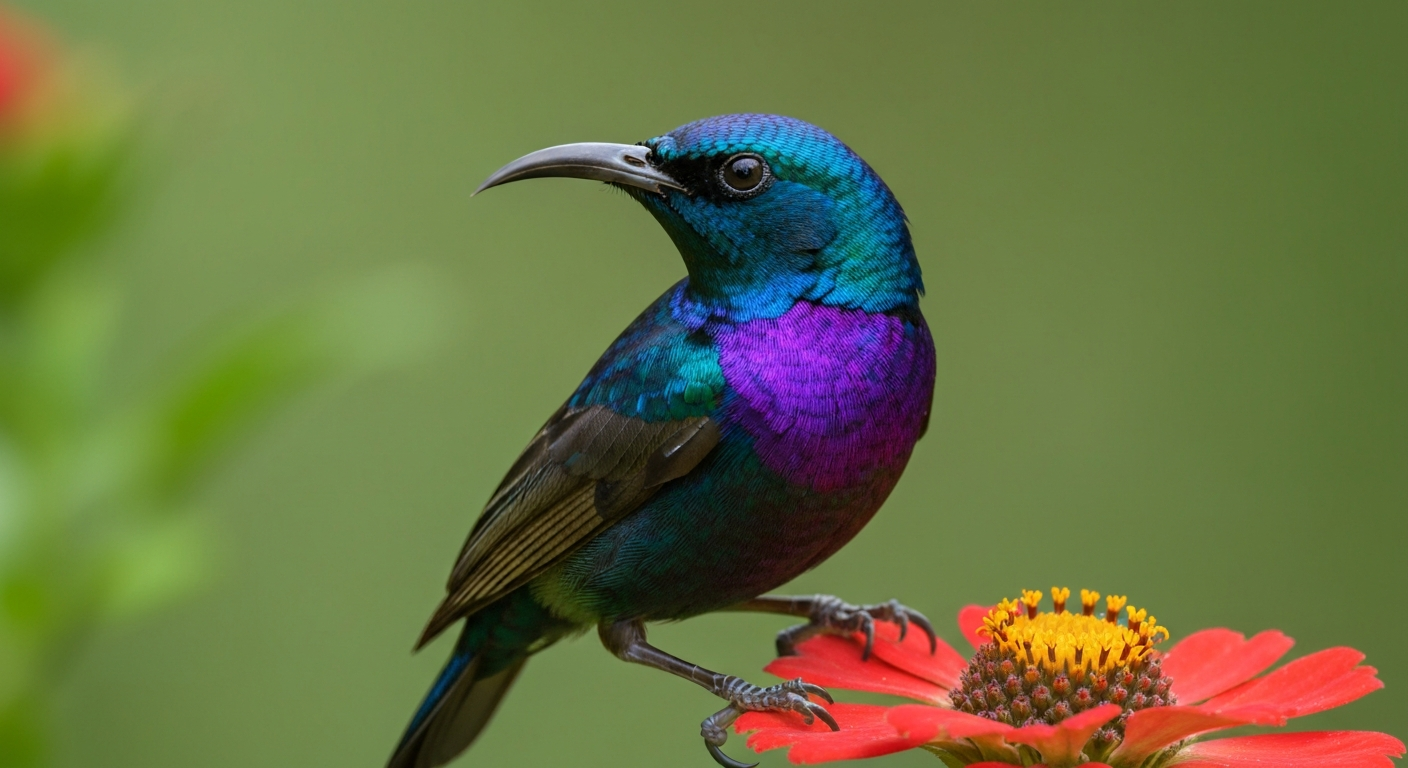
In Hindi, a sunbird is most commonly called 'शक्करखोरा' (Shakkarkhoora) or 'फुलसूँघनी' (Phulsungni), with 'फुलचूही' (Phulchuhi) also widely used in northern India. These are small, brilliantly coloured nectar-feeding birds belonging to the family Nectariniidae, and if you have ever watched one dart between flowers in an Indian garden, you already know them. This article walks you through what sunbirds are, how to say and write the word correctly in Hindi and four other Indian languages, and what role these jewel-like birds play in Indian culture and tradition.
Sun Bird Meaning in Hindi: Translate, Pronounce & Use (Sanskrit & Indian Names)

Rajesh Sharma
5 Aug 2026
What is a sunbird? A quick definition
Sunbirds are small Old World passerine birds in the family Nectariniidae. They are primarily nectarivorous, meaning nectar from flowers is their main food source, though they also eat insects and spiders for protein. You will find them across Africa, South Asia, and Southeast Asia. India is home to several species, making them a familiar sight in gardens, forest edges, and scrubland from the Himalayas to the Western Ghats. Their hovering, darting feeding style often draws comparisons to New World hummingbirds, but the two groups are not closely related; the similarity is a case of convergent evolution.
Spotting sunbirds in India: field marks and common species
India hosts several Nectariniidae species that any birdwatcher or casual observer is likely to encounter. Here are the four you are most likely to come across, along with the key features that separate them in the field.
Purple Sunbird (Cinnyris asiaticus)
The Purple Sunbird is probably the species most Indian city-dwellers have seen without realising it. The male in breeding plumage is unmistakable: a glossy, iridescent purple-black from head to tail, with a subtly curved bill of short to medium length. The female is much plainer, olive above and pale yellowish below. This species thrives in gardens, scrub, and urban greenery right across the subcontinent. If you are in Delhi, Mumbai, or Chennai and you see a tiny glittering bird investigating a flowering plant, it is almost certainly this one.
Purple-rumped Sunbird (Leptocoma zeylonica)
Common in peninsular India and Sri Lanka, the Purple-rumped Sunbird is slightly smaller and the male shows a distinctive purple rump and throat patch against a yellow-white belly. The female can be tricky to separate from other female sunbirds in the region, but the pale underparts and relatively short bill help. This is a garden and forest-edge bird of southern India.
Crimson-backed Sunbird (Leptocoma minima)
At roughly 8 cm, the Crimson-backed Sunbird (also called the Small Sunbird) is one of India's tiniest birds. The male is hard to miss: a vivid crimson-red back and a broad crimson breast band stand out even in dense foliage. It is endemic to India's Western Ghats and adjoining hills, so if you are birdwatching in Kerala, Karnataka, or Goa, this is the sunbird you will most want to look for. See Wikipedia, Crimson‑backed Sunbird (summary and range; consult HBW/IUCN for authoritative details) for authoritative range and conservation notes confirming this species is restricted to the Western Ghats and adjacent hills blank" rel="noopener noreferrer">Wikipedia — Crimson‑backed Sunbird (summary and range; consult HBW/IUCN for authoritative details).
Loten's Sunbird (Cinnyris lotenius)
Loten's Sunbird is a peninsular India resident, slightly larger-looking than the Purple Sunbird because of its noticeably longer, more strongly down-curved bill. For range and identification details, see Wikipedia, Loten's Sunbird (overview; consult Birds of India for field details) blank" rel="noopener noreferrer">Wikipedia — Loten's Sunbird (overview; consult Birds of India for field details). The male has a distinctive maroon breast band. It tends to prefer forest edges and thicker vegetation compared to the Purple Sunbird's urban tolerance. The long bill is the quickest field separation from other species.
How to say 'sunbird' in Hindi: translations, transliteration, and pronunciation
There is no single, universally standardised Hindi translation for 'sunbird,' which is typical of many bird names in Indian vernacular use. What you find instead are a handful of well-attested names that speakers across different regions favour, each capturing a different quality of the bird.
- शक्करखोरा (Shakkarkhoora): literally 'sugar eater' or 'one who eats sweetness,' from शक्कर (shakkar, sugar) + खोरा (khora, eater/consumer). This is probably the most widely recognised Hindi name and appears in Avibase and Indian outreach material. Pronunciation guide: SHUCK-kar-KHO-raa. The 'kh' is the aspirated velar fricative, like the 'ch' in Scottish 'loch.'
- फुलसूँघनी (Phulsungni): literally 'flower-sniffer' or 'one who smells flowers,' from फूल (phool, flower) + सूँघना (sunghna, to smell/sniff). A very evocative, poetic name. Pronunciation: PHOOL-soong-nee. The 'ph' in Hindi is an aspirated 'p,' not an English 'f' sound.
- फुलचूही (Phulchuhi): 'flower mouse' or 'flower sparrow,' a warm, affectionate nickname common in northern India. From फूल (phool, flower) + चूही (chuhi, a small mouse or tiny creature). Pronunciation: PHOOL-choo-hee.
- शर्करा-भक्षक (Sharkara-bhakshak): a more formal, Sanskritised Hindi compound meaning 'sugar consumer.' Less common in everyday speech but occasionally found in textbook or formal ornithological lists. Pronunciation: SHAR-ka-raa BHUCK-shuck.
A quick note on transliteration standards: for scholarly accuracy, Hindi names can be rendered using IAST (International Alphabet of Sanskrit Transliteration) or ISO 15919. For everyday readers, a simplified Hunterian-style respelling is more practical, and that is what this article uses in the guides above. The IPA (International Phonetic Alphabet) reference used here follows standard Modern Standard Hindi phonology.
Sunbird in Sanskrit, Marathi, Punjabi, and Gujarati
Across India's major languages, sunbirds are named with remarkable consistency: almost every language reaches for a metaphor involving flowers, sweetness, or nectar. Here is what each language offers, along with script forms and pronunciation notes.
Sanskrit
Classical Sanskrit does not have a single canonical term for the sunbird as a distinct species group, since the zoological separation of Nectariniidae from other small birds is a modern ornithological framework. The descriptive compounds used in Sanskrit texts and modern Sanskrit-medium educational material are: मधुपायी (Madhupaayi, 'one who drinks honey/nectar,' from मधु madhu + पायी paayi) and पुष्परस-भक्षक (Pushparasa-bhakshaka, 'one who consumes flower juice'). The term मधुकर (Madhukar) also appears, though it more often refers to the bee; some Sanskrit writers use it for nectar-feeding birds by extension.
Marathi
In Marathi, the sunbird is typically called 'सूर्यपक्षी' (Suryapakshi, literally 'sun bird,' a direct calque of the English name) or more colloquially 'फुलचुखा' (Phulchukha, 'flower-pecker/flower-kisser'). The name शक्करखोरा is also understood and used in Maharashtra, borrowed directly from Hindi, particularly in urban areas. Pronunciation of सूर्यपक्षी: SOOR-ya-PUCK-shee.
Punjabi
In Punjabi, the sunbird is called 'ਸ਼ੱਕਰਖੋਰਾ' (Shakkarkhoraa) in Gurmukhi script, essentially the same word as Hindi शक्करखोरा, reflecting shared vocabulary across the two closely related languages. Some Punjabi birdwatching communities also use 'ਫੁੱਲਚੂਹੀ' (Phulchuhi) in the same affectionate sense as Hindi speakers do.
Gujarati
Gujarati speakers typically use 'સૂર્યપક્ષી' (Suryapakshi), the direct calque, or 'ફૂલ ચૂસણી' (Phul Chusni, 'flower-sucker'), which describes the bird's feeding behaviour directly and clearly. The latter is informal and widely understood in rural Gujarat.
Species-to-language quick reference
The table below maps the four most common Indian sunbird species to their names across Hindi, Sanskrit, Marathi, Punjabi, and Gujarati. Cells marked with an asterisk (*) are based on a single attested source and should be treated as provisional until verified with a second independent reference such as a regional field guide or ZSI publication.
| Species (Scientific Name) | English Name | Hindi (Devanagari) | Sanskrit | Marathi | Punjabi (Gurmukhi) | Gujarati |
|---|---|---|---|---|---|---|
| Cinnyris asiaticus | Purple Sunbird | शक्करखोरा / फुलसूँघनी | मधुपायी | शक्करखोरा / फुलचुखा | ਸ਼ੱਕਰਖੋਰਾ | સૂર્યપક્ષી / ફૂલ ચૂસણી |
| Leptocoma zeylonica | Purple-rumped Sunbird | फुलचूही / शक्करखोरा* | मधुपायी* | फुलचुखा* | ਫੁੱਲਚੂਹੀ* | ફૂલ ચૂસણી* |
| Leptocoma minima | Crimson-backed Sunbird | छोटा शक्करखोरा | लघु मधुपायी* | लहान फुलचुखा* | ਛੋਟਾ ਸ਼ੱਕਰਖੋਰਾ* | નાની ફૂલ ચૂસણી* |
| Cinnyris lotenius | Loten's Sunbird | लोटन फुलसुंघी* | मधुपायी* | लोटनचा फुलचुखा* | ਲੋਟਨ ਫੁੱਲਚੂਹੀ* | લોટનની ફૂલ ચૂસણી* |
Example Hindi sentences using 'sunbird'
Seeing the word in actual sentences is the fastest way to lock in both vocabulary and grammar. Here are four practical examples, each with Devanagari, a transliteration, and a note on pronunciation or usage.
- बगीचे में एक शक्करखोरा फूलों का रस पी रहा था। (Bagiiche mein ek shakkarkhoora phoolon kaa ras pee rahaa thaa.) — 'In the garden, a sunbird was drinking the nectar of flowers.' The verb पी रहा था (pee rahaa thaa) is the past continuous tense. Stress in Hindi typically falls on the penultimate or antepenultimate syllable: ba-GEE-che.
- यह छोटी-सी फुलसूँघनी देखने में बहुत सुंदर लगती है। (Yeh chhoti-si phulsungni dekhne mein bahut sundar lagti hai.) — 'This little sunbird looks very beautiful.' The diminutive suffix -सी (-si) adds affection, a common device in everyday Hindi speech.
- क्या आपने कभी फुलचूही को गुलाब के फूल पर बैठे देखा है? (Kyaa aapne kabhi phulchuhi ko gulaab ke phool par baithe dekhaa hai?) — 'Have you ever seen a sunbird perched on a rose?' A good conversational question for birding outings.
- पश्चिमी घाट में छोटा शक्करखोरा केवल उसी क्षेत्र में पाया जाता है। (Pashchimi Ghaat mein chhota shakkarkhoora keval usi kshetr mein paaya jaataa hai.) — 'In the Western Ghats, the Crimson-backed Sunbird is found only in that region.' This sentence is useful for written descriptions or nature guides.
Sunbirds in Indian culture: symbolism, folklore, and poetry
I want to be upfront here: compared to the eagle (garud), the peacock (mor), or the crow (kaag), the sunbird does not occupy a towering position in classical Sanskrit literature or mainstream Hindu iconography. What we do have is rich, if dispersed, and it lives mostly in the folk and vernacular tradition rather than in formal scripture.
The sunbird's association with flowers and nectar gives it a natural symbolic home alongside bees and butterflies in Indian poetic tradition. In classical Sanskrit kavya (poetry), nectar-seeking creatures are frequently invoked as symbols of the soul drawn to divine sweetness, and the भ्रमर (bhramar, bee) tradition of Bhakti poetry, where the soul flutters toward God like a bee to a flower, resonates closely with the sunbird's behaviour. While the sunbird is rarely named explicitly by species in these texts, the imagery overlaps organically.
In folk traditions of the Western Ghats, the Crimson-backed Sunbird's vivid red colouring links it to auspiciousness and vitality in the way red-coloured birds often are in South Asian folk belief. The colour red carries associations with shakti (divine energy), good fortune, and prosperity in many Indian regional traditions. Similarly, in garden cultures across northern India, the arrival of शक्करखोरा (shakkarkhoora) at a flowering plant is taken as a good omen by many households, though this is informal folk belief rather than documented ritual.
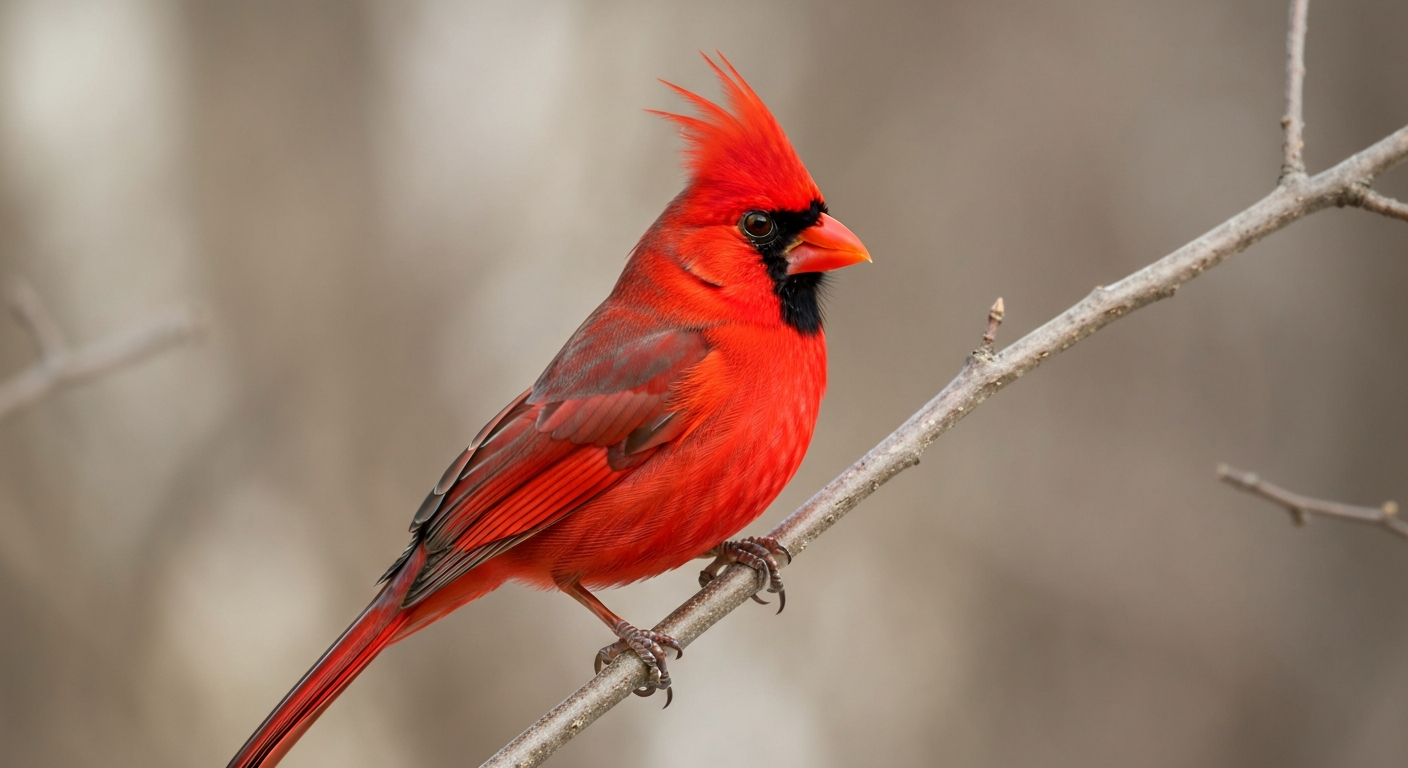
In Urdu and Hindi poetry, the word 'मधुप' (madhup) meaning 'honey drinker' and 'पुष्पासव-पायी' (one who drinks flower wine) are used to evoke the archetype of the nectar-seeker, and sunbirds fit naturally into this metaphorical register. Some modern Hindi nature poets have written directly about फुलसूँघनी, celebrating its role as a pollinator and a sign of a garden's health. For anyone interested in how birds are woven into Indian poetic language more broadly, exploring how similar metaphors attach to the blue bird or the cardinal bird in Indian symbolism opens up a rich comparative field.
Images and media worth including
A well-illustrated sunbird article communicates far more than text alone. Here are the images and media types that will make this entry genuinely useful for learners and birdwatchers.
- Male Purple Sunbird in breeding plumage: a close-up showing the full glossy purple-black iridescence, ideally perched on or near a flower. This is the 'signature' sunbird image for Indian audiences.
- Female Purple Sunbird: essential for identification purposes, showing the olive-above, yellow-below plumage that confuses many beginners.
- Male Crimson-backed Sunbird: a close-up showing the crimson back and breast band against Western Ghats vegetation highlights the species' endemic character.
- Sunbird feeding on a flower: an action shot showing the curved bill inserted into a bloom illustrates the nectar-feeding behaviour and the meaning behind names like फुलसूँघनी and शक्करखोरा.
- Side-by-side male comparison panel: Purple Sunbird, Purple-rumped Sunbird, and Loten's Sunbird together helps readers understand why bill length and breast markings matter for field ID.
- South Asia range map: a clean distribution map showing where each of the four featured species occurs across India, ideally colour-coded by species. This is particularly useful for showing the Crimson-backed Sunbird's restricted Western Ghats range versus the Purple Sunbird's pan-India distribution.
- Devanagari name card graphic: a simple visual showing शक्करखोरा, फुलसूँघनी, and फुलचूही with their transliterations, useful as a shareable language-learning resource.
Related pages to explore
If you found this entry useful, several closely related pages on this site will deepen your understanding. The general bird name meaning in Hindi page is the best starting point for understanding how Hindi bird nomenclature works across species and what naming patterns to expect. For the colour-linked symbolism angle, the blue bird meaning in Hindi page explores how blue-coloured birds are named and what they represent culturally, which connects naturally to the Purple Sunbird's iridescent quality. The eagle bird meaning in Hindi page is a valuable contrast: it shows how a bird with deep mythological status in India is named and discussed compared to a folk-favourite like the sunbird. For another relevant comparison, see eagle bird meaning in hindi. For another species-focused entry, see the Secretary Bird meaning in Hindi, which explains that bird’s Hindi name and cultural notes. Also check the hornbill bird meaning in Hindi page to compare how large forest species are named and discussed in Indian languages. See the emu bird meaning in Hindi for a useful comparison of how large or non-native birds are named and discussed in Hindi. If you are interested in other small or unusual birds, the ear bird meaning in Hindi and hornbill bird meaning in Hindi pages cover some of India's more distinctive species with the same multilingual approach used here.
Practical notes for learners and birdwatchers
A few things that will save you confusion if you are trying to use these names in real conversation or field situations.
- Regional name variation is real: शक्करखोरा is your safest all-India Hindi name for a sunbird, understood from Punjab to Tamil Nadu's Hindi-speaking communities. फुलचूही is warmer and more northern. If you are in Maharashtra, saying फुलचुखा will land better.
- When do Indian speakers use English vs. translated names? In urban birdwatching communities and on platforms like eBird, English names (Purple Sunbird, Crimson-backed Sunbird) dominate because they map cleanly to scientific taxonomy. In everyday conversation and rural contexts, the vernacular names are far more natural and frequently the only names people know.
- Species-level vs. group-level naming: most non-specialists use शक्करखोरा or फुलसूँघनी to refer to any sunbird they see, not a specific species. If you want to specify the Purple Sunbird as distinct from the Loten's or the Crimson-backed, you will usually need to add a descriptor (e.g., बैंगनी शक्करखोरा for 'purple sunbird' or छोटा शक्करखोरा for the Crimson-backed).
- Verify before you publish: names like 'लोटन फुलसुंघी' for Loten's Sunbird appear in only a single source as of my research. If you are writing for a formal publication, cross-check against at least two independent sources, such as a ZSI checklist and a state bird guide, before treating any name as standard.
- Pronunciation shortcut: in all the Hindi names here, फूल (phool) rhymes with English 'ool' (as in 'wool' but longer), not 'fool.' The 'ph' is always aspirated 'p,' never 'f.' Getting this right marks you immediately as someone who has done their homework.
FAQ
What is the clear English definition of 'sunbird' for an Indian audience?
Sunbirds (family Nectariniidae) are small Old World passerine birds that feed mainly on floral nectar and insects. They occur in Africa, South and Southeast Asia (including India) and include brightly colored species such as the Purple Sunbird (Cinnyris asiaticus), Crimson‑backed Sunbird (Leptocoma minima), Loten’s Sunbird (Cinnyris lotenius), and several spiderhunters (genus Arachnothera). Their nectar‑feeding and occasional hovering resemble hummingbirds, but they are not closely related. Recommended taxonomic references: IOC World Bird List, HBW/BirdLife, Birds of India, Avibase.
What accurate Hindi translations, common spellings, and transliterations should be used?
Common Hindi vernaculars for widely recorded Indian sunbirds include forms such as फुलचूही (phulchūhī / phulchūhī), फ़ुलसूँघनी (phulsūⁿghanī / phulsunghani) and शक्करखोरा (śakkarkhorā / shakkarkhora). Use Devanagari for display and provide one of two transliteration styles: IAST/ISO 15919 (e.g., phulacūhī) for reversible scholarly use, or a reader‑friendly Roman respelling (e.g., phul-chuhi). Note: not every species has a standardized Hindi name in two independent sources; mark such cases as provisional and list sources (ZSI, Birds of India, Avibase, regional field guides).
How should Hindi pronunciations be shown (IPA and reader‑friendly)?
Provide both IPA and a simple respelling. Example for फुलचूही: IPA: /pʰʊl.t͡ʃuː.ɦiː/; reader respelling: phul‑choo‑hee. Use Modern Standard Hindi phonology as the basis for IPA derivation. State which romanization standard you used (IAST or simplified) and give a short guide: a = [ə]/[a], ā = [aː], u/ū = [ʊ]/[uː], ch = [t͡ʃ], gh = [ɡʱ].
What are equivalent names in Sanskrit, Marathi, Punjabi, and Gujarati and how reliable are they?
Sanskrit: classical literature lacks a single standard for modern sunbirds; possible descriptive forms include पुष्पभक्षिन् (puṣpabhakṣin, ‘flower‑eater’) — use as an elevated descriptive equivalent rather than an attested vernacular. Marathi: phonetically similar forms like फुलचुही / फुलसुँघी (phulchuhī / phulsunghī) appear in regional guides; verify with state field guides. Punjabi: written in Gurmukhi forms such as ਫੁਲਚੂਹੀ (phulchūhī) or localized names; verification varies by species. Gujarati: Devanagari/Gujarati script forms like ફૂલચૂહી (phulchūhī) appear in some regional lists. For all languages, require at least two independent authoritative sources (e.g., Birds of the Indian Subcontinent, regional ornithological checklists, ZSI, Avibase) before marking as 'verified'.
Can you give a concise species→language name mapping for common Indian sunbirds?
Provide a compact mapping with confidence flags (example entries): - Cinnyris asiaticus — English: Purple Sunbird — Hindi: फुलचूही / फ़ुलसूँघनी (phulchūhī / phulsūnghanī) — Sanskrit equivalent (descriptive): पुष्पभक्षिन् (puṣpabhakṣin) — Marathi: फुलचुही (phulchuhī) — Punjabi: ਫੁਲਚੂਹੀ (phulchūhī) — Gujarati: ફૂલચૂહી (phulchūhī) — verification: verified x2 (Avibase, Birds of India). - Leptocoma minima — English: Crimson‑backed Sunbird — Hindi: छोटा शक्करखोरा / क्रिमसन‑बैक्ड सुन्बर्ड (regional names) — verification: verified (ZSI, regional guides). - Cinnyris lotenius — English: Loten’s Sunbird — Hindi: single attestations (लोटन फुलसुंघी) — verification: single attestation; treat as provisional. Note: complete table should cite source URLs per cell and a verification_status column (verified x2 / single attestation / provisional). Use IOC/HBW/Avibase for canonical scientific names and authoritative source lists.
What short identification notes should be provided for field ID in the article?
Give brief, non‑technical ID tips for lay readers: - Purple Sunbird (Cinnyris asiaticus): male breeding plumage glossy purple/black, female olive above and yellowish below, short downcurved bill; common in gardens and scrub. - Crimson‑backed Sunbird (Leptocoma minima): very small (~8 cm), male with crimson back and blackish underparts band; endemic to Western Ghats. - Loten’s Sunbird (Cinnyris lotenius): male with maroon breast band and relatively long bill; found in peninsular India. - Spiderhunters (Arachnothera spp.): larger, long curved bills, streaked or plain underparts, often around rainforest understorey and banana flowers. For authoritative ID details and photos consult Birds of India, HBW, BirdGuides and Avibase.
Next Article
Cardinal Bird Meaning in Hindi: Translation, Symbolism & ID
कार्डिनल पक्षी का हिंदी अर्थ, लिप्यंतरण, पहचान, प्रतीकात्मक अर्थ और भारतीय तुलना, सहज उच्चारण टिप्स सहित।