If you searched 'ear bird meaning in Hindi,' the most likely bird being referred to is the Scops Owl, specifically the Collared Scops Owl (Otus bakkamoena), known in Hindi as 'Tharkavi Chughad' (थरकवी छुग्घड़). The phrase 'ear bird' is not a standard Hindi term. It is an English description rooted in the bird's most distinctive physical feature: prominent feather tufts on its head that look remarkably like ears. In Hindi, 'ear' is कान (kaan) and 'bird' is पक्षी (pakshi) or चिड़िया (chidiya), so a literal translation would be 'कान वाला पक्षी' (kaan waala pakshi), meaning 'the bird with ears.' But no one in India actually calls it that. The real Hindi and regional names map to the owl family, and the symbolism that follows is rich, ancient, and genuinely worth knowing.
Ear Bird Meaning in Hindi: Actual Bird, Symbolism, and How to Confirm


What 'ear bird' literally means in Hindi

Breaking the phrase down is straightforward. कान (kaan) means ear, पक्षी (pakshi) is the formal Sanskrit-derived word for bird, and चिड़िया (chidiya) is the everyday colloquial word most Hindi speakers use. So 'ear bird' would translate literally as 'कान वाला पक्षी' or, more casually, 'कान वाली चिड़िया.' You might also hear 'कर्ण-पक्षी' (karna-pakshi) if someone were constructing a Sanskrit-style compound, since कर्ण (karna) is the classical Sanskrit word for ear.
None of these literal translations are used in real birding or everyday Hindi speech. They are purely what you get when you run the English phrase through a dictionary. In practice, when Indian bird enthusiasts, field guides, or folk tradition refer to a bird known for its 'ears,' they use the specific name for that owl or tufted species directly, not a generic 'ear-bird' label. That gap between literal translation and actual usage is exactly where the confusion begins.
What 'ear bird' actually points to in bird terminology
In ornithological English, birds described as 'eared' have prominent feather tufts near the top of their head that mimic the look of mammalian ears. These are not actual ears. They are feather projections covering patches of skin, and they are most famously associated with owls in the Scops and related groups. The Collared Scops Owl (Otus bakkamoena) is the most widespread 'eared' owl across the Indian subcontinent and the species most readers will encounter when asking this question.
There are a couple of other birds that could technically fit the 'ear bird' label. The Eared Nightjar group (genus Lyncornis) includes the Great Eared Nightjar, which has two striking feather tufts on its head and is found in parts of South and Southeast Asia. Wikipedia’s account of the Great eared nightjar highlights its distinctive long ear-tufts as a key identifying trait. The Eared Pitta is another example where 'eared' refers to distinctive plumage near the ear-coverts rather than actual tufts. But for anyone in northern or central India who heard this phrase in conversation, in a story, or in a wildlife context, the Scops Owl is the overwhelmingly likely candidate.
The confusion in translation happens because English bird names often use descriptive adjectives like 'eared,' 'tufted,' or 'crested' that get dropped or garbled when people try to render them casually into Hindi. Someone hears 'eared owl,' looks up 'ear' in Hindi, combines it with 'bird,' and searches the result. The actual Hindi name for the same bird looks completely different. It is worth noting that a similar naming quirk trips people up with the Secretary Bird, whose name references quill pens tucked behind an ear and has nothing to do with secretaries in the professional sense. If you are also curious about the secretary bird meaning in Hindi, the name connects to the bird’s appearance rather than any office role.
Cultural and symbolic meaning in Indian tradition

Once you land on the owl (उल्लू, ullu) as the target bird, you step into one of the most layered symbolic traditions in Indian culture. The owl holds a dual reputation in Hindu mythology that is genuinely fascinating and sometimes contradictory.
The most celebrated association is with Maa Lakshmi, the goddess of wealth, prosperity, and good fortune. The owl is her vahana, her divine vehicle. On the night of Diwali, seeing an owl near your home is considered deeply auspicious, a sign that Lakshmi herself is arriving. Hindi sources, including mainstream media around Diwali, regularly reinforce this belief, and it is widely observed across North India. The Collared Scops Owl, being the most common owl heard calling at night across Indian towns and villages, is often the bird people are actually seeing (or hearing) in these moments.
At the same time, उल्लू in Hindi idiom is an insult. Calling someone an 'ullu' means calling them a fool. There is also a widespread folk belief in many parts of India, particularly in tribal and rural communities, that owls are inauspicious, connected to death, or associated with black magic. This contradiction, sacred vehicle of Lakshmi and symbol of foolishness or ill omen, exists simultaneously in the culture and varies strongly by region, caste, and community tradition.
In Sanskrit literature and Ayurvedic texts, the owl is called Uluka (उलूक). The Garuda Purana and other texts describe owls as creatures of the night associated with Yama, the god of death, which explains the darker strand of symbolism. The Collared Scops Owl's haunting, repetitive call heard across Indian nights has no doubt contributed to both the mystical and ominous readings over centuries.
How different Indian languages name the 'ear bird'
If you are cross-checking this across the Indian languages this site covers, here is how the Collared Scops Owl (the primary 'eared' bird candidate for Indian contexts) appears in regional names, based on authoritative vernacular databases including the BNHS records and Ali and Ripley's field guides.
| Language | Name for Collared Scops Owl | General word for owl |
|---|---|---|
| Hindi | Tharkavi Chughad (थरकवी छुग्घड़) | Ullu (उल्लू) |
| Sanskrit | Uluka (उलूक) | Uluka (उलूक) |
| Punjabi | Kalar Wala Ulloo (कलर वाला उल्लू) | Ulloo (उल्लू) |
| Gujarati | Deshi Chuggad (દેશી છગ્ઘડ) | Chuggad (છગ્ઘડ) |
| Marathi | Ghubad (घुबड) | Ghubad (घुबड) |
Notice that none of these regional names translate literally as 'ear bird.' Each language has its own distinct root word for owl, and the Collared Scops Owl gets a descriptive regional modifier added to that root word. In Punjabi, 'Kalar Wala Ulloo' essentially means 'the collared owl.' In Gujarati, 'Deshi Chuggad' means 'local/native chuggad.' The 'ear' feature, while visually obvious in the field, does not make it into any of these names directly. This is why searching for a literal translation of 'ear bird' in any of these languages returns nothing useful.
How to identify the exact bird being meant
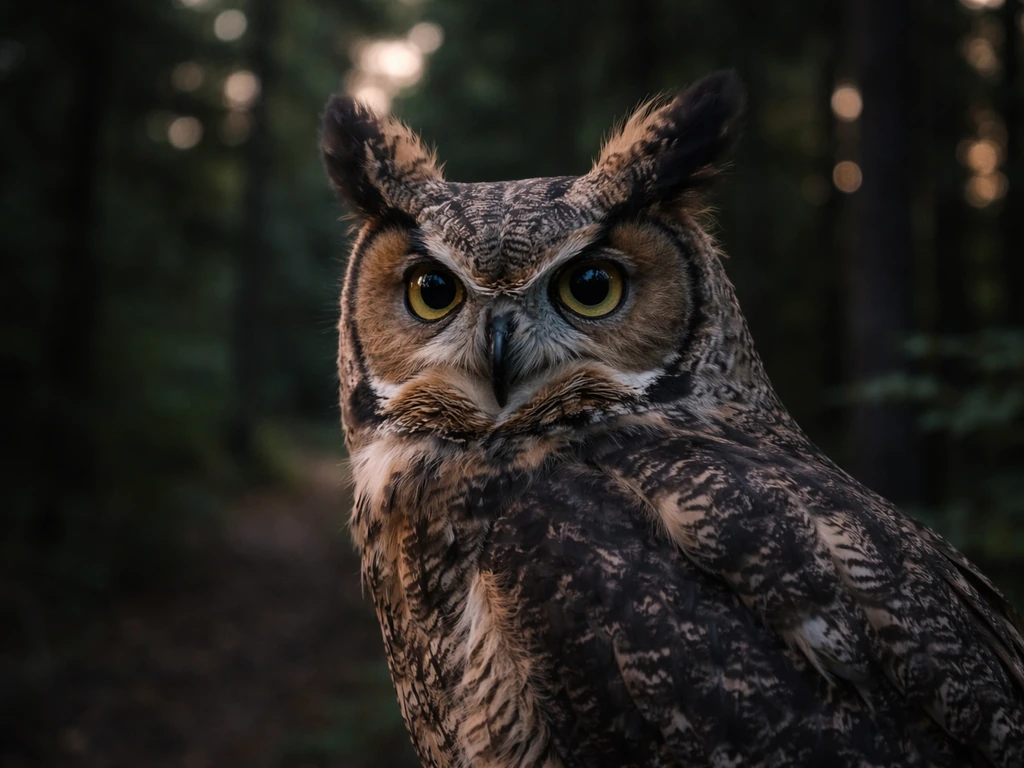
If you encountered the term 'ear bird' in a specific context and want to confirm which species is actually being referenced, a few quick checks will resolve it.
- Ear tufts visible: If the bird has two upright feather tufts on the top of its head that look like small ears or horns, it is almost certainly a Scops Owl (Otus species) in an Indian context. The Collared Scops Owl is the most common across the subcontinent.
- Small size, nocturnal: The Collared Scops Owl is roughly 23 cm long, about the size of a large fist. It is strictly nocturnal and usually heard before it is seen.
- The call: Its call is a soft, repetitive 'wut... wut... wut' or a whistling note repeated at regular intervals through the night. This is one of the most reliable identifiers. Audio recordings of the Collared Scops Owl on platforms like Wikimedia Commons or Xeno-canto can help you match what you heard.
- Larger bird with tufts, active at dusk: If the bird is much larger (like a cat-sized bird), look into the Great Eared Nightjar instead of a scops owl.
- Colorful, ground-dwelling: If it is a colorful, pitta-like bird, the Eared Pitta (found mainly in forested Southeast Asian regions, rare in India) might be the match, though this is far less likely for most Indian readers.
Where you encountered the term also matters a lot. If it came from a Hindi story, a mythological text, or a Diwali-related context, it is almost certainly referring to the उल्लू (owl). If it appeared in a nature documentary, a wildlife book, or a birding forum, think about whether the word 'eared' or 'tufted' was part of the original English phrase, and then match that to the species list above.
Your next steps to get the right answer
Here is a practical path to resolving whatever brought you to this search in the first place.
- Identify the source: Where did you first encounter 'ear bird'? A book, a conversation, a social media post, a documentary? Knowing the source language and context will immediately narrow down the candidate species.
- Check the physical description: Does the bird have visible ear-like tufts? Is it owl-sized and nocturnal? Match those features against the Collared Scops Owl first, since it is the most commonly encountered 'eared' bird across India.
- Look up the Hindi owl entry on this site: The owl (उल्लू / Uluka) has its own rich symbolism in Indian tradition, particularly around Lakshmi and Diwali. If the symbolic angle is what you were after, that entry will give you the full cultural picture.
- Cross-check regional names: Use the table above to verify which regional name your source might have used. If someone in Gujarat said 'Chuggad' or a Punjabi speaker said 'Ulloo with a collar,' those are the same bird.
- Compare with related bird entries on this site: If the bird in question has blue plumage, a dramatic crest, or other distinctive features, it may point to a different bird entirely. Entries on birds like the hornbill or sunbird cover similarly distinctive-looking species that sometimes get confused in casual translation.
- Still unsure? Describe the bird: Note its size, coloring, call, habitat (forest, city, farmland), and the region of India where it was seen or mentioned. That combination almost always pins down the species, and from there you can find the exact Hindi name and its cultural significance.
The bottom line is this: 'ear bird' is an English translation artifact, not a real Hindi bird name. If you are specifically searching “cardinal bird meaning in hindi,” the same approach of matching context to the exact species will help you get the right meaning and translation. If you are specifically looking for the bird name meaning in Hindi, start by identifying whether the context is Diwali, a myth, or everyday birding language ear bird. If you are specifically trying to understand emu bird meaning in Hindi, look for the correct Hindi term used for an emu and its common transliterations. If you are looking for the blue bird meaning in Hindi, the answer depends on which bird is meant by “blue bird” in your context. The bird it most reliably points to is the Collared Scops Owl, called Tharkavi Chughad in Hindi and recognized across Indian languages through various owl-family names. Its cultural meaning in India runs deep, from being the sacred mount of Lakshmi to being a nighttime omen, a comedic insult, and a subject of ancient Sanskrit texts. Once you confirm which specific bird you are looking for, the symbolism and naming entries on this site can take you the rest of the way. If you are also looking for the eagle bird meaning in Hindi, that term refers to how Hindi speakers describe an eagle, often tied to words like बाज (baaj) or related regional names. For the hornbill bird meaning in Hindi, you can also look up the exact Hindi name used for the species and the context in which it appears.
FAQ
If I translate “ear bird” literally to Hindi, will people understand it?
Usually no. Native speakers typically use the specific owl or nightjar name, like उल्लू for owl in general, not a compound meaning “ear bird.” A literal version like “कान वाला पक्षी” is understandable but unnatural, so it may confuse the listener unless the context clearly points to the species.
How can I tell whether “ear bird” means Collared Scops Owl or Eared Nightjar?
Check location and the type of head “ears.” Collared Scops Owl is the most likely in towns and villages across North and Central India, with prominent feather tufts on the head. Great Eared Nightjar and other Eared Nightjars are more associated with South and Southeast Asian areas and have different overall body shape and call patterns, so your local region and what you heard matter.
What should I do if I saw the word “eared” instead of “ear bird” in English?
Treat “eared” as a description of feather tufts near the top of the head, not actual ears. Then match it to the “tufted/eared” owl or nightjar candidates rather than converting “ear” into कान and searching for a literal Hindi phrase.
Is “ear bird” sometimes used as an idiom or slang in Hindi?
In everyday Hindi, it is not a common idiom. The phrase you are searching is best seen as an English-to-Hindi translation artifact. If you heard it in a conversation, it likely referred to an owl, and the correct approach is to identify the surrounding situation (story, Diwali talk, or birding context).
During Diwali, does seeing an owl automatically mean the same “ear bird” thing?
Diwali owl sightings are widely treated as auspicious in North India, but that does not mean the exact species is always the Collared Scops Owl. If you want to confirm “ear bird” specifically, focus on whether the bird had obvious head tufts, and if possible note the call and timing.
What does “उल्लू” mean, and how does it affect the search results?
“उल्लू” means owl, and it is also used as an insult meaning fool. Because of that, search engines may mix cultural slang with literal owl references, so it helps to filter your understanding by context, for example mythology or a night bird you saw, rather than general vocabulary meaning.
Could “ear bird” refer to something other than an owl if the source was a wildlife book?
Yes. “Eared” can be used for other birds where the ear-area plumage or markings resemble an ear region, like Eared Pitta. So if the source is a field guide or birding forum, prioritize the exact species list shown there rather than assuming all “eared” birds are Scops Owls.
If I only have an image, how can I confirm the bird quickly?
Look for key field marks: the presence of distinct head feather tufts, the general body shape, and relative size. Also, owl tufts are feather projections, not mammalian ears, so confirm you are seeing feather structures. If you can share the scene context, like forest edge versus village street, that can narrow it further.
Why do Hindi regional names not match the “ear bird” meaning directly?
Because the regional names usually start from the native word for owl and add a descriptive modifier, like “collared” or “local,” rather than translating the English adjective “ear.” So you should expect different root words across languages, which is why literal “ear bird” translations often lead to dead ends.