
The white stork is called 'Laglag' (लगलग) in Hindi, and 'Pandhra Karkocha' in Marathi. These are the names you'll find in authoritative ornithological sources like Salim Ali's The Book of Indian Birds and the government's BUCEROS ENVIS vernacular names table. If you've been searching for 'stork meaning in Hindi' and landing on 'सारस (saaras)' from general dictionaries, that's a common mismatch worth understanding before you go further. The skylark bird meaning in Hindi is often discussed as "लाल पक्षी" in some contexts, but it can vary by source.
White stork bird meaning in Hindi and Marathi

Rajesh Sharma
13 Jun 2026
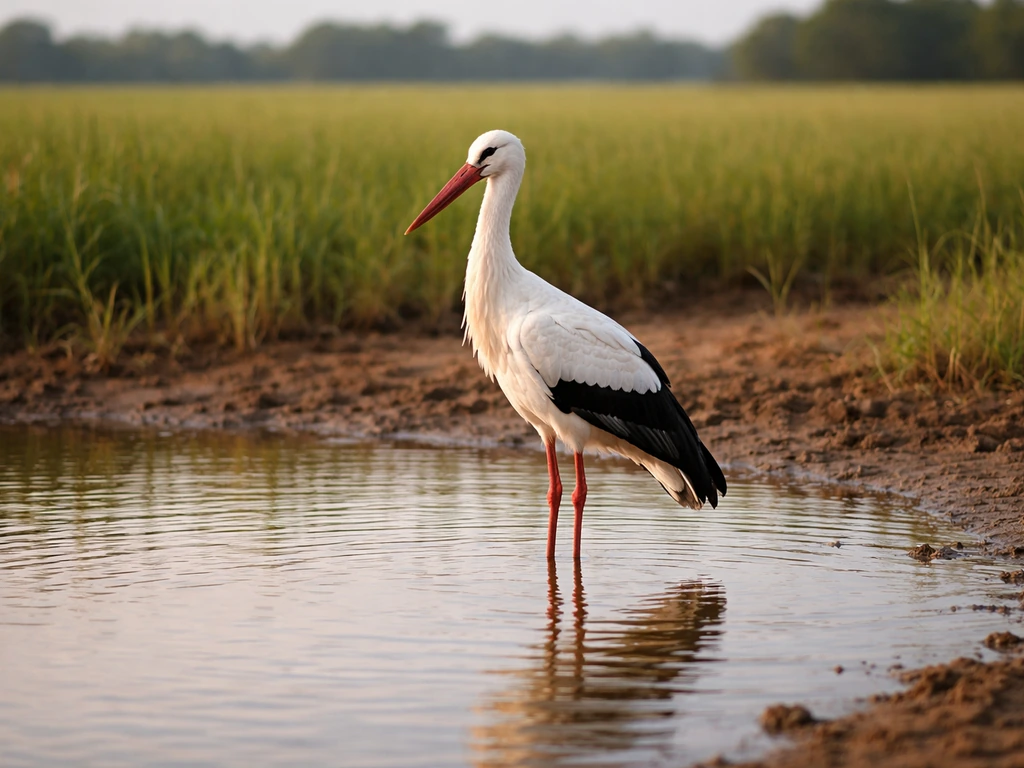
Meaning and Hindi/Marathi Translation of White Stork
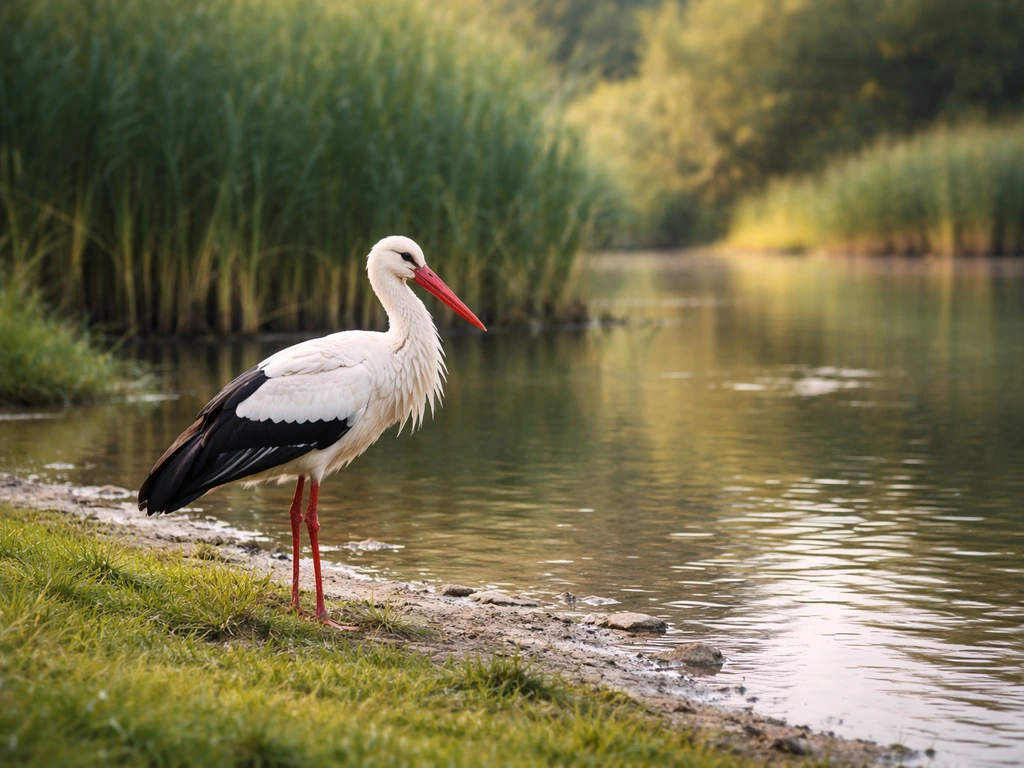
The white stork (Ciconia ciconia) carries the Hindi name 'Laglag' (लगलग). This name is well-documented in ornithological literature specific to the Indian subcontinent and is the term used by birdwatchers, naturalists, and field guides working in Hindi-speaking regions. If you are also comparing other birds’ Hindi names, it helps to check the common swift bird in hindi so you don’t mix up similar-sounding vernacular terms. In Marathi, the bird is referred to as 'Pandhra Karkocha', 'pandhra' simply meaning white, and 'karkocha' being the regional term for the stork type. So if someone asks you what a white stork is called in Marathi, Pandhra Karkocha is your precise answer.
The confusion arises because general Hindi dictionaries often translate 'stork' as 'सारस (saaras),' which is technically the Hindi name for the Sarus crane, not the white stork. In Hindi usage, the sparrow bird meaning in Hindi is commonly given as "गौरैया" (gaurīyā). In Hindi, many people also search for the saaras word, but it actually refers to the Sarus crane rather than the white stork saras bird meaning in hindi. The Sarus crane and the white stork are two very different birds. Many everyday speakers use saaras loosely for any tall, long-legged waterbird, but if you need accuracy, Laglag is the word for white stork and saaras belongs to the Sarus crane.
Linguistic Breakdown: Name Variants, Spelling, and Local Terms
The name 'Laglag' is the most consistent Hindi vernacular term for Ciconia ciconia across major references. You may occasionally encounter alternate romanized spellings like 'Lag-lag' or 'Laglag' with a hyphen, but these all refer to the same word. In Marathi, 'Pandhra Karkocha' is specific to the white stork, while other stork species get their own distinct Marathi names. For instance, the White-necked Stork (Ciconia episcopus) has a separate Marathi entry in the same vernacular tables, with names like 'Bagula' or 'Kardok/Kandesur' appearing in that row, which shows that Marathi speakers do distinguish between stork species rather than lumping them all under one label.
Across the broader Indian language landscape, the Sanskrit root 'sarasa' (सरस) historically covered a range of large waterbirds including herons, cranes, and storks. The word sārasas in Sanskrit lexicons maps to the moon, the heron, and the stork in an almost fluid sense, these early classifications didn't always separate stork from crane the way modern taxonomy does. That's where a lot of the dictionary-level confusion between 'saaras' and 'stork' originates.
| Language | Term for White Stork | Notes |
|---|---|---|
| Hindi | Laglag (लगलग) | Standard ornithological name per Salim Ali and BUCEROS ENVIS |
| Marathi | Pandhra Karkocha | Pandhra = white; specific to Ciconia ciconia |
| Sanskrit (classical) | Sārasas (सारसः) | Historically used broadly for large wading birds |
| Hindi (general dictionaries) | Saaras (सारस) | Actually refers to Sarus crane; avoid for white stork |
| Scientific (universal) | Ciconia ciconia | European/White Stork — accepted internationally |
Cultural Symbolism of the White Stork in Indian Traditions
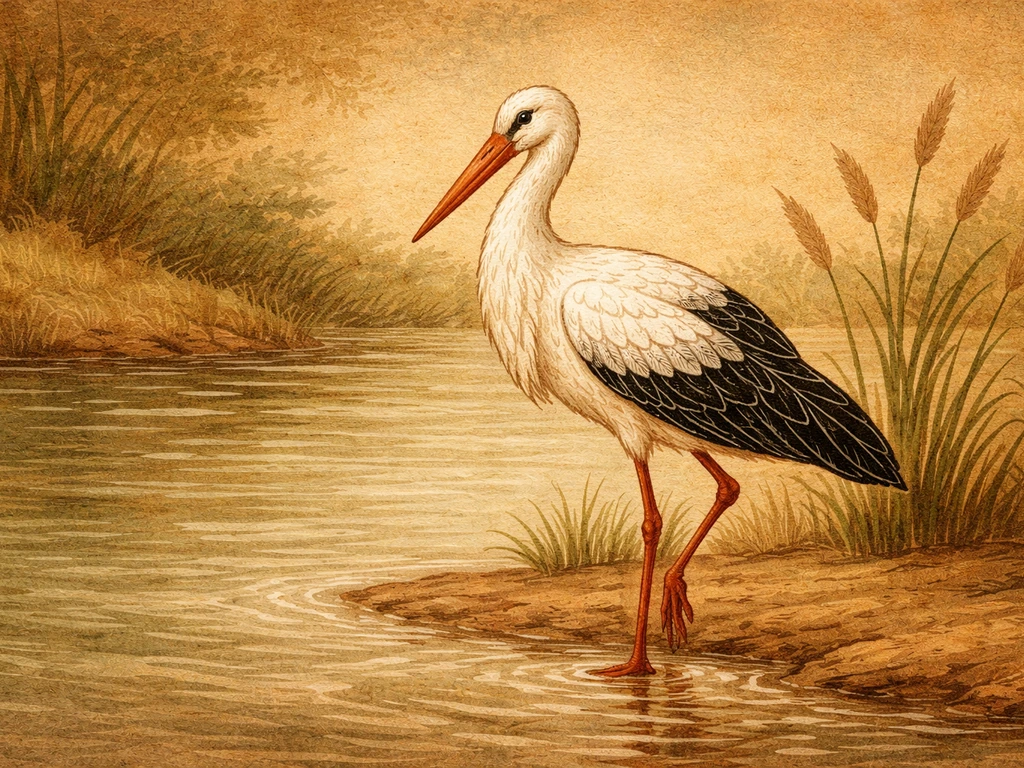
The white stork doesn't occupy the same iconic cultural space in India that it does in European traditions, where it's famously associated with bringing newborns. In Indian culture, the symbolic weight given to large white wading birds tends to cluster around the Sarus crane (saaras) and the crane/heron types generally. The saaras is tied to loyalty, devotion, and even the origin of poetry in Hindu tradition. The white stork, being a migratory visitor rather than a resident bird, doesn't carry a dedicated set of folklore in the same way.
That said, in regions where white storks pass through during migration, the arrival of laglag can be treated as a seasonal marker, the way many communities note migratory birds as signs of changing weather or fortune. In Hindi, the phrase “Laglag” is closely tied to the white stork, so its meaning often comes up alongside stork identity and cultural usage. The bird's striking white-and-black appearance and dignified walk make it visually memorable, and in folk memory, large white birds are generally auspicious symbols in Indian contexts, associated with purity, alertness, and patience.
Mythology and Folklore Associations
The clearest folklore thread that connects to storks in the Indian and South Asian context is the motif of a stork or crane acting as a caregiver or nurse figure in folk stories. The tale 'Amal Biso,' found in Sri Lankan and Indian oral traditions, has been catalogued with the specific motif 'stork as nurse for child' in folklore studies. This is a meaningful data point: it shows that South Asian storytelling does give the stork a nurturing, protective role, even if that role isn't as loudly celebrated as in Western folklore.
More broadly, Indian mythology is rich with 'sāras'-type birds as symbols of faithful love and spiritual awareness. The Valmiki Ramayana famously opens with a scene involving a krauncha bird (often identified as a Sarus crane) being killed, prompting the first shloka (verse) in Sanskrit literature. While that specific bird is typically linked to the crane rather than the stork, the conceptual world they inhabit in mythology is shared. If you encounter the laglag or a stork figure in a folk story or regional text, the symbolic register to read it through is one of patience, grace, vigilance, and sometimes loyalty.
How to Confirm You're Looking at a White Stork
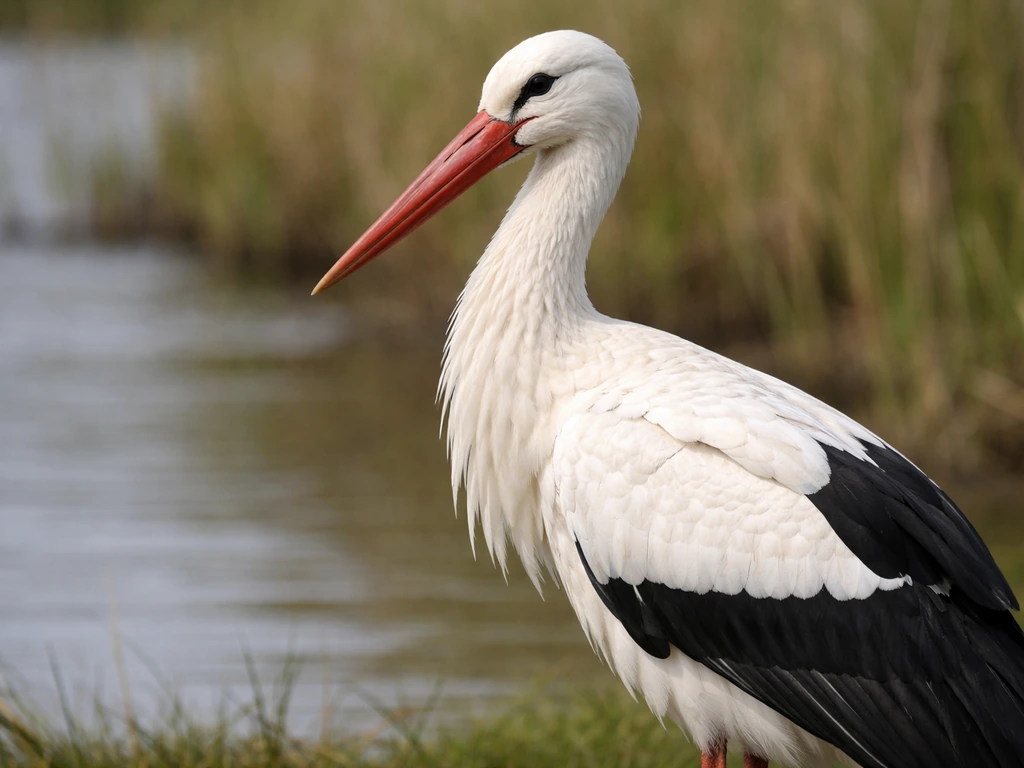
The white stork is hard to mistake once you know what to look for. It stands about 100 cm tall (roughly the height of a five-year-old child) and is predominantly white with sharply contrasting black flight feathers on its wings. The bill is dark red, long, and heavy-looking, and the legs are a striking reddish-pink. There is no visible difference between male and female birds in coloration or size, which is a useful identification note. When it flies, the black-and-white wing pattern is immediately distinctive.
- Height: approximately 100 cm
- Plumage: mostly white with black flight feathers on the wings
- Bill: long, dark red — not yellow, not orange
- Legs: reddish-pink, long and straight
- No difference between male and female in appearance
- Behavior: bill-clattering is a characteristic sound; often seen walking slowly in open fields or wetlands
- Flight: soars with neck outstretched (unlike herons, which tuck their neck in flight)
This last point about the neck posture is actually one of the quickest ways to distinguish a stork from a heron in the field. Herons fly with the neck pulled back in an S-curve; storks fly with the neck fully extended. The Sarus crane (saaras) also flies with neck extended, which is another reason people confuse these birds, but the crane is uniformly grey with a red head patch, while the white stork is white and black with a red bill.
Where the Meaning Shows Up: Folk Stories, Art, and Usage
The term laglag itself doesn't appear frequently in classical Hindi or Sanskrit literary texts, partly because the white stork is a winter migrant to India rather than a year-round resident. Its appearances in folk art and regional storytelling tend to be grouped under the broader visual category of 'shvet pakshi' (white bird) or blended into the symbolic space of the saaras and bagula. In painted folk art traditions like Madhubani or Warli, large white birds are a recurring motif associated with water, fertility, and seasonal abundance.
In popular usage today, you're more likely to encounter the white stork's name and image in nature writing, wildlife magazines, and birdwatching communities in India than in literary or religious texts. If you are also trying to understand the lark bird meaning in hindi, it helps to check the exact local name used for the species you mean, since names can vary by region.
It shows up in bird lists for Rajasthan, Gujarat, and parts of the Indo-Gangetic plain during the winter months. If you're cross-referencing a Marathi nature article, look for 'Pandhra Karkocha' to confirm the bird being discussed. For Hindi-language bird content, 'Laglag' is the term to verify against images or field descriptions. This is why the swift bird meaning in Hindi is often confused with other similar-looking birds and older dictionary terms.
If you're exploring related birds in the same cultural and linguistic space, the Sarus crane (saaras) is the bird with the deepest roots in Indian mythology and symbolism, and it's worth understanding clearly as a separate species from the white stork. Other large waterbirds like the painted stork and the Openbill stork each carry their own distinct vernacular names across Hindi, Marathi, and Gujarati, showing just how specifically Indian languages do name these birds when ornithological precision matters.
Practical Next Steps for Getting the Answer Right

- If you need the Hindi name for white stork specifically: use 'Laglag' (लगलग) and cross-check it against bird field guides covering the Indian subcontinent.
- If you need the Marathi name: 'Pandhra Karkocha' is the documented term for Ciconia ciconia.
- If a dictionary gives you 'saaras' for stork: remember that saaras properly refers to the Sarus crane, not the white stork. Use it for Grus antigone, not Ciconia ciconia.
- To visually confirm the bird: look for the white-and-black plumage combination with a red bill and red legs, standing about 100 cm tall, flying with neck extended.
- For cultural or symbolic meaning: frame the white stork within the broader Indian symbolism of white wading birds (purity, patience, seasonal arrival) while noting it doesn't have a dedicated mythological narrative the way the Sarus crane does.
- For folklore research: search for the 'stork as nurse' motif in South Asian oral tradition studies, or look at how large white birds function symbolically in the regional folk art of Rajasthan and Maharashtra.
FAQ
If I search “white stork bird meaning in Hindi,” why do I keep seeing “सारस (saaras)”?
In Hindi, “सारस (saaras)” usually points to the Sarus crane (Grus antigone), not the white stork. If you see “सारस” in a source, double-check whether the description mentions a grey crane with a red head patch (crane) versus a white-and-black bird with a dark red bill (white stork).
Are “Laglag” and “Lag-lag” different names for the same bird?
Yes, you can see “Lag-lag” or “Laglag” with different spellings in Roman script, but it refers to the same Hindi vernacular name. When matching with bird photos or field notes, rely on the species description (white body, black wing feathers, red bill and legs) rather than just the spelling.
What is the quickest way to tell apart a white stork and a Sarus crane when only a photo is available?
Sarus crane and white stork can look confusing in silhouettes, but their color patterns differ sharply. The white stork is predominantly white with black on the wings, while the Sarus crane is uniformly grey with a red head patch, and their bills and body tone do not match the white stork’s high-contrast look.
If a Marathi article says “Pandhra Karkocha,” can I assume it’s definitely the white stork?
Marathi labels like “Pandhra Karkocha” are more specific than generic dictionary translations. If you are reading a Marathi article and it uses that exact phrase, it is typically referring to the white stork, but if the text instead uses broader terms like “shwet pakshi” (white bird), it may be using a visual category rather than the exact species.
What field marks help me confirm “Laglag” versus a heron in flight?
Field identification tips matter because everyday “stork” can be used loosely. For storks, watch the neck posture in flight (neck extended, not pulled back in an S-curve), plus the distinctive black-and-white wing pattern. Herons also extend the neck less predictably in the air, and their overall body look does not have the white-and-black stork contrast.
Should I trust only the Hindi name (“Laglag”), or should I confirm with scientific naming?
“Laglag” is a vernacular Hindi name, while the scientific name for white stork is Ciconia ciconia. If your source gives only the Hindi word, try to confirm with any provided scientific name or with description details like size, white-and-black pattern, and red bill and legs.
Does “Laglag” usually show up in specific seasons in India?
If the bird is mentioned as a seasonal visitor, “Laglag” fits the white stork’s migratory pattern in India. When a text speaks in winter-season terms and refers to a large white migratory waterbird, that context makes “Laglag” more likely than names that commonly refer to resident or culturally dominant crane species.
How do I avoid translation mistakes when comparing Hindi and Marathi bird names?
If you are cross-referencing bird names across languages, treat Hindi and Marathi labels as species-level checks rather than generic translations. For instance, Marathi “pandhra” means white, but “karkocha” is the part that points to the stork type; mixing only the “white” meaning with another bird name can lead to errors.
Can “Pandhra Karkocha” be used for other stork species too?
Yes. Even within “stork,” different species have different vernacular names in Marathi, so a single label like “stork” in English should not be assumed to match white stork. If the source is precise, look for the Marathi species-specific row name rather than using “Pandhra Karkocha” for every stork mention.