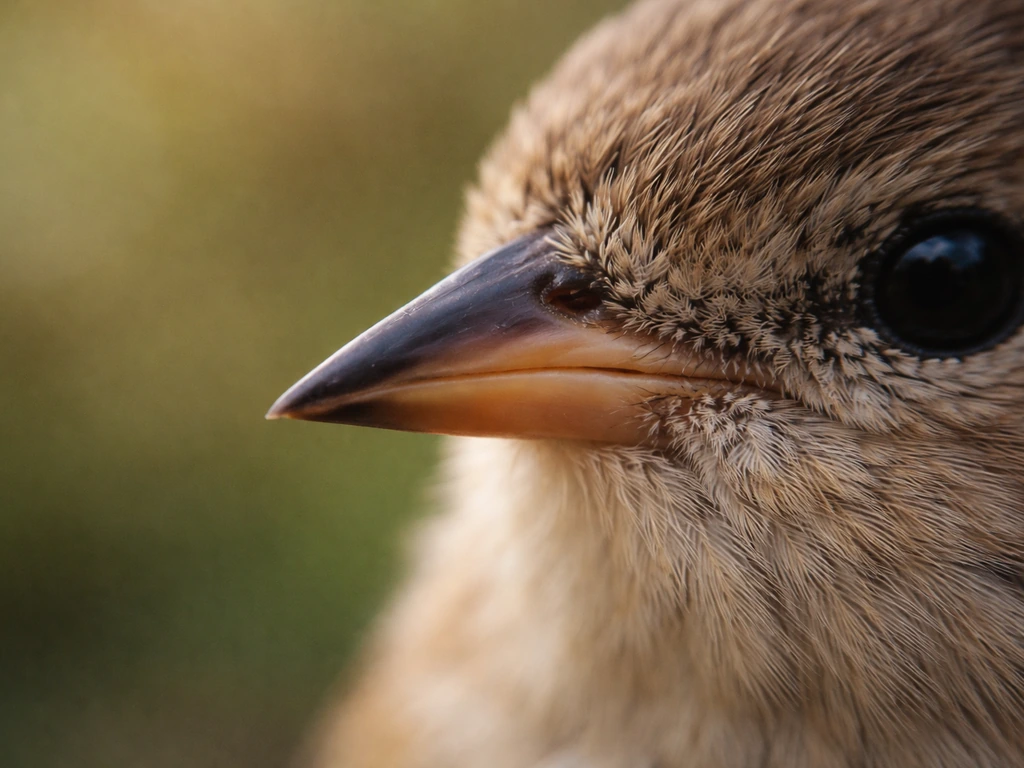
In Hindi, the swift bird is most commonly called "Ababeel" (अबाबील) or "Babeela" (बाबीला), and sometimes "Babila" or "Batasi" depending on the region and reference. These names are used specifically for swifts of the family Apodidae, most often the House Swift (Apus nipalensis) and the Little Swift (Apus affinis), which are the species you're most likely to see wheeling and screaming over Indian cities, towns, and hillsides.
Swift Bird Meaning in Hindi: Name, Identification, Culture

Rajesh Sharma
30 Apr 2026

What "swift" actually means as a bird term
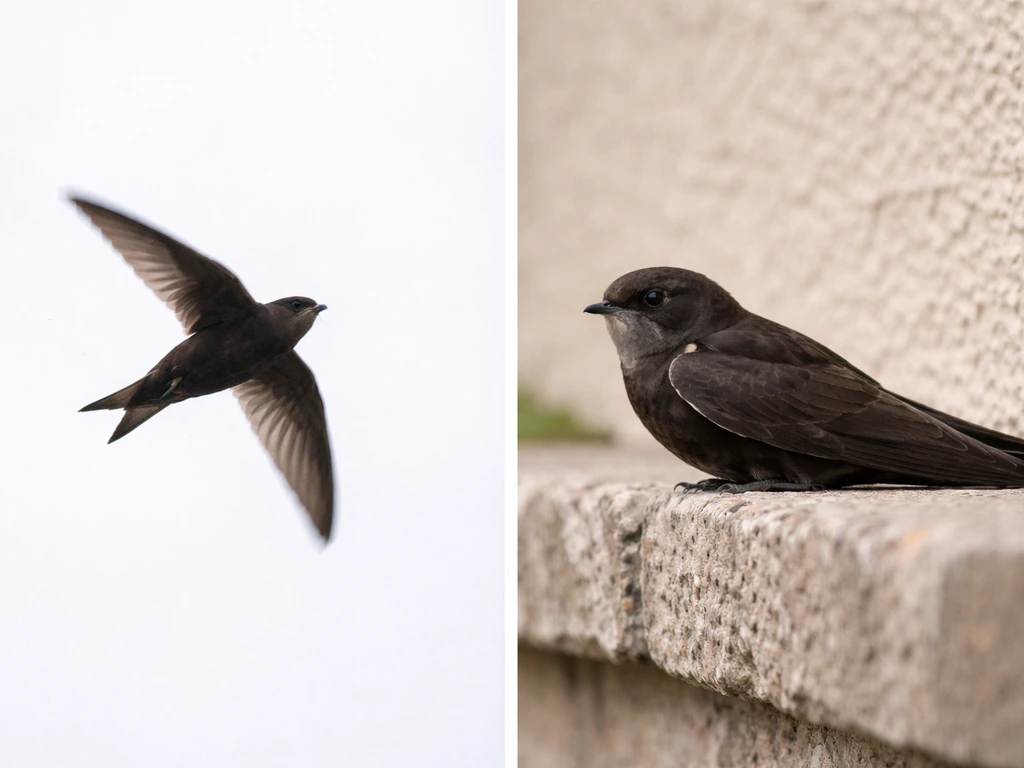
"Swift" in English does double duty: it's an everyday adjective meaning fast, but when you see it used as a bird name, it refers to a very specific family of birds called Apodidae. Encyclopaedia Britannica describes blank" rel="noopener noreferrer">true swifts as birds in the family Apodidae within the apodiform order. These are not just any fast-flying birds. Apodidae translates roughly from Latin as "without feet," and that's the core of what makes swifts so distinctive. Their blank" rel="noopener noreferrer">legs are so tiny and weak that they essentially cannot walk or perch on a branch the way most birds do. Instead, they are almost entirely aerial creatures, spending the bulk of their lives on the wing, catching insects mid-air in a behavior called "hawking." So if someone says "swift bird," they mean this particular aerial, insect-hunting family, not a generic speedy bird.
This matters when you're looking up the Hindi meaning, because the word "swift" could theoretically just be a descriptor in someone's mind ("that fast bird I saw"), but the ornithological meaning is precise. Knowing this prevents you from applying the wrong Hindi name or symbolism to a swallow or martin, which is the most common mix-up.
The Hindi name for the swift bird
The primary Hindi name you'll encounter in authoritative Indian bird references, including the BNHS (Bombay Natural History Society) vernacular database, is "Ababeel" (अबाबील) and "Babeela" (बाबीला). Both names are used for House Swift and Little Swift entries. A third variant, "Batasi," also appears in older regional references. These aren't separate birds with separate names, they're the same swift referred to slightly differently across communities and printed guides.
Pronunciation note: Ababeel is said as "Uh-bah-BEEL," with the stress on the last syllable. Babeela is "Bah-BEE-lah." If you're having a conversation in Hindi about the fast, dark, screaming birds nesting in building crevices, saying "Ababeel" will get immediate recognition from most speakers in North India.
| Hindi Form | Devanagari | Species Typically Referenced |
|---|---|---|
| Ababeel | अबाबील | House Swift / Little Swift |
| Babeela | बाबीला | House Swift / Little Swift |
| Babila | बाबिला | House Swift (regional variant) |
| Batasi | बटासी | Swift (older/regional usage) |
How swifts are named across Indian languages

One thing this site regularly highlights is how bird names shift and echo across Indian languages, sometimes sharing roots, sometimes diverging entirely. Swifts are a good example of both. The BNHS vernacular database maps the House Swift's name across several languages, and it's worth knowing these if you're working across regions or checking a field guide in another script.
| Language | Name for Swift (House Swift) | Notes |
|---|---|---|
| Hindi | Ababeel / Babeela / Batasi | Most widely used forms in North India |
| Marathi | Pakoli | Distinct root from Hindi forms |
| Gujarati | Ababeelo / Moti Ababil | Shares Ababeel root with Hindi |
| Sanskrit | Closely tied to Apus/Vayupakshi concepts | No single fixed classical term; described by flight characteristics |
| Punjabi | Ababeel (shared with Urdu/Hindi usage) | Term crosses into Punjabi via shared Urdu influence |
| Ladakhi/Regional (high altitude) | Kalakugti | Used for Alpine Swift in Ladakh field guides |
Marathi "Pakoli" is a good example of a completely different root, unrelated to the Ababeel cluster. If you're checking a Marathi field guide and see Pakoli, you're looking at the same bird as Hindi Ababeel. Gujarati stays closer to the Hindi/Urdu tradition with Ababeelo and Moti Ababil ("large ababil"). Sanskrit doesn't have a single classical bird-name for swifts in the way it does for birds like the crane (Saras) or swan (Hans), but the bird is described in terms of its aerial nature in classical zoological texts. In Hindi, the swan bird meaning is commonly discussed as Hans, which is used to refer to a swan in traditional contexts swan (Hans).
It's also worth noting that the Ababeel/Ababil form has a parallel life in Urdu and Persian, which is how it entered Hindi. This linguistic crossover has its own cultural weight, discussed in the symbolism section below.
What swifts symbolize in Indian traditions
Swifts don't carry the heavyweight mythological baggage of birds like the saras crane, the swan (Hans), or the divine peacock in classical Hindu tradition, but they hold real symbolic resonance in folk culture and in the broader Indic-Islamic cultural world that shapes so much of North Indian life. If you're also comparing bird names in Hindi, you can look up saras bird meaning in hindi as a separate example of how crane names differ from swift naming.
The Ababil connection: protection and divine intervention

The name Ababeel/Ababil carries immediate cultural weight for anyone with familiarity with Islamic tradition. In the Qur'an's Surah Al-Fil (The Elephant), birds called Ababil are described as dropping small clay stones to destroy the army of Abraha, which had marched on the Kaaba. These miraculous birds became symbols of divine protection, swift justice, and the power of the unseen. Because the Hindi term for the swift bird is directly drawn from this name, swifts in North Indian folk consciousness often carry an echo of this protective, sacred quality, particularly among Muslim communities. In Urdu poetry and folk sayings, Ababil appears as a symbol of the small but invincible, of grace under threat, and of loyalty to a sacred place.
It's worth noting that scholars debate whether the Qur'anic Ababil were specifically swifts, swallows, or another aerial bird entirely. The point for our purposes is that the Hindi bird name inherits this symbolic tradition, meaning that when an Indian speaker uses the word Ababeel, there's often a layer of meaning that goes beyond simple bird identification.
Folk beliefs and everyday symbolism
In folk tradition across India, swifts nesting in the crevices of buildings and temples are generally seen as auspicious. Their aerial agility, the way they appear suddenly in screaming flocks at dusk, and their habit of returning to the same nesting sites year after year all feed into associations with speed, freedom, faithfulness, and celestial energy. There's a practical folk belief in many Indian communities that having swifts nest in or near your home brings good luck, partly because their nesting signals the availability of insects (and thus, a fertile environment) and partly because their connection to the sacred Ababeel tradition lends them a protective aura.
Compared to birds like the sparrow (Gauraiya), which carries strong domestic and nurturing symbolism in Hindi poetry and folk songs, or the skylark and lark family associated with the soul's ascent in verse, the swift's symbolism is more tied to motion, protection, and the divine realm than to home and hearth. That aerial quality, never touching the ground, always in flight, gives it a slightly otherworldly symbolic identity in Indian cultural readings.
Identifying the right bird: types of swift in India and what to look for
If you've seen a fast-flying, dark bird over an Indian city and want to confirm it's actually a swift (and not a swallow, martin, or pigeon), here's what to look for. The most common swifts you'll encounter in India are the House Swift (Apus nipalensis) and the Little Swift (Apus affinis). In higher altitudes like Ladakh, you might see the Alpine Swift, locally called Kalakugti.
Key identification features of House Swift and Little Swift
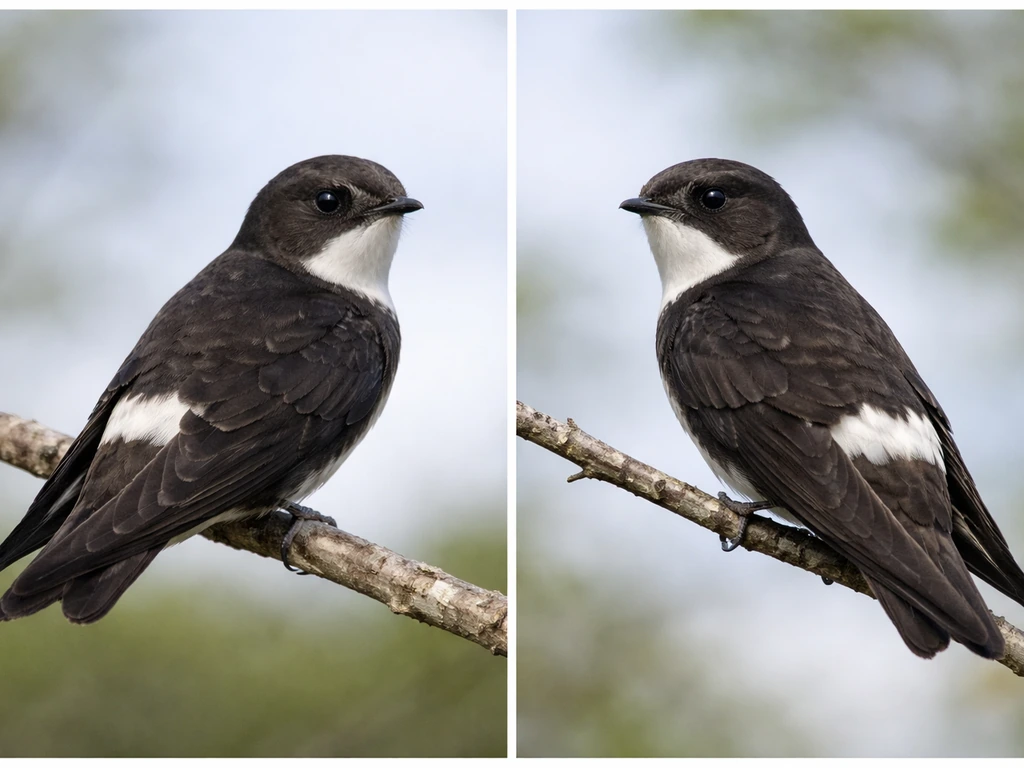
- Overall color: Small, stocky, and predominantly blackish-dark all over.
- White patches: Look for a clear white throat patch and a white rump band (the patch just above the tail). These are the most reliable field marks.
- Wings: Long, curved, scythe-like wings that look stiff in flight, not the flexible flapping of swallows.
- Tail: Short and slightly forked, not the deep fork of barn swallows.
- Flight style: Rapid, stiff-winged glides and fast flapping, often in screaming groups over rooftops, cliffs, or valleys.
- Call: High-pitched, twittering trill or screaming sound, especially in flight.
- Behavior: Almost never perches. If the bird is sitting on a wire or branch, it is almost certainly a swallow or martin, not a swift.
- Nesting: Nests in building crevices, under roof tiles, or in cliff holes. Not open cup nests like swallows.
That "never perches" behavior is the fastest mental shortcut. Swifts' legs are so reduced that perching on a wire or branch the way swallows do is essentially impossible for them. If you see the bird sitting anywhere, rule out swift immediately.
Don't mix this up: swift vs swallow, martin, and other fast aerial birds
This is the most practical issue for anyone trying to use the right Hindi word or symbolism. Swifts (Apodidae) and swallows/martins (Hirundinidae) look superficially similar because they both hunt insects in the air, but they are not closely related at all. The confusion goes back centuries: the genus name Apus was historically associated with swallow-type birds by early naturalists, which is exactly why this mix-up persists.
| Feature | Swift (Apodidae / Ababeel) | Swallow / Martin (Hirundinidae) |
|---|---|---|
| Underparts color | Dark/blackish all over (with white rump/throat patches) | Often pale or white belly, contrasting with dark back |
| Wings | Long, narrow, scythe-shaped; stiff in flight | Longer, more flexible; pointed but broader |
| Tail | Short, slightly forked | Often deeply forked (barn swallow) or square |
| Perching ability | Cannot perch; almost never lands on wires/branches | Perches freely on wires, branches, buildings |
| Legs | Tiny, almost vestigial | Normal small legs; can walk/perch |
| Flight style | Fast, stiff-winged glides; less flexible flap | More fluid, acrobatic, variable speed |
| Hindi name | Ababeel / Babeela / Batasi | Ababil (sometimes shared), or regional swallow terms |
| Family | Apodidae | Hirundinidae |
The Hindi naming situation adds a layer of complexity here: the word "Ababil" is sometimes loosely applied to swallows as well in informal use, precisely because of the Qur'anic narrative ambiguity about what exactly those birds were. So if you're reading a folk text or a religious commentary that mentions Ababil, you may not always be sure whether the author means a swift or a swallow. For ornithological purposes, the BNHS database and scientific field guides specifically map Ababeel/Babeela to swifts (Apodidae), so stick with that when you need precision.
Pigeons are a separate case entirely. People sometimes describe any fast-moving overhead bird as a "swift" colloquially, but pigeons (Kabutar, कबूतर in Hindi) are much larger, thicker-bodied, and fly with a very different wingbeat. A pigeon in a hurry can look surprisingly fast, but the silhouette, body size, and cooing call make them unmistakable once you know what to look for. The aerial screaming flocks of dark, tiny, stiff-winged birds you see at dusk over buildings are swifts. If you meant the skylark in Hindi, that is a different bird with a different meaning and common name. If you are trying to identify a common swift bird in Hindi, that bird-name is Ababeel (अबाबील) or Babeela (बाबीला) swifts. The birds landing on your windowsill are pigeons.
How to confirm the bird and the name you need
If you want to verify you're using the right Hindi term for the right bird, here's a practical checklist. Go through these in order and you'll have your answer within a minute.
- Did the bird perch on a wire, branch, or building surface? If yes, it's almost certainly not a swift. Look up swallow (Hirundinidae) terms instead.
- Was the bird small, dark all over, with white patches near the throat and rump? That's a strong match for House Swift or Little Swift, Hindi name: Ababeel or Babeela.
- Was it in a screaming, fast-flying group over a city, town, valley, or hillside? Classic swift behavior.
- Are you in Ladakh or a high-altitude Himalayan area? You may be seeing Alpine Swift, local name Kalakugti.
- Do you need the name for a religious or cultural text about Ababil? Note that the term spans both swifts and swallows in some traditions, but the ornithological mapping in Indian references points to swifts.
- Cross-check against the BNHS ENVIS vernacular database if you need scientific-name confirmation. It gives scientific name to Hindi/Marathi/Gujarati mapping in a single lookup.
Whether you're a language learner trying to nail the right Hindi word, a birder confirming a sighting's vernacular name, or someone exploring the cultural meaning behind these aerial acrobats, the core answer stays the same: swift bird in Hindi is Ababeel (अबाबील) or Babeela (बाबीला), the bird is the fast, dark, non-perching Apodidae family, and its cultural meaning carries a thread of divine protection and celestial freedom that runs through folk belief and literary tradition across North India. In Hindi, a white stork bird is commonly discussed with its own meaning and name, which can differ from the swift (Ababeel) used in this article white stork bird meaning in hindi.
FAQ
Is “Ababil” in Hindi always the same as “Ababeel” for swifts, or can it mean something else?
In Hindi, “Ababeel/Ababil” is the common vernacular for swifts (Apodidae), but the same word can show up informally for swallows too because people use it loosely from religious stories. If you need accuracy, rely on “Ababeel/बाबीला” plus field cues (tiny weak legs, almost no perching) rather than the name alone.
Which Hindi form should I choose, Ababeel (अबाबील) or Babeela (बाबीला), for everyday use?
Use Ababeel (अबाबील) when you are writing or speaking in a North Indian context where the Quranic-linked form is widely recognized. Use Babeela (बाबीला) in conversations if that is what locals around you prefer, since both refer to the same swift vernacular in mainstream references.
When translating “swift bird meaning in Hindi,” how do I know whether it’s the bird name or just “fast bird”?
Yes, the meaning changes depending on whether you mean bird-name or adjective. If someone says “swift bird” in English, they might only mean “fast bird,” but in Hindi the precise bird term points to the Apodidae family and usually to House Swift or Little Swift. When converting, add the Hindi bird word, not just the English idea of speed.
What if the bird I saw actually landed on a wire or balcony, could it still be a swift called Ababeel?
If you see a small dark bird overhead that perches on wires or sits on ledges, it is almost certainly not a swift, since swifts are built for flying and struggle to perch. Swallows can perch and have a different body shape, so perching is the quickest rule-out in real conditions.
If I saw a House Swift or Little Swift, should I still call it Ababeel in Hindi?
Commonly, House Swift and Little Swift get mapped to Ababeel/Babeela in vernacular references, so for most sightings in cities you can safely use the same Hindi term. If you are in high-altitude regions, names may shift locally for different swift species, but the “Ababeel” label is still the default starting point.
How can I avoid confusing Ababeel swifts with pigeons that look fast from far away?
Avoid using “Kabutar” (कबूतर) for this case. Pigeons are larger, thicker-bodied, and fly with a different silhouette and vocal pattern, while swifts look like tiny dark “screaming” dots that stay winged and agile over buildings, especially at dusk.
What should I do if a religious or folk text mentions Ababil but it is unclear whether it means swifts or swallows?
If a text mentions “Ababil” but your setting is clearly about India, treat it as ambiguous and decide using context. Religious commentary may not specify the exact species, so field identification should be based on swift traits, while cultural interpretation can still use the Ababil symbolism layer.
I’m using search or notes in Hindi, which spellings should I try to find the right swift meaning?
If you are searching in Hindi script, try both “अबाबील” and “बाबीला” in the same query, because different guides and families use different spellings. This prevents missing results due to transliteration differences rather than a real naming difference.
If a regional guide in another language uses a totally different word, can it still refer to the same swift?
Yes, Marathi and other regional languages may use unrelated roots for the same swift, for example Marathi “Pakoli.” So when cross-checking between languages, do not assume the name will rhyme with Ababeel, confirm the bird traits or the local field guide mapping.
How can I explain Ababeel in simple Hindi without confusing it with swallow or “fast bird”?
A practical way to phrase it is, “Ababeel (अबाबील), a swift, Apodidae, which hunts insects in flight and rarely perches.” This wording helps listeners not interpret Ababeel as just “fast,” and it reduces confusion with swallows and martins.
Next Article
Bird Beak Meaning in Hindi: Chonch, Bill, Pronunciation
Bird beak in Hindi chonch or bill, pronunciation, examples, beak vs bill differences, and figurative Hindi use