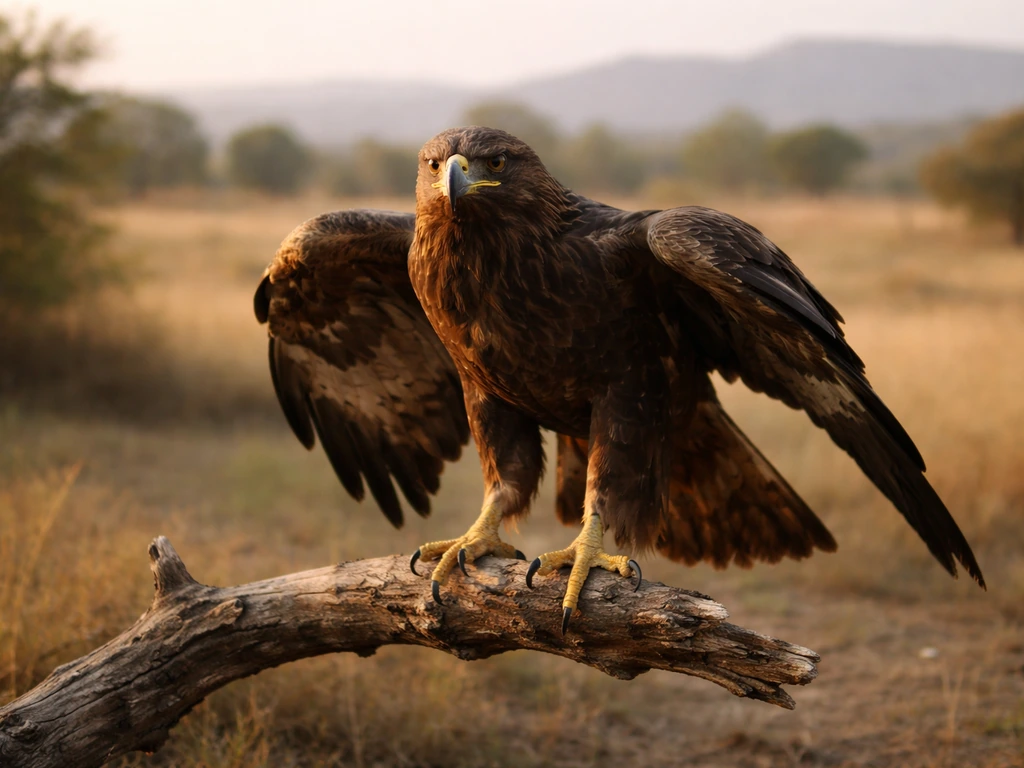
In Hindi, the talons of a bird are most commonly called पंजा (panjā) or पंजे (panje) in everyday speech. The more formal, Sanskrit-rooted word is नख (nakh), which covers the broader idea of a claw or nail. A third term you will encounter is चंगुल (changul), which carries the specific sense of a gripping, entrapping claw. So if you are searching for "talons bird meaning in Hindi," the answer is: bird talons = पंजे (panje) in casual Hindi, नख (nakh) in literary or formal Hindi, and the phrase सभी शिकारी पक्षियों के नुकीले पंजे होते हैं ("all birds of prey have sharp talons") is perfectly natural in both written and spoken Hindi.
Talons bird meaning in Hindi and English with examples

Rajesh Sharma
26 Apr 2026
What "talons" actually means for a bird (the English definition)
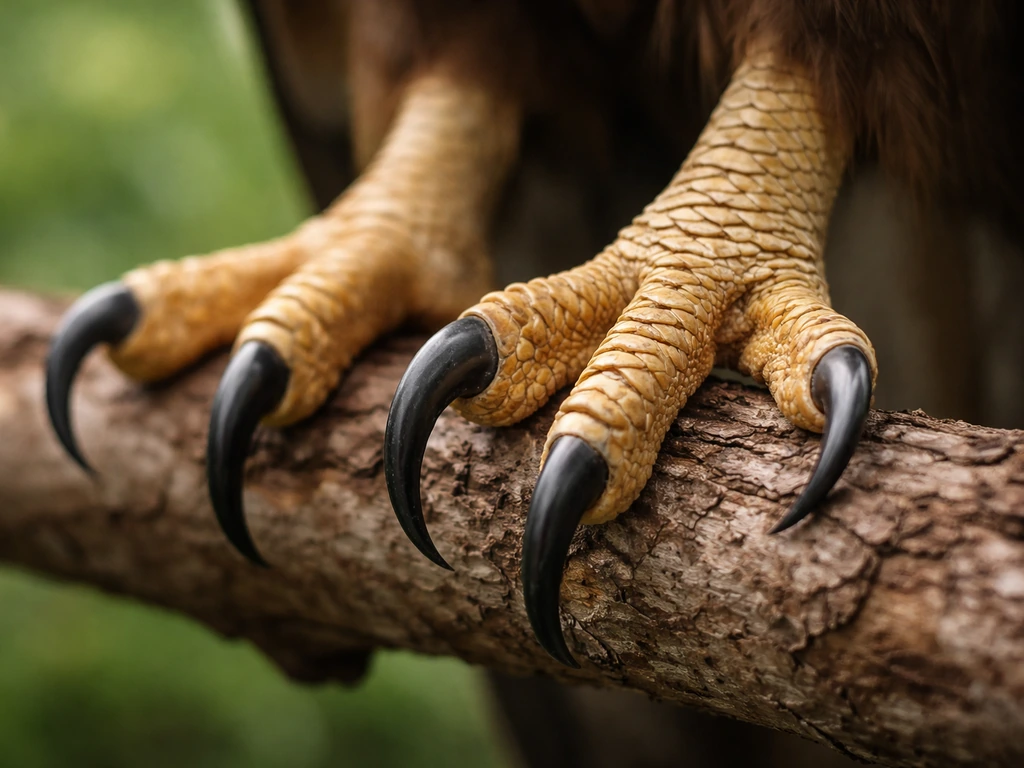
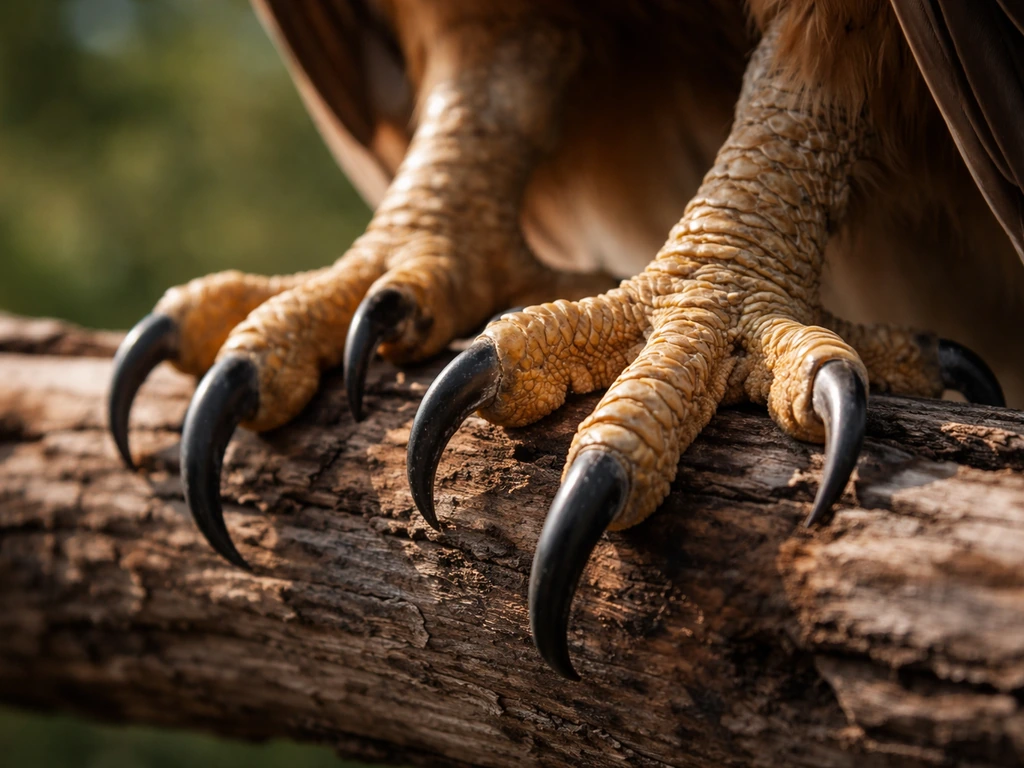
In English, a talon is specifically the sharp, curved, hooked claw of a bird of prey. Merriam-Webster, Oxford, and Cambridge all agree on this: the word talon is reserved for predatory birds, not for every bird that has claws. A chicken has claws for scratching; an eagle has talons for seizing prey. That distinction matters when you are translating, because Hindi sometimes uses the same word for both, and sometimes uses different words depending on context.
Talons sit on the toes of raptors and do most of the work in a hunt. Encyclopaedia Britannica notes that eagles have "strong feet equipped with great curved talons" for grasping prey. The talons puncture, grip, and immobilize. Without them, most birds of prey could not hunt at all. So when you see "talons" in an English bird description, think: large, hooked, predatory claw used for killing and carrying.
Hindi words for talons and claws: what to use and when
Hindi has three main words that translate "talon" or "claw," and choosing the right one depends on register and context. Here is a quick comparison of all three.
| Hindi Word | Transliteration | Literal Sense | Best Used When |
|---|---|---|---|
| पंजा / पंजे | panjā / panje | claw, paw, grip | Everyday conversation, news, wildlife writing |
| नख | nakh | nail, claw, talon (Sanskrit root) | Formal, literary, or poetic writing; scientific texts |
| चंगुल | changul | grip, clutch, entrapping claw | Idioms, figurative language, describing capture or entrapment |
पंजा (panjā) is the word most Hindi speakers reach for first. You will hear it in wildlife documentaries, in newspaper headlines about bird attacks, and in casual conversation. पंजे (panje) is simply its plural form. नख (nakh) is a learned borrowing from Sanskrit नख (nakha), which Sanskrit dictionaries define directly as "nail, claw, talon." It shows up in poetry, classical literature, and formal descriptions. चंगुल (changul) is slightly different in tone: it almost always implies being caught or trapped, as in चंगुल में फंसना (changul mein phansna), "to be caught in the claws/grip." In Punjabi and Marathi, पंजा is similarly used and widely understood, making it a safe cross-regional choice.
Example sentences in Hindi with English translations
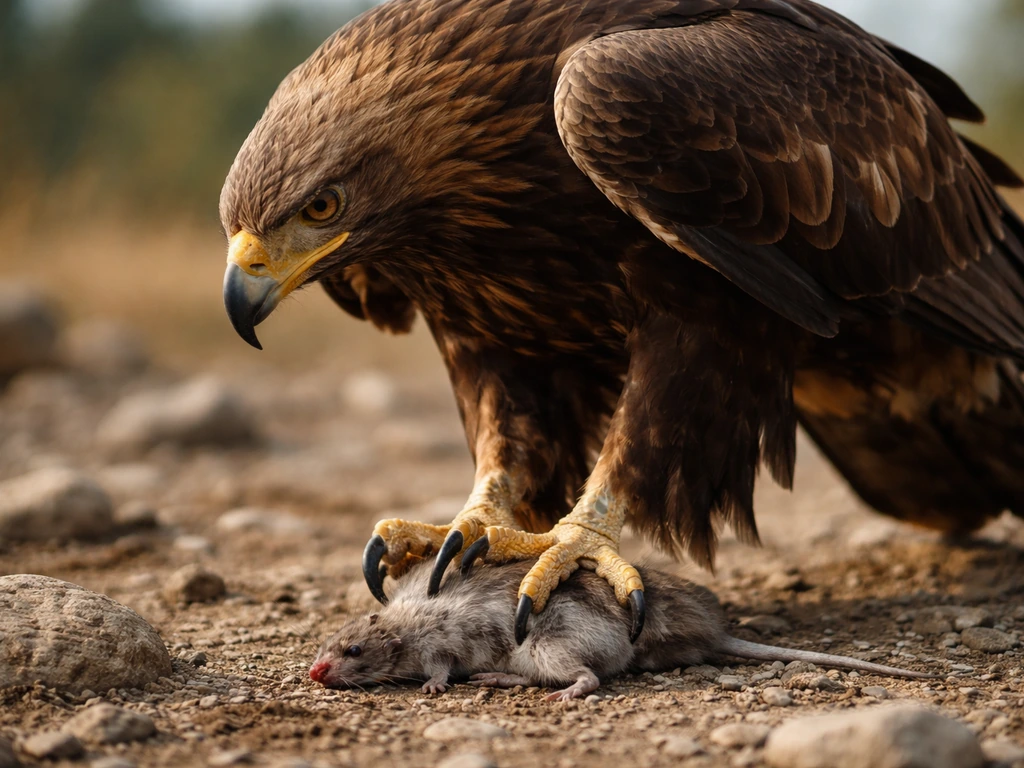
- गरुड़ के तेज़ पंजे होते हैं। (Garuḍ ke tez panje hote hain.) — "The eagle has sharp talons."
- बाज़ अपने शिकार को पंजों में जकड़ लेता है। (Bāz apne shikār ko panjōn mein jakad letā hai.) — "The falcon grips its prey in its talons."
- उल्लू के नख बहुत मज़बूत होते हैं। (Ullu ke nakh bahut mazboot hote hain.) — "The owl's talons/claws are very strong."
- शेर के चंगुल में फंसना आसान है, बचना मुश्किल। (Sher ke changul mein phansna āsān hai, bachnā mushkil.) — "Falling into the lion's claws is easy; escaping is hard." (A common idiom that works equally for a bird of prey in context.)
Which birds have talons, and how are they described in Hindi
Talons belong to birds of prey, called शिकारी पक्षी (shikārī pakshī) in Hindi. The word शिकारी means "hunter" and पक्षी means "bird," so the phrase literally translates as "hunter bird," which maps perfectly onto the English concept of a bird of prey. These are the birds whose feet and talons do the real work.
- गरुड़ (garuḍ) — Eagle: the iconic raptor of Indian mythology, famous for its powerful पंजे
- बाज़ (bāz) — Falcon/Hawk: a swift hunter whose needle-sharp talons grip slippery prey mid-air
- श्येन (shyen) — Hawk or falcon in classical Sanskrit/Hindi texts
- उल्लू (ullu) — Owl: nocturnal raptor with curved, gripping talons; associated with Lakshmi in Hindu tradition
- गिद्ध (giddh) — Vulture: large scavenger with strong feet but comparatively blunter talons than active hunters
Falcons show particularly interesting talon variation. Britannica notes that different falcon species have either "needle-taloned" feet or "thick, strong talons" depending on whether they hunt birds in the air or mammals on the ground. This is worth keeping in mind when you encounter a Hindi description of a specific raptor's पंजे, because the shape and size vary a great deal by species.
What talons symbolize in Indian tradition
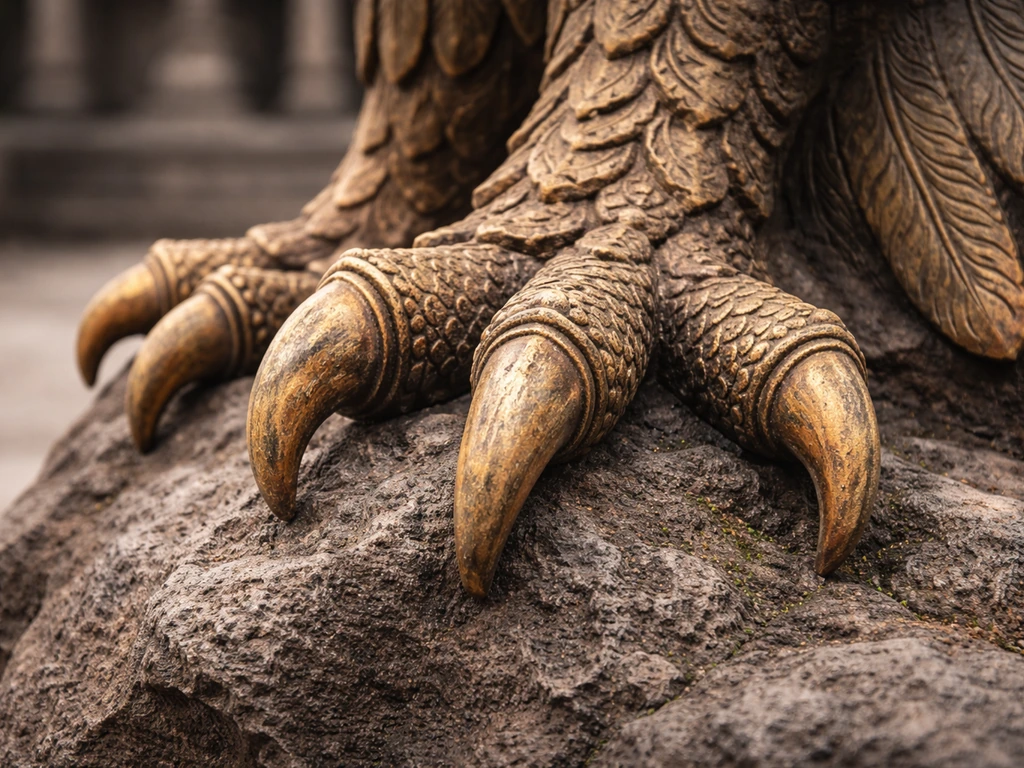
In Indian cultural and spiritual tradition, the talon or claw carries deep symbolic weight. The central ideas are power, sovereignty, protection, and the ability to seize or destroy evil. When you see a deity or mythological creature depicted with prominent claws or talons, the message is almost always about strength and divine authority.
The clearest example is गरुड़ (Garuḍ), the divine eagle who serves as the vehicle (वाहन, vāhan) of Lord Vishnu. Garuda's talons are mentioned in the Puranas as weapons of immense power: he uses them to tear serpents apart and to carry Vishnu across the cosmos. Wikipedia’s Garuda overview notes that Garuda appears across texts such as the Puranas and the Vedas, and describes him as an enemy to nāgas (serpent beings) Garuḍ. The talons here are not just anatomy, they are a symbol of divine grip over evil, specifically the conquest of nagaas (serpents) by a higher celestial force.
The word नख (nakh) itself has rich cultural currency beyond ornithology. Consider बाघनख (bāgh nakh), which literally means "tiger's claw" in Hindi. This is both a real weapon (the famous iron claw used by Chhatrapati Shivaji Maharaj) and a symbol of ferocious, controlled power. The same logic applies to bird talons in Indian imagery: the claw represents the power to seize, hold, and overcome. In folk paintings, the image of an eagle or hawk with outstretched पंजे is a common motif for victory and protection.
चंगुल (changul) carries the shadow side of this symbolism. Being in someone's चंगुल means being trapped, helpless, caught. It appears in folk sayings and in Hindi film dialogue to describe being in the grip of an enemy, an addiction, or fate itself. So the talon in Indian symbolic language cuts both ways: it is the protector's weapon and the captor's trap, depending on whose claws you are in.
The literary expression नख से शिख तक (nakh se shikh tak), meaning "from nail/claw to crown (top of the head)," is a classical Hindi and Sanskrit phrase used in poetry to describe someone's entire body from toe to head. It appears in the Bihari Satsai and other classical texts. This shows that नख, rooted in the same word-family as "talon," functions across physical, anatomical, and aesthetic registers in Indian literary tradition.
Is "talons bird" about anatomy, or is it a specific bird or creature?
The phrase "talons bird" in a search query is genuinely ambiguous, and it is worth pausing to figure out which interpretation applies to you. The bird in question is said to be able to fly backwards, and you can find how this is phrased in Hindi here which bird can fly backwards in hindi.
If you are specifically looking for the meaning of a peregrine bird in Hindi, the correct Hindi name will depend on the exact species reference peregrine bird meaning in hindi. Large web-footed bird meaning in Hindi often points to species described by the word for webbed feet in Hindi, so check the exact bird name in the sentence you are translating large web footed bird meaning in hindi. Here are the two main possibilities.
- Anatomy interpretation: You want to know what the word "talons" means when describing a bird's claws, and you want the Hindi equivalent. In that case, you are looking at पंजे (panje) or नख (nakh), as covered above.
- Creature/bird interpretation: You are asking about a specific bird or legendary creature whose name or defining feature in English or Hindi involves the word talon or claw. This could be Garuda (the divine eagle), or it could be a bird name you have encountered in a text, a story, or a wildlife article.
To disambiguate, ask yourself: is there a specific bird name in the original text that you are trying to translate, or are you describing what a bird's feet look like? If it is the former, search for the bird's name directly alongside "Hindi meaning" rather than searching for the word "talons." If it is the latter, पंजे and नख are your answers.
If the context is mythological or literary and involves a great clawed bird, the reference is almost certainly to गरुड़ (Garuḍ) or, less commonly, to श्येन (shyen, a hawk mentioned in the Vedas). In Hindi, the large web-footed bird meaning people look up often points to गरुड़ (Garuda), especially in myth and traditional descriptions. Both are described extensively in Sanskrit and Hindi texts with reference to their powerful नख or पंजे. A search for "Garuda Hindi meaning" or "Garuda symbolism" will give you far richer results in that case.
How to translate accurately and find the exact bird meaning
If you are a language learner or someone translating a text about birds, here are practical steps to make sure you get the right Hindi term every time.
- Identify the bird species first. The word you use in Hindi for talons will feel more natural if you already know the bird. For eagle (गरुड़ or चील depending on species), the phrase पैने पंजे (paine panje, sharp talons) is standard. For an owl (उल्लू), उल्लू के नुकीले पंजे (ullu ke nukeele panje) works well.
- Choose your register. For everyday writing or speech, पंजे is almost always right. For literary, poetic, or Sanskrit-influenced writing, use नख. For capturing the sense of being trapped or seized, use चंगुल.
- Check neighboring Indian languages if needed. In Marathi, पंजा (panjā) is equally common. In Gujarati, the same word पंजो (panjo) is used. In Punjabi, ਪੰਜੇ (panje) is the direct equivalent. Sanskrit texts will use नख (nakha) consistently.
- Search by bird name for symbolic or mythological contexts. If you read about a talon-bearing bird in a story or religious text, search the bird's name plus "Hindi meaning" or "Hindu mythology." For example: "eagle Hindi meaning," "Garuda meaning," or "hawk in Indian mythology."
- Use reliable bilingual dictionaries. Shabdkosh, Rekhta (for Urdu-Hindi literary vocabulary), and Collins Hindi-English dictionary all carry entries for पंजा, नख, and चंगुल with example usage that will confirm the right word for your context.
It is also worth knowing how talons fit into the broader family of bird-foot vocabulary. Raptors and birds of prey, as a category, are distinct from perching birds (which have feet adapted for gripping branches rather than seizing prey) and from large water birds with webbed feet. If you want the Hindi for perching birds, search for the perching bird meaning in Hindi along with the word for “perch. ”.
The talon is a raptor-specific anatomy word, which is why शिकारी पक्षी (birds of prey) is the category you need to stay in when using पंजे in a predatory-bird context. Migratory birds, for instance, may have claws too, but their feet are not typically described using the "talon" vocabulary in English or in Hindi. Migratory bird meaning in Hindi depends on the species and context, but the common Hindi framing uses शब्द जैसे प्रवासी पक्षी or migrating bird-related wording.
To summarize the full picture: talons in Hindi are पंजे (panje) for everyday use, नख (nakh) for formal and literary use, and चंगुल (changul) for the figurative sense of being caught or gripped. The symbolic meaning of bird talons in Indian tradition centers on divine power, protective strength, and the conquest of evil, most powerfully embodied in Garuda. If the phrase "talons bird" in your search is pointing you toward a specific creature rather than anatomy, Garuda is almost certainly the entry point you need. If your query uses “bird of passage meaning in hindi,” that term is about migratory context rather than talons, so treat it as a related adjacent topic to check next.
FAQ
Should “talons” be translated differently for birds like chickens or sparrows (not birds of prey)?
In English, talons are the hooked claws used by birds of prey, so you should not use talon to translate the claws of a chicken or other non-predatory birds. For Hindi, पंजा/पंजे (casual) or नख (formal) can cover claws in general, but if the original English uses “talons” specifically, pick पंजे (or नख in literary text) to keep the raptor implication.
When should I use चंगुल instead of पंजे या नख?
If the sentence talks about being stuck or seized, चंगुल is the closest natural Hindi choice because it carries the “grip that traps” sense. If it only describes the anatomy or hunting weapon, use पंजे (everyday) or नख (formal/literary).
Is पंजा or पंजे better when I describe “talons” in English?
Hindi plural matters: पंजा is singular, पंजे is plural, so “eagles have strong talons” should be phrased with पंजे. नख can also appear in plural-like usage (for example, multiple claws), but many descriptions prefer पंजे when talking about species traits.
What are natural Hindi adjective combinations for talons (sharp, strong, hooked)?
In many Hindi sentences, talons may be expressed as “sharp पंजे” or “नुकीले पंजे,” rather than translating every word literally. If the English says “strong talons,” a natural Hindi pattern is “मजबूत पंजे,” or “प्रभावी/शक्तिशाली नख” in formal text.
In a hunting scene, how do I decide whether the focus is anatomy (claw) or being trapped (grip)?
For translations of hunting descriptions, keep the mapping raptor-to-talon consistent: “grip, puncture, seize prey” should push you toward पंजे/नख, not चंगुल. Use चंगुल only when the focus is the victim being caught or trapped by the claw.
How should I translate “talons” in mythological descriptions of Garuड़?
If your source is a mythological or devotional passage and mentions a divine eagle or a weapon-like claw, the term will usually align with Garuड़’s portrayal, where नख functions symbolically as a powerful grip. Even if the text uses a generic “claw,” Hindi readers often interpret the reference through that cultural frame.
What if “talons bird” in my source refers to a specific creature, not anatomy?
Don’t rely on the search phrase alone, because “talons bird” can mean either anatomy (the bird’s claws) or a specific creature described by that search. If the original text names a bird, translate the bird name directly first, then add the correct foot/claw word. If no bird name exists and the description is about feet, use पंजे/नख.
How do I handle talon variations mentioned for different falcon species in translation?
When the English text is about a particular falcon species, the claw type can differ, like needle-like talons versus thicker strong talons. Hindi translations may reflect this by adding size/shape adjectives, so check whether the source mentions “needle,” “thick,” or “strong,” and choose descriptive Hindi accordingly.
Next Article
Bird of Prey Meaning in Hindi: Exact Words and Cultural Sense
Bird of prey meaning in Hindi with exact words, regional equivalents, and cultural symbolism in Indian context.