The Hindi meaning of 'bird of prey' is शिकारी पक्षी (shikari pakshi). That is the standard, widely recognized term you will find in Hindi dictionaries, news media, and everyday conversation. blank" rel="noopener noreferrer">Shikari (शिकारी) means hunter or one who hunts, and pakshi (पक्षी) means bird. Put them together and you have the most natural, accurate Hindi equivalent for the English term. A secondary form you will sometimes encounter is मांसाहारी पक्षी (maansahari pakshi), literally 'meat-eating bird' or carnivorous bird, which emphasizes diet over hunting behavior. Both are correct, but शिकारी पक्षी is what most Hindi speakers and publications use in practice.
Bird of Prey Meaning in Hindi: Exact Words and Cultural Sense

Rajesh Sharma
19 Apr 2026
The Direct Hindi Meaning and How People Actually Use It
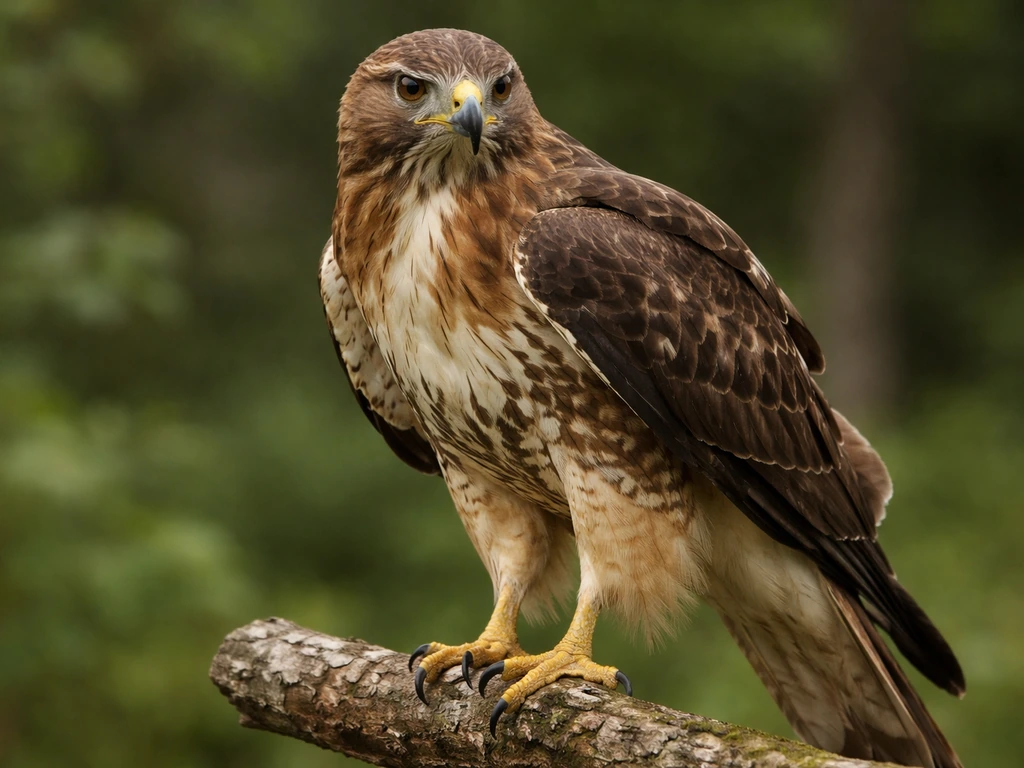
In everyday Hindi, शिकारी पक्षी works the same way 'bird of prey' or 'raptor' works in English. You can use it in conversation, in school textbooks, in nature documentaries, and in newspaper articles. Major Hindi news outlets like DW Hindi use शिकारी पक्षी and शिकारी पक्षियों (the plural/oblique form) directly when writing about raptors in South Asian conservation contexts. The word shikari itself carries weight in Hindi culture. It evokes images of a skilled, powerful hunter, so calling an eagle or hawk a shikari pakshi instantly communicates both the biology and the respect attached to these birds.
You will also hear रैप्टर (raptor) used in urban, English-influenced Hindi conversations, especially among birders, wildlife enthusiasts, and students. It is borrowed directly from English and is perfectly understood in those circles, though शिकारी पक्षी remains the more rooted and culturally resonant choice for most contexts. If you are wondering which bird can fly backwards in Hindi, that question is often discussed alongside fun facts about raptors and their flight abilities.
Which Birds Actually Count as Raptors in Indian Usage
This is where things get a little nuanced, and it is worth clarifying before you go further. In Indian usage, as in global ornithology, there is no single perfectly rigid definition of which birds qualify as शिकारी पक्षी. The Peregrine Fund has noted that even in scientific literature there is ambiguity about where the boundaries of 'raptor' fall. That said, the broad, practical understanding shared by most Hindi speakers, educators, and reference materials includes the following birds as clear members of the group:
- Eagles (चील / बाज़ के प्रकार, and specifically the large eagles referred to as गरुड़-type birds in mythology)
- Hawks (बाज़ / श्येन)
- Falcons (बाज़ / शाहीन)
- Kites (चील, as in the Black Kite or Brahminy Kite)
- Vultures (गिद्ध)
- Owls (उल्लू)
Owls deserve a special mention because people sometimes wonder whether they count. In common Hindi understanding and in dictionaries like Bolti Dictionary, owls are explicitly included: 'उल्लू और चील दोनों bird of prey की श्रेणी में आते हैं' (both owls and kites fall in the bird of prey category). So yes, उल्लू is a शिकारी पक्षी by most practical definitions used in India, even though the cultural associations around owls are quite different from those around eagles or hawks, as we will explore below.
How to Say 'Bird of Prey' Across Indian Languages
If you are learning more than just Hindi, or working with texts and communities across India, knowing the regional equivalents is genuinely useful. The core vocabulary shifts across languages but the root concepts, especially from Sanskrit, run through all of them.
| Language | Term for Bird of Prey | Pronunciation Guide | Notes |
|---|---|---|---|
| Hindi | शिकारी पक्षी | shikari pakshi | Most common, everyday and media usage |
| Sanskrit | श्येनः / श्येन पक्षी | shyenah / shyen pakshi | Shyena refers specifically to hawk/falcon-type birds; also the root for many regional words |
| Marathi | शिकारी पक्षी | shikari pakshi | Follows the Hindi/Sanskrit pattern closely; widely understood |
| Punjabi | ਸ਼ਿਕਾਰੀ ਪੰਛੀ | shikari panchhi | Panchhi is the Punjabi equivalent of pakshi; shikari is shared across North Indian languages |
| Gujarati | શિકારી પક્ષી | shikari pakshi | Very close to Hindi; pakshi is common across Indo-Aryan languages |
Sanskrit is the key thread here. The word श्येन (shyena) in Sanskrit refers specifically to a hawk or falcon, and it appears in ancient Vedic texts. It is the root behind many bird-related terms across Indian languages. When you see shyena in a classical text, you are reading about what we would call a raptor today. Similarly, the Sanskrit word सुपर्ण (suparna), meaning 'beautiful-winged' or 'good-winged,' was used as a title for divine birds of prey, most famously Garuda. These Sanskrit terms pop up in mythology, poetry, and scriptural commentary, so recognizing them helps you decode a lot of cultural material.
What Raptors Symbolize in Indian Culture and Spirituality
In Indian cultural imagination, शिकारी पक्षी carry a rich set of symbolic meanings. Most of the associations are positive, especially for eagles, hawks, and falcons, while owls occupy a more complicated symbolic space.
Eagles, Hawks, and Falcons: Power, Authority, and Protection
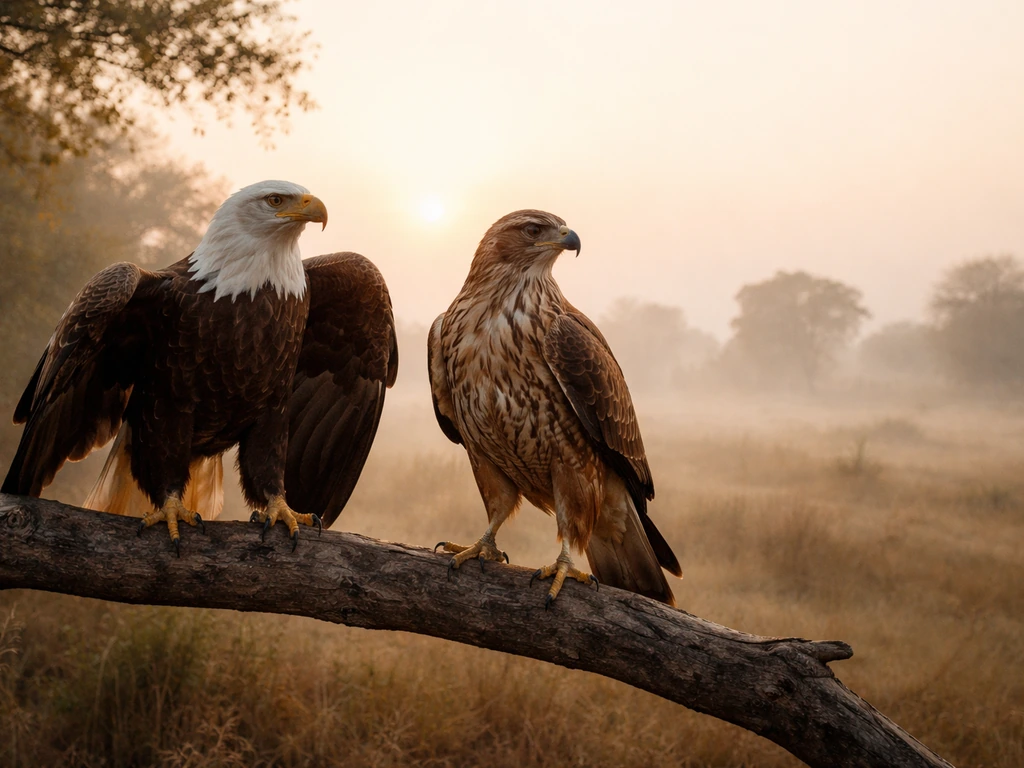
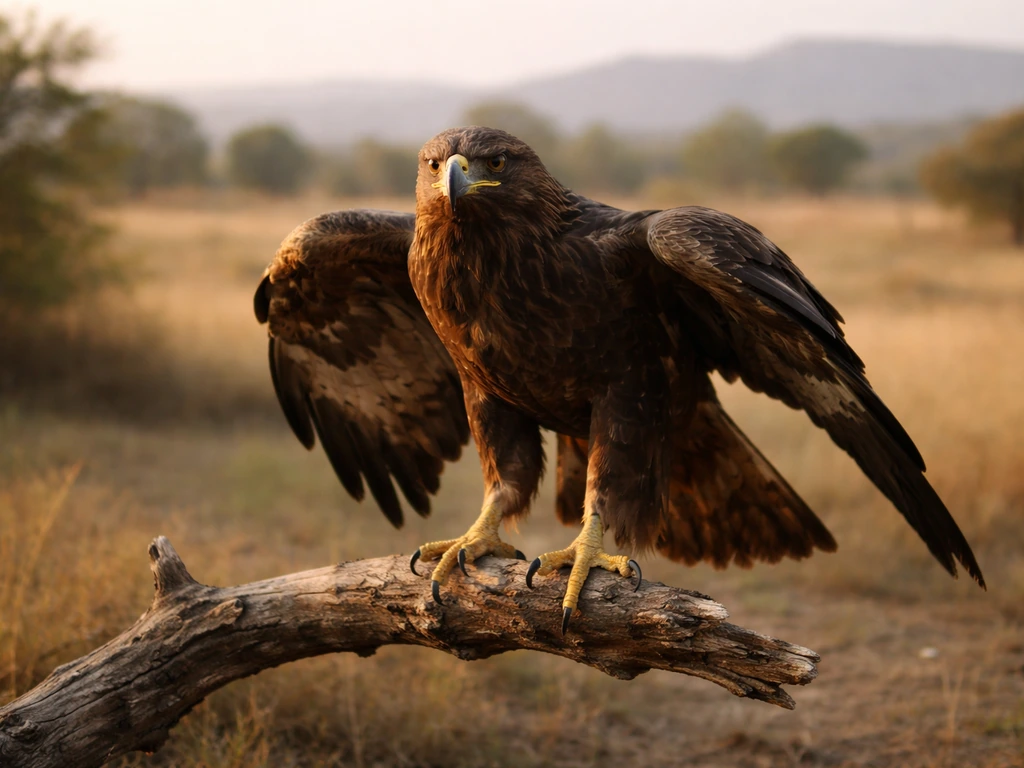
Eagles and hawks are universally seen as symbols of strength, sharp vision, vigilance, and authority in Indian tradition. A sharp-sighted person is compared to a hawk. A powerful ruler or warrior is likened to an eagle. Falconry, the ancient art of training birds of prey for hunting, has deep Indian roots: the Sanskrit text Shyenavinod is directly linked to the practice of training falcons and hawks, suggesting that India had a sophisticated falconry tradition long before it became famous in Mughal courts. The Mughals, particularly emperors Akbar and Jahangir, were passionate falconers, and their courts refined the culture of using trained रैप्टर्स as a symbol of royal status and refinement.
Owls: Between the Sacred and the Inauspicious
The उल्लू (owl) sits in a fascinating cultural tension. On one hand, the owl is the vahana (vehicle) of Goddess Lakshmi, the deity of wealth and prosperity, which gives it a sacred connection. On the other hand, in folk belief and everyday superstition across much of India, seeing an owl, especially at night or in a dream, is widely considered inauspicious, a possible omen of death or bad luck.
In Idukki, Kerala, for example, the spot-bellied eagle owl was historically associated with death and fear in local communities. And in Hindi everyday speech, calling someone an 'ullu' is a mild insult meaning fool or simpleton. So the owl manages to be both the companion of a goddess and a byword for foolishness, which is very Indian in a way.
Vultures: Necessary but Unsettling
The गिद्ध (vulture) occupies a different symbolic register. Ecologically vital, vultures are nature's cleanup crew, and in some traditions they are respected for this role. In the Ramayana, the vulture king Jatayu is one of the most heroic characters, dying in an attempt to save Sita from Ravana. Despite this mythological honor, in everyday Indian symbolism, vultures are associated with death, waiting opportunistically, and sometimes greed. The phrase 'like vultures circling' has the same connotation in Hindi as it does in English.
Legendary Raptors from Indian Mythology
No discussion of शिकारी पक्षी in India can skip the great mythological birds. These are not just stories. They define how Indians have thought about raptors for thousands of years, and their names and images appear in temples, government seals, currencies, and daily speech.
Garuda: The Divine Raptor Above All

Garuda (गरुड़) is the supreme raptor figure in Hindu mythology. Described in the Garuda Purana and across Vedic literature, Garuda is a giant eagle-like or kite-like divine being who serves as the vahana (mount) of Lord Vishnu. Britannica describes him as the 'man-bird vehicle of Vishnu,' combining human intelligence with the power and speed of a great bird of prey. Garuda is a symbol of divine power, speed, loyalty, and the ability to destroy evil, particularly serpents (nagas).
He is literally anti-venom in mythological terms, the natural enemy of snakes. Indonesia's national airline is named Garuda, and the Indian Air Force uses the Garuda Commando unit, showing how the name has traveled across cultures as a symbol of aerial power and protection.
Shyena: The Sacred Hawk of the Vedas
In the Rigveda, Shyena (श्येन) is the divine hawk who brought the Soma (sacred drink) from the heavens to the earth. This story establishes the hawk as a sacred messenger and a being capable of moving between divine and earthly realms, a classic raptor archetype. Shyena also appears in fire altar (agni) rituals: the Vedic fire altar was sometimes built in the shape of a falcon, known as the Syena-citi. This is one of the earliest examples of raptor symbolism being built directly into religious practice in India.
Jatayu and Sampati: Vulture Heroes of the Ramayana
Jatayu (जटायु) and his brother Sampati are the great vulture characters of the Ramayana. Jatayu is a friend of King Dasharatha (Ram's father) and a guardian figure who dies heroically fighting Ravana to protect Sita. His death scene is one of the most emotionally charged in the epic.
Ram performs funeral rites for Jatayu, treating him with the honor due to a father figure, which is significant because it establishes that even a bird of prey, a vulture, deserves that kind of respect and can embody dharma. Sampati, who lost his wings trying to shield Jatayu from the sun, later helps Ram's army locate Lanka. These two characters rescue the vulture from purely negative symbolism and plant them firmly in the heroic tradition.
Using the Term Correctly: Sentence Examples
Here are practical sentence examples that show how to use शिकारी पक्षी and related terms correctly in different contexts. These range from simple descriptive sentences to slightly more formal and literary ones.
| Hindi Sentence | English Translation | Context |
|---|---|---|
| चील एक शिकारी पक्षी है। | The kite is a bird of prey. | Simple descriptive, everyday conversation |
| बाज़ और उल्लू दोनों शिकारी पक्षियों की श्रेणी में आते हैं। | Both the hawk and the owl fall under the category of birds of prey. | Educational or explanatory context |
| गरुड़ हिंदू पौराणिकता में सबसे प्रसिद्ध शिकारी पक्षी है। | Garuda is the most famous bird of prey in Hindu mythology. | Cultural or mythological writing |
| शिकारी पक्षियों की संख्या भारत में तेज़ी से घट रही है। | The number of birds of prey in India is declining rapidly. | News, conservation, or academic writing |
| श्येन वैदिक साहित्य में एक पवित्र शिकारी पक्षी है। | Shyena is a sacred bird of prey in Vedic literature. | Classical or scholarly usage |
| उसकी नज़र बाज़ की तरह तेज़ है। | His eyesight is as sharp as a hawk's. | Idiomatic/figurative use in everyday Hindi |
Notice that the plural form in oblique case becomes शिकारी पक्षियों (shikari pakshiyon), which is what you need when the noun is the object of a verb or follows a postposition, as in the conservation sentence above. This is a small but important grammatical point for Hindi learners.
Choosing the Right Word for Your Context
If you are writing or speaking in everyday Hindi, शिकारी पक्षी is always the right starting point. It is natural, clear, and understood by everyone. If you are writing about mythology, classical texts, or Vedic tradition, knowing शयेन (shyena) for hawk/falcon and गरुड़ (garuda) for the divine eagle-type adds cultural depth and accuracy. If you are in a bilingual or urban context, रैप्टर works fine as a technical loan word. For Marathi, Punjabi, and Gujarati speakers, the shikari pakshi / panchhi pattern holds with minor phonetic variations, so you can use it confidently across these languages with small adjustments.
It is also worth noting that the category of शिकारी पक्षी overlaps with neighboring concepts that birding and language enthusiasts often explore together. If you are also comparing related bird terms, you might next look up the large web footed bird meaning in hindi as a neighboring vocabulary point.
Understanding how talons (पंजे) define a raptor physically, or how certain raptors are also migratory birds (प्रवासी पक्षी) that travel across the subcontinent seasonally, adds another layer to how Indians talk about and classify these birds. The bird of passage meaning in Hindi is often explained as a migratory or temporary visitor, and it matches the idea of birds that travel seasonally.
That is why the migratory bird meaning in Hindi is often tied to the idea of a bird that visits seasonally migratory or temporary visitor. The peregrine falcon, for instance, is both a classic shikari pakshi and a migratory visitor to parts of India, known for its extraordinary speed. The peregrine bird meaning in Hindi is closely tied to how people describe this bird as a fast, migratory raptor peregrine falcon.
The cultural weight of the शिकारी पक्षी in India is hard to overstate. From the Vedic fire altars shaped like falcons, to Garuda on the Indonesian national symbol, to Jatayu's heroic death in the Ramayana, to the Mughal emperors riding with trained falcons on their wrists, these birds have been woven into Indian identity across thousands of years. When you use the term शिकारी पक्षी, you are not just naming a biological group. You are invoking a lineage of power, divinity, and cultural memory that runs very deep in Indian tradition.
FAQ
Does उल्लू (owl) also mean bird of prey in Hindi?
No, not always. In common Hindi and most dictionaries, owl (उल्लू) is included in the practical “bird of prey” sense, but if a text is using a stricter modern biology framing, it may separate “raptors” (falcons, eagles, kites) from owls. When in doubt, check the sentence context (whether they mention only falcons and eagles, or explicitly mention owls).
Should I say शिकारी पक्षी or रैप्टर when speaking English-influenced Hindi?
Use रैप्टर (raptor) when you are writing for birders or in a science or urban bilingual setting, but keep शिकारी पक्षी for general audiences. A practical rule, if your audience includes non-specialists or you are writing for school, pick शिकारी पक्षी first, then you can add रैप्टर in parentheses.
Is मांसाहारी पक्षी (meat-eating bird) the same as bird of prey in Hindi?
Yes, diet-based wording is acceptable, मांसाहारी पक्षी is understood as a bird that eats meat, but it does not always map perfectly to “prey-hunting predators” the way शिकारी पक्षी does. If the focus is hunting behavior or raptor identity, prefer शिकारी पक्षी; if the focus is feeding habits in general, मांसाहारी पक्षी can work.
How do I use शिकारी पक्षी in plural or oblique forms correctly?
For a question sentence, you would typically use शिकारी पक्षी as the base noun, for example “कौन-सा पक्षी शिकारी पक्षी कहलाता है?” For direct objects or after postpositions, switch to the oblique plural like शिकारी पक्षियों, as in “मैंने शिकारी पक्षियों को देखा.” The plural/oblique change is a common mistake for Hindi learners.
Do I use शिकारी पक्षी or शिकारी पक्षियों when talking about one bird versus many?
If you are describing a single bird, use the singular noun form, शिकारी पक्षी. Only use the plural oblique form when the grammar requires it (for example, “देखे हुए शिकारी पक्षियों की संख्या…”). Mixing शिकारी पक्षी and शिकारी पक्षियों in the wrong spot can sound incorrect even if the meaning is close.
Can I shorten “bird of prey” to just शिकारी in Hindi?
Avoid translating “bird of prey” into a purely generic term like “शिकारी” alone or “पक्षी” alone. “शिकारी” by itself can mean any hunter, not specifically a bird category. The full pairing शिकारी पक्षी is what keeps the meaning specific and natural.
Is a bird of prey the same as a प्रवासी पक्षी (migratory bird)?
You can, especially in wildlife contexts, but be careful about the overlap. “प्रवासी पक्षी” means migratory bird, which is about travel, not hunting. A peregrine falcon can be both, but the sentence should say both concepts if you want to be accurate (migratory visitor plus raptor).
Are the borders of “शिकारी पक्षी” fixed and always identical across references?
Yes, but treat it as a category label, not a literal guarantee. Some “raptors” in everyday speech may include birds with different hunting styles, and the exact boundary can vary by source. If a source is trying to be scientific, it may list families rather than rely only on the broad Hindi label.
How can I avoid confusion when writing reports in Hindi about raptors?
Commonly, it is. However, in formal or technical writing, pairing the term with a specific species name (like पेरेग्रीन फाल्कन) reduces confusion. Species names are unambiguous, while category words like शिकारी पक्षी can vary in which subtypes a writer includes.
Next Article
Bird Beak Meaning in Hindi: Chonch, Bill, Pronunciation
Bird beak in Hindi chonch or bill, pronunciation, examples, beak vs bill differences, and figurative Hindi use