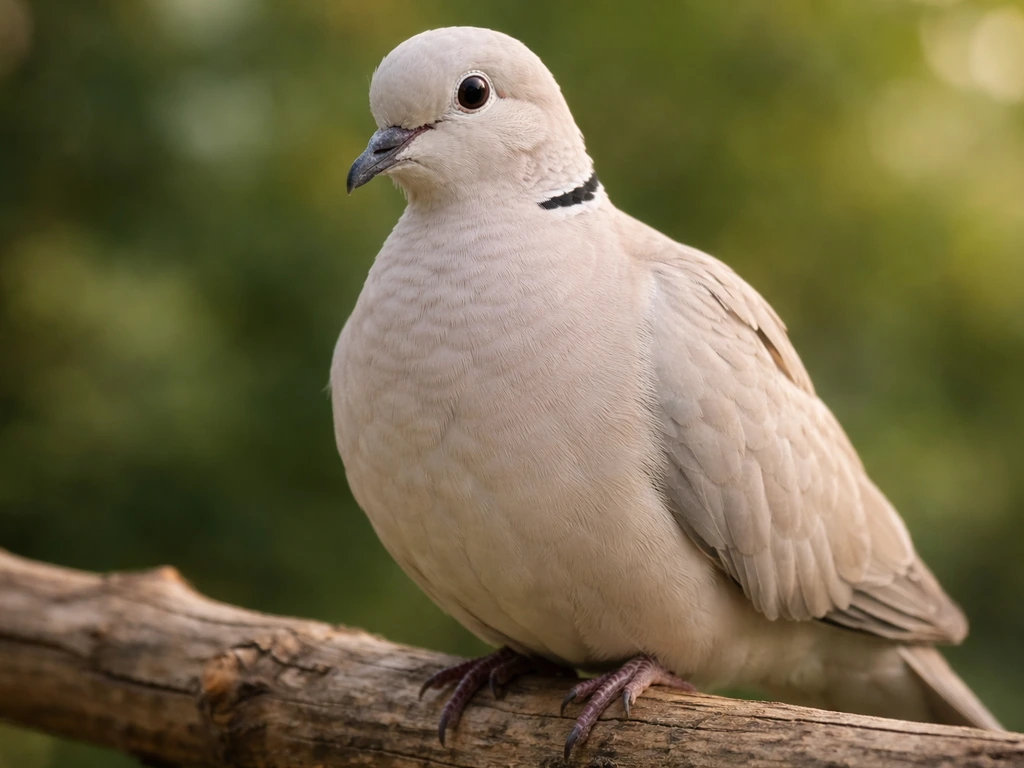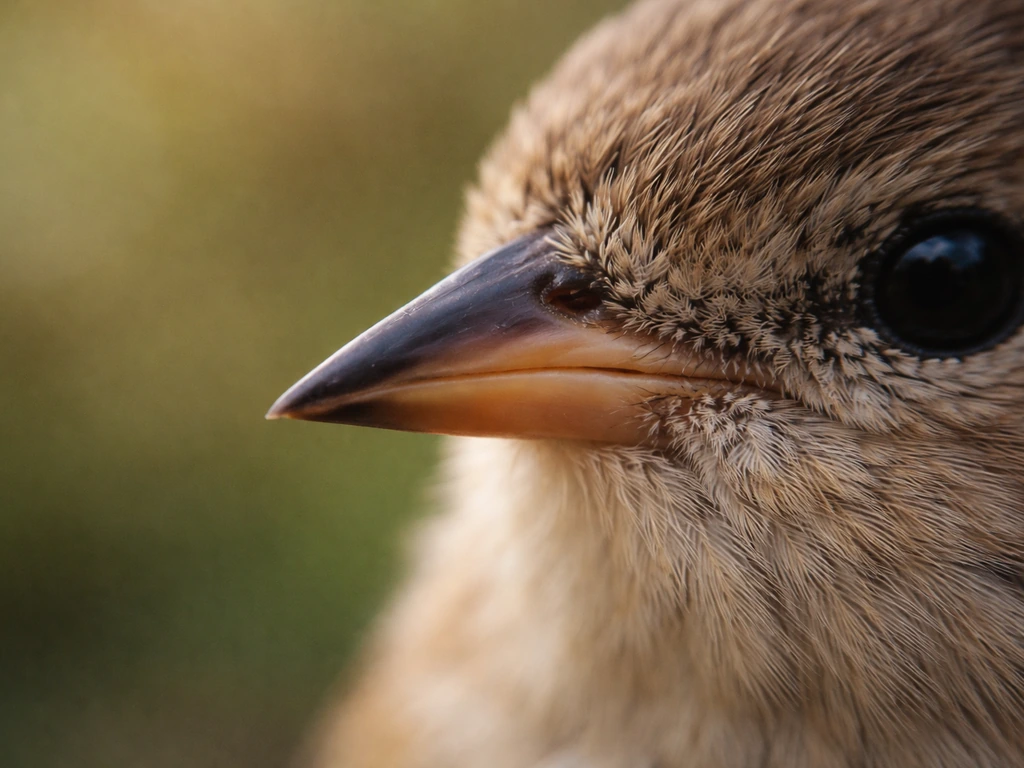
The Hindi word for condor is कंडोर (kandor), sometimes also written as कंडर (kandar) or कांडोर (kaandor). All three are transliterations of the English word, because the condor is not a bird native to India and has no ancient Sanskrit or regional-language name of its own. If you have seen Hindi educational texts or wildlife writing describe it, you will often find an explanatory note in parentheses like गिद्ध (giddh), meaning vulture, because that is the closest biological category. So the most accurate and practical way to refer to it is: कंडोर (kondor), एक विशालकाय गिद्ध, meaning 'a giant vulture.'
Condor Bird Meaning in Hindi: मतलब, प्रतीक और पहचान

Rajesh Sharma
13 May 2026
The Most Common Hindi Translations for Condor

Hindi dictionaries and translation platforms agree on the transliterated form कंडोर as the standard word. Variants you may encounter include कंडर, कांडोर, कुंडार, and the less common कँडोर. These differences come down to different romanization and Devanagari conventions across publishers, not separate meanings. They all refer to the same bird.
One Hindi administrative lexicon (Rajbhasha Department) phrases it directly: 'कँडोर पृथ्वी की सबसे बड़ी शिकारी चिड़िया है', the condor is the world's largest predatory/scavenging bird. Hindi educational content on the California condor (कैलिफोर्निया कंडोर) frequently adds the gloss गिद्ध in brackets to make the category clear for readers. That gloss is genuinely useful: it tells you that when Hindi speakers need a cultural or emotional frame for this bird, they reach for गिद्ध first.
| Term | Script | Notes |
|---|---|---|
| Kandor (most common) | कंडोर | Standard transliteration used in Hindi dictionaries and media |
| Kandar | कंडर | Variant found in Hinkhoj and similar platforms |
| Kaandor | कांडोर | Variant used in some formal/administrative texts |
| Kundaar | कुंडार | Less common variant, same bird |
| Giddh (explanatory gloss) | गिद्ध | Biological category equivalent: vulture, used in educational texts |
Condor Symbolism in an Indian Cultural Context
The condor carries no direct symbolism in classical Indian tradition simply because it lives on the other side of the world. But that does not mean the bird is symbolically empty for an Indian reader. When you understand what the condor represents in its own cultural home, you immediately find parallels that resonate in Indian thought.
In Andean indigenous culture, the condor (called kuntur in Quechua) is the sacred bird of the sky, a connector between the earthly realm and the upper world. It is the living symbol of power, freedom, and divine guidance. The Andean condor is the national symbol of several South American countries and is treated as a biocultural keystone species, meaning it is both ecologically critical and spiritually significant to the communities that share its landscape.
For an Indian reader approaching this symbolism, the parallel that makes most sense is not Garuda (more on that below) but the idea of the great sky-dwelling scavenger bird as a spiritual sentinel. In Indian folk traditions, large raptors and vultures are often associated with Shani (Saturn) and with messages from the ancestral world. The condor's soaring, its connection to high mountains and open skies, and its role as a purifier of the dead map quite naturally onto the reverence Indians have historically shown for large birds of prey, even if the condor itself is not named in any Sanskrit text.
If you are using the condor as a symbolic figure in Hindi writing today, such as in poetry, a nature essay, or a spiritual metaphor, the associations that will land most naturally for a Hindi-speaking reader are: vastness, sky, freedom (मुक्ति, mukti), and a certain grave dignity associated with birds that circle high above the earth. The word विशालकाय (vishaalakaay, meaning enormous-bodied) often accompanies it in descriptive Hindi prose.
Mythology, Folklore, and Cross-Cultural Legendary Parallels

The most natural mythology question that comes up is: is the condor like Garuda? The honest answer is: symbolically adjacent, biologically opposite. Garuda (गरुड़) in Hindu mythology is the divine eagle-like vahana (vehicle) of Lord Vishnu, the king of birds, a destroyer of serpents, a symbol of divine power and protection. Garuda has eagle-like claws, a powerful beak, and a semi-human form in classical iconography. It is the bird of solar energy, speed, and divine victory.
The condor, by contrast, is a New World vulture. It soars on thermal currents, subsists on carrion, and is biologically closer to a scavenger than a predator. Mapping condor onto Garuda in your writing would mislead readers, Garuda is explicitly and gloriously an eagle, not a vulture. If anything, the condor maps more accurately onto the concept of a sacred पक्षी (pakshi, bird) that bridges worlds, which in Indian tradition would be closer to certain forms of Jatayu (जटायु), the great mythological vulture from the Ramayana.
Jatayu is a powerful and noble vulture king in the Ramayana who sacrifices himself trying to rescue Sita from Ravana. He is enormous, sky-dominating, and spiritually significant, much closer in spirit and biology to the condor than Garuda is. Like the Andean condor in Inca mythology (which connects the earthly Kay Pacha to the heavenly Hanan Pacha), Jatayu exists as a bridge between the human and divine realms. This is the mythological parallel that genuinely works and will resonate with readers familiar with Indian storytelling.
Beyond India, in indigenous Andean mythology, the condor is literally described as a messenger between the upper world and the earthly world, an emissary of the sun-deity, and a guardian of sacred mountains. This sacred-sky-bird role has echoes in many world mythologies, including in the reverence Indian traditions give to birds like the crane, eagle, and vulture in various regional and tribal contexts.
What Exactly Is a Condor? Identifying the Bird and Why Confusion Happens
The confusion between condor, eagle, vulture, and kite in Hindi translation is extremely common, so let's settle it clearly. A condor is not an eagle. It belongs to the family Cathartidae, which are the New World vultures, scavenging birds with bald heads, massive wingspans, and a diet almost entirely of carrion. There are two living species: the Andean condor (Vultur gryphus) found in South America, and the California condor (Gymnogyps californianus) found in western North America.
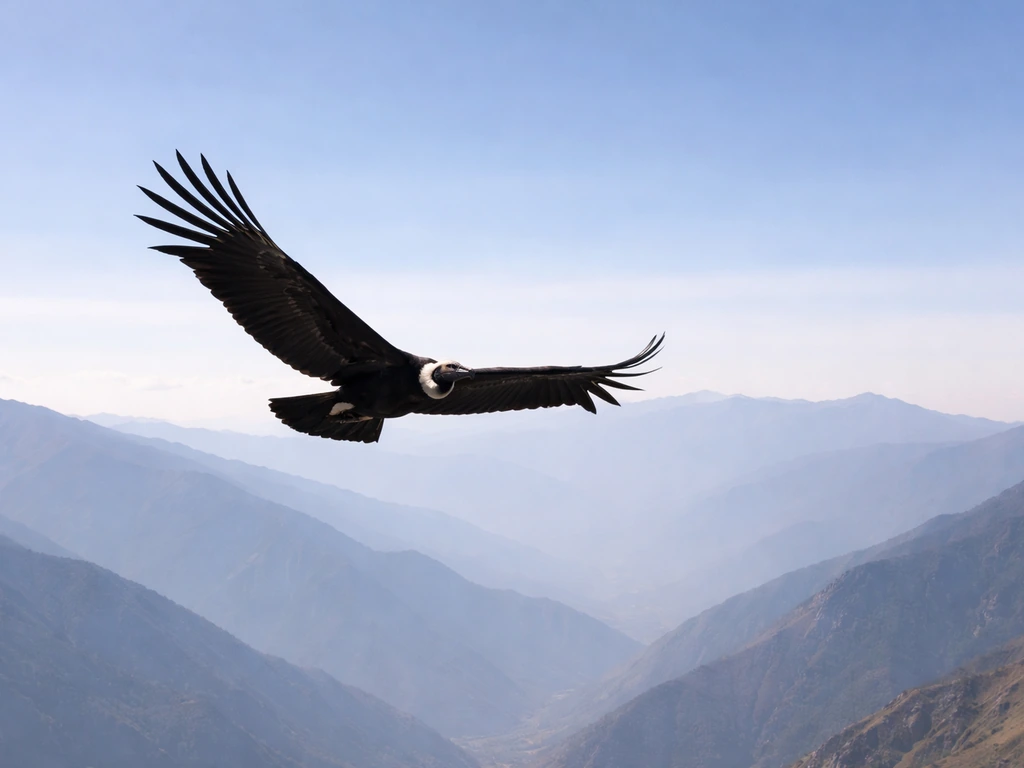
The Andean condor holds the record as the largest living bird of prey by combined wingspan and weight, with a wingspan reaching up to 3.3 metres. It has mostly black plumage, a distinctive white feather ruff at the base of the neck, and large white patches on its wings visible when soaring. The California condor is the largest land bird in North America and famously went extinct in the wild in 1987 before a successful reintroduction programme brought it back.
Neither species lives anywhere near India. Their range is entirely in the Americas, the Andean condor in mountainous and coastal regions of South America, and the California condor historically along the Pacific coast from British Columbia down to Baja California. This is exactly why Hindi has no ancient word for them and why any Hindi reference to a condor is either a transliteration (कंडोर) or a contextual explanation using गिद्ध.
The confusion happens most often when readers encounter the word 'condor' in wildlife documentaries, travel writing about the Andes, or environmental news about endangered species, and try to find a direct Hindi equivalent. The pull toward 'eagle' (चील, cheel, or गरुड़, garuda) comes from the bird's majestic size and soaring flight, but biologically and behaviorally it is a vulture. Always use गिद्ध as the explanatory category, with कंडोर as the specific name.
Condor in Hindi, Sanskrit, Marathi, Punjabi, and Gujarati

Because the condor is not a bird from the Indian subcontinent, none of the classical Indian languages have a native word for it. Across all the regional languages, the approach is consistent: transliterate the English name and, if needed, follow it with the local word for vulture as a category marker.
| Language | Word for Condor | Category Word (Vulture) | Pronunciation Note |
|---|---|---|---|
| Hindi | कंडोर | गिद्ध (giddh) | Transliteration; 'kandor' |
| Sanskrit | No classical term; कन्डोर (kandora) used in modern texts | गृध्र (gridhra) | Sanskrit 'gridhra' is the classical vulture word |
| Marathi | कंडोर | गिधाड (gidhad) | Same transliteration; 'gidhad' is the Marathi vulture |
| Punjabi | ਕੰਡੋਰ (kandor) | ਗਿੱਧ (giddh) | Gurmukhi script; same root as Hindi |
| Gujarati | કૉન્ડોર (kondor) | ગીધ (geedh) | Slight vowel shift in Gujarati pronunciation |
The Sanskrit word for vulture, गृध्र (gridhra), is worth knowing because it appears in classical texts including the Ramayana when describing Jatayu and Sampati. If you are writing in a Sanskrit-inflected Hindi style and want to reference the condor in a poetic or mythological register, pairing कंडोर with the explanatory note विशाल गृध्र (vishal gridhra, meaning 'great vulture') gives it an appropriate classical weight.
This multilingual pattern also comes up with other non-native birds. If you have looked into hoopoe bird meanings or the dove's symbolism across Indian languages, you will notice a similar dynamic: birds with ancient Sanskrit names carry rich inherited meaning, while birds without Indian origins rely on transliteration and contextual borrowing. If you are also searching for hoopoe bird meaning in Hindi, look for how Indian writing explains it through traditional Sanskrit naming and local category words hoopoe bird meanings. In the same way, a dove’s symbolism in Hindi is often explained through context across languages, not through a single fixed Sanskrit-origin term dove bird meaning in hindi. The condor sits firmly in the second category.
How 'Condor' Actually Gets Used in Hindi Speech and Writing
Knowing the word is one thing. Knowing how it actually appears in real Hindi contexts is more useful. Here are the main contexts where you will encounter कंडोर in use today.
In Wildlife and Environmental Writing
Hindi-language science and wildlife content most commonly introduces the condor in the context of endangered species and conservation. A typical sentence: 'कैलिफोर्निया कंडोर (गिद्ध) विश्व के सबसे संकटग्रस्त पक्षियों में से एक है', the California condor (vulture) is one of the most endangered birds in the world. The parenthetical gloss (गिद्ध) is standard practice in educational texts to help readers connect the foreign name to a known bird category.
In Names and Branding
The word कंडोर is occasionally used in Indian branding, particularly in the context of adventure tourism, airlines, and sporting goods, fields where large soaring birds carry associations of power and freedom. It reads as bold and international. Unlike birds with deep Hindi roots, कंडोर does not carry regional or religious baggage, which can make it neutral and versatile for modern naming purposes. You may also see 'Condor' used in mountain trekking companies and paragliding operations, where the soaring imagery is obvious.
In Poetry and Spiritual Writing
Contemporary Hindi poets who write about nature, ecological loss, or cross-cultural mythology sometimes invoke the condor as a symbol of sky-freedom and endangered grandeur. In this context it often pairs with words like ऊँचाई (unchaai, height/altitude), स्वतंत्रता (swatantrata, freedom), and विलुप्ति (vilopti, extinction). A line like 'कंडोर सी उड़ान, पर धरती से नाता' (a flight like the condor, yet tied to the earth) works as a metaphor for the tension between spiritual aspiration and earthly existence.
In spiritual writing that draws on world traditions, the condor's Andean mythology, sky messenger, connector of realms, is sometimes woven into discussions of shamanistic or cross-cultural spirituality. Here, the condor tends to be transliterated directly and explained in terms Indian readers will recognise: आकाश का दूत (aakaash ka doot, messenger of the sky) or स्वर्ग और पृथ्वी का सेतु (swarg aur prithvi ka setu, bridge between heaven and earth).
As a National Symbol Reference
When Hindi media covers South American countries, the Andean condor is regularly mentioned as a राष्ट्रीय प्रतीक (rashtriya prateek, national symbol). A straightforward example from translation platforms: 'आंडियन कंडोर ... For example, some translation platforms show “condor” as कंडोर and use context like “आंडियन कंडोर … राष्ट्रीय प्रतीक” to indicate its meaning. राष्ट्रीय प्रतीक है', the Andean condor is a national symbol. This is the most factual, non-symbolic use and the one most commonly searched for in translation contexts.
Putting It All Together: Which Word to Use and When
If you are translating a wildlife article or subtitling a nature documentary: use कंडोर with a parenthetical (गिद्ध) the first time it appears. After that, कंडोर alone is fine. If you are writing poetry or a cultural essay and want mythological weight: use विशाल गृध्र or pair कंडोर with आकाश का दूत. If you are writing about Indian mythology and someone suggests 'condor is like Garuda': correct them gently, the condor maps better to Jatayu, not Garuda. Garuda is an eagle-deity; Jatayu is the noble vulture of the Ramayana. And if you are looking for the equivalent of condor symbolism in Indian spiritual traditions, the sky-connecting, realm-bridging, sacred-scavenger role is the thread to follow. That is the meaning that travels across continents.
FAQ
condor bird meaning in hindi क्या है, और क्या “कंडोर” ही सही शब्द है?
सबसे मानक और व्यावहारिक रूप “कंडोर” (kandor) ही माना जाता है। कई स्रोत “कंडर” या “कांडोर” भी लिखते हैं, लेकिन अर्थ अलग नहीं होता, वे बस अलग ट्रांसलिटरेशन/देवनागरी कन्वेंशन हैं।
क्या कंडोर को हिंदी में “चील” या “गरुड़” कह सकते हैं?
नहीं, शुद्ध जैविक अर्थ में नहीं। “चील” और “गरुड़” आम तौर पर ईगल/गरुड़ जैसी श्रेणी की ओर खींचते हैं, जबकि कंडोर New World vulture है। सही श्रेणी बताने के लिए साथ में “गिद्ध” (vulture) का प्रयोग करें।
कंडोर लिखकर मैं “गिद्ध” कब जोड़ूं, और पहली बार के बाद कैसे लिखूं?
अनुवाद, सबटाइटल या शिक्षाप्रद लेख में पहली बार कंडोर के साथ “(गिद्ध)” जोड़ना मददगार रहता है ताकि पाठक तुरंत श्रेणी समझे। उसके बाद उसी लेख में “कंडोर” अकेला लिखना प्रायः पर्याप्त होता है, जब तक संदर्भ स्पष्ट रहे।
अगर कोई “कंडोर” को “वulture” की जगह “ईगल” समझ रहा हो, तो गलती कैसे सुधारें?
आप यह स्पष्ट कर सकते हैं कि कंडोर ईगल नहीं, vulture family Cathartidae का पक्षी है, जो मुख्यतः carrion पर निर्भर रहता है। एक लाइन में “विशाल उड़ने वाला गिद्ध, कंडोर” लिखना अक्सर भ्रम जल्दी दूर कर देता है।
कंडोर और गिद्ध में क्या संबंध है, क्या “कंडोर” एक प्रकार का गिद्ध है?
हाँ, कंडोर को हिंदी में समझाने के लिए “गिद्ध” एक उपयोगी category marker है। कंडोर गिद्धों की एक विशिष्ट प्रजाति/समूह से जुड़ा नाम है, पर “गिद्ध” व्यापक शब्द है।
क्या कंडोर का संबंध केवल Andean condor से है या California condor से भी?
दोनो से जुड़ा है, लेकिन लिखते समय फर्क समझाना अच्छा रहता है। Andean condor दक्षिण अमेरिका में रहता है, California condor उत्तर अमेरिका (मुख्यतः पूर्व में Pacific coast) से जुड़ा था और 1987 के बाद reintroduction हुआ। कई लेख “कंडोर” कहकर भी इनका मिश्रण कर देते हैं, इसलिए प्रजाति साफ लिखें।
क्या “कांडोर” या “कुंडार” लिखना गलत है?
गलत नहीं, पर औपचारिक/मानक संदर्भ में “कंडोर” अधिक प्रचलित है। “कांडोर” (kaandor) या “कुंडार” जैसे रूप आम तौर पर उच्चारण-आधारित ट्रांसलिटरेशन हैं, अलग अर्थ नहीं बनाते।
पोएट्री या स्पिरिचुअल लिखाई में कंडोर का संकेत कैसे रखें ताकि भारतीय पाठक के लिए अर्थ बने?
आप “आकाश” और “सेतु” जैसी भाषा से ब्रिज-मोटिफ को पकड़ सकते हैं, जैसे “आकाश का दूत” या “स्वर्ग और पृथ्वी का सेतु”। साथ ही “विस्तार, मुक्ति, ऊँचाई” जैसे संकेत कंडोर की soaring छवि से प्राकृतिक रूप से बैठते हैं।
क्या condor जैसा प्रतीक भारतीय मिथक वाले पक्षियों से जोड़ा जा सकता है? क्या Garuda से तुलना सही है?
Garuda से तुलना आमतौर पर misleading हो सकती है, क्योंकि Garuda ईगल रूपक है और कंडोर vulture है। अधिक संगत समानता Jatayu (जटायु) की “आकाश में महान वतुल/गिद्ध” वाली भूमिका से बैठती है, क्योंकि वह भी आकाश-आधारित सम्मान और realm-connection वाला भाव देता है।
क्या संस्कृत-इन्फ्लेक्टेड हिंदी में कंडोर को “विशाल गृध्र” कहने का तरीका सही है?
हाँ, यह एक शैलीगत विकल्प है। “गृध्र” संस्कृत में vulture की ओर जाता है, इसलिए “विशाल गृध्र” (great vulture) जैसी जोड़ी काव्यात्मक वजन बढ़ा सकती है। ध्यान रखें, यह literal species-name नहीं, बल्कि mythic/poetic register वाला रूप है।
अगर मैं किसी पोस्टर/ब्रॉशर में ब्रांडिंग के लिए कंडोर लिख रहा हूं, तो क्या यह धार्मिक भाव से जुड़ा है?
आमतौर पर “कंडोर” का सीधा शास्त्रीय धार्मिक संबंध नहीं माना जाता, क्योंकि यह भारतीय मूल का पारंपरिक शब्द नहीं है। इसलिए यह अपेक्षाकृत neutral और international-leaning लगता है, फिर भी टारगेट ऑडियंस के अनुसार (विशेषकर धार्मिक आयोजन) tone मिलान कर लें।
मैं ट्रांसलेशन (subtitling) कर रहा हूं, पहली बार और बाद में पंक्चुएशन कैसे रखें?
पहली उपस्थिति में “कंडोर (गिद्ध)” जैसा parenthetical रखें, फिर अगले वाक्यों में केवल “कंडोर” चलाएं। यदि डॉक्यूमेंट में प्रजाति स्पष्ट करनी है तो उसी पहली लाइन में “कैलिफोर्निया कंडोर” या “आंडियन कंडोर” भी लिख दें ताकि संदर्भ स्थिर रहे।