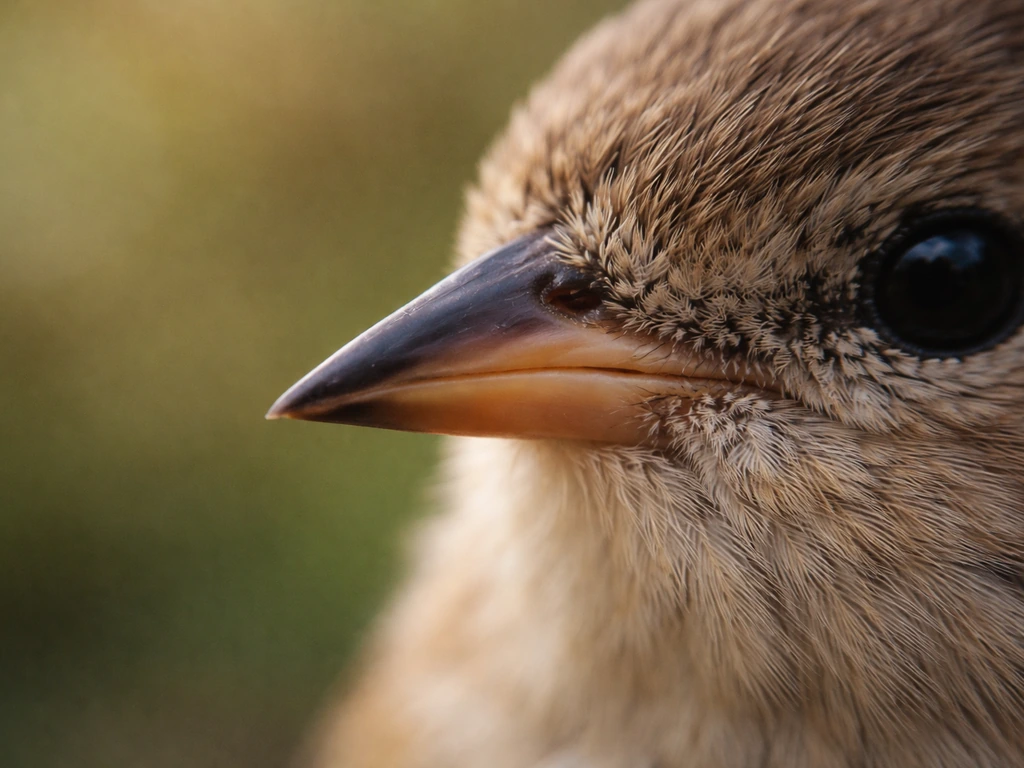
The most common Hindi word for a raven is कौआ (kauā), the same word used for crows in everyday Hindi. When you need to specifically mean the Common Raven (Corvus corax) and distinguish it from a crow, modern Hindi uses the loanword रैवन (rāivan) or रेवन (revan), borrowed directly from English. If you are translating a wildlife article, a mythology text, or just need to tell someone what bird you saw in the Himalayas, this distinction matters more than most dictionaries let on.
Raven Bird Meaning in Hindi: Translation, Symbolism, IDs

Rajesh Sharma
20 Jul 2026

How to say 'raven' in Hindi
Hindi offers you two practical options depending on context. The everyday, culturally rooted word is कौआ, and the species-specific loanword is रैवन. Here is how to read, write, and say each one.
| Word | Devanagari | Transliteration | Pronunciation guide |
|---|---|---|---|
| Everyday Hindi (crow/raven) | कौआ | kauā | kau as in 'cow', then a short 'aa' — roughly 'KOW-aa' |
| Literary/Sanskrit-derived | काग / काक | kāg / kāk | kaag / kaak — long 'aa', hard 'g' or 'k' |
| Modern loanword (raven) | रैवन | rāivan | RAY-vun — closely mirrors English 'raven' |
| Alternative loanword | रेवन | revan | REH-vun — a softer Hindi rendering of 'raven' |
A quick note on stress: Hindi does not use English-style word stress, so when saying कौआ, both syllables are relatively even. The loan form रैवन is pronounced much as an English speaker would say it, which is why it sits comfortably in modern bilingual writing and wildlife field guides.
Sanskrit roots and how they shaped modern Hindi
The Sanskrit word काक (kāka) is the classical root for 'crow' documented in Monier-Williams's Sanskrit-English Dictionary with references spanning Vedic, Epic, and Puranic texts. The feminine form कākī (kākī) referred to a she-crow. This root spawned nearly every North Indian and Dravidian vernacular word for a corvid: Hindi's काग (kāg) and काक (kāk) are direct descendants, as are Punjabi ਕਾਗ (kāg) and Gujarati કાગ. The everyday spoken form कौआ (kauā) evolved from the same Prakrit and Apabhramsha chain, eventually softening the hard Sanskrit 'k' sound into the diphthong we hear today.
Sanskrit literature never needed a separate word for raven because Corvus corax, the Common Raven, inhabits high mountain zones rather than the plains and towns where classical texts were composed and where corvids were most visible. So classical authors used kāka to cover the entire crow-raven family, and that broad usage passed directly into Hindi.
What birders actually mean by 'raven', and how it differs from a crow
If you are a birdwatcher or you are translating a field guide, this distinction is important. Ravens and crows are both corvids (family Corvidae) but they are not the same bird. The Common Raven (Corvus corax) is significantly larger than the House Crow (Corvus splendens) or even the Large-billed Crow (Corvus macrorhynchos) that most people see across the Indian subcontinent.
- Size: Ravens are noticeably bigger, roughly the size of a buzzard. House Crows are much smaller and slimmer.
- Bill: Ravens have a heavy, deep, curved bill; crows have a lighter, straighter bill relative to head size.
- Tail shape in flight: Ravens show a wedge- or diamond-shaped tail; crows have a rounded, fan-shaped tail — one of the easiest field marks at a distance.
- Throat hackles: Ravens have shaggy, pointed feathers at the throat that ruffle visibly; crows have smooth throat feathers.
- Voice: Ravens produce a deep, resonant croak or 'cronk'; crows give the familiar sharper 'caw'. The raven's call is noticeably hoarser and lower.
- Habitat in India: Corvus corax occurs in the Himalayas and north-west India at higher altitudes; the crows most people encounter in towns and plains are Corvus splendens and Corvus macrorhynchos.
There is also a Brown-necked Raven (Corvus ruficollis) recorded in arid north-west India. Regional checklists based on Rasmussen and Anderton, and BirdLife/IUCN species accounts, are the authoritative sources for exact range and subspecies status, because corvid taxonomy in South Asia is genuinely complex and has shifted with recent molecular work. See BirdLife/HBW, Corvus corax species factsheet (range and taxonomy notes) for authoritative range and taxonomy details across South Asia BirdLife/HBW — Corvus corax species factsheet (range and taxonomy notes).
Why Hindi uses the same word for raven and crow
This is the single biggest source of confusion for language learners, and the answer is ecological as much as linguistic. The Common Raven simply does not appear in the villages, towns, and agricultural plains where most Hindi speakers have lived for centuries. The birds people actually saw, fed scraps to, and incorporated into folklore were the House Crow and the Large-billed Crow. So the language developed rich vocabulary for 'crow' and never needed a separate, entrenched word for a bird most speakers never encountered.
Hindi dictionaries do list descriptive compounds for larger Corvus types: काला कौआ (kālā kauā, 'black crow'), डोम कौआ (dom kauā, roughly 'forest/jungle crow'), and पर्वतकाक (parvat-kāk, 'mountain crow'). These show how Hindi handles the gap, it builds compounds rather than coining a wholly distinct word. The loanword रैवन is a recent solution imported alongside scientific ornithology, and it is the cleanest option when precision is required.
Hindi and regional names across Indian languages
The table below maps the main words used across Hindi, Sanskrit, Marathi, Punjabi, and Gujarati. Because ravens are not separately named in most living Indian languages, the entries reflect the corvid vocabulary that covers both crow and raven in each language, alongside the modern loan equivalent where relevant.
| Language | Script | Transliteration | Notes |
|---|---|---|---|
| Hindi (common) | कौआ / कौवा | kauā / kauvā | Standard everyday word; covers crow and raven in general use |
| Hindi (literary) | काग / काक | kāg / kāk | Sanskrit-derived; used in poetry, proverbs, and formal writing |
| Hindi (loanword) | रैवन / रेवन | rāivan / revan | Used when specifically meaning Corvus corax (Common Raven) |
| Sanskrit (classical) | काक / काकी | kāka / kākī | Root form in Vedic and Puranic literature; kākī = she-crow |
| Marathi | कावळा | kāvaḷā | Standard Marathi word for crow/corvid |
| Punjabi | ਕਾਂ / ਕਾਗ / ਕਾਕ | kāṉ / kāg / kāk | Multiple regional forms in use; all Sanskrit-derived |
| Gujarati | કાગડો | kāgḍo | Standard Gujarati for crow; same Sanskrit root |
Practical translation guidance: which word to use and when
Choosing the right Hindi word depends almost entirely on context. Here is how I think about it when translating or writing in Hindi.
Use कौआ / कौवा when
- You are writing for a general Hindi-speaking audience and the species distinction does not matter.
- The context is everyday, colloquial, or conversational — a street scene, a story, a folk saying.
- You are translating proverbs, mythological references, or ritual texts where 'crow' in the broad sense is meant.
- You are describing the bird's behavior (cawing, scavenging, sitting on a rooftop) in a non-scientific setting.
Use काग / काक when
- You are writing poetry, literary prose, or translating classical texts — these forms carry a formal, literary register.
- You are discussing Sanskrit-origin proverbs or religious rituals where the classical term is expected.
- You want a more elevated or archaic tone, as these forms sound decidedly learned in modern Hindi.
Use रैवन / रेवन when
- You are writing a wildlife article, a field guide translation, or a scientific caption that specifically identifies Corvus corax.
- You need to contrast a 'raven' with a 'crow' for an informed reader — the loanword signals that distinction immediately.
- You are translating English-language mythology or fantasy fiction (Norse myths, Western folklore) where 'raven' has its own cultural weight.
One word to avoid confusing here is कबूतर (kabūtar), which means 'pigeon' or 'dove', it is completely unrelated to corvids but comes up in bird vocabulary lists and can trip up language learners. If you are writing about corvids, कबूतर has no place in the sentence.
Symbolism and mythology in Indian traditions
In Indian mythological and folk traditions, the crow (काक / कौआ) carries layered symbolic meaning that ranges from the deeply sacred to the cautiously inauspicious. Because Sanskrit literature did not separate raven from crow, virtually all the symbolism attached to 'raven' in a Western sense applies, in the Indian context, to the crow-raven family as a whole.
Ancestor connections and ritual significance
The most firmly established ritual association is with Pitru Paksha, the Hindu fortnight dedicated to ancestral rites. During Shraddha ceremonies, pinda (rice balls) and food offerings are placed for ancestors, and crows arriving to eat the offering are traditionally understood as the ancestors themselves accepting the gift. Pitru Paksha, Wikipedia (overview of Hindu ancestor fortnight and offerings) documents that crows feeding on offerings during Shraddha are traditionally interpreted as ancestors accepting the gift blank" rel="noopener noreferrer">See Pitru Paksha — Wikipedia (overview of Hindu ancestor fortnight and offerings) for documentation that crows feeding on pinda are taken as a sign the ancestors accepted the offering.. This belief is documented across Hindu ritual manuals and is widely practiced today. The crow's role as an intermediary between the living and the dead gives it genuine sacred weight, not mere superstition.
Omens and folk beliefs
A crow cawing near the house is widely interpreted in North Indian folk tradition as a sign that guests are about to arrive, a belief reflected in common sayings. Conversely, a crow cawing persistently or in an unusual direction could be read as an inauspicious omen depending on regional tradition. These are folk interpretations that vary considerably by community and region; they are not prescriptive Vedic injunctions.
Textual appearances
In the Ramayana, a crow figures in the episode of Kakasura (काकासुर), where a crow attacks Sita and is punished by Rama using a grass blade empowered as a weapon. This is one of the most cited mythological crow narratives in classical Sanskrit literature. The Panchatantra and Hitopadesha use the crow repeatedly as a character embodying cleverness, cunning, and sometimes foolish pride, moral fables that have entered the broader South Asian folk imagination.
How associations vary regionally
In Maharashtra, the crow (कावळा) carries much the same ancestor-spirit association as in Hindi-speaking regions, and Shraddha rituals involving crows are practiced here too. In Punjab, the cultural weight of the crow is reflected in folk poetry and sayings, though regional interpretations of omens can differ. In Gujarat, the Shraddha crow-feeding tradition is similarly observed. The key point is that the sacred ancestral association is pan-Hindu and broadly shared, while specific omen-readings (which direction the crow faces, how many times it caws) tend to be local and variable. Do not read regional omen beliefs as universally applicable across India.
Raven vs. crow: a quick comparison for Hindi readers
| Feature | Raven (Corvus corax) | House Crow (Corvus splendens) | Large-billed Crow (Corvus macrorhynchos) |
|---|---|---|---|
| Hindi name | रैवन / काला कौआ | कौआ / कौवा | जंगली कौआ / डोम कौआ |
| Size | Very large (buzzard-sized) | Medium | Medium-large |
| Tail shape in flight | Wedge/diamond-shaped | Fan/rounded | Fan/rounded |
| Bill | Heavy, deeply curved | Lighter, straight-based | Heavy but less curved than raven |
| Voice | Deep, hoarse croak | Sharp 'caw' | Deeper caw than House Crow |
| Habitat in India | Himalayas, NW India (higher altitudes) | Towns, villages, coasts — widespread | Forests, hillsides — widespread |
| Throat hackles | Prominent, shaggy | Smooth | Smooth to slightly shaggy |
Related corvid entries worth comparing
If you have come here from a broader interest in bird vocabulary and symbolism in Hindi and Indian languages, a few related entries will sharpen your understanding. The crow (Hindi: कौआ) has its own detailed entry that covers the House Crow and Large-billed Crow in depth, including proverbs and folk sayings where the crow appears far more frequently than the raven in everyday Hindi culture. The vulture (Hindi: गिद्ध, giddh) is another large, dark bird with significant ritual and mythological associations worth reading alongside this entry. For the vulture bird meaning in Hindi, see the related entry on गिद्ध (giddh). The roller bird (Hindi: नीलकंठ, nīlkaṇṭh) represents an entirely different symbolic register, sacred to Shiva and associated with Dussehra, and makes for a useful contrast. See roller bird meaning in Hindi for a short explanation of the roller's symbolism and name. There is also an entry covering the term 'crone bird' in Hindi, which addresses some of the older, darker folk-bird imagery that overlaps with raven symbolism in non-Indian traditions.
The one-sentence answer for translators
In everyday Hindi, write कौआ and your reader will understand corvid. In any context where the species matters, wildlife writing, scientific translation, or contrasting a raven with a crow, use रैवन (rāivan) and add 'Corvus corax' in parentheses for complete clarity. That combination of vernacular familiarity and scientific precision is exactly how modern Hindi field guides and bilingual wildlife references handle it, and it is the approach that serves both language learners and serious ornithologists equally well.
FAQ
What is the correct Hindi word for “raven” (Devanagari), how is it transliterated and pronounced?
Generic everyday Hindi for Corvus (crow/raven) is कौआ (romanization: kauā or kaua; simple pronunciation: KOW‑aa, IPA approx. /kau̯aː/). When a speaker needs to mark the English concept “raven” (the large Corvus corax or a true raven distinct from local crows) modern Hindi often uses the loan रैवन or रेवन (romanization: rāivan / revan; pronunciation: RAY‑ven, IPA approx. /reɪvən/). Both forms appear in contemporary dictionaries: कौआ as the safe generic headword, and रैवन/रेवन when a specific ‘raven’ is meant.
What is the etymology and Sanskrit root behind the Hindi words for crow/raven?
Hindi कौआ and related dialectal forms go back to Sanskrit काक (kāka) / काग (kāga) documented in classical lexica (Monier‑Williams) as the word for a crow. These Sanskrit roots produced regional vernaculars (e.g., काक, काग, काकी). The modern loan रैवन/रेवन is from English “raven” and has no separate Sanskrit origin; Hindi descriptive compounds (e.g., काला कौआ ‘black crow’, पर्वत‑काक ‘mountain‑crow’) are also used to mark larger or habitat‑specific Corvus forms.
How do ornithologists distinguish ravens from crows (field identification)?
Standard field differences used by bird guides: size — ravens (e.g., Corvus corax) are much larger than typical crows; bill — ravens have a heavier, deeper bill; throat — ravens show shaggy throat‑hackles; tail shape in flight — ravens usually have wedge‑ or diamond‑shaped tails, while crows have fan‑shaped tails; flight and behavior — ravens soar more often and give deeper, hoarser croaks, whereas crows give sharper “caw” calls and more flapping flight. In South Asia, species composition matters: the Common Raven occurs mainly in higher/northern regions, while large jungle crows and house crows are widespread in lowlands.
Which Corvus species occur in India and how does that affect naming?
Common taxa referenced in India: Corvus corax (Common Raven) — mainly Himalayan and north‑west highlands; Corvus macrorhynchos complex (Large‑billed / jungle crow complex) — widespread; Corvus splendens (House/Indian Crow) — common in human habitats; Corvus ruficollis (Brown‑necked Raven) and occasional other records regionally. Because local Corvus diversity is complex, Hindi tends to use कौआ or descriptive compounds for most forms and borrows रैवन/रेवन or English “raven” when the author needs to unambiguously indicate Corvus corax or compare a true raven with local crows.
What are regional and equivalent names in Sanskrit, Marathi, Punjabi and Gujarati?
Sanskrit: काक (kāka) / काग (kāga) (classical lexemes for ‘crow’). Marathi: कावळा (kāvaḷā) — common word for crow. Punjabi (Gurmukhi): variants include ਕਾਂ (kāṉ), ਕਾਗ (kāg), ਕਊਆ / ਕਾਉਂ (kaūā / kā'ō) and ਕਾਕ (kāk) — reflecting the same Sanskrit roots. Gujarati: કાગડો (kāgḍo / kagado) — commonly used for crow. Note: these regional names often mean ‘crow’ generically; when a text must specify a large raven (Corvus corax) regional speakers may use descriptive compounds or loanwords (e.g., English ‘raven’ or regional descriptors meaning ‘mountain crow’).
What are the bird’s cultural and mythological associations in Indian traditions and common proverbs/folk‑beliefs?
Cultural associations: corvids (usually referred to as कौआ / काक) appear frequently in Indian ritual and folklore. In Hindu rites such as Śrāddha / Pitru Paksha, the arrival or feeding of a crow is traditionally interpreted as an acceptance of offerings by ancestors — an enduring ritual symbolism rather than a biological claim. Mythology: crows and ravens appear in folk tales, Puranic stories and regional myths as messengers, omens, tricksters or witnesses; precise roles vary by region and text. Proverbs/folk beliefs: common sayings treat the crow as an omen‑carrier, scavenger or clever bird (examples in Hindi include proverbs referencing कौए and काकी relating to watchfulness, greed or ancestral signs). As with all folklore, associations are context‑dependent — ritual meaning differs from poetry or everyday superstition, and ethnographic sources vary by community.
Next Article
Bird Beak Meaning in Hindi: Chonch, Bill, Pronunciation
Bird beak in Hindi chonch or bill, pronunciation, examples, beak vs bill differences, and figurative Hindi use