
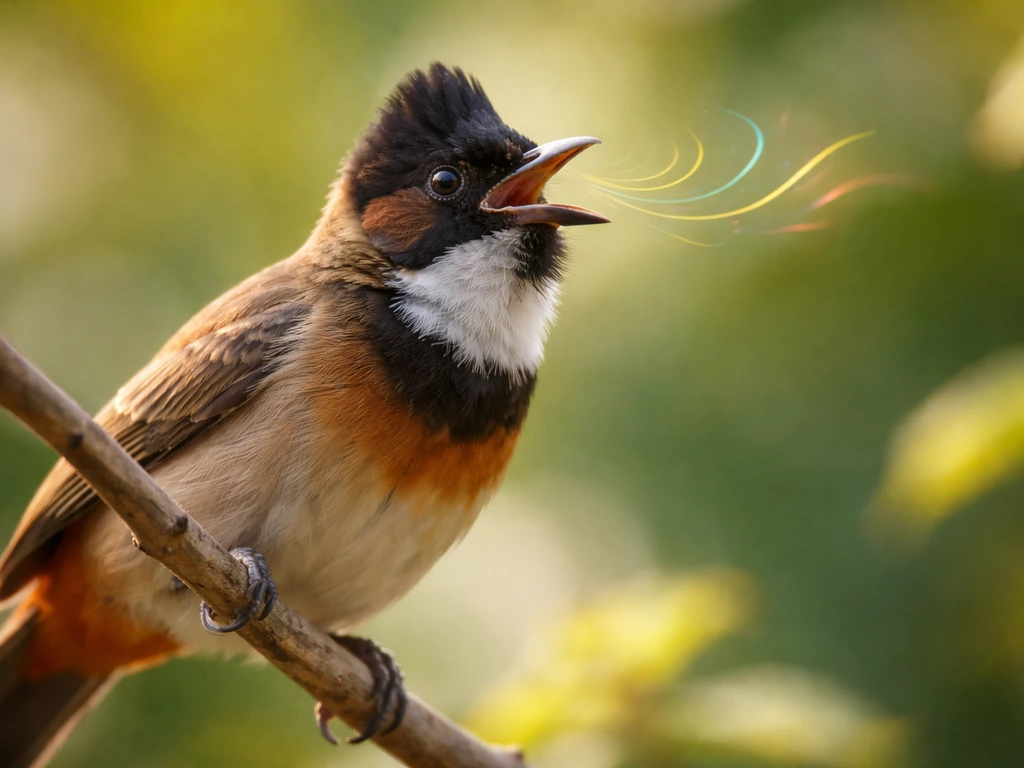
Bird chirp in Hindi is most naturally said as 'चहचहाना' (chahchahaana) or 'चहकना' (chahakna), and the sound itself is written as 'चह-चह' or 'चीं-चीं' (cheen-cheen). If you have heard someone say 'चिड़िया चहचहा रही है,' that means the bird is chirping. These are onomatopoeic words, meaning they literally mimic the sound a bird makes, and they sit right at the heart of everyday Hindi the same way 'tweet' or 'chirp' do in English. If you want a quick bird box explained in hindi, this kind of sound description is also a helpful starting point to talk about birds confidently.
Bird chirp meaning in Hindi: चहचहाना, कलरव और प्रतीक

Rajesh Sharma
9 Jul 2026
The Direct Hindi Meaning of 'Bird Chirp' and Which Words to Use
The Rekhta Dictionary defines 'चहचहाना' specifically as 'पक्षियों का उमंग में आकर चहचह शब्द करना,' meaning a bird making the chah-chah sound out of joy or excitement. Collins Hindi-English describes the same word in the context of a bird singing beautifully. So 'चहचहाना' carries a positive, lively feeling built right into its meaning. It is not a neutral mechanical sound but implies the bird is happy and vocal.
Alongside 'चहचहाना,' you will come across 'चहकना' (to chirp, to be cheerful and vocal), 'कलरव' (kalrav, a more literary or classical word for melodious birdsong or collective bird noise), and 'चहचहाट' (chahchahaht, the noun form, meaning the act or sound of chirping). For the sharp, small sound of a tiny bird like a sparrow, Hindi speakers tend to use 'चीं-चीं' or 'चूँ-चूँ' as a direct sound-imitation. Hinkhoj Dictionary also lists 'चीं-चीं करना' as a common translation for 'chirp.' Think of 'चहचहाना' as the full act of chirping lively and 'चीं-चीं' as the specific sound you hear coming out of a little bird.
| Hindi Word/Phrase | Transliteration | What It Means / When to Use It |
|---|---|---|
| चहचहाना | chahchahaana | The verb for chirping or singing with joy; general, everyday use |
| चहकना | chahakna | To chirp or be lively and vocal; also used for a cheerful person |
| चह-चह | chah-chah | The written sound itself; onomatopoeic, informal |
| चीं-चीं / चूँ-चूँ | cheen-cheen / choon-choon | High-pitched chirp of small birds like sparrows; very colloquial |
| कलरव | kalrav | Melodious, collective birdsong; literary/classical Hindi and Sanskrit |
| चहचहाट | chahchahaht | Noun: the chirping sound or its occurrence |
| कूक / कूकना | kook / kookna | The call of the cuckoo/koel; deep, resonant, distinctive |
A Map of Common Bird Sounds in Hindi
Not every bird sound is called 'चहचहाना.' Hindi has a layered vocabulary for bird sounds, and once you know the distinctions, you can describe almost any bird call you hear. The everyday words break down quite neatly.
- चहचहाना / चहकना: the general chirping or chattering of small garden birds, especially sparrows, munias, and bulbuls
- कलरव (kalrav): a literary word for collective, melodious birdsong, the kind you might hear at dawn when many birds call together; rooted in Sanskrit
- कूक / कूकना: the call of the कोयल (koel) or cuckoo; the Shabdkosh and Rekhta both confirm 'कुक्कू' as the recognized Hindi-Urdu word for cuckoo, and its sound is said to be a 'मख़सूस मीठी आवाज़' (distinctively sweet call)
- चीं-चीं: the tiny, rapid sound of baby birds begging for food or of sparrows in a hedge
- चिल्लाना / चीखना: when a bird screams sharply, like a raptor or a myna raising an alarm
- गुटरगूँ / घुटुरगूँ: the cooing of pigeons and doves; very different from chirping but equally well-known in Hindi
- टी-टी / टिटिहरी की आवाज़: the piercing two-note call of the red-wattled lapwing, a bird so named after its own cry
The word 'चिरई-चुरुंग,' used in Bhojpuri and related dialects, is a broader sound-word for small birds and their collective twittering. It shows how the 'chir' root travels across Hindi dialects to describe bird sound with a warm, village-life feel. You will not find this in a formal dictionary, but you will hear it constantly in eastern UP and Bihar.
How to Identify a Specific Chirping Bird in the Field

You hear a bird but cannot see it. Here is a practical system for narrowing down which bird you are listening to, using a combination of sound character, time of day, and setting.
- Notice the quality of the sound: is it rapid and chattery (likely a sparrow, मुनिया/munia, or tailor bird), rich and melodious with varied phrases (almost certainly a बुलबुल/bulbul or shyama), a slow repeating two-note call rising in pitch (कोयल/koel, especially in April-June), or a sharp single-note alarm screech (myna, lapwing, or a raptor overhead)?
- Check the time: dawn choruses in India are dominated by bulbuls, drongos, and koels from roughly 5 to 7 AM. Midday chirping in gardens is mostly sparrows and mynas. Night calls almost always point to an owl (उल्लू), nightjar, or occasionally a disturbed myna—nighttime bird sounds are a separate category entirely.
- Look at the setting: a bird chirping inside a city courtyard or near a window ledge is most likely a house sparrow (गौरैया, gauraiya), common myna, or rock pigeon. In a garden with flowering trees, the bulbul and sunbird are the prime suspects. Near water, it could be a kingfisher, pond heron, or bee-eater.
- Note the call pattern: a short, piercing single note repeated quickly tends to be an alarm call, meaning the bird has spotted a threat. A long, flowing sequence of varied notes is usually a song meant to attract a mate or mark territory. Soft, rapid 'chee-chee' notes in a bush are often chicks calling for food.
- Use Merlin (Cornell Lab's free app) or eBird: record or play the sound back, and the app will suggest matching species with their Hindi common names. This is the fastest practical shortcut available today.
What Chirping Birds Symbolize in Indian Folk and Spiritual Traditions
In Indian folk culture, the chirping of birds has never been just background noise. Shakun Shastra, the traditional Indian science of omens and signs, assigns specific meanings to bird sounds based on timing, direction, and species. When bird poop appears on your right shoulder, many people in India interpret it as a personal omen, and you can read the meaning in Hindi as well bird poop on right shoulder meaning in hindi.
A sparrow chirping near a window, for instance, is widely read as a sign of incoming good news or the arrival of a guest. The Vedic tradition treats the morning chorus as an auspicious opening of the day, and many households in North India consider it a good omen to hear 'चिड़ियों की चहचहाहट' the moment they wake up.
The कोयल (koel) holds a very special place. Its call, the ascending 'कुहू-कुहू,' is consistently associated with the arrival of spring (वसंत), romantic longing, and the sweetness of life. Sanskrit poetry, particularly in Kalidasa's works, uses the koel's song as a metaphor for a beloved's voice. Hindivyakran's essay on the cuckoo notes that the bird is named 'कोकिल' or 'कोयल' in part because of this iconic sound. At the ISVARA.org references, there are descriptions of forests called 'Kokilavana' (कोकिलवन) literally named after thousands of koels singing there, which tells you how central this bird's voice was to sacred geography in the Puranas.
Beyond the koel, the गौरैया (sparrow) is associated with simplicity, home, and domestic happiness. Its constant 'चीं-चीं' near a house is seen in many folk traditions as a sign that the home is alive, protected, and welcoming. A sudden silence where sparrows usually chirp can, conversely, be read as a warning of something unsettling nearby. This reflects a real ecological fact: sparrows and small birds go quiet when a predator is around, so folk intuition here aligns with ornithology. The New Indian Express notes that bird singing in the morning is associated with good news in feng shui and related Asian traditions, a belief that maps closely onto the North Indian folk reading of the same event.
The peacock's call (मोर की बोली) in Indian tradition signals rain and the arrival of the monsoon. The crane (सारस) is a symbol of marital fidelity. The owl's call at night is treated with caution in many communities, though classical Sanskrit texts sometimes present the owl quite neutrally. The point is that Indian tradition does not treat all chirping sounds the same: the meaning changes with the bird, the time, the direction, and whether the sound is joyful or alarm-like.
How Neighboring Indian Languages Say 'Bird Chirp'

If you move across Indian languages, you will find the same onomatopoeic instinct at work, but the specific words differ in charming ways. Here is a quick cross-language reference.
| Language | Word for Chirping / Bird Sound | Notes |
|---|---|---|
| Hindi | चहचहाना, चहकना, चीं-चीं | Most common everyday and literary terms |
| Sanskrit | कलरव (kalrav), कलकण्ठ (sweet-throated), कूजन (cooing/singing) | Classical terms; kalrav used in Hindi literary language too |
| Marathi | किलबिलणे / किलबिल (kilbil) | Onomatopoeic; 'पशुपक्ष्यांचे आवाज' lists bird sounds with similar sound-mirroring logic |
| Punjabi | ਚਹਿਚਹਾਉਣਾ (chahchahauna) | Very close to Hindi; same root, same sound-feel |
| Gujarati | ચહચહવું (chahchahvu) | Again shares the 'chah-chah' root; reflects shared North Indian sound heritage |
| Urdu | چہچہانا (chahchahaana), کلرو (kalrav) | Identical to Hindi; Rekhta Dictionary is the primary reference |
The shared 'chah-chah' root across Hindi, Punjabi, Gujarati, and Urdu is not a coincidence. These languages all borrowed from or evolved alongside Sanskrit, which had 'कलरव' as its formal word and various onomatopoeic roots for bird sound. The Marathi 'किलबिल' (kilbil) is slightly different in sound but follows the same principle: the word imitates what you actually hear. If you are a language learner moving between these languages, listening for the 'chah' or 'kil' sounds in bird-sound words will help you recognize them quickly.
It is also worth knowing that in colloquial Hindi, 'चिड़िया' often means specifically a small bird or sparrow, while 'पक्षी' (pakshi) is the broader, more formal word for bird. If you are unsure what “bird hindi meaning” refers to, this article’s Hindi sound terms like “चहचहाना” and “कलरव” are a useful place to start. This matters for searching: 'चिड़िया की आवाज़' and 'पक्षी का कलरव' are both correct but carry different registers. A Reddit discussion on Hindi bird vocabulary confirms that 'चिड़िया' in everyday speech often defaults to meaning a sparrow or small bird in many North Indian communities, even though technically it covers all birds.
When Chirping Means Something Specific: Context, Emotion, and Warning Signs
Not all chirping is happy chattering. Understanding what a bird is communicating through its call type can tell you a lot about what is happening around it, and in some situations, whether you need to act.
Alarm Calls vs. Songs vs. Contact Calls
Cornell Lab's research distinguishes sharply between different call types. A short, sharp, repeated note, often high-pitched and piercing, is an alarm call blank" rel="noopener noreferrer">different call types. A soft, flowing song sequence is usually a territorial or mating song: the bird is content and broadcasting its presence. A short, sharp, repeated note, often high-pitched and piercing, is an alarm call. In your garden this is the sound to pay attention to: when your sparrows or mynas suddenly switch from relaxed 'chah-chah' chattering to rapid, insistent 'chit-chit-chit,' something has alarmed them, usually a cat, a crow, or a raptor. The Natural History Museum notes that short piercing calls typically serve an alarm function while loud chirps carry flock-contact meaning.
Baby birds make a distinctive rapid, soft 'chee-chee' begging call when a parent arrives with food. If you hear this kind of sound coming from a hedge or roof cavity in spring and early summer (roughly March to July in most of India), there is very likely an active nest nearby. This is normal and good. Do not disturb the area.
When to Worry About a Bird's Chirping
For pet birds especially, a sudden change in chirping pattern is worth noticing. PetMD and pet care guides point out that repetitive, distressed-sounding screaming that is out of character for the bird can indicate anxiety, illness, or pain. PetMD के अनुसार, अचानक ‘screaming’ और repetitive chirping या alarm calls distress से जुड़ी हो सकती हैं, खासकर जब आवाज़ का बढ़ना और repetitive alarm-like स्वर दिखे। [repetitive, distressed-sounding screaming](https://www. petmd.
com/bird/behavior/how-tell-if-your-bird-unhappy-or-stressed-and-what-do). If a bird that normally chirps cheerfully becomes either completely silent or starts producing harsh, repetitive alarm-like sounds, it may be stressed or unwell. For wild birds, distress calls are typically brief, context-triggered responses to threats. A wild bird that calls repeatedly and seems unable to fly or move normally may be injured, and your local wildlife rescue center is the right next step.
Nesting behavior also changes bird sound patterns. During the nesting season, male birds become much more vocal and persistent in their singing (territory defense), while females near a nest may go quieter to avoid drawing attention to it. If you notice a bird visiting the same spot on your balcony or window ledge repeatedly and making soft contact calls, check gently whether it is building a nest. Once a nest is active, giving that corner some peace is the most useful thing you can do.
Practical Next Steps: Search Smart, Listen Better
If you want to go further with understanding bird chirp meanings in Hindi, here are the most useful things to do right now. If you are specifically wondering about the bird brain meaning in Hindi, that phrase is usually used as a figurative expression for someone who seems overly foolish or slow to understand bird chirp meanings in Hindi.
- Use these Hindi search phrases when looking up specific bird sounds online: 'चिड़िया की चहचहाहट का अर्थ,' 'पक्षियों की आवाज़ें हिंदी में,' 'कोयल की कूक का मतलब,' or 'पक्षी की आवाज़ पहचान।' These will pull up culturally relevant results rather than purely scientific ones.
- Download the Merlin Bird ID app by Cornell Lab. It has a Sound ID feature that listens to live bird sounds and identifies the species. It includes Hindi common names for Indian birds, so you get the scientific match and the Hindi name together.
- Practice the key sound-vocabulary: 'चहचहाना' for general chirping, 'कलरव' for melodious collective song, 'कूकना' for the koel's call, and 'चीं-चीं' for tiny high-pitched sparrow sounds. If you can use these in a sentence, you can ask any Hindi speaker to describe a bird sound and they will immediately know what type you mean.
- Pay attention to time and setting as your first filter. Morning garden sounds in India are mostly bulbuls and koels. Afternoon courtyard noise is usually sparrows and mynas. Night calls point to owls or nightjars. This dramatically narrows down what you are hearing before you even look anything up.
- For the cultural and symbolic dimension, searching 'शकुन शास्त्र पक्षी आवाज़' (Shakun Shastra bird sounds) will open up the traditional Indian omen-reading tradition around bird calls. This is the folk-knowledge layer that sits alongside the linguistic one and is genuinely fascinating if you are curious about how Indian traditions have always listened to birds.
Bird sounds in Hindi sit at a fascinating intersection of language, culture, and nature. Whether you are a language learner who encountered 'चहचहाना' in a poem, someone who heard a beautiful morning call and wants to know the Hindi word for it, or someone drawn to the symbolic meanings birds carry in Indian tradition, the vocabulary is rich and the cultural layer is deep. And if you are exploring other bird-related meanings in Hindi, the ideas around bird symbolism in Indian traditions, bird idioms like 'bird brain' in Hindi, or spiritual readings like what it means when a bird drops something on you are all part of the same layered world of Indian bird culture. To get the bird eye view meaning in Hindi, you can think of it as looking at something from a very top, all-around perspective.
FAQ
“पक्षी का कलरव” और “चिड़िया का चहचहाना” में फर्क कैसे समझूं?
Hindi में “पक्षी” (pakshi) शब्द औपचारिक और व्यापक है, जबकि रोजमर्रा में “चिड़िया” (chidiya) अक्सर छोटे पक्षी, खासकर गौरैया जैसे पक्षियों के लिए स्वतः चल पड़ता है। अगर आपको किसी वाक्य में “चिड़िया की आवाज़” दिखे, तो ज्यादातर मामलों में उसका मतलब छोटा, घर के आसपास दिखने वाला पक्षी ही लिया जाता है।
क्या “चहचहाना” हमेशा खुश रहने का संकेत होता है?
उसी चहचहाना जैसे शब्द अलग संदर्भ में अलग भाव दे सकते हैं। खुशी वाला कॉल (धीमा, बहता, लयबद्ध) और अलर्ट वाला कॉल (छोटा, तेज, बार-बार) एक ही “चह-चह” जैसी लिखावट में दिख सकते हैं, पर बोली में लोग अक्सर गति और तीखेपन से फर्क बताकर समझा देते हैं। सुनते समय बस “लय” और “तेज ध्वनि” पर ध्यान दें।
“चीं-चीं” का मतलब क्या हर बार चहचहाना ही होता है?
हाँ, हिंदी में “चीं-चीं” या “चूँ-चूँ” कई बार छोटे पक्षियों की बहुत हल्की, लगातार चहक के लिए प्रयोग होता है, लेकिन वही ध्वनि अगर अचानक बहुत ज्यादा तेज और घबराई हुई हो जाए, तो वह अलार्म या खतरे की प्रतिक्रिया हो सकती है। यानी शब्द वही हो सकता है, पर स्थिति का पैटर्न निर्णायक होता है।
“कुहू-कुहू” सुनने पर क्या हमेशा कोयल ही समझनी चाहिए?
अगर आप “कुहू-कुहू” सुनें और वह सुबह-सुबह हो, तो लोग इसे अक्सर वसंत और शुभ शुरुआत से जोड़कर सुनते हैं। लेकिन अलग घंटे, अलग दूरी, या एक बार में बार-बार न सुनाई देना, भाव को बदल सकता है, क्योंकि पक्षी का व्यवहार मौसम, क्षेत्र और साथी की तलाश पर भी निर्भर करता है।
किस स्थिति में “पक्षी की आवाज़” को प्रतीक मानना ठीक है, और कब नहीं?
बर्ड-लवर्स ने जिस “पहुंचने” वाली भावना का ज़िक्र किया जाता है, वह अक्सर उस समय होती है जब कॉलिंग ग्रुप में हो, आसपास आवाजें फैल रही हों, या कोई पक्षी बार-बार खिड़की के पास आकर बुला रहा हो। अगर आप केवल एक बार संक्षिप्त आवाज़ सुनकर फिर लंबे समय तक चुप्पी देख रहे हैं, तो उसे प्रतीक मानने के बजाय कारण-आधारित व्याख्या (जैसे प्रतिस्पर्धी पक्षी, शिकारी की उपस्थिति, मौसम) के बारे में सोचना बेहतर है।
मैं “bird chirp meaning in hindi” खोजते समय कौन-कौन से शब्द साथ में इस्तेमाल करूं?
सही खोज के लिए “चिड़िया” और “पक्षी” दोनों शब्द ट्राय करें, साथ में “आवाज़”, “बोली”, “कलरव”, “चहचहाना”, या “चीं-चीं” जोड़ें। बहुत बार लोग सिर्फ ध्वनि लिखते हैं, जैसे “चह-चह”, और इससे परिणाम कम मिलते हैं। “आवाज़” जोड़ने से अर्थपूर्ण उदाहरण तेजी से मिल जाते हैं।
एक ही आवाज़ सुनकर गलत शब्द चुनने से कैसे बचूं?
अगर आपने किसी पक्षी को “चहचह” करते सुना है, तो यह मानें कि यह ज़रूरी नहीं कि वही प्रजाति हो जिसकी आप सोच रहे हैं, क्योंकि कई छोटे पक्षियों के कॉल मिलते-जुलते लग सकते हैं। गलत समझ से बचने के लिए समय (सुबह या शाम), जगह (खिड़की, पेड़, छत), और कॉल की “रीपीट” दर नोट करें, फिर उसी आधार पर शब्द चुनें।
अगर घर के पास पक्षी अचानक कम या ज्यादा बोलने लगे, तो मुझे क्या नोट करना चाहिए?
पैटर्न में बदलाव एक अच्छा संकेत है कि आपके आसपास कोई नया ट्रिगर आ गया है। लेकिन “बिल्कुल चुप” हो जाना और “तेज, डराने वाली चिल्लाहट” के बीच फर्क है, क्योंकि पहला असर मौसम या दिनचर्या बदलने से भी हो सकता है, जबकि दूसरा अक्सर खतरे, चोट, या तनाव से जुड़ता है। इसलिए बदलाव कब और कितनी देर तक है, यह दर्ज करें।
अचानक तेज और बार-बार कॉल सुनूं, तो तुरंत क्या करूं?
अगर “चहचह” के साथ बहुत तेज, लगातार “चीट-चीट” जैसी ध्वनि सुनाई दे रही हो, तो आम तौर पर पास में कैट, कौआ, या बाज जैसे शिकारी की मौजूदगी का अंदाजा लगता है। ऐसे में सबसे उपयोगी कदम है कि आप शांत रहें, पालतू बिल्ली-कुत्ते को दूर रखें, और खिड़की से अनावश्यक गतिविधि कम करें।
घोंसले के पास “chee-chee” सुनने पर क्या मुझे घुसकर देखना चाहिए?
अगर किसी घोंसले से “chee-chee” जैसी मांग वाली, छोटी-छोटी दोहराई जाने वाली आवाज़ आती है, तो इसका मतलब अक्सर खाना मांगने की स्थिति होती है। इंसानों का बार-बार वहां जाना कॉल पैटर्न बदल सकता है, इसलिए दूरी बनाए रखें और घोंसले की जगह को छुएं नहीं। अधिक जरूरी हो तो सिर्फ रूटीन निरीक्षण में सीमित रहें।