The kite bird is called चील (cheel) in Hindi. That single word is the one you'll encounter most often in everyday Hindi speech, dictionaries, and field guides when someone refers to a kite as a bird of prey. If you're specifically talking about the Black Kite (Milvus migrans), the most common kite across India, the full Hindi name is काली चील (kālī chīl), meaning literally 'black kite.' Just make sure you're not confusing bird-kite with the flying toy, which is पतंग (patang) in Hindi, a completely different word.
What Is Kite Bird Called in Hindi Meaning and Types

Rajesh Sharma
17 May 2026
What does 'kite bird' actually mean in English?
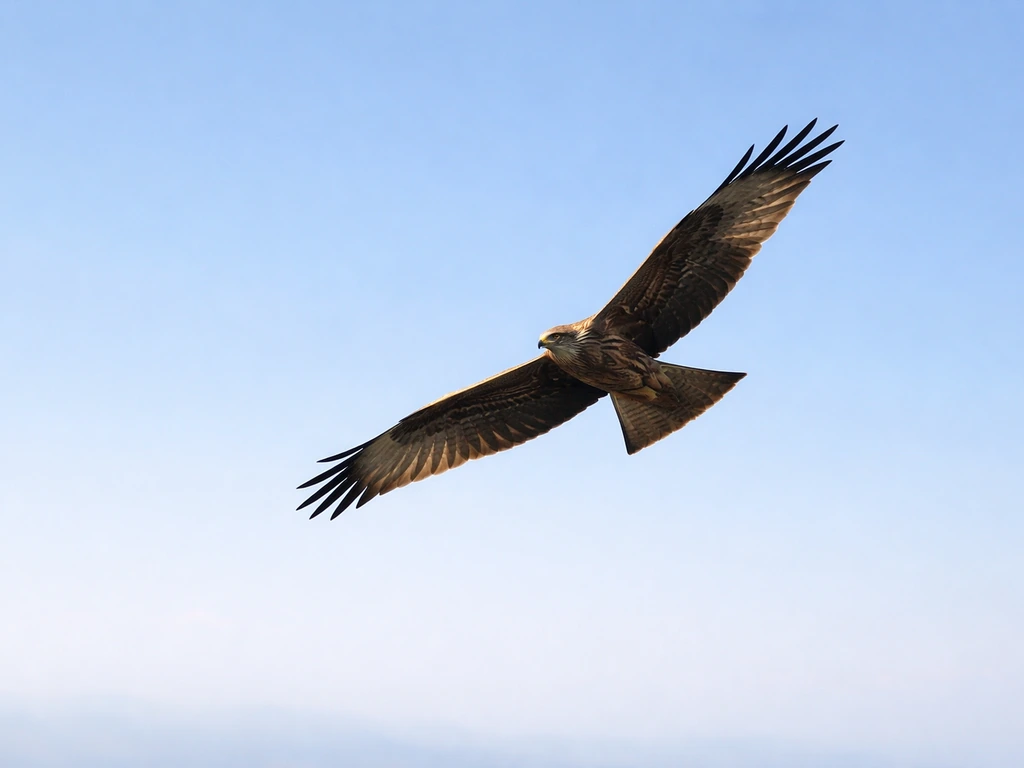
In English, 'kite' as a bird refers to a group of medium-to-large raptors in the family Accipitridae. These are soaring birds of prey, graceful in the air, with long wings and often a distinctive forked or angled tail. The word 'kite' for the bird actually came first historically, the flying toy was named after the bird because of how it hovers and soars. So when someone says 'kite bird,' they almost always mean a raptor, not a toy.
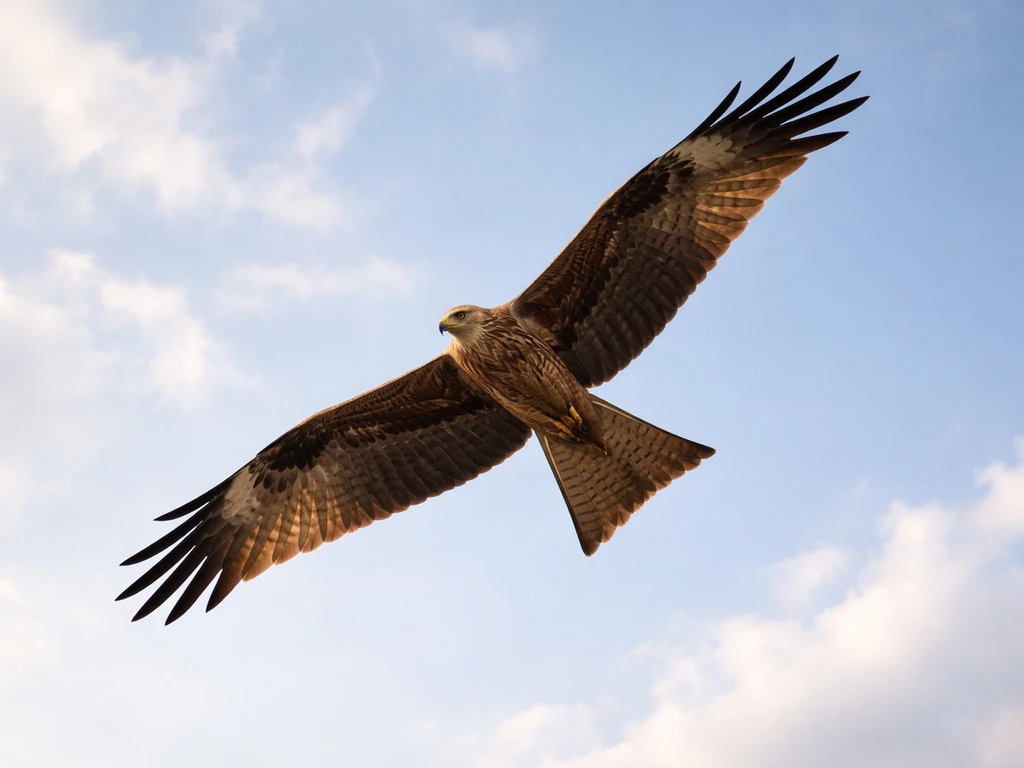
The most common kite you'll see across the Indian subcontinent is the Black Kite (Milvus migrans). It's the dark brown bird with a shallow forked tail that circles above cities, railway stations, and riversides in enormous numbers. The Brahminy Kite (Haliastur indus) is another well-known Indian species, reddish-brown with a white head and chest, far more striking in appearance. The Black-winged Kite (Elanus caeruleus) is a third, less common species with a pale grey-and-white body and vivid red eyes.
Hindi names for kite birds, by species
Hindi doesn't use a single universal name for every kite species the way 'kite' works as an umbrella in English. Instead, चील (cheel) acts as the root word, and a qualifier is usually added to indicate the specific type. Hiwiki.IIIT’s Hindi Wiki treats चील as a broader umbrella used for multiple raptor species, with qualifiers for different kite types (such as color or region) चील (cheel) acts as the root word, and a qualifier is usually added. Here's how the major kite species map to their Hindi names:
| English Name | Scientific Name | Hindi Name | Transliteration |
|---|---|---|---|
| Black Kite | Milvus migrans | काली चील | kālī chīl / kali cheel |
| Brahminy Kite | Haliastur indus | ब्राह्मणी चील / धोबिया चील | brāhmaṇī chīl / dhobiyā chīl |
| Black-winged Kite | Elanus caeruleus | कपासी चील | kapāsī chīl |
| Kite (generic/common) | — | चील | cheel / chīl |
The term ब्राह्मणी चील for the Brahminy Kite is the most widely used Hindi name in northern and central India, though धोबिया चील also circulates in some regions. The root चील on its own, without any qualifier, almost always points to the Black Kite in everyday Hindi conversation simply because the Black Kite is by far the most visible and abundant kite across most of India.
Pronunciation, spelling variations, and how to anchor your search
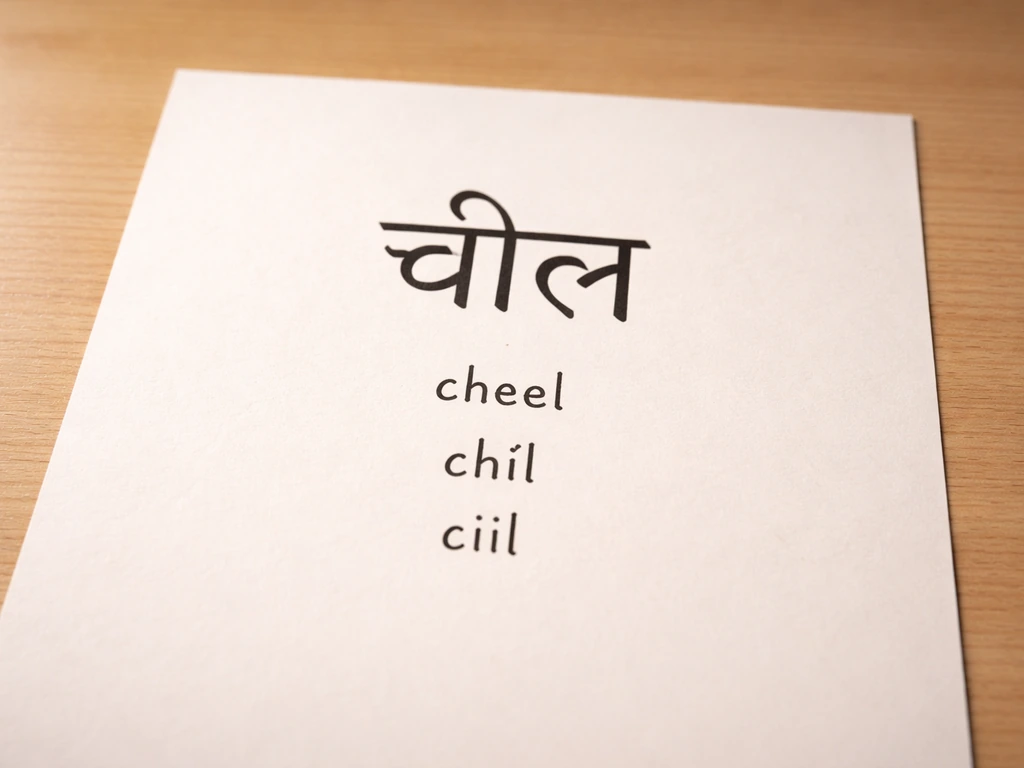
The Devanagari spelling चील is your most reliable anchor. When romanized, you'll see it written as cheel, chīl, or occasionally ciil depending on the transliteration system being used. These all refer to the same word. Similarly, काली चील becomes 'kali cheel' or 'kali chil' in casual romanized searches on YouTube or Google. None of these variations should throw you off, they're all pointing to the same bird.
One important distinction to hold on to: if a Hindi source or speaker says पतंग (patang), they are talking about the paper kite toy, not the bird at all. This mix-up appears fairly often in quick dictionary lookups, especially on sites that list both meanings of the English word 'kite' without clearly separating them. Whenever you're searching for the bird specifically, include the word चील (cheel) or add 'bird' / 'raptor' to your English search to filter out the toy meaning.
For pronunciation: चील sounds roughly like 'cheel' with a long 'ee' vowel, similar to the 'ee' in 'feel.' The 'ch' is aspirated, like in 'cheese.' काली चील is 'kaa-lee cheel', straightforward once you say it a couple of times. ब्राह्मणी चील sounds like 'braam-ha-nee cheel,' with the stress on the first syllable.
Kite birds in Indian culture and symbolism
Of all the kite species in India, the Brahminy Kite carries the richest cultural and spiritual significance. In several parts of India, particularly in coastal and Goan communities, the Brahminy Kite is referred to as Garuda, the divine eagle-vehicle of Lord Vishnu. The bird's russet-and-white coloring and its majestic soaring flight make it an easy stand-in for the sacred Garuda motif in folk tradition. Sighting a Brahminy Kite near a temple or before an important event is considered auspicious in some regional traditions. This is the kind of cultural layering that makes Indian bird naming so rich: a species name like ब्राह्मणी चील isn't just a label, it carries a whole religious and cultural weight.
The Black Kite, though far more common and less celebrated symbolically, has its own cultural presence. Its image as a scavenger and opportunist appears in Hindi idioms, and it's deeply woven into the everyday landscape of Indian towns. In Sanskrit, broad terms for birds of prey and soaring birds appear across mythological texts, and the tradition of associating raptors with divine power runs deep, something explored further if you look into what birds are called in Sanskrit more generally. If you mean the general Sanskrit word for birds, it can vary by context, but you can look for mentions in classical texts and dictionaries what birds are called in Sanskrit.
It's also worth noting that the idea of a legendary or mythologized bird is a recurring theme in Indian tradition. Just as the chatak bird carries deep poetic symbolism in Hindi and Urdu literature, the kite species (especially Brahminy) occupy a space where ornithology and mythology genuinely overlap. In English, the chatak bird is commonly referred to as the whistling kite. This site covers several such birds where the cultural meaning is as important as the literal translation.
How to figure out exactly which kite bird you're looking for
If you're not sure which kite species you're dealing with, a few quick visual and contextual checks will settle it fast:
- Dark brown body with a shallow forked (V-shaped) tail: almost certainly a Black Kite (काली चील / Milvus migrans). This is the kite you see circling above most Indian cities.
- Reddish-brown body with a white head and chest: Brahminy Kite (ब्राह्मणी चील / Haliastur indus). Often found near coasts and large water bodies.
- Small, pale grey-and-white bird with striking red eyes perching on wires or hovering: Black-winged Kite (कपासी चील / Elanus caeruleus).
- Heard a loud, whistling call from a soaring raptor with a long-tailed silhouette: you may be looking at a Whistling Kite (Haliastur sphenurus), though this species is less common in the Indian subcontinent and more associated with Australia.
- Someone said 'kite' in a Hindi conversation and you're unsure if they meant the bird or the toy: context is everything. If it's Makar Sankranti season or a festival, they almost certainly mean पतंग (patang). Any other context, they most likely mean चील (cheel).
Where to verify the exact bird and name
Once you have a species in mind, here's a practical verification workflow that works well for Indian birds specifically:
- Search the English common name (e.g., 'Black Kite') on the Birds of India species pages. These entries cross-reference English common names with scientific names and often list Hindi or regional vernacular names.
- Cross-check the Hindi name on Wikimedia Commons species pages, which typically include a vernacular names section listing the Hindi (हिन्दी) name alongside other Indian languages.
- For additional confirmation, the IndiaBiodiversity portal maintains species records for Indian taxa that help pin down the scientific species and its local names.
- Use the Devanagari spelling (e.g., काली चील or ब्राह्मणी चील) rather than romanized versions when searching Hindi-language sources. This eliminates ambiguity from inconsistent transliteration.
- If the name you found still doesn't match what you heard or saw, note the location in India, the habitat (city, coast, forest, farmland), and the bird's size and tail shape, then recheck against the species list above.
The bottom line: if someone asks 'what is kite bird called in Hindi,' the direct answer is चील (cheel). If you are searching for the xenops bird meaning in Hindi, the key is to check the correct local name used for xenops in your region चील. For the most common Indian species, that becomes काली चील (kali cheel) for the Black Kite, and ब्राह्मणी चील (Brahminy cheel) for the sacred Brahminy Kite. Use the visual clues and verification steps above to confirm which specific bird you're dealing with, and you'll have both the right Hindi name and the cultural context to go with it.
FAQ
In Hindi, is “cheel” always the name of the Black Kite, or does it refer to all kites?
In everyday speech, “चील” usually points to the Black Kite because it is the most common and visible kite in many regions. However, for other species people typically add a qualifier (for example, ब्राह्मणी चील for Brahminy Kite). If you want to be fully specific, use the full local name plus the qualifier.
How do I tell “patang” from the bird when I see both words in Hindi-English dictionaries?
“पतंग (patang)” means the flying paper toy, while the bird is “चील (cheel).” If a search result or sentence talks about threads, kites in festivals, or paper, it is almost certainly the toy. If it mentions raptors, soaring, or scavenging behavior, it is the bird.
What should I do if I see different roman spellings like “cheel,” “chīl,” or “chil” online?
Treat all of these roman spellings as the same Hindi word because they are just different transliteration choices for “चील.” For accuracy, rely on the Devanagari spelling “चील” or the full compound forms like “काली चील” and “ब्राह्मणी चील.”
Is there a single Hindi word that matches the English “kite” umbrella for many species?
Hindi does not behave exactly like English “kite” as a universal umbrella term. The common root is “चील,” but species identification typically requires adding an adjective or qualifier. So “चील” alone is most practical for the general idea, but it may not name the exact species you mean.
If someone says “काली चील” or “ब्राह्मणी चील,” do they always mean those exact species?
Usually yes, those compound names are meant to indicate specific species. Still, regional variation can cause casual misuse, especially when people are describing a kite they saw without being precise. If you need certainty, cross-check with visible traits (tail shape, head color, and overall coloration) and the context (coastal vs inland, urban scavenging vs temple areas).
How can I verify which kite it is when I cannot find the Hindi name for the species I mean?
Use a two-step approach: first, identify the bird by key visual traits (tail fork depth, body color, head/chest color, and whether it has prominent red eyes). Second, then search using “चील” plus one describing word in Hindi (for example, “सफेद सिर” for white-headed) or use the likely common species names available in your region.
Do Bengali, Marathi, Tamil, or other languages in India use the same word “चील” for kites?
No. “चील” is Hindi (Devanagari). Other languages often have their own words for raptors. If you are reading a multi-language page or a comment section, look for the exact script or the species qualifier rather than assuming the same word carries across languages.
What is the correct pronunciation for “काली चील” if I want to say it clearly?
Say it as “kaa-lee cheel.” Keep “cheel” with a long “ee” sound (like “feel”). The word “काली” is “kaa-lee,” not “ka-li,” and consistent stress helps locals understand you faster.
If I’m searching on YouTube or Google, what query wording works best to avoid toy results?
Include “चील” or add English context like “bird,” “raptor,” or “Black Kite.” For example, searching “काली चील bird” or “चील raptor” dramatically reduces confusion with “पतंग (paper kite toy)” results.
Next Article
Bird Beak Meaning in Hindi: Chonch, Bill, Pronunciation
Bird beak in Hindi chonch or bill, pronunciation, examples, beak vs bill differences, and figurative Hindi use